
This lesson guides you through the complexities of navigating and making deliveries in busy urban environments as a professional Category C driver. You will learn the critical safety protocols for using loading bays and kerbside access while managing interactions with other road users and strict local regulations. Understanding these rules is vital for passing your theory exam and ensuring efficient, compliant urban operations.
Lesson content overview
Operating a professional goods vehicle in busy urban environments presents a unique set of challenges, demanding precision, adherence to strict protocols, and a high degree of awareness. This comprehensive lesson, crucial for holders of a Category C goods vehicle licence in Great Britain, delves into the essential practices for safe, lawful, and efficient deliveries within urban delivery zones. Mastery of these protocols not only ensures compliance with legal obligations but also minimises disruption, enhances public safety, and upholds professional driving standards.
This lesson builds upon foundational knowledge from the Highway Code, general goods vehicle dimensions and weight limits, basic loading principles, hazard perception, and an understanding of vulnerable road user categories. It directly connects to topics such as identifying and managing blind spots, interacting with pedestrians and cyclists, and general urban delivery risks, which are all vital for navigating complex cityscapes.
Urban delivery zones are designated areas within towns and cities where goods vehicles are permitted to stop for loading and unloading. These zones are meticulously regulated by local authorities to manage traffic flow, reduce congestion, minimise noise pollution, and enhance safety for all road users, especially vulnerable ones. Professional drivers must understand the specific rules governing these zones to operate effectively and avoid penalties.
The primary goal of these protocols is to create a predictable and safe environment for deliveries. By clearly defining where and when a goods vehicle can stop, and how the loading or unloading process should be conducted, these rules aim to protect pedestrians and cyclists, who are most at risk in close proximity to large vehicles. They also ensure that commercial operations integrate smoothly with urban life, reducing conflict and maintaining a positive public image for the haulage industry.
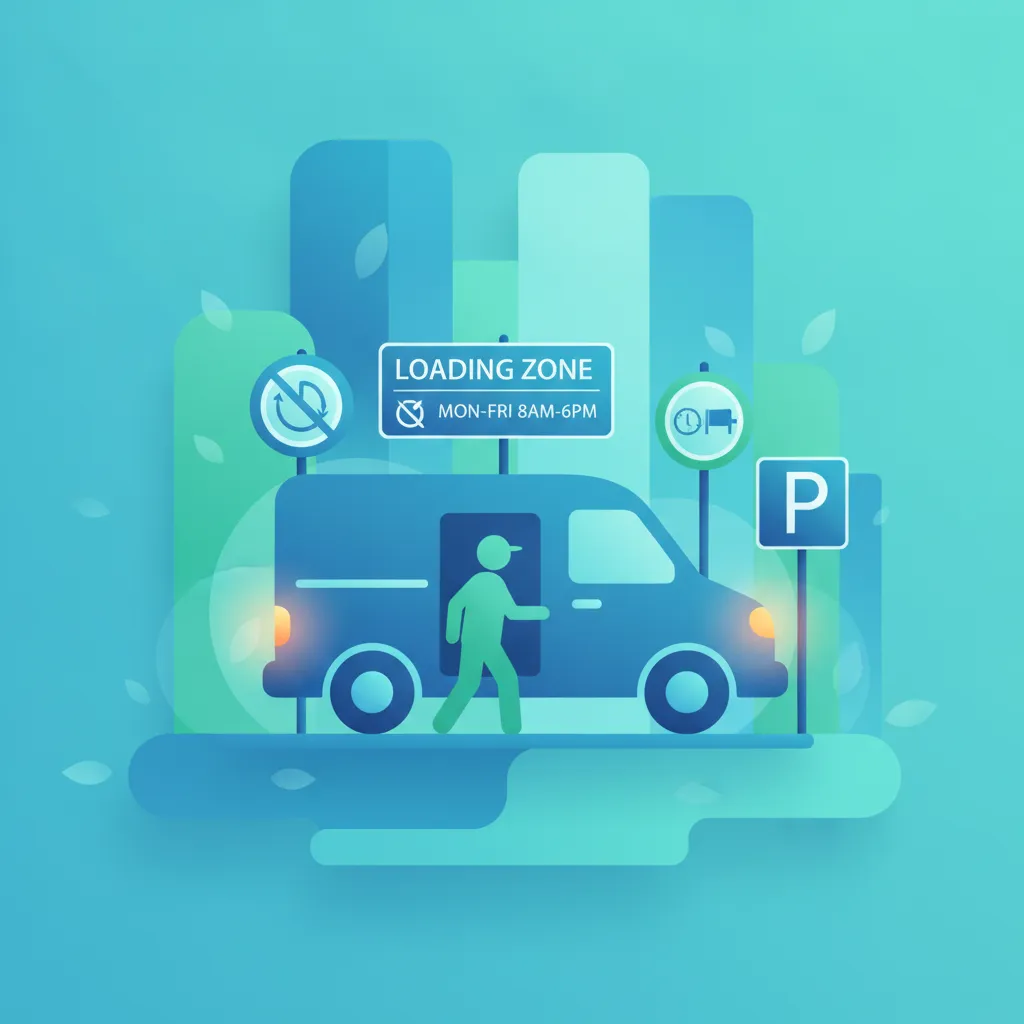
Designated loading bays are specific, marked areas on the road or sometimes partially on the footway, exclusively set aside for goods vehicles to load or unload. These bays are identifiable by road markings, often white chevrons, and accompanying signage. Utilising these bays correctly is paramount for professional goods vehicle drivers.
Drivers must always prioritise using a designated loading bay when one is available. Stopping on the carriageway or in other restricted areas when a bay is nearby can lead to fines and obstruct traffic. Each bay will have specific conditions, which must be carefully observed. These often include time limits (e.g., "Max stay 30 minutes") and sometimes vehicle size or weight restrictions (e.g., "Goods vehicles up to 7.5 tonnes only").
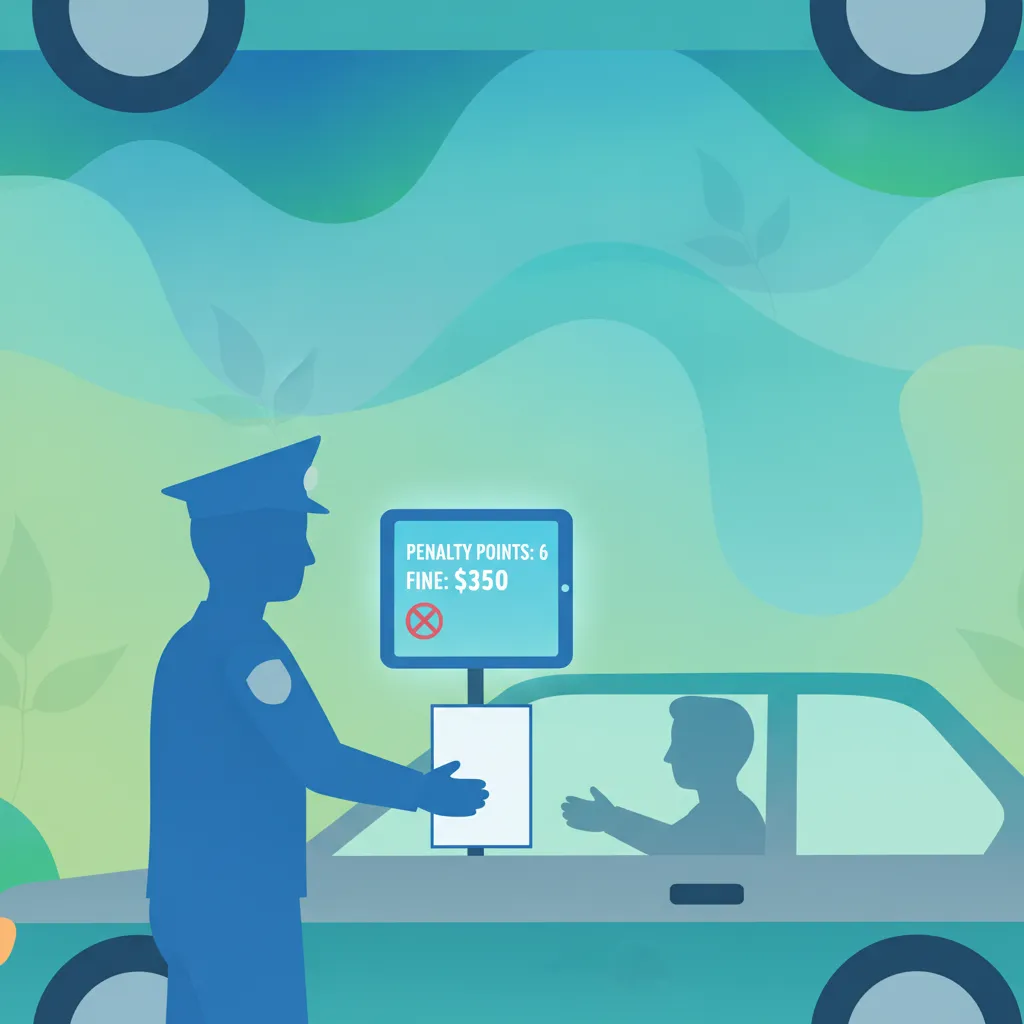
Failure to comply with these restrictions can result in fixed penalty notices and points on a driver's licence. For instance, a 12-tonne lorry attempting to use a bay restricted to 7.5-tonne vehicles is a clear violation. Similarly, overstaying a time limit, even if actively loading, will incur a penalty. Drivers should always plan their delivery schedule to account for potential delays and ensure they complete operations within the permitted window.
When a designated loading bay is unavailable, or the nature of the delivery requires it, drivers may need to perform a kerbside delivery. This involves stopping the goods vehicle directly alongside the kerb, often adjacent to the footway, to unload goods. While common, this manoeuvre requires extreme caution to ensure the safety of pedestrians and other road users.
Positioning: Carefully pull the vehicle parallel to the kerb, ensuring it is as close as safely possible without mounting the footway, unless explicitly permitted and necessary. The vehicle should not obstruct the carriageway or extend into it more than absolutely necessary.
Hazard Lights: Activate the hazard warning lights immediately upon stopping the vehicle for loading or unloading. This signals to other road users that your vehicle is stationary and may be causing an obstruction or performing an activity requiring caution.
Footway Clearance: Ensure that the footway, cycle lanes, and pedestrian crossings remain clear. Parcels, trolleys, or equipment must not create trip hazards or block pedestrian flow. If a temporary obstruction is unavoidable, use cones or barriers and keep the duration to a minimum.
Door Management: When opening vehicle doors, especially those on the side facing the footway, always check mirrors and blind spots for approaching pedestrians or cyclists. Doors should be opened carefully and kept open only for the necessary duration to prevent "dooring" accidents.
Vigilance: Maintain constant awareness of the surroundings. Pedestrians, cyclists, and other road users may not anticipate a stationary goods vehicle or its unloading activities.
The Highway Code explicitly states that drivers must exercise caution when opening a vehicle door to avoid endangering other road users (Rule 265). Similarly, rules 179-181 mandate keeping cycle lanes and footways clear. Neglecting these rules during kerbside deliveries can lead to accidents, injuries, and severe legal consequences for the driver and the operating company.
Many urban areas enforce specific time restrictions for loading and unloading, often indicated by roadside signage. These restrictions are primarily in place to mitigate traffic congestion during peak hours, reduce noise disturbances in residential areas, and align with local council ordinances.
Common time restrictions include:
Drivers must integrate these time windows into their route planning and scheduling. Arriving too early or too late can mean waiting until the permitted window, causing delays, or risking a fixed penalty notice if operations proceed outside the allowed times. It is crucial to correctly interpret 24-hour clock formats and be aware of any local exemptions that might apply to certain vehicle categories or under special permits. For example, a delivery scheduled for 08:30 in a zone with a 07:00-18:00 restriction would be a violation, whereas a delivery at 19:30 would be permissible.
Hazard warning lights, the amber flashing indicators on a vehicle, serve a critical purpose in urban delivery zones. They signal to other road users that a stationary vehicle may pose a temporary hazard or is operating under unusual circumstances. Their correct and timely activation is a mandatory safety measure for goods vehicle drivers.
Amber flashing lights on a vehicle used to indicate that it is stationary and may present a danger or temporary obstruction to other road users, often while loading, unloading, or in an emergency.
When to Use:
When Not to Use:
The Road Vehicle Lighting Regulations 1992 stipulate that hazard lights must be used when a stationary vehicle “poses a danger to other road users.” Consistently using them correctly informs surrounding traffic of your presence and activity, significantly reducing the risk of rear-end collisions or other incidents. Forgetting to switch them on, or leaving them on incorrectly, can result in penalties and compromises safety.
The presence of large goods vehicles in urban areas inherently introduces risks, particularly to those who are most vulnerable. Professional drivers have a profound responsibility to manage their operations in a way that prioritises the safety of pedestrians, cyclists, motorcyclists, and other road users. This requires proactive measures, clear communication, and an unwavering commitment to safe practices.
Urban environments are bustling with activity, meaning goods vehicle drivers will constantly interact with pedestrians, cyclists, and other vulnerable road users (VRUs). These groups are at a significantly higher risk of serious injury or fatality in a collision with a heavy vehicle due to their lack of protection.
Always assume pedestrians and cyclists may not see your large vehicle. Make eye contact where possible, use clear hand signals if safe, and avoid sudden movements.
Key Practices for Safe Interaction:
Understanding blind spots is crucial here. Goods vehicles have extensive blind spots, especially down the sides and immediately in front of and behind the cab. Regular observation checks, even when stationary, are essential to detect VRUs who may enter these zones. This ties into the knowledge gained from Unit 7.1, "Identifying and Managing Blind Spots."
The way a goods vehicle is positioned during loading or unloading, and the stability of its load, are critical safety factors that directly impact the surrounding environment and the vehicle's integrity. Incorrect positioning can cause traffic obstruction or damage, while unstable loads pose a significant risk of accidents.
Vehicle Positioning:
Load Stability:
Failing to secure a load can lead to catastrophic consequences, including load shift that causes loss of vehicle control, items falling off the vehicle and striking other road users, or obstructing the carriageway. Proper training in cargo securing protocols (as covered in Unit 3, "Loads, Cargo Security, Stability and Safety Checks") is vital and applies just as much to partial unloads in urban zones as it does to long-haul journeys.
Operating goods vehicles in urban areas involves navigating a complex web of national and local regulations. Beyond the Highway Code, drivers must be aware of specific bylaws and environmental schemes enforced by local authorities. Ignorance of these rules is not a defence and can lead to significant penalties.
Many urban areas in Great Britain, particularly larger cities, have implemented Low Emission Zones (LEZ) or Clean Air Zones (CAZ). These zones aim to improve air quality by restricting access for vehicles that do not meet specific emission standards.
An area where only vehicles meeting specific emission standards are allowed to enter, or where vehicles not meeting those standards must pay a charge. LEZs aim to improve air quality in urban environments.
Key Compliance Points for LEZs/CAZs:
In addition to LEZs, local authorities can enact numerous other bylaws that impact goods vehicle operations. These might include:
Drivers should familiarise themselves with their planned routes using up-to-date mapping and routing software that incorporates these local restrictions. Ignoring local signage or failing to adhere to these bylaws can lead to costly penalties, including fines and potential vehicle impoundment.
Despite careful planning, goods vehicle drivers will inevitably encounter situations that test their knowledge and adherence to urban delivery protocols. Recognising common pitfalls and understanding how to adapt to varying conditions are hallmarks of a professional driver.
Many violations in urban delivery zones stem from a lack of awareness, poor planning, or taking shortcuts under pressure. Understanding the most frequent mistakes helps in proactively avoiding them.
Common Violations and Their Consequences:
Always double-check local signage. Restrictions can change, and what was permissible yesterday may not be today. Routing software can help, but on-the-spot observation is crucial.
Urban deliveries are rarely performed in ideal conditions. Professional drivers must be prepared to adjust their protocols based on environmental factors and specific operational challenges.
Weather Conditions:
Light Conditions:
Road Type and Area:
Vehicle State:
Urban delivery zone protocols are a fundamental aspect of professional goods vehicle operations in Great Britain. They are designed to ensure safety, minimise disruption, and uphold legal and environmental standards in densely populated areas. For Category C licence holders, understanding and consistently applying these protocols is not merely about compliance; it's about demonstrating professionalism, responsibility, and a commitment to road safety.
To recap, professional drivers must:
Adherence to these guidelines, supported by the legal frameworks of the Highway Code and specific regulations, is crucial for preventing collisions, avoiding penalties, and ensuring the smooth flow of goods through our urban centres. This knowledge is not only vital for passing your Category C theory test but is an everyday necessity for a successful and safe professional driving career.
Explore all units and lessons included in this driving theory course.
Lesson content overview
Explore all units and lessons included in this driving theory course.
Explore search topics learners often look for when studying Urban Delivery Zone Protocols. These topics reflect common questions about road rules, driving situations, safety guidance, and lesson level theory preparation for learners in Great Britain.
Browse additional driving theory lessons that cover connected traffic rules, road signs, and common driving situations related to this topic. Improve your understanding of how different rules interact across everyday traffic scenarios.
Learn how to safely manage interactions with pedestrians, cyclists, and motorcyclists during urban deliveries. Essential guidance on positioning, communication, and hazard awareness for Category C drivers.

This lesson addresses the unique challenges of operating a large goods vehicle in congested urban and city environments. It focuses on techniques for navigating narrow streets, making tight turns, and safely accessing delivery points while being highly aware of vulnerable road users like pedestrians and cyclists. The importance of exceptional observation, low-speed control, and clear communication with other road users is heavily emphasized to minimize risk in these complex settings.
Understand the specific bylaws, Low Emission Zone (LEZ) rules, and time restrictions governing goods vehicle deliveries in UK urban areas. Ensure legal operation and avoid penalties.

This lesson addresses the growing number of environmental access restrictions in urban areas, such as Low Emission Zones (LEZ), Ultra Low Emission Zones (ULEZ), and congestion charging. Learners will understand the vehicle emission standards (Euro standards) required for entry and how to check their vehicle's compliance. It covers the practicalities of planning routes that account for these zones to avoid significant financial penalties and support cleaner air initiatives.
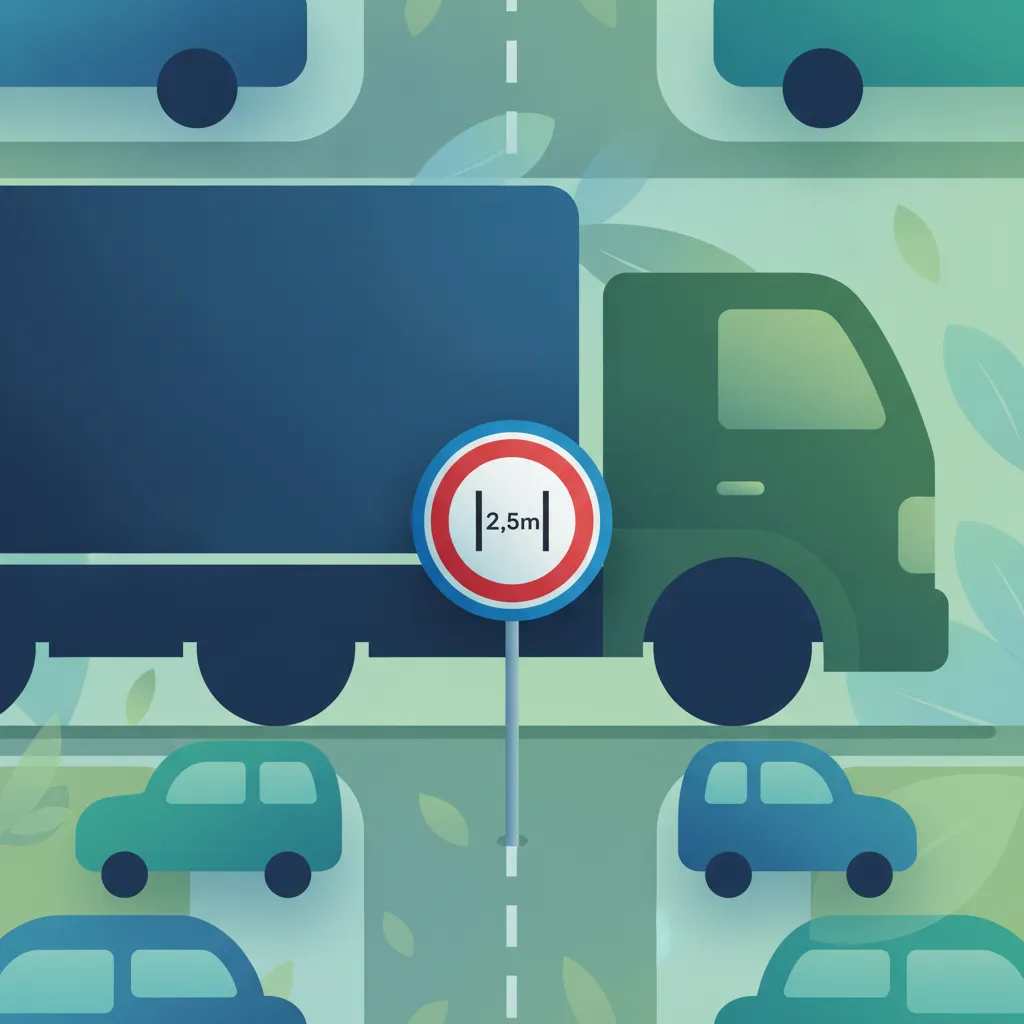
This lesson offers a deep dive into the specific regulations concerning weight, width, and axle load restrictions for goods vehicles. It covers how to read and comply with the associated road signs to avoid overloading weak bridges and entering restricted areas. Learners will understand the importance of correct load assessment and the serious penalties for non-compliance, which are enforced through DVSA roadside inspections and weighbridges.
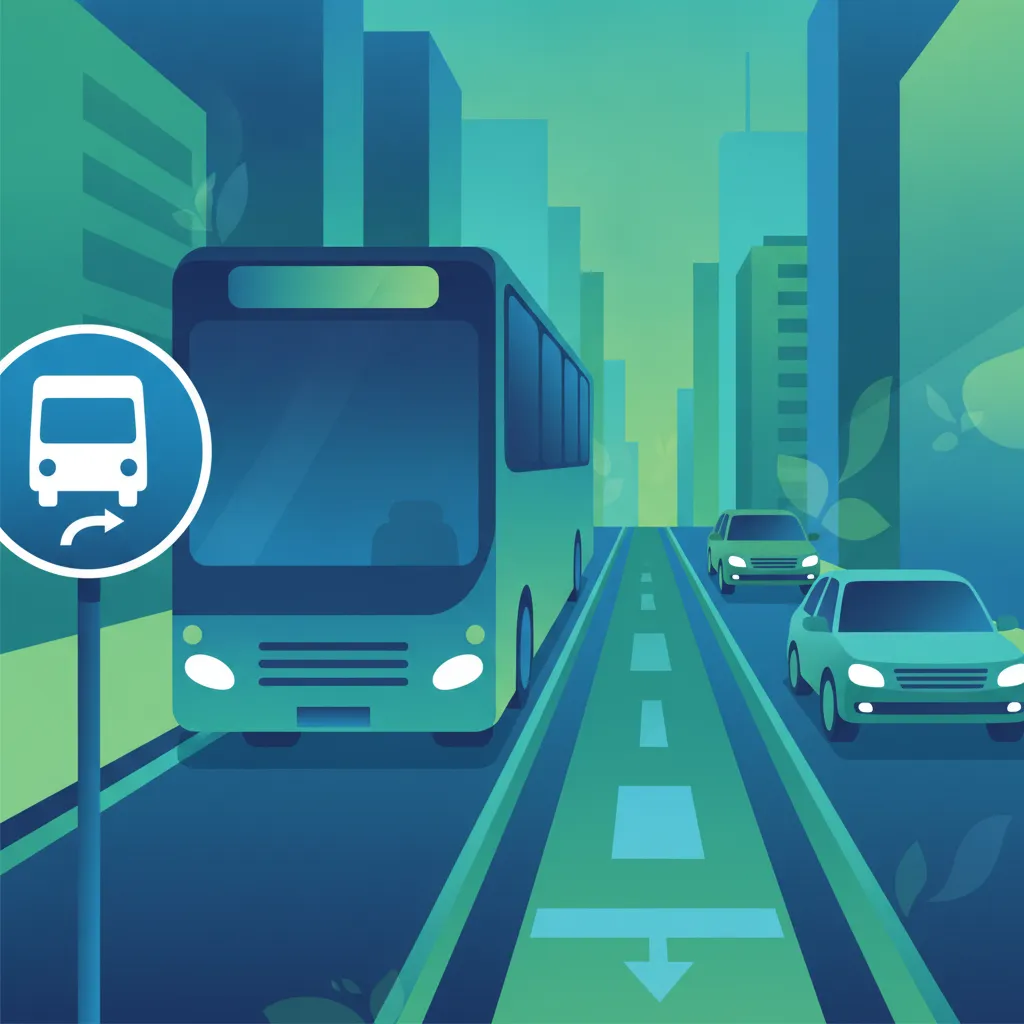
This lesson examines the unique rules and restrictions governing buses and coaches, focusing on bus lane priority, time-based restrictions, and loading zone limitations. Learners will explore the criteria for using bus-only routes and understand the legal consequences of non-compliance. The content also reviews signage indicating bus gate operation and areas where passenger vehicles are prohibited from stopping or loading outside of designated zones, ensuring lawful and efficient urban navigation.
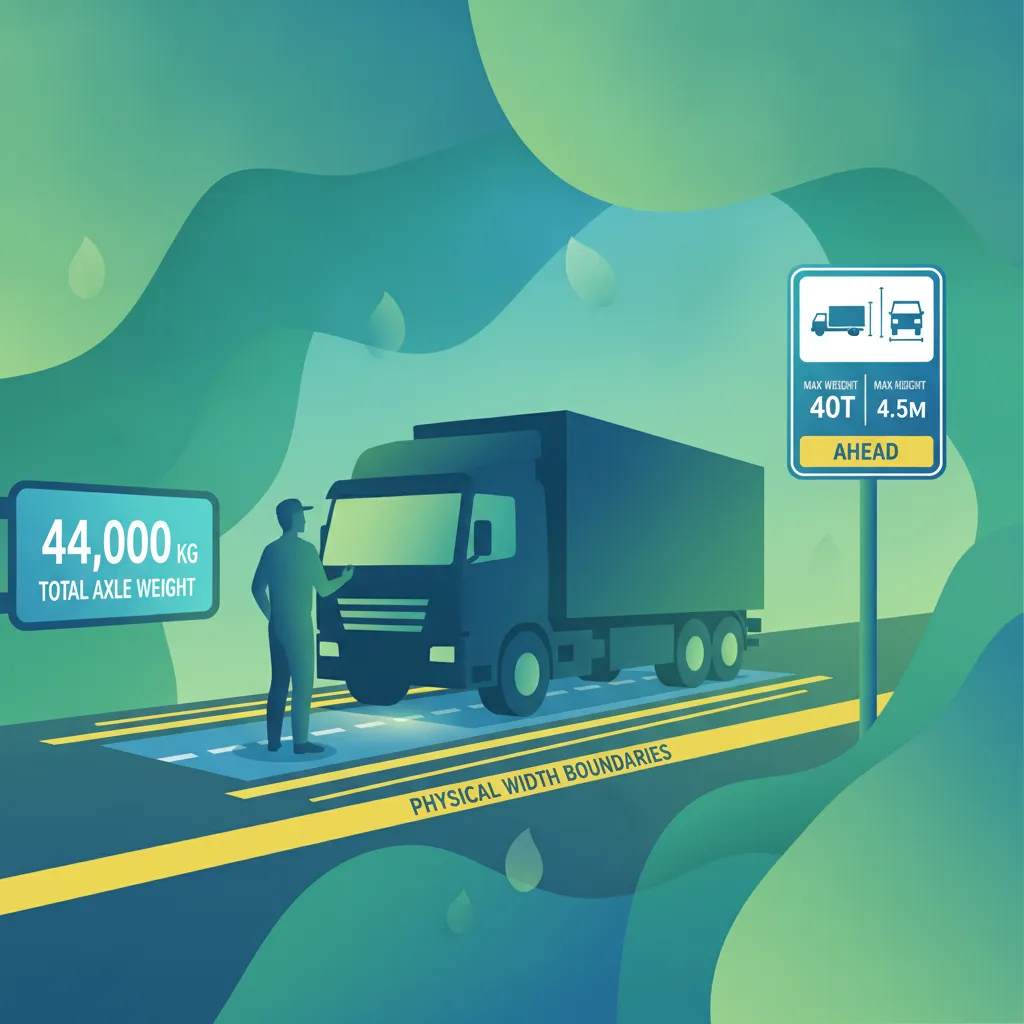
This lesson introduces the statutory limits governing the dimensions and mass of goods vehicles in Great Britain, including gross vehicle weight and individual axle loads. It explains how to calculate a vehicle's loaded weight to ensure it remains within legal parameters, preventing penalties and safety risks. Understanding these regulations is crucial for preventing damage to road infrastructure and ensuring the vehicle's stability and safe operation on every journey.

This lesson provides a clear overview of the primary goods vehicle licence categories: C1, C, C1E, and CE. It explains the specific vehicle types, weight thresholds, and axle configurations permitted for each classification. You will learn about the DVSA's regulatory framework, including the essential age and medical fitness criteria for eligibility, as well as the steps for obtaining a full licence. Understanding these legal definitions is fundamental for ensuring compliance and safety.

Gain a comprehensive understanding of the legal repercussions for violating goods vehicle regulations, which can range from civil penalties to criminal prosecution. This lesson details the fines, penalty points, and potential vehicle seizure enforced by authorities like the DVSA and the police. It clarifies how serious offences are handled in court and how repeated infractions can lead to escalating sanctions, impacting both your licence and professional career.
This lesson addresses the unique challenges of operating a large goods vehicle in congested urban and city environments. It focuses on techniques for navigating narrow streets, making tight turns, and safely accessing delivery points while being highly aware of vulnerable road users like pedestrians and cyclists. The importance of exceptional observation, low-speed control, and clear communication with other road users is heavily emphasized to minimize risk in these complex settings.

This lesson focuses on the specific rules and best practices for driving HGVs on motorways in Great Britain. It covers mandatory speed limits for goods vehicles, lane discipline including restrictions on using the outside lane, and procedures for safely joining and leaving the motorway. The lesson also includes up-to-date information on driving on smart motorways, including understanding the signs and using emergency refuge areas correctly.

This lesson teaches a structured approach to effective route planning, a critical skill for any professional driver. It covers the use of specialized HGV navigation software and traditional maps to account for vehicle dimensions, weight limits, low bridges, and delivery time constraints. The goal is to create routes that are not only the most efficient in terms of time and fuel but are also safe, legal, and responsive to potential disruptions like roadworks or traffic.
This lesson outlines the serious consequences of failing to comply with road transport law. It details the graduated system of fines and penalties that can be issued by the DVSA and police for offences ranging from drivers' hours violations to vehicle defects. The lesson also explains more severe sanctions, such as vehicle prohibition, licence suspension, and referral to the Traffic Commissioner, which can impact both the driver and their employer.
Find clear answers to common questions learners have about Urban Delivery Zone Protocols. Learn how the lesson is structured, which driving theory objectives it supports, and how it fits into the overall learning path of units and curriculum progression in Great Britain. These explanations help you understand key concepts, lesson flow, and exam focused study goals.
Always ensure you are aware of the specific time restrictions displayed on nearby signs. Failure to comply with these times is a common cause of fixed penalty notices and can lead to dangerous congestion if you are occupying space outside of your allocated window.
Prioritize pedestrian safety by using your vehicle's safety mirrors and cameras extensively. If possible, plan deliveries for quieter times of day and ensure you remain visible to others by using lights appropriately, while never compromising safety for speed.
Yes, urban delivery protocols often overlap with Low Emission Zone (LEZ) requirements. Always check that your vehicle is compliant before entering such zones, as the extra weight and size of Category C vehicles often attract stricter access controls.
Hazard lights should be used to warn other drivers that your vehicle is temporarily obstructing the flow of traffic during a loading or unloading maneuver. Do not use them as an excuse to park illegally or for extended periods in restricted areas.
Dive into our comprehensive question bank to find exactly what you need for your Great Britain theory test. Use our advanced filters to pinpoint specific subjects or test your knowledge on challenging areas, ensuring you're fully prepared for success.