
This lesson guides you through critical speed management techniques required for operating large passenger vehicles on Great Britain's roads. It builds on your knowledge of vehicle dynamics to ensure you can adapt to different speed limits and traffic conditions safely and professionally.
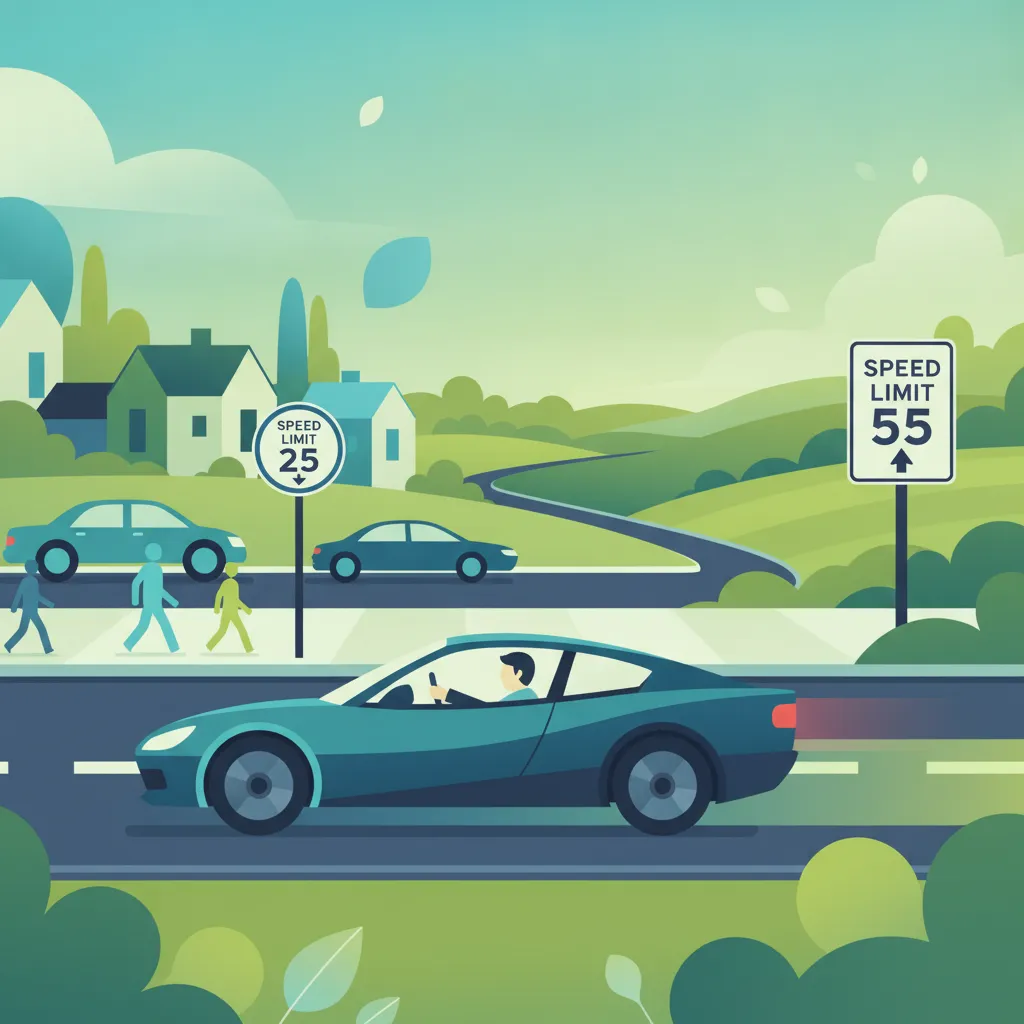
Lesson content overview
Effective speed management is a cornerstone of professional passenger vehicle operation in Great Britain. For drivers holding Category D, D1, D1E, or DE licences, the deliberate control of vehicle velocity is paramount for ensuring safety, maintaining passenger comfort, complying with legal regulations, and optimizing vehicle performance. This lesson delves into the fundamental principles, practical techniques, and crucial considerations for managing speed across diverse urban, rural, and motorway environments encountered on UK roads.
Proper speed management significantly reduces the risk of accidents, enhances fuel efficiency, minimizes vehicle wear, and provides a smooth, reassuring journey for all passengers. It involves a continuous assessment of legal limits, road conditions, traffic density, vehicle state, and the presence of vulnerable road users, demanding constant vigilance and adaptability from the driver.
Legal speed limits are statutory maximums set by law to ensure the safety of all road users. They are expressed in miles per hour (mph) and vary based on road type, location, and the class of vehicle. For professional passenger vehicle drivers, it is critical to understand these limits and how they apply specifically to larger vehicles.
These limits are not merely guidelines; they are legally binding and must never be exceeded. Compliance is fundamental to road safety and a key aspect of a professional driver's responsibility.
In the UK, default speed limits apply to different road types unless specific signage indicates otherwise. For passenger vehicles over 3.5 tonnes maximum authorised mass (MAM) or passenger vehicles with more than 8 seats, the national speed limits are often lower than for cars.
It is crucial for professional drivers of buses, coaches, and minibuses to be aware of the specific speed limits that apply to their vehicle class, which are often lower than those for standard cars on single and dual carriageways. Always refer to the latest Highway Code and DVSA guidance for precise limits.
Beyond the statutory defaults, drivers must also contend with dynamic speed changes that require immediate adaptation.
While legal speed limits define the maximum permissible velocity, a professional driver’s primary duty is to maintain a safe speed. A safe speed is often lower than the legal limit and is determined by a continuous assessment of prevailing road, traffic, and environmental conditions.
The Highway Code mandates driving at a speed that is safe for the conditions, irrespective of the posted legal limit. This implies a proactive approach to speed selection, prioritizing safety and control.
Many factors can necessitate driving below the posted legal speed limit. Professional drivers must develop the judgment to consistently select an appropriate safe speed.
An operating speed chosen by the driver that is appropriate for the perceived road, traffic, and environmental conditions, which may be lower than the legal limit. It prioritizes adequate reaction time, comfortable vehicle handling, and passenger safety.
Effective speed management relies not just on constantly checking the speedometer, but also on developing a strong sense of speed perception and estimation. This is the driver’s ability to accurately gauge the vehicle's velocity using a combination of visual cues, auditory feedback, and instrument readings.
Developing this skill allows drivers to maintain consistent speeds without constant visual focus on the dashboard, reducing fatigue and improving overall hazard awareness. Regularly cross-referencing visual and auditory estimations with the speedometer helps to calibrate and refine this perception.
Dynamic speed management is the continuous and smooth adaptation of vehicle speed in response to ever-changing traffic, road, environmental, or vehicle-specific factors. It's a hallmark of professional driving, minimizing abrupt braking and acceleration that can compromise safety and passenger comfort.
This proactive approach requires drivers to constantly scan the road ahead, anticipate potential hazards, and adjust their speed well in advance.
Professional drivers use a blend of techniques to maintain awareness of their current speed and ensure it remains appropriate.
Dynamic speed management heavily relies on anticipatory driving. This means looking far ahead, predicting potential scenarios, and making smooth, gradual speed adjustments.
Smooth acceleration and deceleration are vital for passenger comfort. Avoid harsh braking or rapid acceleration, which can cause passengers to lose balance, particularly those standing or with reduced mobility.
Understanding stopping distances is fundamental to safe speed management. Stopping distance is the total distance your vehicle travels from the moment you perceive a hazard until it comes to a complete halt. This distance is comprised of two parts: perception-reaction distance and braking distance.
For large passenger vehicles, the increased mass significantly lengthens stopping distances compared to smaller vehicles, making precise speed control even more crucial.
The kinetic energy of a moving vehicle increases quadratically with speed (KE = ½ mv²). This means that if you double your speed, the kinetic energy quadruples, requiring significantly more braking force and distance to stop. This physical principle underlies the need for drastically reduced speeds in adverse conditions where grip is compromised.
To ensure adequate stopping distance, the Highway Code recommends maintaining a safe following distance using the "two-second rule."
A guideline for maintaining a safe following distance, equivalent to the time it takes for a vehicle to travel two seconds behind the vehicle in front. It should be extended to at least four seconds in wet conditions and significantly more in icy conditions.
To apply this rule:
For large passenger vehicles, especially when heavily loaded or in adverse weather, it is prudent to extend this gap even further to account for longer braking distances and reduced manoeuvrability.
A key responsibility for professional passenger vehicle drivers is to ensure the comfort and safety of their passengers. Speed management plays a crucial role in achieving this, especially when considering vehicle load and dynamics.
Passengers, particularly those standing, with reduced mobility, or who are prone to motion sickness, are highly sensitive to sudden changes in speed.
The weight and design of passenger vehicles have a direct impact on how they handle at speed.
Authorities in Great Britain employ various mechanisms to enforce speed limits and deter non-compliance. Professional drivers must be aware of these measures and the serious consequences of violating speed regulations.
Exceeding speed limits can lead to significant penalties, impacting both the driver and the operating company.
Professional drivers must possess the skill to alter their speed dynamically in response to a multitude of real-world conditions. This adaptability is central to safe and efficient operation of passenger vehicles.
Weather conditions profoundly impact vehicle performance and safety, demanding significant speed adjustments.
Driving in reduced light conditions presents unique challenges that require a moderated approach to speed.
Each road type presents a unique set of hazards and demands a specific approach to speed.
The condition of your vehicle and the presence of vulnerable road users also dictate appropriate speed.
The principles of speed management are not arbitrary rules; they are rooted in the physics of motion, human psychology, and extensive road safety data.
Many common driving errors and violations stem from inadequate speed management.
By consistently applying the principles of safe speed management, professional drivers not only avoid penalties but, more importantly, contribute significantly to road safety, passenger comfort, and efficient, reliable service.
Never override or tamper with a vehicle's speed limiter. This is a serious legal offence with severe consequences and compromises the safety design of the passenger vehicle.
This lesson covers speed management principles essential for professional passenger vehicle drivers in Great Britain, addressing statutory speed limits specific to Category D and D1 vehicles on different road types, the distinction between legal limits and safe speeds determined by conditions, and techniques for smooth speed adjustment including engine braking and anticipatory driving. It explains stopping distance components, the physics of kinetic energy, and the two-second rule for maintaining safe following distances. The lesson also details speed enforcement mechanisms including fixed cameras, average speed systems, and vehicle speed limiters, while emphasising passenger comfort considerations and the need to adapt speed for weather, visibility, vehicle load, and vulnerable road users.
A short set of high-value points that capture the most important learning from this lesson.
Passenger vehicles over 3.5 tonnes MAM or with more than 8 seats face lower national speed limits than cars on single carriageways (50 mph vs 60 mph) and dual carriageways (60 mph vs 70 mph).
Safe speed is determined by continuously assessing road conditions, weather, traffic density, and vehicle state—it can and should be below the legal limit when conditions demand.
Stopping distance increases quadratically with speed because kinetic energy grows with the square of velocity, making speed reduction the most effective way to shorten stopping distance.
Dynamic speed management requires anticipating hazards well ahead and making smooth, gradual adjustments using techniques like engine braking on descents.
Variable and temporary speed limits override statutory limits and must be obeyed immediately when displayed, including on smart motorways and roadwork zones.
Explore all units and lessons included in this driving theory course.
On single carriageways: 50 mph for large passenger vehicles; on dual carriageways: 60 mph; motorways: 70 mph; built-up areas: 30 mph unless signed otherwise.
The two-second rule should be extended to four seconds in wet conditions and significantly more in icy conditions, with additional margin for heavy loads.
Kinetic energy increases with the square of speed—doubling speed quadruples the energy that must be dissipated during braking.
Speed limiters on vehicles over 12 tonnes are legally mandated and tampering with them is a serious offence.
Adverse weather (rain, fog, ice, strong crosswinds) requires significant speed reductions, increased following distances, and gentler inputs to maintain control.
Assuming the legal speed limit is always a safe speed, particularly in adverse weather, heavy traffic, or poor visibility.
Braking mid-corner rather than reducing speed before entering a bend, which destabilises high-sided vehicles like double-deck buses.
Failing to observe variable speed limits on smart motorways or temporary limits indicated by yellow road signs.
Not extending following distance sufficiently for large vehicles, which have longer braking distances than cars due to greater mass.
Over-relying on the speedometer without developing complementary visual and auditory speed perception skills.
Lesson content overview
A short set of high-value points that capture the most important learning from this lesson.
Passenger vehicles over 3.5 tonnes MAM or with more than 8 seats face lower national speed limits than cars on single carriageways (50 mph vs 60 mph) and dual carriageways (60 mph vs 70 mph).
Safe speed is determined by continuously assessing road conditions, weather, traffic density, and vehicle state—it can and should be below the legal limit when conditions demand.
Stopping distance increases quadratically with speed because kinetic energy grows with the square of velocity, making speed reduction the most effective way to shorten stopping distance.
Dynamic speed management requires anticipating hazards well ahead and making smooth, gradual adjustments using techniques like engine braking on descents.
Variable and temporary speed limits override statutory limits and must be obeyed immediately when displayed, including on smart motorways and roadwork zones.
Explore all units and lessons included in this driving theory course.
On single carriageways: 50 mph for large passenger vehicles; on dual carriageways: 60 mph; motorways: 70 mph; built-up areas: 30 mph unless signed otherwise.
The two-second rule should be extended to four seconds in wet conditions and significantly more in icy conditions, with additional margin for heavy loads.
Kinetic energy increases with the square of speed—doubling speed quadruples the energy that must be dissipated during braking.
Speed limiters on vehicles over 12 tonnes are legally mandated and tampering with them is a serious offence.
Adverse weather (rain, fog, ice, strong crosswinds) requires significant speed reductions, increased following distances, and gentler inputs to maintain control.
Assuming the legal speed limit is always a safe speed, particularly in adverse weather, heavy traffic, or poor visibility.
Braking mid-corner rather than reducing speed before entering a bend, which destabilises high-sided vehicles like double-deck buses.
Failing to observe variable speed limits on smart motorways or temporary limits indicated by yellow road signs.
Not extending following distance sufficiently for large vehicles, which have longer braking distances than cars due to greater mass.
Over-relying on the speedometer without developing complementary visual and auditory speed perception skills.
Explore search topics learners often look for when studying Speed Management in Varied Environments. These topics reflect common questions about road rules, driving situations, safety guidance, and lesson level theory preparation for learners in Great Britain.
Browse additional driving theory lessons that cover connected traffic rules, road signs, and common driving situations related to this topic. Improve your understanding of how different rules interact across everyday traffic scenarios.
Learn how weather conditions like rain, fog, snow, and wind affect vehicle handling and stopping distances. This lesson explains the necessary speed reductions and safety precautions for professional drivers in Great Britain.

This lesson provides essential advice for driving when weather conditions are poor. It explains how rain can cause aquaplaning and why you must double your following distance. You will also learn techniques for driving in icy conditions, including gentle use of controls to avoid skidding, and the correct use of lights in fog.
This lesson explains that safe driving often requires travelling at a speed lower than the legal limit. It covers how to adjust your speed for adverse conditions such as rain, which can double your stopping distance, or fog, which severely reduces visibility. The goal is to always be able to stop safely in the distance you can see to be clear.
This lesson explains how different weather conditions impact the handling and stability of a large passenger vehicle. It covers the risks of aquaplaning in heavy rain, the effect of high winds on vehicle stability, and the severe reduction in visibility caused by fog. Learners will understand how ice and snow dramatically increase stopping distances and require extremely gentle control inputs to prevent skidding. Strategies for adapting speed and increasing following distances are emphasized.
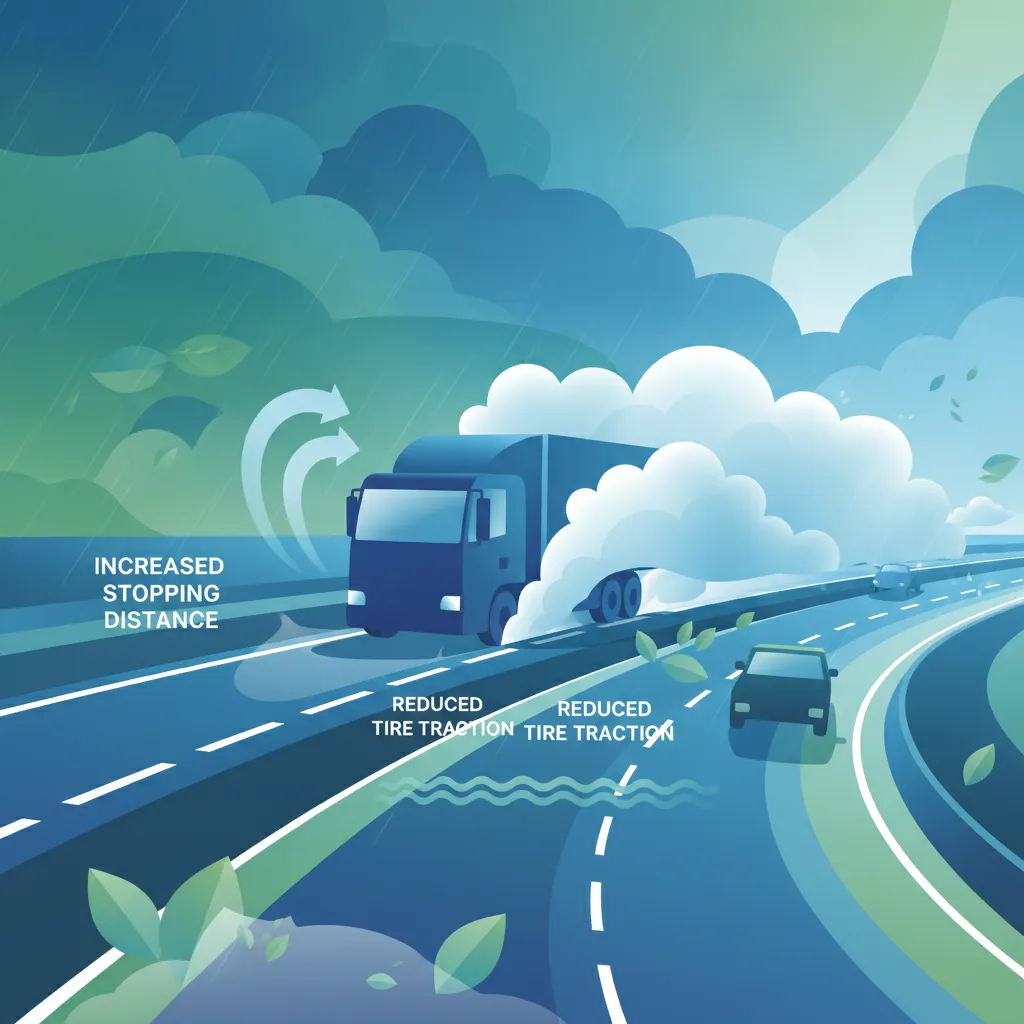
This lesson details how different adverse weather conditions uniquely affect the handling and stability of a heavy goods vehicle. It covers the increased stopping distances in rain, reduced visibility in fog, severe traction loss on ice, and the dangerous effect of strong crosswinds on high-sided vehicles. You will learn specific techniques for adjusting speed, increasing following distances, and using vehicle controls smoothly to maintain safety in challenging weather.

This lesson equips drivers with strategies for maintaining control of a heavy vehicle during adverse weather conditions like heavy rain, ice, snow, and strong crosswinds. It covers the physics of traction loss, aquaplaning, and skidding, and explains how to use smooth inputs for steering, acceleration, and braking. The function of electronic stability control systems and other driver aids is also discussed as part of a proactive approach to safety in challenging environments.

This lesson provides essential advice for riding safely in adverse weather conditions that reduce tyre grip. You will learn how rain, ice, and wet leaves dramatically increase braking distances and affect handling. Key strategies covered include reducing speed, increasing following distances, making smooth control inputs, and anticipating slippery areas to maintain control and avoid skidding on compromised road surfaces.

Riding in the rain requires significant adjustments to your technique. This lesson covers how to ride smoothly to maintain traction, the importance of increasing your following distance, and how to deal with reduced visibility from spray and fogged visors. You will also learn what aquaplaning is and how to avoid or manage it.
This lesson teaches a practical method for maintaining a safe distance from the vehicle in front. The 'two-second rule' provides a minimum time gap in dry conditions, which should be doubled to four seconds in the wet. Adhering to this rule gives you sufficient time to react and brake safely if the vehicle ahead stops suddenly.

This lesson prepares you for the challenges of countryside driving. It emphasizes that the national speed limit on these roads is often too fast for the conditions. You will learn how to approach sharp bends, use passing places on single-track roads, and anticipate hazards like slow-moving tractors, horse riders, or mud on the road surface.

This lesson prepares you for the specific challenges of driving in the countryside. It explains the correct procedure for overtaking horse riders: slow down and pass wide, ensuring you do not spook the animal. You will also learn how to anticipate and safely manage encounters with slow-moving tractors and other farm machinery.
Understand the specific speed limits and management techniques for passenger vehicles in urban areas, rural roads, and motorways across Great Britain. This lesson covers statutory and variable limits, and safe speed selection.
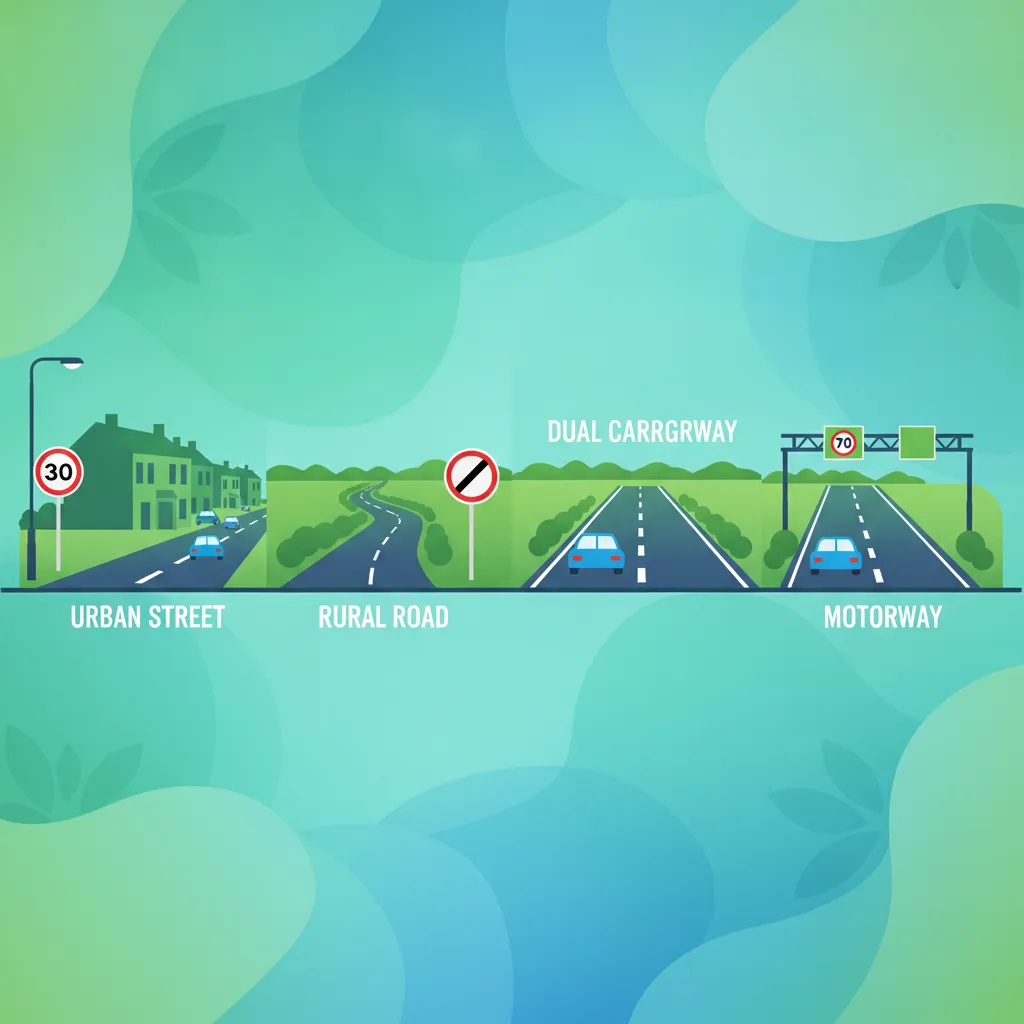
This lesson details the default speed limits for cars in Great Britain. You will learn the 30 mph limit for built-up areas, 60 mph on single carriageways, and 70 mph on dual carriageways and motorways. It also covers how to identify these roads and the importance of looking for signs indicating a different limit is in force.
This lesson prepares you for the challenges of countryside driving. It emphasizes that the national speed limit on these roads is often too fast for the conditions. You will learn how to approach sharp bends, use passing places on single-track roads, and anticipate hazards like slow-moving tractors, horse riders, or mud on the road surface.
This lesson addresses the unique set of challenges that rural roads present to HGV drivers. It covers how to safely navigate narrow and winding lanes, the importance of anticipating hazards like slow-moving agricultural machinery, mud on the road, and wildlife. You will learn how the national speed limit applies to your vehicle on these roads and why it is often necessary to travel at a much lower speed to ensure safety.

This lesson contrasts the challenges of different road types. It covers how to handle the hidden bends, poor surfaces, and unexpected hazards of rural roads. It then details the specific procedures for using dual carriageways and motorways, including using slip roads, adhering to strict lane discipline, and safely overtaking at high speeds.
This lesson focuses on the principles of effective speed management for heavy goods vehicles, which extends beyond simply obeying the statutory speed limits. It covers how to adapt speed based on vehicle weight, load stability, road gradients, and prevailing traffic and weather conditions. You will also learn about the function of mandatory speed limiters and how intelligent use of speed and cruise control can significantly improve fuel efficiency and safety.
This lesson explains that safe driving often requires travelling at a speed lower than the legal limit. It covers how to adjust your speed for adverse conditions such as rain, which can double your stopping distance, or fog, which severely reduces visibility. The goal is to always be able to stop safely in the distance you can see to be clear.

This lesson addresses the unique challenges of driving a large vehicle on rural roads. It provides techniques for positioning the vehicle through sharp bends and on narrow lanes, and for safely navigating unmarked or uncontrolled junctions. Learners will be taught to anticipate hidden hazards common in the countryside, such as slow-moving farm vehicles, animals on the road, and concealed entrances. The correct use of passing places and strategies for meeting oncoming traffic are also covered.
This lesson focuses on the regulations and best practices for driving a bus or coach on motorways. It details the specific speed limits applicable to PCVs and reinforces strict lane discipline. The content covers the correct procedures for safely joining from a slip road, overtaking other vehicles, and exiting the motorway. It also explains the features of smart motorways and the correct safety procedures to follow in the event of a breakdown, including the use of the hard shoulder.
This lesson prepares you for the specific challenges of driving in the countryside. It explains the correct procedure for overtaking horse riders: slow down and pass wide, ensuring you do not spook the animal. You will also learn how to anticipate and safely manage encounters with slow-moving tractors and other farm machinery.

This lesson addresses the unique challenges of operating a large goods vehicle in congested urban and city environments. It focuses on techniques for navigating narrow streets, making tight turns, and safely accessing delivery points while being highly aware of vulnerable road users like pedestrians and cyclists. The importance of exceptional observation, low-speed control, and clear communication with other road users is heavily emphasized to minimize risk in these complex settings.
Find clear answers to common questions learners have about Speed Management in Varied Environments. Learn how the lesson is structured, which driving theory objectives it supports, and how it fits into the overall learning path of units and curriculum progression in Great Britain. These explanations help you understand key concepts, lesson flow, and exam focused study goals.
Yes. While cars may travel at 70 mph, buses and coaches are generally restricted to a maximum of 60 mph on motorways in Great Britain, unless specified otherwise by local signage or specific vehicle type regulations.
Sudden or aggressive changes in speed cause passenger discomfort and increase the risk of injury for standing passengers. Using progressive acceleration and deceleration is a professional requirement for maintaining a smooth, safe ride.
A fully loaded passenger vehicle has significant inertia compared to an empty one or a standard car. You must increase your following distance and begin braking earlier to account for the increased kinetic energy and the time required to stop safely.
Rural roads often have narrow lanes, hidden bends, and unpredictable hazards. You must adjust your speed well below the national limit if visibility is restricted, ensuring you can stop safely within the distance you can see to be clear.
Dive into our comprehensive question bank to find exactly what you need for your Great Britain theory test. Use our advanced filters to pinpoint specific subjects or test your knowledge on challenging areas, ensuring you're fully prepared for success.