
Driving in rain presents unique challenges that every driver must be prepared for. Reduced friction between tires and the road surface, combined with decreased visibility, increases the risk of accidents. This page outlines the key dangers of driving in wet conditions in Denmark and provides practical advice on how to adjust your driving behavior to stay safe.
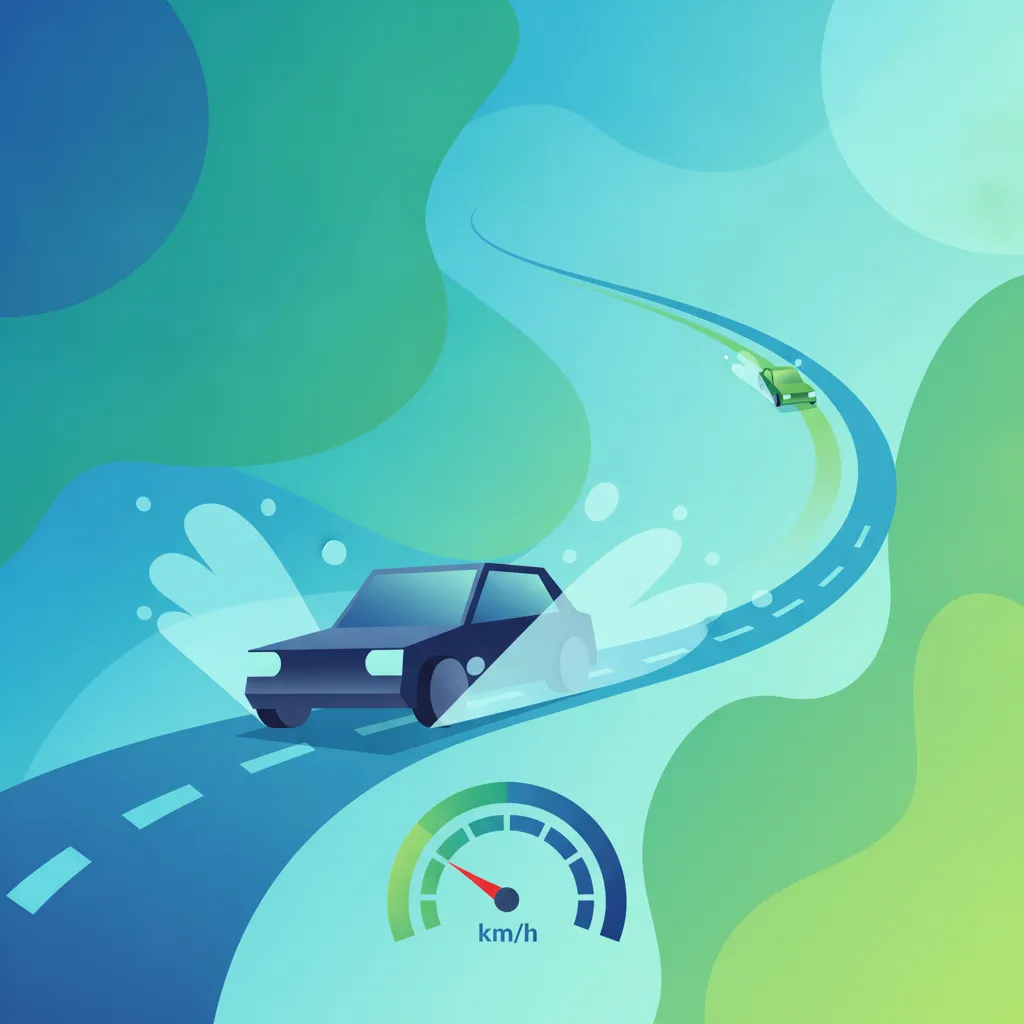
Theory topic content overview
Read the full theory topic guide for Driving in Rain with structured, easy-to-scan content built for learners in Denmark. This detailed section explains the exact rule, meaning, traffic context, comparison points, and exam logic behind this Danish driving theory topic so you can study faster, understand the concept more clearly, and avoid common interpretation mistakes on the theory test.
Driving in rain significantly alters the fundamental dynamics of vehicle control by reducing the friction between your tires and the road surface, while also severely impairing your visibility. This dual challenge demands a conscious shift in your driving behaviour to maintain safety on Danish roads. Understanding these changes is crucial for passing your driving theory test and for safe, practical driving.
Rain creates a thin layer of water that acts as a lubricant, making the road surface far more slippery than when dry. This directly impacts your ability to accelerate, steer, and, most critically, to brake effectively. Furthermore, raindrops, road spray from other vehicles, and the accumulation of water on your windshield significantly reduce how far and how clearly you can see.
In Denmark, where rain is a common occurrence, mastering wet weather driving is not just about comfort—it's a critical safety skill and a frequent topic in the official Danish driving theory test. Ignoring the effects of rain dramatically increases the risk of skidding, hydroplaning, and collisions.
For Danish learners, it's particularly important to remember:
Rainfall introduces several distinct hazards that demand a proactive and cautious approach from every driver.
The primary effect of rain is the dramatic reduction in tire grip. A layer of water between your tires and the asphalt diminishes the friction needed for effective control. This means:
The first few minutes of light rain can be the most dangerous. This is when road oil and dust mix with the water, creating a particularly greasy surface before the rain washes it away.
Because of the reduced grip, your vehicle will require a significantly longer distance to stop when the road is wet compared to dry conditions. Even moderate rain can double your normal braking distance. In heavy rain or on very slippery surfaces, it could be even longer. This is a crucial concept for the Danish theory test, as it directly relates to safe following distances.
Hydroplaning, also known as aquaplaning, occurs when a layer of water builds up between your tires and the road surface, causing your tires to lose contact with the road completely. When this happens:
Hydroplaning is most likely to occur at higher speeds, with worn tires, or when driving through significant standing water. It's a critical hazard on Danish motorways and larger roads where speeds are higher and water can accumulate.
Rainfall directly obscures your view. Factors include:
Your ability to see other road users, road signs, traffic lights, and potential hazards like pedestrians or cyclists (who may also be less visible in rain) is severely compromised.
To counter these challenges, active adaptation of your driving style is essential.
This is the most critical adjustment. Reduce your speed significantly to match the conditions, not just the legal speed limit. A lower speed:
As braking distances increase, you need more space between your vehicle and the one in front. A general rule of thumb on wet roads is to at least double your normal following distance. If you typically use a "2-second rule" in dry conditions, extend it to 4 seconds or more in the rain. This provides a crucial buffer zone for reaction and braking.
Sudden movements are much more likely to cause a skid on wet roads.
If you cannot avoid driving through standing water:
Learners often confuse the general effects of rain with specific phenomena:
New drivers often make critical errors when encountering wet weather:
The Danish driving theory test places significant emphasis on hazard perception and adapting to adverse conditions. When answering questions about rain, always default to the safest option:
Remember that on many Danish roads, you'll encounter a mix of traffic, including many cyclists. Cyclists are even more vulnerable in rain, as they are less stable and often less visible. Pay extra attention and give them plenty of space. Be particularly cautious when approaching intersections and roundabouts, as painted road markings and cobblestones can become extremely slippery.
Driving in rain requires a proactive mindset focused on safety. Always assume that conditions are worse than they appear and that your vehicle's capabilities are diminished. Reduce your speed, increase your following distance, ensure maximum visibility with proper lighting and wipers, and make all your vehicle inputs as smooth and gentle as possible. By doing so, you minimize risks and ensure you can navigate Danish roads safely, no matter the weather.
Start with a short, direct summary of Driving in Rain before reading the full explanation below.
When driving in rain, you must adapt your speed and increase your following distance due to reduced tire grip and longer braking distances. Rain also impairs visibility, so ensure your lights and wipers are properly used. Be especially mindful of hydroplaning risks when driving through standing water on Danish roads, and make all steering and braking inputs smoothly.
Review the most important terms, rule signals, and traffic concepts linked to Driving in Rain.
Explore related theory topic pages connected to Driving in Rain and continue with the next useful rule explanation.
See the common search queries learners use when trying to understand Driving in Rain in Denmark.

Dive into detailed explanations of Danish traffic legislation, road signs, and driving conventions. Solidify your understanding of key theory topics and prepare confidently for all sections of your official Danish driving license theory exam.
Explore Driving Theory TopicsTheory topic content overview
Start with a short, direct summary of Driving in Rain before reading the full explanation below.
When driving in rain, you must adapt your speed and increase your following distance due to reduced tire grip and longer braking distances. Rain also impairs visibility, so ensure your lights and wipers are properly used. Be especially mindful of hydroplaning risks when driving through standing water on Danish roads, and make all steering and braking inputs smoothly.
Review the most important terms, rule signals, and traffic concepts linked to Driving in Rain.
Explore related theory topic pages connected to Driving in Rain and continue with the next useful rule explanation.
See the common search queries learners use when trying to understand Driving in Rain in Denmark.
Dive into detailed explanations of Danish traffic legislation, road signs, and driving conventions. Solidify your understanding of key theory topics and prepare confidently for all sections of your official Danish driving license theory exam.
Explore Driving Theory TopicsUse this exam-focused revision tip to understand how Driving in Rain is likely to appear in theory questions for learners in Denmark. This section helps you identify the most testable part of the rule, avoid common traps, and remember the concept more effectively during Danish driving theory exam preparation.
Theory test questions often focus on adapting driving behavior to adverse weather. Remember that rain affects not just visibility but critically, road grip and braking distance. Always choose a lower speed, increase your following distance, and use dipped headlights, even during the day, as emphasized in Danish traffic rules.
Read direct answers to the most common learner questions about Driving in Rain in Denmark. This FAQ focuses on rule confusion, practical meaning, comparison with similar concepts, and the exact uncertainties that appear most often in Danish driving theory revision and exam preparation.
Rain creates a thin layer of water between your tires and the road, significantly reducing friction. This decreased grip makes it harder to accelerate, steer, and brake effectively, increasing the risk of skidding.
Hydroplaning occurs when a layer of water builds up between your tires and the road surface, causing your vehicle to lose contact and effectively 'float.' Avoid it by reducing speed, especially through standing water, ensuring your tires have good tread, and avoiding sudden steering or braking.
In wet conditions, your braking distance can double or even triple. A good rule of thumb is to double your normal dry-weather following distance, maintaining at least a four-second gap between your vehicle and the one in front.
In Denmark, during rain or reduced visibility, you should use your dipped headlights (kørelys) to ensure you are clearly visible to other road users, even during daylight hours. Fog lights should only be used when visibility is severely impaired (less than 50 meters).
Yes, absolutely. Reducing your speed is one of the most effective ways to mitigate risks in rain. Slower speeds allow your tires more time to displace water, maintain better grip, and give you more time to react to unexpected hazards.
Wet roads drastically increase braking distance because reduced friction means your tires can't grip the surface as effectively. Always anticipate the need for longer stopping distances and brake more gently and earlier than you would on dry pavement.
The biggest mistake is often underestimating the impact of rain on road conditions and maintaining speeds or following distances suitable for dry weather. Overconfidence in vehicle capabilities or tire condition can also lead to critical errors.
Use our powerful search tool to pinpoint specific Danish driving theory topics, road signs, or traffic situations you need to review. Start exploring relevant practice sets now to reinforce your knowledge and build confidence for your upcoming driving licence exam.