
Safe turning is essential for smooth traffic flow and preventing collisions on Danish roads. This guide explains the systematic approach to turning, emphasizing correct observation, timely signalling, precise lane positioning, and understanding right-of-way, especially with vulnerable road users like cyclists and pedestrians. Mastering these steps ensures both safety and compliance with Danish traffic laws.
Theory topic content overview
Read the full theory topic guide for Safe Turning with structured, easy-to-scan content built for learners in Denmark. This detailed section explains the exact rule, meaning, traffic context, comparison points, and exam logic behind this Danish driving theory topic so you can study faster, understand the concept more clearly, and avoid common interpretation mistakes on the theory test.
Safe turning is a fundamental skill for all drivers, especially on Danish roads where interactions with cyclists and pedestrians are frequent and diverse. It's more than just steering; it's a systematic process of observation, communication, and yielding to ensure your change of direction doesn't create danger or inconvenience for other road users. In Denmark, understanding and executing safe turning procedures (kendte som svingning regler) is critical not only for daily driving but also a frequent focus in the Danish driving theory exam.
The core principle behind safe turning is to anticipate potential conflicts and actively prevent them, always prioritizing the safety of vulnerable road users like cyclists and pedestrians.
Performing a safe turn in Danish traffic requires a methodical approach. This sequence, often referred to as LSPSL, helps ensure all critical steps are covered:
Before initiating any turn, thorough observation is paramount. This includes:
Communicate your intentions clearly and "i god tid" (in good time) using your indicators.
Place your vehicle correctly within your lane to communicate your turning intention and prepare for the maneuver.
Adjust your speed to be appropriate for the sharpness of the turn, the road conditions, and the traffic situation.
Perform a final check of your surroundings and execute the turn smoothly.
Danish traffic laws place a strong emphasis on protecting vulnerable road users during turns, leading to specific priority rules.
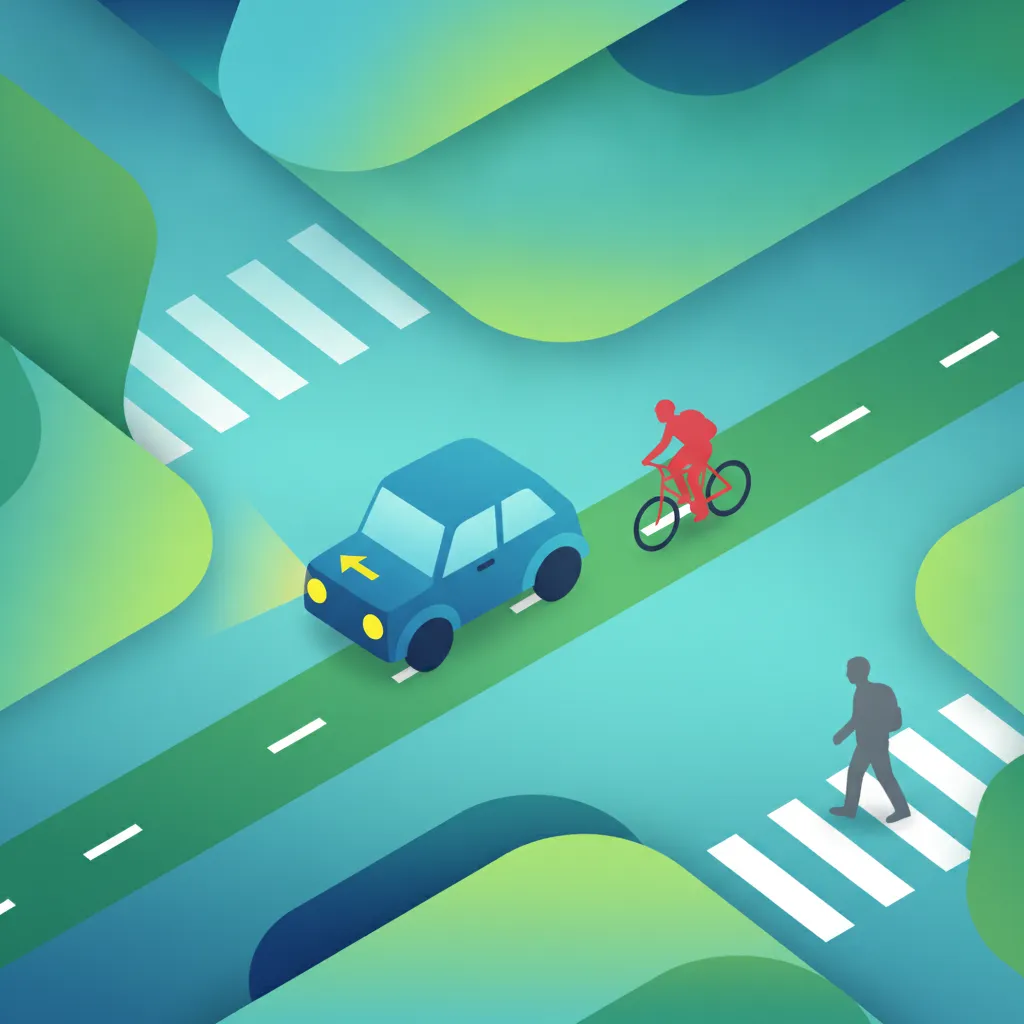
When turning right, the primary hazard often comes from cyclists and pedestrians.
Left turns typically involve more complex priority situations:
The Danish Traffic Act also addresses U-turns (vending). A specific rule states that:
vending or reversing, you must ensure the maneuver can be carried out without danger or inconvenience to others (uden fare eller ulempe for andre).vending.Learners and even experienced drivers often make mistakes during turning maneuvers, which can lead to accidents or failing the theory exam.
hoveddrejning) to check blind spots, leading to collisions with cyclists or moped riders.The Danish driving theory test will frequently present scenarios involving turns, particularly focusing on priority rules with cyclists and pedestrians. To excel, internalize the LSPSL sequence and pay close attention to the specific situations where you must yield. Remember that "give tegn i god tid" (signal in good time) and "tjek blinde vinkler ved hoveddrejning" (check blind spots with a head turn) are explicit requirements and common test points. By consistently applying these principles, you not only ensure your safety but also demonstrate a comprehensive understanding of Danish traffic laws and conventions.
Safe turning in Danish traffic requires mastering the LSPSL method (Look, Signal, Position, Speed, Look Again) to systematically address observation, communication, and yielding. The critical priority rules in Denmark involve yielding to vulnerable road users - cyclists and pedestrians always have priority when you are turning into their path. Blind spot checks via head turns are mandatory before signalling and before turning, especially for cyclists who can approach quickly and quietly. The Danish theory exam frequently tests these priority situations, so understanding exactly when to yield to cyclists on cycle paths, pedestrians crossing, and oncoming traffic is essential for passing.
A short set of high-value points that capture the most important ideas from this theory explanation.
Safe turning follows the LSPSL sequence: Look, Signal, Position, Speed, Look Again
Always yield to cyclists and pedestrians when turning in Danish traffic, as they have priority on your intended path
Blind spot checks (hoveddrejning) must be performed before signalling and again before turning
Lane positioning matters: position right for right turns, toward the center line for left turns
U-turns (vending) must be performed by turning forward to the left unless circumstances prevent it
Signal 'i god tid' (in good time) - early enough to inform others but not so early it causes confusion
For right turns, yield to cyclists continuing straight on parallel cycle paths and pedestrians crossing
For left turns, yield to oncoming traffic going straight or turning right, plus cyclists and pedestrians
Cancel your indicator manually if it doesn't self-cancel after completing the turn
When turning left with oncoming traffic, wait in the intersection only if you won't block cross-traffic
Failing to perform clear head turns (hoveddrejning) to check blind spots for cyclists and moped riders
Signalling too late or forgetting to signal altogether, depriving other road users of crucial information
Incorrect lane positioning - too far from kerb for right turns or not centered for left turns
Assuming cyclists or pedestrians will yield when you have the apparent right of way
Cutting corners on right turns and driving over cycle paths or kerbs
Start with a short, direct summary of Safe Turning before reading the full explanation below.
To turn safely in Denmark, first observe your surroundings thoroughly, checking mirrors and blind spots for all road users. Signal your intention well in advance, position your vehicle correctly in the lane, and yield to any road users who have priority, such as pedestrians or cyclists. Execute the turn smoothly, maintaining awareness until the maneuver is completed, and correct your steering to maintain a straight course.
Review the most important terms, rule signals, and traffic concepts linked to Safe Turning.
Explore related theory topic pages connected to Safe Turning and continue with the next useful rule explanation.
See the common search queries learners use when trying to understand Safe Turning in Denmark.

Dive into detailed explanations of Danish traffic legislation, road signs, and driving conventions. Solidify your understanding of key theory topics and prepare confidently for all sections of your official Danish driving license theory exam.
Explore Driving Theory TopicsTheory topic content overview
A short set of high-value points that capture the most important ideas from this theory explanation.
Safe turning follows the LSPSL sequence: Look, Signal, Position, Speed, Look Again
Always yield to cyclists and pedestrians when turning in Danish traffic, as they have priority on your intended path
Blind spot checks (hoveddrejning) must be performed before signalling and again before turning
Lane positioning matters: position right for right turns, toward the center line for left turns
U-turns (vending) must be performed by turning forward to the left unless circumstances prevent it
Signal 'i god tid' (in good time) - early enough to inform others but not so early it causes confusion
For right turns, yield to cyclists continuing straight on parallel cycle paths and pedestrians crossing
For left turns, yield to oncoming traffic going straight or turning right, plus cyclists and pedestrians
Cancel your indicator manually if it doesn't self-cancel after completing the turn
When turning left with oncoming traffic, wait in the intersection only if you won't block cross-traffic
Failing to perform clear head turns (hoveddrejning) to check blind spots for cyclists and moped riders
Signalling too late or forgetting to signal altogether, depriving other road users of crucial information
Incorrect lane positioning - too far from kerb for right turns or not centered for left turns
Assuming cyclists or pedestrians will yield when you have the apparent right of way
Cutting corners on right turns and driving over cycle paths or kerbs
Start with a short, direct summary of Safe Turning before reading the full explanation below.
To turn safely in Denmark, first observe your surroundings thoroughly, checking mirrors and blind spots for all road users. Signal your intention well in advance, position your vehicle correctly in the lane, and yield to any road users who have priority, such as pedestrians or cyclists. Execute the turn smoothly, maintaining awareness until the maneuver is completed, and correct your steering to maintain a straight course.
Review the most important terms, rule signals, and traffic concepts linked to Safe Turning.
Explore related theory topic pages connected to Safe Turning and continue with the next useful rule explanation.
See the common search queries learners use when trying to understand Safe Turning in Denmark.
Dive into detailed explanations of Danish traffic legislation, road signs, and driving conventions. Solidify your understanding of key theory topics and prepare confidently for all sections of your official Danish driving license theory exam.
Explore Driving Theory TopicsUse this exam-focused revision tip to understand how Safe Turning is likely to appear in theory questions for learners in Denmark. This section helps you identify the most testable part of the rule, avoid common traps, and remember the concept more effectively during Danish driving theory exam preparation.
In Danish theory tests, turning questions frequently focus on priority rules, especially with cyclists and pedestrians. Remember to always signal well in advance and to check blind spots with a clear head movement. A common trap involves situations where you must yield to oncoming traffic when turning left, or to cyclists when turning right. Practice applying the 'Look, Signal, Position, Speed, Look again' sequence.
Read direct answers to the most common learner questions about Safe Turning in Denmark. This FAQ focuses on rule confusion, practical meaning, comparison with similar concepts, and the exact uncertainties that appear most often in Danish driving theory revision and exam preparation.
The key steps include thorough observation, signalling in good time, correct lane positioning, adjusting speed, continuous observation during the turn, and yielding to others as required.
You should signal well in advance of your turn, giving other road users ample time to understand your intentions and adjust their actions accordingly. Danish law emphasizes timely signalling (give tegn i god tid).
In Denmark, cyclists on a cycle path generally have priority when you turn right and cross their path, unless specific road signs or traffic lights indicate otherwise. Always yield to them.
For a left turn, you should position your vehicle closer to the center line or the left side of your lane, ensuring you do not obstruct oncoming traffic or vehicles turning right from the opposite direction. This also helps other drivers understand your intention.
Common hazards include failing to spot cyclists or pedestrians, misjudging the speed of oncoming traffic, incorrect lane positioning, and not maintaining awareness throughout the maneuver. These can lead to serious collisions.
No, that specific rule refers to a distinct reversing maneuver. Forward turns at intersections have their own separate rules regarding observation, signalling, and priority, which are different from reversing. You must be able to perform both.
Checking your blind spots with a head turn is crucial because mirrors alone do not show all areas around your vehicle. This helps you spot other vehicles, especially motorcycles and bicycles, that might be hidden from view, preventing collisions during the turn.
Use our powerful search tool to pinpoint specific Danish driving theory topics, road signs, or traffic situations you need to review. Start exploring relevant practice sets now to reinforce your knowledge and build confidence for your upcoming driving licence exam.