
Navigate Danish parking zones and rules with confidence. This section covers everything from using the 'P-skive' and understanding paid parking apps to resident permits and P-hus garages. Master the regulations to pass your theory exam and drive legally in Denmark.
Understand the precise legal distinction between temporary stops and parking to avoid fines and navigate urban zones like a local. These resources detail mandatory P-skive usage, parking zone restrictions, and prohibited locations to ensure you are fully prepared for your theory exam.
Driving a motorhome in Denmark requires a clear understanding of vehicle weight classifications, as these dictate your license requirements and speed limits on various road types. This guide helps you navigate the complexities of the Danish Road Traffic Act, including rules for designated camping areas and local parking restrictions, ensuring you stay compliant while on the road. Whether you are a tourist or a learner driver, grasping these regulations is essential for safe navigation and avoiding common penalties.
Understanding parking regulations is a fundamental part of the Danish driving theory curriculum, as these rules are frequently tested to ensure road safety. This guide clarifies the legal obligations for drivers, including proper P-skive operation and the strict prohibitions against parking on cycle tracks or too close to pedestrian crossings. By learning these concepts, you will be prepared to answer exam questions accurately and navigate Danish city streets safely.
Learning where and how to park is a core requirement for any driver in Denmark. This guide helps you navigate the complexities of municipal parking zones, the correct operation of your parking disc, and the critical rules of the Færdselsloven that examiners often test. By mastering these regulations, you ensure you can park safely, legally, and without risking unnecessary traffic penalties.
Navigate Danish parking zones and rules with confidence, understanding the crucial difference between 'parkering' and 'standsning'. This section covers everything from using the 'P-skive' and understanding paid parking apps to resident permits, ensuring you grasp essential Danish driving theory for your exam.
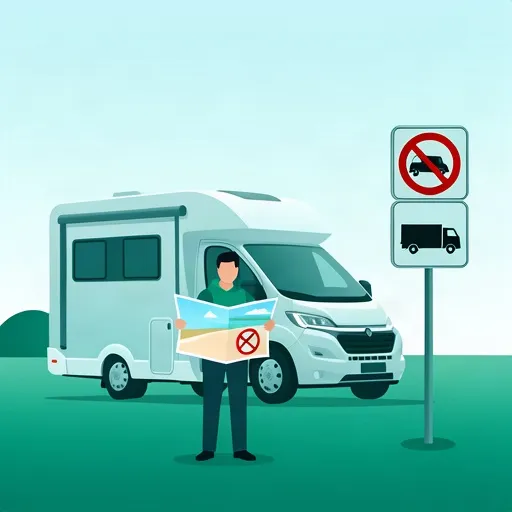
Driving a motorhome in Denmark requires a clear understanding of vehicle weight classifications, as these dictate your license requirements and speed limits on various road types. This guide helps you navigate the complexities of the Danish Road Traffic Act, including rules for designated camping areas and local parking restrictions, ensuring you stay compliant while on the road. Whether you are a tourist or a learner driver, grasping these regulations is essential for safe navigation and avoiding common penalties.
Updated on Sep 22, 2026
Understanding parking regulations is a fundamental part of the Danish driving theory curriculum, as these rules are frequently tested to ensure road safety. This guide clarifies the legal obligations for drivers, including proper P-skive operation and the strict prohibitions against parking on cycle tracks or too close to pedestrian crossings. By learning these concepts, you will be prepared to answer exam questions accurately and navigate Danish city streets safely.
Updated on Aug 13, 2026
Learning where and how to park is a core requirement for any driver in Denmark. This guide helps you navigate the complexities of municipal parking zones, the correct operation of your parking disc, and the critical rules of the Færdselsloven that examiners often test. By mastering these regulations, you ensure you can park safely, legally, and without risking unnecessary traffic penalties.
Updated on Aug 13, 2026
This article provides essential information on parking regulations for electric vehicles (elbiler) and plug-in hybrids in Denmark. You will learn to differentiate between general parking areas and specific zones designated for EVs and hybrids, understanding that official signage, not just the presence of a charger, dictates usage. Mastering these rules is vital for the Danish driving theory exam and for avoiding potential parking penalties.
Updated on Jun 20, 2026

Learn the essential rights and responsibilities that come with using the Danish blue disabled parking badge (EU handicapparkeringskort). This guide covers how to legally utilize designated disabled parking spots and the specific advantages the badge provides in time-restricted parking areas, crucial knowledge for any driver in Denmark.
Updated on Jun 20, 2026

Navigate Denmark's complex parking landscape with confidence by understanding the nuances of 'Standsning forbudt' versus 'Parkering forbudt' and the significance of yellow kerb markings (gul kantlinje) and blue zone signs (zone P-tavler). This guide prepares you for real-world driving and helps you avoid common pitfalls tested in the Danish driving theory exam.
Updated on Jun 20, 2026
Navigate Denmark's specific parking and stopping laws with confidence. This guide explains the vital 10-meter rule around junctions and pedestrian crossings, rules for bus stops, and the distinction between 'no stopping' and 'no parking' zones, all based on Færdselsloven. Understanding these details is key for your Danish driving theory test and safe road behaviour.
Updated on Jun 20, 2026
Discover other categories connected to Danish Parking & Standsning Rules. These sections help you explore additional topics, expand your understanding of driving theory in Danish, and build a more complete picture of the rules and situations tested during the exam.
Find answers to common questions learners ask about Danish Parking & Standsning Rules. This section helps clarify difficult concepts, highlight critical exam information, and support your preparation for the Danish driving theory exam in Denmark.
In Denmark, 'standsning' refers to stopping briefly to let passengers in/out or for immediate loading/unloading, not exceeding the time needed. 'Parkering' is any stopping beyond that, including leaving the vehicle unattended. Rules differ for each, especially regarding where they are forbidden.
The P-skive is used in many free, time-limited parking zones. You set the disc to the time you arrived and place it visibly on your dashboard. Exceeding the stated time limit or not displaying a correctly set P-skive can result in a parking fine ('parkeringsafgift').
Parking is generally forbidden within 10 meters of intersections, at pedestrian crossings ('fodgængerfelt'), on cycle paths ('cykelsti'), in front of fire hydrants, at bus stops, and on sections of the kerb marked with yellow lines. Always look for signs and markings.
Parking fines in Denmark, issued by both municipal authorities and private operators, can range significantly, typically from DKK 510 to DKK 1020 or more, depending on the infraction and location. Incorrect parking can lead to substantial costs and potentially vehicle towing ('bortfjernelse').
Yes, parking in designated spots for electric vehicle charging is only permitted for EVs that are actively charging. Once charging is complete, you must move the vehicle to avoid a fine. These rules are becoming increasingly common in urban areas.
Begin your structured preparation for the Danish driving licence exam. Select a topic category from our comprehensive list to access in-depth articles on road rules, priority, signs, and practical driving situations specific to Denmark.
Browse Driving Theory Article Categories