
This unit focuses on the essential pre-operation checks for passenger vehicles, ensuring safety and compliance with Danish standards. You will learn to identify critical safety systems, understand how vehicle dimensions affect driving, and master the procedures for safe door operation and mirror usage. Mastering these checks is vital for your Category D theory exam and for professional, safe passenger transport.
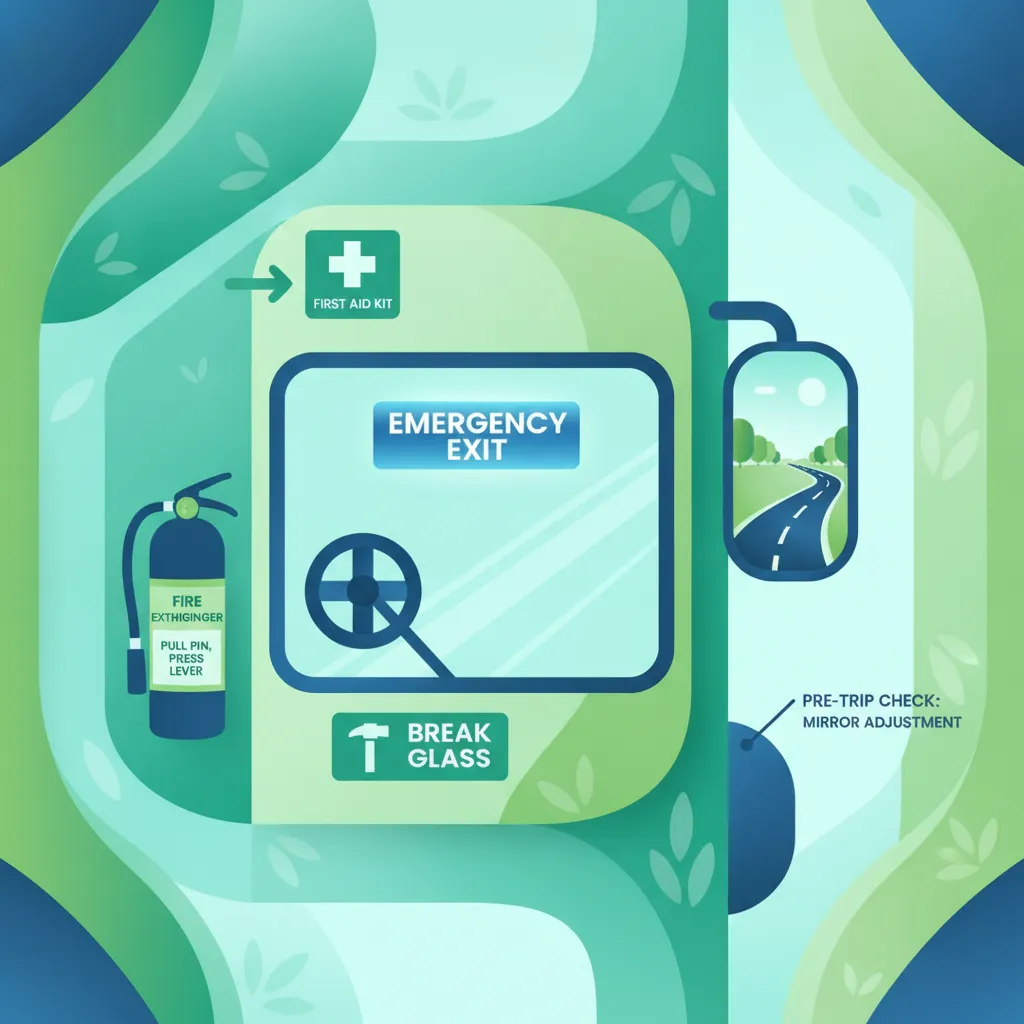
Browse all lessons that make up Passenger Vehicle Checks, Dimensions, Doors, Mirrors and Safety Systems. Each lesson focuses on specific topics, learning objectives, and core concepts, helping you build essential knowledge and follow a clear, structured progression toward your study goals in Denmark.
This lesson outlines the mandatory daily pre-trip inspection for passenger vehicles as required by Danish law. It provides a systematic checklist for examining brakes, lights, tires, mirrors, and emergency equipment to confirm the vehicle's roadworthiness. Following these procedures helps drivers identify and report potential mechanical faults before they can compromise passenger or public safety.
This lesson explains the relationship between a bus's dimensions—length, width, and height—and its maneuverability. It covers key concepts such as turning radius, rear overhang, and swept path, which are critical for navigating turns and tight spaces safely. Learners will also understand how these physical characteristics create significant blind spots that require specific observation techniques to manage.
This lesson focuses on the safe and correct operation of passenger vehicle doors. It covers the different types of door mechanisms and the importance of monitoring the door area to prevent injury during boarding and alighting. The content details Danish regulations regarding door safety systems and the driver's responsibility to ensure doors are fully closed and secured before moving.
This lesson teaches the effective use of mirrors and on-board camera systems for comprehensive spatial awareness. It explains how to correctly adjust all mirrors to minimize blind spots and how to integrate camera views into a regular scanning routine. The content emphasizes the importance of combining mirror checks with direct observation to detect vulnerable road users hidden in blind zones.
Explore high-intent keywords and long-tail search topics learners use when researching Passenger Vehicle Checks, Dimensions, Doors, Mirrors and Safety Systems. These terms reflect how people search for reliable study materials, structured explanations, and unit-level theory preparation support in Denmark.
Find clear answers to the most common questions learners ask about Passenger Vehicle Checks, Dimensions, Doors, Mirrors and Safety Systems. Understand how the unit is organized, what learning goals it supports, and how it contributes to your study progression with structured explanations and practical guidance tailored for learners in Denmark.
Pre-trip checks are critical in Denmark to ensure the vehicle is safe for operation, protecting both passengers and other road users. They help identify potential mechanical issues, faulty safety equipment, or external hazards before they can cause an accident. For professional drivers, these checks are a legal and ethical responsibility.
Larger dimensions mean a wider turning circle and longer stopping distances, requiring careful planning for manoeuvres. They also create larger blind spots, especially to the sides and rear. Understanding these dimensions allows you to anticipate where other vehicles or vulnerable road users might be hidden from view.
Key safety systems include brakes, steering, tyres, lights (headlights, indicators, brake lights), mirrors, windscreen wipers and washers, and any specific passenger-related safety features like emergency exits or door interlocks. For Category D vehicles, these are subject to rigorous checks as per Danish regulations.
Yes, Danish regulations mandate safe door operation. This includes ensuring no passengers are at risk of falling out or being injured during opening or closing, and ensuring doors are properly secured before moving off. Lesson 2.3 covers these specific procedures.
Effective blind spot management involves using all your mirrors and any available cameras regularly, adjusting them correctly before you start driving. You must also develop a habit of physically checking blind spots by turning your head before changing lanes or making turns, especially in busy Danish traffic environments.
All included lessons
Lessons in Passenger Vehicle Checks, Dimensions, Doors, Mirrors and Safety Systems
See who benefits most from studying Passenger Vehicle Checks, Dimensions, Doors, Mirrors and Safety Systems. This overview explains how the unit supports different learning needs, what level of knowledge is helpful before starting, and how it fits into the overall study path in Denmark.
This unit is crucial for all candidates preparing for the Danish Category D driving licence theory examination, including those seeking D1, D1E, D, or DE licences. It is particularly beneficial for new drivers of larger passenger vehicles who need to understand their pre-trip responsibilities and how vehicle size impacts road behaviour.

Begin your official Danish driving licence preparation today by exploring our comprehensive curriculum. Choose a structured course that suits your learning style and progress confidently through all traffic rules, road signs, and practical scenarios required for your exam.
Browse Driving Theory CoursesExplore all units and lessons included in this driving theory course.
Begin your official Danish driving licence preparation today by exploring our comprehensive curriculum. Choose a structured course that suits your learning style and progress confidently through all traffic rules, road signs, and practical scenarios required for your exam.
Browse Driving Theory Courses