
Navigate Danish roads confidently by mastering their visual language. This unit covers all essential road signs, markings, traffic signals, and the crucial priority rules that govern traffic flow, including the important Danish concepts of 'ubetinget vigepligt' and 'højre vigepligt'. Understanding these elements is fundamental for safe stor knallert operation and passing your theory exam.
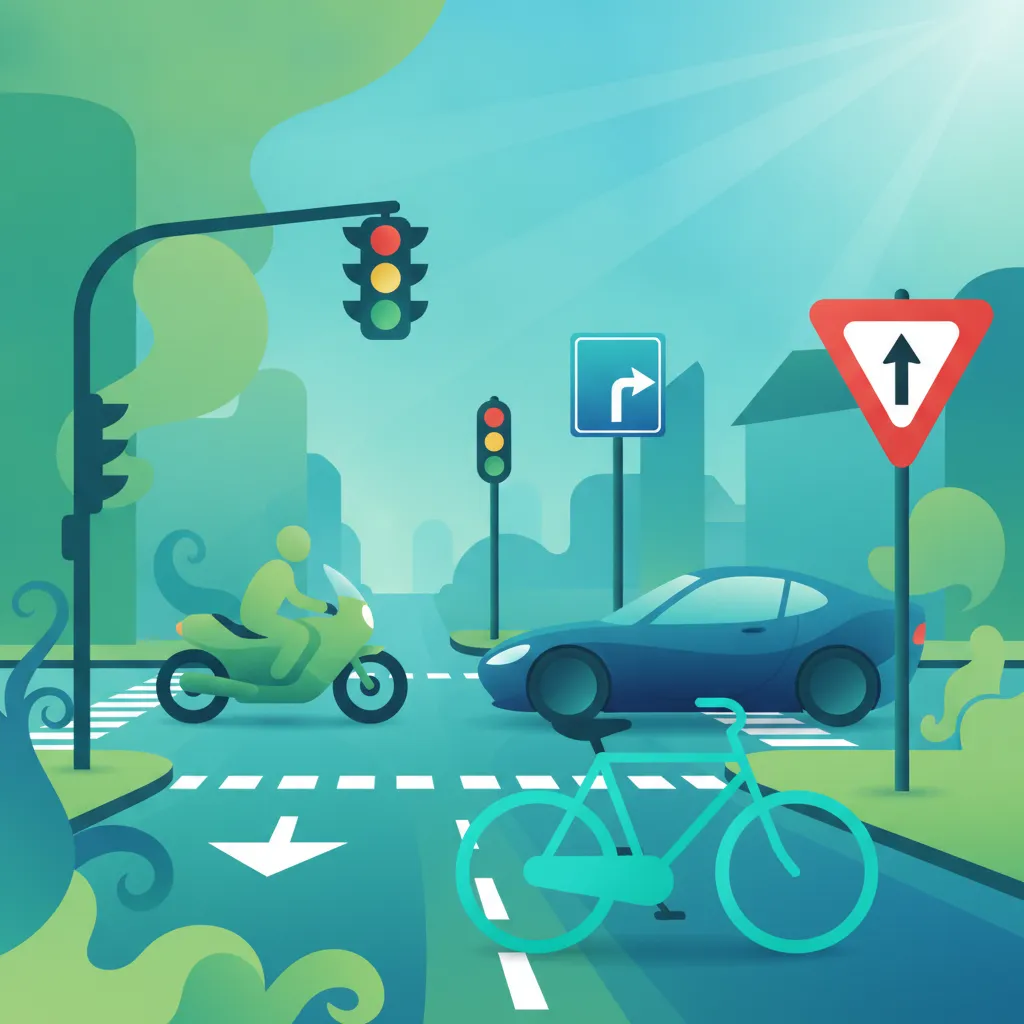
Browse all lessons that make up Danish Signs, Markings, Signals and Priority Rules. Each lesson focuses on specific topics, learning objectives, and core concepts, helping you build essential knowledge and follow a clear, structured progression toward your study goals in Denmark.
This lesson introduces the primary categories of Danish road signs and their legal implications. It covers regulatory signs that dictate mandatory actions or prohibitions, and warning signs that indicate upcoming hazards. Correct interpretation of these signs is fundamental for lawful and safe riding on Danish roads.
This lesson focuses on interpreting the various markings painted on Danish road surfaces. It explains the rules associated with solid and broken lane lines, directional arrows, and special-purpose lanes for buses and cyclists. Understanding these markings is crucial for maintaining correct lane discipline and safely navigating complex road layouts.
This lesson details the function and meaning of traffic light signals in Denmark. It covers the standard red, amber, and green sequences, as well as special signals like flashing amber lights and green arrows for turning. The content also explains signals specific to cyclists and pedestrians that moped riders must observe at intersections.
This lesson provides an in-depth explanation of Denmark's priority rules, known as 'vigepligt.' It differentiates between unconditional priority ('ubetinget vigepligt'), often indicated by signs, and the default right-hand priority rule ('højre vigepligt'). Applying these rules correctly is essential for preventing collisions at junctions without traffic signals.
Explore high-intent keywords and long-tail search topics learners use when researching Danish Signs, Markings, Signals and Priority Rules. These terms reflect how people search for reliable study materials, structured explanations, and unit-level theory preparation support in Denmark.
Find clear answers to the most common questions learners ask about Danish Signs, Markings, Signals and Priority Rules. Understand how the unit is organized, what learning goals it supports, and how it contributes to your study progression with structured explanations and practical guidance tailored for learners in Denmark.
'Ubetinget vigepligt' means you must always give way to traffic from the right and left, unless otherwise indicated by signs. 'Højre vigepligt', or the right-hand rule, specifically dictates that you must yield to vehicles approaching from your right when there are no signs or signals present. Both are critical for navigating Danish intersections safely.
Yes, Denmark uses specific signs to indicate priority rules. Signs like 'VIGENDE VEJ' (Yield) and 'STOP' clearly signal that you must give way. Conversely, a triangular sign with a white border and blue center indicates that traffic from other directions must yield to you. Understanding these signs is key to applying the correct priority.
Danish traffic lights follow standard international conventions. Red means stop, yellow means prepare to stop, and green means proceed if safe. For stor knallert riders, it's crucial to note that specific lights for bicycles or motorcycles are rare; you generally follow the main traffic signals. Always ensure the intersection is clear before proceeding on green.
Road markings provide vital information about lane usage, direction, and potential hazards. Solid white lines usually indicate lane boundaries or the edge of the carriageway, while dashed lines often permit lane changes. Special markings like diamond shapes can indicate a priority lane or a dedicated cycle path, requiring specific attention.
Yes, a thorough understanding of Danish road signs is essential for the stor knallert theory test. The exam will cover various categories, including mandatory signs, warning signs, information signs, and signs indicating priority rules. Knowing their meaning and how to react to them is fundamental.
Road markings are extremely important for stor knallert riders. They help define lanes, indicate safe passing zones, warn of hazards, and show designated areas for other road users like cyclists. Correctly interpreting markings helps you maintain a safe position on the road and anticipate potential conflicts.
All included lessons
Lessons in Danish Signs, Markings, Signals and Priority Rules
See who benefits most from studying Danish Signs, Markings, Signals and Priority Rules. This overview explains how the unit supports different learning needs, what level of knowledge is helpful before starting, and how it fits into the overall study path in Denmark.
This unit is designed for all individuals preparing for the Danish Category AM (stor knallert) theory test. It is particularly beneficial for new riders who need a thorough grounding in Denmark's traffic control systems and priority regulations, ensuring they understand the essential visual information on the road.

Begin your official Danish driving licence preparation today by exploring our comprehensive curriculum. Choose a structured course that suits your learning style and progress confidently through all traffic rules, road signs, and practical scenarios required for your exam.
Browse Driving Theory CoursesExplore all units and lessons included in this driving theory course.
Begin your official Danish driving licence preparation today by exploring our comprehensive curriculum. Choose a structured course that suits your learning style and progress confidently through all traffic rules, road signs, and practical scenarios required for your exam.
Browse Driving Theory Courses