
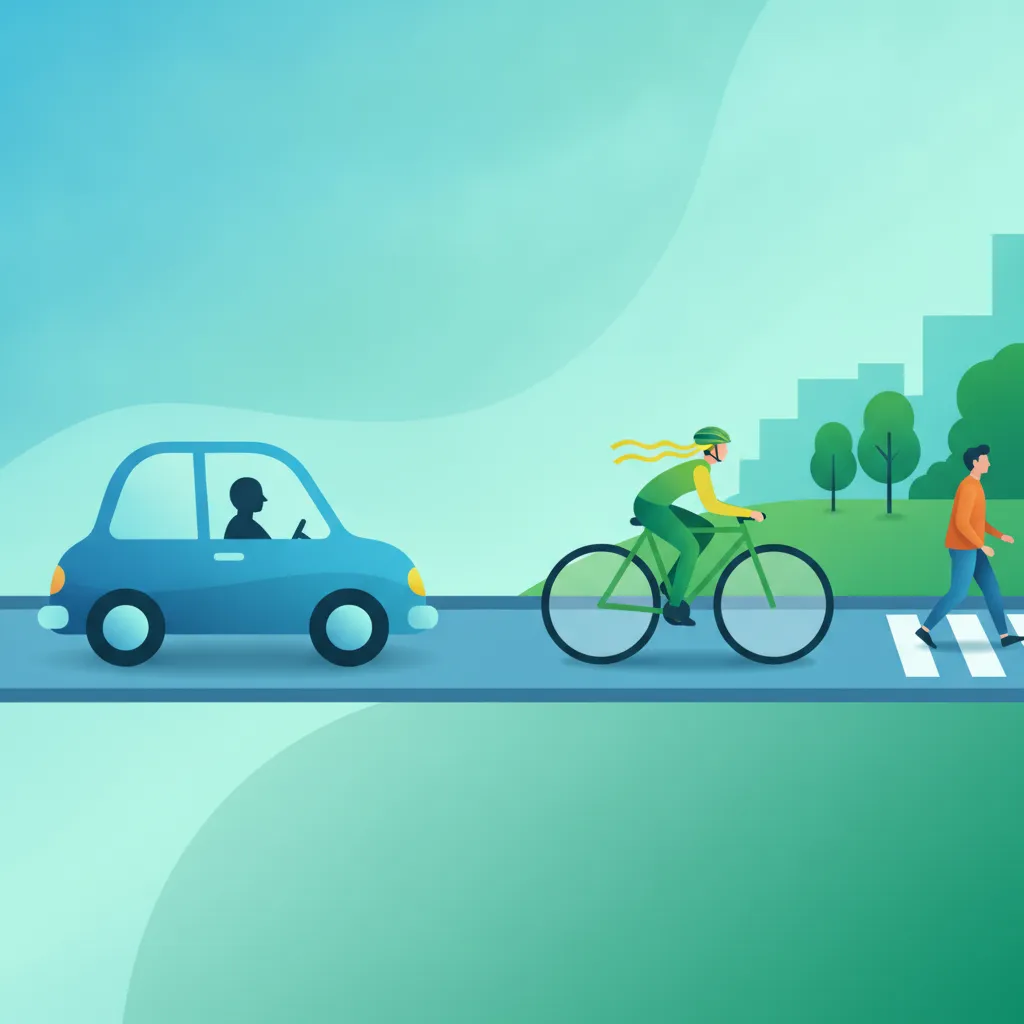
Danish roads are used by many different groups, each with unique characteristics and vulnerabilities. As a driver, you must constantly adapt your behavior to ensure the safety of everyone, especially pedestrians, cyclists, and motorcyclists. This section explains how to interact responsibly and predictably with all road users, from the most vulnerable to the largest vehicles, as required by Danish traffic law.
Theory topic content overview
Read the full theory topic guide for Safe Road Sharing with structured, easy-to-scan content built for learners in Denmark. This detailed section explains the exact rule, meaning, traffic context, comparison points, and exam logic behind this Danish driving theory topic so you can study faster, understand the concept more clearly, and avoid common interpretation mistakes on the theory test.
Sharing the road safely means actively adjusting your driving behavior to account for the unique characteristics and potential vulnerabilities of every other road user. In Denmark, where a diverse mix of traffic, from numerous cyclists to large commercial vehicles, coexists, this adaptive approach is fundamental for preventing accidents and ensuring a smooth flow of traffic. It's about proactive awareness, predictable actions, and mutual respect, which are cornerstones of Danish traffic culture and essential for passing your driving theory test.
The safety of everyone on the road depends on drivers recognizing and responding to the varied needs and limitations of others.
bløde trafikanter (soft road users) in Danish contexts, have no protective shell. Even a minor collision can have severe consequences for them.trafiksamarbejde) and courtesy are highly valued in Denmark. Expecting others to always yield or react to your actions is a dangerous mindset.Effective road sharing requires specific considerations for each group:
Pedestrians are the most vulnerable.
fodgængerfelter). Even at unmarked crossings, you must give way if a pedestrian intends to cross or is already crossing.Denmark has a high number of cyclists, and integrating safely with them is a major part of driving here.
cykelstier). When turning right, you must check for cyclists coming straight ahead or turning right alongside you. Always yield to cyclists who are continuing straight when you are turning.døde vinkler). Always perform a thorough head check (lifesaver) before turning, changing lanes, or opening your car door.Motorcyclists have a smaller profile and can be less visible, leading to unique hazards.
These vehicles have significant limitations that drivers must respect.
døde vinkler) on all sides, especially along their length and directly behind them. If you can't see their mirrors, they likely can't see you. Avoid lingering in these zones.Svajerum): Large vehicles need considerable svajerum (swept path) to maneuver, particularly when turning. They may need to swing wide to the left before making a right turn, or use multiple lanes for a left turn. Never try to squeeze alongside them.Learners often struggle with specific scenarios involving diverse road users:
svajerum).Safe road sharing in Denmark boils down to proactive awareness and a mindset of cooperation. Always assume that other road users, especially bløde trafikanter, might not see you, might make unexpected movements, or might be affected by external factors. Give generous space, thoroughly check your blind spots, anticipate their actions, and adapt your speed and position. This not only keeps everyone safe but also demonstrates the responsible driving behavior expected in Danish traffic and on your driving theory exam.
Safe road sharing in Denmark requires drivers to actively adapt their behavior for pedestrians, cyclists, motorcyclists, and large vehicles, each with distinct vulnerabilities and requirements. Vulnerable road users (bløde trafikanter) like cyclists and pedestrians lack protection, demand extra space, and require thorough blind spot checks before any lateral movement. Large vehicles need significant swept path space (svajerum) for turns and longer braking distances, so drivers should avoid lingering in their blind spots and never attempt to squeeze alongside them. The cornerstone of Danish traffic culture is cooperation and proactive anticipation—assuming others may not see you and giving generous space ensures both road safety and success on the Danish driving theory exam.
A short set of high-value points that capture the most important ideas from this theory explanation.
In Denmark, 'bløde trafikanter' (soft road users) like pedestrians and cyclists have no protective shell, making collisions especially dangerous for them
When passing cyclists, maintain a minimum of 1.5 meters distance to protect them from air turbulence and road hazards
Large vehicles (buses and trucks) require significant 'svajerum' (swept path space) when turning and cannot squeeze into tight spaces
Blind spots are critical hazards for motorcycles and cyclists; if you cannot see a truck's mirrors, the driver cannot see you
Anticipating unpredictable behavior from vulnerable road users is essential, especially near schools, crossings, and cycle lanes
Cyclists can quickly enter blind spots before you turn right or change lanes—always perform a head check (lifesaver)
Pedestrians have right of way at zebra crossings (fodgængerfelter) and even unmarked crossings if they intend to cross
Large vehicles need more braking distance, especially in wet conditions, so maintain a generous following distance
Motorcyclists may be difficult to judge in terms of speed and distance due to their small profile
The term 'svajerum' refers to the wide turning path large vehicles need; never try to squeeze alongside them during turns
Failing to leave adequate space when passing cyclists, which can push them into hazards or cause them to fall
Neglecting blind spot checks for motorcyclists and cyclists before turning, particularly at intersections
Attempting to pass a truck that is signaling to turn, not accounting for its wide turning path
Assuming pedestrians will always wait or follow crossing rules, especially children who may run unexpectedly
Not adjusting driving for weather conditions that affect other road users' visibility and maneuverability
Start with a short, direct summary of Safe Road Sharing before reading the full explanation below.
Sharing the road safely means actively adapting your driving behavior to account for the unique characteristics and vulnerabilities of other road users, such as pedestrians, cyclists, and motorcyclists. In Denmark, this includes providing ample space when passing cyclists, checking blind spots thoroughly for motorcyclists, and being aware of the larger maneuver space required by buses and trucks. Prioritizing cooperation and predictable actions ensures everyone's safety and adherence to Danish traffic regulations.
Review the most important terms, rule signals, and traffic concepts linked to Safe Road Sharing.
Explore related theory topic pages connected to Safe Road Sharing and continue with the next useful rule explanation.
See the common search queries learners use when trying to understand Safe Road Sharing in Denmark.

Dive into detailed explanations of Danish traffic legislation, road signs, and driving conventions. Solidify your understanding of key theory topics and prepare confidently for all sections of your official Danish driving license theory exam.
Explore Driving Theory TopicsTheory topic content overview
A short set of high-value points that capture the most important ideas from this theory explanation.
In Denmark, 'bløde trafikanter' (soft road users) like pedestrians and cyclists have no protective shell, making collisions especially dangerous for them
When passing cyclists, maintain a minimum of 1.5 meters distance to protect them from air turbulence and road hazards
Large vehicles (buses and trucks) require significant 'svajerum' (swept path space) when turning and cannot squeeze into tight spaces
Blind spots are critical hazards for motorcycles and cyclists; if you cannot see a truck's mirrors, the driver cannot see you
Anticipating unpredictable behavior from vulnerable road users is essential, especially near schools, crossings, and cycle lanes
Cyclists can quickly enter blind spots before you turn right or change lanes—always perform a head check (lifesaver)
Pedestrians have right of way at zebra crossings (fodgængerfelter) and even unmarked crossings if they intend to cross
Large vehicles need more braking distance, especially in wet conditions, so maintain a generous following distance
Motorcyclists may be difficult to judge in terms of speed and distance due to their small profile
The term 'svajerum' refers to the wide turning path large vehicles need; never try to squeeze alongside them during turns
Failing to leave adequate space when passing cyclists, which can push them into hazards or cause them to fall
Neglecting blind spot checks for motorcyclists and cyclists before turning, particularly at intersections
Attempting to pass a truck that is signaling to turn, not accounting for its wide turning path
Assuming pedestrians will always wait or follow crossing rules, especially children who may run unexpectedly
Not adjusting driving for weather conditions that affect other road users' visibility and maneuverability
Start with a short, direct summary of Safe Road Sharing before reading the full explanation below.
Sharing the road safely means actively adapting your driving behavior to account for the unique characteristics and vulnerabilities of other road users, such as pedestrians, cyclists, and motorcyclists. In Denmark, this includes providing ample space when passing cyclists, checking blind spots thoroughly for motorcyclists, and being aware of the larger maneuver space required by buses and trucks. Prioritizing cooperation and predictable actions ensures everyone's safety and adherence to Danish traffic regulations.
Review the most important terms, rule signals, and traffic concepts linked to Safe Road Sharing.
Explore related theory topic pages connected to Safe Road Sharing and continue with the next useful rule explanation.
See the common search queries learners use when trying to understand Safe Road Sharing in Denmark.
Dive into detailed explanations of Danish traffic legislation, road signs, and driving conventions. Solidify your understanding of key theory topics and prepare confidently for all sections of your official Danish driving license theory exam.
Explore Driving Theory TopicsUse this exam-focused revision tip to understand how Safe Road Sharing is likely to appear in theory questions for learners in Denmark. This section helps you identify the most testable part of the rule, avoid common traps, and remember the concept more effectively during Danish driving theory exam preparation.
Remember that the Danish driving theory exam often tests your ability to identify hazardous situations involving vulnerable road users. Pay close attention to questions about blind spots, safe passing distances for cyclists, and the extra space needed by trucks and buses when turning or changing lanes. Always prioritize the safety of those outside your vehicle to score well.
Read direct answers to the most common learner questions about Safe Road Sharing in Denmark. This FAQ focuses on rule confusion, practical meaning, comparison with similar concepts, and the exact uncertainties that appear most often in Danish driving theory revision and exam preparation.
It refers to a driver's responsibility to safely interact with all other road users, including pedestrians, cyclists, motorcyclists, and larger vehicles, by adapting their behavior and maintaining awareness according to Danish traffic laws.
Cyclists are vulnerable because they are unprotected and less visible than vehicles, making them highly susceptible to serious injury in a collision. Drivers in Denmark must provide extra space and caution when interacting with them.
You must always provide a safe and adequate distance, generally at least 1.5 meters when passing at speed, and ensure there's no oncoming traffic or other hazards that could endanger the cyclist. This is a crucial rule in Danish traffic.
Large vehicles have significant blind spots and require more space for turning and maneuvering. Avoid lingering in their blind spots and anticipate their wider turning circles, especially at intersections or roundabouts in Denmark.
Motorcyclists are smaller and can be harder to spot. Always check your mirrors and blind spots twice before changing lanes or turning, and assume they may be in a position you don't immediately see. Their agility means they can appear quickly.
Always yield to pedestrians when they have priority, such as at marked crosswalks. Even when they don't have priority, drivers must exercise extreme caution, especially near schools or residential areas, as they are highly vulnerable.
Yes, you must always drive at a speed appropriate to the conditions and the presence of other road users. This means reducing speed significantly when passing vulnerable users or in areas with high pedestrian/cyclist traffic, adhering to the general duty of care.
Use our powerful search tool to pinpoint specific Danish driving theory topics, road signs, or traffic situations you need to review. Start exploring relevant practice sets now to reinforce your knowledge and build confidence for your upcoming driving licence exam.