
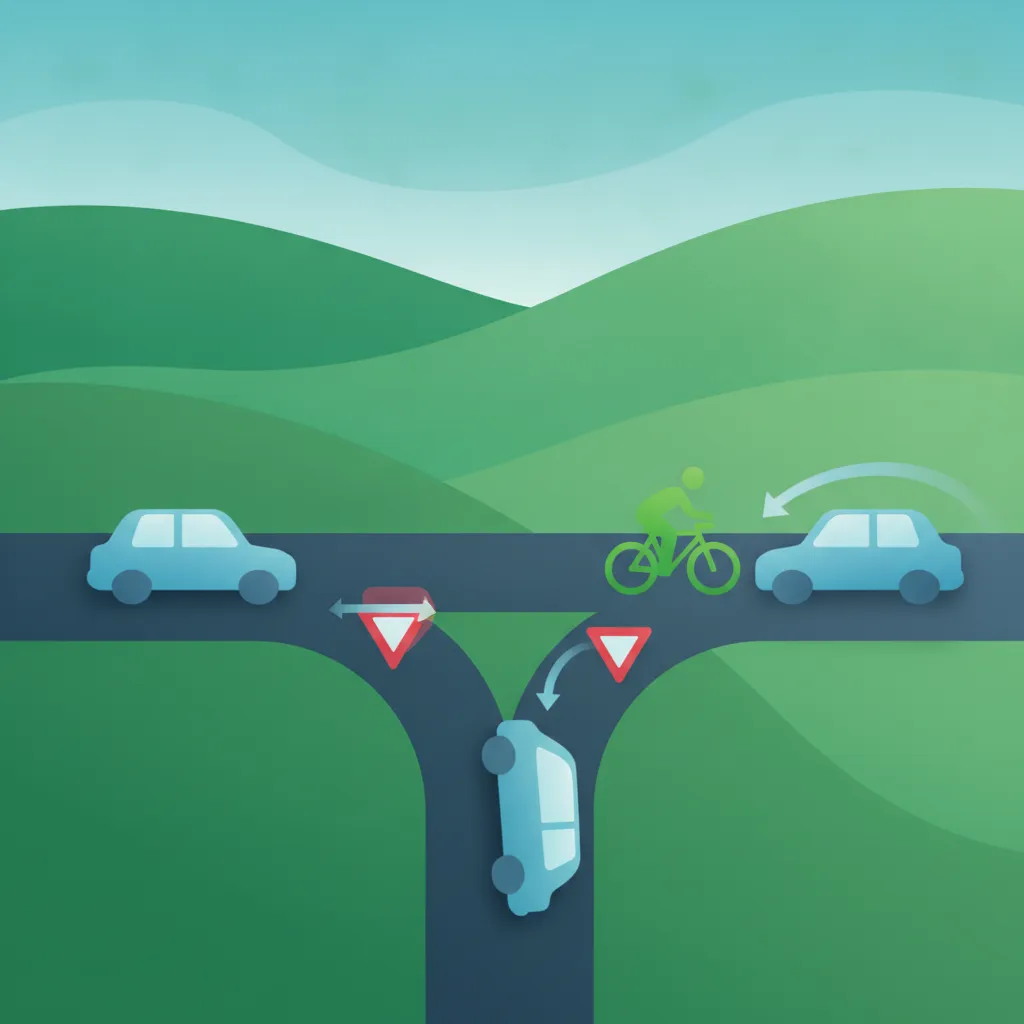
Right of way rules are the foundation for safe and orderly traffic flow. In Denmark, these rules dictate who has priority to proceed first when paths intersect or conflict. This page explains the hierarchy of factors—from traffic lights and signs to general rules—that determine who must yield and who can go, clarifying common confusions at intersections and in other traffic situations.
Theory topic content overview
Read the full theory topic guide for Right of Way Rules with structured, easy-to-scan content built for learners in Denmark. This detailed section explains the exact rule, meaning, traffic context, comparison points, and exam logic behind this Danish driving theory topic so you can study faster, understand the concept more clearly, and avoid common interpretation mistakes on the theory test.
Right of way, known in Danish as vigepligt (literally "duty to yield"), is a fundamental concept in Danish traffic law. It dictates which road user has priority to proceed first when their paths intersect or conflict. Mastering vigepligt rules is crucial for safe driving, preventing collisions, and successfully navigating the Danish driving theory test. Without clear rules on who goes first, traffic would quickly descend into chaos, leading to accidents and congestion.
This topic focuses on providing Danish learners with a structured understanding of how priority is determined, allowing you to make safe and correct decisions in any traffic situation, from complex intersections to pedestrian crossings.
Vigepligt is DeterminedIn Danish traffic, determining who has vigepligt (the duty to yield) follows a clear, established hierarchy. Drivers must assess the situation in this specific order to correctly identify who has priority:
Vigepligt: If neither traffic lights nor specific signs/markings are present, general vigepligt rules apply. The most prominent of these in Denmark is the 'Right Before Left' rule (højre vigepligt).Understanding this hierarchy is key to passing your Danish driving theory exam and driving safely on Danish roads.
Traffic lights are the highest authority in determining priority. A steady green light means you have priority to proceed, provided the way is clear. A steady red light means you must stop before the stop line or intersection.
vigepligt rules applicable to that intersection. Treat it as an uncontrolled intersection where you must apply højre vigepligt unless signs dictate otherwise.When traffic lights are absent or not active, priority signs and road markings become paramount. Recognizing these Danish signs immediately tells you who has priority.
Vigepligtstavle): A downward-pointing triangle with a red border and white centre (B 11). This sign means you must yield to all traffic on the intersecting road before proceeding. You do not have to stop if the way is clear, but you must be prepared to.Stopstavle): An octagonal sign with a white 'STOP' on a red background (B 13). This sign requires you to come to a complete stop before the stop line, or if no line, at the intersection's edge, and then yield to all traffic on the intersecting road. Even if the way appears clear, you must make a full stop.Hovedvejstavle): A yellow diamond-shaped sign with a white border (B 15). This sign indicates that you are on a priority road (hovedvej). Traffic approaching from side roads without priority signs must yield to you. This sign usually appears before intersections and may be repeated after them.Ophør af hovedvej): The Hovedvejstavle with a black diagonal stripe through it. This indicates that the priority road status ends, and general priority rules (like højre vigepligt) may apply again at subsequent intersections unless other signs are present.hajtænder): These white triangular markings painted on the road indicate a give way requirement. They are often found in conjunction with a Vigepligtstavle or where a hovedvej meets a minor road. They confirm you must yield to traffic on the intersecting road.Stopstavle, you must stop before this line.Vigepligt Rules (When No Signs or Lights Apply)When no traffic lights, signs, or explicit markings dictate priority, general rules apply. These are critical for Danish learners, as they are common at many residential and rural intersections.
Højre Vigepligt)This is the most important general vigepligt rule in Denmark. At intersections without signs or signals, you must yield to all traffic approaching from your right.
højre vigepligt unless you see a sign or signal indicating otherwise.When making a left turn (venstresving), you must yield to oncoming traffic (modkørende trafik) that is going straight or turning right. This is a common point of confusion and a frequent theory test question in Denmark.
You must always yield when:
nødspor) or a lay-by (rasteplads).fortov) or cycle path (cykelsti) to enter a road.In Denmark, buses (busser) that signal their intention to pull out from a bus stop (busholdeplads) into the lane of traffic generally have priority, especially in urban areas where the speed limit is 50 km/h or less. Be prepared to yield to them.
Danish traffic law places a strong emphasis on protecting vulnerable road users (bløde trafikanter), which include pedestrians, cyclists, and moped riders.
Fodgængere):
fodgængerfelt): You must yield to pedestrians who are on or about to step onto a zebra crossing. Always be prepared to stop.Cykellister):
Rundkørsler)In Danish roundabouts, the general rule is to yield to traffic already in the roundabout. When approaching a roundabout, look for the Vigepligtstavle (Give Way sign) and hajtænder (shark's teeth) markings, which confirm you must yield to traffic circulating within the roundabout. Once inside, you generally have priority over traffic entering behind you.
When merging onto a motorway (motorvej) or another road, you must adjust your speed and be prepared to yield to traffic already on the main road. The driver on the main road has priority. Similarly, when lanes merge, you are expected to merge safely, often using an "alternating" or "zip" method, but the primary duty is to ensure safety and not force your way in.
Udrykningskøretøjer)Emergency vehicles (police, ambulance, fire service) displaying blue flashing lights and/or sirens always have absolute priority. You must yield to them immediately and safely, even if it means momentarily breaking other traffic rules (e.g., pulling over into a cycle lane or onto a pavement) as long as it's safe to do so.
Many learners struggle with vigepligt rules, leading to common errors in the theory test and on the road:
Højre Vigepligt: Assuming you have priority because you are going straight, even at unmarked intersections. Always remember to check for traffic from your right when no signs or lights are present.Hovedvej Status: Assuming that being on a hovedvej grants absolute priority in all circumstances. While it usually means others yield to you, you still have responsibilities, especially with vulnerable road users, and the Hovedvej status can end.Stopstavle) and merely being prepared to yield (at a Vigepligtstavle).To master vigepligt in Danish traffic, remember these key principles:
højre vigepligt is paramount in the absence of others).By applying these principles consistently, you'll build the confidence and knowledge needed to navigate Danish roads safely and successfully pass your driving theory exam.
Right of way in Danish traffic is governed by a clear hierarchy: traffic lights take precedence, followed by traffic signs and road markings, and finally general rules when nothing else is present. The most important general rule is højre vigepligt, requiring drivers at unmarked intersections to yield to traffic from their right. When turning left, you must always yield to oncoming vehicles going straight or turning right, regardless of traffic light signals. Danish traffic law also places particular emphasis on protecting vulnerable road users—pedestrians at zebra crossings and cyclists on designated paths have priority. Understanding these rules and the specific Danish terminology is essential for both safe driving and passing the Danish theory test.
A short set of high-value points that capture the most important ideas from this theory explanation.
In Danish traffic, priority follows a strict hierarchy: traffic lights override everything, then traffic signs and road markings, then general rules like højre vigepligt.
At unmarked intersections without signs or lights, you must always yield to traffic approaching from your right (højre vigepligt), regardless of which direction you are travelling.
When turning left, you must yield to all oncoming traffic going straight or turning right, even with a green light.
Danish law places strong emphasis on protecting vulnerable road users; you must yield to pedestrians at zebra crossings and cyclists at cycle path crossings.
Emergency vehicles with blue lights and/or sirens always have absolute priority and you must yield safely, even if it requires temporarily using other lanes or shoulders.
Give Way (Vigepligtstavle) means yield but not necessarily stop; Stop (Stopstavle) always requires a complete stop before proceeding.
A flashing yellow light means the traffic light is out of order—treat the intersection as uncontrolled and apply højre vigepligt.
Being on a hovedvej (priority road) means others yield to you, but the status can end with an 'Ophør af hovedvej' sign and does not override other road users' rights.
When merging onto a motorway or any main road, you must yield to traffic already on the main road—the driver already in the lane has priority.
At roundabouts, always yield to traffic already circulating; once inside, you generally have priority over vehicles entering behind you.
Forgetting højre vigepligt and assuming priority when going straight at unmarked intersections—always check right first.
Failing to yield to oncoming traffic when turning left, which is a frequent cause of collisions and a common exam trap.
Misinterpreting hovedvej status as granting absolute priority in all situations; remember it can end and does not override all other rules.
Assuming other drivers will yield to you even when you technically have right of way—always be prepared for mistakes.
Confusing the Give Way sign (yield without stopping) with the Stop sign (full stop required) when answering exam questions.
Start with a short, direct summary of Right of Way Rules before reading the full explanation below.
Right of way refers to the official Danish traffic rules that establish which road user has priority to proceed in situations where paths cross or merge. Priority is primarily determined by traffic lights, then by traffic signs (like 'give way' or 'stop'), and finally by general rules, such as yielding to traffic from the right at unmarked intersections. Understanding these rules is vital for anticipating other road users' actions and preventing accidents.
Review the most important terms, rule signals, and traffic concepts linked to Right of Way Rules.
Explore related theory topic pages connected to Right of Way Rules and continue with the next useful rule explanation.
See the common search queries learners use when trying to understand Right of Way Rules in Denmark.

Dive into detailed explanations of Danish traffic legislation, road signs, and driving conventions. Solidify your understanding of key theory topics and prepare confidently for all sections of your official Danish driving license theory exam.
Explore Driving Theory TopicsTheory topic content overview
A short set of high-value points that capture the most important ideas from this theory explanation.
In Danish traffic, priority follows a strict hierarchy: traffic lights override everything, then traffic signs and road markings, then general rules like højre vigepligt.
At unmarked intersections without signs or lights, you must always yield to traffic approaching from your right (højre vigepligt), regardless of which direction you are travelling.
When turning left, you must yield to all oncoming traffic going straight or turning right, even with a green light.
Danish law places strong emphasis on protecting vulnerable road users; you must yield to pedestrians at zebra crossings and cyclists at cycle path crossings.
Emergency vehicles with blue lights and/or sirens always have absolute priority and you must yield safely, even if it requires temporarily using other lanes or shoulders.
Give Way (Vigepligtstavle) means yield but not necessarily stop; Stop (Stopstavle) always requires a complete stop before proceeding.
A flashing yellow light means the traffic light is out of order—treat the intersection as uncontrolled and apply højre vigepligt.
Being on a hovedvej (priority road) means others yield to you, but the status can end with an 'Ophør af hovedvej' sign and does not override other road users' rights.
When merging onto a motorway or any main road, you must yield to traffic already on the main road—the driver already in the lane has priority.
At roundabouts, always yield to traffic already circulating; once inside, you generally have priority over vehicles entering behind you.
Forgetting højre vigepligt and assuming priority when going straight at unmarked intersections—always check right first.
Failing to yield to oncoming traffic when turning left, which is a frequent cause of collisions and a common exam trap.
Misinterpreting hovedvej status as granting absolute priority in all situations; remember it can end and does not override all other rules.
Assuming other drivers will yield to you even when you technically have right of way—always be prepared for mistakes.
Confusing the Give Way sign (yield without stopping) with the Stop sign (full stop required) when answering exam questions.
Start with a short, direct summary of Right of Way Rules before reading the full explanation below.
Right of way refers to the official Danish traffic rules that establish which road user has priority to proceed in situations where paths cross or merge. Priority is primarily determined by traffic lights, then by traffic signs (like 'give way' or 'stop'), and finally by general rules, such as yielding to traffic from the right at unmarked intersections. Understanding these rules is vital for anticipating other road users' actions and preventing accidents.
Review the most important terms, rule signals, and traffic concepts linked to Right of Way Rules.
Explore related theory topic pages connected to Right of Way Rules and continue with the next useful rule explanation.
See the common search queries learners use when trying to understand Right of Way Rules in Denmark.
Dive into detailed explanations of Danish traffic legislation, road signs, and driving conventions. Solidify your understanding of key theory topics and prepare confidently for all sections of your official Danish driving license theory exam.
Explore Driving Theory TopicsUse this exam-focused revision tip to understand how Right of Way Rules is likely to appear in theory questions for learners in Denmark. This section helps you identify the most testable part of the rule, avoid common traps, and remember the concept more effectively during Danish driving theory exam preparation.
In the Danish theory test, pay close attention to the presence of traffic signs and lights in intersection scenarios. If none are present, automatically apply the 'right before left' (højre vigepligt) rule. Also, remember to yield to oncoming traffic when turning left, a common exam trap.
Read direct answers to the most common learner questions about Right of Way Rules in Denmark. This FAQ focuses on rule confusion, practical meaning, comparison with similar concepts, and the exact uncertainties that appear most often in Danish driving theory revision and exam preparation.
In Denmark, 'højre vigepligt' or 'right before left' is the general rule at uncontrolled intersections. It means you must give way to all traffic approaching from your right, unless specific signs or signals indicate otherwise.
Yes, functioning traffic lights take precedence over all other right of way rules, including traffic signs and general priority rules, in Denmark.
Pedestrians who are already on or are about to step onto a designated pedestrian crossing (zebra crossing) generally have priority over vehicles, which must stop to let them pass. However, pedestrians must not create a dangerous situation.
When turning left in Denmark, you must yield to oncoming traffic, including cyclists, that is continuing straight or turning right, even if you technically have right of way over other traffic approaching from your left.
A 'Give Way' (Vigepligt) sign (an inverted triangle) indicates that you must yield to all traffic on the intersecting road before proceeding. This sign overrides the 'right before left' rule.
In Denmark, drivers entering a roundabout must yield to traffic already circulating within the roundabout, unless signs or markings specifically indicate otherwise. Traffic already in the roundabout has priority.
Cyclists generally follow the same priority rules as other vehicles. However, drivers must be especially aware of cyclists, particularly when turning, as cyclists may have priority in certain situations or be less visible.
The hierarchy of priority in Denmark is: 1. Traffic lights 2. Police/traffic officers' signals 3. Traffic signs and road markings 4. General rules (e.g., 'right before left' at uncontrolled intersections).
Use our powerful search tool to pinpoint specific Danish driving theory topics, road signs, or traffic situations you need to review. Start exploring relevant practice sets now to reinforce your knowledge and build confidence for your upcoming driving licence exam.