
This lesson guides you through the systematic pre-ride inspection routine, essential for every motorcyclist in Austria. You will learn to apply the T-CLOCS acronym to identify potential mechanical issues before they become safety hazards, ensuring you are fully prepared for both the motorcycle theory exam and real-world road conditions.

Lesson content overview
Before every ride, regardless of its length or destination, a systematic safety inspection of your motorcycle is paramount. This crucial routine, often remembered by the T-CLOCS mnemonic (Tires, Controls, Lights, Oil, Chassis, Stands), is not just a recommendation but a fundamental practice for rider safety, vehicle longevity, and adherence to Austrian traffic regulations. By performing these checks, riders can identify potential mechanical failures before they lead to hazardous situations on the road, ensuring a confident and secure journey.
This lesson provides an in-depth guide to the T-CLOCS system, detailing each component, its importance, and how to perform the necessary checks. It connects theoretical knowledge to practical application, reinforcing the principles of vehicle roadworthiness as stipulated by Austrian law for categories A, A1, and A2 licence holders.
Regular pre-ride safety checks serve multiple critical purposes. They act as a proactive measure against equipment failure, which can have severe consequences for a rider. From a physical standpoint, ensuring adequate tyre pressure maintains the optimal contact patch with the road, vital for grip and stability. Properly functioning brakes guarantee effective stopping distances, while correct oil levels are crucial for engine lubrication and preventing overheating.
Beyond the immediate safety benefits, these inspections are a legal obligation under Austrian law. Section 61 of the Austrian Road Traffic Act mandates that all motor vehicles must be kept in a roadworthy condition. Neglecting these checks can lead to fines, legal liability in the event of an accident, and potentially severe injuries. Furthermore, consistent inspection and minor adjustments contribute to preventive maintenance, extending the lifespan of your motorcycle and maintaining its performance over time.
Developing a consistent habit of performing T-CLOCS checks before every ride enhances rider confidence and contributes significantly to overall road safety.
The T-CLOCS mnemonic provides an easy-to-remember checklist covering the most critical areas of your motorcycle that require inspection. Each letter stands for a major component or system that needs to be verified for proper function and condition.
The tyres are your motorcycle's only contact with the road. Their condition directly impacts handling, braking, and overall safety. A thorough tyre inspection involves checking both pressure and tread depth.
Tyre pressure refers to the amount of air inside a tyre, typically measured in bar or psi. Correct tyre pressure is vital for maintaining the tyre's intended shape, providing the optimal contact patch (the area of rubber in contact with the road), and ensuring effective grip. Incorrect pressure can lead to poor handling, increased stopping distances, excessive tyre wear, and even blowouts.
Always consult your motorcycle's owner's manual for the manufacturer-specified tyre pressure values. These values often vary between the front and rear tyres and may require adjustment when carrying a passenger or luggage. Check tyre pressure when the tyres are cold, as riding can heat them up and temporarily increase internal pressure.
Locate the manufacturer's recommended tyre pressure in your owner's manual or on a sticker typically found on the swingarm or chain guard.
Ensure tyres are cold (before riding or after significant cooling time).
Use an accurate tyre pressure gauge to check the pressure in both the front and rear tyres.
Adjust pressure as needed, inflating if too low or releasing air if too high, to match the manufacturer's specifications.
The tread depth is the depth of the grooved pattern on your tyre. These grooves are essential for dispersing water from beneath the tyre, preventing aquaplaning in wet conditions, and providing grip. Section 70 of the Austrian Road Traffic Act mandates a minimum tread depth of 1.6 mm for motorcycles. Riding with tyres below this legal limit is dangerous and can result in fines and legal penalties.
Inspect the tread across the entire surface of the tyre for signs of uneven wear, which could indicate suspension or alignment issues. Look for embedded foreign objects like nails or glass, as well as any cuts, cracks, or bulges in the tyre sidewall.
Do not rely solely on visual inspection for tyre safety. Always use a pressure gauge, and if in doubt about tread depth, use a tread depth gauge or consult a professional. Temperature changes significantly affect tyre pressure; always recheck after drastic shifts in ambient temperature.
The controls are the components you directly interact with to operate your motorcycle. They must be fully functional, provide appropriate feedback, and be free of excessive play or stiffness. This includes the throttle, brakes, clutch, steering, and gear shifter.
Your motorcycle has two independent braking systems: the front brake (operated by a lever on the right handlebar) and the rear brake (operated by a pedal near the right footpeg). Both must be in excellent working order.
Properly functioning lights are crucial for both your visibility to other road users and your ability to see the road, especially in low light or adverse weather conditions. Under Austrian law, certain lights are mandatory.
Even in daylight, always ensure your tail light is functional. In conditions of reduced visibility (rain, fog, dusk), all required lights must be operational.
Engine oil is essential for lubricating moving parts, reducing friction, dissipating heat, and protecting against wear. Checking the oil level is a simple yet critical step in preventing engine damage.
Park your motorcycle on a level surface.
Ensure the engine has cooled down for several minutes (as specified in your owner's manual) to allow the oil to settle in the sump. Checking oil when the engine is hot can lead to inaccurate readings.
Check the oil level using either the dipstick or the sight glass, depending on your motorcycle model.
If using a dipstick, remove it, wipe it clean, reinsert it fully (without screwing it in on some models, consult your manual), and then remove it again to read the level.
The oil level should be between the 'min' and 'max' marks. If below 'min', add the correct type and amount of oil gradually until it reaches the safe range.
Also, observe the oil's color and consistency. Extremely dark or sludgy oil indicates it needs changing.
The chassis encompasses the motorcycle's structural framework, including the frame, suspension components (forks and rear shock absorber), swingarm, and all associated fasteners. Its integrity is paramount for stability and handling.
Ignoring fluid leaks from suspension components can lead to compromised handling and increased risk of a crash.
The stands are used to support the motorcycle when stationary. They must be fully functional and properly deployed or retracted.
Always verify the side stand is fully retracted before moving your motorcycle. Some motorcycles have an interlock safety feature that prevents the engine from starting or continuing to run if the side stand is down and a gear is engaged. Do not override this feature.
Adherence to pre-ride safety checks is not just about personal safety; it's a legal obligation in Austria. As mentioned, Section 61 of the Austrian Road Traffic Act (StVO) requires all motor vehicles to be maintained in a roadworthy condition. Section 70 of the StVO further specifies requirements for individual components such as tyres and lights.
Ignoring these regulations can result in penalties, including fines, and in the event of an accident, can impact insurance claims and lead to legal liability. It demonstrates a lack of responsible vehicle stewardship and can severely compromise your safety and the safety of other road users.
Even experienced riders can sometimes overlook critical checks. Being aware of common pitfalls can help reinforce good habits.
The intensity and focus of your pre-ride checks may vary slightly depending on the specific conditions you anticipate.
The relationship between performing pre-ride checks and rider safety is a clear cause-and-effect.
If checks are performed correctly:
If checks are ignored:
This lesson on Pre-Ride Safety Checks is foundational and builds upon several previous topics while preparing you for future ones:
Looking ahead, the importance of functional lights is further explored in Seeing, Being Seen and Communicating as a Rider, while the physics of tyre grip and brake performance are central to Braking, Traction, Tyres and Emergency Control.
The T-CLOCS pre-ride inspection system (Tires, Controls, Lights, Oil, Chassis, Stands) is a mandatory safety routine for all Austrian motorcycle riders, codified in Sections 61 and 70 of the Austrian Road Traffic Act. Critical checks include verifying tyre pressure against manufacturer specifications, ensuring minimum 1.6 mm tread depth, testing both front and rear brakes for firm resistance, confirming all lights are functional, inspecting suspension components for leaks and smooth operation, and verifying the side stand retracts fully. These systematic checks prevent equipment failures, ensure legal compliance, and are essential for passing the Austrian motorcycle theory exam and maintaining long-term rider safety.
A short set of high-value points that capture the most important learning from this lesson.
The T-CLOCS mnemonic (Tires, Controls, Lights, Oil, Chassis, Stands) provides a systematic pre-ride inspection routine that must be performed before every ride
Tyre pressure must match manufacturer specifications and tread depth must be at least 1.6 mm as legally required in Austria under Section 70 StVO
Both front and rear brakes must provide firm, consistent resistance with properly filled fluid reservoirs
All lights including headlights, tail lights, brake lights, and turn signals must be fully operational for visibility and legal compliance
Section 61 of the Austrian Road Traffic Act makes pre-ride safety checks a legal obligation for roadworthiness
Explore all units and lessons included in this driving theory course.
Tyre pressure drops significantly in cold temperatures - always recheck after temperature changes
Check oil level only when engine is cool and on level ground, between min and max marks
Side stand must be fully retracted before riding - never rely solely on the kill switch interlock
Front fork seals and rear shock should show no oil leaks and compress/rebound smoothly
Brake fluid should be clean and between min/max marks; dark or cloudy fluid indicates need for replacement
Neglecting to check tyre pressure after overnight temperature drops, leading to under-inflation
Riding with a partially retracted side stand, risking loss of control or drivetrain damage
Assuming a spongy brake lever feel is normal - it indicates air in the hydraulic system or worn components
Missing a burnt-out brake light because it was not tested before every ride
Checking engine oil when hot, which gives inaccurate higher readings due to thermal expansion
Lesson content overview
A short set of high-value points that capture the most important learning from this lesson.
The T-CLOCS mnemonic (Tires, Controls, Lights, Oil, Chassis, Stands) provides a systematic pre-ride inspection routine that must be performed before every ride
Tyre pressure must match manufacturer specifications and tread depth must be at least 1.6 mm as legally required in Austria under Section 70 StVO
Both front and rear brakes must provide firm, consistent resistance with properly filled fluid reservoirs
All lights including headlights, tail lights, brake lights, and turn signals must be fully operational for visibility and legal compliance
Section 61 of the Austrian Road Traffic Act makes pre-ride safety checks a legal obligation for roadworthiness
Explore all units and lessons included in this driving theory course.
Tyre pressure drops significantly in cold temperatures - always recheck after temperature changes
Check oil level only when engine is cool and on level ground, between min and max marks
Side stand must be fully retracted before riding - never rely solely on the kill switch interlock
Front fork seals and rear shock should show no oil leaks and compress/rebound smoothly
Brake fluid should be clean and between min/max marks; dark or cloudy fluid indicates need for replacement
Neglecting to check tyre pressure after overnight temperature drops, leading to under-inflation
Riding with a partially retracted side stand, risking loss of control or drivetrain damage
Assuming a spongy brake lever feel is normal - it indicates air in the hydraulic system or worn components
Missing a burnt-out brake light because it was not tested before every ride
Checking engine oil when hot, which gives inaccurate higher readings due to thermal expansion
Explore search topics learners often look for when studying Pre‑Ride Safety Checks. These topics reflect common questions about road rules, driving situations, safety guidance, and lesson level theory preparation for learners in Austria.
Browse additional driving theory lessons that cover connected traffic rules, road signs, and common driving situations related to this topic. Improve your understanding of how different rules interact across everyday traffic scenarios.
Learn the essential T-CLOCS pre-ride inspection routine for your motorcycle. This lesson covers detailed checks of tires, controls, lights, oil, chassis, and stands, along with their importance for Austrian road safety and legal compliance.

This lesson emphasizes the importance of conducting a thorough pre-ride inspection to ensure vehicle safety. It provides a simple checklist covering critical components such as tires, brakes, lights, and controls. Performing these checks regularly helps identify potential issues before they become dangerous on the road.

This lesson teaches the systematic procedure for conducting a thorough pre-trip walk-around inspection. It provides a checklist of critical components to examine, including tyres, lights, braking systems, and load security. Performing this daily check is a legal requirement and a fundamental practice for preventing mechanical failures and ensuring safety.

This lesson covers the essential personal protective equipment (PPE) required for motorcycling in Austria. It details the safety standards for helmets, including fit and certification, and explains the benefits of armored jackets, gloves, and sturdy boots. The importance of high-visibility and weather-appropriate gear is also discussed to enhance rider protection in all conditions.
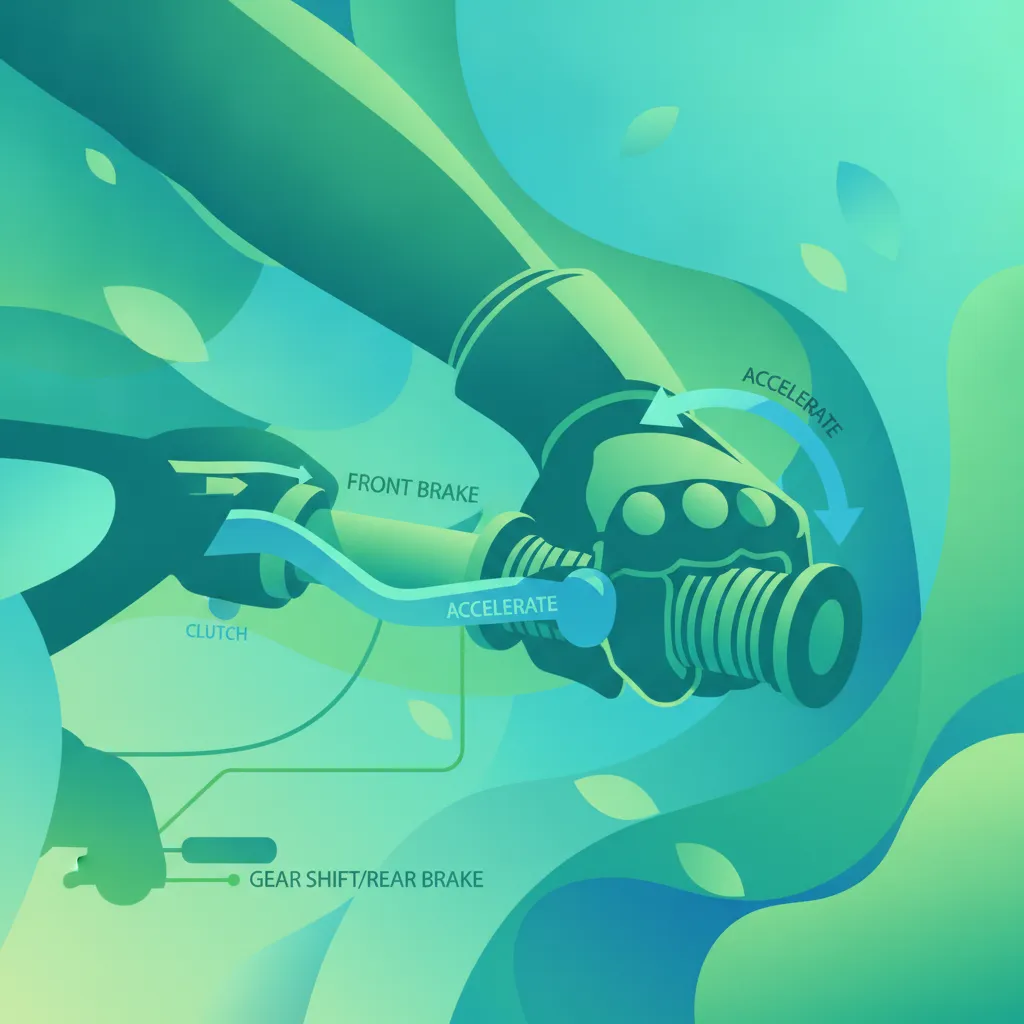
This lesson provides a functional overview of a motorcycle's essential controls, explaining the operation of the throttle, clutch, and gear selector. It differentiates between the front and rear braking systems and their roles in effective stopping. Learners will also identify handlebar switches for lights, indicators, and the horn, ensuring complete familiarity with the vehicle's interface for safe operation.

This lesson details the mandatory personal and vehicle documentation required for motorcyclists in Austria. It covers the necessity of carrying a valid licence card, vehicle registration papers, and proof of insurance at all times. Understanding these legal requirements ensures full compliance with Austrian traffic law and facilitates smooth interactions with law enforcement.
This lesson focuses specifically on motorcycle tyre maintenance, a critical safety component. It explains how to accurately measure tyre pressure, inspect for adequate tread depth, and identify uneven wear patterns that may indicate other issues. Understanding how tyre condition affects grip, handling, and braking performance is essential for every rider to maintain control.

This lesson breaks down the overtaking maneuver into a safe, repeatable process: assess, signal, check, move, and return. It emphasizes the importance of ensuring a sufficient gap in oncoming traffic, checking mirrors and blind spots thoroughly, and maintaining a proper speed differential. Adherence to Austrian laws regarding where overtaking is prohibited is also covered in detail.

This lesson focuses on the rider's primary responsibility: ensuring they are visible and their actions are predictable to other road users. It explains effective strategies such as using proper lighting, wearing reflective clothing, and adopting a safe road position. The content also emphasizes how clear signaling and anticipating the actions of others can significantly reduce the risk of collisions.

This lesson teaches the correct technique for setting and using motorcycle mirrors to maintain awareness of traffic behind and to the sides. It emphasizes that mirrors alone are not enough, detailing the necessity of the 'lifesaver' shoulder check to cover critical blind spots. A disciplined observation routine is crucial for safe lane changes, merging, and navigating dense traffic.

This lesson details the mandatory lighting and reflector requirements for Category AM vehicles in Austria. It explains the functions of different light settings, including daytime running lights, and their importance for being seen. Additionally, it covers the legal standards for protective helmets, a critical component of rider safety.
Understand the critical legal obligations for motorcycle roadworthiness in Austria, including penalties for non-compliance. This lesson focuses on common mistakes made during pre-ride checks and their impact on safety and legal standing.
This lesson emphasizes the importance of conducting a thorough pre-ride inspection to ensure vehicle safety. It provides a simple checklist covering critical components such as tires, brakes, lights, and controls. Performing these checks regularly helps identify potential issues before they become dangerous on the road.
This lesson details the mandatory personal and vehicle documentation required for motorcyclists in Austria. It covers the necessity of carrying a valid licence card, vehicle registration papers, and proof of insurance at all times. Understanding these legal requirements ensures full compliance with Austrian traffic law and facilitates smooth interactions with law enforcement.

This lesson provides essential knowledge for using Austria's high-speed road network. It covers the correct procedure for entering via acceleration lanes, maintaining strict lane discipline (keeping right, passing left), and understanding the digital or physical Vignette (toll sticker) requirement. The formation of the 'Rettungsgasse' (emergency corridor) during traffic jams is also a key topic.
This lesson focuses specifically on motorcycle tyre maintenance, a critical safety component. It explains how to accurately measure tyre pressure, inspect for adequate tread depth, and identify uneven wear patterns that may indicate other issues. Understanding how tyre condition affects grip, handling, and braking performance is essential for every rider to maintain control.
This lesson details the essential legal and administrative requirements for operating an AM vehicle in Austria. It covers the processes for vehicle registration, the obligation for licence plates, and the necessity of third-party liability insurance. Furthermore, it explains the importance of regular technical inspections to ensure the vehicle remains roadworthy and compliant with national standards.
This lesson covers the essential personal protective equipment (PPE) required for motorcycling in Austria. It details the safety standards for helmets, including fit and certification, and explains the benefits of armored jackets, gloves, and sturdy boots. The importance of high-visibility and weather-appropriate gear is also discussed to enhance rider protection in all conditions.
This lesson details the mandatory lighting and reflector requirements for Category AM vehicles in Austria. It explains the functions of different light settings, including daytime running lights, and their importance for being seen. Additionally, it covers the legal standards for protective helmets, a critical component of rider safety.

This lesson highlights the specific hazards of riding on countryside roads in Austria. It teaches riders to be vigilant for wildlife crossing signs, especially at dawn and dusk, and how to safely approach and overtake slow-moving agricultural machinery. Awareness of potential surface hazards like mud, gravel, or manure from farm access points is also crucial for maintaining traction.

This lesson emphasizes the practical and ethical duties of motorcyclists on Austrian roads, focusing on proactive risk assessment and sound judgment. It teaches learners how to recognize potential hazards, anticipate the actions of other road users, and consistently adhere to traffic regulations. Cultivating this responsible mindset is crucial for personal safety and protecting others in traffic.

This lesson introduces the fundamentals of regular vehicle inspection and preventive maintenance. Learners will understand how to perform essential pre-drive checks, including verifying fluid levels (oil, coolant, washer fluid), testing brakes, and checking the responsiveness of the steering. Adhering to a basic maintenance schedule is presented as a critical habit for ensuring long-term vehicle safety and roadworthiness, helping to prevent mechanical failures.
Find clear answers to common questions learners have about Pre‑Ride Safety Checks. Learn how the lesson is structured, which driving theory objectives it supports, and how it fits into the overall learning path of units and curriculum progression in Austria. These explanations help you understand key concepts, lesson flow, and exam focused study goals.
The theory exam tests your knowledge of vehicle safety as part of your legal responsibility. Understanding T-CLOCS helps you answer situational questions about mechanical maintenance and risk prevention.
For your own safety and to comply with best practices, you should perform a quick visual and functional check before every single ride, regardless of the distance.
On Austrian roads, especially in mountain regions or wet weather, insufficient tyre tread or incorrect pressure significantly reduces traction. This is a primary cause of loss-of-control accidents and a common topic in theory test hazard perception.
While checking the oil level every single day may not be necessary depending on your bike, you must check it frequently according to the manufacturer's intervals and always before long trips in the Alps.
Refine your study plan by searching for specific Austrian driving theory practice sets. Pinpoint questions related to particular road rules, signs, or challenge levels, and begin practicing immediately to reinforce your knowledge and excel in your official exam with confidence. Get started with focused revision today.