
This lesson provides a comprehensive overview of your motorcycle's primary control interface, a foundational skill for all A1, A2, and A category riders. You will learn to identify and operate essential components that ensure safety and precision on the road, setting the groundwork for more advanced riding maneuvers in subsequent units.
Lesson content overview
Operating a motorcycle safely and effectively on Austrian roads, whether you are pursuing an A1, A2, or A licence, hinges on a thorough understanding and mastery of its controls. This lesson provides a comprehensive overview of each essential control, explaining its function, proper operation, and its role in maintaining vehicle stability and rider safety. From managing your speed and acceleration to signaling your intentions and braking effectively, precise control manipulation is paramount for confident riding.
A motorcycle’s controls are an extension of the rider's will, enabling the precise management of speed, direction, and communication. Familiarity with the location and function of each control is not merely a legal requirement but a fundamental aspect of safe riding. This knowledge forms the basis for everything from smooth urban commuting to confident alpine road navigation. Before even starting the engine, a rider must instinctively know how to interact with their machine, ensuring predictable responses in every traffic situation.
This understanding is foundational for later topics, such as performing pre-ride safety checks, mastering advanced braking techniques, and effectively communicating with other road users.
Effective motorcycle control is built upon several core principles that govern how a rider interacts with the machine and the environment. These principles emphasize coordination, precision, and anticipatory action, all crucial for navigating the diverse conditions encountered in Austrian traffic.
Control Mastery: This principle denotes the ability to command all motorcycle controls simultaneously and effectively. It requires developing muscle memory and coordination between your hands and feet to manipulate the throttle, clutch, gear selector, brakes, and switches seamlessly. Mastery allows a rider to react instinctively to traffic scenarios and maintain vehicle dynamics.
Separate Braking Systems: Motorcycles feature independent braking systems for the front and rear wheels, typically hydraulic. This design provides balanced stopping power and allows for precise stability control. Riders must learn when and how to apply each brake individually or in combination to achieve optimal deceleration without losing control. The front brake generally provides the majority of stopping power due to weight transfer during braking.
Sequential Gear Changes: The process of changing gears involves a precise sequence: closing the throttle, pulling in the clutch, selecting the new gear with the foot lever, and then smoothly releasing the clutch while coordinating with throttle input. This synchronized action ensures smooth acceleration or deceleration, prevents engine stalling, and protects the transmission from damage.
Communication Through Controls: Many controls serve a dual purpose of vehicle operation and communication. Using indicators, headlights, and the horn correctly conveys your intentions to other road users, significantly increasing predictability and safety in traffic interactions. Activating the appropriate controls before a maneuver is crucial for preventing misunderstandings and potential collisions.
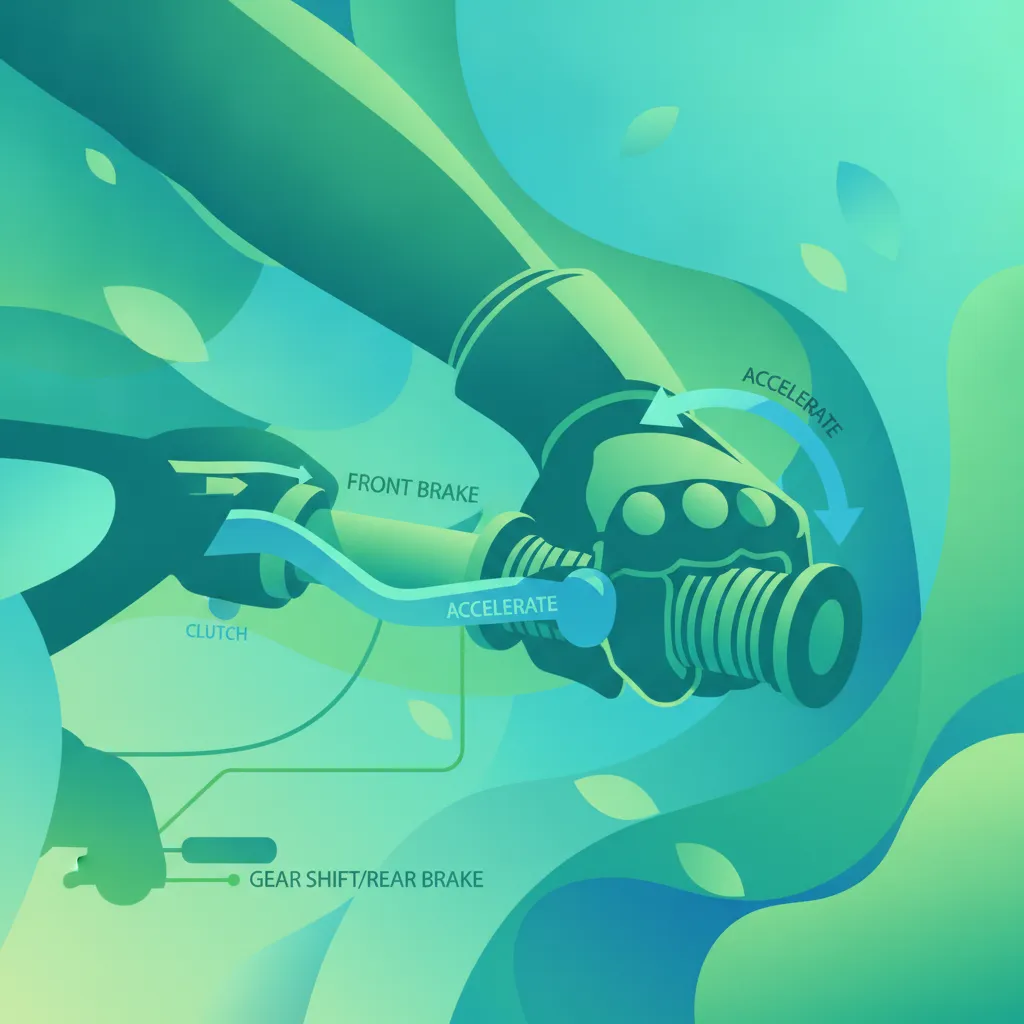
The handlebars are home to several critical controls, primarily managed by the rider's hands. These include the throttle, clutch lever, front brake lever, and various switches for lights and indicators.
The throttle is a hand-operated grip on the right handlebar that controls the engine's power output by regulating the amount of air and fuel mixture entering the engine. Rotating the grip forward, away from the rider, "opens" the throttle, increasing engine power and acceleration. Releasing the grip returns it to the "idle throttle" position, where the engine runs at a minimum speed.
Smooth and precise throttle control is fundamental for managing speed, maintaining stability, and achieving seamless acceleration or deceleration. Abrupt throttle movements can upset the motorcycle's balance, especially during turns or on slippery surfaces. When stopping, it is crucial to fully close the throttle to prevent unintended acceleration.
Practice smooth, gradual throttle inputs. Jerky movements can lead to instability and unexpected changes in speed, particularly for less experienced riders.
Positioned on the left handlebar, the clutch lever connects or disconnects the engine from the transmission. When the lever is fully released (clutch engaged), engine power is transmitted to the rear wheel. When the lever is pulled fully towards the handlebar (clutch disengaged), the engine is isolated from the transmission, allowing the rider to change gears without stalling the engine or causing a jerky transition.
Proper clutch use is essential for smooth starts, seamless gear changes, and preventing the engine from stalling, especially at low speeds or when coming to a stop. Gradually releasing the clutch while simultaneously opening the throttle is key to a smooth start from a standstill. "Riding the clutch"—keeping it partially engaged for extended periods—can cause premature wear and overheating of clutch components.
The front brake lever is located on the right handlebar, alongside the throttle. Pulling this lever activates the hydraulic brake system for the front wheel. This action squeezes brake pads against the front brake disc(s), generating friction to slow the wheel.
The front brake provides the majority of the motorcycle's stopping power, often accounting for up to 70% or more of total braking force, particularly during hard deceleration due to weight transfer to the front wheel. However, applying the front brake too aggressively, especially on slippery surfaces or without proper technique, can lead to front wheel lock-up and a loss of steering control. It should almost always be used in conjunction with the rear brake for stable and effective deceleration.
Avoid using only the front brake for emergency stops, especially on wet or loose surfaces, as this significantly increases the risk of losing control. Always strive for a balanced application of both front and rear brakes.
Below the rider's feet are crucial controls for selecting gears and engaging the rear brake. These require precise foot movements, often coordinated with hand controls.
The gear selector, also known as the shift lever, is a foot-operated lever located on the left side of the motorcycle. It allows the rider to select different transmission gears, typically ranging from first to sixth, and neutral (N). The standard shift pattern for most motorcycles is "one down, four or five up": first gear is selected by pressing the lever down, while neutral and subsequent gears (second through sixth) are selected by lifting the lever up.
Close the throttle completely.
Pull the clutch lever in fully.
Use the foot lever to select the desired gear (down for lower, up for higher, or to find neutral).
Smoothly release the clutch lever while simultaneously opening the throttle to match engine RPM with road speed.
Neutral is a special position where the engine is running but no power is transmitted to the wheels, allowing the motorcycle to stand still without stalling. It's often found between first and second gear. Selecting the appropriate gear ensures the engine operates within its optimal power band for the given speed and load, providing efficient acceleration and fuel economy.
The rear brake pedal is a foot-operated lever situated on the right side of the motorcycle. Pressing this pedal activates the rear wheel's hydraulic or cable brake system, slowing the rear wheel.
While the front brake provides the majority of stopping power, the rear brake is crucial for stability, especially during low-speed maneuvers, when navigating slippery surfaces like wet roads, or when braking in a corner. It helps settle the rear of the motorcycle and can prevent the front wheel from locking up under aggressive front braking. However, excessive rear brake application can lead to the rear wheel locking up, resulting in a skid and potential loss of control. The rear brake is also typically connected to the brake light, illuminating it when applied to signal deceleration to following traffic.
Beyond managing speed and gears, motorcycles are equipped with controls to enhance visibility and communicate intentions to other road users, which is particularly vital for rider safety in Austria.
The indicators, or turn signals, are activated by a switch on the left handlebar. These controls operate blinking lights, typically orange, at the front and rear of the motorcycle, signaling the rider's intention to turn left or right, or to change lanes.
According to Austrian traffic regulations, indicators must be activated well in advance of a maneuver. Specifically, they must be turned on at least three seconds before executing a turn or lane change. This allows sufficient time for other road users to perceive your intention and adjust their actions accordingly. Critically, remember to cancel the indicators manually after completing the maneuver to avoid confusing other drivers. Failing to cancel indicators can lead to dangerous assumptions by other road users about your next action.
Motorcycles are equipped with switches to control lighting systems, crucial for both seeing the road ahead and being seen by others.
Headlight Switch: Located on the left handlebar, this switch typically offers positions for off, low beam (Abblendlicht), and high beam (Fernlicht). The low beam provides adequate illumination for night riding and is mandatory in tunnels, during dusk, and whenever visibility is reduced. It is designed not to dazzle oncoming traffic. The high beam offers maximum illumination for unlit roads but must be switched off or dimmed to low beam when encountering oncoming traffic or when following another vehicle closely to prevent blinding other drivers.
Tail Light Switch: This control often works in conjunction with the headlight switch or automatically when the ignition is on. It illuminates the rear tail light (Rücklicht), making the motorcycle visible from behind, especially at night or in poor visibility. The brake light (Bremslicht) is automatically activated when either the front brake lever or rear brake pedal is pressed, signaling to following vehicles that you are decelerating. Ensuring all lights are functional is a key part of pre-ride safety checks.
The horn is typically activated by a push-button or lever, usually found on the left handlebar. Its primary function is to provide an audible warning signal to alert other road users of your presence or to avert a potential collision.
The horn should be used responsibly and sparingly, specifically for safety purposes. It is not a substitute for indicators, nor should it be used to express frustration or as a greeting. A brief, decisive press is usually sufficient to draw attention. For instance, a quick honk might be appropriate before overtaking a vehicle that appears unaware of your presence, or when approaching a blind corner where visibility is limited.
Operating a motorcycle in Austria requires adherence to specific traffic regulations (Straßenverkehrsordnung – StVO) regarding the use of controls. These rules are designed to enhance safety and ensure predictable behavior on the road for all participants.
Misuse of motorcycle controls can lead to dangerous situations and premature wear of components. Being aware of common pitfalls helps riders develop safer habits.
The effective use of motorcycle controls is highly dependent on environmental and traffic conditions. Riders must adjust their inputs based on the context to maintain safety and control.
Mastering motorcycle controls is an ongoing process that develops through practice and experience. The ultimate goal is to achieve seamless, instinctive coordination of all controls, allowing the rider to focus on hazard perception and decision-making rather than the mechanics of operating the bike. This synchronized interplay of hands and feet, often described as "riding harmoniously with the machine," is the hallmark of a skilled and safe rider.
Regular practice in a safe, controlled environment can significantly improve your control coordination. Focus on smooth transitions between throttle, clutch, and gear changes, and practice balanced braking at various speeds.
This conceptual foundation, combined with practical training, will equip you with the essential skills to operate your motorcycle safely, effectively, and in full compliance with Austrian road regulations for your A1, A2, or A licence.
This lesson covers the essential controls of a motorcycle – throttle, clutch, gear selector, and front and rear brakes – explaining how each functions and their specific roles in safe operation. Understanding the coordinated use of these controls enables smooth acceleration, effective braking, and vehicle stability. Austrian traffic regulations mandate specific practices including indicator activation timing, mandatory low beam usage, and restricted horn use. Developing muscle memory for these controls allows riders to focus on hazard perception rather than mechanical operation, forming the foundation for safe motorcycle riding in Austrian traffic conditions.
A short set of high-value points that capture the most important learning from this lesson.
The front brake provides up to 70% of stopping power due to weight transfer during braking, but always use both brakes together for stable deceleration
Proper gear changes require a synchronized sequence: close throttle, pull clutch, select gear, then smoothly release clutch while opening throttle
Indicators must be activated at least three seconds before turning or changing lanes and cancelled immediately after completing the maneuver
Low beam (Abblendlicht) is mandatory in tunnels, during dusk, and whenever visibility is reduced
Control mastery means developing muscle memory for simultaneous, coordinated hand and foot movements to react instinctively
Explore all units and lessons included in this driving theory course.
Gear pattern is "one down, four or five up" – press down for first gear and lift up through neutral to higher gears
Riding the clutch (keeping it partially engaged) causes overheating and premature wear of clutch components
High beam must be dipped to low beam when approaching oncoming traffic or when following another vehicle
The horn is only for avertin danger (Gefahrzeichen) or signaling overtaking maneuvers outside built-up areas, not for greetings
Always pull in the clutch or select neutral before starting the engine to prevent unintended forward movement
Relying solely on the rear brake significantly increases stopping distances and can lead to rear wheel lock-up
Failing to cancel indicators after completing a maneuver confuses other road users about your next action
Abrupt or jerky throttle inputs destabilize the motorcycle, especially in turns or on slippery surfaces
Starting the engine with a gear engaged and clutch engaged causes unexpected lurching forward
Using high beam inappropriately dazzles oncoming drivers and creates hazardous situations
Lesson content overview
A short set of high-value points that capture the most important learning from this lesson.
The front brake provides up to 70% of stopping power due to weight transfer during braking, but always use both brakes together for stable deceleration
Proper gear changes require a synchronized sequence: close throttle, pull clutch, select gear, then smoothly release clutch while opening throttle
Indicators must be activated at least three seconds before turning or changing lanes and cancelled immediately after completing the maneuver
Low beam (Abblendlicht) is mandatory in tunnels, during dusk, and whenever visibility is reduced
Control mastery means developing muscle memory for simultaneous, coordinated hand and foot movements to react instinctively
Explore all units and lessons included in this driving theory course.
Gear pattern is "one down, four or five up" – press down for first gear and lift up through neutral to higher gears
Riding the clutch (keeping it partially engaged) causes overheating and premature wear of clutch components
High beam must be dipped to low beam when approaching oncoming traffic or when following another vehicle
The horn is only for avertin danger (Gefahrzeichen) or signaling overtaking maneuvers outside built-up areas, not for greetings
Always pull in the clutch or select neutral before starting the engine to prevent unintended forward movement
Relying solely on the rear brake significantly increases stopping distances and can lead to rear wheel lock-up
Failing to cancel indicators after completing a maneuver confuses other road users about your next action
Abrupt or jerky throttle inputs destabilize the motorcycle, especially in turns or on slippery surfaces
Starting the engine with a gear engaged and clutch engaged causes unexpected lurching forward
Using high beam inappropriately dazzles oncoming drivers and creates hazardous situations
Explore search topics learners often look for when studying Motorcycle Controls and Their Functions. These topics reflect common questions about road rules, driving situations, safety guidance, and lesson level theory preparation for learners in Austria.
Browse additional driving theory lessons that cover connected traffic rules, road signs, and common driving situations related to this topic. Improve your understanding of how different rules interact across everyday traffic scenarios.
Understand the essential motorcycle controls for your Austrian A1, A2, and A licence. Learn how to effectively operate the throttle, clutch, brakes, and gear shifter, ensuring safe and confident riding in Austria.

This lesson breaks down the overtaking maneuver into a safe, repeatable process: assess, signal, check, move, and return. It emphasizes the importance of ensuring a sufficient gap in oncoming traffic, checking mirrors and blind spots thoroughly, and maintaining a proper speed differential. Adherence to Austrian laws regarding where overtaking is prohibited is also covered in detail.
This lesson explains the physics behind motorcycle braking, detailing why the front brake is responsible for the majority of stopping force due to forward weight transfer. It introduces the concept of progressive brake application to manage this weight shift and maximize tyre grip without locking a wheel. Understanding these core principles is the foundation for developing smooth and effective braking skills.

This lesson details the components and function of a motorcycle's braking system. It explains the roles of the front and rear brakes, the mechanics of hydraulic disc brakes, and the importance of maintaining proper brake fluid levels. Learners will also understand how to recognize the signs of worn brake pads, ensuring the system remains effective for safe stopping.

This lesson provides essential knowledge for using Austria's high-speed road network. It covers the correct procedure for entering via acceleration lanes, maintaining strict lane discipline (keeping right, passing left), and understanding the digital or physical Vignette (toll sticker) requirement. The formation of the 'Rettungsgasse' (emergency corridor) during traffic jams is also a key topic.

This lesson addresses the challenge of navigating terrain with changing elevation. It covers techniques for maintaining momentum and control on uphill climbs, including proper gear selection and throttle use. For descents, it emphasizes the use of engine braking to control speed and prevent brake overuse, a vital skill for long alpine descents.
This lesson provides clear instructions for maneuvering through single and multi-lane roundabouts. It covers the critical rule of giving way to traffic already in the circle, proper lane selection based on the intended exit, and the correct use of indicators when entering and exiting. Mastering roundabouts is key to efficient and safe travel in modern Austrian traffic systems.

This lesson focuses on clear communication with other road users through the correct use of signals. It covers the proper operation of turn indicators, including the importance of cancelling them after a maneuver, and the use of brake lights. Additionally, it reviews standard hand signals for turning and stopping, which serve as a vital backup or supplementary communication tool.
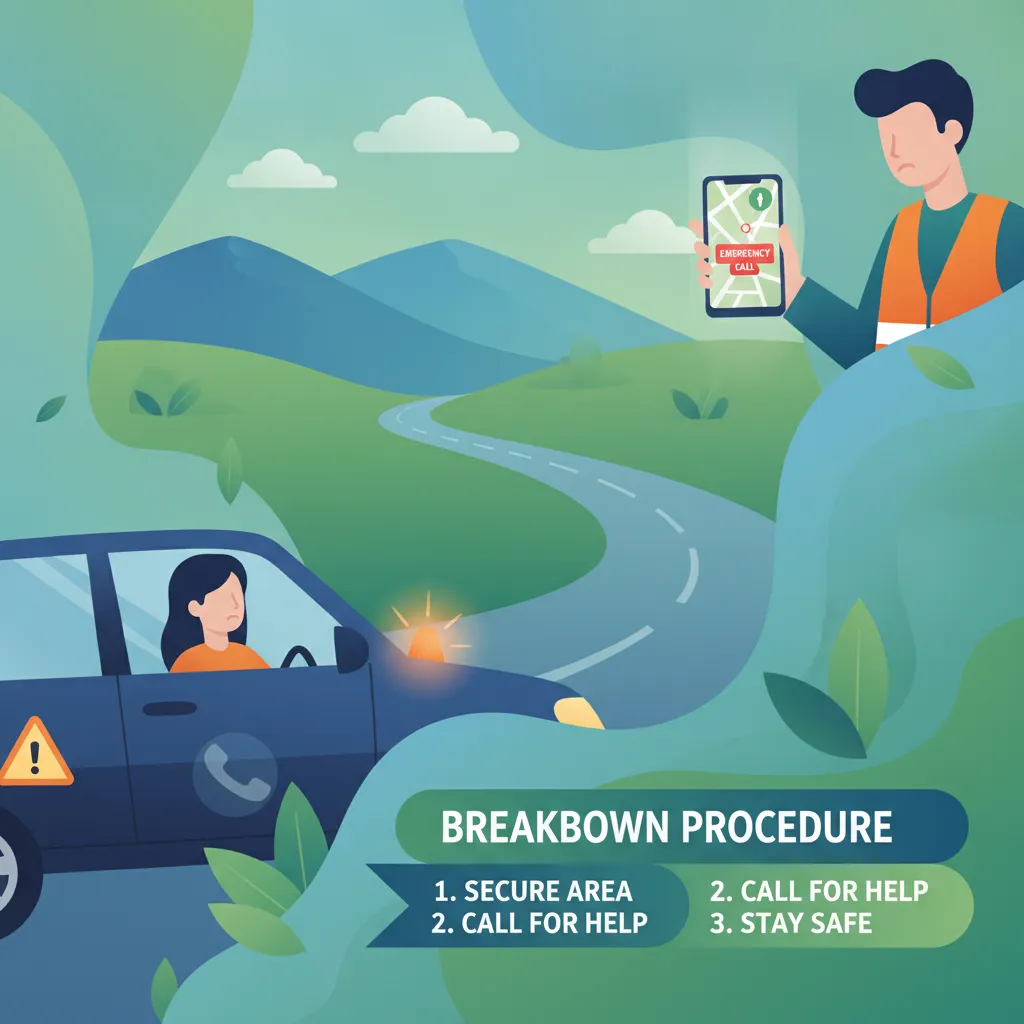
This lesson outlines the step-by-step safety protocol for a vehicle breakdown. It instructs the rider to move the motorcycle to the safest possible location, activate hazard lights, and put on a high-visibility vest. The proper placement of a warning triangle and the procedure for making an emergency call to 112 or a roadside assistance service are also detailed.

This lesson details the technical specifications for each Austrian motorcycle licence category: A1, A2, and A. It clarifies the legal limits on engine capacity and power output, alongside the minimum age requirements for each stage. By outlining the clear progression path, learners will grasp the necessary steps and training phases to advance their riding qualifications according to Austrian law.

This lesson explains the mandatory multi-stage training system in Austria, known as Mehrphasenausbildung. It details the required theoretical and practical training modules that riders must complete after obtaining their initial licence. Understanding this structured pathway helps learners plan their skill development and meet all legal requirements for full licensure.
Identify and avoid common mistakes when using motorcycle controls. This lesson covers essential best practices for throttle, clutch, brake, and indicator usage to ensure safe riding according to Austrian traffic law.
This lesson provides essential knowledge for using Austria's high-speed road network. It covers the correct procedure for entering via acceleration lanes, maintaining strict lane discipline (keeping right, passing left), and understanding the digital or physical Vignette (toll sticker) requirement. The formation of the 'Rettungsgasse' (emergency corridor) during traffic jams is also a key topic.
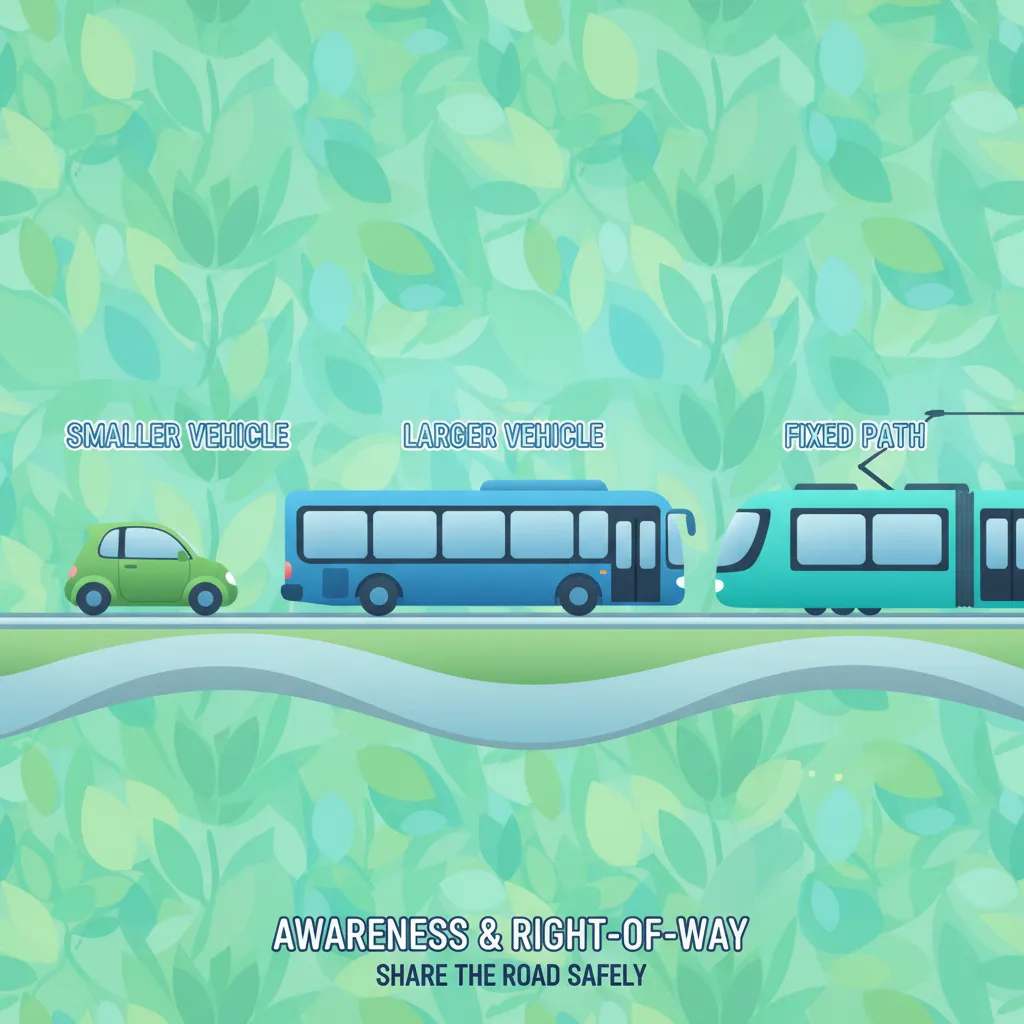
This lesson provides specific guidance for sharing the road with different types of vehicles in Austria. It covers the dangers of large vehicle blind spots, the rules for navigating near buses and dedicated tram tracks, and common conflict points at intersections. Understanding the behavior and limitations of other vehicles is key to safely navigating complex urban environments.
This lesson breaks down the overtaking maneuver into a safe, repeatable process: assess, signal, check, move, and return. It emphasizes the importance of ensuring a sufficient gap in oncoming traffic, checking mirrors and blind spots thoroughly, and maintaining a proper speed differential. Adherence to Austrian laws regarding where overtaking is prohibited is also covered in detail.
This lesson focuses on clear communication with other road users through the correct use of signals. It covers the proper operation of turn indicators, including the importance of cancelling them after a maneuver, and the use of brake lights. Additionally, it reviews standard hand signals for turning and stopping, which serve as a vital backup or supplementary communication tool.
This lesson provides clear instructions for maneuvering through single and multi-lane roundabouts. It covers the critical rule of giving way to traffic already in the circle, proper lane selection based on the intended exit, and the correct use of indicators when entering and exiting. Mastering roundabouts is key to efficient and safe travel in modern Austrian traffic systems.

This lesson provides a comprehensive explanation of Austria's right-of-way laws, which are fundamental to intersection safety. It covers the meaning of different priority signs and clarifies the 'Rechts vor Links' (priority to the right) rule that applies at unmarked junctions. A clear understanding of these rules is essential to prevent conflicts and collisions in urban and rural settings.

This lesson explains the correct techniques for using mirrors to maintain awareness of surrounding traffic and for checking blind spots. It details the proper timing and use of indicators to signal turns and lane changes effectively. The content reinforces that clear, early communication is key to preventing misunderstandings with other drivers.

This lesson teaches a safe, methodical process for navigating intersections. It stresses the importance of proper lane positioning on approach, comprehensive visual scans for cross-traffic, pedestrians, and cyclists, and clear communication of intent. Special attention is given to the increased risks associated with left turns across oncoming traffic.
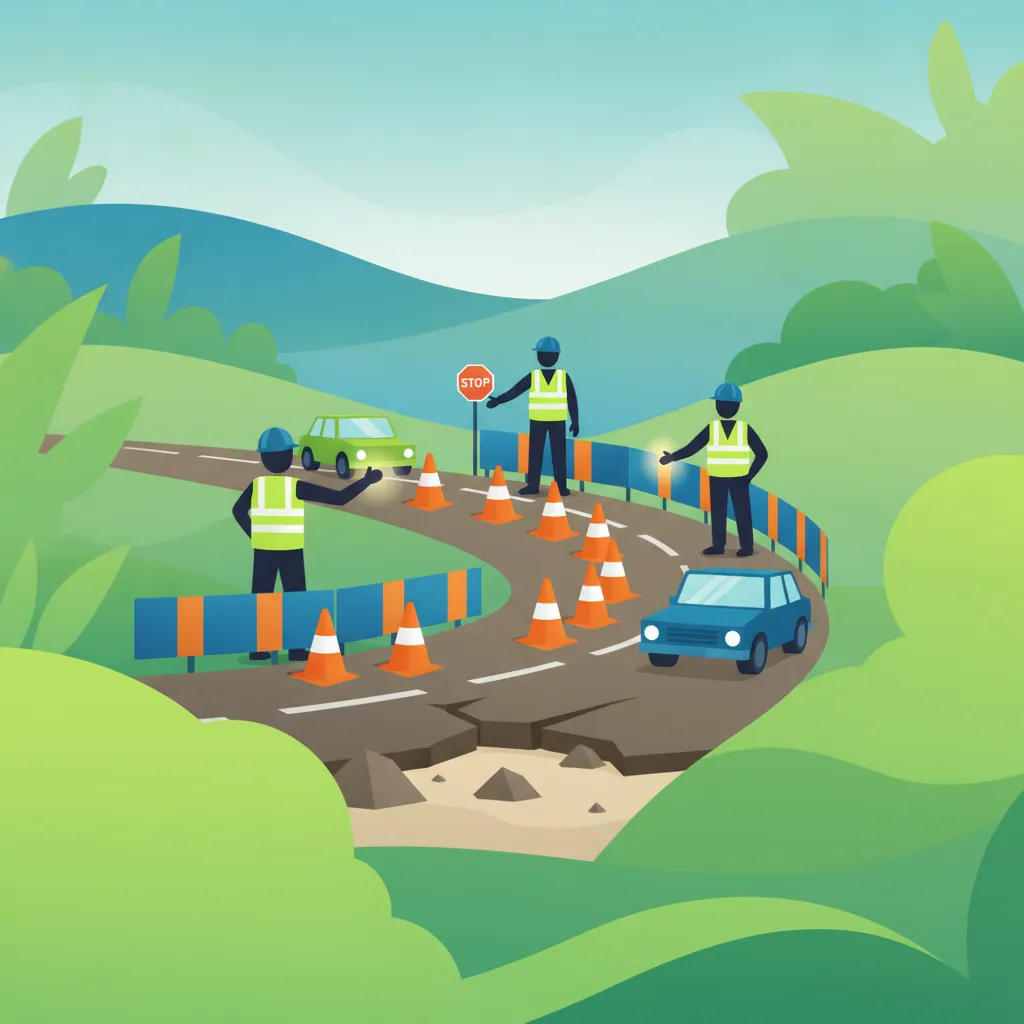
This lesson prepares riders for safely transiting through construction zones ('Baustellen'). It covers the interpretation of temporary signage, adherence to reduced speed limits, and awareness of hazards suchas altered lane markings, abrupt surface changes, and loose gravel. Respecting the safety of road workers and anticipating unpredictable traffic patterns are key themes.
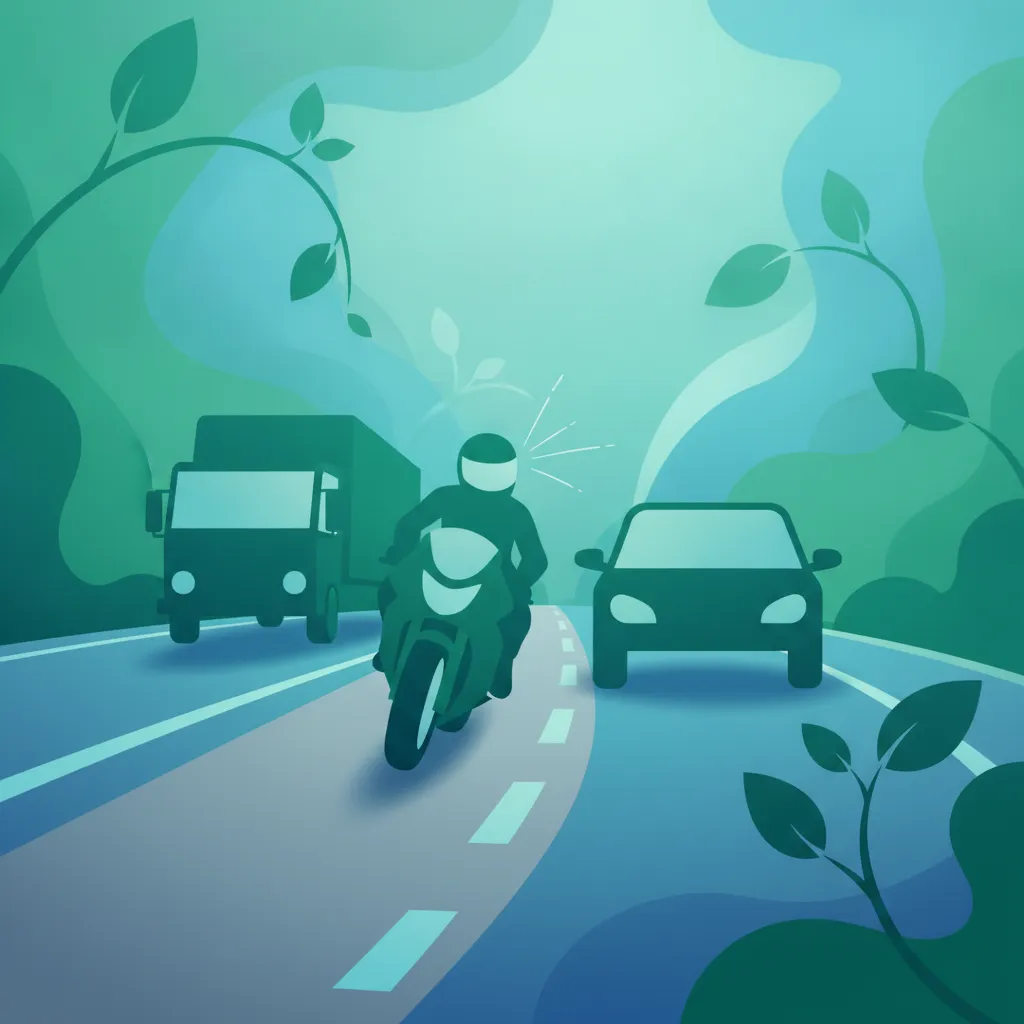
This lesson explains how to use different positions within a lane to maximize visibility, create safety buffers, and plan escape routes. It introduces the concept of anticipative riding, which involves actively scanning for potential hazards and predicting the actions of other drivers. Strategic positioning is a dynamic skill that allows a rider to manage space and time effectively in changing traffic.
Find clear answers to common questions learners have about Motorcycle Controls and Their Functions. Learn how the lesson is structured, which driving theory objectives it supports, and how it fits into the overall learning path of units and curriculum progression in Austria. These explanations help you understand key concepts, lesson flow, and exam focused study goals.
The Austrian theory exam tests your understanding of weight transfer. Knowing that the front brake provides the majority of stopping power while the rear provides stability is vital for answering hazard perception and emergency braking questions correctly.
Yes. The theory test may ask you to identify indicators, horn, or light switches. You must be able to operate these instinctively to ensure you can communicate your intentions to other road users in any traffic situation.
While the physical mechanism remains the same, the power and weight of the motorcycle vary across categories. Understanding the friction zone and proper clutch control is a fundamental requirement for all riders regardless of the license category.
Refine your study plan by searching for specific Austrian driving theory practice sets. Pinpoint questions related to particular road rules, signs, or challenge levels, and begin practicing immediately to reinforce your knowledge and excel in your official exam with confidence. Get started with focused revision today.