
This lesson provides an essential overview of how your motorcycle's braking system functions, which is critical for both the Austrian theory exam and your safety on the road. You will learn the mechanics behind hydraulic disc brakes, the importance of fluid management, and how to identify when components require professional maintenance.

Lesson content overview
The braking system is arguably the most critical safety feature on any motorcycle, allowing you to control your speed, react to hazards, and come to a safe stop. For riders seeking an Austrian A1, A2, or A licence, a thorough understanding of how these systems work, how to maintain them, and how to use them effectively is not just beneficial—it's essential for both passing your theory test and ensuring your safety on Austrian roads. This lesson provides a detailed overview, covering everything from the fundamental mechanics to critical maintenance and legal requirements.
The primary purpose of your motorcycle's braking system is to dissipate kinetic energy (the energy of motion) as heat through friction, bringing your vehicle to a controlled stop. A reliable and well-maintained braking system directly translates to shorter stopping distances and enhanced control, especially in emergency situations. This understanding forms the bedrock of safe riding practices and contributes significantly to accident prevention. Every component, from the brake lever to the pads, plays a vital role in ensuring your motorcycle can perform this fundamental safety function reliably.
Pre-Ride Checks for Braking System Always integrate a check of your braking system into your daily pre-ride safety routine. This includes testing both front and rear brakes for proper function, checking fluid levels, and visually inspecting brake pads for wear.
Motorcycles are equipped with two independent braking systems: one for the front wheel and one for the rear. This dual-brake system is crucial for distributing braking force efficiently, ensuring stability, and optimizing stopping distances under various conditions. Riders must master the use of both brakes, often in conjunction, to achieve safe and controlled deceleration.
The front brake is typically the more powerful of the two systems, responsible for the majority of the motorcycle's stopping power. During deceleration, the motorcycle's weight shifts forward, transferring a significant portion of the load onto the front wheel. This increased weight on the front wheel enhances its traction, allowing the front brake to apply greater stopping force without locking up. It is usually operated by a hand lever on the right handlebar.
The braking mechanism applied to the front wheel, primarily responsible for the majority of a motorcycle's stopping force due to dynamic weight transfer during deceleration.
Most modern motorcycles utilize a disc front brake system, which employs hydraulic pressure to clamp brake pads onto a rotating disc rotor. While less common on contemporary motorcycles, some older models may feature drum front brakes, which use mechanically expanding shoes within a drum. Regardless of the type, the front brake must always be fully functional; riding without a working front brake is illegal in Austria, as stipulated by Regulation § 35 B. Misunderstandings, such as believing the front brake is optional or unsafe in wet conditions, can lead to dangerous riding habits and significantly compromise safety. For instance, in an emergency stop, approximately 70-80% of the effective braking force often comes from the front brake.
The rear brake, operated by a foot pedal on the right side of the motorcycle, complements the front brake by providing stability and additional stopping power, particularly at lower speeds. While generally less powerful than the front brake, its role is vital for balancing the motorcycle during braking and for precise control in situations like parking, tight turns, or slow-speed maneuvers. It helps to settle the chassis and prevent excessive dive from aggressive front brake application.
The braking mechanism applied to the rear wheel, primarily contributing to stability and supplementary stopping power, particularly effective at lower speeds or for subtle speed adjustments.
Similar to the front, rear brakes can be disc rear brakes (hydraulic) or drum rear brakes (mechanical). Over-reliance on the rear brake alone, especially at higher speeds, can lead to premature rear-wheel lock-up and extended stopping distances, as the weight transfer during braking reduces the effective traction of the rear wheel. The rear brake, like the front, must be fully functional for a motorcycle to be considered roadworthy under Austrian law (§ 35 B). Using the rear brake smoothly to scrub off speed before entering a corner is a common and effective technique, illustrating its role in refined riding.
Most modern motorcycles use hydraulic disc brake systems for both front and rear wheels due to their superior efficiency, modulation, and heat dissipation capabilities. Understanding the mechanics of this system is crucial for proper maintenance and effective use.
A typical hydraulic disc brake system comprises several essential components working in unison:
When the rider activates the brake lever or pedal, it pushes a piston inside the master cylinder. This action generates hydraulic pressure in the brake fluid. The incompressible brake fluid transmits this pressure through the brake lines to the calipers. Inside the calipers, the fluid pressure forces the pistons to extend, pushing the brake pads against the spinning disc rotor. The resulting friction between the pads and the rotor converts the kinetic energy of the moving motorcycle into heat, thereby slowing it down or bringing it to a stop. The advantage of a hydraulic system is its ability to multiply force, allowing the rider to generate significant braking power with relatively little effort, while also offering excellent modulation—the ability to precisely control the amount of braking force.
Brake fluid is the lifeblood of a hydraulic braking system; its correct level and integrity are paramount for safe and effective braking. Neglecting brake fluid maintenance can lead to spongy brakes, reduced braking effectiveness, or even complete brake failure.
Regularly checking your brake fluid level is a simple yet crucial part of motorcycle maintenance. Most motorcycles have transparent brake fluid reservoirs mounted on the handlebars for the front brake and sometimes near the rear master cylinder for the rear brake.
Ensure your motorcycle is on level ground and upright (not on its side stand).
Locate the brake fluid reservoirs for both front and rear brakes.
Observe the fluid level through the sight glass or transparent window on the reservoir. The fluid should always be between the "Min" and "Max" marks.
If the fluid level is consistently low, it may indicate worn brake pads (as fluid moves into the calipers to compensate) or a leak in the system. Address any leaks immediately.
Low brake fluid or fluid below the minimum mark can cause air to enter the system, leading to a loss of hydraulic pressure and potentially complete brake failure.
Brake fluid is specially formulated to handle high temperatures and transmit pressure efficiently. It is categorized by DOT (Department of Transportation) ratings, such as DOT 3, DOT 4, DOT 5, and DOT 5.1. It is critical to always use the specific type of brake fluid recommended by your motorcycle's manufacturer. Mixing different types of fluid or using an incompatible fluid can damage rubber seals, corrode internal components, and severely compromise braking performance.
A specialized hydraulic fluid designed to transmit pressure within a braking system, requiring specific DOT ratings and regular replacement due to its hygroscopic nature.
Brake fluid is hygroscopic, meaning it absorbs moisture from the air over time. Water contamination lowers the fluid's boiling point, which can lead to brake fade or complete brake failure when the brakes heat up during heavy use (the water boils, creating compressible vapor bubbles). For this reason, brake fluid should be replaced periodically, typically every two years or as specified in your motorcycle's service manual. Failure to maintain brake fluid integrity can be considered negligent under Austrian vehicle maintenance laws (§ 22 B).
Brake pads are consumable components designed to wear down over time. Monitoring their condition and replacing them when necessary is vital for maintaining safe stopping ability and preventing damage to other braking components, such as the disc rotors.
There are several ways to detect worn brake pads:
Riding with worn brake pads significantly compromises your motorcycle's safety. As the friction material thins, braking efficiency diminishes, leading to longer stopping distances. In extreme cases, if the pads wear completely through, the metal backing plate will contact the disc rotor, causing severe damage to the rotor, potentially leading to catastrophic brake failure and dangerous instability. This also makes a loud grinding noise. Ignoring squealing sounds or visual wear indicators is a dangerous oversight that can lead to accidents and legal repercussions for violating vehicle safety standards.
Effective braking goes beyond simply applying force; it involves understanding the physics of weight transfer and applying both brakes in a balanced manner to maximize traction and maintain control.
When you apply the brakes on a motorcycle, the vehicle's momentum causes its weight to dynamically shift forward. This phenomenon, known as weight transfer, significantly increases the load and therefore the available traction on the front wheel, while simultaneously reducing the load and traction on the rear wheel. The more aggressive the braking, the more pronounced this weight transfer becomes. For example, during hard braking, approximately 30-40% of the motorcycle's total weight can shift to the front wheel within the first meter of deceleration.
The dynamic shift of a motorcycle's mass towards the front wheel during deceleration, which increases front wheel traction and reduces rear wheel traction.
Understanding weight transfer is crucial because it dictates how much braking force each wheel can effectively handle. Over-braking the rear wheel when its traction is reduced can easily lead to a rear-wheel lock-up and skid, especially at higher speeds. Conversely, the increased traction at the front allows for significantly more aggressive front braking.
Achieving optimal brake balance means distributing braking force between the front and rear wheels to maximize deceleration while maintaining stability. While specific ratios can vary based on motorcycle design, speed, and road conditions, a general rule of thumb for dry, normal conditions is to apply approximately 70-80% of your total braking effort to the front brake and 20-30% to the rear brake.
This balance allows you to exploit the increased front wheel traction due to weight transfer. However, this is not a fixed rule; riders must constantly adjust their brake application based on:
Misusing brake balance, such as over-relying on the rear brake for high-speed stops, will significantly increase your stopping distance. Conversely, grabbing too much front brake abruptly can lead to a front wheel lock-up, a common cause of motorcycle accidents. Advanced techniques like trail braking involve progressively reducing brake pressure while entering a corner, demanding precise modulation and an understanding of brake balance and weight transfer.
The Anti-lock Braking System (ABS) is a significant safety innovation that has become increasingly common, and often mandatory, on modern motorcycles. It is designed to prevent wheel lock-up during hard or emergency braking, particularly on slippery surfaces.
ABS works by continuously monitoring the rotational speed of both wheels. If it detects that a wheel is about to lock up (i.e., its rotational speed suddenly decreases much faster than the vehicle's speed, indicating loss of traction), the system rapidly modulates the brake pressure to that specific wheel. It briefly releases, then re-applies, the brake pressure many times per second. This rapid pulsing prevents the wheel from completely locking, allowing the rider to maintain steering control while braking hard.
An electronic safety system that prevents motorcycle wheels from locking up during heavy braking by rapidly modulating brake pressure, thereby helping riders maintain steering control.
The primary benefit of ABS is enhanced safety, especially in emergency situations or on low-traction surfaces like wet roads, gravel, or ice. It allows riders to apply maximum braking force without fear of losing control due to skidding. While ABS is a powerful tool, it does not negate the need for proper braking technique; riders should still practice smooth, progressive braking.
In Austria, as in many parts of the European Union, ABS is mandatory on new motorcycles above a certain engine capacity (typically 125cc). For motorcycles equipped with ABS, the system must be fully functional. Disabling or tampering with approved safety devices, including ABS, is strictly prohibited under Austrian law (§ 42 B) and can result in significant penalties. This regulation underscores the critical importance of these systems for rider safety. If your motorcycle has ABS, it is designed to be an active safety feature that should always be operational.
Adhering to legal mandates regarding motorcycle braking systems is not just about avoiding fines; it's about ensuring your own safety and the safety of others on the road. Austrian regulations are clear on the functionality and maintenance required.
Austrian Regulation § 35 B explicitly states that all motor vehicles, including motorcycles, must be equipped with a braking system capable of stopping within specified distances defined by the regulator. Crucially, both the front and rear brakes must be fully functional. This applies universally to all motorcycle licence categories (A1, A2, A).
Riding a motorcycle with a malfunctioning front or rear brake is a serious legal violation and a significant safety hazard. It can lead to immediate vehicle impoundment and fines.
The rationale behind this rule is straightforward: adequate stopping power and vehicle stability are non-negotiable safety requirements. A rider must perform functional tests of both brakes before each ride to ensure compliance. Failure to stop within legal distances due to poor brake performance is also a violation.
Beyond just functionality, Austrian Regulation § 22 B places the responsibility on the owner or driver to maintain their vehicle in a safe condition. This includes meticulous maintenance of the braking system, specifically regarding brake fluid level and integrity. Negligence in maintaining brake fluid, such as ignoring low fluid warnings or using an incorrect fluid type, can be deemed a breach of this regulation.
Regular checks, replenishing fluid to the correct level, and adhering to manufacturer-recommended service intervals (including fluid replacement) are all part of a driver's legal and moral obligation to maintain vehicle safety.
For motorcycles equipped with advanced safety features like ABS, Austrian Regulation § 42 B strictly prohibits disabling or tampering with these approved devices. This rule applies specifically to vehicles where ABS is installed by the manufacturer. The rationale is to maintain the manufacturer-intended safety performance of the vehicle. Intentionally disabling ABS, perhaps under the misconception that it offers "more feel" for the road, not only undermines safety but also constitutes a clear legal violation. Riders must ensure that such safety systems remain fully operative.
Understanding the theory of braking systems is only half the battle; applying this knowledge in real-world scenarios, and avoiding common pitfalls, is key to safe riding.
Braking technique must adapt significantly to different environmental factors:
Many common mistakes can lead to both accidents and legal violations:
The braking system on your motorcycle is a complex yet fundamental safety component. For riders navigating Austrian roads and preparing for their A1, A2, or A theory test, a deep understanding of its function, maintenance, and proper usage is non-negotiable.
Remember these key principles:
By consistently applying this knowledge through diligent maintenance and practiced braking techniques, you ensure your motorcycle remains safe and compliant, allowing you to ride confidently and responsibly.
The braking system is the most critical safety feature on a motorcycle, using hydraulic pressure to convert rider input into friction that dissipates kinetic energy as heat. Modern motorcycles use dual independent brake systems—front and rear—with the front brake providing approximately 70-80% of stopping power due to weight transfer during deceleration. Proper maintenance requires checking brake fluid levels between Min and Max marks, using the correct DOT-rated fluid, replacing brake pads when wear indicators sound or material thickness falls below specification, and ensuring both brakes are fully functional. Austrian law mandates functional brakes (§ 35 B), proper vehicle maintenance (§ 22 B), and prohibits disabling safety systems like ABS (§ 42 B) on equipped motorcycles. Riders must adapt braking technique to conditions—reducing force on wet or slippery surfaces and using engine braking on steep alpine descents to prevent brake fade.
A short set of high-value points that capture the most important learning from this lesson.
The front brake provides 70-80% of stopping power due to dynamic weight transfer during deceleration, making it the dominant braking system
Both front and rear brakes must be fully functional at all times—riding with either brake malfunctioning is illegal under Austrian Regulation § 35 B
Hydraulic disc brakes use brake fluid to transmit force from the master cylinder through brake lines to calipers, which press pads against the rotating disc rotor
Brake fluid is hygroscopic and must be replaced every two years or as specified by the manufacturer to prevent water contamination and brake failure
ABS prevents wheel lock-up during heavy braking and must remain fully operational on equipped motorcycles—it cannot be disabled under § 42 B
Explore all units and lessons included in this driving theory course.
Brake fluid comes in DOT 3, DOT 4, DOT 5, and DOT 5.1 ratings—always use the type specified by your motorcycle manufacturer
Worn brake pads produce a distinctive high-pitched squeal when the metal wear indicator contacts the rotor, signaling immediate replacement is needed
During braking, weight transfers forward onto the front wheel, increasing its traction while reducing rear wheel grip
Optimal brake balance is approximately 70-80% front and 20-30% rear for most normal conditions, adapting based on speed, load, and road surface
Continuous heavy braking on steep descents causes brake fade from overheating—use engine braking and intermittent gentle applications instead
Over-relying on the rear brake at higher speeds, which causes rear wheel lock-up and significantly longer stopping distances
Using the wrong DOT-rated brake fluid, which damages rubber seals, corrodes components, and compromises braking performance
Ignoring the squealing sound from wear indicators, leading to metal-on-metal contact that destroys disc rotors and causes brake failure
Failing to check brake fluid levels regularly, allowing air to enter the system and creating a spongy lever feel with reduced stopping power
Attempting to disable ABS on motorcycles equipped with this system, which is illegal under Austrian law and removes critical safety protection
Lesson content overview
A short set of high-value points that capture the most important learning from this lesson.
The front brake provides 70-80% of stopping power due to dynamic weight transfer during deceleration, making it the dominant braking system
Both front and rear brakes must be fully functional at all times—riding with either brake malfunctioning is illegal under Austrian Regulation § 35 B
Hydraulic disc brakes use brake fluid to transmit force from the master cylinder through brake lines to calipers, which press pads against the rotating disc rotor
Brake fluid is hygroscopic and must be replaced every two years or as specified by the manufacturer to prevent water contamination and brake failure
ABS prevents wheel lock-up during heavy braking and must remain fully operational on equipped motorcycles—it cannot be disabled under § 42 B
Explore all units and lessons included in this driving theory course.
Brake fluid comes in DOT 3, DOT 4, DOT 5, and DOT 5.1 ratings—always use the type specified by your motorcycle manufacturer
Worn brake pads produce a distinctive high-pitched squeal when the metal wear indicator contacts the rotor, signaling immediate replacement is needed
During braking, weight transfers forward onto the front wheel, increasing its traction while reducing rear wheel grip
Optimal brake balance is approximately 70-80% front and 20-30% rear for most normal conditions, adapting based on speed, load, and road surface
Continuous heavy braking on steep descents causes brake fade from overheating—use engine braking and intermittent gentle applications instead
Over-relying on the rear brake at higher speeds, which causes rear wheel lock-up and significantly longer stopping distances
Using the wrong DOT-rated brake fluid, which damages rubber seals, corrodes components, and compromises braking performance
Ignoring the squealing sound from wear indicators, leading to metal-on-metal contact that destroys disc rotors and causes brake failure
Failing to check brake fluid levels regularly, allowing air to enter the system and creating a spongy lever feel with reduced stopping power
Attempting to disable ABS on motorcycles equipped with this system, which is illegal under Austrian law and removes critical safety protection
Explore search topics learners often look for when studying Braking System Overview. These topics reflect common questions about road rules, driving situations, safety guidance, and lesson level theory preparation for learners in Austria.
Browse additional driving theory lessons that cover connected traffic rules, road signs, and common driving situations related to this topic. Improve your understanding of how different rules interact across everyday traffic scenarios.
Understand the essential maintenance of your motorcycle's braking system, including fluid checks, pad wear, and ABS functionality. Learn about Austrian regulations like § 35 B and § 22 B ensuring your brakes are legally compliant and safe.

This lesson emphasizes the importance of conducting a thorough pre-ride inspection to ensure vehicle safety. It provides a simple checklist covering critical components such as tires, brakes, lights, and controls. Performing these checks regularly helps identify potential issues before they become dangerous on the road.
This lesson focuses specifically on motorcycle tyre maintenance, a critical safety component. It explains how to accurately measure tyre pressure, inspect for adequate tread depth, and identify uneven wear patterns that may indicate other issues. Understanding how tyre condition affects grip, handling, and braking performance is essential for every rider to maintain control.

This lesson details the mandatory personal and vehicle documentation required for motorcyclists in Austria. It covers the necessity of carrying a valid licence card, vehicle registration papers, and proof of insurance at all times. Understanding these legal requirements ensures full compliance with Austrian traffic law and facilitates smooth interactions with law enforcement.

This lesson outlines the critical pre-ride inspection process, often remembered by the acronym T-CLOCS (Tires, Controls, Lights, Oil, Chassis, Stands). It guides learners through checking tyre pressure and tread, verifying brake and control functionality, and confirming all lights are operational. Performing these systematic checks before every ride is fundamental to preventing equipment failure and ensuring safety on the road.

This lesson explains the procedures for checking the functionality of a heavy vehicle's braking systems, with a focus on air brakes. It covers how to monitor air pressure gauges and conduct tests to ensure both the service and parking brakes are operating correctly. These daily checks are essential for confirming the vehicle's stopping capability.
This lesson details the essential legal and administrative requirements for operating an AM vehicle in Austria. It covers the processes for vehicle registration, the obligation for licence plates, and the necessity of third-party liability insurance. Furthermore, it explains the importance of regular technical inspections to ensure the vehicle remains roadworthy and compliant with national standards.
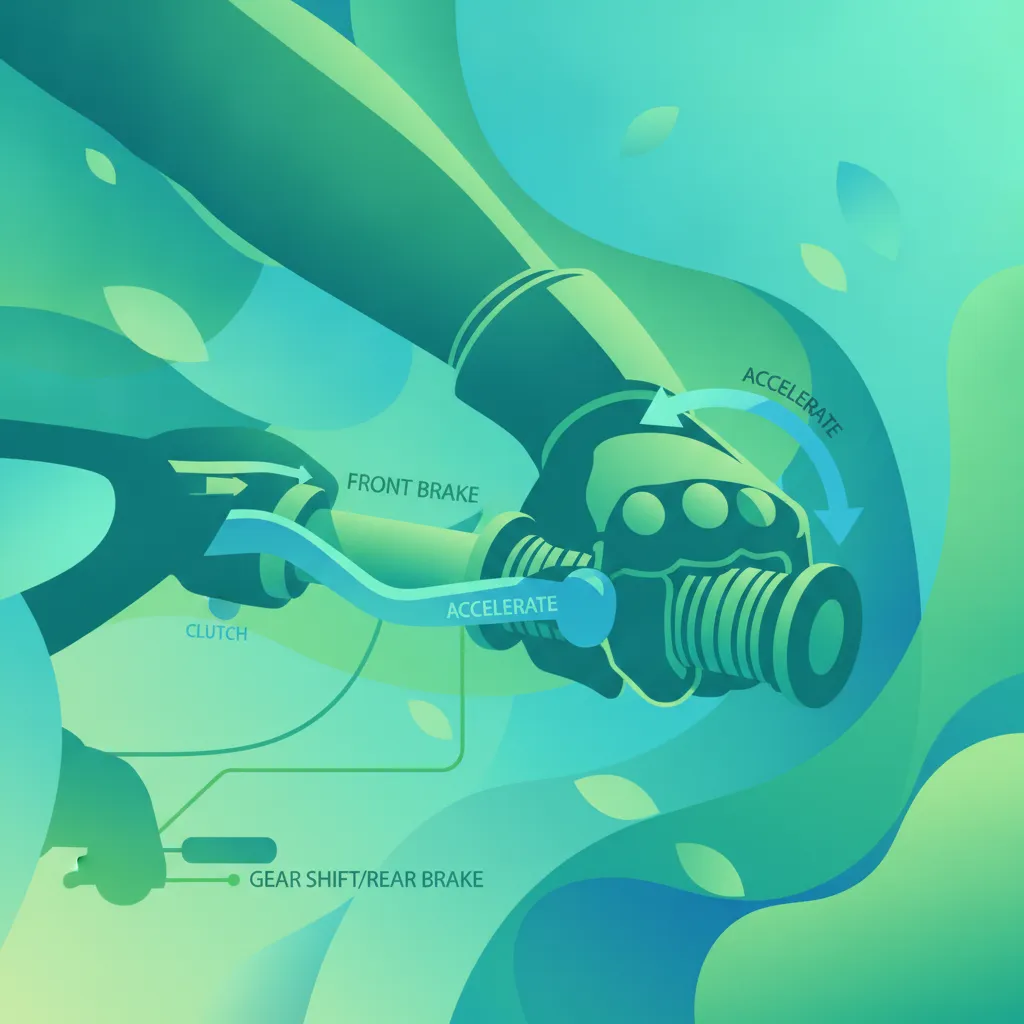
This lesson provides a functional overview of a motorcycle's essential controls, explaining the operation of the throttle, clutch, and gear selector. It differentiates between the front and rear braking systems and their roles in effective stopping. Learners will also identify handlebar switches for lights, indicators, and the horn, ensuring complete familiarity with the vehicle's interface for safe operation.
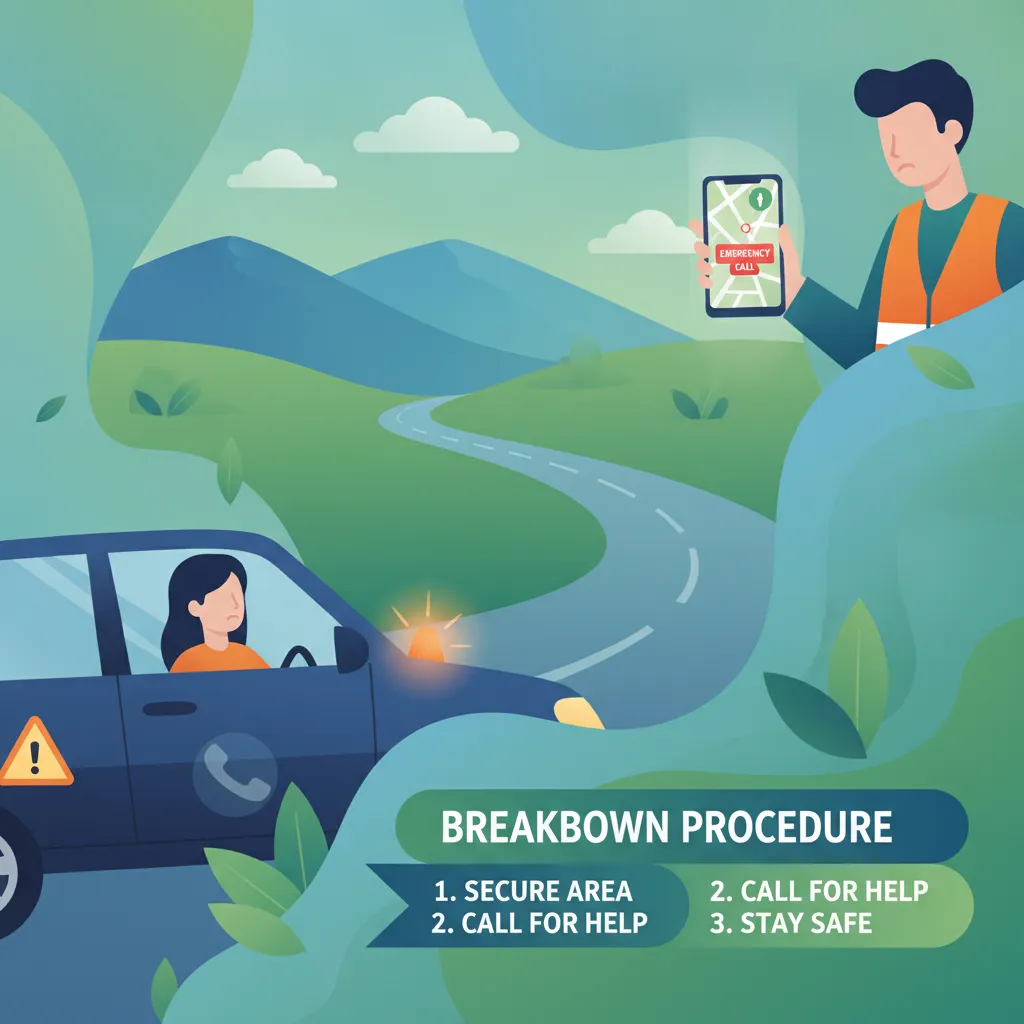
This lesson outlines the step-by-step safety protocol for a vehicle breakdown. It instructs the rider to move the motorcycle to the safest possible location, activate hazard lights, and put on a high-visibility vest. The proper placement of a warning triangle and the procedure for making an emergency call to 112 or a roadside assistance service are also detailed.
This lesson focuses on the art of coordinating the front and rear brakes to achieve stable and efficient deceleration. It explains how the ideal balance changes depending on speed, road surface, and whether the bike is traveling in a straight line or a curve. Proper brake balance enhances control, shortens stopping distances, and provides a smoother riding experience.
This lesson explains the physics behind motorcycle braking, detailing why the front brake is responsible for the majority of stopping force due to forward weight transfer. It introduces the concept of progressive brake application to manage this weight shift and maximize tyre grip without locking a wheel. Understanding these core principles is the foundation for developing smooth and effective braking skills.
Explore how weight transfer affects motorcycle braking and learn to achieve optimal brake balance. Understand techniques for braking in various conditions and how ABS enhances control for Austrian riders.
This lesson explains the physics behind motorcycle braking, detailing why the front brake is responsible for the majority of stopping force due to forward weight transfer. It introduces the concept of progressive brake application to manage this weight shift and maximize tyre grip without locking a wheel. Understanding these core principles is the foundation for developing smooth and effective braking skills.
This lesson focuses on the art of coordinating the front and rear brakes to achieve stable and efficient deceleration. It explains how the ideal balance changes depending on speed, road surface, and whether the bike is traveling in a straight line or a curve. Proper brake balance enhances control, shortens stopping distances, and provides a smoother riding experience.
This lesson provides a step-by-step guide to executing an emergency stop safely. It teaches riders how to apply firm, progressive pressure to both brakes to achieve the shortest possible stopping distance without locking the wheels. The role of ABS in these situations is also explained, highlighting how it assists the rider in maintaining steering control under maximum braking.

This lesson addresses the complex skill of braking while the motorcycle is leaned over in a corner or on low-traction surfaces. It introduces the concept of trail braking to adjust speed and tighten a cornering line, and provides strategies for gentle brake application on wet or loose surfaces. Mastering these techniques requires a delicate touch and a deep understanding of traction limits.
This lesson provides a functional overview of a motorcycle's essential controls, explaining the operation of the throttle, clutch, and gear selector. It differentiates between the front and rear braking systems and their roles in effective stopping. Learners will also identify handlebar switches for lights, indicators, and the horn, ensuring complete familiarity with the vehicle's interface for safe operation.

This lesson explains the significant impact of extra weight from a passenger or luggage on a motorcycle's dynamics. It covers how to properly secure loads to maintain a low center of gravity and the importance of instructing a passenger on how to lean with the bike. Riders will learn to adjust their braking, acceleration, and cornering techniques to compensate for the altered handling characteristics.
This lesson teaches correct braking techniques, including the coordinated use of front and rear brakes for maximum efficiency. It explains how to calculate total stopping distance based on speed, perception time, and reaction time. The content also covers adjustments needed for braking on wet or slippery surfaces to avoid loss of control.

This lesson offers a practical guide to managing additional weight on a motorcycle. It explains how to distribute luggage evenly and low on the bike, and how to brief a passenger on their role in maintaining balance. The lesson reinforces that acceleration will be slower and braking distances longer, requiring smoother control inputs and greater anticipation from the rider.
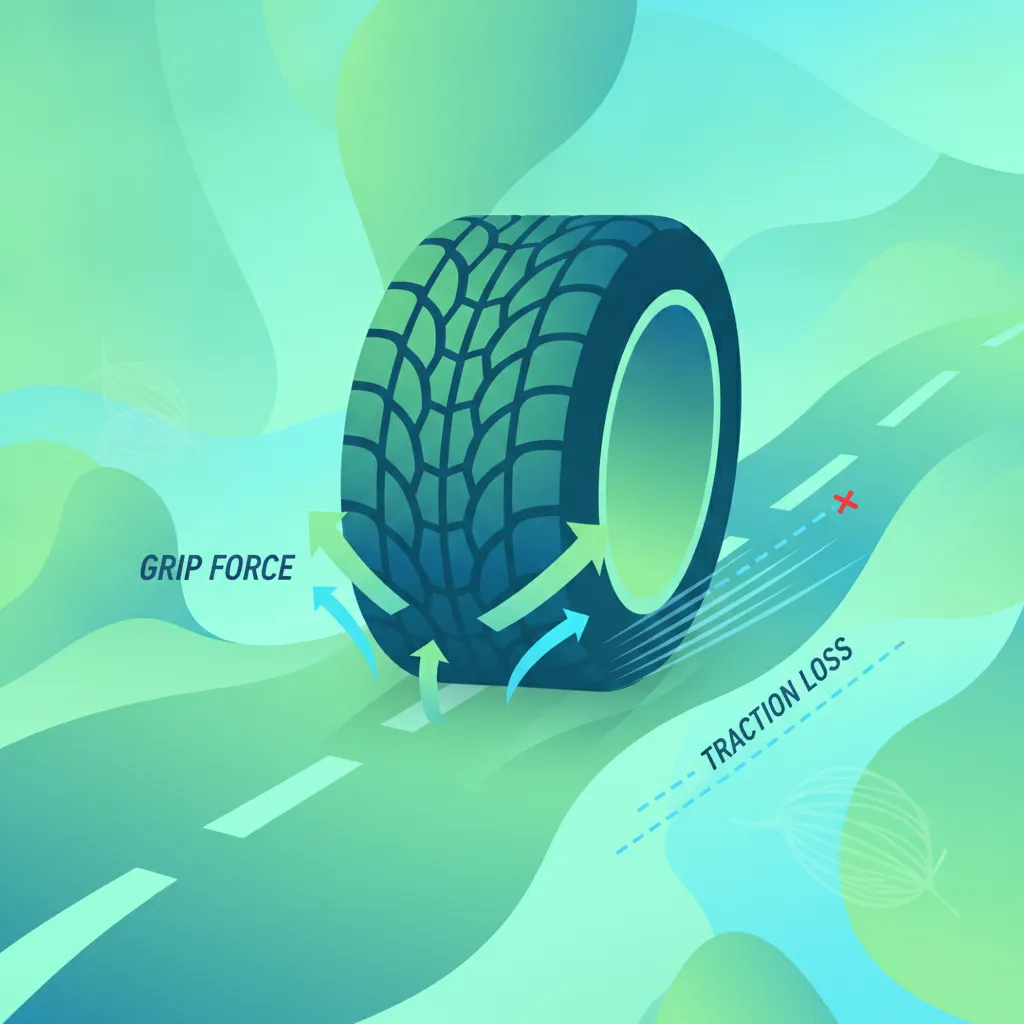
This lesson delves into the science of tyre traction, explaining how the small contact patch is critical for control. It examines how factors like tyre pressure, temperature, and road surface conditions (wet, dry, gravel) affect the available grip. Understanding the limits of traction is essential for knowing how hard a rider can safely brake or corner in any given situation.

This lesson addresses the challenge of navigating terrain with changing elevation. It covers techniques for maintaining momentum and control on uphill climbs, including proper gear selection and throttle use. For descents, it emphasizes the use of engine braking to control speed and prevent brake overuse, a vital skill for long alpine descents.
Find clear answers to common questions learners have about Braking System Overview. Learn how the lesson is structured, which driving theory objectives it supports, and how it fits into the overall learning path of units and curriculum progression in Austria. These explanations help you understand key concepts, lesson flow, and exam focused study goals.
Understanding fluid levels is a standard vehicle safety requirement in Austria. The theory test expects you to know that low fluid can compromise braking pressure and that regular checks are a mandatory part of ensuring your bike is roadworthy.
You should visually inspect the thickness of the friction material on the pads. If the material is below the manufacturer's recommended minimum depth, it must be replaced immediately to ensure effective stopping power.
While both typically use hydraulic systems, they have different operational roles. The front brake provides the majority of your stopping power, while the rear brake is used for stability and controlled deceleration.
Refine your study plan by searching for specific Austrian driving theory practice sets. Pinpoint questions related to particular road rules, signs, or challenge levels, and begin practicing immediately to reinforce your knowledge and excel in your official exam with confidence. Get started with focused revision today.