
Logo
Austrian Driving Theory Courses

Lesson 3 of the Category AM in Austria and the First Responsibility of a Rider unit

Austrian AM Driving Theory: First Responsibility: Visibility and Predictability

This lesson establishes your first and most important responsibility as an AM license holder in Austria: ensuring you are visible and predictable. You will learn how proper lighting, reflective gear, and clear road positioning help you communicate safely with other traffic. These core principles are essential for your daily riding and provide the foundation for answering hazard perception questions in the Austrian theory test.

visibilitypredictabilityAM licenserider safetytheory practice
Austrian AM Driving Theory: First Responsibility: Visibility and Predictability

Lesson content overview

Austrian AM Driving Theory

Ensuring Visibility and Predictability: Your First Responsibility as an AM Rider in Austria

As you embark on your journey through the Austrian AM Driving Theory – Safe Riding for Mopeds and Small Scooters course, one principle stands paramount: your responsibility to be seen and understood by every other road user. This lesson delves into "First Responsibility: Visibility and Predictability," fundamental concepts that underpin accident prevention and safe riding. For mopeds and small scooters, which are often less conspicuous than larger vehicles, mastering these aspects is not just a recommendation but a critical life skill. By proactively ensuring you are visible and your actions are predictable, you significantly reduce the risk of collisions and foster a safer traffic environment for everyone.

Why Visibility and Predictability Matter for Mopeds and Scooters

Mopeds and small scooters, by their nature, are more vulnerable in traffic. Their smaller size, often quieter engines, and sometimes less prominent lighting can make them harder for other drivers to spot, especially in complex traffic situations or adverse weather. This inherent vulnerability means that AM riders must take extra steps to stand out and clearly communicate their intentions. Understanding human perception limits, such as visual range and reaction time, highlights why riders must actively make themselves conspicuous. This isn't merely about following rules; it's about safeguarding yourself and others on the road.

Core Principles of Safe Moped Riding: Visibility, Predictability, and Communication

Effective road safety for moped and small scooter riders revolves around several core principles that guide every interaction in traffic.

Maximizing Moped Visibility in Austrian Traffic

Definition

Visibility

The ability of a rider and their vehicle to be seen clearly by other road users under all possible conditions, day or night, fair weather or foul.
The primary purpose of visibility is to reduce the likelihood of collisions that arise from a lack of awareness. It necessitates active measures from the rider, including the correct use of vehicle lighting systems, wearing high-visibility and reflective clothing, and strategic road positioning. By making yourself obvious, you give other drivers the necessary time to see you, react, and adjust their own driving.

Acting Predictably on Your AM Scooter

Definition

Predictability

The clarity with which a rider’s future actions can be anticipated by other road users based on their signals, road positioning, and adherence to traffic flow.
Predictability enables other road users to respond appropriately and safely to your movements. When you ride predictably, you reduce uncertainty for drivers around you, allowing them to make informed decisions about their own maneuvers. This principle demands consistent signaling, smooth adherence to traffic flow, and the avoidance of sudden, erratic movements.

Optimal Road Positioning for Moped Riders

Definition

Road Positioning

The intentional placement of your moped or scooter within a lane to maximize your visibility to others and minimize potential hazards.
Choosing the right lane placement is crucial for enhancing your conspicuity and allowing sufficient reaction time for both you and other road users. This involves riding in a position that makes you easily seen, particularly in relation to larger vehicles, and that allows you space to react to unfolding situations. It implies avoiding blind spots and adjusting your position based on the road context and traffic conditions.

Effective Communication in Mixed Traffic

Definition

Communication

The explicit conveyance of your intentions to other road users through the use of vehicle signals, hand gestures, or visible body language.
Communication complements visibility by ensuring that your actions are not just seen, but also clearly understood. It requires the timely and correct use of your moped's turn signals and brake lights, as well as appropriate hand signals when vehicle lights may not be clear. Clear communication ensures that other drivers can interpret your planned actions, facilitating smoother and safer traffic flow.

Essential Practices for Moped Rider Visibility

Achieving maximum conspicuity is an active process that varies depending on the conditions.

Understanding Moped Lighting Systems and StVO Rules

The lighting system on your moped or small scooter is your primary tool for visibility. Knowing when and how to use each light is critical for your safety and for compliance with Austrian traffic regulations.

Tip

Always check that all your moped's lights are functional before starting any journey. A quick check of your headlamp, rear light, and brake light can prevent serious hazards.
  • Daytime Visibility: Even during daylight hours, enhancing your visibility is important. The use of daytime running lights, if equipped, or consistently riding with your dipped beam activated can significantly increase your conspicuity. High-visibility clothing further aids this, especially on overcast days.
  • Nighttime and Low-Light Visibility: From sunset to sunrise, and in any conditions with reduced visibility such as fog, heavy rain, or snow, the use of appropriate lighting is mandatory. You must activate your dipped beam headlamp to illuminate the road ahead and ensure you are seen by oncoming traffic. Your rear red light and brake light are crucial for alerting vehicles behind you. Hazard warning lights are for stationary vehicles only and should not be used while riding. The Austrian Road Traffic Regulations (StVO) clearly outline these requirements:
    • StVO § 36 – Lighting Requirements: This rule mandates the use of headlights from sunset to sunrise and whenever visibility is reduced. For mopeds, the dipped beam is essential to ensure you are seen and to illuminate the road.
    • StVO § 48 – Vehicle Lighting Equipment: Your AM-class vehicle must be equipped with at least one white headlamp (dipped beam), a rear red light, and brake lights. Turn indicators are mandatory if the vehicle's design supports them.

The Role of Reflective Clothing for AM Riders

Definition

Reflective Clothing

Garments or accessories made with reflective material that return external light sources (like headlights) back to their origin, thereby enhancing a rider's visibility.
While vehicle lights are crucial, reflective clothing provides an additional layer of visibility, particularly in low-light conditions or adverse weather.

  • High-Visibility Vests: Wearing a high-visibility vest that meets standards like EN 471 is strongly recommended, especially during twilight, night, or in conditions like rain or fog. These vests make you stand out much more effectively than regular clothing.
  • Reflective Strips: Many modern riding jackets, helmets, and even pants incorporate reflective strips. These seemingly small details can make a significant difference in how early other drivers detect your presence.

Even in daylight, on a cloudy or rainy day, reflective gear can cut through the gloom and make you more noticeable. While not always strictly mandatory by law, the recommendation under StVO § 38 to increase conspicuity is a safety measure no rider should ignore.

Predictable Moped Riding: Signaling and Anticipation

Being seen is only half the battle; ensuring your intentions are understood is equally vital for avoiding collisions.

Mastering Turn Signals and Braking Indications

Your moped’s signals are your voice on the road, communicating your planned actions to those around you.

  • Turn Indicators: Use your left or right turn indicators well in advance of a turn or lane change. Austrian StVO § 29 specifies that turn signals must be activated at least three seconds before the intended maneuver. This crucial lead time provides other drivers with adequate warning to react safely.
  • Hand Signals: In situations where your vehicle's turn indicators are not clearly visible, or if they are malfunctioning, you must use clear hand signals. StVO § 37 permits hand signals to convey turns, stops, or speed reductions. For example, extending your left arm horizontally indicates a left turn.
  • Brake Light: Your brake light illuminates whenever you apply the brakes, signaling to following traffic that you are slowing down. Ensure it is always clean and functional. Do not assume your brake light alone tells drivers your stopping distance; combine its use with appropriate speed and road positioning.

Warning

Never use hazard warning lights while moving. They are intended for stationary vehicles to warn of a hazard or breakdown, and using them while riding can confuse other road users about your intentions.

Anticipating Other Road Users' Actions

Safe riding involves not only making yourself predictable but also actively predicting the actions of others.

  • Scanning the Environment: Continuously scan your mirrors and your surroundings. Look ahead, check side roads, and observe traffic far down the road, not just immediately in front of you. This continuous observation helps you spot potential hazards early.
  • Predictive Planning: Adjust your speed and road position based on what you anticipate others might do. For instance, slow down when approaching an intersection where other users might have priority, even if you theoretically have the right-of-way. Be prepared for pedestrians to step into the road or for cars to change lanes abruptly.
  • Right-of-Way Rules (StVO § 21): While knowing right-of-way rules is essential, always be prepared for others to misinterpret or disregard them. The duty to yield to vehicles with priority means you must actively anticipate these situations and be ready to react safely, even if it means giving up your theoretical right-of-way to prevent a collision.

Austrian Road Traffic Regulations (StVO) for Moped Visibility and Predictability

Adhering to the specific paragraphs of the Austrian Road Traffic Regulations is non-negotiable for AM riders. These rules are designed to ensure safety and order on the roads.

  • StVO § 9 – Road Positioning: This fundamental rule requires all vehicles, including mopeds and small scooters, to stay within their designated lane markings and not obstruct traffic flow. For moped riders, this means riding centrally within the lane rather than hugging the curb. Riding too close to the edge of the road can make you less visible and push you into debris or uneven surfaces.
  • StVO § 21 – Right of Way (Yielding): At intersections, roundabouts, and pedestrian crossings, you must yield to traffic with priority. This rule underscores the importance of anticipation; you must proactively assess and prepare for right-of-way situations to prevent conflicts and ensure a smooth flow of traffic.
  • StVO § 29 – Turn Signals: As discussed, this rule mandates the use of turn signals at least three seconds before a turn or lane change. This is a critical requirement for communicating your intentions early and clearly to all surrounding road users.
  • StVO § 36 – Lighting Requirements: This paragraph dictates when and how vehicle lights must be used. From sunset to sunrise, and in any conditions with reduced visibility (like fog or heavy rain), your headlights (dipped beam) are mandatory. Proper lighting ensures you are visible and can see the road ahead.
  • StVO § 37 – Hand Signals: This rule specifies that hand signals must be used when vehicle signals are not clearly visible, or in the event of a malfunction. It ensures that communication of intentions remains possible even when electronic systems fail.
  • StVO § 48 – Vehicle Lighting Equipment: This paragraph details the mandatory lighting equipment for mopeds and AM-class vehicles, including a white headlamp, a rear red light, and brake lights. All these components must be fully operational and properly maintained.

Common Mistakes and Hazards for AM Riders

Understanding common pitfalls can help you avoid dangerous situations.

  1. Riding without proper lighting at dusk or in poor weather: Failing to activate dipped beams significantly reduces your visibility, especially when ambient light is low or conditions are wet.
  2. Improper lane positioning: Riding too close to the curb or within a larger vehicle's blind spot makes you virtually invisible to drivers.
  3. Neglecting turn indication: Making turns or lane changes without signaling prevents other road users from anticipating your maneuvers, leading to sudden braking or collisions.
  4. Riding on sidewalks: This is illegal for mopeds unless specifically designated and endangers pedestrians, violating StVO § 57.
  5. Using hazard lights while moving: This confuses other drivers, as hazard lights are strictly for stationary vehicles indicating a problem.
  6. Ignoring reflective clothing in challenging conditions: Riding in rain, fog, or at night without reflective gear drastically reduces your conspicuity.
  7. Abrupt maneuvers: Sudden changes in speed or direction without warning are highly unpredictable and dangerous.
  8. Failure to yield at priority intersections: Assuming right-of-way or proceeding without verifying it can lead to severe collisions.
  9. Poor brake light maintenance: A malfunctioning brake light removes a crucial communication tool, increasing the risk of rear-end collisions.
  10. Not scanning effectively: A lack of continuous observation means you might miss critical cues from other road users, preventing timely anticipation.

Adapting Your Riding: Conditional Variations for AM Riders

The principles of visibility and predictability must be adapted to various external conditions.

  • Weather Conditions: Rain, fog, or snow significantly reduce visibility. In such conditions, you must activate your dipped beam earlier, wear reflective gear, and reduce your speed. Heavy rain can make rear reflectors less effective; ensure your lights are especially bright and clean.
  • Light Conditions: Nighttime riding absolutely mandates the use of headlights and rear red lights. During dawn and dusk, the transition to dipped beam should be immediate, even if you feel there is still enough natural light. Your perception might differ from a driver's, especially if they are looking into the sun or glare.
  • Road Types:
    • Urban Roads: With more intersections, parked cars, and higher traffic density, turn signals and precise lane positioning are even more critical. Be extra vigilant for vulnerable road users like pedestrians and cyclists.
    • Rural Roads: These often have wider shoulders and lack street lighting. Here, the effectiveness of your headlights and reflective clothing becomes paramount. Be aware of wildlife hazards.
    • Motorways: While AM-category vehicles are generally not permitted on Austrian motorways, if applicable to specific vehicle types (like light quadricycles), maintaining extreme visibility and predictable high-speed lane discipline would be crucial.
  • Vehicle State: If you are carrying an added load or a passenger, your moped’s handling characteristics change, which can affect your road positioning and stability. A passenger or large load might also obscure your lights or reflective elements, requiring you to compensate with even more prominent gear or careful positioning. Malfunctioning lights must be repaired immediately before you ride.
  • Interactions with Vulnerable Road Users: Pedestrians and cyclists are highly vulnerable and can be hard to spot. Always assume they might not see you. Maintain a safe distance, avoid filtering through dense traffic aggressively, and be prepared to anticipate unexpected movements from them.

Real-World Scenarios: Visibility and Predictability in Practice

Let's look at how these concepts play out in everyday riding situations.

Urban Intersection – Turn Indication

  • Setting: A bustling city intersection with traffic lights, moderate traffic, during daylight hours.
  • Relevant Rule: StVO § 29 – turn signals must be activated at least three seconds before a turn.
  • Correct Behavior: As the rider approaches the intersection, they activate their left indicator well in advance (at least 3 seconds before the turn). They position their moped centrally in the left-turn lane, making themselves visible to traffic behind and oncoming, then execute the turn only after receiving a green light and ensuring the intersection is clear.
  • Incorrect Behavior: The rider makes a sudden left turn without signaling, causing a car behind to brake sharply and an oncoming car to hesitate, narrowly avoiding a collision.
  • Explanation: Proper signaling allows all other road users, including drivers and pedestrians, to anticipate the moped's maneuver, significantly reducing reaction distance and the risk of a collision.

Night Riding on an Unlit Rural Road – Headlight Use

  • Setting: A completely unlit rural road after sunset, with very low ambient visibility.
  • Relevant Rule: StVO § 36 – headlights must be on from sunset to sunrise and in reduced visibility.
  • Correct Behavior: Before entering the dark road, the rider ensures their dipped beams are activated and verifies that their brake light and rear red light are fully functional. They ride at a speed appropriate for their visibility and reaction time, being extra cautious of potential hazards or wildlife.
  • Incorrect Behavior: The rider proceeds onto the rural road without any headlights, becoming virtually invisible to oncoming traffic until it is too late for them to react safely.
  • Explanation: Dipped beams make the rider visible to oncoming traffic and allow them to see the road. Without them, the moped becomes a ghost on the road, detectable only at very close range.

Rainy Day Commute – Reflective Clothing

  • Setting: An overcast and drizzly morning on busy city streets.
  • Relevant Principle: Reflective clothing significantly increases visibility in poor weather.
  • Correct Behavior: The rider puts on a high-visibility vest with reflective strips over their jacket. This makes them much more conspicuous to other drivers, whose visibility is also reduced by the rain and spray.
  • Incorrect Behavior: The rider commutes in dark, non-reflective clothing, making them blend into the grey, wet environment and incredibly difficult for other drivers to spot.
  • Explanation: Reflective clothing reflects light from headlights and streetlights, creating a strong contrast against the dim, wet conditions and alerting other road users to the moped's presence much earlier.

Safety and Reasoning Insights

The effectiveness of visibility and predictability is rooted in fundamental aspects of human perception and traffic dynamics.

  • Human Visual Perception: Our vision is highly susceptible to low light, glare, and clutter. Proper lighting extends the effective detection range of your moped, giving other drivers more precious seconds to process your presence and react.
  • Cognitive Load and Reaction Time: Predictable behavior reduces the cognitive load on other drivers. When your actions are clear and anticipated, drivers don't have to spend extra time trying to guess your next move, allowing them to make faster, safer decisions. The average driver reaction time is often cited as around 1.5 seconds, but this can be longer under stress or fatigue. Signaling at least 3 seconds before a maneuver factors in this latency, ensuring sufficient warning.
  • Physics of Light: Reflective materials work by retro-reflecting light, meaning they send light back towards its source (e.g., a car's headlights). This makes the reflective object appear to glow brightly to the driver of that vehicle, dramatically improving visibility in darkness.
  • Statistical Evidence: Studies on traffic accidents consistently demonstrate that improved visibility, such as the use of daytime running lights or high-visibility clothing, can reduce collision rates for vulnerable road users by a significant percentage, sometimes up to 30% in specific conditions.

Final Concept Summary for AM Moped Riders

Your primary responsibility as an AM rider in Austria is to proactively ensure your visibility and predictability.

  • Visibility First: Always use your dipped beams from sunset to sunrise and in any conditions with reduced visibility. Make sure your rear red light and brake lights are functioning perfectly. Augment your visibility by wearing high-visibility and reflective clothing, especially in low light or adverse weather.
  • Predictable Actions: Signal your intentions clearly and early using turn indicators (at least three seconds before a maneuver) or hand signals if your lights are obscured or broken. Maintain consistent speed and avoid any sudden, unexpected maneuvers.
  • Strategic Road Positioning: Ride centrally within your lane to maximize your visibility to other drivers and to give yourself ample space to react. Actively avoid blind spots of larger vehicles.
  • Anticipate and Adapt: Continuously scan your surroundings, anticipate the likely actions of other road users, and adjust your speed and positioning accordingly. Be extra cautious around vulnerable road users like pedestrians and cyclists.
  • Know Your StVO: Familiarize yourself with and adhere strictly to Austrian Road Traffic Regulations, particularly StVO §§ 9, 21, 29, 36, 37, and 48, which govern lighting, signaling, and road positioning.
  • Context Matters: Always adapt your visibility and predictability measures to prevailing conditions, whether it's heavy rain, dense urban traffic, or dark rural roads.

By internalizing and consistently applying these principles, you will significantly enhance your safety and contribute to a more harmonious traffic environment for everyone in Austria.

Learn more with these articles

Check out these practice sets

Lesson recap

Quick summary before you move on

Fast revision

This lesson establishes that visibility and predictability are the foundational safety principles for AM riders in Austria. Effective visibility requires functional lighting (dipped beam mandatory per StVO § 36), reflective clothing, and strategic lane positioning to avoid blind spots. Predictability demands clear communication through timely turn signals (at least 3 seconds per StVO § 29) and hand signals when vehicle signals are obscured. Riders must continuously scan their environment and anticipate the actions of others, recognizing that pedestrians, cyclists, and larger vehicle drivers may not see them. Adapting to weather, light conditions, and road type variations ensures these principles remain effective across all riding scenarios on Austrian roads.


Core takeaways

Main ideas from this lesson

A short set of high-value points that capture the most important learning from this lesson.

Your primary responsibility as an AM rider is to make yourself visible and your actions predictable to all other road users.

Dipped beam headlights are mandatory from sunset to sunrise and whenever visibility is reduced, as required by StVO § 36.

Turn signals must be activated at least three seconds before any turn or lane change, per StVO § 29.

Reflective clothing and high-visibility gear dramatically increase your conspicuity in low-light and adverse weather conditions.

Ride centrally within your lane to avoid blind spots of larger vehicles and maximize your visibility to other road users.

Remember this

Details worth keeping in mind

Point 1

StVO § 29: Signal at least 3 seconds before turning or changing lanes.

Point 2

StVO § 36: Headlights (dipped beam) are mandatory from sunset to sunrise and in reduced visibility.

Point 3

StVO § 48: AM vehicles must have a white headlamp, rear red light, and functional brake lights.

Point 4

Hazard warning lights are for stationary vehicles only—never use them while riding.

Point 5

Anticipate other users' mistakes; always be prepared to yield even when you have priority.

Watch for this

Frequent learner mistakes

Riding without dipped beams activated at dusk, in rain, fog, or poor visibility conditions.

Positioning too close to the curb or within larger vehicles' blind spots.

Making turns or lane changes without activating turn indicators.

Using hazard warning lights while moving, which confuses other road users about your intentions.

Neglecting reflective clothing in challenging conditions such as rain, fog, or night riding.

Search topics related to First Responsibility: Visibility and Predictability

Explore search topics learners often look for when studying First Responsibility: Visibility and Predictability. These topics reflect common questions about road rules, driving situations, safety guidance, and lesson level theory preparation for learners in Austria.

visibility rules for moped riders in Austriahow to be predictable on a moped AM licenseAustrian driving theory test rider visibilitymoped rider safety tips Austria StVOAM license theory test communication with other driverspreventing accidents on a scooter in Austriaessential riding skills for AM license exam

Related driving theory lessons for First Responsibility: Visibility and Predictability

Browse additional driving theory lessons that cover connected traffic rules, road signs, and common driving situations related to this topic. Improve your understanding of how different rules interact across everyday traffic scenarios.

Advanced Visibility and Predictability Rules for AM Riders in Austria

Explore nuanced situations and advanced strategies for AM riders to ensure visibility and predictability beyond basic requirements. Understand how Austrian StVO applies in complex scenarios and improve your safety on the road.

visibilitypredictabilityAM licenseadvanced rulesAustrian StVOrider safety
Riding in Rain, Fog, and Low Sunlight lesson image

Riding in Rain, Fog, and Low Sunlight

This lesson focuses on strategies for riding safely in conditions of poor visibility, such as rain, fog, and low sun glare. It explains how to use lights effectively, increase following distances, and moderate speed to maintain control. The content also addresses braking techniques on wet surfaces to prevent skidding and hydroplaning.

Austrian AM Driving TheoryWeather, Darkness, Winter Conditions and Vehicle Readiness
View lesson
Lighting, Reflectors, and Helmets lesson image

Lighting, Reflectors, and Helmets

This lesson details the mandatory lighting and reflector requirements for Category AM vehicles in Austria. It explains the functions of different light settings, including daytime running lights, and their importance for being seen. Additionally, it covers the legal standards for protective helmets, a critical component of rider safety.
Austrian AM Driving TheoryVisibility, Road Position and Communication in Mixed Traffic
View lesson
Rider Visibility Fundamentals lesson image

Rider Visibility Fundamentals

This lesson covers the foundational principles of making a motorcyclist conspicuous to other road users. It examines the role of brightly colored and reflective clothing, effective helmet colors, and the mandatory use of headlights during the day. Understanding how to create a strong visual presence in traffic is a key component of proactive accident prevention for any rider.
Austrian Motorcycle Theory (A)Seeing, Being Seen and Communicating as a Rider
View lesson
Legal Requirements and Vehicle Limits lesson image

Legal Requirements and Vehicle Limits

This lesson details the essential legal and administrative requirements for operating an AM vehicle in Austria. It covers the processes for vehicle registration, the obligation for licence plates, and the necessity of third-party liability insurance. Furthermore, it explains the importance of regular technical inspections to ensure the vehicle remains roadworthy and compliant with national standards.

Austrian AM Driving TheoryCategory AM in Austria and the First Responsibility of a Rider
View lesson
Communicating Intent to Cars, Buses, and Trams lesson image

Communicating Intent to Cars, Buses, and Trams

This lesson addresses the specific challenges of interacting with larger vehicles like buses and trams in an urban environment. It explains how to signal intentions clearly and predictably to avoid conflicts in shared spaces. Key topics include safely crossing tram tracks and maintaining awareness around public transport stops.
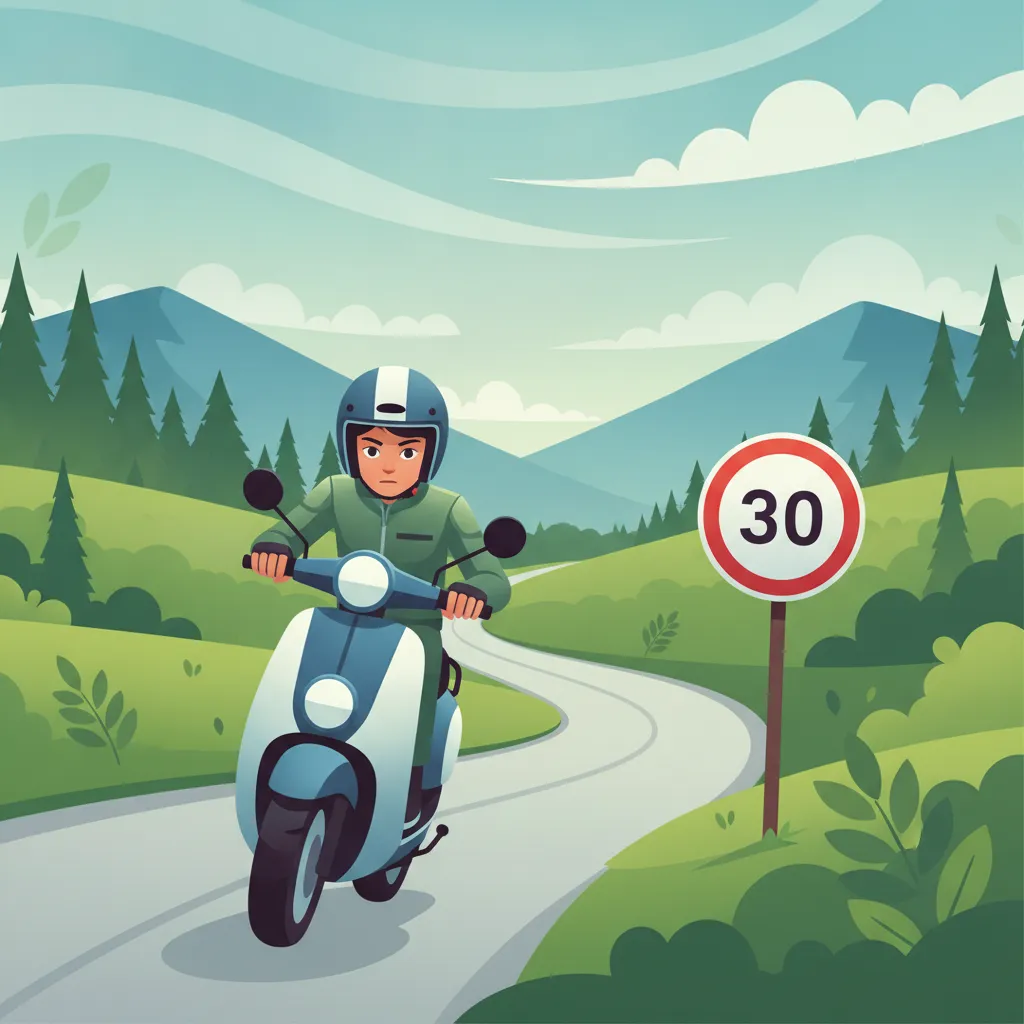
Austrian AM Driving TheoryVisibility, Road Position and Communication in Mixed Traffic
View lesson
Speed Limits for AM Vehicles lesson image

Speed Limits for AM Vehicles

This lesson outlines the legal speed limits for Category AM vehicles in Austria, covering urban, residential, and rural areas. It explains how to identify different speed zones through signage and the importance of adjusting speed based on traffic, weather, and road conditions. Adherence to these limits is a fundamental aspect of both legal compliance and safety.

Austrian AM Driving TheorySpeed, Braking, Grip, Balance and Safe Cornering
View lesson
Road Position on Different Road Types lesson image

Road Position on Different Road Types

This lesson provides guidance on selecting the appropriate road position to maximize visibility and safety. It covers strategies for riding in different parts of a lane based on traffic, road conditions, and potential hazards like parked cars. The goal is to establish a defensive position that allows for adequate reaction time and makes the rider predictable to others.
Austrian AM Driving TheoryVisibility, Road Position and Communication in Mixed Traffic
View lesson
Interaction with Cars, Buses, and Trams lesson image

Interaction with Cars, Buses, and Trams

This lesson provides specific guidance for sharing the road with different types of vehicles in Austria. It covers the dangers of large vehicle blind spots, the rules for navigating near buses and dedicated tram tracks, and common conflict points at intersections. Understanding the behavior and limitations of other vehicles is key to safely navigating complex urban environments.
Austrian Motorcycle Theory (A)Seeing, Being Seen and Communicating as a Rider
View lesson
Urban Hazards: Parked Cars, Narrow Streets, and Pedestrian Zones lesson image

Urban Hazards: Parked Cars, Narrow Streets, and Pedestrian Zones

This lesson focuses on identifying and mitigating common hazards in dense urban settings. It explains how to maintain a safe distance from parked cars to avoid opening doors and how to navigate narrow streets. Additionally, it covers the special rules and heightened awareness required when riding in or near pedestrian zones and school areas.

Austrian AM Driving TheoryJunctions, Roundabouts, Tram Tracks and Urban Hazards
View lesson
Common Risk Behaviours among Young Riders lesson image

Common Risk Behaviours among Young Riders

This lesson identifies and analyzes common risk-taking behaviors prevalent among young and inexperienced riders. It covers the dangers of distractions like mobile phone use, the influence of peer pressure, and the false sense of security from overconfidence. The goal is to foster a mature and responsible approach to riding.

Austrian AM Driving TheoryRisk Behaviour, Legal Consequences, Breakdowns and Emergency Conduct
View lesson

Common Visibility and Predictability Mistakes for Moped Riders in Austria

Learn about frequent errors AM riders make regarding visibility and predictability. This lesson explains how to avoid typical hazards and misunderstandings that lead to dangerous situations on Austrian roads.

visibilitypredictabilityAM licensecommon mistakeshazard avoidanceAustrian road rules
Riding in Rain, Fog, and Low Sunlight lesson image

Riding in Rain, Fog, and Low Sunlight

This lesson focuses on strategies for riding safely in conditions of poor visibility, such as rain, fog, and low sun glare. It explains how to use lights effectively, increase following distances, and moderate speed to maintain control. The content also addresses braking techniques on wet surfaces to prevent skidding and hydroplaning.

Austrian AM Driving TheoryWeather, Darkness, Winter Conditions and Vehicle Readiness
View lesson
Urban Hazards: Parked Cars, Narrow Streets, and Pedestrian Zones lesson image

Urban Hazards: Parked Cars, Narrow Streets, and Pedestrian Zones

This lesson focuses on identifying and mitigating common hazards in dense urban settings. It explains how to maintain a safe distance from parked cars to avoid opening doors and how to navigate narrow streets. Additionally, it covers the special rules and heightened awareness required when riding in or near pedestrian zones and school areas.

Austrian AM Driving TheoryJunctions, Roundabouts, Tram Tracks and Urban Hazards
View lesson
Common Risk Behaviours among Young Riders lesson image

Common Risk Behaviours among Young Riders

This lesson identifies and analyzes common risk-taking behaviors prevalent among young and inexperienced riders. It covers the dangers of distractions like mobile phone use, the influence of peer pressure, and the false sense of security from overconfidence. The goal is to foster a mature and responsible approach to riding.

Austrian AM Driving TheoryRisk Behaviour, Legal Consequences, Breakdowns and Emergency Conduct
View lesson
Rider Visibility Fundamentals lesson image

Rider Visibility Fundamentals

This lesson covers the foundational principles of making a motorcyclist conspicuous to other road users. It examines the role of brightly colored and reflective clothing, effective helmet colors, and the mandatory use of headlights during the day. Understanding how to create a strong visual presence in traffic is a key component of proactive accident prevention for any rider.

Austrian Motorcycle Theory (A)Seeing, Being Seen and Communicating as a Rider
View lesson
Road Position on Different Road Types lesson image

Road Position on Different Road Types

This lesson provides guidance on selecting the appropriate road position to maximize visibility and safety. It covers strategies for riding in different parts of a lane based on traffic, road conditions, and potential hazards like parked cars. The goal is to establish a defensive position that allows for adequate reaction time and makes the rider predictable to others.

Austrian AM Driving TheoryVisibility, Road Position and Communication in Mixed Traffic
View lesson
Lighting, Reflectors, and Helmets lesson image

Lighting, Reflectors, and Helmets

This lesson details the mandatory lighting and reflector requirements for Category AM vehicles in Austria. It explains the functions of different light settings, including daytime running lights, and their importance for being seen. Additionally, it covers the legal standards for protective helmets, a critical component of rider safety.

Austrian AM Driving TheoryVisibility, Road Position and Communication in Mixed Traffic
View lesson
Rural Road Risks and Wildlife Encounters lesson image

Rural Road Risks and Wildlife Encounters

This lesson highlights the specific hazards of riding on countryside roads in Austria. It teaches riders to be vigilant for wildlife crossing signs, especially at dawn and dusk, and how to safely approach and overtake slow-moving agricultural machinery. Awareness of potential surface hazards like mud, gravel, or manure from farm access points is also crucial for maintaining traction.

Austrian Motorcycle Theory (A)Overtaking, Motorways, Tunnels, Rural Roads and Tourist Routes
View lesson
Alpine Road Characteristics and Hazards lesson image

Alpine Road Characteristics and Hazards

This lesson prepares riders for the specific conditions of Austria's mountain passes. It highlights hazards such as tight hairpin turns, potential for sudden weather changes, rockfall, and variable road surfaces. Awareness of these unique challenges allows riders to anticipate risks and adapt their technique for safe and enjoyable alpine touring.
Austrian Motorcycle Theory (A)Steering, Cornering, Bends, Gradients and Alpine Road Awareness
View lesson
Personal Safety and Risk Awareness lesson image

Personal Safety and Risk Awareness

This lesson addresses the heightened vulnerability of motorcyclists and outlines essential strategies for personal safety and risk mitigation. It covers the importance of wearing certified protective gear, maintaining situational awareness, and adopting a defensive riding posture. By understanding and anticipating potential hazards in the Austrian traffic environment, riders can actively reduce their risk of accidents.

Austrian Motorcycle Theory (A)Austrian A1, A2 and A Categories, Rider Identity and Responsibility
View lesson
Interaction with Cars, Buses, and Trams lesson image

Interaction with Cars, Buses, and Trams

This lesson provides specific guidance for sharing the road with different types of vehicles in Austria. It covers the dangers of large vehicle blind spots, the rules for navigating near buses and dedicated tram tracks, and common conflict points at intersections. Understanding the behavior and limitations of other vehicles is key to safely navigating complex urban environments.

Austrian Motorcycle Theory (A)Seeing, Being Seen and Communicating as a Rider
View lesson

Frequently asked questions about First Responsibility: Visibility and Predictability

Find clear answers to common questions learners have about First Responsibility: Visibility and Predictability. Learn how the lesson is structured, which driving theory objectives it supports, and how it fits into the overall learning path of units and curriculum progression in Austria. These explanations help you understand key concepts, lesson flow, and exam focused study goals.

Why is road position so important for moped riders in Austria?

Because AM vehicles are smaller and lighter than cars, they can easily vanish in a driver's blind spot. By choosing a clear and stable road position, you signal your presence to other road users and give them more time to react to your maneuvers.

Is wearing reflective clothing mandatory for AM riders?

While specific StVO requirements for reflectors on the vehicle are strict, wearing high-visibility and reflective gear is highly recommended by experts for any moped rider in Austria to improve recognition in low-light conditions.

How does predictability help me in the theory test?

Many hazard perception questions in the Austrian theory exam present scenarios where a rider's lack of clear signaling or sudden change in position causes a crash. Understanding these rules helps you identify the safe, predictable course of action expected by the examiner.

Do I need to use my indicators even if I think no one is around?

Yes, always use your indicators for every turn or lane change. Predictability is about creating a habit; if you only use signals when you think cars are present, you risk forgetting to signal when it matters most.

Start Your Targeted Austrian Driving Theory Practice Search Now

Refine your study plan by searching for specific Austrian driving theory practice sets. Pinpoint questions related to particular road rules, signs, or challenge levels, and begin practicing immediately to reinforce your knowledge and excel in your official exam with confidence. Get started with focused revision today.

Search Practice Questions

Continue your Austrian driving theory learning journey

Austrian road signsAustrian article topicsSearch Austrian road signsAustrian HGV Theory C courseAustrian driving theory homeAustrian road sign categoriesAustrian driving theory topicsSearch Austrian theory articlesAustrian driving theory coursesAustrian Driving Theory B courseAustrian Driving Theory D courseAustrian driving theory articlesAustrian driving theory practiceAustrian practice set categoriesAustrian AM Driving Theory courseAustrian driving licence proceduresAustrian Motorcycle Theory (A) courseSearch Austrian driving theory practiceAustrian driving theory terminology A–ZAustrian driving theory terms and glossarySigns, Signals, Priority and Austrian Road Basics unit in Austrian AM Driving TheoryMass, Dimensions, Axle Loads, Payload and Operating Limits unit in Austrian HGV Theory CWhat Category AM Allows lesson in Category AM in Austria and the First Responsibility of a RiderCategory AM in Austria and the First Responsibility of a Rider unit in Austrian AM Driving TheoryAustrian Traffic Culture, Core Behaviour Rules and Road Sharing unit in Austrian Driving Theory BMotorcycle Controls, Safety Checks and Protective Equipment unit in Austrian Motorcycle Theory (A)Category B in Austria, L17, Learner Practice and Driver Responsibility unit in Austrian Driving Theory BAustrian D Categories, Passenger Duty of Care and Professional Identity unit in Austrian Driving Theory DPassenger Vehicle Checks, Dimensions, Doors, Mirrors and Safety Systems unit in Austrian Driving Theory DAustrian A1, A2 and A Categories, Rider Identity and Responsibility unit in Austrian Motorcycle Theory (A)Austrian C Categories, Heavy-Vehicle Responsibility and Professional Mindset unit in Austrian HGV Theory CBasic StVO Concepts for AM Riders lesson in Category AM in Austria and the First Responsibility of a RiderLegal Requirements and Vehicle Limits lesson in Category AM in Austria and the First Responsibility of a RiderFirst Responsibility: Visibility and Predictability lesson in Category AM in Austria and the First Responsibility of a Rider