
This lesson details the critical pre-trip inspection procedures required for heavy goods vehicles in Austria. By mastering these daily walk-around checks, you satisfy both legal safety requirements and ensure your vehicle is fit for the road before starting your journey.

Lesson content overview
Operating a heavy goods vehicle (HGV) within Austria, under categories C, C1, C1E, or CE, carries significant responsibility. Before embarking on any journey, a mandatory and systematic pre-trip walk-around inspection is not merely a recommendation; it is a fundamental legal requirement designed to ensure the roadworthiness and safety of your vehicle. This comprehensive check helps identify potential mechanical defects, prevents breakdowns, and significantly reduces the risk to yourself, your cargo, and other road users.
This lesson will guide you through the systematic procedure for conducting a thorough pre-trip inspection, detailing the critical components to examine. By understanding and consistently applying these procedures, you fulfil your legal obligations and uphold the highest standards of professional driving.
A pre-trip walk-around inspection is your primary line of defence against mechanical failure. It involves a detailed visual and functional assessment of your heavy goods vehicle before you begin driving. This proactive safety measure is mandated by Austrian road safety regulations, reflecting its critical role in accident prevention.
The rationale behind these daily checks is clear: early detection of faults. Whether it's a tyre nearing its minimum tread depth, a malfunctioning light, or a potential air leak in the braking system, identifying these issues before they escalate into critical failures can avert serious accidents, costly delays, and significant legal consequences. Performing these checks demonstrates a high level of professional responsibility and commitment to road safety.
Consistent application of pre-trip inspection procedures builds confidence in your vehicle's condition and reinforces a safety-first mindset, crucial for all professional drivers.
To be effective, a pre-trip inspection must be systematic and thorough. This means following a consistent sequence, ensuring no critical component is overlooked. The core principles include:
This foundational understanding builds upon knowledge of vehicle components and their operating limits, especially those covered in lessons concerning Mass, Dimensions, Axle Loads, Payload and Operating Limits and paves the way for deeper understanding in Brake System Checks and Air Pressure Monitoring and Load Distribution, Load Securing and Stability.
A thorough pre-trip inspection covers several critical areas. Each component plays a vital role in the overall safety and roadworthiness of your heavy goods vehicle.
Start at the driver's side front: Begin your walk-around by checking the front wheels, tyres, suspension, and steering components.
Move along the driver's side: Inspect side mirrors, fuel tank, battery box, and any storage compartments.
Rear of the tractor/truck: Check coupling devices, air and electrical lines, and the rear tyres and wheels.
Trailer inspection (if applicable): Systematically inspect the entire trailer, including its tyres, lights, reflective markings, undercarriage, landing gear, and load security.
Passenger side of the trailer/truck: Continue the walk-around, checking mirrors, access steps, and any other components.
Front of the vehicle: Conclude by checking the grille, headlights, indicators, and front-facing warning signs.
In-cab checks: Once the walk-around is complete, enter the cab to perform checks on fluid levels, gauges, and functional tests (brakes, lights).
Tyres are the sole contact point between your heavy vehicle and the road, making their condition paramount for safety, stability, and braking efficiency. A meticulous inspection of your tyres involves assessing tread depth, sidewall integrity, inflation pressure, and ensuring the load rating is appropriate for the vehicle's axle loads.
The measurement of the depth of the grooves in a tyre, directly indicating its grip capability on various road surfaces.
For heavy goods vehicles in Austria, the minimum legal tyre tread depth is 1.6 mm. This depth ensures sufficient grip, especially in wet conditions, to prevent hydroplaning and maintain effective braking. You should also visually inspect the tyre sidewalls for any cuts, bulges, cracks, or signs of unusual wear, which could indicate internal damage or improper inflation.
Proper inflation pressure is crucial. Under-inflated tyres can lead to increased fuel consumption, reduced stability, and excessive heat build-up, potentially causing blowouts. Over-inflation can reduce the tyre's contact patch, leading to decreased grip and uneven wear. Always refer to the manufacturer's load chart for the correct tyre pressure according to the specific load.
Never assume visual inspection alone confirms proper tyre inflation. Always use a reliable pressure gauge to verify readings, and be aware that a tyre with an embedded object, such as a nail, might appear intact but could still be compromised.
Functional lighting systems are critical for visibility and communication with other road users, especially during adverse weather conditions or at night. Your inspection must cover all external lights and reflectors.
This includes:
All external lights must be fully functional, clean, and correctly aligned. In Austria, it is important to remember that amber rear fog lights are prohibited when the vehicle is moving; they are primarily for warning traffic when stationary in poor visibility. Do not rely solely on automatic light sensors; manually verify all lights before departure. A burnt-out indicator, for example, can lead to dangerous, uncommunicated lane changes.
The braking system is arguably the most critical safety feature of any heavy goods vehicle. A preliminary assessment during your pre-trip inspection focuses on the brake pedal travel, monitoring air pressure gauges (for vehicles equipped with air brakes), and a visual inspection of brake lines and components.
For vehicles with air brakes, which is common for HGVs, the air compressor system is vital. Before departure, the air brake system must show a minimum pressure of 5 bar in the service line. A soft or spongy brake pedal, or a noticeable drop in air pressure, could indicate a leak in the system, significantly compromising stopping distance and overall brake performance.
The primary braking system operated by the driver, designed to slow down or stop the vehicle during normal operation. For HGVs, this commonly includes air brake systems.
Always verify pressure gauges. Relying solely on pedal feel without confirming gauge readings can lead to misjudging the system's readiness. Check for visible damage or leaks in brake lines, hoses, and connections.
For heavy goods vehicles, maintaining a clear and comprehensive view of the surroundings is essential for safe operation, especially during lane changes, turns, and reversing manoeuvres. The inspection of mirrors and blind spot devices involves checking for proper adjustment, cleanliness, and ensuring their functionality.
HGVs require outside rear-view mirrors on both sides of the vehicle to provide a clear view of the road behind and alongside. Many heavy vehicles are also equipped with additional side blind spot mirrors, or even camera systems, designed to reduce the notorious blind spots inherent in large vehicles.
Ensure all mirrors are clean and free from cracks or damage. Critically, mirrors must be properly adjusted for your seating position and for any changes in load or trailer configuration. An unadjusted mirror after a load shift could hide a critical blind spot, leading to unsafe lane changes or turns, particularly involving vulnerable road users.
When operating a heavy vehicle combination, the integrity of the coupling device is paramount. This inspection involves a thorough examination of the kingpin, fifth wheel, safety chains, and connection bolts for any signs of wear, proper engagement, and tightness.
A coupling device located on the tractor unit that connects to the kingpin of a semi-trailer, forming a secure articulation point.
Check that the fifth wheel is fully engaged and locked around the trailer's kingpin. For drawbar trailers, ensure the coupling eye and pin are securely fastened. Safety chains, if required for your coupling type, must be properly connected and tightened before departure to prevent accidental decoupling of the trailer from the tractor unit. Never assume an automatic coupling eliminates the need for manual checks of safety chains or other securing mechanisms. Loose safety chains could lead to trailer separation during sudden braking or evasive manoeuvres, with catastrophic consequences.
The security of your cargo is directly linked to vehicle stability and safety. This part of the inspection involves verifying that all cargo is properly restrained, distributed within permissible axle limits, and does not obstruct your view or the movement of any vehicle parts.
Load securing methods can include mechanical restraints (straps, chains, tensioners), friction restraints, and physical barriers such as bulkheads. The load must be secured with appropriate restraints to prevent any movement during transport, which could affect vehicle stability, braking, or even cause the load to shift dangerously. Overhanging loads must be correctly marked according to regulations.
A common misunderstanding is believing that "gravity holds" cargo in place without additional restraints. Even heavy cargo can shift during cornering, braking, or acceleration, leading to trailer sway, loss of control, or damage.
This aspect of the inspection is directly related to Lesson 5, Load Distribution, Load Securing and Stability, and ensures that the practical application aligns with theoretical knowledge.
Ensuring adequate fluid levels is crucial for the proper functioning and longevity of your heavy goods vehicle. Your pre-trip inspection should include checking the levels of:
Engine oil, in particular, must be at the recommended level before each trip. Ignoring small leaks or low levels can lead to critical mechanical failures over long distances, such as engine damage from overheating or lack of lubrication.
Many modern heavy goods vehicles are equipped with a Tyre Pressure Monitoring System (TPMS), which provides real-time pressure readings. During your inspection, you must ensure that the TPMS sensors are operational and correctly displaying pressure readings for all tyres.
The practical meaning of TPMS is significant: it allows you to detect under- or over-inflation immediately, preventing issues like uneven tyre wear, reduced fuel efficiency, and potential blowouts. If your vehicle has a TPMS, any warning lights or alarms must be functional. Ignoring a TPMS warning light constitutes a violation and poses a serious safety risk, as it could mask a deflated tyre that might otherwise go unnoticed.
In Austria, the requirement for pre-trip inspections is explicitly stated in road safety legislation. Drivers of heavy vehicles (categories C, C1, C1E, CE) are legally obligated to conduct a thorough inspection before each journey. This ensures that the vehicle is in a roadworthy condition and that any identified faults are rectified before departure. If a critical defect is found, the vehicle must be taken out of service until it is repaired.
A systematic visual and functional walk-around of a vehicle before starting a journey, legally required for heavy goods vehicles in Austria.
This rule is mandatory under provisions such as Article 3 of the Austrian Road Traffic Act, or equivalent regulations concerning vehicle maintenance and roadworthiness. The rationale is clear: to prevent accidents stemming from mechanical failures and to ensure every vehicle on Austrian public roads meets the required safety standards.
Correct Application Example: A driver checks the tyre pressure, discovers one tyre is significantly underinflated, and inflates it to the correct pressure before starting the journey. Incorrect Application Example: A driver notices a cracked headlight but decides to proceed with the trip, assuming it will not affect safety. This action is subject to fines and potential point penalties, as the vehicle is not in a fully roadworthy condition.
Despite the clear regulations and importance, certain aspects of pre-trip inspections are frequently overlooked, leading to common violations and increased safety risks.
The emphasis of certain inspection points can shift based on prevailing conditions, requiring the driver to adapt their focus.
Understanding the cause-and-effect relationships inherent in pre-trip inspections highlights their profound impact on safety and operational efficiency.
To solidify your understanding, consider these practical scenarios and the correct inspection actions required.
Scenario: Dry Summer Day, Highway, Fully Loaded HGV.
Scenario: Foggy Early Morning, Rural Road.
Scenario: Loading Dock, Multiple Pallets on Trailer.
Scenario: Nighttime, Urban Area with Many Pedestrians and Cyclists.
The pre-trip walk-around inspection is a cornerstone of safe and compliant heavy goods vehicle operation in Austria. It is a systematic, legally mandated procedure that requires diligent attention to detail across multiple critical components.
To summarize, always:
By consistently performing these rigorous checks, you contribute significantly to road safety for everyone and ensure your compliance with Austrian heavy vehicle regulations.
The pre-trip walk-around inspection is a mandatory, systematic procedure for all Austrian HGV drivers that must be conducted before every journey. Critical components include tyres (minimum 1.6mm tread depth, correct inflation), lights (all indicators, brake lights, and reflectors), brakes (minimum 5 bar air pressure for service line), mirrors (proper adjustment for current load), coupling devices (fifth wheel engagement and safety chains), and load security (physical restraints, not just gravity). The inspection must be documented, and any critical defects require the vehicle to be removed from service until repaired. Inspection focus should adapt based on weather conditions, road type, loading state, and the presence of vulnerable road users.
A short set of high-value points that capture the most important learning from this lesson.
A systematic pre-trip inspection is a legally mandatory requirement for all HGV drivers in Austria before every journey
Tyre tread depth must be at least 1.6mm and tyre pressure must match the load chart for your vehicle's current weight
Air brake systems require a minimum service line pressure of 5 bar before departure
Load security cannot rely on gravity alone; cargo must be physically restrained with appropriate straps, chains, or barriers
All inspection findings must be documented in a trip log, and critical defects require the vehicle to be taken out of service until repaired
Explore all units and lessons included in this driving theory course.
Minimum legal tyre tread depth for HGVs in Austria is 1.6mm
Minimum air brake service line pressure is 5 bar
The inspection sequence follows a clockwise or counter-clockwise walk-around starting from the driver's side front
Safety chains must be checked even when automatic coupling systems are used
Rear fog lights are prohibited for use while driving in Austria; they are only for stationary use in severely reduced visibility
Assuming visual tyre inspection alone confirms proper inflation without using a pressure gauge
Believing that cargo weight alone prevents shifting during braking or cornering
Proceeding with a journey when air pressure is below the 5 bar minimum
Skipping light checks during daylight hours assuming they are only needed at night
Failing to readjust mirrors after load changes, creating new blind spots
Lesson content overview
A short set of high-value points that capture the most important learning from this lesson.
A systematic pre-trip inspection is a legally mandatory requirement for all HGV drivers in Austria before every journey
Tyre tread depth must be at least 1.6mm and tyre pressure must match the load chart for your vehicle's current weight
Air brake systems require a minimum service line pressure of 5 bar before departure
Load security cannot rely on gravity alone; cargo must be physically restrained with appropriate straps, chains, or barriers
All inspection findings must be documented in a trip log, and critical defects require the vehicle to be taken out of service until repaired
Explore all units and lessons included in this driving theory course.
Minimum legal tyre tread depth for HGVs in Austria is 1.6mm
Minimum air brake service line pressure is 5 bar
The inspection sequence follows a clockwise or counter-clockwise walk-around starting from the driver's side front
Safety chains must be checked even when automatic coupling systems are used
Rear fog lights are prohibited for use while driving in Austria; they are only for stationary use in severely reduced visibility
Assuming visual tyre inspection alone confirms proper inflation without using a pressure gauge
Believing that cargo weight alone prevents shifting during braking or cornering
Proceeding with a journey when air pressure is below the 5 bar minimum
Skipping light checks during daylight hours assuming they are only needed at night
Failing to readjust mirrors after load changes, creating new blind spots
Explore search topics learners often look for when studying Pre-Trip Walk-Around Inspection Procedures. These topics reflect common questions about road rules, driving situations, safety guidance, and lesson level theory preparation for learners in Austria.
Browse additional driving theory lessons that cover connected traffic rules, road signs, and common driving situations related to this topic. Improve your understanding of how different rules interact across everyday traffic scenarios.
Focus on the critical checks for brakes, lights, and tyres in HGV pre-trip inspections. Understand Austrian legal requirements and safety implications to ensure roadworthiness and prevent common faults.

This lesson explains the procedures for checking the functionality of a heavy vehicle's braking systems, with a focus on air brakes. It covers how to monitor air pressure gauges and conduct tests to ensure both the service and parking brakes are operating correctly. These daily checks are essential for confirming the vehicle's stopping capability.

This lesson covers the various lighting and reflector systems required on heavy goods vehicles in Austria. It explains the function and legal requirements for headlights, taillights, brake lights, indicators, and reflective markings. Ensuring all lighting systems are operational is essential for visibility and communicating intentions to other road users.

This lesson introduces the fundamentals of regular vehicle inspection and preventive maintenance. Learners will understand how to perform essential pre-drive checks, including verifying fluid levels (oil, coolant, washer fluid), testing brakes, and checking the responsiveness of the steering. Adhering to a basic maintenance schedule is presented as a critical habit for ensuring long-term vehicle safety and roadworthiness, helping to prevent mechanical failures.
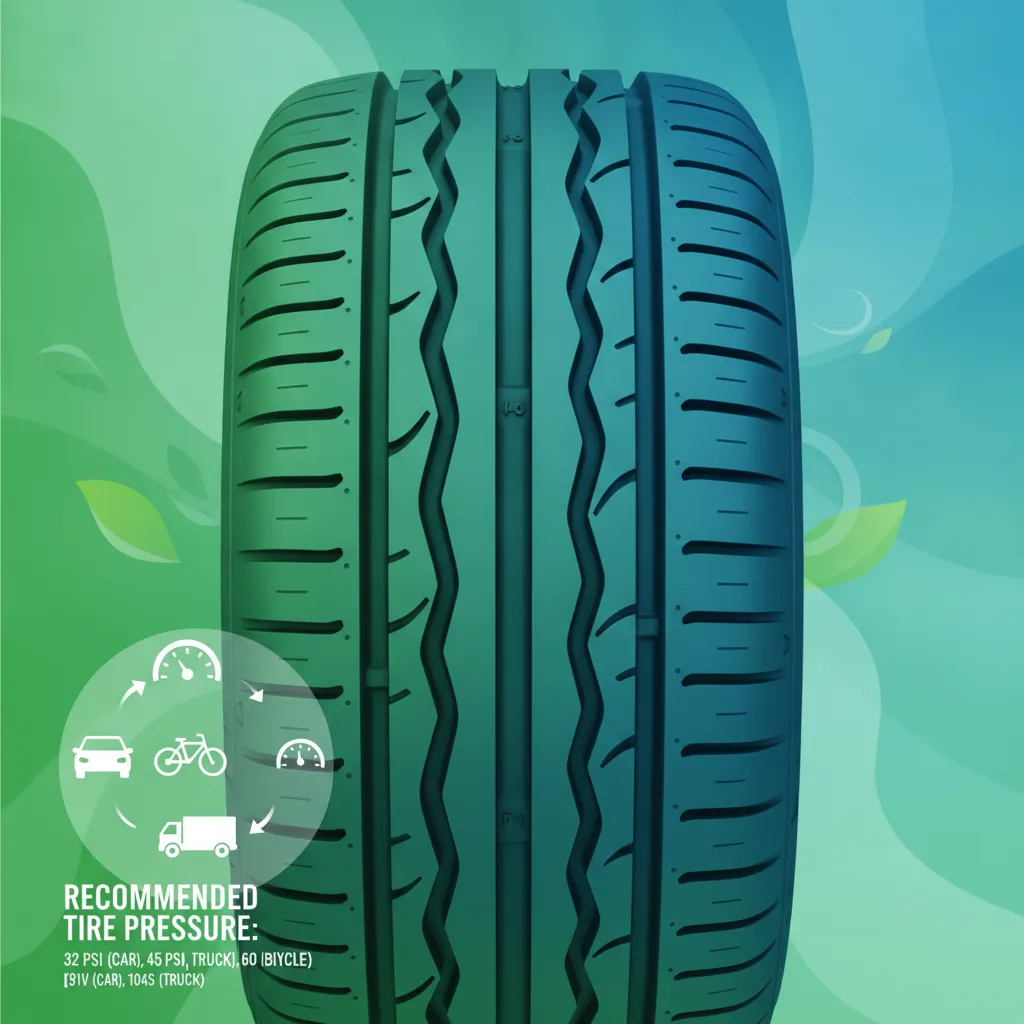
This lesson provides detailed information on heavy vehicle tyres, covering topics such as correct inflation pressures, legal tread depth requirements, and understanding the load index. It explains how to identify signs of abnormal wear or damage that could compromise safety. Proper tyre maintenance is crucial for optimal handling, braking, and overall vehicle safety.

This lesson focuses on the legal restrictions concerning a heavy vehicle's dimensions, including maximum height, width, and length. It teaches drivers how to interpret road signs and supplemental plates that indicate these limits. This knowledge is crucial for route planning, especially when navigating under bridges, through tunnels, and on restricted roads.
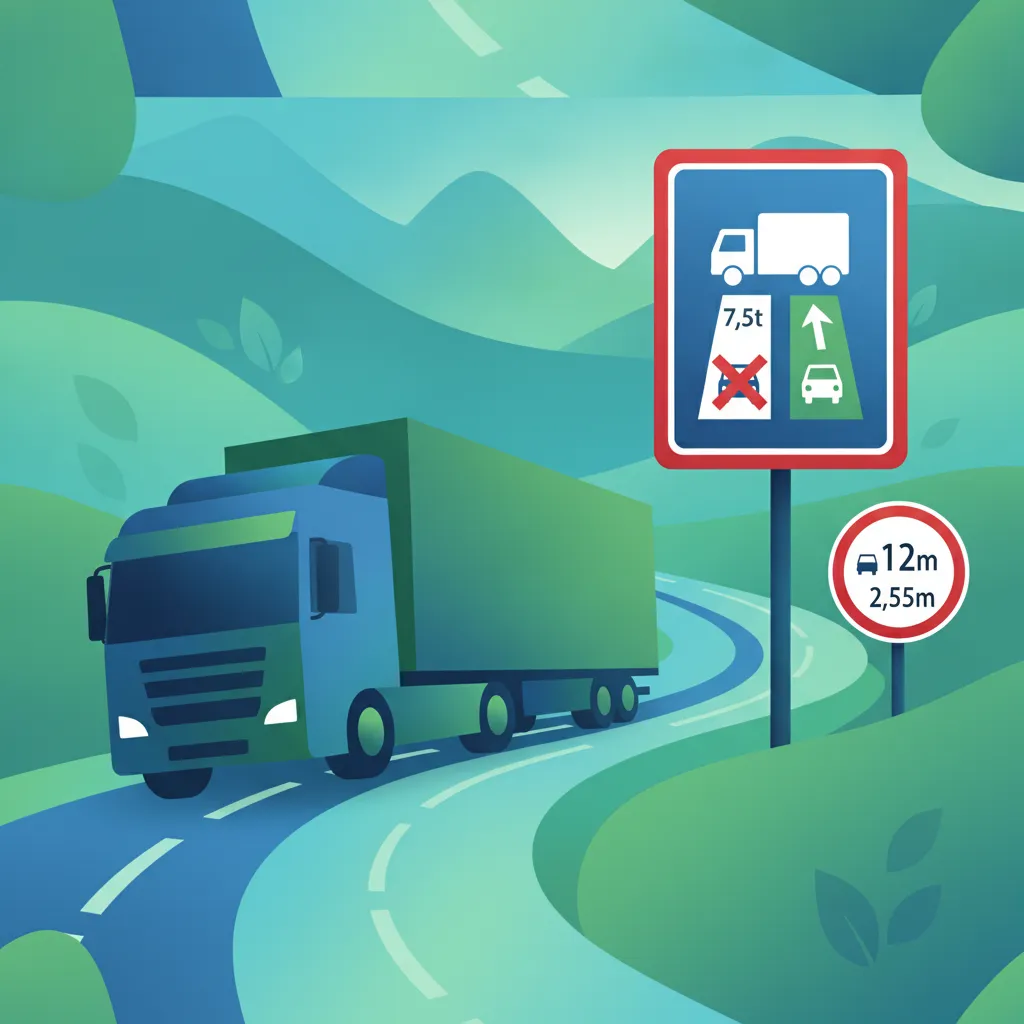
This lesson focuses on the specific Austrian road signs and supplemental plates that apply to heavy goods vehicles. It explains how to interpret signage indicating weight limits, height and width restrictions, lane usage rules, and other critical regulatory information. Correctly understanding these signs is essential for legal compliance and safe navigation on Austria's roads.

This lesson details the general traffic rules applicable to heavy goods vehicles on Austrian roads, highlighting differences from passenger car regulations. It covers key topics such as right-of-way at intersections, specific rules for overtaking, maintaining proper lane discipline, and adhering to designated speed limits. Understanding these rules is critical for safe integration into mixed traffic.

This lesson outlines the standardized procedure for handling a vehicle breakdown safely. It covers pulling over to a safe location, activating hazard lights, deploying the warning triangle, and wearing a high-visibility vest. It also explains when and how to contact roadside assistance or emergency services.

This lesson details the critical role tyres play in vehicle safety, focusing on Austrian regulations for seasonal use. Learners will understand the mandatory period for winter tyres, the legal minimum for tread depth, and the importance of maintaining correct tyre pressure for optimal grip and fuel efficiency. The content explains how tyre condition directly affects braking distance and the risk of aquaplaning, making it a key safety component.

This lesson covers the specific weight restrictions that apply to sensitive infrastructure like Alpine passes and bridges throughout Austria. It explains how to identify these limits through road signage and incorporate them into route planning. Adhering to these restrictions is vital for preventing structural damage and ensuring safety in challenging terrain.
Explore the essential procedures for inspecting load securing, trailer coupling, and understanding their impact on vehicle stability for heavy goods vehicles in Austria. Crucial for safe operations and legal compliance.

This lesson explains the critical relationship between load distribution, the vehicle's centre of gravity, and its stability. It details how incorrect placement of cargo can negatively affect handling, increase the risk of rollovers, and reduce braking efficiency. Achieving a balanced load is a key component of safe heavy vehicle operation.

This lesson explains the severe consequences of a load shift while the vehicle is in motion. It details how sudden movement of cargo can drastically alter the vehicle's stability, making it difficult to steer or brake effectively. This can lead to a loss of control or a rollover, highlighting the importance of proper load securing.

This lesson explains the critical importance of properly securing any load, whether inside the vehicle, on a roof rack, or in a trailer. It covers the principles of correct weight distribution to maintain the vehicle's center of gravity and stability. Learners will understand the legal requirements and best practices for using tie-downs and other securing methods to prevent items from shifting or falling, which could create a serious hazard on the road.

This lesson provides guidance on how to strategically distribute a load across both the main vehicle and its trailer. It covers planning the placement of cargo to maintain a stable centre of gravity for the entire combination. This holistic approach to loading is crucial for safe handling and adhering to individual vehicle and axle weight limits.

This lesson emphasizes the need to inspect all load-securing equipment as part of the daily pre-trip check. It teaches drivers how to look for signs of wear, damage, or malfunction in straps, chains, ratchets, and other devices. Verifying the integrity of this equipment is essential before every journey to ensure the load remains secure.

This lesson focuses on the management of tongue load (Stützlast), which is the downward force the trailer coupling exerts on the towing vehicle. It explains how too little or too much tongue load can negatively affect the stability and handling of the entire combination. Achieving the correct Stützlast is vital for safe towing.

This lesson explains the physical principles of load distribution and its direct impact on a vehicle's centre of gravity and stability. It details how to arrange cargo to maintain a low centre of gravity and ensure weight is distributed correctly over the axles. Proper load distribution is fundamental to safe handling and preventing rollovers.

This lesson details the importance of managing axle load limits (Achslast) and their relationship to the vehicle's payload (Nutzlast). It explains how uneven load distribution can lead to exceeding individual axle limits, even if the total mass is legal. Proper management of axle loads is essential for vehicle stability, road preservation, and legal compliance.

This lesson details the legal ramifications of operating an overloaded heavy vehicle in Austria, which include significant fines and penalty points. It also emphasizes the severe safety risks, such as compromised braking performance and increased mechanical stress on the vehicle. Understanding these consequences reinforces the importance of strict adherence to weight limits.

This lesson prepares drivers for the emergency scenario of a shifting or lost load. It covers how to react to the sudden change in vehicle handling, safely pull over, and assess the situation. The lesson also explains the driver's responsibility for securing the scene and reporting the incident to prevent hazards for other road users.
Find clear answers to common questions learners have about Pre-Trip Walk-Around Inspection Procedures. Learn how the lesson is structured, which driving theory objectives it supports, and how it fits into the overall learning path of units and curriculum progression in Austria. These explanations help you understand key concepts, lesson flow, and exam focused study goals.
Yes, as a professional driver, you are legally responsible for ensuring your vehicle is in a safe condition before every journey. Failure to perform these checks can lead to penalties and invalid insurance in case of an incident.
Prioritize critical safety items: tyre tread and pressure, all exterior lights, brake functionality, and the integrity of your load-securing equipment. Any defect here could render the vehicle unroadworthy.
Exam questions often present scenarios where you must identify if a vehicle is safe to drive or which specific component requires immediate repair based on a described symptom or failure.
Absolutely. Ensuring your cargo is properly secured is a fundamental part of the check, as load shifts are a major cause of stability issues and accidents in heavy vehicles.
Refine your study plan by searching for specific Austrian driving theory practice sets. Pinpoint questions related to particular road rules, signs, or challenge levels, and begin practicing immediately to reinforce your knowledge and excel in your official exam with confidence. Get started with focused revision today.