
This lesson details the legal safety requirements for motorcycle helmets as mandated by Austrian law. You will learn to identify compliant headgear, understand the critical importance of a correct fit, and discover why regular replacement is essential for rider safety in your A, A1, or A2 licence journey.
Lesson content overview
Riding a motorcycle offers a unique sense of freedom, but it comes with inherent risks that demand a strong commitment to safety. Among all protective gear, the helmet stands as the single most critical piece of equipment for safeguarding a rider's head. In Austria, wearing a helmet is not just a recommendation; it is a strict legal requirement, governed by specific safety standards designed to minimize head injuries in the event of an accident. This lesson provides a comprehensive guide to understanding these standards, choosing the right helmet, ensuring a proper fit, and maintaining your helmet for optimal protection throughout its lifespan.
Motorcycle helmets are engineered to protect your most vital organ: your brain. In a crash, the primary goal of a helmet is to absorb and dissipate impact energy, reducing the force transferred to your skull and brain. This is achieved through a multi-layered construction, typically involving a hard outer shell, an impact-absorbing foam liner, and soft comfort padding. By extending the duration of the impact and spreading the force over a larger area, helmets significantly reduce the risk of severe head injuries, concussions, and fatalities. Neglecting helmet use or wearing an ill-fitting or compromised helmet can have catastrophic consequences, making proper helmet selection and usage paramount for every motorcycle rider and passenger.
In Austria, as in most European Union countries, motorcycle helmets are legally mandated to meet specific safety certifications. The primary standard you need to be aware of is the ECE Regulation 22.
The Economic Commission for Europe Regulation 22 is an internationally recognized safety standard for motorcycle helmets. It specifies stringent testing protocols for impact absorption, penetration resistance, field of vision, and the strength of the retention system.
Historically, the ECE 22.05 standard has been the prevailing legal requirement. This certification guarantees that a helmet has undergone rigorous testing and meets minimum safety criteria. Since 2016, a newer, even more stringent standard, ECE 22.06, has been introduced. While ECE 22.05 certified helmets remain legal for use, new helmets manufactured and sold are increasingly complying with ECE 22.06. This updated standard includes more advanced tests, such as oblique impacts to assess rotational forces, and expands the range of impact points.
It is crucial that any helmet worn by a rider or passenger in Austria bears an ECE 22.05 or ECE 22.06 mark. Helmets without this specific European certification, such as those meeting DOT (USA) or Snell (USA) standards only, are generally not legally recognized for road use in Austria.
Always check for the ECE certification label before purchasing or using a helmet. Helmets lacking this mark are illegal for road use in Austria and offer unverified levels of protection.
The ECE certification mark is typically found on a label stitched into the chin strap or inside the helmet liner. This label contains a series of numbers and letters, including:
Motorcycle helmets come in various designs, each offering different levels of protection, ventilation, and rider comfort. The choice often depends on riding style, speed, and personal preference, but all types must adhere to ECE safety standards.
A helmet design that completely encloses the head, including a fixed chin bar and an integrated visor, offering the highest level of protection.
Full-face helmets provide the most comprehensive protection among all helmet types. They cover the entire head, including the chin and jaw, which are vulnerable areas in an accident. The integrated visor protects the eyes from wind, debris, and insects. Full-face helmets are generally preferred for high-speed riding, touring, and sport riding due due to their superior aerodynamics, noise reduction, and overall safety. They offer excellent impact absorption and prevent road rash on the face.
A full-face helmet design with a hinged chin bar and visor assembly that can be lifted upwards, allowing the rider to easily access their face without removing the helmet.
Modular, or "flip-up," helmets offer a compromise between the full protection of a full-face helmet and the convenience of an open-face design. The chin bar can be lifted, allowing riders to communicate easily, drink water, or get some air while stopped without taking the helmet off. When riding, especially at speed, the chin bar must be securely locked in the down position to maintain its protective integrity. Many modular helmets are dual-certified (P/J rating), meaning they meet ECE standards for both protective (full-face) and jet (open-face) configurations, but the full protection rating only applies when the chin bar is locked down.
A helmet design that covers the top, back, and sides of the head, but leaves the face and chin exposed, typically used with goggles or a separate visor.
Open-face helmets, sometimes referred to as "jet helmets," cover the top and sides of the head but lack a chin bar. They offer less protection compared to full-face or modular helmets, particularly against facial impacts. While they provide better airflow and a wider field of view, they are generally only recommended for low-speed urban commuting where the risk of high-speed impact is reduced. Riders using open-face helmets should always wear eye protection, such as goggles or a clear visor, to shield their eyes from debris and wind. In Austria, open-face helmets must still bear the ECE certification mark.
Off-road helmets, often associated with motocross or trail riding, are designed for the specific demands of these sports. They typically feature an elongated chin bar for increased airflow and space for a breathing mask, along with a prominent peak (visor) to shield from roost and sun. These helmets are usually worn with separate goggles. While they offer excellent protection for their intended use, their aerodynamic properties are not suited for sustained high-speed road riding. Like all helmets, those used on public roads must be ECE certified.
A helmet, regardless of its ECE certification, can only provide optimal protection if it fits correctly. An ill-fitting helmet can shift during an impact, compromising its energy absorption capabilities or even coming off.
The first step to finding the right fit is to accurately measure your head circumference.
Use a soft measuring tape: Wrap the tape around your head, approximately 1 centimeter (about half an inch) above your eyebrows and ears.
Note the measurement: Take the measurement in centimeters. This will be your primary guide for selecting a helmet size from manufacturer charts.
Consider head shape: Beyond circumference, head shape (round-oval, intermediate-oval, long-oval) also influences fit. Some brands cater more to specific head shapes, so trying on different brands is often necessary.
Once you have your head measurement, consult helmet size charts (S, M, L, XL, etc.). However, size charts are just a starting point. The real test is trying the helmet on.
Put the helmet on: It should feel snug all around, with uniform pressure on your head. There should be no painful pressure points.
Check cheek pads: The cheek pads should press firmly against your cheeks without causing discomfort. Your cheeks should feel slightly compressed.
Observe movement: With the chin strap fastened, try to move the helmet from side to side and up and down. Your scalp should move with the helmet; the helmet should not slide independently. If it moves too much, it’s too large.
Ensure visibility: The eyeport should allow for a good field of vision without obstructions.
Wear for a few minutes: Keep the helmet on for at least 5-10 minutes to ensure there are no developing pressure points that could become painful on longer rides.
The helmet's retention system, primarily the chin strap, is crucial for keeping the helmet securely on your head during an impact. An ECE-certified helmet with a loose or unfastened chin strap offers significantly reduced protection, as it can easily come off in a crash.
Most ECE-certified helmets feature either a double D-ring fastener or a quick-release buckle (often a micrometric ratchet system).
A helmet retention system consisting of two D-shaped rings through which the chin strap is threaded, providing a very secure and infinitely adjustable fastening.
The double D-ring system is considered the most secure and reliable. It's simple, robust, and less prone to failure than some mechanical buckles. To fasten, thread the strap through both D-rings, then back over the first D-ring and through the second.
Quick-release buckles offer convenience and are often found on modular or urban helmets. They are generally safe when properly designed and maintained, but it's vital to ensure they are fully engaged and not damaged.
Regardless of the fastening mechanism, the chin strap must be tightened correctly every time you ride.
Fasten the strap: Secure the D-rings or buckle.
Tighten snugly: Pull the loose end of the strap until it feels snug against your throat.
Check the fit: You should be able to fit only one fingertip comfortably between the strap and your chin. If you can fit more than one, it's too loose.
Test the helmet: Try to pull the helmet off your head from the back. If the chin strap is properly fastened, the helmet should resist coming off, and the strap should dig slightly into your throat.
A common violation of helmet safety is riding with an unfastened or loosely fastened chin strap. This renders the helmet ineffective and is illegal.
The visor is your window to the road and is essential for clear vision and protection against wind, debris, and UV radiation. Its condition directly impacts your safety.
The transparent or tinted shield attached to a helmet, protecting the rider's eyes and face from wind, weather, debris, and UV radiation.
Tinted visors are useful for reducing glare and eye strain during bright daylight conditions. However, their use is strictly regulated, especially in Austria.
Unlike a pair of jeans, a motorcycle helmet does not last forever. Even if it looks perfectly fine, the materials degrade over time, reducing its protective capabilities.
The most critical factor for helmet replacement is any impact. Even a seemingly minor drop onto a hard surface or a low-speed fall can compromise the helmet's structural integrity, especially the energy-absorbing EPS (Expanded Polystyrene) foam liner. This foam is designed to compress and crush once to absorb impact energy. Once compromised, it cannot offer the same level of protection again.
If your helmet has been involved in a crash, even if you see no visible damage, it must be replaced. The internal structure may be compromised, making it unsafe for further use.
Even without an impact, helmet materials degrade due to:
For these reasons, safety experts and most helmet manufacturers recommend replacing your helmet every five years from the date of manufacture (often stamped inside the helmet) or five years from the date of purchase, whichever comes first, even if it appears to be in perfect condition. While Austrian law doesn't explicitly mandate a replacement period, riding with a helmet beyond its recommended lifespan could be interpreted as negligence in the event of an accident.
The use of certified motorcycle helmets is not merely a safety recommendation; it is a fundamental legal obligation in Austria under the Straßenverkehrsordnung (StVO - Road Traffic Regulations).
Mandatory Helmet Use (§ 17 StVO): According to § 17 of the StVO, all riders and passengers of motorcycles and mopeds (motorisierte Zweiräder) must wear a helmet that complies with ECE 22.05 or newer certification while the vehicle is in motion on public roads. This rule applies universally, regardless of the motorcycle's speed, type of road, or journey length.
Retention System Rule: Crucially, the helmet's chin strap must be securely fastened at all times while the motorcycle is moving. An unfastened or loose strap renders the helmet ineffective and is considered non-compliance with the regulations.
Visor Tinting Regulation: As previously discussed, helmets with tinted visors are only permitted during daylight hours. They must be removed or lifted (if applicable, with a clear internal visor used) when riding at night or in conditions of poor visibility.
Helmet Condition and Damage: While not explicitly codified with a specific "damaged helmet" paragraph, using a helmet that has been compromised by an impact or shows significant visible damage can be construed as negligence, as it fails to provide the legally required level of protection. Riders are expected to ensure their protective equipment is in good working order.
Non-compliance with these regulations can result in fines and, more importantly, significantly increase the risk of severe injury or fatality in an accident.
Being aware of common mistakes can help you ensure compliance and maximize your safety.
The optimal helmet choice and maintenance can vary depending on riding conditions and environment.
Understanding the engineering behind helmets reinforces their importance.
By working together, these components significantly reduce the severity of head injuries, turning potentially fatal impacts into survivable ones.
Adhering to these principles is essential for your safety and legal compliance on Austrian roads, allowing you to enjoy the ride with confidence and peace of mind.
This lesson covers Austria's mandatory motorcycle helmet requirements under ECE Regulation 22, distinguishing between full-face, modular, and open-face helmet types and their respective protection levels. It emphasizes that proper fit—measured by head circumference and confirmed by checking that the helmet moves with the scalp—is essential for the helmet to function correctly during an impact. The lesson details proper chin strap adjustment using the double D-ring or quick-release systems, requiring only one fingertip gap when tightened. Critical maintenance points include visor cleanliness and replacement of damaged visors, plus adherence to the five-year replacement cycle even without visible wear, as materials degrade from UV exposure and temperature cycles. Finally, it clarifies that tinted visors are only permitted during daylight hours in Austria, with riders needing a clear visor or retractable sun shield for nighttime and low-visibility conditions.
A short set of high-value points that capture the most important learning from this lesson.
All motorcycle helmets worn in Austria must bear ECE 22.05 or ECE 22.06 certification marking to be legally compliant on public roads
Full-face helmets provide the highest level of protection, while open-face helmets offer less coverage for chin and jaw areas
A properly fitting helmet should move with your scalp when tested, not slide independently, with cheek pads pressing firmly against your cheeks
Modular helmets only provide full protection when the chin bar is securely locked in the down position during riding
Replace your helmet immediately after any impact and every five years regardless of visible condition due to material degradation
Explore all units and lessons included in this driving theory course.
ECE certification label includes the letter 'E' followed by a country number, the regulation version (22.05 or 22.06), and a production serial number
Chin strap is correctly tightened when only one fingertip fits comfortably between the strap and your chin
Tinted visors are illegal in Austria during nighttime, dusk, dawn, or poor visibility conditions
The EPS foam liner absorbs impact energy once and cannot provide the same protection after compression
Helmet lifespan is typically five years from manufacture date due to UV exposure, temperature cycles, and general wear degrading protective materials
Assuming DOT or Snell-only certified helmets are legal in Austria; only ECE certification meets EU/Austrian road requirements
Wearing a helmet with the chin strap loosely fastened or unfastened, which renders the helmet ineffective in a crash
Continuing to use a helmet after a crash because no visible external damage is apparent
Using a helmet that is too large, which allows it to shift during impact and reduces energy absorption effectiveness
Riding with a heavily tinted visor at night or in fog, severely impairing visibility and creating an illegal condition
Lesson content overview
A short set of high-value points that capture the most important learning from this lesson.
All motorcycle helmets worn in Austria must bear ECE 22.05 or ECE 22.06 certification marking to be legally compliant on public roads
Full-face helmets provide the highest level of protection, while open-face helmets offer less coverage for chin and jaw areas
A properly fitting helmet should move with your scalp when tested, not slide independently, with cheek pads pressing firmly against your cheeks
Modular helmets only provide full protection when the chin bar is securely locked in the down position during riding
Replace your helmet immediately after any impact and every five years regardless of visible condition due to material degradation
Explore all units and lessons included in this driving theory course.
ECE certification label includes the letter 'E' followed by a country number, the regulation version (22.05 or 22.06), and a production serial number
Chin strap is correctly tightened when only one fingertip fits comfortably between the strap and your chin
Tinted visors are illegal in Austria during nighttime, dusk, dawn, or poor visibility conditions
The EPS foam liner absorbs impact energy once and cannot provide the same protection after compression
Helmet lifespan is typically five years from manufacture date due to UV exposure, temperature cycles, and general wear degrading protective materials
Assuming DOT or Snell-only certified helmets are legal in Austria; only ECE certification meets EU/Austrian road requirements
Wearing a helmet with the chin strap loosely fastened or unfastened, which renders the helmet ineffective in a crash
Continuing to use a helmet after a crash because no visible external damage is apparent
Using a helmet that is too large, which allows it to shift during impact and reduces energy absorption effectiveness
Riding with a heavily tinted visor at night or in fog, severely impairing visibility and creating an illegal condition
Explore search topics learners often look for when studying Helmet Standards and Usage. These topics reflect common questions about road rules, driving situations, safety guidance, and lesson level theory preparation for learners in Austria.
Browse additional driving theory lessons that cover connected traffic rules, road signs, and common driving situations related to this topic. Improve your understanding of how different rules interact across everyday traffic scenarios.
Understand the mandatory ECE safety standards for motorcycle helmets in Austria. Learn about different helmet types, how to ensure a proper fit, and crucial advice on visor care and helmet lifespan for rider safety.

This lesson covers the essential personal protective equipment (PPE) required for motorcycling in Austria. It details the safety standards for helmets, including fit and certification, and explains the benefits of armored jackets, gloves, and sturdy boots. The importance of high-visibility and weather-appropriate gear is also discussed to enhance rider protection in all conditions.

This lesson details the mandatory lighting and reflector requirements for Category AM vehicles in Austria. It explains the functions of different light settings, including daytime running lights, and their importance for being seen. Additionally, it covers the legal standards for protective helmets, a critical component of rider safety.

This lesson addresses the heightened vulnerability of motorcyclists and outlines essential strategies for personal safety and risk mitigation. It covers the importance of wearing certified protective gear, maintaining situational awareness, and adopting a defensive riding posture. By understanding and anticipating potential hazards in the Austrian traffic environment, riders can actively reduce their risk of accidents.

This lesson covers the foundational principles of making a motorcyclist conspicuous to other road users. It examines the role of brightly colored and reflective clothing, effective helmet colors, and the mandatory use of headlights during the day. Understanding how to create a strong visual presence in traffic is a key component of proactive accident prevention for any rider.
This lesson focuses specifically on motorcycle tyre maintenance, a critical safety component. It explains how to accurately measure tyre pressure, inspect for adequate tread depth, and identify uneven wear patterns that may indicate other issues. Understanding how tyre condition affects grip, handling, and braking performance is essential for every rider to maintain control.

This lesson details the mandatory personal and vehicle documentation required for motorcyclists in Austria. It covers the necessity of carrying a valid licence card, vehicle registration papers, and proof of insurance at all times. Understanding these legal requirements ensures full compliance with Austrian traffic law and facilitates smooth interactions with law enforcement.

This lesson prepares riders for the specific conditions of Austria's mountain passes. It highlights hazards such as tight hairpin turns, potential for sudden weather changes, rockfall, and variable road surfaces. Awareness of these unique challenges allows riders to anticipate risks and adapt their technique for safe and enjoyable alpine touring.

This lesson emphasizes the practical and ethical duties of motorcyclists on Austrian roads, focusing on proactive risk assessment and sound judgment. It teaches learners how to recognize potential hazards, anticipate the actions of other road users, and consistently adhere to traffic regulations. Cultivating this responsible mindset is crucial for personal safety and protecting others in traffic.
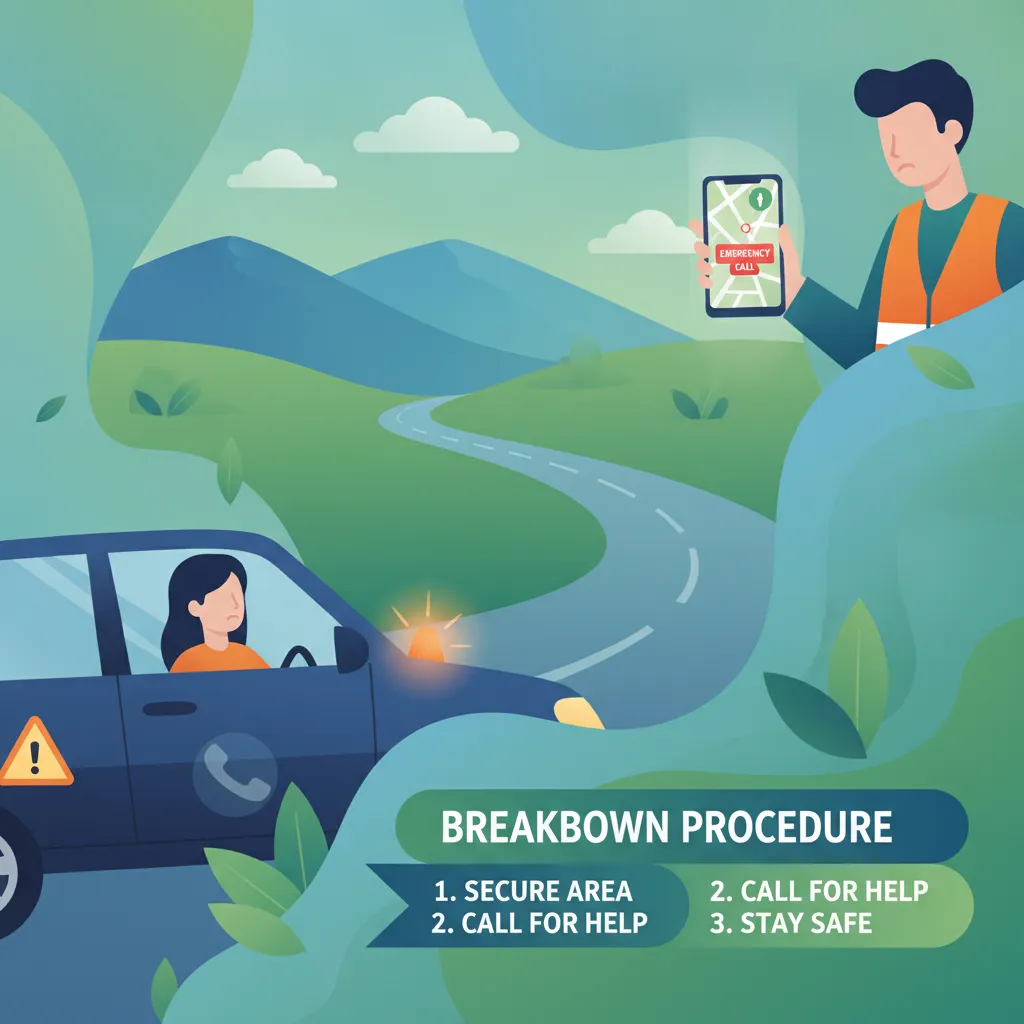
This lesson outlines the step-by-step safety protocol for a vehicle breakdown. It instructs the rider to move the motorcycle to the safest possible location, activate hazard lights, and put on a high-visibility vest. The proper placement of a warning triangle and the procedure for making an emergency call to 112 or a roadside assistance service are also detailed.

This lesson provides critical knowledge for being the first responder at an accident. It covers securing the scene to prevent further incidents, making an effective emergency call, and forming the 'Rettungsgasse' for approaching rescue vehicles. Basic but potentially life-saving first aid steps are reviewed, with a strong emphasis on not endangering oneself while providing assistance.
Navigate the legal framework for motorcycle helmets in Austria, including StVO regulations. Learn about common violations such as unfastened chin straps or illegal visor tints, and understand the consequences.

This lesson provides a clear overview of the legal penalties for traffic violations in Austria. It details the system of fines, demerit points, and the conditions that can lead to license suspension or revocation. Understanding these consequences reinforces the importance of lawful and responsible riding.

This lesson provides an overview of the legal framework for traffic enforcement in Austria. It explains the structure of fines for common offenses, the demerit point system that can lead to licence suspension, and the more severe consequences for major violations. Understanding these penalties reinforces the importance of consistent adherence to all traffic laws.
This lesson covers the essential personal protective equipment (PPE) required for motorcycling in Austria. It details the safety standards for helmets, including fit and certification, and explains the benefits of armored jackets, gloves, and sturdy boots. The importance of high-visibility and weather-appropriate gear is also discussed to enhance rider protection in all conditions.
This lesson details the mandatory lighting and reflector requirements for Category AM vehicles in Austria. It explains the functions of different light settings, including daytime running lights, and their importance for being seen. Additionally, it covers the legal standards for protective helmets, a critical component of rider safety.
This lesson details the mandatory personal and vehicle documentation required for motorcyclists in Austria. It covers the necessity of carrying a valid licence card, vehicle registration papers, and proof of insurance at all times. Understanding these legal requirements ensures full compliance with Austrian traffic law and facilitates smooth interactions with law enforcement.

This lesson provides essential knowledge for using Austria's high-speed road network. It covers the correct procedure for entering via acceleration lanes, maintaining strict lane discipline (keeping right, passing left), and understanding the digital or physical Vignette (toll sticker) requirement. The formation of the 'Rettungsgasse' (emergency corridor) during traffic jams is also a key topic.
This lesson details the essential legal and administrative requirements for operating an AM vehicle in Austria. It covers the processes for vehicle registration, the obligation for licence plates, and the necessity of third-party liability insurance. Furthermore, it explains the importance of regular technical inspections to ensure the vehicle remains roadworthy and compliant with national standards.
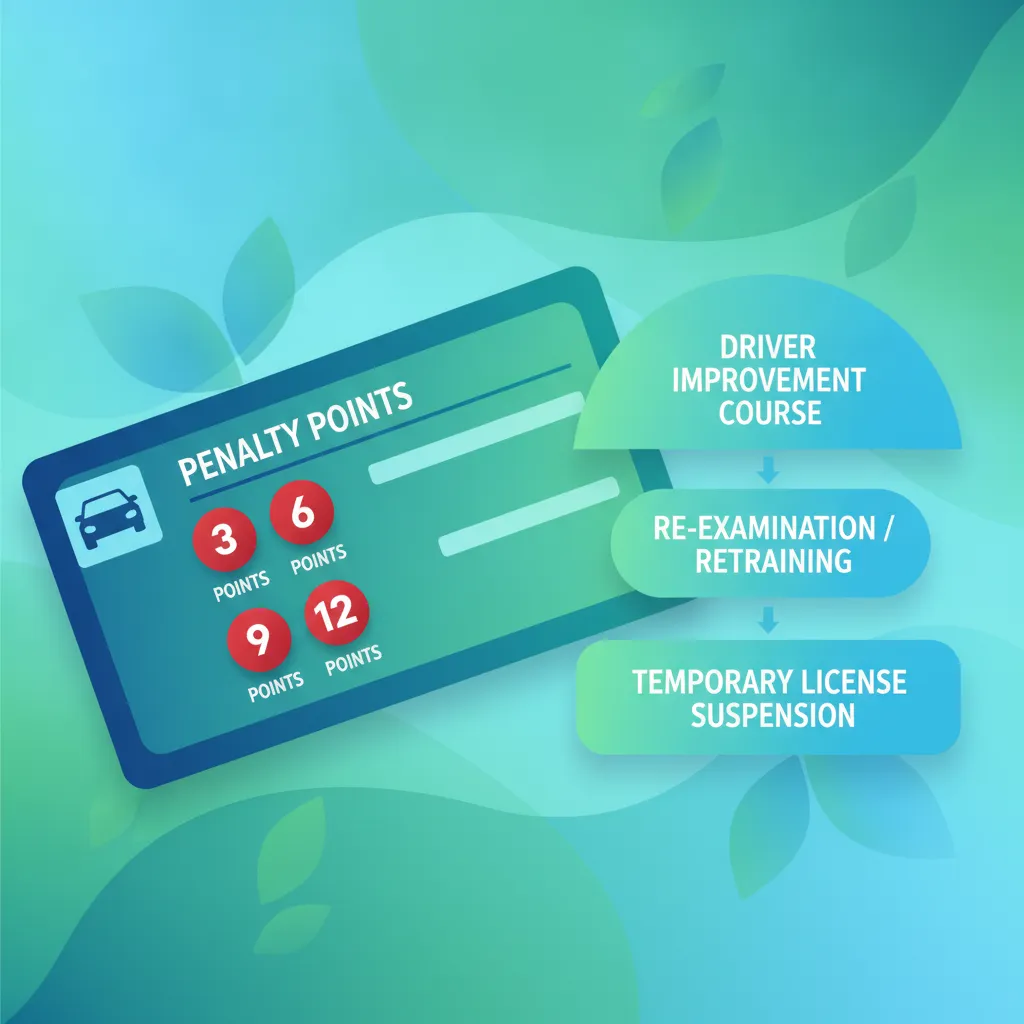
This lesson offers a clear explanation of the Austrian system of penalties for traffic offenses, including the demerit points system (Vormerksystem). It details which violations lead to points, the accumulation process, and the consequences at each stage, such as mandatory driver improvement courses and potential license suspension (Fahrverbot). Understanding this system provides a strong incentive for consistent compliance with all traffic regulations.
This lesson outlines the step-by-step safety protocol for a vehicle breakdown. It instructs the rider to move the motorcycle to the safest possible location, activate hazard lights, and put on a high-visibility vest. The proper placement of a warning triangle and the procedure for making an emergency call to 112 or a roadside assistance service are also detailed.

This lesson explains the correct protocol when encountering emergency vehicles with active sirens and lights. It details the legal requirement to yield the right-of-way and provides practical guidance on how to pull over safely and efficiently. Understanding these procedures helps ensure emergency services can reach their destination without delay.
Find clear answers to common questions learners have about Helmet Standards and Usage. Learn how the lesson is structured, which driving theory objectives it supports, and how it fits into the overall learning path of units and curriculum progression in Austria. These explanations help you understand key concepts, lesson flow, and exam focused study goals.
The ECE mark is an international safety standard required by law in Austria. It confirms that the helmet has undergone rigorous impact and penetration testing, ensuring it meets the minimum legal threshold for road use.
Helmets contain EPS liners and adhesives that degrade over time due to exposure to UV light, perspiration, and temperature fluctuations. After five years, this material may no longer provide the intended impact absorption, which is a common concept addressed in the Austrian theory exam.
While legally permitted in some contexts, open-face helmets offer significantly less protection than full-face or modular options. The curriculum strongly recommends full-face helmets for their superior chin and face protection, which is crucial for passing safety assessments and real-world riding.
A secure helmet should feel snug around the crown and cheeks without creating painful pressure points. When you move the helmet, your skin should move with the lining; if the helmet slides independently, it is too large and will not protect you effectively in a crash.
Refine your study plan by searching for specific Austrian driving theory practice sets. Pinpoint questions related to particular road rules, signs, or challenge levels, and begin practicing immediately to reinforce your knowledge and excel in your official exam with confidence. Get started with focused revision today.