
This lesson explores the essential physical principles of motorcycle traction on various French road surfaces. By understanding how different materials and conditions affect grip, you will learn to adjust your riding style to maintain stability and avoid common hazards encountered on the road. This knowledge is crucial for both your theoretical exam performance and your practical safety as a rider.
Lesson content overview
For riders preparing for the French Motorcycle Theory Examination (Épreuve Théorique Moto - ETM) for Category A, A1, or A2 licenses, mastering the concept of road grip is a vital safety requirement. Unlike car drivers, motorcyclists rely on a tiny contact patch—barely the size of a credit card per tire—to maintain stability, steer, brake, and accelerate.
This lesson explores how different road surfaces in France impact your motorcycle's grip limits. You will learn to identify low-traction hazards such as tar strips (serpents en bitume), wet manhole covers, gravel patches, and diesel spills, and understand how to manage your motorcycle’s forces to prevent dangerous slides.
Grip is not a static characteristic of your tires; it is a dynamic relationship between the tire rubber and the road surface. In physics, this relationship is quantified by the Friction Coefficient, denoted by the Greek letter mu (μ).
The friction coefficient (μ) is the ratio of the force of friction () acting between two bodies to the normal force () pressing them together (). In motorcycle dynamics, it determines the maximum amount of braking, accelerating, and cornering force your tires can transfer to the road before losing traction.
A high friction coefficient means excellent traction, while a low coefficient indicates slippery conditions. On public roads, varies dramatically based on surface materials, moisture, temperature, and contaminants:
| Road Surface Condition | Typical Friction Coefficient () | Grip Level | Impact on Riding Dynamics |
|---|---|---|---|
| Dry, clean asphalt | 0.8 to 0.9 | High | Maximum braking and lean angles possible. |
| Wet asphalt | 0.5 to 0.6 | Moderate | Stopping distances increase; lean angles must be reduced. |
| Wet concrete | 0.45 to 0.55 | Moderate-Low | Sicker than asphalt; requires progressive control inputs. |
| Oily asphalt / Light rain | 0.2 to 0.3 | Low | Extremely slippery, especially during the first 15 minutes of rain. |
| Wet metal (manhole covers) | 0.1 to 0.2 | Very Low | Minimal traction; tires will slide under almost any abrupt lateral force. |
| Ice or packed snow | 0.05 to 0.1 | Extreme Risk | Near-zero traction; vertical stability is highly compromised. |
When the friction coefficient decreases, your motorcycle's limits shrink. To maintain control, you must reduce your speed and minimize lean angles to keep the demanded lateral and longitudinal forces well within the available grip.
To visualize how your tires use available grip, motorcycle dynamics specialists use the Traction Circle (also known as the Friction Circle).
The boundary of the circle represents the maximum traction your tire can offer (determined by ). Any force vector falling inside the circle means the tire has grip. If the combined forces exceed the boundary of the circle, the tire will slide.
The traction circle teaches us two critical lessons:
The Golden Rule of Traction Management: On low-traction surfaces, avoid overlapping inputs. Do all of your braking in a straight line before entering a curve, and wait until the motorcycle is upright before applying significant throttle.
French roads are generally well-maintained, but they present specific recurring hazards that can suddenly compromise your grip. Spotting these hazards early allows you to adjust your speed, path, and lean angle before your tires make contact.
Tar strips, colloquially known in France as serpents en bitume, are rubberized bituminous sealants used by road crews to patch cracks in the asphalt. They are commonly found on rural roads (routes départementales) and the outer lanes of motorways (autoroutes).
Manhole covers (regards d'égout) and metal expansion joints on bridges are common urban hazards.
Loose gravel is a frequent hazard in France, particularly on rural routes or in areas undergoing active road maintenance.
Roundabouts (carrefours à sens giratoire) are incredibly common in France. They are also hot spots for diesel (gazole) spills, especially near industrial zones or fuel stations.
The cross-sectional shape of the road is designed for drainage, but it directly impacts motorcycle stability.
The French Code de la route places the legal responsibility for vehicle control squarely on the driver. Failing to adapt your riding style to compromised road surfaces can lead to severe fines and legal liability if an accident occurs.
According to French traffic law, drivers must constantly adjust their speed based on atmospheric conditions, visibility, and road surface state.
Under Articles R411-20 to R411-24 of the Code de la route, temporary road work zones must be clearly signed.
When you encounter an AK5 sign, you must expect gravel, uneven lanes, or fresh tar strips. You are legally required to reduce your speed immediately and prepare for sudden surface changes.
Under civic responsibility guidelines and local road safety frameworks, riders are strongly encouraged to report severe road hazards (such as massive oil spills, deep potholes, or missing sewer grates) to the local authorities.
Understanding grip limits in theory is different from executing safe decisions on the road. Below are critical edge cases where riders often fail to manage traction properly:
In France, lane splitting is highly regulated. A common mistake is splitting lanes too close to the outer edge of the highway or near construction barriers where gravel, dirt, and rubber debris gather. Always split lanes near the center line where the road surface is cleanest.
When a rider feels the rear tire slip slightly on a diesel patch in a roundabout, a common panic reaction is to chop the throttle closed or grab the brakes. This sudden weight transfer destabilizes the suspension, leading to an immediate crash. The correct action is to keep the throttle steady and ride through the slick patch with minimal steering input.
After weeks of dry weather, oil, rubber dust, and engine fluids accumulate on the road. When the first light rain falls, it mixes with these contaminants to create an incredibly slick, milky emulsion. This is often far more dangerous than a heavy, prolonged downpour, which eventually washes the contaminants away.
Identify the Danger: As soon as rain starts falling after a dry spell, realize that the friction coefficient () has dropped to dangerous levels (around 0.2 to 0.3).
Reduce Speed Immediately: Lower your speed by at least 20-30% below the normal speed limit.
Increase Following Distance: Double your following distance to at least 4 seconds to compensate for the dramatically increased stopping distances.
Smooth Out Inputs: Avoid any rapid braking, accelerating, or sharp steering. Use progressive, gentle pressure on the controls.
Safe riding requires a proactive approach to grip limits. Use the following structured checklist to manage traction safely before, during, and after encountering compromised road surfaces.
Your eyes must look 12 to 15 seconds ahead. Scan the road surface for changes in color, texture, or reflectivity. Look for shiny metal, dark tar lines, or light-colored gravel patches.
If a hazard is detected, complete all necessary braking and downshifting before reaching the low-traction zone. Do not attempt to brake while riding over the hazard.
Adjust your path to cross the hazard at as close to a 90-degree angle as possible. This minimizes the lateral forces acting on your tires. Avoid leaning the motorcycle; keep it as vertical as possible.
Once on the low-traction surface, maintain a neutral, steady throttle. Do not accelerate, decelerate, or clutch in abruptly. Let the motorcycle's natural momentum carry you across the hazard.
Motorcycle traction depends on the friction coefficient (μ), which varies dramatically between road surfaces—from 0.8 on dry asphalt to near-zero on wet metal or ice. The traction circle concept shows that braking and cornering forces compete for the same limited tire contact patch, meaning you must choose between them on low-grip surfaces. French roads present specific hazards including tar strips, wet manhole covers, gravel patches, and diesel spills at roundabouts, each requiring specific rider actions such as staying upright, using clean tire tracks, and maintaining steady throttle. Under Article R413-22 of the Code de la route, riders are legally obligated to adjust speed for conditions, and failing to do so can result in citations and legal liability.
A short set of high-value points that capture the most important learning from this lesson.
Grip is dynamic, quantified by the friction coefficient (μ), which varies from 0.8-0.9 on dry asphalt down to near-zero on wet metal or ice
The traction circle shows that braking/acceleration forces and cornering forces compete for the same limited tire grip
On low-traction surfaces, the traction circle shrinks; a maneuver safe on dry asphalt can easily exceed grip limits when wet
French road hazards include tar strips (serpents en bitume), wet manhole covers, gravel patches, and diesel spills at roundabouts
Article R413-22 of the Code de la route legally requires riders to adjust speed based on road surface conditions
Explore all units and lessons included in this driving theory course.
Friction coefficient ranges: Dry asphalt μ=0.8-0.9, Wet asphalt μ=0.5-0.6, Wet metal μ=0.1-0.2, Ice μ=0.05-0.1
The Golden Rule: do all braking in a straight line before a curve, and wait until upright before applying throttle
First rain after a dry spell creates the most dangerous conditions (μ=0.2-0.3) as it mixes accumulated oils and rubber dust into a slick emulsion
At roundabouts, ride in the clean tire tracks of passenger cars to avoid the diesel drip line left by trucks
Road camber affects grip: positive camber helps cornering, negative camber fights it and requires slower speeds
Braking while actually riding over a low-traction hazard instead of completing braking beforehand in a straight line
Chopping the throttle or grabbing brakes when the rear slips on a diesel patch, which destabilizes the suspension and causes a crash
Lane splitting too close to road shoulders where gravel and debris accumulate, rather than splitting near the center line
Riding directly in the center of a roundabout lane where trucks drip diesel, instead of following cleaner car tire tracks
Assuming a light first rain is safer than heavy rain, when in fact the first rain creates the most slippery conditions due to accumulated contaminants
Lesson content overview
A short set of high-value points that capture the most important learning from this lesson.
Grip is dynamic, quantified by the friction coefficient (μ), which varies from 0.8-0.9 on dry asphalt down to near-zero on wet metal or ice
The traction circle shows that braking/acceleration forces and cornering forces compete for the same limited tire grip
On low-traction surfaces, the traction circle shrinks; a maneuver safe on dry asphalt can easily exceed grip limits when wet
French road hazards include tar strips (serpents en bitume), wet manhole covers, gravel patches, and diesel spills at roundabouts
Article R413-22 of the Code de la route legally requires riders to adjust speed based on road surface conditions
Explore all units and lessons included in this driving theory course.
Friction coefficient ranges: Dry asphalt μ=0.8-0.9, Wet asphalt μ=0.5-0.6, Wet metal μ=0.1-0.2, Ice μ=0.05-0.1
The Golden Rule: do all braking in a straight line before a curve, and wait until upright before applying throttle
First rain after a dry spell creates the most dangerous conditions (μ=0.2-0.3) as it mixes accumulated oils and rubber dust into a slick emulsion
At roundabouts, ride in the clean tire tracks of passenger cars to avoid the diesel drip line left by trucks
Road camber affects grip: positive camber helps cornering, negative camber fights it and requires slower speeds
Braking while actually riding over a low-traction hazard instead of completing braking beforehand in a straight line
Chopping the throttle or grabbing brakes when the rear slips on a diesel patch, which destabilizes the suspension and causes a crash
Lane splitting too close to road shoulders where gravel and debris accumulate, rather than splitting near the center line
Riding directly in the center of a roundabout lane where trucks drip diesel, instead of following cleaner car tire tracks
Assuming a light first rain is safer than heavy rain, when in fact the first rain creates the most slippery conditions due to accumulated contaminants
Explore search topics learners often look for when studying Grip Limits on Different Road Surfaces. These topics reflect common questions about road rules, driving situations, safety guidance, and lesson level theory preparation for learners in France.
Browse additional driving theory lessons that cover connected traffic rules, road signs, and common driving situations related to this topic. Improve your understanding of how different rules interact across everyday traffic scenarios.
Learn to spot city-specific riding hazards like sewer grates, expansion joints, and road markings. This guide explains how to safely manage lane positioning and throttle control on varied urban surfaces to improve motorcycle stability and hazard perception skills in accordance with the French Code de la route.
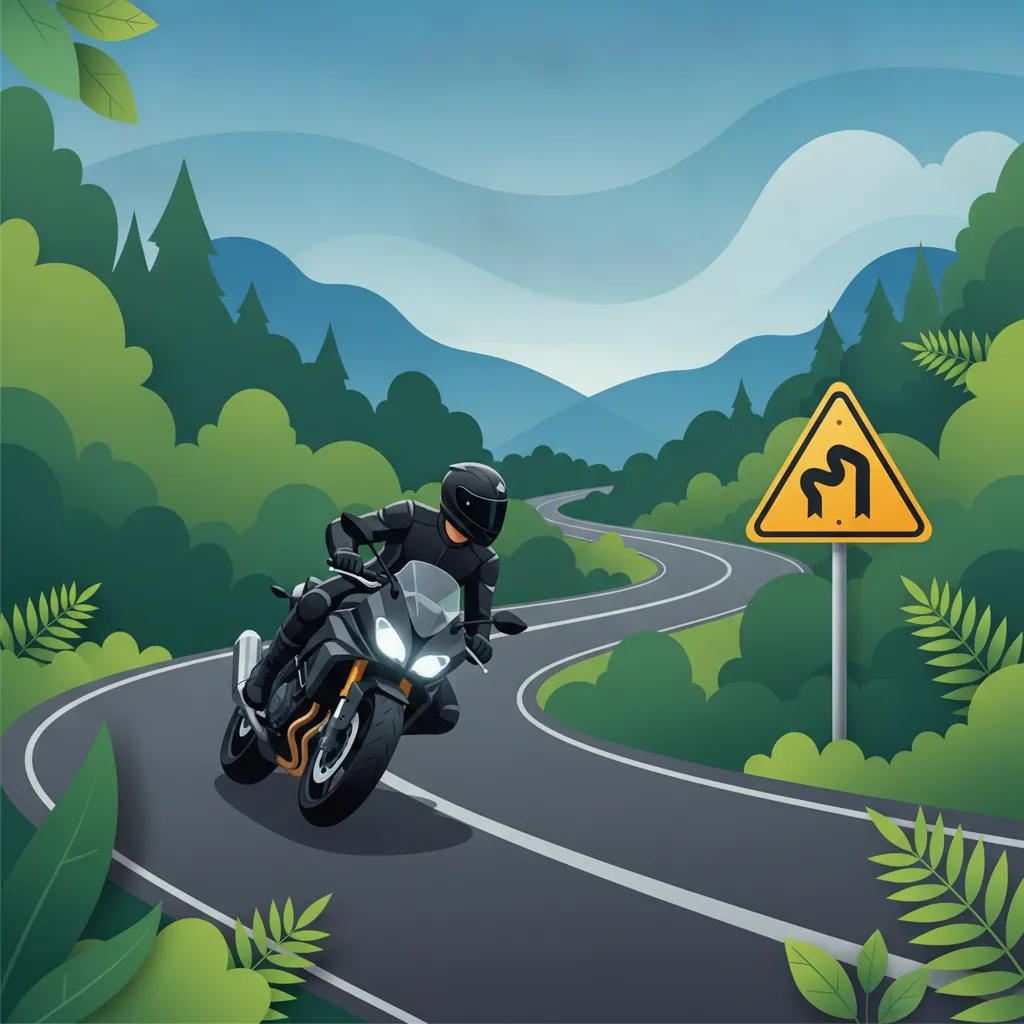
This lesson breaks down triangular warning signs, which warn of upcoming safety hazards like reverse curves, narrowing lanes, or loose gravel. You will learn to translate these visual markers into proactive riding techniques, such as adjusting your entry speed or choosing an alternative lean angle. Special attention is given to signs indicating temporary roadworks or variable grip conditions, which pose elevated dangers to motorcycles.

This lesson teaches riders how to negotiate loose surfaces such as gravel, sand, and poorly maintained urban asphalt without dropping the motorcycle. You will study correct body positioning, focusing on keeping your weight centered and your grip relaxed on the handlebars. The lesson also highlights why smooth, constant throttle delivery and avoiding abrupt front braking are essential to prevent the front wheel from washing out.

This lesson teaches riders how to approach and cross both controlled and uncontrolled intersections in urban settings. You will practice the 'scanning cycle' technique to identify cross-traffic hazards and manage your defensive line of sight around physical obstructions. The lesson also highlights the critical importance of early signaling and positioning to ensure that turning passenger cars do not violate your safety zone.

This lesson provides practical strategies for managing the physical demands of slow, heavily congested city traffic. You will learn how to maintain excellent low-speed balance through correct body posture, rear brake modulation, and smooth clutch control. It also emphasizes the importance of preserving an adequate safety buffer when stopping behind other vehicles, allowing an immediate escape route if you face a rear-end threat.
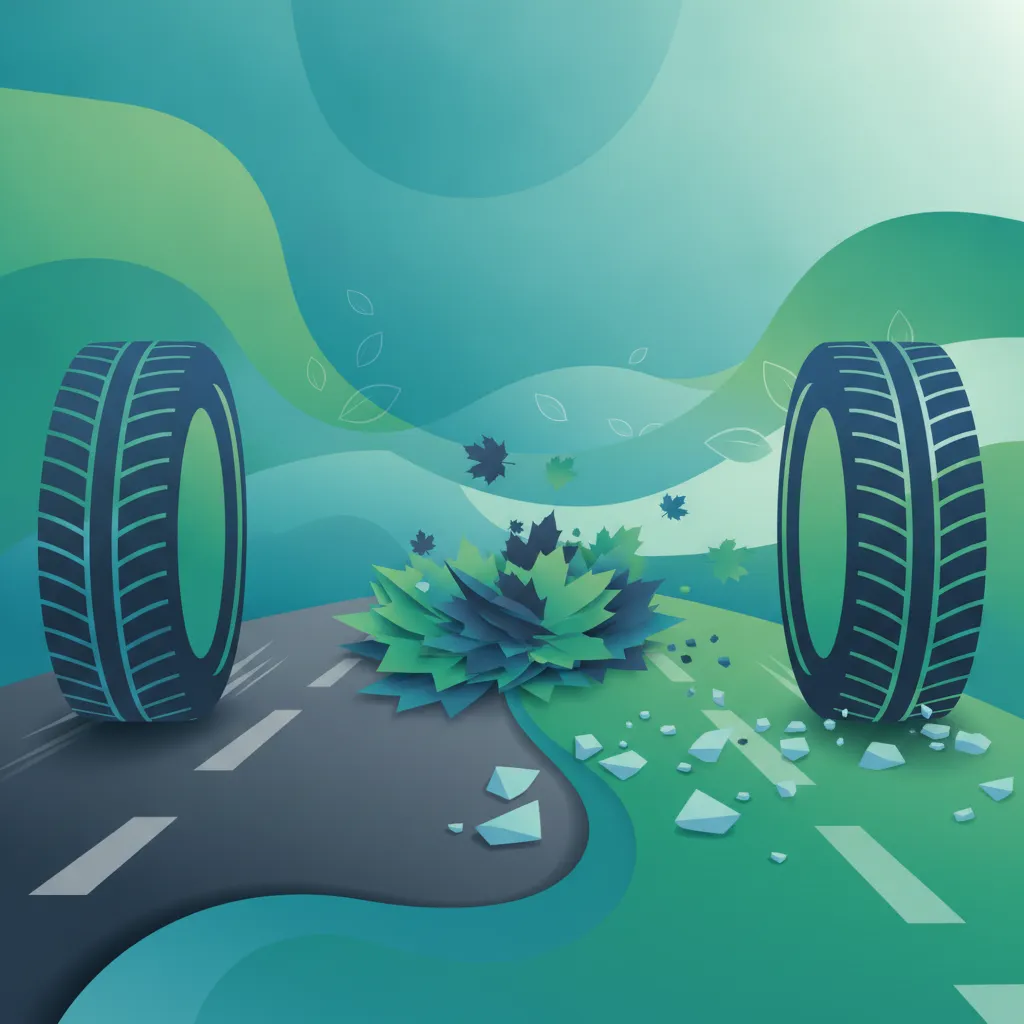
This lesson examines how different road surfaces affect tire grip and vehicle stability. Learners will explore strategies for maintaining traction on wet surfaces, gravel, and irregular roadways, including appropriate lean angles and smooth throttle control under French road conditions. Understanding these principles helps riders avoid slip incidents and preserve control during cornering and braking.
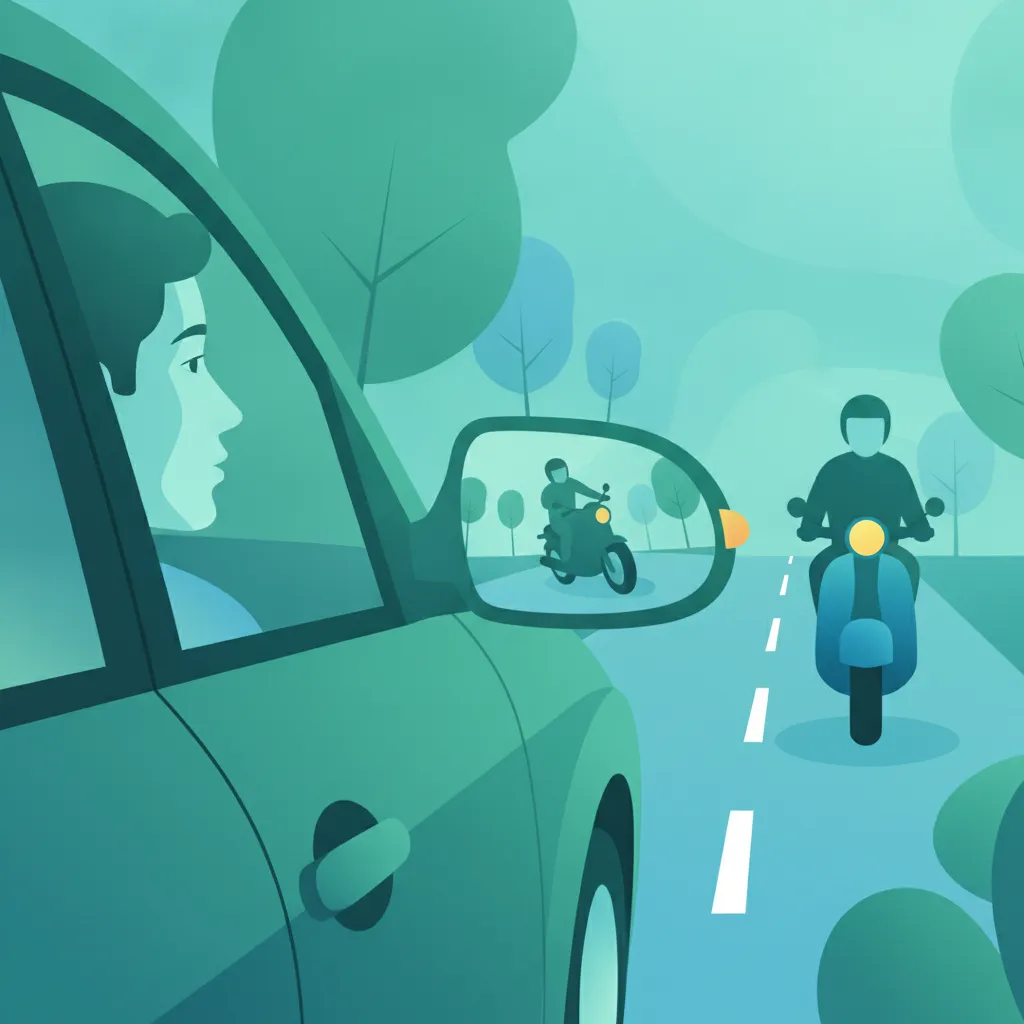
In this lesson, drivers will learn how to safely share the road with motorcycles and scooters, focusing on the specific blind spots and speed differentials that create risk. The content highlights proper lane positioning, caution when overtaking, and strategies for predicting motorcycle trajectories. Learners will also be introduced to the importance of being aware of scooter movements, especially in narrow streets.
This lesson addresses the unique hazards of riding a motorcycle in wet conditions, emphasizing the danger of aquaplaning. You will learn how water pooling on the asphalt can cause tires to lose direct contact with the road, leading to a complete loss of steering control. The lesson offers practical advice on reducing your speed, using smooth throttle and brake inputs, and ensuring your tires have adequate tread depth to clear water.

This lesson clarifies the legal boundaries of urban infrastructure, highlighting the strict ban on riding motorcycles within bus lanes or cycle paths. You will study French regulations concerning traffic flow, including where and when experimental lane filtering is permitted between lines of stationary cars. Understanding these boundaries ensures you can keep moving through congested areas without risking heavy fines or dangerous collisions.

This lesson covers the operational logic of traffic light signals in France, emphasizing the legal implications of the red, amber, and green cycles. You will study how to safely manage the amber phase to avoid rear-end collisions from vehicles behind while maintaining control. Additionally, you will discover the unique challenge of electromagnetic induction loops, which sometimes fail to detect lightweight motorcycles at quiet intersections.

This lesson teaches you how to establish and preserve a dynamic cushion of safety on all sides of your motorcycle. You will study how to apply the 'two-second rule' to keep a safe following distance, extending it to three or more seconds in adverse weather. Additionally, you will discover how to manage tailgating motorists safely without resorting to dangerous speed increases, ensuring you always maintain a clear escape route.
Understand the physics of tire traction in poor weather and on contaminated surfaces. This lesson covers how to adjust speed and braking techniques when encountering rain, gravel, or oil spills on French roads to minimize the risk of loss of control and meet official driving theory standards.

Learners will explore techniques for maintaining control and safety while riding in rain, focusing on reduced braking efficiency, hydroplaning prevention, and visibility challenges. The lesson emphasizes appropriate speed reduction, tire condition checks, and the use of rain gear to enhance rider comfort and protection. By mastering these adaptations, riders can navigate wet French conditions with confidence.
This lesson addresses the unique hazards of riding a motorcycle in wet conditions, emphasizing the danger of aquaplaning. You will learn how water pooling on the asphalt can cause tires to lose direct contact with the road, leading to a complete loss of steering control. The lesson offers practical advice on reducing your speed, using smooth throttle and brake inputs, and ensuring your tires have adequate tread depth to clear water.

This lesson focuses on adapting your riding behavior to sudden environmental shifts, such as heavy fog or strong crosswinds on exposed bridges. You will learn specific technical adjustments, including leaning slightly into crosswinds and widening your safety margins during low-visibility fog. The lesson also highlights how seasonal temperature drops affect your tires' ability to warm up and achieve reliable, safe levels of road adhesion.
This lesson teaches riders how to negotiate loose surfaces such as gravel, sand, and poorly maintained urban asphalt without dropping the motorcycle. You will study correct body positioning, focusing on keeping your weight centered and your grip relaxed on the handlebars. The lesson also highlights why smooth, constant throttle delivery and avoiding abrupt front braking are essential to prevent the front wheel from washing out.
This lesson provides guidance on safe riding practices during nighttime, emphasizing proper headlamp usage, reflective clothing, and strategies to manage glare from oncoming traffic. Learners will learn to compensate for reduced peripheral vision and increased fatigue, as well as to identify common night road hazards in France. By applying these techniques, riders can enhance their visibility and safety after dark.
This lesson examines how different road surfaces affect tire grip and vehicle stability. Learners will explore strategies for maintaining traction on wet surfaces, gravel, and irregular roadways, including appropriate lean angles and smooth throttle control under French road conditions. Understanding these principles helps riders avoid slip incidents and preserve control during cornering and braking.

This lesson explores practical methods to make yourself visible to other road users, preventing the classic 'sorry mate, I didn't see you' hazard. You will analyze the use of high-visibility yellow or orange retro-reflective waistcoats, which are legally required to be carried on board in France. Additionally, you will study optimal headlight utilization and correct placement of auxiliary indicators to capture driver attention.
This lesson focuses on the skill of adjusting speed according to real-time road conditions, visibility, and traffic density. Learners will learn to assess factors such as weather, road surface quality, and pedestrian activity to determine a safe riding speed under French regulatory expectations. By mastering adaptive speed control, riders can enhance safety and reduce the likelihood of accidents caused by inappropriate speed.

This lesson addresses the distinct safety considerations for riding during daylight hours versus nighttime, covering topics such as managing glare from the sun and ensuring adequate lighting after dark. Learners will learn strategies to maintain visibility, stay alert, and adapt riding techniques to varying light conditions, including the use of reflective gear. Emphasis is placed on proactive planning to mitigate risks associated with reduced visibility, thereby fostering safe riding practices.
Find clear answers to common questions learners have about Grip Limits on Different Road Surfaces. Learn how the lesson is structured, which driving theory objectives it supports, and how it fits into the overall learning path of units and curriculum progression in France. These explanations help you understand key concepts, lesson flow, and exam focused study goals.
Tar snakes or joint sealants become extremely slippery when wet or during hot summer days when they soften. They offer significantly less grip than asphalt, potentially causing a loss of traction if you brake or lean heavily while crossing them.
Roundabouts are notorious for diesel spills due to the lateral forces acting on heavy vehicles. Approach with reduced speed, maintain an upright bike position as much as possible, and scan the surface for iridescent patches before entering.
While ABS helps prevent wheel lock-up during hard braking, it cannot create grip where none exists. Even with ABS, you must adjust your speed and braking pressure significantly on loose gravel or wet leaves to prevent the tyre from sliding.
Treat all metal surfaces as having near-zero traction when wet. The golden rule is to avoid all steering, braking, or throttle changes while your tyres are on the metal surface; pass over it in a straight line with constant speed.
Ready to focus your study? Use the practice search to find exactly the French driving theory questions you need for the Code de la route and permis de conduire ETG. Refine your knowledge on specific topics or challenging rules to boost your confidence and exam readiness.