
This lesson guides you through the complex world of urban intersections, a critical component of your French motorcycle theory exam. You will learn to apply the scanning cycle and defensive positioning to navigate various junctions, ensuring you are ready to handle real-world risks as a rider.

Lesson content overview
This lesson covers the critical skills needed to navigate French urban intersections safely as a motorcyclist. It establishes the fundamental distinction between controlled intersections (with traffic lights, stop signs, or yield signs) and uncontrolled intersections governed by priorité à droite, and explains the danger signs to watch for. The core technique is the 4-phase scanning cycle, which trains riders to systematically check far-ahead, lateral, rear, and blind-spot areas starting 150 meters before the junction. Defensive positioning and early signaling (at least 3 seconds) are presented as legal obligations under Article R412-10 that directly protect your safety zone. The lesson also covers road markings, environmental adjustments for wet or night conditions, and the serious penalties for violations, including €135 fines and 4-point deductions for running stop signs or refusing priority.
A short set of high-value points that capture the most important learning from this lesson.
Uncontrolled intersections in France follow priorité à droite: yield to traffic from your right; vehicles from your left must yield to you.
The 4-phase scanning cycle (far-ahead at 150m, lateral scan, rear-mirror check, blind spot check) must be continuous when approaching any junction.
Early signaling under Article R412-10 requires turn indicators at least 3 seconds before any maneuver; motorcycles lack self-canceling signals.
Lane positioning should maximize visibility: center-left for straight-through, left side for left turns, right side for right turns.
Motorcyclists are legally prohibited from stopping in sas vélo (cycle boxes); doing so results in penalties.
Explore all units and lessons included in this driving theory course.
Sign A18 marks priority-to-the-right intersections; absence of signs means priorité à droite still applies at uncontrolled junctions.
A complete stop at a stop sign means wheels must stop rolling entirely; rolling stops are illegal.
Look for wheel movement at side-street exits as the first indicator a driver is about to pull out.
Wet paint lines and metal surfaces become as slippery as ice in rain; keep your motorcycle upright when crossing them.
Carrying a passenger shifts your center of gravity backward and significantly increases braking distance.
Assuming a wider or busier road automatically grants priority at uncontrolled intersections, which is a dangerous misconception.
Relying on eye contact or a driver looking toward you as proof they have seen you (LBFTS phenomenon).
Hiding your motorcycle behind parked cars or the curb, which eliminates your line of sight and makes you invisible to side-street drivers.
Forgetting to cancel turn signals after completing a maneuver, misleading other drivers about your intended direction.
Stopping in the sas vélo when the light is red, which is illegal and blocks cyclists who have priority at traffic lights.
Lesson content overview
A short set of high-value points that capture the most important learning from this lesson.
Uncontrolled intersections in France follow priorité à droite: yield to traffic from your right; vehicles from your left must yield to you.
The 4-phase scanning cycle (far-ahead at 150m, lateral scan, rear-mirror check, blind spot check) must be continuous when approaching any junction.
Early signaling under Article R412-10 requires turn indicators at least 3 seconds before any maneuver; motorcycles lack self-canceling signals.
Lane positioning should maximize visibility: center-left for straight-through, left side for left turns, right side for right turns.
Motorcyclists are legally prohibited from stopping in sas vélo (cycle boxes); doing so results in penalties.
Explore all units and lessons included in this driving theory course.
Sign A18 marks priority-to-the-right intersections; absence of signs means priorité à droite still applies at uncontrolled junctions.
A complete stop at a stop sign means wheels must stop rolling entirely; rolling stops are illegal.
Look for wheel movement at side-street exits as the first indicator a driver is about to pull out.
Wet paint lines and metal surfaces become as slippery as ice in rain; keep your motorcycle upright when crossing them.
Carrying a passenger shifts your center of gravity backward and significantly increases braking distance.
Assuming a wider or busier road automatically grants priority at uncontrolled intersections, which is a dangerous misconception.
Relying on eye contact or a driver looking toward you as proof they have seen you (LBFTS phenomenon).
Hiding your motorcycle behind parked cars or the curb, which eliminates your line of sight and makes you invisible to side-street drivers.
Forgetting to cancel turn signals after completing a maneuver, misleading other drivers about your intended direction.
Stopping in the sas vélo when the light is red, which is illegal and blocks cyclists who have priority at traffic lights.
Explore search topics learners often look for when studying Intersection Types and Safe Navigation Strategies. These topics reflect common questions about road rules, driving situations, safety guidance, and lesson level theory preparation for learners in France.
Browse additional driving theory lessons that cover connected traffic rules, road signs, and common driving situations related to this topic. Improve your understanding of how different rules interact across everyday traffic scenarios.
Understand the specific priority rules and lane discipline required when approaching, entering, and exiting roundabouts according to the French Code de la route. This guide covers the correct positioning and signaling techniques necessary to navigate circular intersections safely while interacting with other road users.

France features a vast network of roundabouts (carrefours a sens giratoire) governed by specific entry and lane-use regulations. This lesson explains that vehicles entering a roundabout must yield to traffic already circulating inside. You will learn how to select the correct lane depending on your exit, use direction indicators properly, and yield to pedestrians and cyclists near roundabout exits.
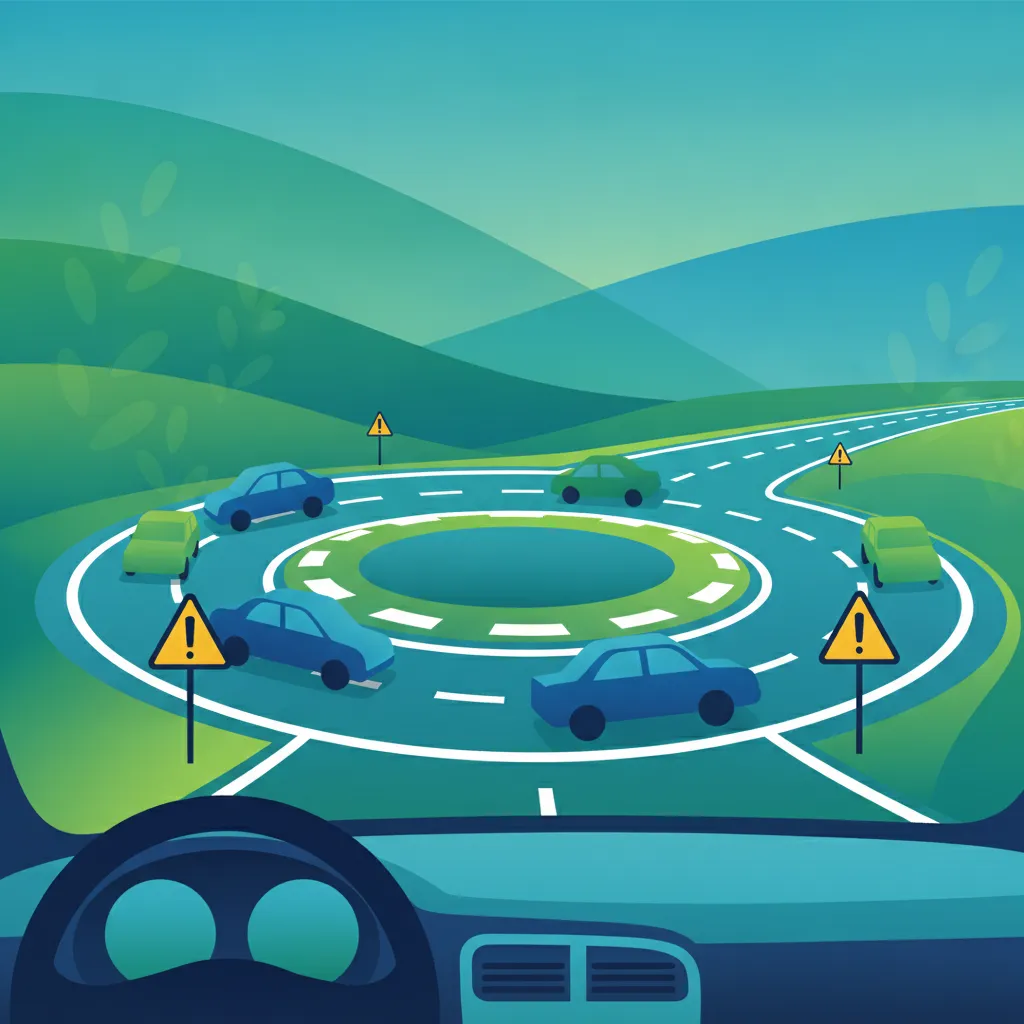
This lesson focuses on the skills required to safely enter, navigate, and exit roundabouts, a common feature in French urban environments. Learners will understand the need to yield to circulating traffic, select the appropriate lane upon entry, and signal intentions when exiting. By mastering these techniques, AM riders can safely integrate into roundabout traffic flow and reduce conflicts with other road users.

This lesson explains the correct procedures for entering, circulating, and exiting roundabouts, which are highly prevalent throughout France. You will learn the exact lane choice strategies based on your intended exit, and how to use your turn indicators at each stage of the maneuver. The content also addresses the critical task of performing over-the-shoulder blind spot checks to avoid conflicts with overtaking vehicles when exiting.
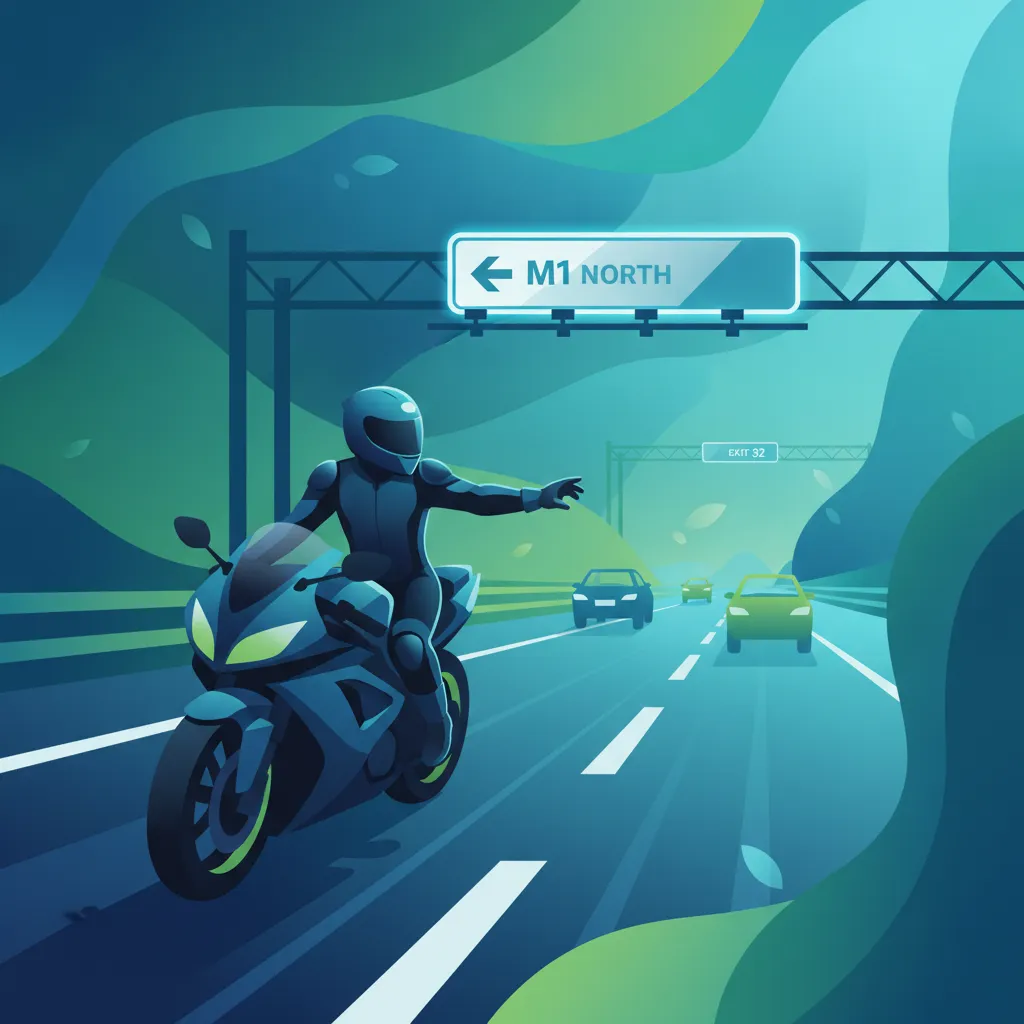
This lesson details how to safely enter, cruise on, and exit French motorways, known as autoroutes, which feature high-speed traffic flows. You will master the process of matching highway speeds in the acceleration lane and performing blind spot checks before merging. The lesson also explains correct lane positioning to avoid aerodynamic turbulences from large semi-trucks, and how to safely prepare for decelerating at exit ramps.

This lesson analyzes the technical path a long wheelbase vehicle must take when turning at intersections and navigating roundabouts. Drivers will learn to calculate tail swing and rear-wheel tracking, intentionally swinging wide to clear roadside curbs and poles safely. The lesson emphasizes yielding protocols for pedestrians and cyclists who may be crossing the target street during the turn.

This lesson covers the strict legal conditions under which you may overtake other vehicles on French roads, including necessary visibility criteria. You will master the step-by-step process of checking rearview mirrors, performing head checks, signaling, and maintaining a safe speed differential during the pass. It also details when overtaking is strictly forbidden, such as before intersections, near pedestrian crossings, or across solid lines.
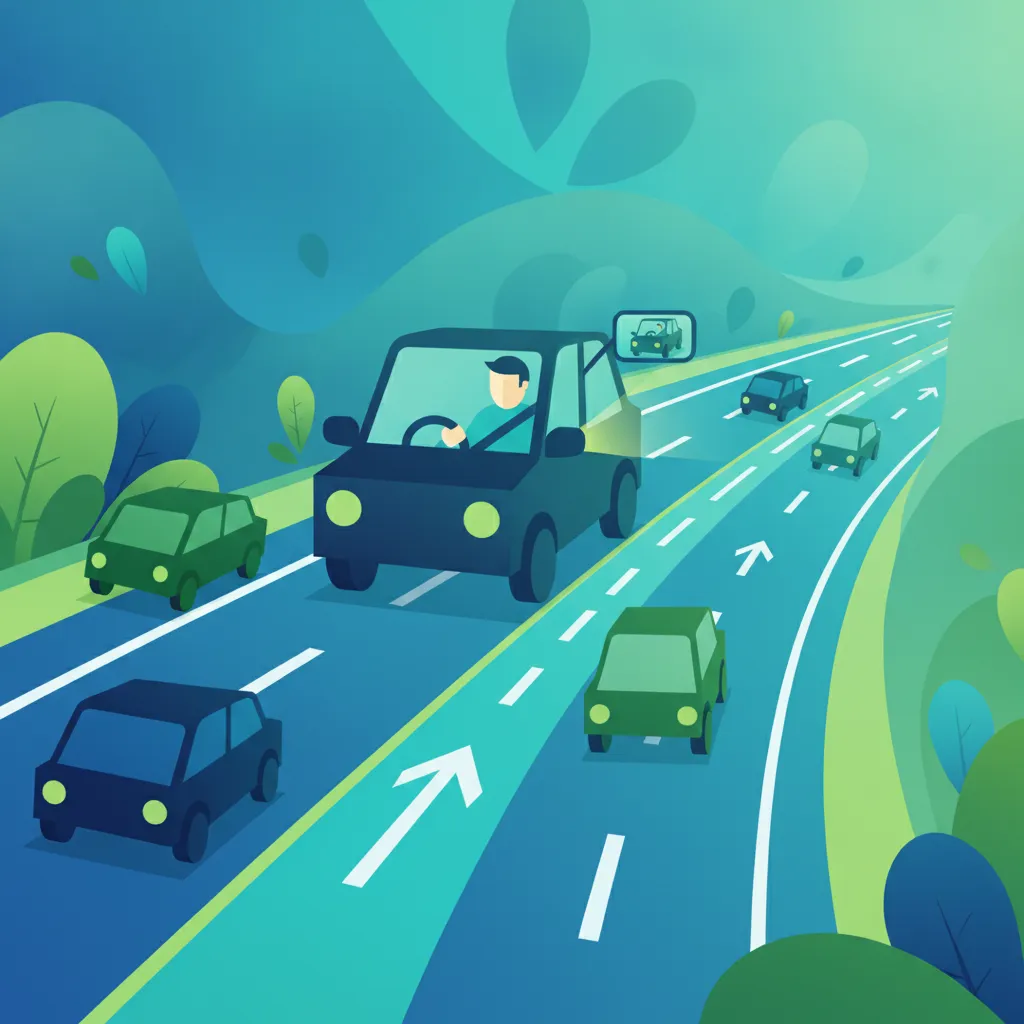
Changing lanes or executing turns requires a structured visual and physical procedure to prevent interrupting surrounding traffic. This lesson explains the key steps: checking the center mirror, exterior mirrors, turning on direction indicators, and performing blind-spot checks. You will learn correct vehicle positioning for both left and right turns, and how to execute safe turning circles without cutting corners.
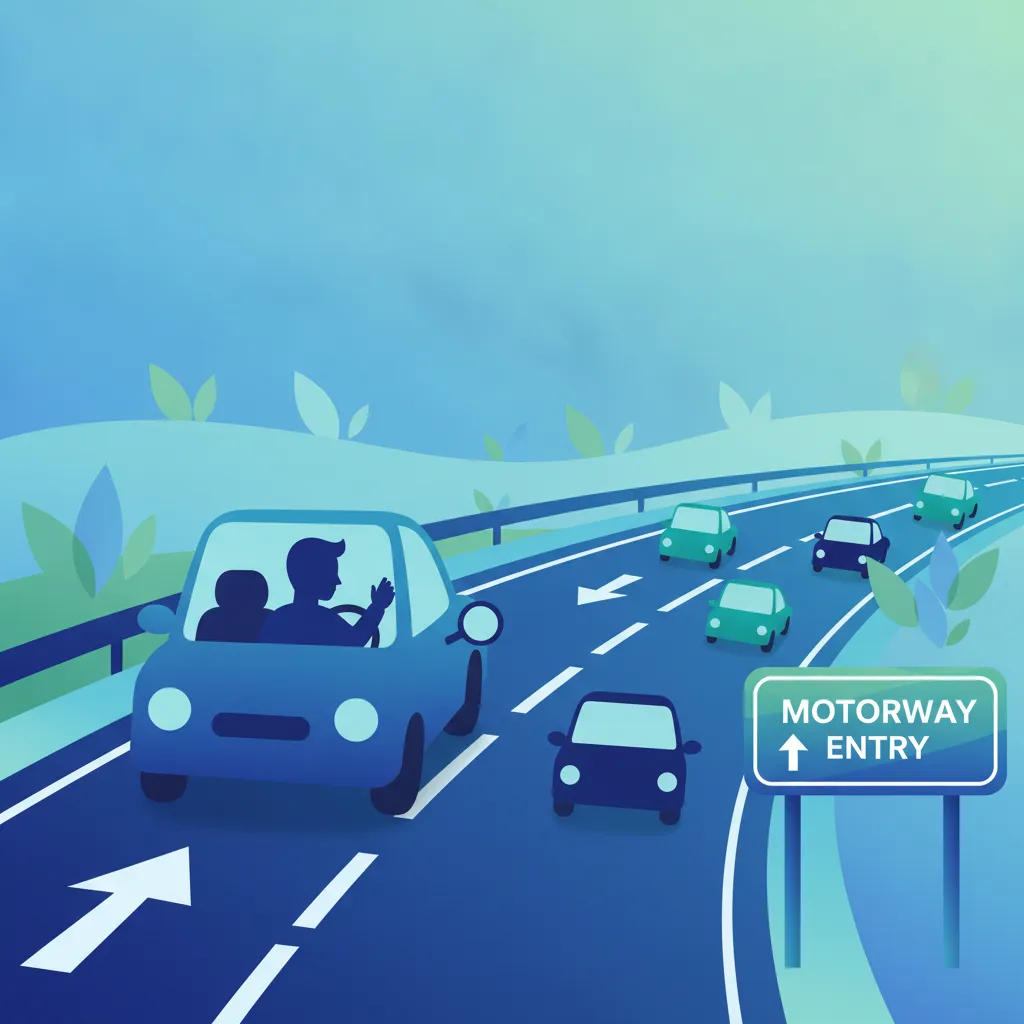
Merging onto a motorway or dual carriageway requires precise coordination of speed, lane observation, and indicator signalling. This lesson explains how to utilize the acceleration lane (voie d'insertion) to match the speed of highway traffic before merging. You will learn how to assess traffic gaps in your side mirrors, signal your intentions, and execute the merge without disrupting the traffic flow.

Reversing (marche arriere) is a slow-speed maneuver that presents significant visibility challenges due to rear vehicle blind spots. This lesson covers proper driver posture, direct over-the-shoulder viewing, and the effective use of mirrors while backing up. You will learn how to reverse safely out of driveways or parking bays and how to yield to pedestrians who might cross your path.

Overtaking must always be executed quickly and safely, without forcing other drivers to alter their speed or direction. This lesson teaches the strict rule of passing on the left and the rare exceptions where passing on the right is permitted. You will learn to read road signs and markings that prohibit overtaking and how to calculate a safe speed margin to complete your pass.
Learn how to apply systematic scanning and hazard detection to identify risks before they manifest in urban traffic. This explanation focuses on maintaining a protective safety zone and managing blind spots while riding in complex environments to reduce the likelihood of accidents and priority violations.

This lesson provides practical strategies for managing the physical demands of slow, heavily congested city traffic. You will learn how to maintain excellent low-speed balance through correct body posture, rear brake modulation, and smooth clutch control. It also emphasizes the importance of preserving an adequate safety buffer when stopping behind other vehicles, allowing an immediate escape route if you face a rear-end threat.
This final lesson integrates all course concepts into a single, cohesive approach to defensive riding and continuous risk assessment. You will study how to maintain a high-mileage visual lead, continuously scanning the road ahead for warning signs of conflict. By learning to assume that other motorists may not see you, you will build the proactive slowing habits and situational awareness needed to remain safe throughout your riding life.

Learners will develop the ability to anticipate potential hazards on the road, enhancing reaction times and defensive riding strategies. The lesson emphasizes constant scanning, early identification of threats such as sudden stops, pedestrian crossings, or unexpected lane changes, and appropriate response measures. By cultivating proactive risk assessment, AM riders can significantly reduce accident likelihood.

This lesson provides global defensive driving strategies to minimize collision risks for all non-motorized and vulnerable road users. Drivers will learn to systematically lower vehicle speed in dense pedestrian zones, even when no active hazards are visible. By cultivating an anticipatory mindset and maintaining generous safety margins, professional drivers establish a protective safety envelope around their vehicle.

This lesson analyzes the various traffic challenges unique to operating large passenger vehicles in historic and modern French urban areas. Drivers will learn to manage narrow street layouts, double-parked delivery trucks, and high-density multi-lane roundabouts safely. The lesson emphasizes defensive driving strategies, route adjustments, and maintaining mental focus under severe schedule and time pressures.
This lesson focuses on the legal requirement to yield to pedestrians on or about to step onto zebra crossings, a major focus of French road safety. You will learn how to approach school zones and pedestrian islands with heightened vigilance and reduced speed. Additionally, the lesson explores shared urban spaces, explaining how to maintain safe lateral distances when overtaking cyclists or personal electric scooters.
Find clear answers to common questions learners have about Intersection Types and Safe Navigation Strategies. Learn how the lesson is structured, which driving theory objectives it supports, and how it fits into the overall learning path of units and curriculum progression in France. These explanations help you understand key concepts, lesson flow, and exam focused study goals.
A controlled intersection uses lights, signs, or road markings to dictate right-of-way. An uncontrolled intersection defaults to the priorité à droite rule, meaning you must yield to vehicles approaching from the right.
The scanning cycle forces you to look well ahead and to the sides, allowing you to identify potential threats before they reach your path. It helps you manage your blind spots and adjust your speed or position early.
Proper lane positioning increases your visibility to other drivers and creates a buffer zone. By positioning yourself correctly, you signal your intent and prevent passenger cars from crowding your lane while turning.
Yes, the fundamental rules of the Code de la route regarding priority and intersection navigation are identical for all motorcycle categories. Your safety strategies remain the same regardless of your bike's power.
Ready to focus your study? Use the practice search to find exactly the French driving theory questions you need for the Code de la route and permis de conduire ETG. Refine your knowledge on specific topics or challenging rules to boost your confidence and exam readiness.