
This lesson teaches you how to establish and preserve a dynamic cushion of safety on all sides of your motorcycle. As part of our unit on lane positioning and space management, you will learn to apply official French safety rules to prevent collisions and navigate traffic with confidence.

Lesson content overview
When preparing for the French motorcycle theory exam (Épreuve Théorique Moto - ÉTM) to obtain your Category A1, A2, or A license, master the concept of the protective space. Unlike car drivers, who are protected by a metal chassis, airbags, and crumple zones, motorcyclists rely entirely on their surrounding space as their primary shield.
This protective safety cushion is not a static buffer; it is a dynamic, shifting zone that you must actively manage, adapt, and defend on all sides—front, rear, and lateral—to guarantee your safety on French roads.
The protective safety cushion refers to the space a rider maintains around their motorcycle to ensure they have adequate time to perceive hazards, react, and safely execute maneuvering or braking adjustments. In French traffic law (Code de la route), this is fundamentally tied to the concept of the distance de sécurité (safety distance).
Maintaining this space is dictated by two critical elements of vehicle dynamics: human reaction time and the physical limitations of braking.
The dynamic safety buffer surrounding a motorcycle on all four sides (front, rear, left, and right). This cushion must continuously expand or contract depending on riding speed, road friction, weather conditions, and traffic density.
When you ride, you must constantly visualize this zone as a bubble. The faster you travel, the larger this bubble must be.
This is because the distance your motorcycle travels during your reaction time (which averages 1 second for a focused rider) and the subsequent braking distance both increase exponentially with speed. If your protective bubble is compromised on any side, you are exposed to immediate danger.
Under dry, clear daylight conditions on French roads, the absolute baseline for safe following distance is the two-second rule. This rule is legally codified in the French Code de la route (Article R412-12), which mandates that a safety distance must always be maintained between two vehicles traveling in the same direction, corresponding to the distance covered by a vehicle in at least two seconds.
The two-second baseline is divided into two distinct phases:
Many riders struggle to estimate distances in metres while moving. To quickly estimate the distance you travel in one second, use this simple rule of thumb: multiply the tens digit of your speed by 3.
On French motorways (autoroutes), you can easily gauge this distance by looking at the white emergency lane markings (bande d'arrêt d'urgence) on the right side of the road. Each white line is 39 metres long, and the gaps between them are 13 metres. Maintaining a safety gap of two white lines ensures you have a safe following distance at 130 km/h.
Select a landmark: Choose a stationary object ahead, such as a road sign, a bridge structure, or a shadow on the pavement.
Start counting: As soon as the vehicle in front of you passes that landmark, start counting: "One thousand and one, one thousand and two" (or in French: "Une seconde, deux secondes").
Assess and adjust: If your front wheel reaches the landmark before you finish counting, you are tailgating. Roll off the throttle slightly to restore your safety bubble.
The two-second rule is only a minimum baseline for optimal conditions. When riding conditions deteriorate, the physical grip of your tires and your visibility are severely compromised. In these scenarios, you must dynamically expand your front protective space by adopting a three-second or four-second rule.
When riding in rain, fog, or snow, or during night riding, increase your following distance to at least three seconds (and often four seconds on motorways).
On wet pavement, the coefficient of friction is cut in half, which drastically increases your braking distance. Furthermore, road spray from other vehicles impairs your vision, requiring a wider gap to spot road hazards like standing water, oil slicks, or debris.
At high speeds, the energy of a moving motorcycle is immense, and any sudden braking maneuver can result in a loss of control or a high-side crash if traction is lost. Keeping a larger buffer gives you the option to slow down progressively rather than grabbing the brakes in a panic.
Carrying a passenger (duo) or heavy luggage shifts your motorcycle's center of gravity and significantly increases its overall mass. This added weight directly lengthens your stopping distance. Whenever your motorcycle is loaded, automatically add a minimum of one extra second to your safety cushion.
A major hazard for motorcyclists is being followed too closely by other motorists (tailgating). Because you cannot control the driver behind you, you must use smart defensive riding techniques to manage the space behind your motorcycle without reacting aggressively.
Never speed up to escape a tailgater! Accelerating to get away from a tailgating car is a dangerous trap. It simply forces you to ride faster, reducing your own front reaction time and increasing the overall risk. If the tailgater continues to follow you closely at a higher speed, a potential collision becomes far more severe.
Instead of accelerating, apply the following systematic defensive strategies to manage the risk:
Your protective safety cushion must also extend to your left and right sides. Lateral space ensures that you do not collide with vehicles merging into your lane, opening car doors, or drifting within their lane.
In France, the Code de la route defines specific minimum lateral clearances when passing or overtaking vulnerable road users, such as cyclists, pedestrians, and animals:
When riding past parked cars in urban environments, always position yourself in the left-hand side of your lane (while remaining clear of oncoming traffic). This provides a protective lateral buffer of at least 1.5 metres to guard against "dooring" (when a driver suddenly opens their car door without looking) or pedestrians stepping out between parked vehicles.
Managing your protective space becomes highly dynamic when navigating intersections, dealing with large vehicles, or filtering through traffic.
Intersections are the most common location for multi-vehicle motorcycle accidents. Often, oncoming drivers turn left across a motorcyclist’s path because they failed to perceive the bike or misjudged its speed.
Heavy goods vehicles (HGVs), buses, and delivery vans have massive blind spots to their front, rear, and sides. If you ride in these zones, you are completely invisible to the driver.
In France, heavy vehicles over 3.5 tonnes are legally required to display visible "Attention - Angles Morts" (Warning: Blind Spots) stickers on their sides and rear to alert vulnerable road users of these high-risk areas.
Lane filtering—the practice of riding between lanes of slow-moving or stationary traffic—is highly regulated in France. When authorized under regional experimental frameworks, you must respect strict rules to preserve your protective safety cushion.
Failing to maintain a safe protective space is not only dangerous; it is also a severe traffic violation in France. French law heavily penalizes tailgating and unsafe lane positioning.
Furthermore, if you are involved in a rear-end collision where you struck the vehicle ahead, you will almost always be held 100% legally liable for the accident, as you failed to master your speed and maintain your distance de sécurité under Article R412-6 of the Code de la route.
| Condition / Scenario | Recommended Safety Cushion | Key Practical Action |
|---|---|---|
| Dry Day, Normal Traffic | 2 Seconds (~30m at 50 km/h, ~78m at 130 km/h) | Pick a landmark and count "one thousand and one, one thousand and two." |
| Wet Roads / Rain / Fog | 3 Seconds or more | Reduce speed, double your braking zone, and avoid tire tracks with standing water. |
| Carrying Passenger / Cargo | 3 to 4 Seconds | Factor in the extended stopping distance and brake earlier and smoother. |
| Being Tailgated | Double your front gap | Create a progressive braking zone to absorb sudden stops without getting hit. |
| Overtaking Cyclists (Urban) | 1.0 Metre minimum | Always signal, check blind spots, and use the left part of the lane. |
| Overtaking Cyclists (Rural) | 1.5 Metres minimum | Wait for a clear view ahead before crossing the center line to pass. |
| Lane Filtering (Inter-files) | Max 50 km/h | Maintain at least 0.5m lateral clearance from surrounding car mirrors. |
This lesson covers the essential concept of the protective safety cushion for motorcyclists, a dynamic space that must be actively managed on all sides. The two-second rule under dry conditions (quantified as 30m at 50 km/h, 54m at 90 km/h, and 78m at 130 km/h) serves as the legal minimum baseline established by French Code de la route Article R412-12, but must be extended to three or four seconds in adverse weather or when carrying passengers. Lateral clearance requirements of 1.0 metre in urban areas and 1.5 metres outside built-up areas protect against dooring and passing conflicts. When tailgated, riders should never speed up but instead widen their front gap and communicate through brake light flashes. The lesson also covers blind spot dangers from heavy vehicles, lane filtering regulations in France, intersection positioning strategies, and the legal penalties of €135 fine plus 3 licence points for failing to maintain the distance de sécurité.
A short set of high-value points that capture the most important learning from this lesson.
The protective space around a motorcycle is a dynamic bubble that must expand with speed, adverse conditions, and reduced traction.
The two-second rule provides one second for reaction time and one second for braking safety margin under optimal conditions.
When riding in rain, fog, or at night, extend your following distance to at least three seconds because wet pavement halves tire grip.
Never accelerate to escape a tailgater; instead, increase your front gap to create a gradual braking zone that protects you from being rear-ended.
If you cannot see a truck driver's face in their mirrors, you are in their blind spot and they cannot see you.
Explore all units and lessons included in this driving theory course.
At 50 km/h: 2 seconds = 30m; at 90 km/h: 2 seconds = 54m; at 130 km/h: 2 seconds = 78m.
Lateral clearance minimums: 1.0 metre in urban areas, 1.5 metres on rural roads when passing cyclists or pedestrians.
When tailgated: double your front gap to create space for gentle braking and tap rear brake to flash warning lights.
For lane filtering in France: maximum 50 km/h, speed differential not exceeding 30 km/h, lateral buffer of at least 0.5 to 1.0 metre.
At intersections: stop 3 to 4 metres behind the vehicle ahead, keep bike in first gear, and maintain an escape route to the shoulder.
Applying the two-second rule as a fixed rule regardless of weather, road surface, or load conditions rather than expanding it dynamically.
Accelerating to get away from tailgaters, which reduces reaction time and makes any resulting collision more severe.
Attempting to filter between vehicles when lateral gaps are smaller than 0.5 metres, risking mirror strikes and side collisions.
Riding alongside large vehicles (trucks, buses) for extended periods without realizing they have massive blind spots on all four sides.
Pulling right up behind vehicles at red lights instead of leaving a 3 to 4 metre gap and escape route.
Lesson content overview
A short set of high-value points that capture the most important learning from this lesson.
The protective space around a motorcycle is a dynamic bubble that must expand with speed, adverse conditions, and reduced traction.
The two-second rule provides one second for reaction time and one second for braking safety margin under optimal conditions.
When riding in rain, fog, or at night, extend your following distance to at least three seconds because wet pavement halves tire grip.
Never accelerate to escape a tailgater; instead, increase your front gap to create a gradual braking zone that protects you from being rear-ended.
If you cannot see a truck driver's face in their mirrors, you are in their blind spot and they cannot see you.
Explore all units and lessons included in this driving theory course.
At 50 km/h: 2 seconds = 30m; at 90 km/h: 2 seconds = 54m; at 130 km/h: 2 seconds = 78m.
Lateral clearance minimums: 1.0 metre in urban areas, 1.5 metres on rural roads when passing cyclists or pedestrians.
When tailgated: double your front gap to create space for gentle braking and tap rear brake to flash warning lights.
For lane filtering in France: maximum 50 km/h, speed differential not exceeding 30 km/h, lateral buffer of at least 0.5 to 1.0 metre.
At intersections: stop 3 to 4 metres behind the vehicle ahead, keep bike in first gear, and maintain an escape route to the shoulder.
Applying the two-second rule as a fixed rule regardless of weather, road surface, or load conditions rather than expanding it dynamically.
Accelerating to get away from tailgaters, which reduces reaction time and makes any resulting collision more severe.
Attempting to filter between vehicles when lateral gaps are smaller than 0.5 metres, risking mirror strikes and side collisions.
Riding alongside large vehicles (trucks, buses) for extended periods without realizing they have massive blind spots on all four sides.
Pulling right up behind vehicles at red lights instead of leaving a 3 to 4 metre gap and escape route.
Explore search topics learners often look for when studying Maintaining Protective Space Around the Motorcycle. These topics reflect common questions about road rules, driving situations, safety guidance, and lesson level theory preparation for learners in France.
Browse additional driving theory lessons that cover connected traffic rules, road signs, and common driving situations related to this topic. Improve your understanding of how different rules interact across everyday traffic scenarios.
Learn how to conduct continuous risk assessments while riding to anticipate hazards early. This guide explores the core principles of defensive riding according to the French Code de la route, focusing on hazard perception and proactive decision-making to maintain safety in diverse traffic conditions.
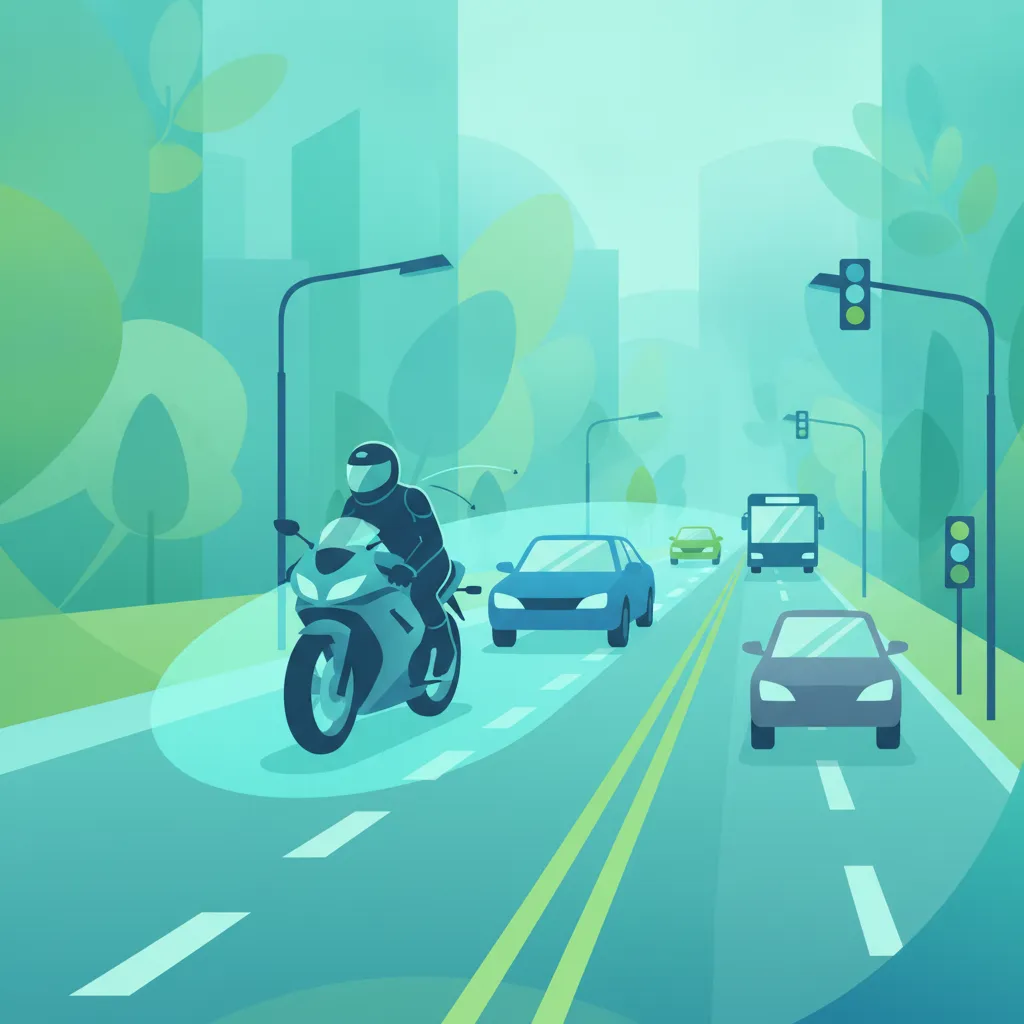
This final lesson integrates all course concepts into a single, cohesive approach to defensive riding and continuous risk assessment. You will study how to maintain a high-mileage visual lead, continuously scanning the road ahead for warning signs of conflict. By learning to assume that other motorists may not see you, you will build the proactive slowing habits and situational awareness needed to remain safe throughout your riding life.

This lesson addresses the critical psychological elements that often lead to hazardous riding decisions, especially among newer motorcyclists. You will examine the dangers of overestimating your personal control limits and downplaying common road risks during group rides. The lesson provides practical strategies to resist peer pressure, maintain your own safe pace, and prioritize professional defensive habits over showing off.

This lesson teaches critical emergency response maneuvers to help you avoid sudden, unexpected obstacles on the roadway. You will learn the exact step-by-step process of executing a rapid, controlled swerve, keeping braking forces separate from steering inputs to prevent a slide. Additionally, the lesson addresses the psychological challenge of 'target fixation' and provides techniques to keep your eyes focused on your clear escape route.

This lesson addresses the unique physiological demands of operating a heavy motorcycle, requiring high muscular coordination, core stability, and rapid reaction times. You will learn to perform self-assessments of your current health status and identify how minor physical ailments can impair balance. The lesson also covers cognitive load management, ensuring that mental stress does not compromise your reaction patterns on the road.

This lesson provides practical strategies for managing the physical demands of slow, heavily congested city traffic. You will learn how to maintain excellent low-speed balance through correct body posture, rear brake modulation, and smooth clutch control. It also emphasizes the importance of preserving an adequate safety buffer when stopping behind other vehicles, allowing an immediate escape route if you face a rear-end threat.

This lesson teaches riders how to approach and cross both controlled and uncontrolled intersections in urban settings. You will practice the 'scanning cycle' technique to identify cross-traffic hazards and manage your defensive line of sight around physical obstructions. The lesson also highlights the critical importance of early signaling and positioning to ensure that turning passenger cars do not violate your safety zone.

Learners will develop the ability to anticipate potential hazards on the road, enhancing reaction times and defensive riding strategies. The lesson emphasizes constant scanning, early identification of threats such as sudden stops, pedestrian crossings, or unexpected lane changes, and appropriate response measures. By cultivating proactive risk assessment, AM riders can significantly reduce accident likelihood.

This lesson focuses on adapting your riding behavior to sudden environmental shifts, such as heavy fog or strong crosswinds on exposed bridges. You will learn specific technical adjustments, including leaning slightly into crosswinds and widening your safety margins during low-visibility fog. The lesson also highlights how seasonal temperature drops affect your tires' ability to warm up and achieve reliable, safe levels of road adhesion.

This lesson teaches riders how to negotiate loose surfaces such as gravel, sand, and poorly maintained urban asphalt without dropping the motorcycle. You will study correct body positioning, focusing on keeping your weight centered and your grip relaxed on the handlebars. The lesson also highlights why smooth, constant throttle delivery and avoiding abrupt front braking are essential to prevent the front wheel from washing out.

This lesson emphasizes that driving a motorcycle in France involves unique moral and social responsibilities towards vulnerable road users like cyclists and pedestrians. You will examine the importance of defensive riding habits, civil road etiquette, and the prioritizing of shared road safety. Understanding these principles helps to prevent dangerous situations, respect local communities, and lower overall accident statistics.
Understand the legal framework and safety requirements for lane filtering in urban traffic in France. This lesson covers proper lateral clearance, speed differentials, and safe positioning techniques to navigate congested city streets and intersections effectively while respecting road rules.
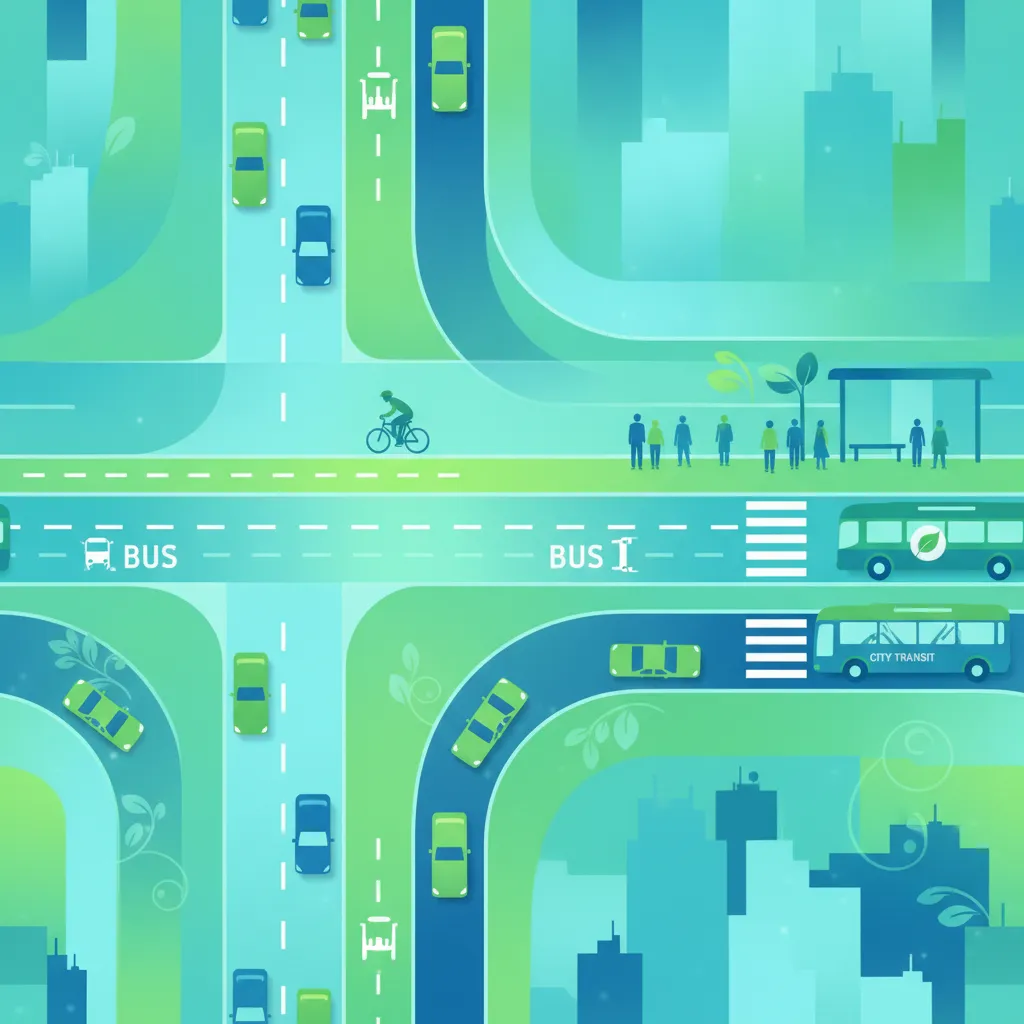
This lesson clarifies the legal boundaries of urban infrastructure, highlighting the strict ban on riding motorcycles within bus lanes or cycle paths. You will study French regulations concerning traffic flow, including where and when experimental lane filtering is permitted between lines of stationary cars. Understanding these boundaries ensures you can keep moving through congested areas without risking heavy fines or dangerous collisions.
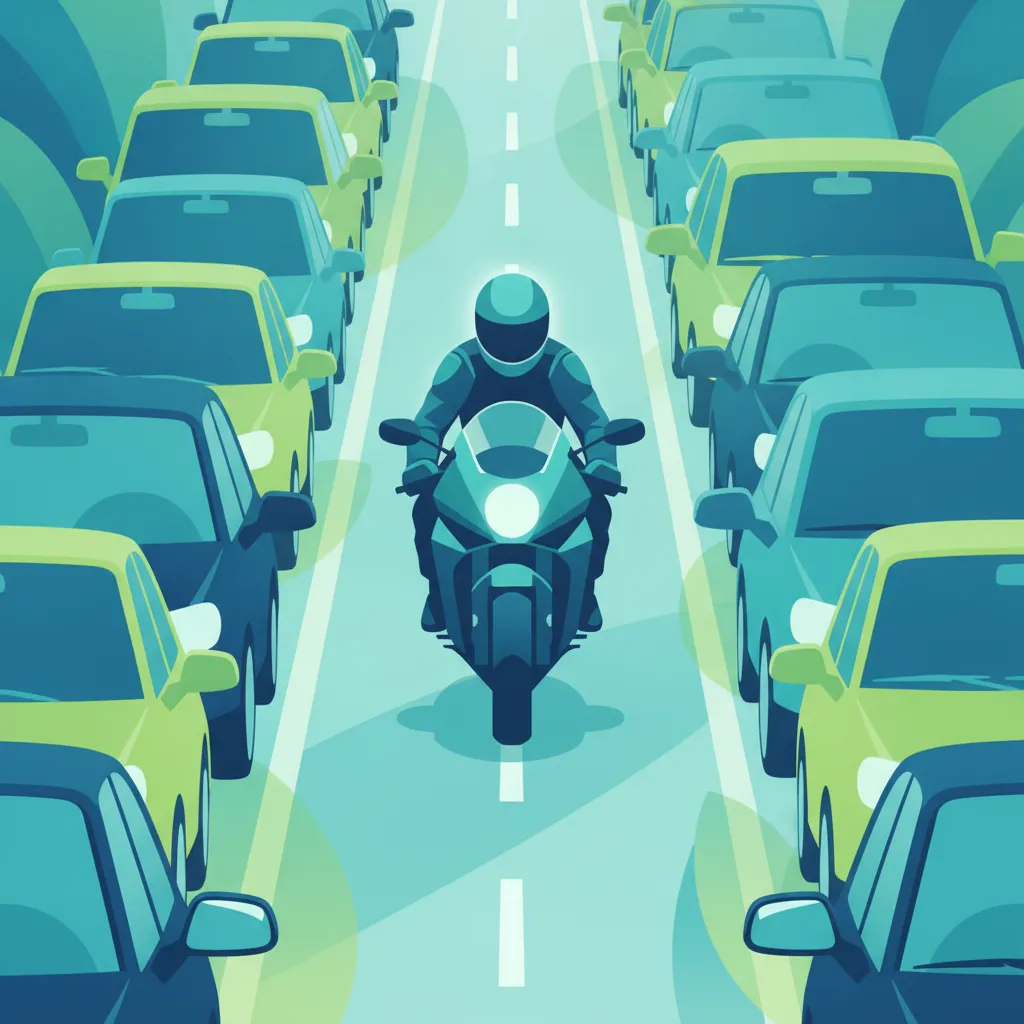
This lesson outlines the rules and practical safety limits of lane filtering, known as 'inter-files' riding, under French road guidelines. You will study the specific speed limits allowed during filtering, the conditions of high congestion where it is permitted, and where it remains completely banned. The lesson also highlights the critical need to anticipate sudden lane changes from frustrated car drivers stuck in stationary traffic queues.
This lesson provides practical strategies for managing the physical demands of slow, heavily congested city traffic. You will learn how to maintain excellent low-speed balance through correct body posture, rear brake modulation, and smooth clutch control. It also emphasizes the importance of preserving an adequate safety buffer when stopping behind other vehicles, allowing an immediate escape route if you face a rear-end threat.
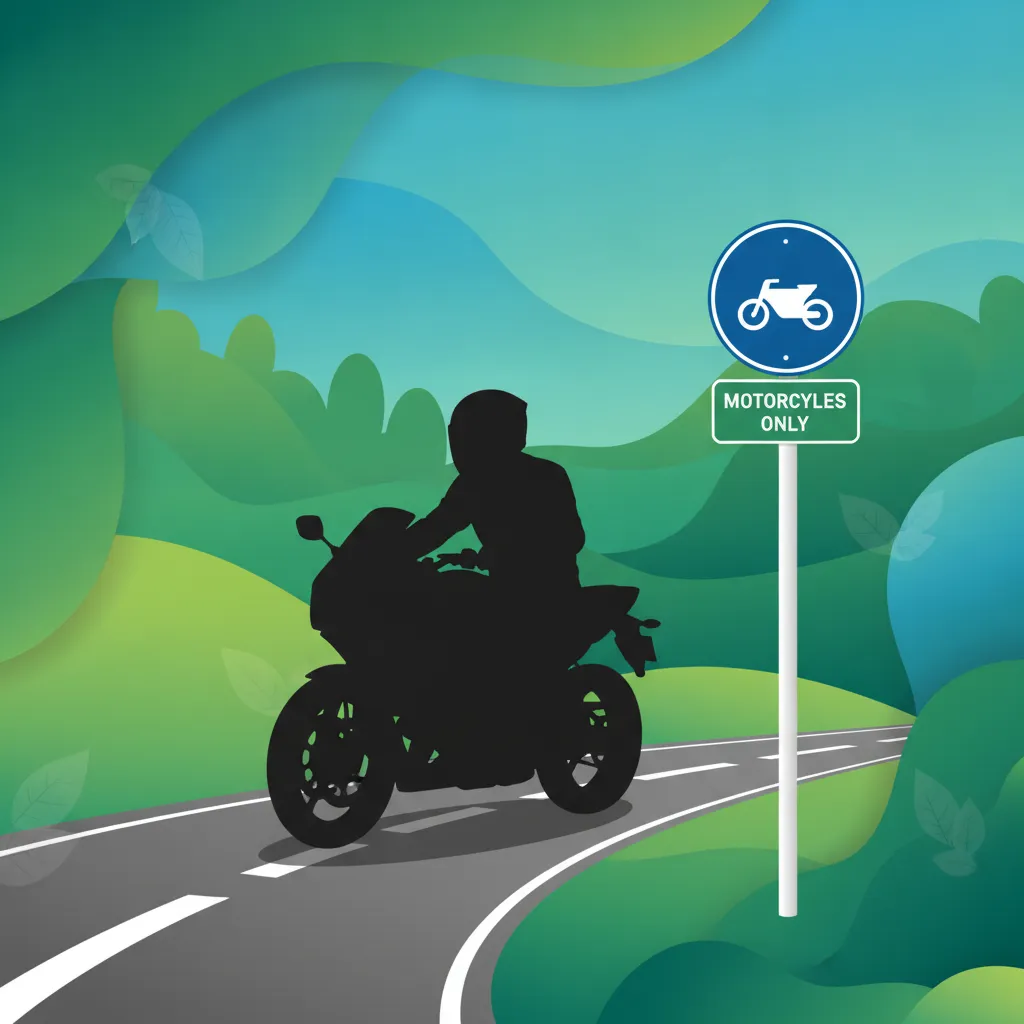
This lesson focuses on identifying regulatory signs, which are circular signs with red borders for prohibitions or blue backgrounds for obligations. You will learn about specific restrictions that impact motorcycle paths, including narrow lane access bans, motorcycle-specific speed limits, and overtaking prohibitions. Mastering these symbols is vital to ensuring compliance with French road law and avoiding immediate traffic penalty points.

This lesson explores how dividing your travel lane into three distinct vertical zones allows you to adjust your positioning for optimal safety. You will learn to shift your line to avoid oil slicks in the lane center, road debris at the edges, and wind blasts from passing trucks. Crucially, the lesson covers how to adapt your lane position on blind bends to widen your field of vision and stay clear of oncoming traffic.

This lesson covers the operational logic of traffic light signals in France, emphasizing the legal implications of the red, amber, and green cycles. You will study how to safely manage the amber phase to avoid rear-end collisions from vehicles behind while maintaining control. Additionally, you will discover the unique challenge of electromagnetic induction loops, which sometimes fail to detect lightweight motorcycles at quiet intersections.
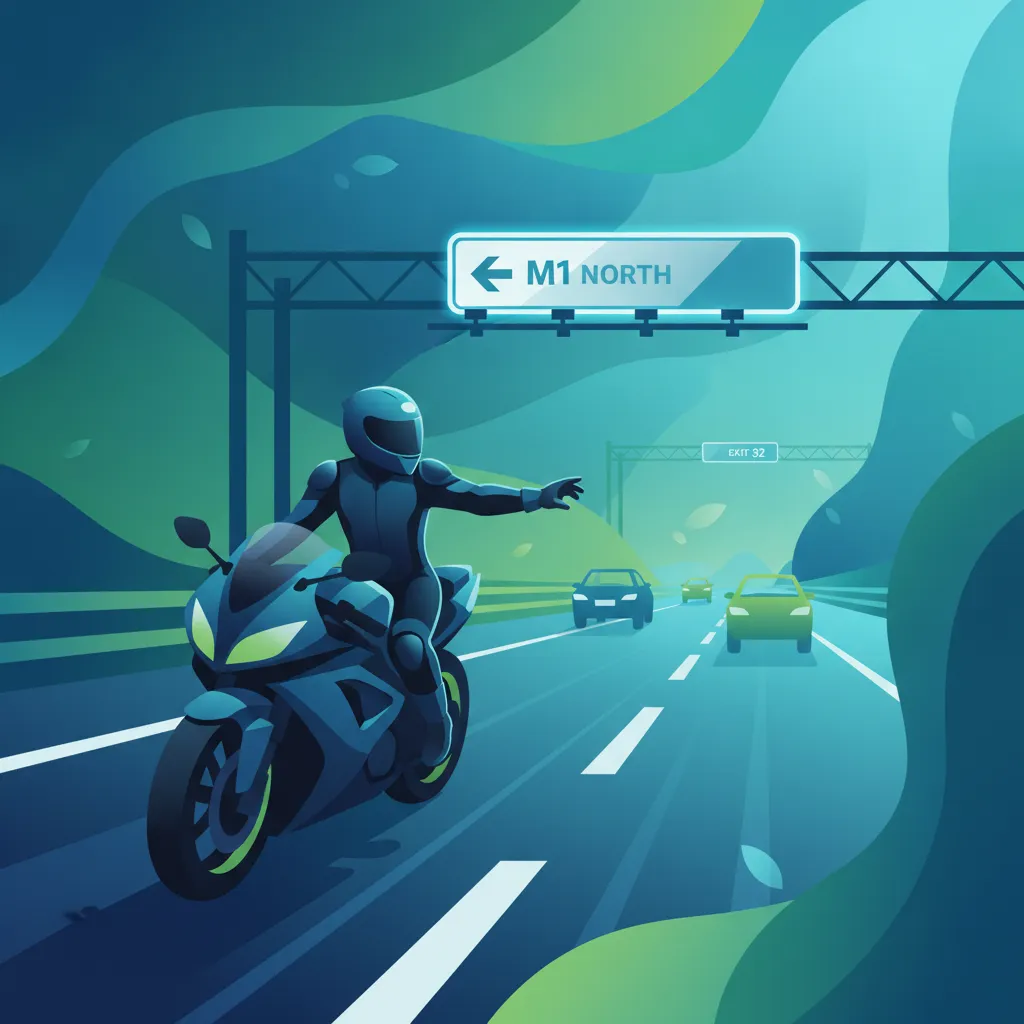
This lesson details how to safely enter, cruise on, and exit French motorways, known as autoroutes, which feature high-speed traffic flows. You will master the process of matching highway speeds in the acceleration lane and performing blind spot checks before merging. The lesson also explains correct lane positioning to avoid aerodynamic turbulences from large semi-trucks, and how to safely prepare for decelerating at exit ramps.
This lesson teaches riders how to approach and cross both controlled and uncontrolled intersections in urban settings. You will practice the 'scanning cycle' technique to identify cross-traffic hazards and manage your defensive line of sight around physical obstructions. The lesson also highlights the critical importance of early signaling and positioning to ensure that turning passenger cars do not violate your safety zone.
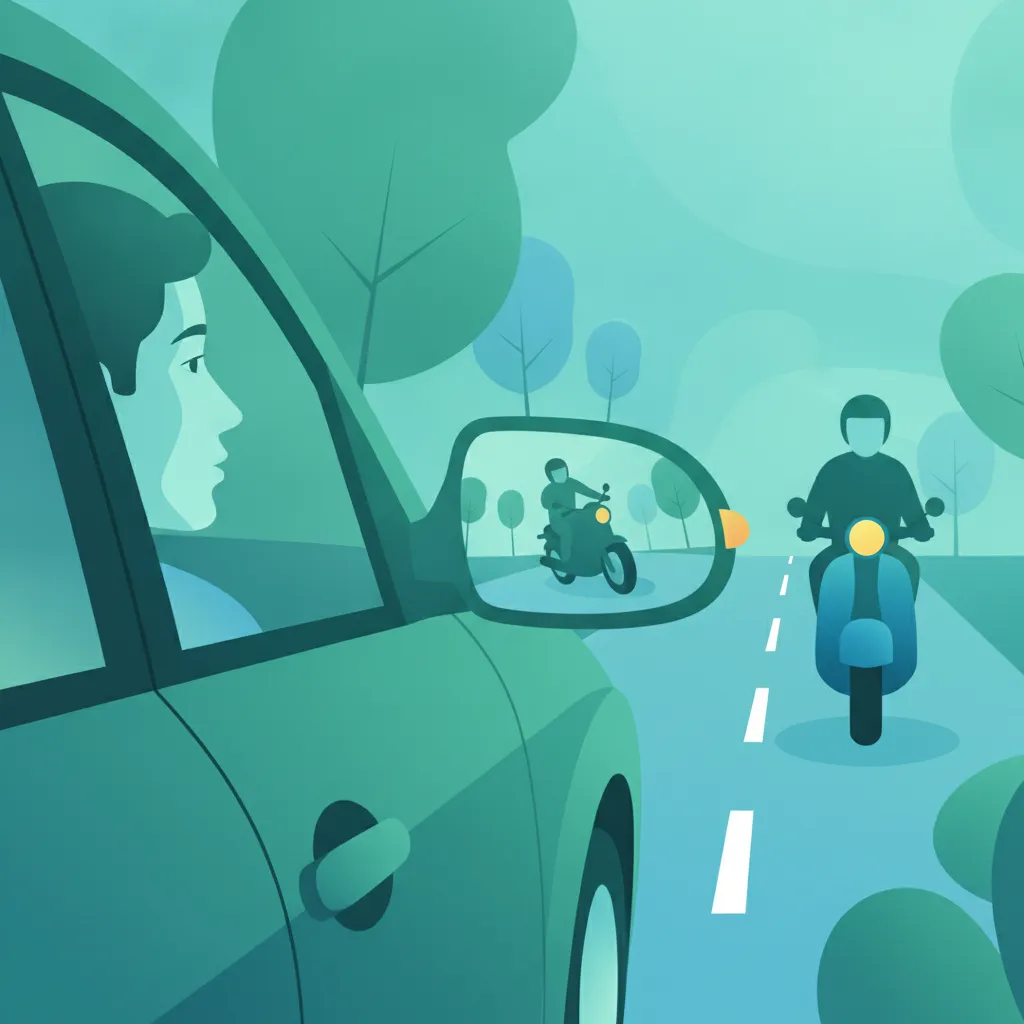
In this lesson, drivers will learn how to safely share the road with motorcycles and scooters, focusing on the specific blind spots and speed differentials that create risk. The content highlights proper lane positioning, caution when overtaking, and strategies for predicting motorcycle trajectories. Learners will also be introduced to the importance of being aware of scooter movements, especially in narrow streets.

This lesson details the legal and physical implications of horizontal markings, including solid white lines, broken warning lines, and cycle lane dividers. You will learn about the strict prohibition against crossing solid lines and how directional arrows dictate correct lane choices at complex junctions. Importantly, the lesson teaches you to recognize the physical hazard of wet road paint, which drastically reduces tire grip during braking.
Find clear answers to common questions learners have about Maintaining Protective Space Around the Motorcycle. Learn how the lesson is structured, which driving theory objectives it supports, and how it fits into the overall learning path of units and curriculum progression in France. These explanations help you understand key concepts, lesson flow, and exam focused study goals.
The two-second rule is the minimum safe following distance between you and the vehicle ahead. It applies to all motorcycles in France; however, in poor weather or on slippery surfaces, you must increase this distance to three seconds or more to ensure safe stopping.
Do not increase your speed to create distance. Instead, maintain your steady speed or slow down slightly to encourage them to overtake. Focus on increasing your distance from the vehicle in front of you so that you have more space to brake gently if needed.
By choosing the right part of your lane, you make yourself more visible to drivers in front and behind you. This helps prevent motorists from crowding your space and ensures you have a clear path to maneuver if an emergency arises.
Yes, many questions on the French theory test involve identifying if a rider has sufficient space or if they are in a dangerous position. Understanding these dynamics is essential for choosing the correct answer.
Ready to focus your study? Use the practice search to find exactly the French driving theory questions you need for the Code de la route and permis de conduire ETG. Refine your knowledge on specific topics or challenging rules to boost your confidence and exam readiness.