
This lesson focuses on the critical safety challenges goods vehicle drivers face when sharing urban environments with vulnerable road users. It provides essential guidance on navigating pedestrian crossings, bike lanes, and crowded delivery zones to ensure compliance with the French Code de la route.
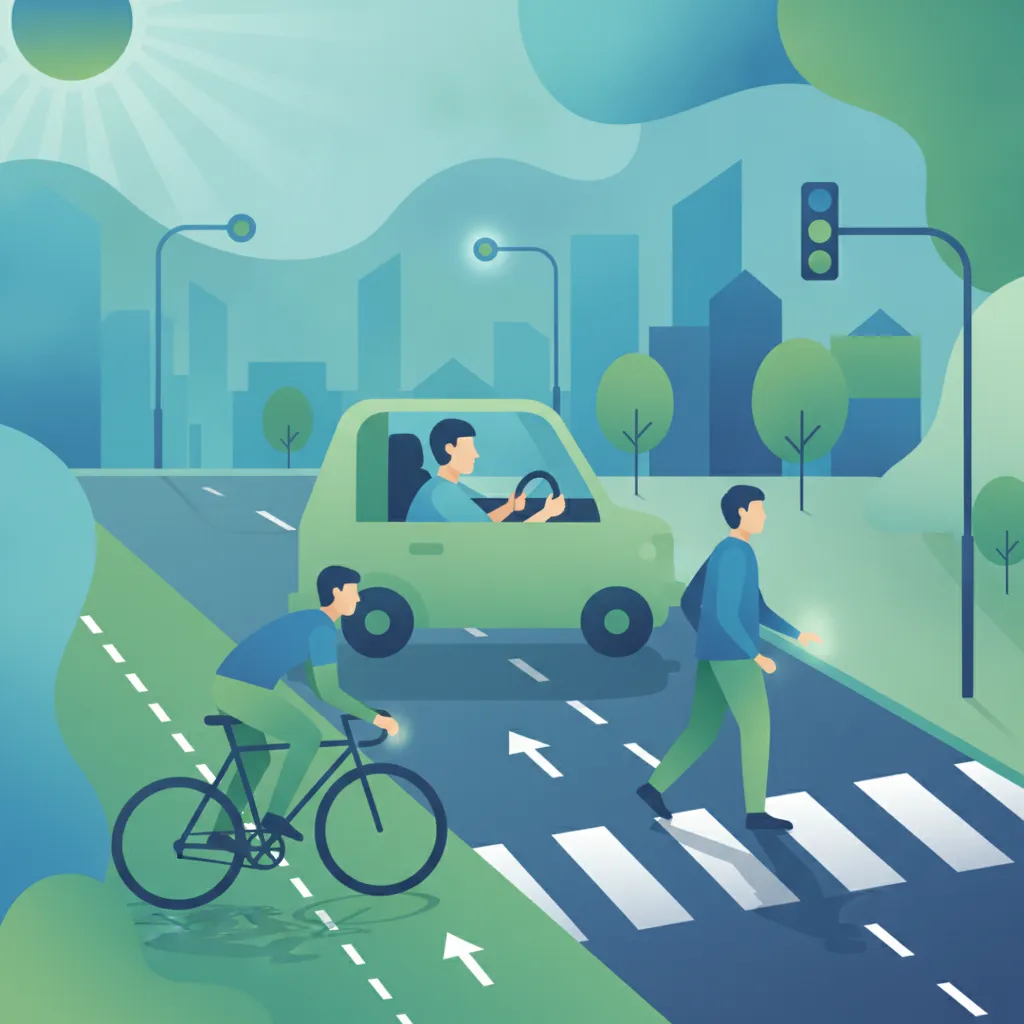
Lesson content overview
Operating a heavy goods vehicle (HGV) of Category C or CE within urban environments demands a high level of cognitive control, spatial awareness, and legal responsibility. In France, urban driving environments have become increasingly complex due to a growing density of micro-mobility options, cycling infrastructure, and pedestrian zones.
Because of their immense mass and restricted visibility, goods vehicles pose a disproportionate risk to Vulnerable Road Users (VRUs). This lesson covers the regulatory framework, physical principles, and practical techniques necessary to safely share the road with pedestrians and cyclists.
The French traffic code (Code de la route) is built upon the Principle of Prudence (Article R412-6), which establishes a legal hierarchy of road users. This framework mandates that drivers with the most powerful and heavily protected vehicles must exercise the highest degree of care toward the most vulnerable and unprotected.
A legal doctrine in France requiring drivers to actively anticipate hazards and take preventive actions to protect vulnerable road users, such as pedestrians and cyclists, who lack physical protection.
This hierarchy is not merely a courtesy; it is a foundational legal responsibility. If a collision occurs between an HGV and a pedestrian or cyclist, French law (under the Loi Badinter) heavily favors the vulnerable user regarding civil liability. As a professional driver, you must understand that the burden of anticipation lies almost entirely on you.
Pedestrians are the most exposed users on public roads. Under French law, drivers must yield to pedestrians in several specific scenarios, with strict penalties for non-compliance.
Under Article R415-11 of the Code de la route, drivers must yield to any pedestrian who has stepped onto a marked zebra crossing, or who clearly indicates their intention to cross.
Strict Penalties: Failure to yield to a pedestrian at a crossing is a major traffic offence in France, resulting in a Class 4 fine, a mandatory deduction of 6 points from your driving licence, and a potential licence suspension.
If a pedestrian is crossing the road outside of a marked crossing, drivers still have a general duty of care. If a pedestrian has already begun crossing a road—even illegally—you must yield. Furthermore, when crossing a sidewalk to enter a delivery bay, depot, or private property, pedestrians on the sidewalk retain absolute priority.
Children and individuals with reduced mobility require special consideration:
The French government has significantly expanded cycling infrastructure. As an HGV driver, you must distinguish between different types of bicycle paths and understand the precise rules governing them.
Under the Code de la route, heavy goods vehicles are strictly prohibited from:
When overtaking a cyclist on a public road, you must maintain a safe lateral clearance. Because of the aerodynamic pressure wave generated by a large commercial vehicle, overtaking too closely can pull a cyclist toward your wheels or cause them to lose balance.
Assess the Road Ahead: Ensure there is no oncoming traffic and that you have a clear view of the road.
Check Blind Spots: Check your left-side mirrors and blind-spot mirrors to ensure no other vehicle is already overtaking you.
Maintain Lateral Clearance: In France, you must maintain a minimum lateral distance of 1.5 metres in urban areas when passing a cyclist.
Signal and Move: Use your left indicator and steer smoothly into the adjacent lane to maintain the clearance. Do not cut back in too early; wait until the cyclist is clearly visible in your interior/passenger-side mirrors.
Intersections represent the highest-risk zones for collisions between goods vehicles, pedestrians, and cyclists. Most fatal accidents involving HGVs and cyclists occur when the vehicle is turning right.
When an HGV turns right, it must often swing wide to the left to allow the rear wheels of the tractor or trailer to clear the curb. This maneuver can create a temporary gap on the right side of the vehicle.
Cyclists traveling straight ahead may attempt to fill this gap, unaware that the HGV is about to turn right across their path.
To prevent this collision, drivers must apply the following turning practices:
In France, cyclists are sometimes permitted to turn right or go straight at red lights under specific conditions, signaled by the M12 sign attached to traffic lights.
As an HGV driver, you must expect cyclists to proceed through certain red lights when these signs are present. Never assume a cyclist will remain stationary at a red light.
Heavy goods vehicles have extensive blind spots, particularly around the front corners, the passenger side, and directly behind the vehicle.
Since January 1, 2021, all heavy vehicles over 3.5 tonnes operating in France must display Angles Morts warning stickers on the sides and rear of the vehicle to warn vulnerable road users of these danger zones.
To safely detect pedestrians and cyclists, you must execute a systematic mirror scan before every movement:
| Mirror Class | Coverage Area | Role in VRU Detection |
|---|---|---|
| Class II (Main) | Main rearward view along the sides of the vehicle. | Detecting cyclists approaching from behind in adjacent lanes. |
| Class IV (Wide-Angle) | Wide field of view along the sides. | Detecting cyclists or pedestrians transitioning into lateral blind spots. |
| Class V (Close-Proximity) | Downward view of the passenger side door area. | Detecting cyclists stopping next to the passenger cab at intersections. |
| Class VI (Front/Cyclopean) | Downward view directly in front of the cab. | Detecting pedestrians crossing immediately in front of the high bumper. |
Professional drivers must manage the physical forces of their vehicles to avoid collisions. The stopping distance of a loaded goods vehicle is significantly longer than that of a passenger car, requiring earlier anticipation.
The total stopping distance consists of two main components:
Stopping Distance Comparison at 50 km/h (Dry Road)
=========================================================
Passenger Car:      |====| ~ 25-30m total
Category C Lorry:   |========| ~ 40-50m total
Articulated CE:     |==========| ~ 55-65m total
In wet weather or low-visibility conditions (rain, fog, dusk), the braking distance can easily double. When navigating areas with high pedestrian and cyclist activity, you must reduce your speed below the limit to compress your reaction and braking distances.
To maintain safety at all times, incorporate these procedures into your daily driving habits:
Scan Ahead: Look for pedestrians approaching the crossing from at least 50 metres away. Scan both sides of the street, checking behind parked cars, trees, or street furniture.
Release the Accelerator: Cover your brake pedal to reduce speed and prepare for an emergency stop.
Check Mirrors: Monitor your rear-view mirrors to ensure vehicles behind you are aware you are slowing down.
Stop Smoothly: If a pedestrian shows intent to cross, bring the vehicle to a complete stop before the stop line or crossing markings. Avoid abrupt braking unless absolutely necessary.
Verify Before Proceeding: Once the pedestrian has crossed past the front of your vehicle, check your Class VI (front) mirror to ensure no other pedestrian or child is hidden directly under your windscreen before accelerating.
Professional HGV drivers face severe legal, financial, and professional consequences for failing to protect vulnerable road users.
In many French cities (e.g., Paris, Lyon, Marseille), HGVs may interact with shared tramway corridors or bus lanes.
VULNERABLE ROAD USER SAFETY CHECKLIST
─────────────────────────────────────────────────────────
1. Visually scan crossings 50m in advance.
2. Maintain 1.5m lateral distance when passing cyclists.
3. Conduct 360-degree mirror sweep before every turn.
4. Keep vehicle speeds low in school and residential zones.
5. Watch for "Angles Morts" warnings and adjust mirrors.
─────────────────────────────────────────────────────────
This lesson addresses the critical safety responsibilities of Category C and CE drivers when sharing urban roads with pedestrians and cyclists in France. It establishes the legal hierarchy under the Principle of Prudence, requiring HGV drivers to exercise maximum care toward vulnerable road users. Key operational requirements include yielding at all marked and unmarked crossings, maintaining a minimum 1.5-metre lateral clearance when overtaking cyclists, and conducting comprehensive mirror checks (Classes II, IV, V, and VI) before any movement. The right-turn blind spot presents the highest collision risk, as cyclists traveling straight may fill the gap created by the vehicle's wide swing. Drivers must also account for significantly longer stopping distances compared to passenger vehicles, especially in wet conditions, and must never use bicycle lanes to bypass traffic or park for deliveries.
A short set of high-value points that capture the most important learning from this lesson.
Under the Principle of Prudence (Article R412-6), HGV drivers bear the highest responsibility to protect vulnerable road users due to their vehicle's mass and limited visibility.
Pedestrians have absolute priority at marked zebra crossings and even at unmarked crossings once they have begun crossing; drivers must yield to their clear intention to cross.
A minimum 1.5-metre lateral clearance is required when overtaking cyclists in urban areas in France, and HGVs are prohibited from using bicycle lanes to bypass traffic.
The right-turn blind spot is the highest-risk area for HGV-cyclist collisions; cyclists traveling straight in a bike lane have absolute priority over turning vehicles.
All heavy vehicles over 3.5 tonnes must display Angles Morts warning stickers, and drivers must conduct systematic mirror sweeps before every movement.
Explore all units and lessons included in this driving theory course.
Remember the four mirror classes: Class II (main rearward), Class IV (wide-angle), Class V (close-proximity passenger side), and Class VI (front Cyclopean).
At 50 km/h, an HGV travels approximately 14 metres during the 1-second reaction time before brakes engage, and total stopping distance can reach 40-65m depending on vehicle configuration.
The M12 sign permits cyclists to proceed through red lights under yield conditions; never assume a cyclist will remain stationary at a red light.
When turning right, the rear wheels swing wide left, creating a dangerous gap that cyclists may attempt to fill—this is the most common fatal HGV-cyclist collision scenario.
Pedestrian islands divide wide crossings legally; once a pedestrian steps onto the island, you must treat this as clear intent to continue crossing.
Assuming pedestrians will only cross when they have fully stepped onto the roadway, when the law requires yielding to clear intention to cross.
Failing to check the Class VI (front) mirror before moving off after stopping at a crossing, where children or short pedestrians may be hidden directly in front of the high cab.
Overtaking cyclists without sufficient lateral clearance because oncoming traffic prevents crossing the center line—overtaking must wait until safe.
Believing that a green traffic light for turning vehicles overrides pedestrian crossing rights; pedestrians crossing on green always have priority.
Neglecting to signal right-turn intention early enough to warn cyclists behind the vehicle before initiating the wide turn.
Lesson content overview
A short set of high-value points that capture the most important learning from this lesson.
Under the Principle of Prudence (Article R412-6), HGV drivers bear the highest responsibility to protect vulnerable road users due to their vehicle's mass and limited visibility.
Pedestrians have absolute priority at marked zebra crossings and even at unmarked crossings once they have begun crossing; drivers must yield to their clear intention to cross.
A minimum 1.5-metre lateral clearance is required when overtaking cyclists in urban areas in France, and HGVs are prohibited from using bicycle lanes to bypass traffic.
The right-turn blind spot is the highest-risk area for HGV-cyclist collisions; cyclists traveling straight in a bike lane have absolute priority over turning vehicles.
All heavy vehicles over 3.5 tonnes must display Angles Morts warning stickers, and drivers must conduct systematic mirror sweeps before every movement.
Explore all units and lessons included in this driving theory course.
Remember the four mirror classes: Class II (main rearward), Class IV (wide-angle), Class V (close-proximity passenger side), and Class VI (front Cyclopean).
At 50 km/h, an HGV travels approximately 14 metres during the 1-second reaction time before brakes engage, and total stopping distance can reach 40-65m depending on vehicle configuration.
The M12 sign permits cyclists to proceed through red lights under yield conditions; never assume a cyclist will remain stationary at a red light.
When turning right, the rear wheels swing wide left, creating a dangerous gap that cyclists may attempt to fill—this is the most common fatal HGV-cyclist collision scenario.
Pedestrian islands divide wide crossings legally; once a pedestrian steps onto the island, you must treat this as clear intent to continue crossing.
Assuming pedestrians will only cross when they have fully stepped onto the roadway, when the law requires yielding to clear intention to cross.
Failing to check the Class VI (front) mirror before moving off after stopping at a crossing, where children or short pedestrians may be hidden directly in front of the high cab.
Overtaking cyclists without sufficient lateral clearance because oncoming traffic prevents crossing the center line—overtaking must wait until safe.
Believing that a green traffic light for turning vehicles overrides pedestrian crossing rights; pedestrians crossing on green always have priority.
Neglecting to signal right-turn intention early enough to warn cyclists behind the vehicle before initiating the wide turn.
Explore search topics learners often look for when studying Interactions with Pedestrians and Cyclists. These topics reflect common questions about road rules, driving situations, safety guidance, and lesson level theory preparation for learners in France.
Browse additional driving theory lessons that cover connected traffic rules, road signs, and common driving situations related to this topic. Improve your understanding of how different rules interact across everyday traffic scenarios.
Understand the specific challenges and spatial requirements for manoeuvring Category C and CE vehicles in dense urban environments. This guide explains safe turning techniques and how to identify road access restrictions in French city centers while protecting vulnerable road users.
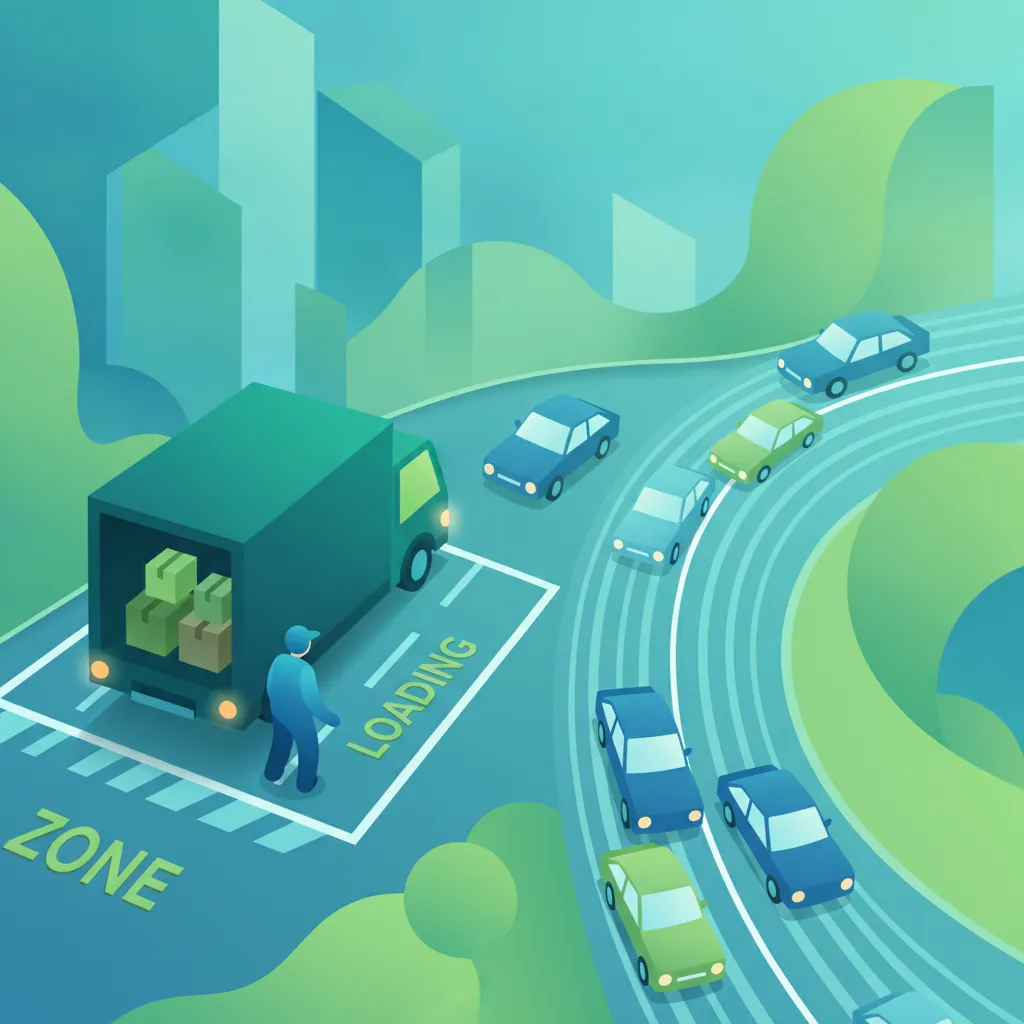
In this lesson, drivers will learn how to navigate urban delivery zones, understanding the rules surrounding loading bays, time windows, and restricted access areas. The content includes the process for obtaining delivery permits, strategies for safe maneuvering in congested city streets, and best practices for minimizing impact on pedestrian traffic. Learners will also be introduced to French city-specific regulations that govern goods vehicle deliveries.
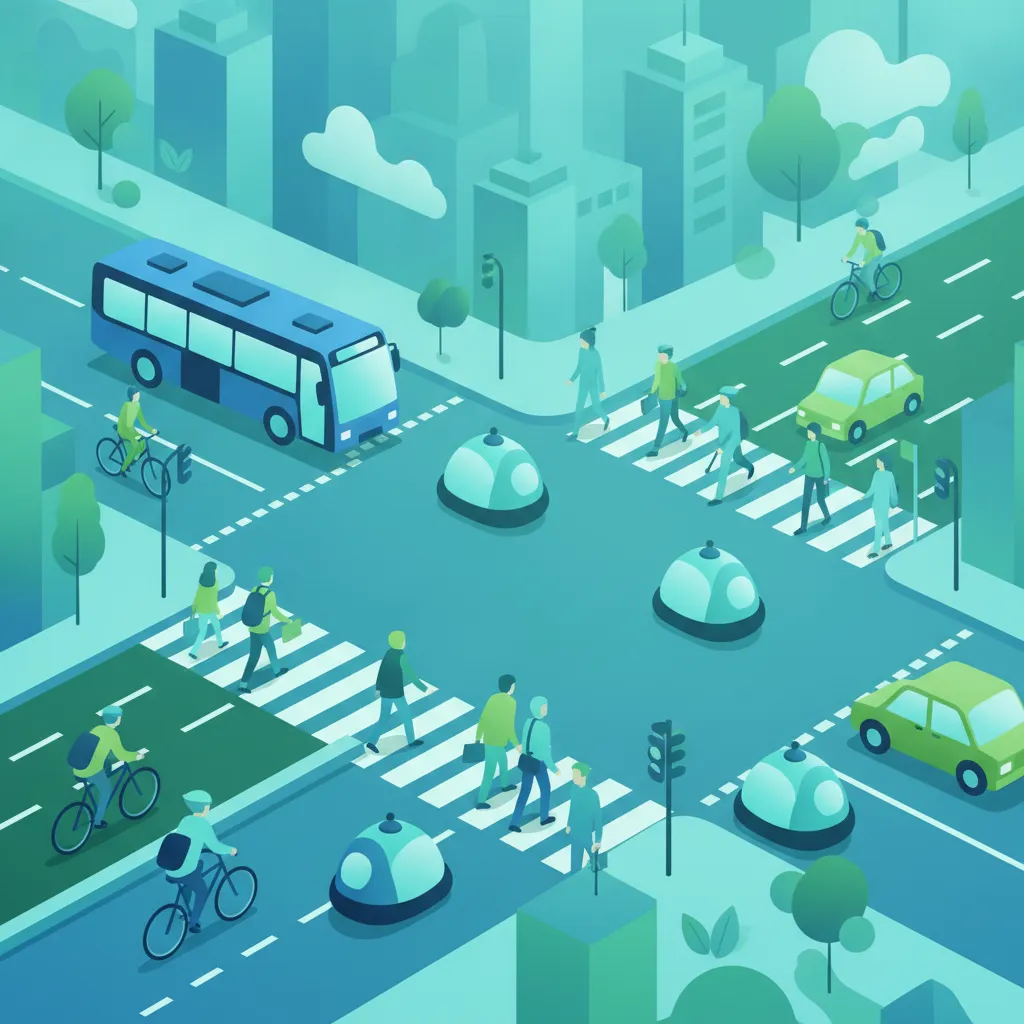
This lesson analyzes the various traffic challenges unique to operating large passenger vehicles in historic and modern French urban areas. Drivers will learn to manage narrow street layouts, double-parked delivery trucks, and high-density multi-lane roundabouts safely. The lesson emphasizes defensive driving strategies, route adjustments, and maintaining mental focus under severe schedule and time pressures.
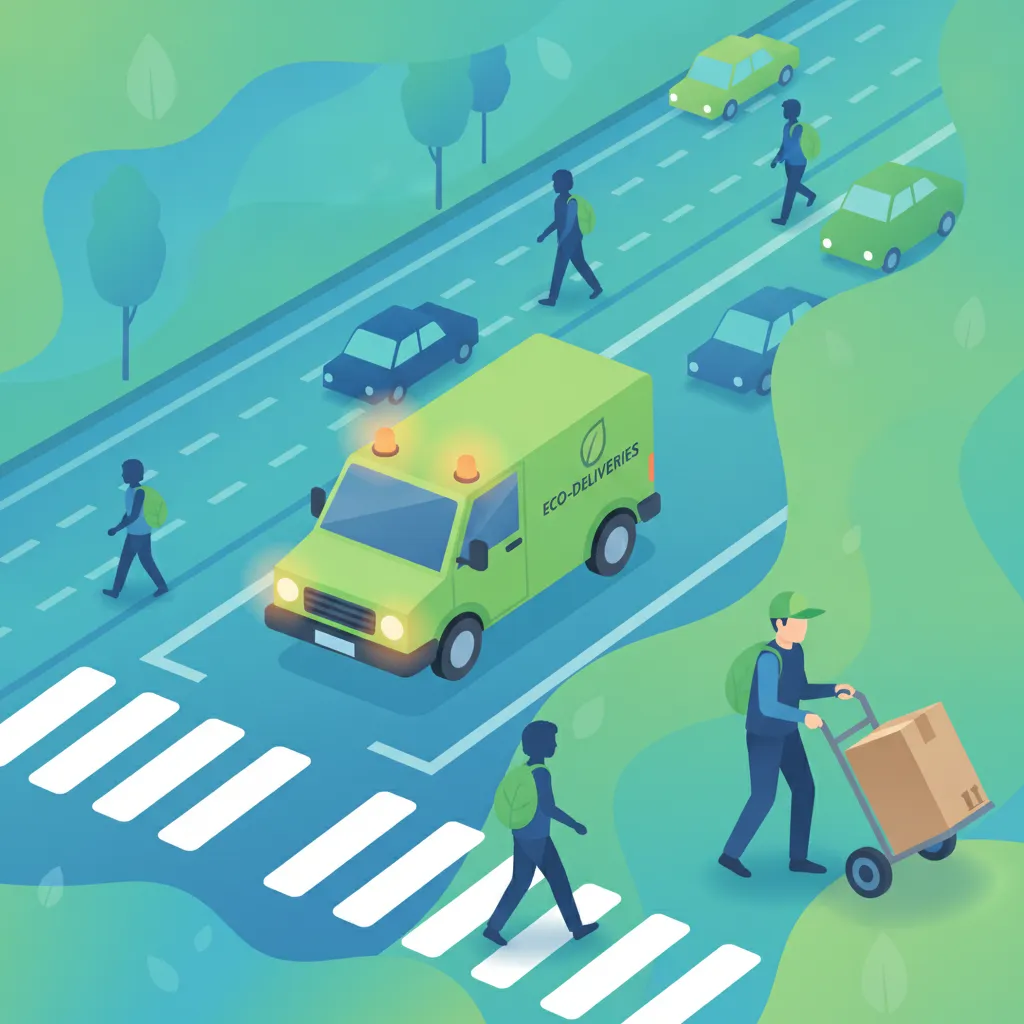
This lesson focuses on the unique challenges of performing deliveries in dense urban areas. Learners will explore best practices for loading and unloading safely, navigating traffic congestion, and minimizing risks to pedestrians and cyclists. The content also covers compliance with city regulations for delivery zones, scheduling considerations, and the importance of careful maneuvering to avoid accidents.
This lesson focuses on maneuvering in extremely crowded areas, passenger terminals, or narrow streets blocked by parked vehicles and obstacles. Drivers will learn to assess clearance distances precisely before committing to narrow pathways. The content teaches steering techniques that maintain stability, optimize space usage, and prioritize public safety during slow-speed, high-difficulty maneuvers.
This lesson covers the physical dimensions of passenger vehicles and how their high profile, length, and width alter spatial awareness on the road. Learners will study tail-swing mechanics and track the path of the rear wheels during sharp turns to avoid hitting roadside obstacles. Accurate measurement of overhead structures, bridges, and underpass clearances is taught to prevent catastrophic structural collisions.

In this lesson, drivers will learn best practices for manoeuvring goods vehicles into loading docks and other confined spaces. The content covers the use of spotting aids, guidance markings, and reverse assistance technologies. Learners will understand how to align the vehicle and trailer correctly with dock doors, maintain situational awareness, and use proper signaling for safety. The lesson also emphasizes the importance of communication with dock personnel.
This lesson examines the regulatory limits and environmental controls applied to large passenger vehicles operating in dense French urban centers. Drivers will study the Crit'Air clean air sticker system and low-emission zones (ZFE) that restrict access for older, high-polluting vehicles. It also addresses navigating physical constraints, such as narrow streets, tight turning radii, and strict municipal weight limits.

In this lesson, drivers will learn strategies to avoid conflicts with smaller vehicles, such as cars and vans, which may not be as visible in large vehicle blind spots. The content emphasizes maintaining adequate spacing, using proper lane discipline, and being aware of small vehicles' behavior during lane changes and turns. Learners will also be introduced to communication techniques, such as signalling and eye contact.
This lesson details the rules of lane discipline for operating wider and longer passenger transport vehicles on highway and city networks. Learners will explore proper lane positioning to prevent encroachment on adjacent lanes or sidewalks. It also covers the step-by-step visual and signaling sequence required to perform safe lane changes, avoiding sudden movements that could startle other drivers.
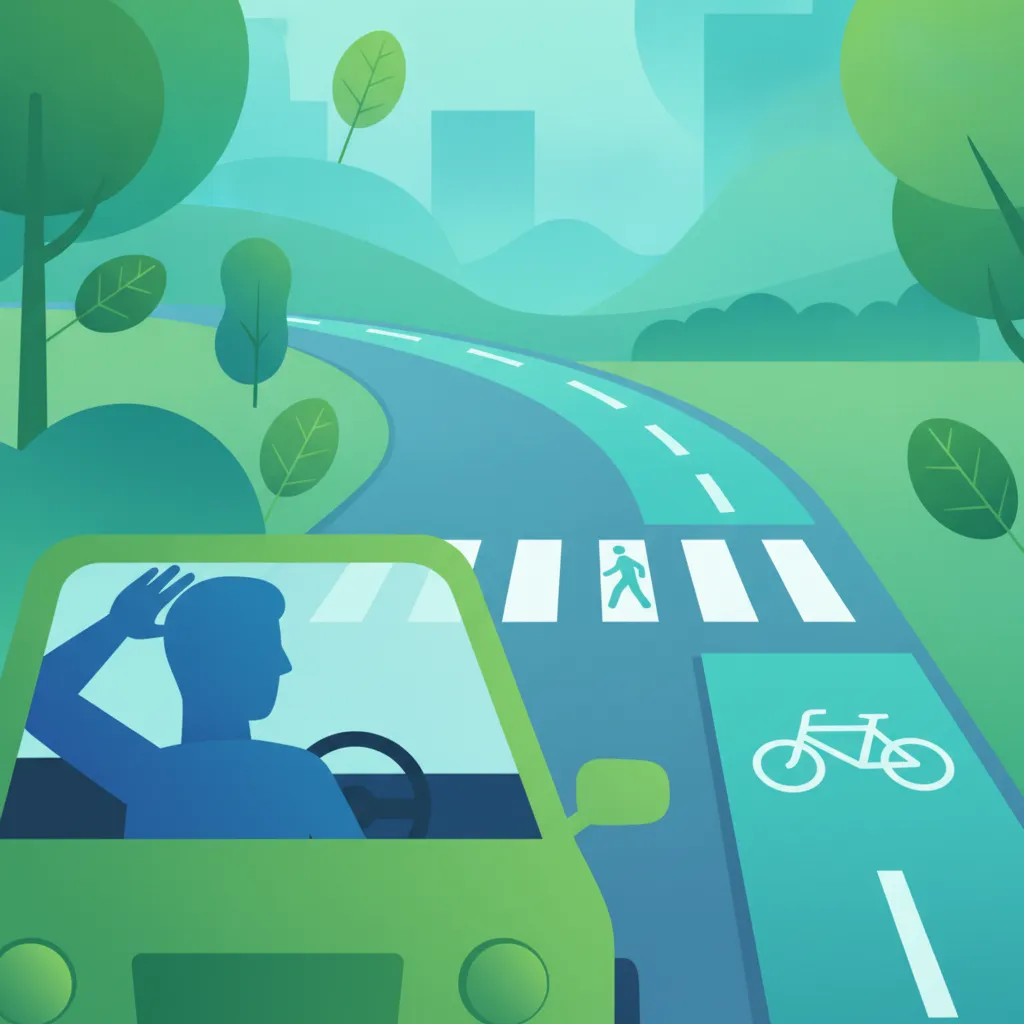
This lesson analyzes the technical path a long wheelbase vehicle must take when turning at intersections and navigating roundabouts. Drivers will learn to calculate tail swing and rear-wheel tracking, intentionally swinging wide to clear roadside curbs and poles safely. The lesson emphasizes yielding protocols for pedestrians and cyclists who may be crossing the target street during the turn.
Explore the critical principles of direct and indirect vision for heavy goods vehicle drivers. This lesson details the use of mirror configurations and safety stickers required in France to identify and mitigate hazards posed by blind spots when sharing the road with smaller vehicles.
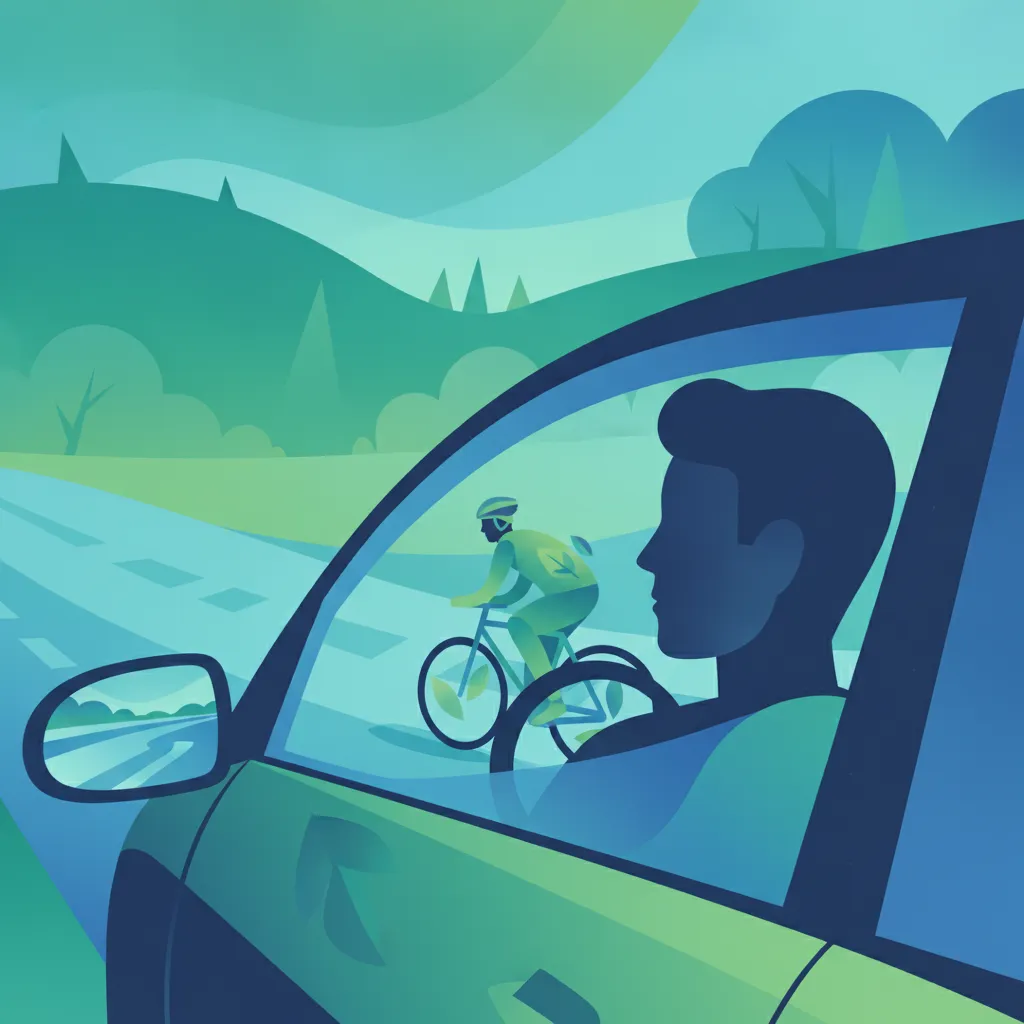
This lesson focuses on the importance of recognizing and mitigating blind spots in goods vehicles, especially when towing trailers. Learners will explore techniques such as proper mirror adjustment, the use of blind spot mirrors, and visual checks to ensure that obstacles and vulnerable road users are detected before executing maneuvers. The content also discusses the limitations of blind spot monitoring systems and the need for supplementary visual checks.

This lesson details the dangerous blind spots (angles morts) that surround heavy passenger vehicles and explains how to mitigate them. Drivers will master the systematic mirror check sequence (retro-information) before executing any turns or lane changes. It also covers the mandatory French "Angles Morts" warning stickers displayed on the vehicle exterior to alert vulnerable road users of danger zones.
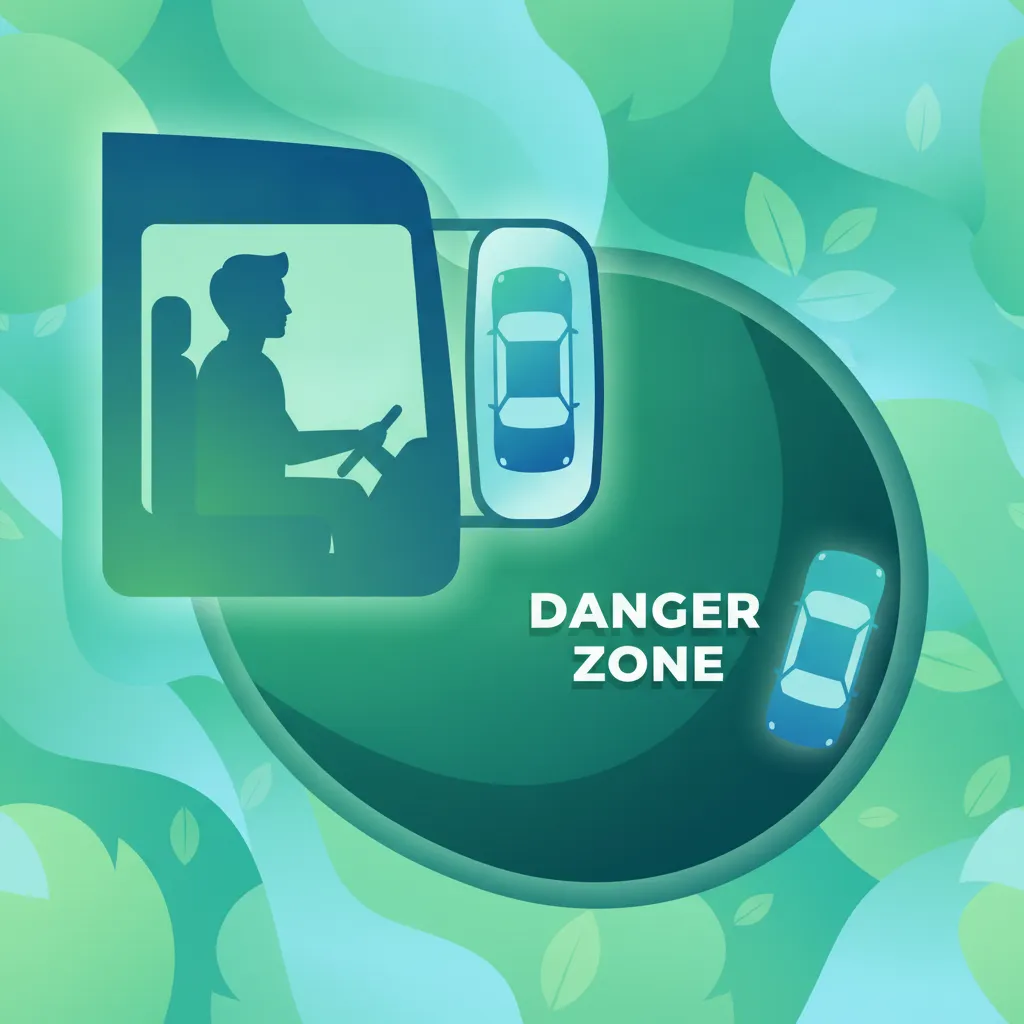
This lesson details the location and scale of blind spots around passenger cars and heavy goods vehicles, often referred to as the 'no-zone' or 'angles morts'. You will learn why truck drivers cannot see you directly behind or immediately adjacent to their cab doors. The lesson provides actionable strategies to minimize the time you spend in these dangerous zones, ensuring you always pass quickly and safely.
In this lesson, drivers will learn strategies to avoid conflicts with smaller vehicles, such as cars and vans, which may not be as visible in large vehicle blind spots. The content emphasizes maintaining adequate spacing, using proper lane discipline, and being aware of small vehicles' behavior during lane changes and turns. Learners will also be introduced to communication techniques, such as signalling and eye contact.

This lesson addresses the challenges of positioning near larger vehicles such as cars, vans, buses, and lorries on French roads. Learners will learn to identify blind spots (angles morts), maintain a safe distance, and position themselves to maximize visibility and predictability. Understanding these dynamics is crucial for AM riders to avoid dangerous situations and ensure safe overtaking and lane sharing.
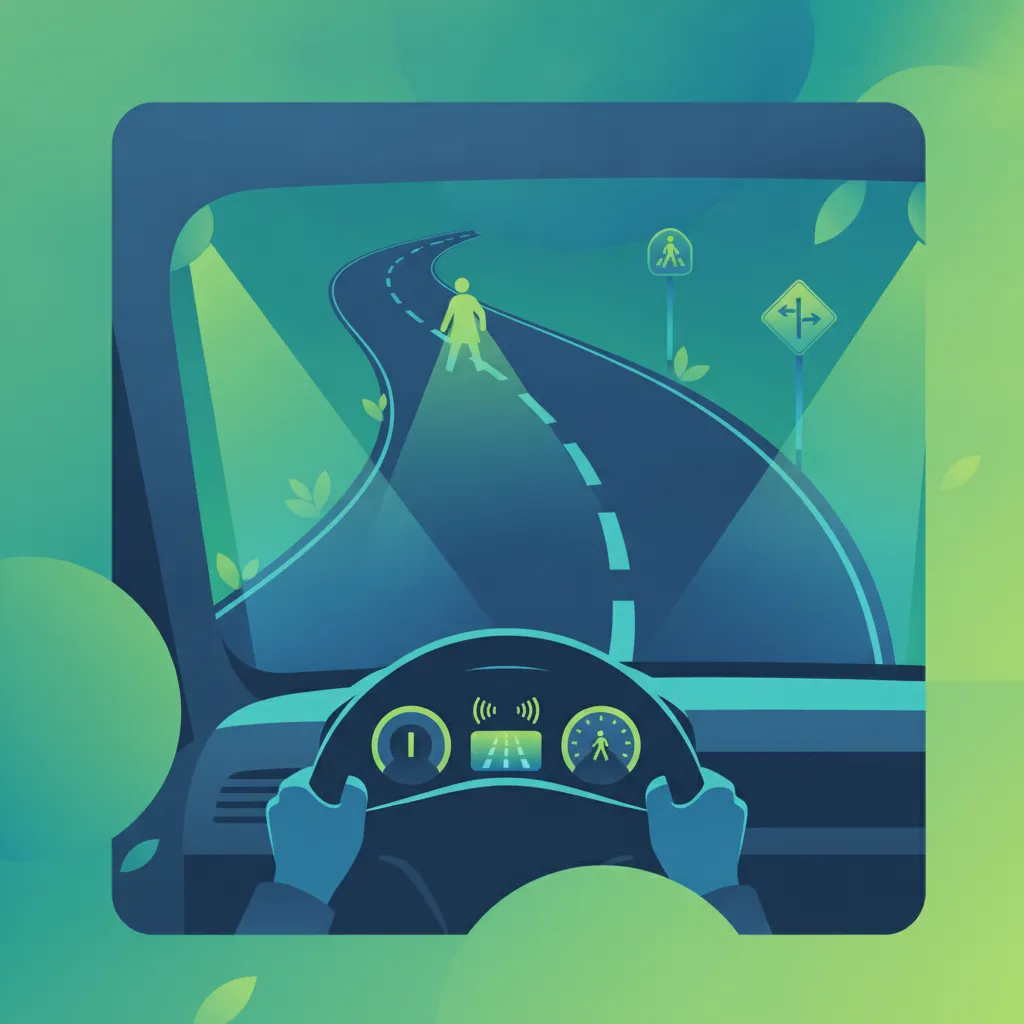
Driving at night introduces serious safety challenges, such as reduced visual range, headlight glare, and fatigue. This lesson explains how to correctly transition from high beams to low beams to avoid blinding oncoming traffic. You will learn to look toward the right-side edge line to minimize headlight glare and recognize signs of visual tiredness that necessitate immediate rest breaks.

In this lesson, drivers will explore the specific challenges presented by rural road environments, including narrower lanes, shared space with agricultural vehicles, and frequent wildlife crossings. The content emphasizes adapting speed to road curvature, surface conditions, and visibility while navigating hills and bends. Learners will also learn to interpret rural road signage and understand the importance of maintaining vigilance.
This lesson teaches specific visual scanning methods to detect vulnerable road users, such as children, elderly individuals, and cyclists near stops. Drivers will learn to anticipate sudden movements, like a passenger running to catch a bus or stepping off a sidewalk unexpectedly. Managing the massive blind spots around the front and right-hand sides of passenger vehicles is highlighted as a critical safety duty.

This lesson outlines the step-by-step safety checks and physical controls required to reverse a bus or coach in confined areas. Learners will study the use of rear-view cameras, mirror angles, and acoustic backing alarms to detect obstacles. It highlights the mandatory use of a trained ground guide (guide de manoeuvre) to assist in blind zones, ensuring zero contact with structures or people.

In this lesson, drivers will learn how to adjust their driving techniques in response to adverse weather conditions such as rain, fog, snow, ice, and strong winds. The content covers strategies for maintaining visibility, managing reduced traction on wet or icy surfaces, and adjusting speed and braking distances accordingly. Learners will also be introduced to the use of anti-skid and stability control systems under challenging weather.
Find clear answers to common questions learners have about Interactions with Pedestrians and Cyclists. Learn how the lesson is structured, which driving theory objectives it supports, and how it fits into the overall learning path of units and curriculum progression in France. These explanations help you understand key concepts, lesson flow, and exam focused study goals.
The primary risk is the 'blind spot' on the right side of the vehicle, where cyclists or pedestrians can be easily hidden. You must use all mirrors and sensors diligently and check over your shoulder before initiating the turn.
In the French Code de la route, you must yield to any pedestrian who is engaged in crossing or clearly indicates their intention to cross. As a professional driver, you should anticipate these movements early to avoid emergency braking.
Never drive or stop in a bike lane. When preparing for a turn, stay within your lane and monitor the bicycle lane constantly to ensure no cyclists are moving alongside your vehicle as you slow down.
Yes, the fundamental safety obligations regarding vulnerable road users remain consistent across C1, C, C1E, and CE licences. However, the increased length and weight of CE vehicles make the physical execution of safe manoeuvres even more critical.
Ready to focus your study? Use the practice search to find exactly the French driving theory questions you need for the Code de la route and permis de conduire ETG. Refine your knowledge on specific topics or challenging rules to boost your confidence and exam readiness.