
Obtaining a driver's license in Germany through an intensive course requires careful planning and an understanding of the mandatory curriculum. This guide breaks down the balance between theory sessions and practical training, helping you navigate the complexities of booking lessons and exam slots in busy urban areas. You will gain insight into the necessary legal steps to ensure your training effectively prepares you for the official German theory and practical driving tests.
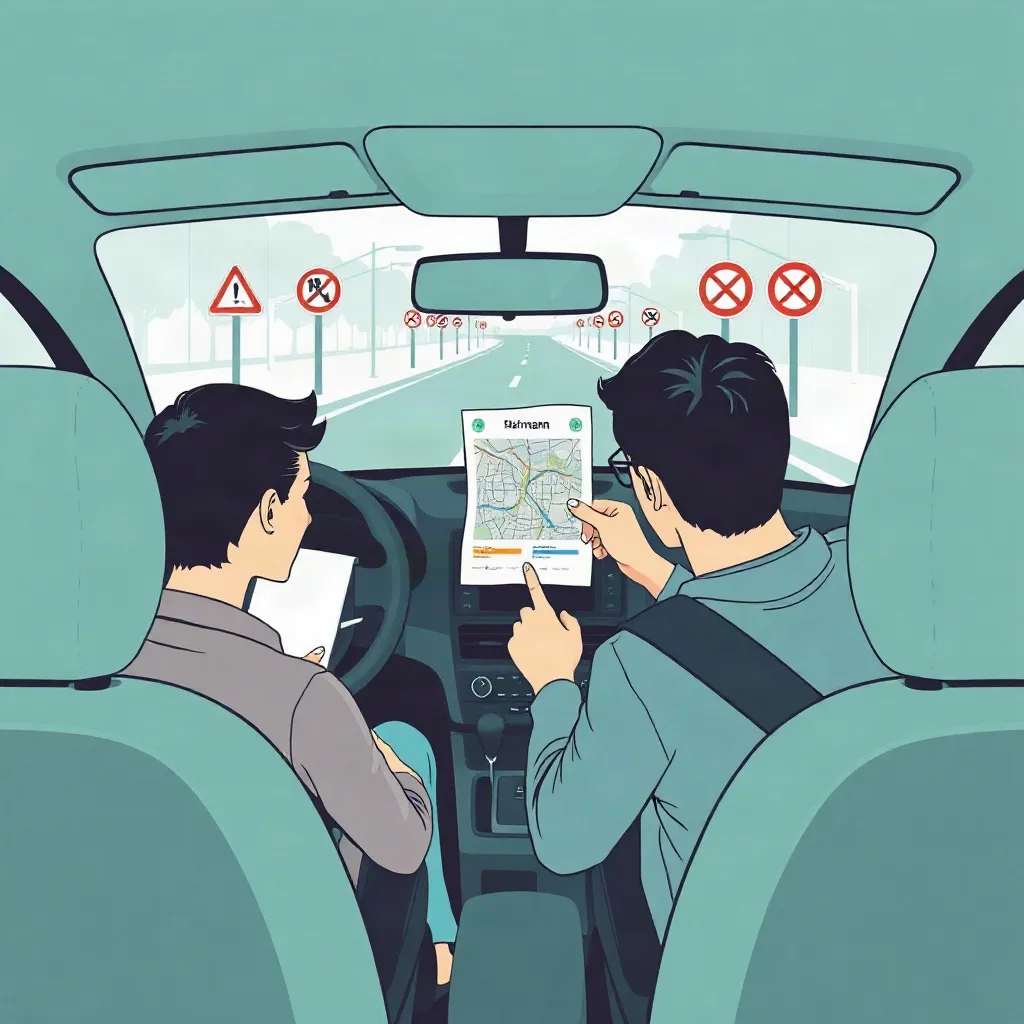
Article content overview
Obtaining a driver's license in Germany is a rigorous process designed to ensure that every new driver possesses the competence and safety awareness required for the Straßenverkehrs-Ordnung (StVO). For many, the traditional path of weekly lessons over several months is not feasible due to work or university commitments. This has led to the popularity of intensive driving courses, often referred to as "holiday driving schools," which aim to consolidate the training curriculum into a much shorter timeframe.
However, it is crucial to understand that while the duration of the training can be condensed, the legal requirements for your education remain non-negotiable. Whether you are aiming for a Class B license or a motorcycle license, the official curriculum set by the Fahrschüler-Ausbildungsordnung (FahrschAusbO) must be fully completed to qualify for the theory and practical tests.
An intensive driving course works by bundling your theory lessons into daily, multi-hour blocks. Instead of attending class once or twice a week, you might find yourself completing the mandatory 14 theory units for a Class B license in just over a week. This rapid pace requires significant mental focus, as you are expected to absorb complex traffic rules, sign meanings, and hazard perception techniques in a concentrated environment.
Practical training is similarly accelerated. In a standard program, you might have one or two lessons per week, but in an intensive course, you may have multiple driving sessions scheduled every day. The success of this approach depends heavily on the logistical capacity of your driving school—specifically, the availability of enough instructors and vehicles to accommodate such a dense schedule.
Be wary of "7-day" promises. While you can complete your training requirements in a week, you must still account for the administrative time required by the authorities to process your application and the availability of test slots at TÜV or DEKRA.
Before you can even take your theory exam, you must fulfill the administrative requirements. This involves registering your primary residence with the local authorities, providing a biometric passport photo, and completing a certified first-aid course and an official vision test. Once your file is processed, you are permitted to take the theory test.
Your practical training is divided into basic instruction and the mandatory "special" driving lessons (Sonderfahrten). These include night driving, highway (Autobahn) driving, and country road driving. These lessons are legally required regardless of how "intensively" you are training, and they must be logged by your instructor.
When selecting a driving school, transparency is your best defense against empty marketing promises. A reputable school will provide you with a clear breakdown of costs, including the base fee (Grundbetrag), the cost per standard driving hour, and the mandatory fees for special lessons. Look for schools that can demonstrate a high first-time pass rate and provide clear communication about waiting times for exam appointments.
Do not be afraid to ask how many instructors the school employs and whether they can guarantee consistent scheduling for your practical lessons. In busy cities like Hamburg, the availability of examination slots is often the "bottleneck" that limits how fast you can actually receive your license.
These are mandatory special practical driving lessons covering highway driving (Autobahn), rural roads (Landstraße), and night driving. You must complete a specific number of these hours before your practical test.
The most significant mistake students make is underestimating the psychological pressure of an intensive course. You will be learning high-stakes skills in a very short time. It is vital to ensure that you are not just memorizing answers for the theory test but truly understanding the underlying logic of German traffic law. If you feel overwhelmed, do not hesitate to ask for a "buffer day" where you can review materials without the stress of being behind the wheel.
Finally, remember that the practical driving test assesses your ability to act safely and responsibly. The examiner is not looking for a "perfect" drive, but for a driver who displays awareness of their surroundings and adheres strictly to priority rules and speed limits. Consistency in your training is the greatest predictor of success.
Article content overview
Explore related topics, search based questions, and concepts that learners often look up when studying German Intensive Driving Courses. These themes reflect real search intent and help you understand how this topic connects to wider driving theory knowledge in Germany.
Find clear and practical answers to common questions learners often have about German Intensive Driving Courses. This section helps explain difficult points, remove confusion, and reinforce the key driving theory concepts that matter for learners in Germany.
While some schools advertise intensive courses over short periods, the total duration depends on your availability, the school's instructor capacity, and the scheduling of official exam slots. You must still complete the mandatory theoretical and practical training hours required by German law.
For a class B license, you must complete at least 14 units of theory lessons and specific mandatory practical training hours, including motorway, night, and country road driving, before you are eligible for the practical test.
Look for transparency in their pricing, clear communication regarding the training schedule, and verified success rates. Reputable schools will be upfront about the realities of exam waiting times and instructor availability rather than promising unrealistic completion dates.
While you can take an intensive course in a different city, you must ensure that your registration for the driving license and the final theory and practical exams can be handled by the local authority in that jurisdiction.
Didn't find what you were looking for? Continue your German driving theory preparation by exploring related articles, specific road sign categories, or in-depth guides on complex traffic situations. Deepen your understanding before the official test.