
This unit dives deep into the critical aspects of heavy vehicle control, focusing on advanced braking systems, speed management, and safe downhill techniques. Understanding these principles is vital for safely operating large trucks and combinations on German roads and crucial for passing your C1, C, CE theory exam.
Browse all lessons that make up Braking Systems, Speed, Distance and Downhill Control. Each lesson focuses on specific topics, learning objectives, and core concepts, helping you build essential knowledge and follow a clear, structured progression toward your study goals in Germany.
This lesson introduces the various braking systems in heavy vehicles, including service brakes, air brakes, and retarders. It explains the functional principles of each system, such as how compressed air is used and the role of retarders in reducing service brake wear. The content also covers the importance of dual-circuit systems and fail-safe mechanisms.
This lesson examines the phenomena of brake delay (lag) and brake fade, particularly during prolonged braking on steep gradients. It discusses how brake temperature rises, leading to reduced friction and potential brake failure. The content also covers strategies for preventing overheating, such as using retarders and proper speed management.
This lesson focuses on the use of retarders and engine braking techniques to control vehicle speed without excessive use of the service brake. It explains the different types of retarders, such as hydraulic and exhaust brakes, and their appropriate application. The content also covers gear selection and engine braking strategies for downhill driving.
This lesson teaches the importance of adhering to speed limits and how to manage speed effectively, especially when hauling heavy loads. It covers the function of speed-limiters to ensure compliance with legal restrictions. The content also discusses the relationship between speed, fuel consumption, and its effect on braking distance.
This lesson provides a method for calculating the braking distance of loaded vehicles, considering factors such as speed, load, and road conditions. It explains the formula for total stopping distance, including reaction time and braking distance components. The content highlights the importance of maintaining adequate safety margins for emergency braking.
Explore high-intent keywords and long-tail search topics learners use when researching Braking Systems, Speed, Distance and Downhill Control. These terms reflect how people search for reliable study materials, structured explanations, and unit-level theory preparation support in Germany.
Find clear answers to the most common questions learners ask about Braking Systems, Speed, Distance and Downhill Control. Understand how the unit is organized, what learning goals it supports, and how it contributes to your study progression with structured explanations and practical guidance tailored for learners in Germany.
Brake fade occurs when brakes lose effectiveness due to overheating, often after prolonged or heavy use, such as on long descents. For heavy vehicles, this can critically reduce stopping power, making it extremely dangerous, especially when loaded or on steep inclines. Understanding this phenomenon is key to preventing accidents.
Retarders, like engine brakes or electromagnetic retarders, are auxiliary braking systems that reduce wear on the service brakes and help control speed, particularly on descents. They work by creating resistance to the drivetrain rather than using friction like service brakes. They are essential for managing speed without overheating the primary braking system.
In Germany, heavy vehicles generally have specific speed limits. On motorways (Autobahnen) and other roads outside built-up areas, the general limit for trucks over 7.5 tonnes is 80 km/h, unless otherwise posted. Inside built-up areas, the limit is typically 50 km/h. Always observe signage, as these limits can vary.
A heavier load significantly increases a vehicle's braking distance. The increased mass requires more force and time to decelerate. For your German theory test, you’ll need to understand that factors like load weight, road surface condition, and speed dramatically impact how quickly a heavy vehicle can stop.
Maintaining a safe following distance is crucial for heavy vehicles due to their longer stopping distances. A common guideline is the 'two-second rule' during normal conditions, but this should be extended to three or even four seconds in adverse weather or when carrying heavy loads. Always ensure you can stop safely if the vehicle ahead brakes suddenly.
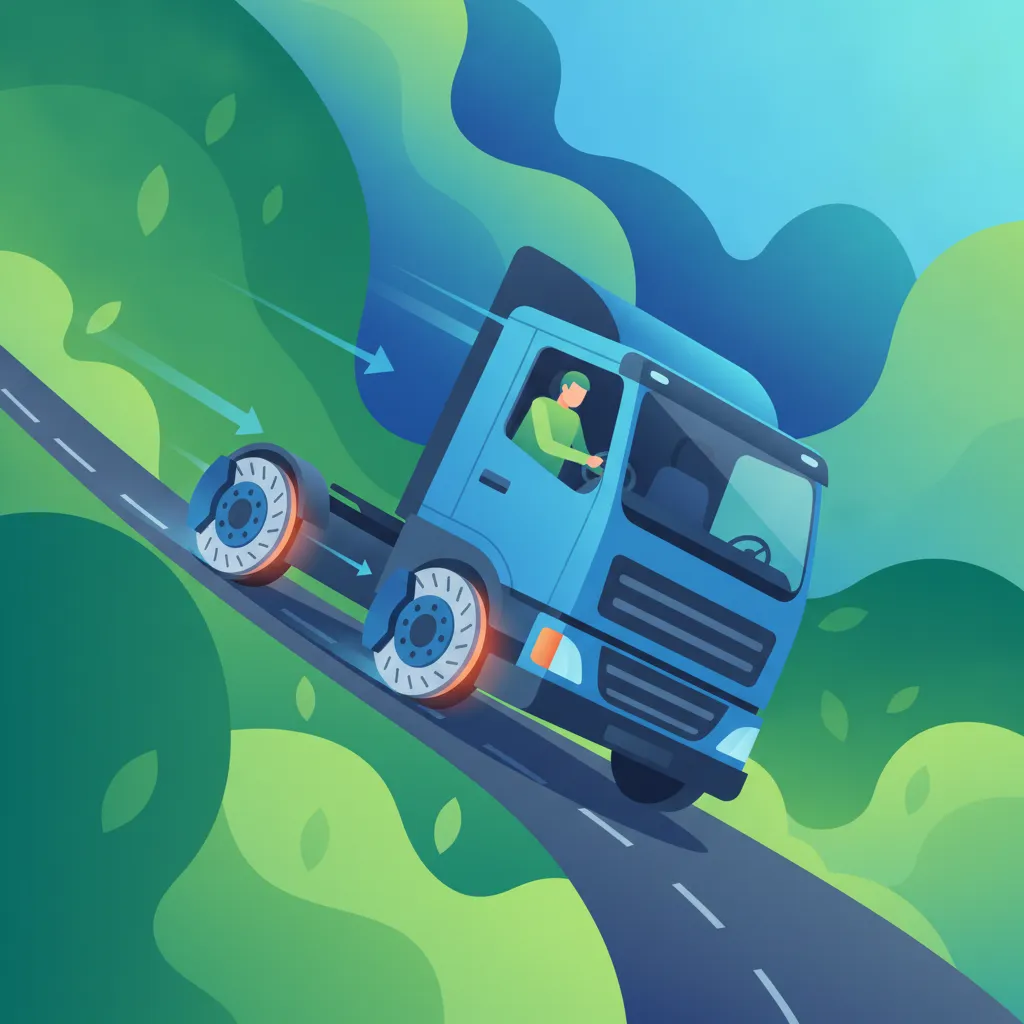
Controlling speed on downhill descents is critical because gravity works with the vehicle’s mass, causing it to accelerate. Without proper speed management using retarders and gentle service brake application, the brakes can overheat (brake fade), leading to a loss of stopping power. This can result in a loss of control.
All included lessons
Lessons in Braking Systems, Speed, Distance and Downhill Control
See who benefits most from studying Braking Systems, Speed, Distance and Downhill Control. This overview explains how the unit supports different learning needs, what level of knowledge is helpful before starting, and how it fits into the overall study path in Germany.
This unit is designed for individuals preparing for the German C1, C1E, C, or CE driving license theory examinations. It is particularly beneficial for drivers new to heavy vehicles or those needing a thorough review of braking systems, speed control, and downhill driving safety to pass the official German theory test.

Ready to prepare for your German driving licence theory exam? Dive into our carefully structured courses to build your knowledge effectively. Select a course that matches your licence category and begin your systematic study path today for confident exam success.
Browse Driving Theory CoursesExplore all units and lessons included in this driving theory course.
Ready to prepare for your German driving licence theory exam? Dive into our carefully structured courses to build your knowledge effectively. Select a course that matches your licence category and begin your systematic study path today for confident exam success.
Browse Driving Theory Courses