
This lesson teaches you how to accurately calculate the total stopping distance for heavy vehicles, an essential skill for the German C and CE driving theory exam. You will learn to factor in reaction times, braking distance, and load weight to maintain safe margins during your professional driving career.

Lesson content overview
Driving heavy vehicles, particularly those operating under load, demands a precise understanding of stopping distances. Unlike passenger cars, the increased mass and dimensions of trucks, lorries, and articulated vehicles significantly alter their braking characteristics. This comprehensive lesson, essential for your German Heavy Vehicle Driving License Theory (categories C1, C1E, C, CE), will delve into the critical factors influencing total stopping distance, providing the foundational knowledge required for safe and responsible operation.
The Total Stopping Distance (TSD) is the complete distance your vehicle travels from the moment you perceive a hazard until it comes to a complete halt. This crucial safety parameter is a composite of two main components: the reaction distance and the braking distance. For professional drivers, accurately estimating and managing TSD is paramount, as it directly influences safe following distances and the ability to prevent collisions, especially when carrying heavy loads or in adverse conditions.
The Reaction Distance (RD) is the distance your vehicle covers during your Perception-Reaction Time (PRT). This is the interval from when a driver first perceives a hazard to the moment they physically apply the brakes or initiate another evasive action. While often underestimated, this human element is a significant part of the total stopping process.
For professional heavy vehicle drivers, an average perception-reaction time is typically estimated between 1.0 and 1.5 seconds. However, this can be extended by factors such as fatigue, distraction, illness, or the use of certain medications. Maintaining peak alertness and avoiding distractions are crucial for keeping reaction times within safe limits. The formula for reaction distance is straightforward:
RD = Speed × Perception-Reaction Time
Even a slight increase in reaction time can dramatically extend the distance traveled before braking begins, especially at higher speeds. Stay alert, avoid distractions, and recognize signs of fatigue to minimize your perception-reaction time.
The Braking Distance (BD) is the distance the vehicle travels from the instant the brakes are applied until it comes to a complete stop. This is where the physics of motion and the mechanical capabilities of the vehicle's braking system come into play. Unlike reaction distance, braking distance is directly influenced by the vehicle's speed, its mass (including the load), the road surface condition, and the efficiency of the braking system itself.
Understanding braking distance is critical for heavy vehicle drivers because the forces involved in stopping a fully loaded truck are immense. A common misconception is that braking performance is constant, regardless of the vehicle's state. In reality, the additional mass from cargo and the varying conditions of the road surface profoundly affect how quickly a heavy vehicle can stop.
Several interconnected factors dictate the braking distance of a heavy vehicle. Mastering these concepts provides the foundation for safe driving decisions.
Kinetic Energy (KE) is the energy an object possesses due to its motion. For a moving vehicle, kinetic energy is directly proportional to its mass and the square of its speed. The formula is:
KE = ½ × m × v² where 'm' is the vehicle's mass and 'v' is its speed.
This formula highlights a critical principle: if you double the vehicle's speed, its kinetic energy quadruples. This exponential relationship means that small increases in speed lead to significant increases in the energy that the brakes must dissipate to bring the vehicle to a stop. Consequently, the braking distance increases quadratically with speed.
When a heavy vehicle is loaded, its total mass increases. This additional mass directly translates to higher kinetic energy at any given speed, which in turn demands a longer braking distance. Drivers must constantly factor in the weight of their cargo, as a fully loaded truck requires substantially more distance to stop than an empty one, even under identical conditions.
The energy an object possesses due to its motion, calculated as half its mass multiplied by the square of its velocity.
The Friction Coefficient (μ) is a dimensionless ratio that describes the amount of friction between the vehicle's tires and the road surface. This coefficient directly determines the maximum deceleration achievable during braking. A higher friction coefficient allows for greater braking force and shorter braking distances, while a lower coefficient limits deceleration and extends stopping distances.
Road surface conditions are the primary determinant of the friction coefficient:
Professional drivers must constantly assess road conditions and adjust their speed and following distance accordingly. Overestimating tire grip on slippery surfaces is a common and dangerous mistake.
A measure of the resistance to motion between two surfaces in contact; for vehicles, it quantifies the grip between tires and the road, directly influencing braking effectiveness.
The load carried by a heavy vehicle is a critical factor in braking distance calculation. As established, increased mass translates to higher kinetic energy, which must be dissipated by the braking system.
Never underestimate the impact of vehicle load on braking distance. Always adjust your speed and increase your following distance proportionally to your vehicle's current mass, especially when fully loaded.
In Germany, road traffic regulations (Straßenverkehrs-Ordnung – StVO) and vehicle licensing regulations (Straßenverkehrs-Zulassungs-Ordnung – StVZO) stipulate clear requirements regarding speed, distance, and vehicle maintenance, all of which directly relate to braking distance.
German traffic law (StVO §4) mandates that drivers must maintain a safe following distance to the vehicle ahead, ensuring that they can stop in time even if the vehicle ahead brakes suddenly. For heavy vehicles, this is particularly critical due to their longer braking distances.
The German Road Traffic Act (StVO §3) dictates that drivers must adjust their speed not only to official speed limits but also to their vehicle's type, load, road conditions, visibility, and weather. Reducing speed is the single most effective way to shorten braking distance, as kinetic energy decreases quadratically with speed.
The condition of a heavy vehicle's braking system is paramount for achieving expected stopping distances. German regulations (StVZO §31) mandate regular maintenance and inspections of braking systems to ensure they remain in optimal working order.
Understanding the theory is one thing; applying it consistently in real-world driving scenarios is another. Professional heavy vehicle drivers must integrate these principles into their daily operations.
Imagine you are driving a fully loaded 40-tonne articulated lorry at 80 km/h on a dry German Autobahn. Ahead, traffic begins to slow rapidly.
Consider the same fully loaded truck, but now you encounter heavy rain, making the road wet and slippery.
You are descending a long, steep mountain pass with a moderate load.
Professional driving requires continuous assessment and adaptation. Several common violations and edge cases highlight areas where drivers often miscalculate or underestimate braking requirements.
Mastering braking distance calculation for loaded heavy vehicles is not merely an academic exercise; it is a fundamental aspect of professional driving safety.
By internalizing these principles, heavy vehicle drivers can confidently navigate the complexities of the road, minimizing risks and ensuring the safe transport of goods and passengers.
This lesson covers the physics and practical calculations of braking distance for heavy vehicles in the German driving context. Total stopping distance comprises reaction distance (affected by driver alertness and speed) and braking distance (affected by speed, vehicle mass, load status, and road friction). The kinetic energy relationship demonstrates why small speed increases cause disproportionately longer stopping distances, making speed management the primary safety tool. Legal requirements mandate minimum 50m following distances for heavy vehicles over 3.5 tonnes, though loaded vehicles in adverse conditions require substantially more. Professional drivers must continuously assess their vehicle load, road conditions, and personal alertness to maintain adequate safety margins.
A short set of high-value points that capture the most important learning from this lesson.
Total Stopping Distance equals Reaction Distance plus Braking Distance, and both must be calculated separately to ensure safe margins
Kinetic energy increases with the square of speed, meaning doubling your speed quadruples braking distance required
Heavy vehicle braking distance increases significantly when loaded, potentially 20-30% longer than an empty vehicle at the same speed
Road surface condition dramatically affects friction coefficient: wet roads reduce grip by ~40%, icy conditions reduce it by up to 80%
Speed reduction is the most effective way to shorten braking distance in poor conditions
Explore all units and lessons included in this driving theory course.
Reaction time averages 1.0-1.5 seconds for professional drivers but extends with fatigue, distraction, or illness
Friction coefficients: dry road ~0.7-0.8, wet road ~0.4-0.5, icy/snowy ~0.1-0.2
German law (StVO §4) requires trucks over 3.5 tonnes to maintain minimum 50m following distance at speeds above 50 km/h
Brake fade occurs from prolonged downhill braking, reducing stopping capability dramatically
Kinetic energy formula KE = ½ × m × v² shows mass and speed both increase stopping distance proportionally
Tailgating when fully loaded, ignoring that cargo mass extends braking distance significantly
Maintaining dry-road speeds and following distances on wet or slippery surfaces
Assuming perception-reaction time stays constant at 1.5 seconds regardless of fatigue or distractions
Relying solely on service brakes during downhill descents, leading to brake fade and loss of braking power
Neglecting tire condition or improper inflation, which reduces effective friction even on dry roads
Lesson content overview
A short set of high-value points that capture the most important learning from this lesson.
Total Stopping Distance equals Reaction Distance plus Braking Distance, and both must be calculated separately to ensure safe margins
Kinetic energy increases with the square of speed, meaning doubling your speed quadruples braking distance required
Heavy vehicle braking distance increases significantly when loaded, potentially 20-30% longer than an empty vehicle at the same speed
Road surface condition dramatically affects friction coefficient: wet roads reduce grip by ~40%, icy conditions reduce it by up to 80%
Speed reduction is the most effective way to shorten braking distance in poor conditions
Explore all units and lessons included in this driving theory course.
Reaction time averages 1.0-1.5 seconds for professional drivers but extends with fatigue, distraction, or illness
Friction coefficients: dry road ~0.7-0.8, wet road ~0.4-0.5, icy/snowy ~0.1-0.2
German law (StVO §4) requires trucks over 3.5 tonnes to maintain minimum 50m following distance at speeds above 50 km/h
Brake fade occurs from prolonged downhill braking, reducing stopping capability dramatically
Kinetic energy formula KE = ½ × m × v² shows mass and speed both increase stopping distance proportionally
Tailgating when fully loaded, ignoring that cargo mass extends braking distance significantly
Maintaining dry-road speeds and following distances on wet or slippery surfaces
Assuming perception-reaction time stays constant at 1.5 seconds regardless of fatigue or distractions
Relying solely on service brakes during downhill descents, leading to brake fade and loss of braking power
Neglecting tire condition or improper inflation, which reduces effective friction even on dry roads
Explore search topics learners often look for when studying Braking Distance Calculation for Loaded Vehicles. These topics reflect common questions about road rules, driving situations, safety guidance, and lesson level theory preparation for learners in Germany.
Browse additional driving theory lessons that cover connected traffic rules, road signs, and common driving situations related to this topic. Improve your understanding of how different rules interact across everyday traffic scenarios.
Explore the key factors that influence the stopping distance of loaded heavy vehicles under German traffic law. Understand how speed, load mass, and road conditions impact braking performance for C and CE licence categories.

This lesson explains the physics behind stopping a vehicle, breaking down the total stopping distance ('Anhalteweg') into its two key components: reaction distance and braking distance. It provides formulas for estimating these distances at various speeds and discusses the critical factors that can increase them, such as driver fatigue, poor weather, and worn tires. Understanding this relationship is vital for appreciating the need for safe speeds and distances.

This lesson covers the dimensional limits for heavy vehicles, focusing on height, width, and length restrictions. It explains how to interpret clearance signage for bridges, tunnels, and overhead obstacles, and discusses the implications for route planning. The content also addresses the importance of understanding turning radii and swept paths to avoid collisions.
This lesson explains the specific regulations for operating heavy vehicles on Autobahnen, including speed limits, lane discipline, and overtaking rules. It discusses the use of dedicated truck lanes and the importance of maintaining appropriate following distances. The content also covers procedures for merging and exiting high-speed roads safely.

This lesson explains the two components of total stopping distance: reaction distance and braking distance. It teaches learners how factors like speed, road conditions, and rider attentiveness influence how far the motorcycle travels before coming to a complete stop. By understanding these principles, riders can make better decisions about safe speeds and following distances to ensure they can stop in time.
This lesson contrasts the dynamic and operational characteristics of heavy vehicles with those of passenger cars. It explains how greater mass and inertia influence braking distance, turning radius, and vehicle stability. The content also addresses visibility challenges, the impact of load on handling, and the necessity for different driving strategies.
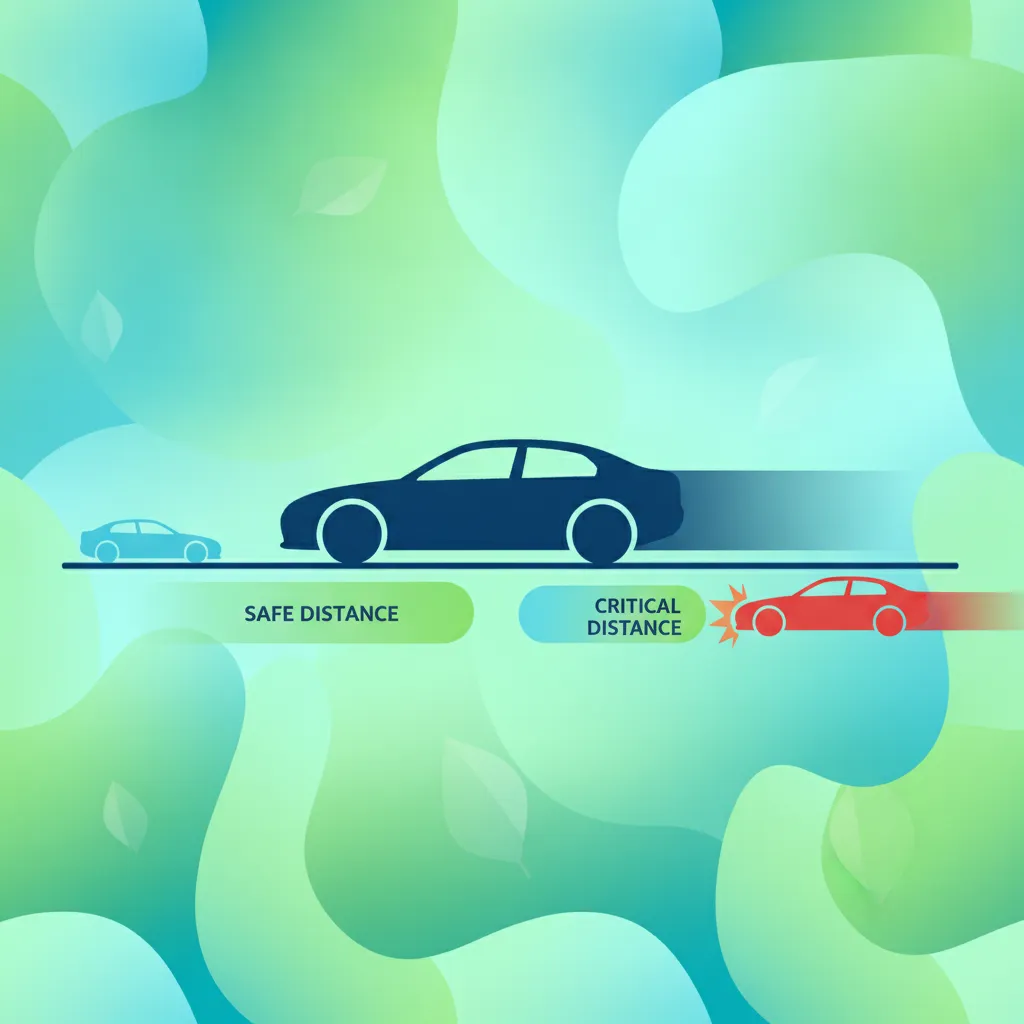
This lesson breaks down the concept of total stopping distance into reaction distance and braking distance. It teaches various braking techniques, including how to perform an emergency stop safely and the function of an Anti-lock Braking System (ABS). The relationship between speed, road condition, and braking effectiveness is a central theme.
This lesson teaches the importance of adhering to speed limits and how to manage speed effectively, especially when hauling heavy loads. It covers the function of speed-limiters to ensure compliance with legal restrictions. The content also discusses the relationship between speed, fuel consumption, and its effect on braking distance.
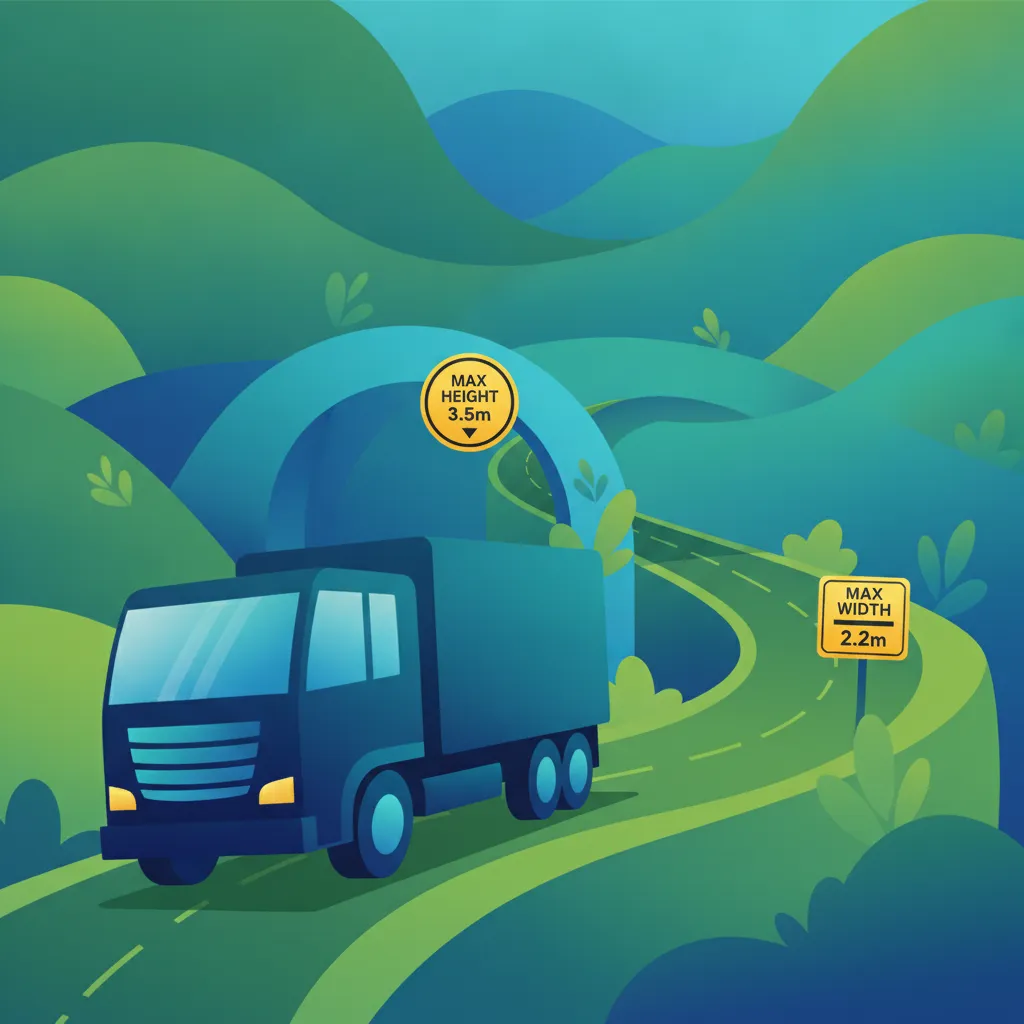
This lesson focuses on the importance of thorough route planning for heavy vehicles, taking into account dimensional and weight limits. It discusses how to use mapping tools and road signage to identify bridges, tunnels, and roads with restrictions. The content also covers how to plan alternative routes to avoid impassable areas.

This lesson covers the crucial skills of managing speed and maintaining a safe buffer from other vehicles. It teaches methods for calculating an appropriate following distance, such as the time-gap method, which adapts to different speeds and conditions. Learners will understand how to adjust their speed based on traffic flow, road surface, and weather to ensure they always have enough time and space to stop safely.

This lesson examines the phenomena of brake delay (lag) and brake fade, particularly during prolonged braking on steep gradients. It discusses how brake temperature rises, leading to reduced friction and potential brake failure. The content also covers strategies for preventing overheating, such as using retarders and proper speed management.
Learn the components of total stopping distance in German driving theory, including reaction time and actual braking distance. Understand the formula and its application for C and CE licence holders, crucial for exam preparation.
This lesson explains the physics behind stopping a vehicle, breaking down the total stopping distance ('Anhalteweg') into its two key components: reaction distance and braking distance. It provides formulas for estimating these distances at various speeds and discusses the critical factors that can increase them, such as driver fatigue, poor weather, and worn tires. Understanding this relationship is vital for appreciating the need for safe speeds and distances.
This lesson explains the two components of total stopping distance: reaction distance and braking distance. It teaches learners how factors like speed, road conditions, and rider attentiveness influence how far the motorcycle travels before coming to a complete stop. By understanding these principles, riders can make better decisions about safe speeds and following distances to ensure they can stop in time.
This lesson breaks down the concept of total stopping distance into reaction distance and braking distance. It teaches various braking techniques, including how to perform an emergency stop safely and the function of an Anti-lock Braking System (ABS). The relationship between speed, road condition, and braking effectiveness is a central theme.

This lesson focuses on the importance of maintaining a safe following distance ('Sicherheitsabstand') to the vehicle ahead. It teaches practical methods for judging this distance, including the universally applicable two-second rule and the German 'halber Tacho' (half the speedometer reading in meters) rule. The lesson stresses the need to increase this distance in poor weather or when visibility is reduced.
This lesson covers the crucial skills of managing speed and maintaining a safe buffer from other vehicles. It teaches methods for calculating an appropriate following distance, such as the time-gap method, which adapts to different speeds and conditions. Learners will understand how to adjust their speed based on traffic flow, road surface, and weather to ensure they always have enough time and space to stop safely.

This lesson explores the critical role of visibility in safe driving, covering topics such as sight distance, managing blind spots, and the correct use of mirrors. It provides guidance on how to adjust your driving in conditions of reduced visibility, such as at night, in fog, or during heavy rain, including the proper use of headlights. The importance of the over-the-shoulder check ('Schulterblick') is also a key focus.
Find clear answers to common questions learners have about Braking Distance Calculation for Loaded Vehicles. Learn how the lesson is structured, which driving theory objectives it supports, and how it fits into the overall learning path of units and curriculum progression in Germany. These explanations help you understand key concepts, lesson flow, and exam focused study goals.
Because the kinetic energy of the vehicle increases significantly with its mass. A fully loaded truck requires much more energy dissipation from the braking system to stop, which increases the required braking distance compared to an empty vehicle.
The total stopping distance is the sum of the distance covered during the reaction time (the time taken to perceive a hazard and touch the brake) and the actual braking distance. In theory questions, you must always account for both.
You must understand the relationship between speed, mass, and distance. While exact mathematical precision is key, the exam tests your ability to apply these concepts to identify the safest driving behaviour in specific, often hazardous, scenarios.
Begin your targeted revision now. Use our practice search to quickly find specific German driving theory questions. Filter by StVO rules, road signs, or hazard perception to create your focused study plan. Master challenging areas and prepare confidently for your theoretical driving test.