
This lesson explores how to use retarders and engine braking to maintain safe speeds in heavy vehicles without overusing the service brake. As part of our C1, C, and CE curriculum, you will learn to manage descent safely while protecting your vehicle's braking system from fade.

Lesson content overview
Effective speed control is paramount for safety, especially when operating heavy vehicles within the German Heavy Vehicle Driving License Theory (C1, C1E, C, CE) curriculum. This lesson provides an in-depth understanding of advanced deceleration methods—retarders and engine braking—which are crucial for managing vehicle speed without over-relying on the service brakes. Mastering these techniques not only enhances safety but also prolongs the lifespan of your braking system and ensures compliance with traffic regulations.
Heavy vehicles, due to their substantial mass and momentum, require robust braking capabilities. While the primary friction-based service brakes are essential for bringing a vehicle to a complete stop, continuous use, especially on long descents, can lead to severe issues. Prolonged application generates immense heat, causing the braking components to lose effectiveness in a phenomenon known as brake fade. This loss of braking power can be extremely dangerous.
To mitigate this risk, heavy vehicles are equipped with auxiliary braking systems such as engine brakes and various types of retarders. These systems are designed to absorb and dissipate kinetic energy, reducing the workload on the service brakes and maintaining consistent stopping performance. Integrating these techniques into your driving strategy is fundamental for safe and professional heavy vehicle operation.
Engine braking is a natural and highly effective method of vehicle deceleration that utilizes the inherent resistance of the engine itself. When the driver lifts their foot off the accelerator pedal, and the throttle closes, the engine's internal mechanisms create a retarding force. This force works against the vehicle's momentum, helping to slow it down without the driver needing to apply the service brakes.
This process is most pronounced when the engine is operating at higher revolutions per minute (RPM). By selecting a lower gear, the engine's RPM increases, thereby maximizing the engine braking effect. This technique is particularly valuable on gentle descents or when minor speed reductions are needed, saving wear and tear on the friction brakes.
The primary mechanism behind engine braking is compression engine braking. In a running internal combustion engine, the pistons continuously move up and down, compressing air in the cylinders during the compression stroke. When the throttle is closed, no fuel is injected, but the engine continues to rotate, driven by the vehicle's momentum through the drivetrain. The energy required to compress the air in each cylinder during the compression stroke, without the subsequent power stroke, creates a significant resistance that effectively slows the vehicle.
Modern heavy vehicle engines often incorporate fuel cut engine braking. When the driver releases the accelerator and the engine speed is above a certain threshold, the engine control unit (ECU) temporarily stops fuel injection. This not only enhances the engine braking effect by eliminating the power stroke entirely but also contributes to fuel efficiency and reduces exhaust emissions. The engine essentially becomes an air compressor, working against the vehicle's motion.
In practice, engine braking is achieved by downshifting to a lower gear while simultaneously reducing or completely releasing the throttle. For example, if you are descending a moderate slope in fifth gear and need to reduce speed, shifting to fourth or even third gear will significantly increase the engine's resistance. This allows the vehicle to maintain a controlled speed without constant reliance on the service brakes. It is critical to select a gear that keeps the engine RPM within safe operating limits to prevent over-revving and potential engine damage.
Retarders are sophisticated mechanical or electro-mechanical devices designed to provide additional, continuous braking power beyond what engine braking alone can offer. They absorb and dissipate kinetic energy from the vehicle, converting it into heat or, in some cases, electrical energy. This significantly reduces the thermal load on the service brakes, making them indispensable for heavy vehicles, especially on long or steep descents.
There are several main types of retarders found in heavy commercial vehicles, each with distinct operating principles.
Hydraulic retarders, often referred to as fluid retarders or hydro-retarders, are among the most common auxiliary braking systems in heavy trucks and buses. These devices use fluid dynamics to create resistance and slow the vehicle.
A hydraulic retarder typically consists of a rotor and a stator, housed within a sealed casing filled with hydraulic fluid (usually oil). The rotor is connected to the vehicle's drivetrain (often the gearbox output shaft or propshaft), so it spins when the vehicle is in motion. When activated, fluid is pumped into the retarder's working chamber. As the rotor spins through this fluid, it churns against the stationary stator blades, creating significant resistance. This resistance converts the vehicle's kinetic energy into heat, which is then dissipated through a dedicated cooling system, often integrated with the engine's cooling system.
Hydraulic retarders are typically activated by a multi-stage lever on the steering column or dashboard, allowing the driver to select different levels of braking intensity. They provide smooth, continuous braking force, making them ideal for long, sustained descents where precise speed control is needed. Their ability to dissipate large amounts of heat without affecting the service brakes is their key advantage, significantly preventing brake fade.
It is crucial to understand that hydraulic retarders are supplementary systems; they are not designed to bring the vehicle to a complete stop or replace the service brakes in emergency situations. They are most effective at higher speeds and can gradually lose efficiency at very low speeds.
Exhaust retarders, also known as engine brakes or exhaust brakes, work by increasing the back pressure in the engine's exhaust system. This resistance helps to slow down the engine, which in turn decelerates the vehicle.
When activated, a valve or flap within the exhaust manifold or exhaust pipe closes partially or completely. This closure restricts the flow of exhaust gases, causing pressure to build up in the engine cylinders. The engine then has to work harder against this increased back pressure to expel the gases, effectively slowing its rotation and providing a braking force to the drivetrain.
Some advanced systems, particularly in modern diesel engines, integrate the exhaust retarder with the exhaust gas recirculation (EGR) system or use variable geometry turbochargers to enhance the braking effect. These systems can precisely control exhaust flow to maximize deceleration without causing excessive stress on the engine.
Exhaust retarders are often activated by a switch or a lever and can sometimes be integrated with the accelerator pedal's release. They are particularly effective when combined with appropriate gear selection, providing substantial auxiliary braking. While generally less powerful than hydraulic or electromagnetic retarders, they are simpler in design and cost-effective. They are excellent for managing speed on moderate descents and can be used intermittently to maintain speed on undulating terrain.
Electromagnetic retarders, sometimes called eddy current brakes, utilize electromagnetic principles to generate resistance and slow a vehicle. They are particularly powerful and durable, making them suitable for heavy-duty applications.
An electromagnetic retarder consists of a rotating disc (rotor) connected to the vehicle's drivetrain and stationary electromagnets (stator). When the retarder is activated, an electric current is passed through the electromagnets, creating a powerful magnetic field. As the metal rotor spins through this magnetic field, it induces eddy currents within the rotor. These eddy currents, in turn, create their own magnetic fields that oppose the primary magnetic field, generating a powerful drag force that slows the rotor and thus the vehicle. The energy is dissipated as heat, typically through fins on the rotor or a dedicated cooling system.
Like hydraulic retarders, electromagnetic retarders are often controlled by a multi-stage lever. They offer very high braking power and are known for their smooth, consistent performance. They are less sensitive to temperature changes compared to friction brakes and do not rely on hydraulic fluid, making them operationally distinct. Electromagnetic retarders are common in heavy trucks and buses for prolonged downhill segments, providing reliable speed control and significantly reducing service brake wear.
A key advantage is their lack of friction, meaning no wear on components, minimal maintenance, and quiet operation. However, they draw electrical power from the vehicle's system, which must be considered.
Proper gear selection is fundamental to effective engine braking and safe downhill driving. It's not just about using the engine's resistance; it's about doing so efficiently and safely.
The general rule of thumb for descending a slope is to select the same gear that would be required to climb that same slope. This ensures that the engine's RPM remains high enough to provide significant engine braking, keeping the vehicle's speed under control without excessive use of the service brakes.
For instance, if your heavy truck would typically climb a particular hill in third gear, you should aim to descend that same hill in third gear. This maximizes the engine's natural resistance and helps maintain a steady, safe speed.
Anticipate the Descent: Look ahead for road signs indicating steep grades and assess the slope's severity.
Reduce Speed Before the Descent: Lightly apply service brakes to reduce your speed to a safe level before entering the steep part of the descent.
Select a Lower Gear: Downshift to a gear that will allow the engine to maintain a controlled speed without exceeding its maximum safe RPM. This is often a gear lower than your current cruising gear.
Engage Auxiliary Brakes: Activate your vehicle's retarder (hydraulic, exhaust, or electromagnetic) in conjunction with engine braking to supplement deceleration.
Monitor Speed and Engine RPM: Continuously check your speedometer and tachometer. Adjust gear selection or retarder intensity as needed to maintain a safe, consistent speed. Briefly apply service brakes only if speed begins to increase beyond the desired limit, then release them to allow them to cool.
While downshifting is crucial, it's equally important to avoid over-revving the engine. Each engine has a maximum safe RPM limit, often indicated by a red zone on the tachometer. Exceeding this limit can cause severe engine damage. Always ensure that when you downshift, the engine RPM remains within the green or safe operating range. Modern heavy vehicles often have engine control units that prevent extreme over-revving by refusing a downshift or automatically managing engine speed, but manual drivers must still exercise caution.
The German Heavy Vehicle Driving License Theory for categories C1, C1E, C, and CE places significant emphasis on safe braking practices, particularly for heavy vehicles on descents. Compliance with these regulations is not only a legal obligation but also a fundamental aspect of professional driving safety.
Drivers of heavy vehicles are legally required to use engine braking or retarders to control their speed on long downhill gradients. The rationale is clear: relying solely on service brakes under such conditions inevitably leads to overheating and brake fade, compromising the vehicle's ability to stop safely. Therefore, proactive engagement of auxiliary braking systems is mandatory.
It is expressly prohibited to use the service brakes continuously for speed control on extended descents. This practice directly leads to brake overheating and is a common cause of accidents involving heavy vehicles. Drivers must instead use a combination of engine braking and retarders, applying the service brakes only intermittently or for final stopping.
During engine braking, the engine's RPM must not exceed the manufacturer's specified limits. This rule protects the engine from mechanical damage and ensures the long-term reliability of the vehicle. Downshifting must be executed smoothly and at appropriate speeds to avoid sudden spikes in engine RPM.
Retarders are complex systems. Their proper functioning and safety depend on adherence to the vehicle manufacturer's guidelines. This includes understanding the specific activation methods, optimal operating speed ranges, and any limitations of the retarder system fitted to the particular vehicle. Misuse can lead to reduced effectiveness or even damage to the retarder unit.
Ultimately, regardless of the braking method used, the driver is legally responsible for maintaining control of the vehicle and being able to bring it to a safe stop within a reasonable distance. Engine braking and retarders are tools to assist in this, but the service brakes must always be ready for use, especially in situations requiring a full stop or emergency deceleration.
| Rule | Applicability | Legal Status | Rationale | Correct Application Example | Incorrect Application Example |
|---|---|---|---|---|---|
| Use engine braking or retarders on long downhill gradients. | Descending steep grades. | Mandatory | Prevents brake overheating and fade, ensuring safety. | Downshifting and engaging the hydraulic retarder on a mountain pass. | Descending a 10% grade by continuously riding the service brakes. |
| Do not use service brakes continuously for speed control on long descents. | All long downhill sections. | Mandatory | Prevents dangerous brake fade and overheating. | Using engine braking and activating the electromagnetic retarder, applying service brakes only briefly if speed creeps up. | Maintaining speed on a long slope by keeping foot constantly on the brake pedal. |
| Engine RPM must not exceed manufacturer's specifications during engine braking. | Anytime engine braking is used. | Mandatory | Protects the engine from mechanical damage. | Downshifting to a gear that keeps the tachometer needle below the redline. | Downshifting at too high a speed, causing the engine to rev past its safe limit. |
| Retarders must be used according to vehicle manufacturer guidelines. | Retarder activation and operation. | Mandatory | Ensures effective and safe operation, prevents system damage. | Activating the exhaust brake only within the recommended speed range as per the truck's manual. | Engaging the retarder at very low speeds where it's ineffective and strains the system unnecessarily. |
| Maintain full vehicle control and readiness to stop at all times. | All braking situations. | Mandatory | Ensures safety and compliance with general road regulations. | Using engine braking to manage speed but keeping adequate distance and hands on the wheel ready for service brake application. | Over-relying on retarders to the point of not being prepared for an abrupt stop or emergency. |
Even experienced drivers can sometimes make errors when using auxiliary braking systems. Awareness of these common pitfalls can significantly enhance safety.
The effectiveness and appropriate use of retarders and engine braking can vary significantly based on environmental and vehicle-specific factors.
In urban or congested environments where vulnerable road users (pedestrians, cyclists) are present, smooth and predictable deceleration is crucial. Engine braking and retarders can provide this gradual speed reduction, minimizing abrupt stops that could surprise other road users or destabilize the load.
Retarders and engine braking techniques are indispensable skills for any heavy vehicle driver. They represent an advanced layer of speed management that complements the primary service brake system, ensuring safety, efficiency, and legal compliance.
By integrating these advanced braking strategies, heavy vehicle drivers can maintain superior control, reduce operational costs through extended brake life, and contribute to safer roads for everyone. Mastering these techniques is not just about passing a theory test; it's about becoming a responsible and highly competent professional driver.
This lesson teaches heavy vehicle drivers how to control speed on descents using engine braking and retarders without overusing service brakes. Engine braking works by using the engine's compression resistance when the throttle is closed, enhanced by downshifting to raise RPM. Retarders—hydraulic, exhaust, and electromagnetic—provide additional continuous braking by converting kinetic energy into heat. Safe downhill driving requires selecting the appropriate gear before the descent, engaging auxiliary braking systems proactively, and maintaining engine RPM within safe limits. German traffic regulations mandate the use of these auxiliary braking methods on long gradients and prohibit continuous service brake application, as this leads to dangerous brake fade and loss of stopping ability.
A short set of high-value points that capture the most important learning from this lesson.
Engine braking uses the engine's internal resistance during the compression stroke to slow the vehicle without using friction brakes
The three main retarder types—hydraulic, exhaust, and electromagnetic—each convert kinetic energy into heat or electrical energy using different physical principles
On downhill descents, select the same gear you would need to climb that slope to maximize engine braking effect
Retarders are supplementary systems designed to prevent brake fade; they do not replace service brakes for emergency stopping
German law mandates the use of engine braking or retarders on long downhill gradients and prohibits continuous service brake use for speed control
Explore all units and lessons included in this driving theory course.
Hydraulic retarders use fluid coupling; exhaust retarders create back pressure in the exhaust system; electromagnetic retarders use eddy currents
Downshift before the descent becomes too steep—proactive engagement is safer than reactive correction
Never shift into neutral on a descent; this eliminates engine braking and places all braking load on the service brakes
Monitor the tachometer when downshifting to ensure engine RPM stays below the red zone and within safe operating limits
Retarders are most effective at higher speeds and lose efficiency at very low speeds—they supplement but cannot replace service brakes
Over-revving the engine by downshifting to a gear that is too low for the current vehicle speed, potentially causing engine damage
Relying exclusively on service brakes during long descents, leading to dangerous brake fade from overheating
Shifting into neutral on downhill grades, which removes engine braking and creates uncontrolled acceleration
Activating the retarder at very low speeds where it is ineffective or straining the system unnecessarily
Ignoring dashboard warning signals related to retarder overheating or malfunction, which can lead to system failure
Lesson content overview
A short set of high-value points that capture the most important learning from this lesson.
Engine braking uses the engine's internal resistance during the compression stroke to slow the vehicle without using friction brakes
The three main retarder types—hydraulic, exhaust, and electromagnetic—each convert kinetic energy into heat or electrical energy using different physical principles
On downhill descents, select the same gear you would need to climb that slope to maximize engine braking effect
Retarders are supplementary systems designed to prevent brake fade; they do not replace service brakes for emergency stopping
German law mandates the use of engine braking or retarders on long downhill gradients and prohibits continuous service brake use for speed control
Explore all units and lessons included in this driving theory course.
Hydraulic retarders use fluid coupling; exhaust retarders create back pressure in the exhaust system; electromagnetic retarders use eddy currents
Downshift before the descent becomes too steep—proactive engagement is safer than reactive correction
Never shift into neutral on a descent; this eliminates engine braking and places all braking load on the service brakes
Monitor the tachometer when downshifting to ensure engine RPM stays below the red zone and within safe operating limits
Retarders are most effective at higher speeds and lose efficiency at very low speeds—they supplement but cannot replace service brakes
Over-revving the engine by downshifting to a gear that is too low for the current vehicle speed, potentially causing engine damage
Relying exclusively on service brakes during long descents, leading to dangerous brake fade from overheating
Shifting into neutral on downhill grades, which removes engine braking and creates uncontrolled acceleration
Activating the retarder at very low speeds where it is ineffective or straining the system unnecessarily
Ignoring dashboard warning signals related to retarder overheating or malfunction, which can lead to system failure
Explore search topics learners often look for when studying Retarders and Engine Braking Techniques. These topics reflect common questions about road rules, driving situations, safety guidance, and lesson level theory preparation for learners in Germany.
Browse additional driving theory lessons that cover connected traffic rules, road signs, and common driving situations related to this topic. Improve your understanding of how different rules interact across everyday traffic scenarios.
Understand the types and functions of auxiliary braking systems in heavy vehicles, such as retarders and engine brakes. This lesson provides key theory for safe speed control, particularly on descents, and is vital for the German driving theory exam.
This lesson introduces the various braking systems in heavy vehicles, including service brakes, air brakes, and retarders. It explains the functional principles of each system, such as how compressed air is used and the role of retarders in reducing service brake wear. The content also covers the importance of dual-circuit systems and fail-safe mechanisms.

This lesson examines the phenomena of brake delay (lag) and brake fade, particularly during prolonged braking on steep gradients. It discusses how brake temperature rises, leading to reduced friction and potential brake failure. The content also covers strategies for preventing overheating, such as using retarders and proper speed management.

This lesson covers the various braking systems used on trailers, including air and electric brakes, and their integration with the towing vehicle. It explains the role of the brake controller, electrical connections for brake lights, and how braking force is distributed. The content also addresses considerations such as brake lag and trailer ABS functionality.

This lesson delves into the critical control systems of a passenger vehicle: steering, braking, and acceleration. It explains the mechanics of hydraulic and pneumatic brakes and the function of safety aids like ABS and ESP. Learners will understand how to apply smooth acceleration and deceleration techniques to ensure passenger comfort and maintain vehicle stability under various driving conditions.
This lesson explains the function of a vehicle's braking system and the technology designed to enhance its effectiveness. It describes how the Anti-lock Braking System (ABS) prevents wheels from locking up during hard braking, allowing the driver to maintain steering control. The role of the Electronic Stability Program (ESP) in preventing skids is also covered.

This lesson provides a method for calculating the braking distance of loaded vehicles, considering factors such as speed, load, and road conditions. It explains the formula for total stopping distance, including reaction time and braking distance components. The content highlights the importance of maintaining adequate safety margins for emergency braking.
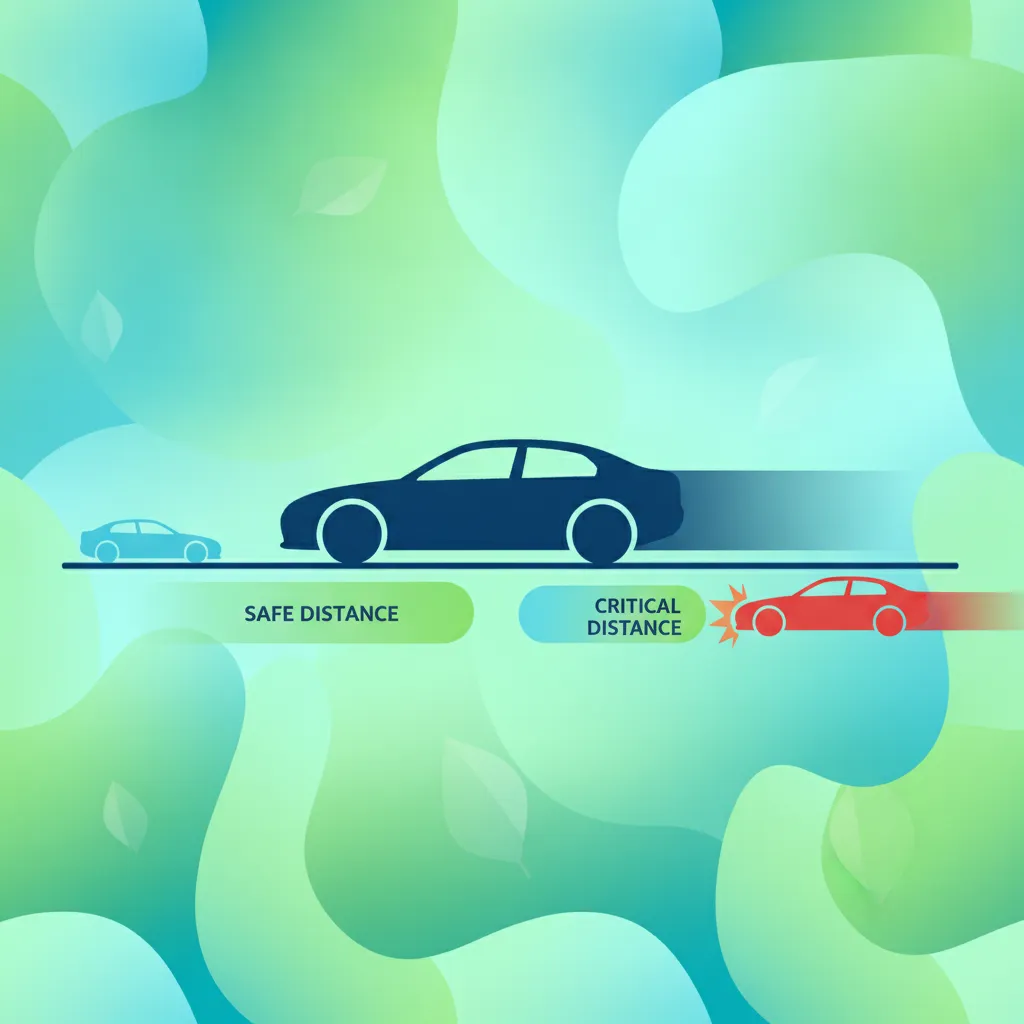
This lesson breaks down the concept of total stopping distance into reaction distance and braking distance. It teaches various braking techniques, including how to perform an emergency stop safely and the function of an Anti-lock Braking System (ABS). The relationship between speed, road condition, and braking effectiveness is a central theme.

This lesson examines the risks associated with load shifting during braking and cornering maneuvers. It explains how inertia and weight transfer can cause cargo to move, potentially leading to instability or loss of control. The content emphasizes the importance of proper load securing to mitigate these risks and maintain vehicle stability.

This lesson teaches the driving techniques required for smooth operation, which is essential for passenger comfort and vehicle stability. It covers progressive application of the accelerator and brakes to avoid jolts and abrupt movements. The principles of anticipatory driving are also explored, showing how looking ahead and planning maneuvers contributes to a smoother ride, better fuel efficiency, and increased safety.
Learn essential techniques for controlling speed safely when driving heavy vehicles downhill. This lesson covers the effective use of retarders, engine braking, and strategic gear selection, crucial knowledge for navigating gradients and preparing for the German theory test.
This lesson examines the phenomena of brake delay (lag) and brake fade, particularly during prolonged braking on steep gradients. It discusses how brake temperature rises, leading to reduced friction and potential brake failure. The content also covers strategies for preventing overheating, such as using retarders and proper speed management.
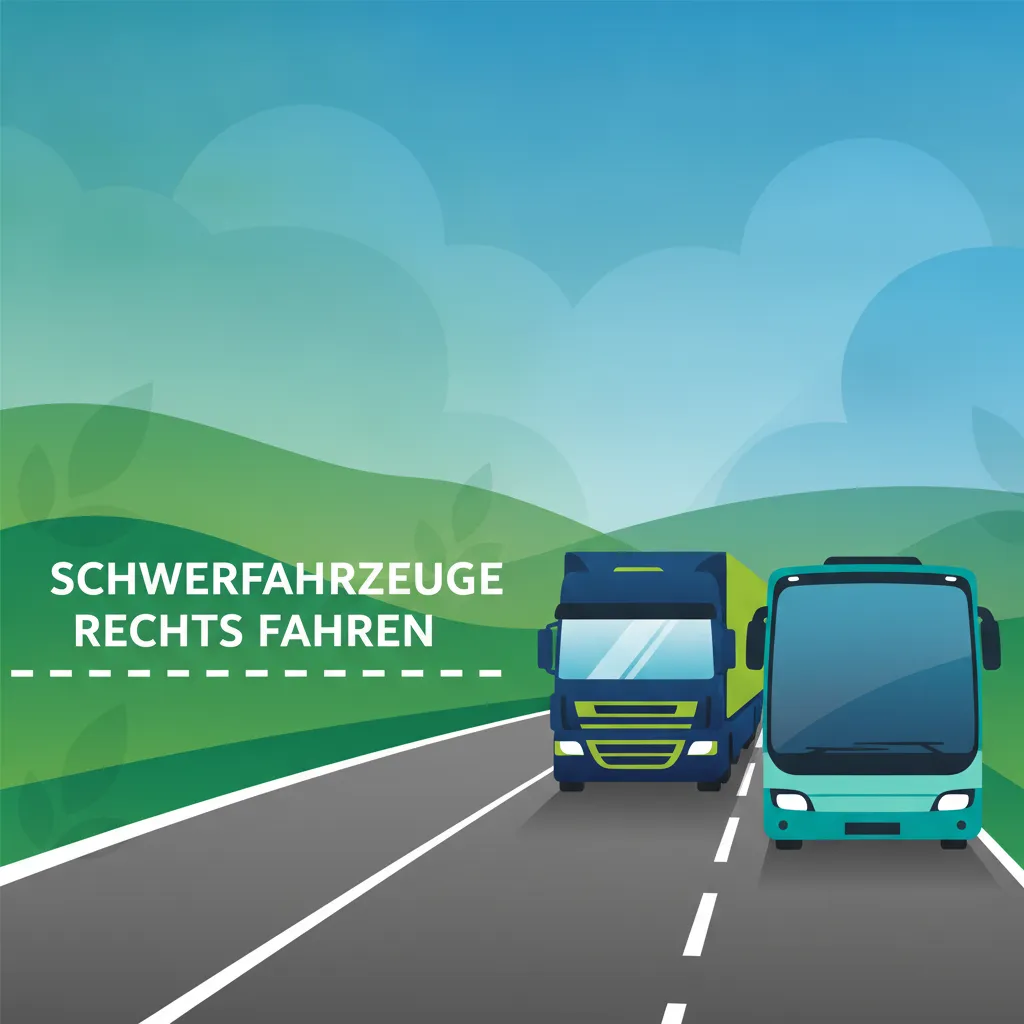
This lesson explains the specific regulations for operating heavy vehicles on Autobahnen, including speed limits, lane discipline, and overtaking rules. It discusses the use of dedicated truck lanes and the importance of maintaining appropriate following distances. The content also covers procedures for merging and exiting high-speed roads safely.
This lesson teaches the driving techniques required for smooth operation, which is essential for passenger comfort and vehicle stability. It covers progressive application of the accelerator and brakes to avoid jolts and abrupt movements. The principles of anticipatory driving are also explored, showing how looking ahead and planning maneuvers contributes to a smoother ride, better fuel efficiency, and increased safety.

This lesson focuses on the risks of jackknifing and trailer swing, particularly during braking and on downhill descents. It provides recommendations for safe speed management, proper braking techniques, and maintaining vehicle stability. The content also addresses safe reversing practices and the importance of monitoring blind spots during maneuvers.
This lesson teaches the importance of adhering to speed limits and how to manage speed effectively, especially when hauling heavy loads. It covers the function of speed-limiters to ensure compliance with legal restrictions. The content also discusses the relationship between speed, fuel consumption, and its effect on braking distance.

This lesson covers safe reversing techniques for both rigid trucks and articulated combinations, emphasizing the use of mirrors and cameras. It discusses the risks of jackknifing during reversal and the importance of speed control and safety checks. The content outlines best practices for planning a safe reversing path, potentially with a guide person.
This lesson introduces the various braking systems in heavy vehicles, including service brakes, air brakes, and retarders. It explains the functional principles of each system, such as how compressed air is used and the role of retarders in reducing service brake wear. The content also covers the importance of dual-circuit systems and fail-safe mechanisms.
This lesson examines the risks associated with load shifting during braking and cornering maneuvers. It explains how inertia and weight transfer can cause cargo to move, potentially leading to instability or loss of control. The content emphasizes the importance of proper load securing to mitigate these risks and maintain vehicle stability.
This lesson provides a method for calculating the braking distance of loaded vehicles, considering factors such as speed, load, and road conditions. It explains the formula for total stopping distance, including reaction time and braking distance components. The content highlights the importance of maintaining adequate safety margins for emergency braking.

This lesson covers the crucial skills of managing speed and maintaining a safe buffer from other vehicles. It teaches methods for calculating an appropriate following distance, such as the time-gap method, which adapts to different speeds and conditions. Learners will understand how to adjust their speed based on traffic flow, road surface, and weather to ensure they always have enough time and space to stop safely.
Find clear answers to common questions learners have about Retarders and Engine Braking Techniques. Learn how the lesson is structured, which driving theory objectives it supports, and how it fits into the overall learning path of units and curriculum progression in Germany. These explanations help you understand key concepts, lesson flow, and exam focused study goals.
On long descents, constant use of service brakes can lead to brake fade caused by overheating. Retarders and engine braking allow you to control speed without relying solely on the friction brakes, ensuring they remain cool and effective for emergency stops.
An exhaust brake restricts the engine's exhaust gas to create backpressure, slowing the engine, while a hydraulic retarder uses fluid dynamics to absorb energy. Both are auxiliary braking systems, but retarders are generally more powerful and suitable for heavy continuous loads.
Selecting a lower gear increases the engine's RPM, which enhances the effectiveness of the engine brake. For heavy vehicle theory, remember that the right gear must be chosen before starting a descent to maintain optimal control.
While there is no single rule mandating retarder use, the StVO requires that vehicle combinations must always be controllable. Professional drivers are expected to use auxiliary braking systems to maintain speed limits and prevent safety hazards on inclines.
Begin your targeted revision now. Use our practice search to quickly find specific German driving theory questions. Filter by StVO rules, road signs, or hazard perception to create your focused study plan. Master challenging areas and prepare confidently for your theoretical driving test.