
This lesson explores critical speed management strategies and the legal requirements for speed-limiters in heavy goods vehicles. As you progress through the braking systems and load-handling units, understanding these rules is essential for maintaining vehicle control and professional compliance in Germany.
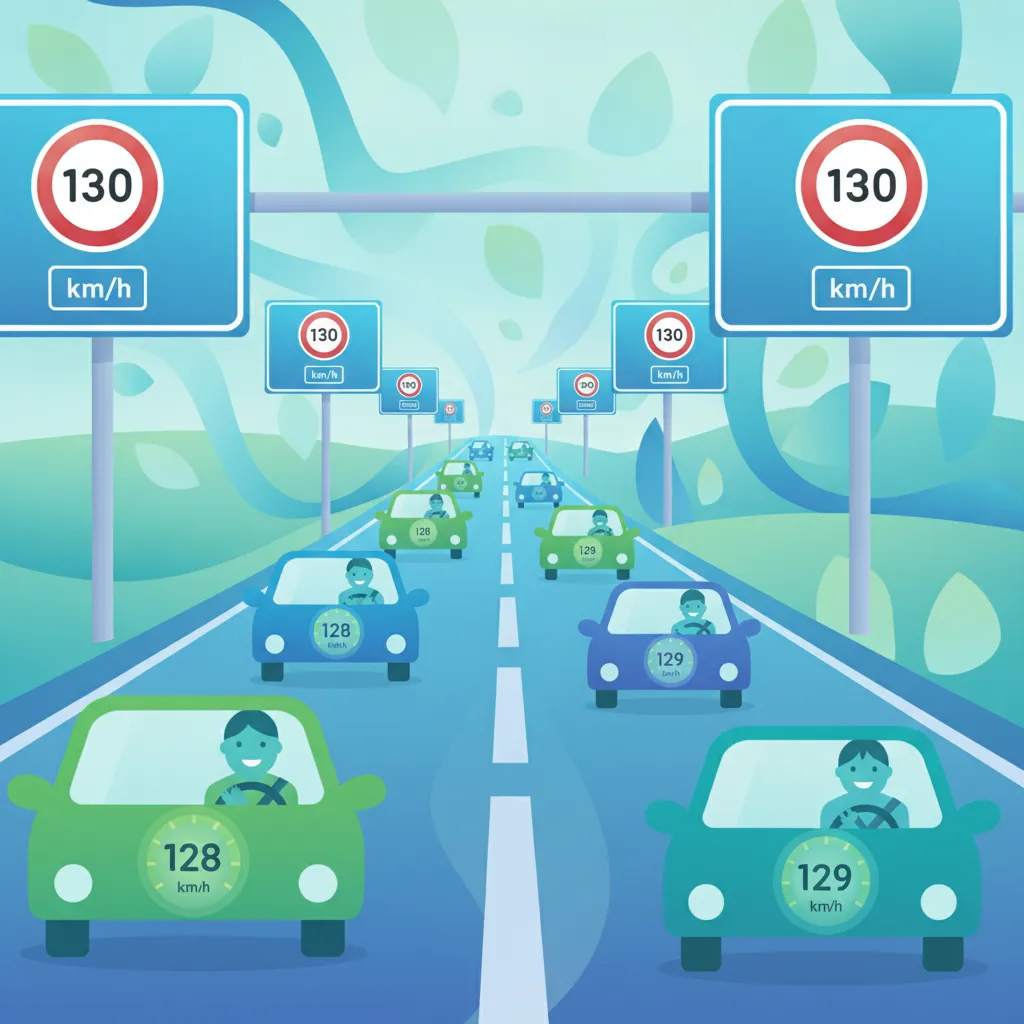
Lesson content overview
Welcome to this comprehensive lesson on speed management and the critical regulations governing gas-limit devices for professional drivers. As part of your German Heavy Vehicle Driving License Theory – C1, C1E, C, CE course, mastering these principles is fundamental to safe, legal, and efficient operation of heavy vehicles. This lesson will explore the intricate relationship between speed, vehicle control, fuel consumption, and braking distance, providing essential knowledge for navigating Germany's roads responsibly.
Understanding how to manage your speed effectively is not merely about obeying signs; it's about anticipating hazards, maintaining vehicle stability, and optimizing performance, especially when hauling significant loads. We will delve into the statutory requirements for speed limiters (often referred to as "Gas-Limit" devices), their purpose, and the implications for professional drivers. This knowledge builds upon your understanding of vehicle dimensions, masses, and braking systems, which are crucial prerequisites for this topic.
Speed limits are fundamental to road safety, defining the maximum legally permissible speed for a given road segment or vehicle category. For professional drivers operating heavy vehicles, these limits often entail stricter restrictions compared to passenger cars, reflecting the greater mass, longer stopping distances, and unique handling characteristics of trucks and buses.
While general speed limits apply to all road users and are indicated by traffic signs, heavy vehicles are frequently subject to specific, lower speed thresholds. These vehicular speed limits are mandated by law, even if higher limits are posted for other vehicle types. For instance, on German autobahns, where passenger cars might be permitted to travel at 130 km/h or more (in sections without a specific limit), a tractor-trailer combination will have a significantly lower maximum permissible speed. It is crucial for drivers of heavy goods vehicles to know and adhere to these specific limits applicable to their vehicle class, payload, and combination.
Drivers must constantly observe and obey all posted speed limit signs. These signs take precedence over general or default speed limits for the type of road. However, when no specific speed limit is posted, drivers must be aware of and adhere to the default speed limits that apply to different road types and vehicle categories. For heavy vehicles, default limits are typically lower than for cars and vary depending on whether the road is an autobahn, a rural road, or within a built-up area. A common misunderstanding is believing the posted speed limit is a minimum speed or assuming it applies equally to all vehicle types. Always adjust your speed according to your vehicle's capabilities, load, and the prevailing conditions, even if that means driving below the maximum allowed speed.
Always know the default speed limits for your specific heavy vehicle category on autobahns, rural roads, and within built-up areas in Germany, as these apply when no signs are present.
Violating speed limits, particularly with heavy vehicles, carries significant legal consequences. Infractions can lead to substantial fines, penalty points, and even temporary or permanent loss of your driving license, especially for repeat offenders or severe breaches. Beyond legal repercussions, exceeding speed limits dramatically increases the risk of accidents. Higher speeds mean less time to react to hazards, longer braking distances, and reduced ability to safely maneuver, all of which are amplified in heavy, loaded vehicles. Safety should always be the paramount concern, outweighing any perceived time-saving benefits of speeding.
To ensure compliance with speed restrictions and enhance road safety, heavy vehicles are legally required to be equipped with a technical device known as a speed limiter, commonly referred to as a "Gas-Limit" device in Germany. This device plays a vital role in preventing drivers from inadvertently or intentionally exceeding specified speed thresholds.
A speed limiter is an electronic device integrated into a vehicle's engine management system that physically restricts the maximum speed the vehicle can attain. It functions by controlling the fuel supply or engine power output to prevent the vehicle from accelerating beyond a pre-set limit. The primary purpose of the Gas-Limit is to enforce legal speed restrictions, particularly for heavy vehicles, thereby reducing the risk of accidents associated with excessive speed. It serves as a crucial safety net, especially for vehicles that inherently require longer distances to stop and have a higher potential for severe damage in a collision.
In Germany, stringent regulations govern the use of speed limiters for heavy vehicles. Specifically, vehicles with a permissible maximum mass exceeding 3.5 tonnes and those used for the carriage of goods where the permissible maximum load mass is also over 3.5 tonnes, must be fitted with a speed limiter. For these categories, the Gas-Limit must generally be set to a maximum speed of 80 km/h. There might be specific exemptions for certain routes or vehicle types where a higher limit is permissible, but the default and most common setting for professional heavy goods vehicles is 80 km/h. These regulations are designed to align with broader European Union directives aimed at enhancing road safety and reducing emissions.
Attempting to bypass, deactivate, or tamper with a legally required speed limiter is a serious offense in Germany, leading to severe penalties and compromising road safety.
As a professional driver, it is your responsibility to ensure that your vehicle's speed limiter is functional and correctly set according to legal requirements for your specific vehicle and route. Before commencing a journey, part of your vehicle check should include verifying the proper operation of the speed limiter. Drivers must never attempt to bypass, deactivate, or improperly adjust the Gas-Limit device. Such actions are not only illegal but also incredibly dangerous, as they remove a critical safety feature designed to protect both the driver and other road users. Maintaining the integrity of the speed limiter is a core professional obligation.
A common misunderstanding among some drivers is that a speed limiter negates the need for careful speed management; this is incorrect. The limiter only prevents exceeding a maximum speed, but drivers must still adjust their speed well below this limit based on road conditions, weather, traffic, and vehicle load. Another misconception is that tampering with the limiter to achieve higher speeds is undetectable. Modern vehicles record such interventions, and tampering can lead to hefty fines, vehicle impoundment, loss of license, and severe consequences for the operating company. It is a serious breach of professional conduct and a direct threat to public safety.
Beyond legal compliance and safety, managing your speed has a direct and significant impact on the operational economics of heavy vehicles, primarily through its effect on fuel consumption. Understanding this correlation is key to economical driving and reducing your environmental footprint.
As a heavy vehicle moves, it encounters resistance from the air, known as aerodynamic drag. This drag increases exponentially with speed; in simpler terms, doubling your speed quadruples the aerodynamic resistance. Overcoming this resistance requires more engine power, which in turn demands more fuel. For large, unstreamlined heavy vehicles, aerodynamic drag becomes the dominant factor in fuel consumption at higher speeds. Consequently, even a modest reduction in cruising speed can lead to substantial fuel savings over long distances.
Maintaining a moderate and consistent speed is one of the most effective strategies for improving fuel efficiency. Professional drivers can significantly reduce operating costs by adhering to optimal speed ranges that minimize aerodynamic drag without excessively extending journey times. This not only saves on fuel expenses but also reduces wear and tear on the engine and braking systems. Anticipatory driving, avoiding harsh acceleration and braking, and utilizing engine braking or retarders to maintain momentum also contribute to better fuel economy. These practices are not just about cost control; they reflect a professional commitment to efficient and responsible vehicle operation.
One of the most critical aspects of speed management, particularly for heavy vehicles, is its direct and profound impact on braking distance. The ability to stop safely and promptly is severely compromised by excessive speed, especially when carrying a heavy load.
Braking distance is the distance a vehicle travels from the moment the brakes are fully applied until it comes to a complete stop. Several critical factors influence this distance:
The relationship between speed and braking distance is not linear; it is roughly proportional to the square of the speed. This means that if you double your speed, your braking distance doesn't just double, it roughly quadruples. For example, a vehicle traveling at 80 km/h will require approximately four times the braking distance of the same vehicle traveling at 40 km/h under identical conditions. This exponential increase highlights the extreme danger of even slightly exceeding appropriate speeds, as the safety margin shrinks dramatically.
The distance a vehicle travels from the moment the brakes are engaged until it comes to a complete stop. It is distinct from total stopping distance, which includes reaction distance.
Heavy vehicles inherently require significantly longer braking distances than passenger cars due to their immense mass. Even with advanced braking systems like ABS, EBS, and retarders, the sheer kinetic energy of a fully loaded truck or combination vehicle is enormous. This is why strict speed limits and mandatory speed limiters are in place for heavy vehicles. A professional driver must always maintain a sufficient safety distance to the vehicle ahead, understanding that their braking capabilities are fundamentally different from those of lighter vehicles. Underestimating the required stopping distance is a leading cause of rear-end collisions involving heavy vehicles.
Speed not only affects your ability to stop but also critically impacts the overall stability of your vehicle and the security of its load. High speeds can lead to dangerous situations, especially when combined with factors like turns, uneven road surfaces, or strong winds.
Excessive speed, particularly when cornering or making sudden maneuvers, can easily lead to a loss of control in heavy vehicles. Due to their high center of gravity and considerable mass, trucks are more susceptible to rollovers than passenger cars. High speeds exacerbate this risk by increasing the lateral forces acting on the vehicle during turns. Even on straight roads, sudden emergency braking at high speeds can induce instability, leading to jack-knifing in articulated vehicles or loss of directional control. Maintaining a controlled speed is therefore essential for preserving vehicle stability and preventing catastrophic accidents.
The security of your load is also intrinsically linked to your speed management. Poorly secured cargo can shift during sudden braking, acceleration, or cornering. At higher speeds, the forces generated by vehicle movements are much greater, making any load shift more violent and potentially destabilizing. A shifting load can alter the vehicle's center of gravity, affecting handling, braking, and overall stability, potentially leading to a loss of control or even an accident. Therefore, appropriate speed management, in conjunction with proper load securing techniques (a topic covered in detail in other lessons), is vital to ensure the cargo remains stable throughout the journey.
Professional drivers must do more than just obey static speed limits; they must constantly adapt their speed to dynamic driving conditions. This adaptive speed management is a hallmark of safe and responsible heavy vehicle operation.
Weather conditions can drastically alter road grip and visibility, demanding a significant reduction in speed, often well below the posted limit.
In all these scenarios, the legal speed limit represents an absolute maximum under ideal conditions. In adverse weather, your actual safe speed will be considerably lower.
Different road types present unique challenges and demand specific speed management approaches:
When operating a heavy vehicle, protecting vulnerable road users (pedestrians, cyclists, motorcyclists) is paramount. In environments where they are present, such as urban areas, residential streets, or near schools, speed must be reduced to a level that allows ample time to react to unexpected movements. The sheer size and mass of heavy vehicles mean that collisions with vulnerable users are often severe, making proactive speed reduction a critical safety measure. Always drive defensively and assume vulnerable users may not see your vehicle.
Adhering to speed management regulations and utilizing gas-limit devices are cornerstones of legal compliance and safe operation for professional drivers of heavy vehicles in Germany.
The regulatory framework for heavy vehicles in Germany, and indeed across the EU, is designed to mitigate the inherent risks associated with their size and weight. Drivers are legally obliged to:
These obligations are non-negotiable and form a fundamental part of a professional driver's responsibility.
Violations of speed limits or tampering with speed limiters carry severe legal and practical consequences:
Understanding and respecting these regulations is not just about avoiding punishment; it's about upholding the highest standards of professional driving and contributing to overall road safety.
Effective speed management is a multifaceted skill essential for all professional heavy vehicle drivers operating in Germany. It encompasses understanding and adhering to legal speed limits, respecting the mandatory role of gas-limit devices, recognizing the economic benefits of fuel-efficient driving, and critically, appreciating the profound impact of speed on braking distance and vehicle stability.
Every decision concerning speed must factor in the specific characteristics of the heavy vehicle, its load, the prevailing weather and road conditions, and the presence of other road users, especially vulnerable ones. By consistently applying these principles, professional drivers not only ensure their own safety and that of others but also contribute to the efficient and environmentally responsible operation of the German heavy vehicle transport industry. Mastering speed management is a continuous commitment to safety, compliance, and professionalism.
This lesson covers essential speed management principles for C-category heavy vehicle drivers in Germany, including mandatory speed limiter (Gas-Limit) requirements for vehicles over 3.5 tonnes, typically capped at 80 km/h. It explains the critical relationship between speed, vehicle mass, and braking distance—demonstrating that doubling speed quadruples stopping distance—and highlights how aerodynamic drag makes moderate speeds significantly more fuel-efficient. The content emphasizes that speed limiters enforce maximum limits but do not replace driver judgment; professional drivers must constantly adapt speed to weather, road conditions, load status, and vulnerable road users. Violations carry severe penalties including fines, license points, and potential revocation, with additional risks of increased accident severity due to heavy vehicle mass.
A short set of high-value points that capture the most important learning from this lesson.
Heavy vehicles exceeding 3.5 tonnes permissible maximum mass must legally be fitted with a speed limiter set to a maximum of 80 km/h in Germany
Braking distance increases with the square of speed, meaning doubling speed quadruples stopping distance
Speed limiters prevent exceeding maximum permitted speed but do not replace the driver's responsibility to adjust speed to conditions
Aerodynamic drag increases exponentially with speed, making moderate cruising speeds significantly more fuel-efficient
Drivers must know default speed limits for their vehicle category on autobahns, rural roads, and built-up areas when no signs are posted
Explore all units and lessons included in this driving theory course.
The legal Gas-Limit threshold is vehicles with permissible maximum mass exceeding 3.5 tonnes, typically set to 80 km/h
Braking distance formula: roughly doubles when speed doubles, but quadruples when speed doubles again due to squared relationship
Even within legal speed limits, adverse weather (rain, snow, ice, fog) requires substantial speed reduction below posted limits
Tampering with or deactivating a speed limiter is a serious legal offense and safety risk
Heavy vehicles require longer braking distances than passenger cars regardless of advanced braking systems like ABS or EBS
Assuming a speed limiter eliminates the need for active speed management based on conditions
Believing posted speed limits apply equally to all vehicle types when heavy vehicles have stricter restrictions
Underestimating braking distance requirements when vehicle is loaded versus unloaded
Assuming speed limiter tampering is undetectable; modern vehicles record such interventions
Driving at the maximum permitted speed without adjusting for weather, road surface, or traffic density
Lesson content overview
A short set of high-value points that capture the most important learning from this lesson.
Heavy vehicles exceeding 3.5 tonnes permissible maximum mass must legally be fitted with a speed limiter set to a maximum of 80 km/h in Germany
Braking distance increases with the square of speed, meaning doubling speed quadruples stopping distance
Speed limiters prevent exceeding maximum permitted speed but do not replace the driver's responsibility to adjust speed to conditions
Aerodynamic drag increases exponentially with speed, making moderate cruising speeds significantly more fuel-efficient
Drivers must know default speed limits for their vehicle category on autobahns, rural roads, and built-up areas when no signs are posted
Explore all units and lessons included in this driving theory course.
The legal Gas-Limit threshold is vehicles with permissible maximum mass exceeding 3.5 tonnes, typically set to 80 km/h
Braking distance formula: roughly doubles when speed doubles, but quadruples when speed doubles again due to squared relationship
Even within legal speed limits, adverse weather (rain, snow, ice, fog) requires substantial speed reduction below posted limits
Tampering with or deactivating a speed limiter is a serious legal offense and safety risk
Heavy vehicles require longer braking distances than passenger cars regardless of advanced braking systems like ABS or EBS
Assuming a speed limiter eliminates the need for active speed management based on conditions
Believing posted speed limits apply equally to all vehicle types when heavy vehicles have stricter restrictions
Underestimating braking distance requirements when vehicle is loaded versus unloaded
Assuming speed limiter tampering is undetectable; modern vehicles record such interventions
Driving at the maximum permitted speed without adjusting for weather, road surface, or traffic density
Explore search topics learners often look for when studying Speed Management and Gas-Limit Regulations. These topics reflect common questions about road rules, driving situations, safety guidance, and lesson level theory preparation for learners in Germany.
Browse additional driving theory lessons that cover connected traffic rules, road signs, and common driving situations related to this topic. Improve your understanding of how different rules interact across everyday traffic scenarios.
Explore the critical relationship between vehicle mass, speed, and braking distance according to German driving theory. Learn how to manage speed effectively for heavy loads and understand the physics of safe stopping.

This lesson provides a method for calculating the braking distance of loaded vehicles, considering factors such as speed, load, and road conditions. It explains the formula for total stopping distance, including reaction time and braking distance components. The content highlights the importance of maintaining adequate safety margins for emergency braking.
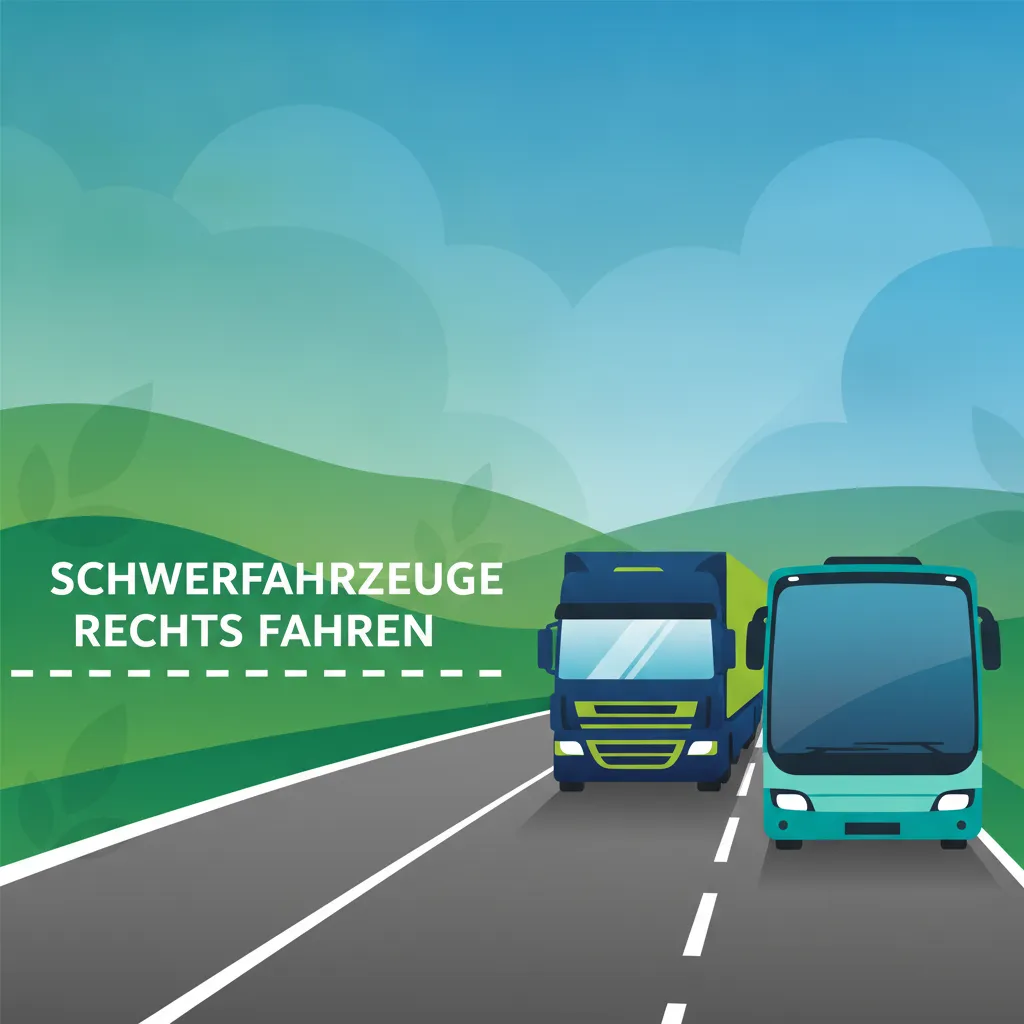
This lesson explains the specific regulations for operating heavy vehicles on Autobahnen, including speed limits, lane discipline, and overtaking rules. It discusses the use of dedicated truck lanes and the importance of maintaining appropriate following distances. The content also covers procedures for merging and exiting high-speed roads safely.

This lesson examines the risks associated with load shifting during braking and cornering maneuvers. It explains how inertia and weight transfer can cause cargo to move, potentially leading to instability or loss of control. The content emphasizes the importance of proper load securing to mitigate these risks and maintain vehicle stability.

This lesson explains the physics behind stopping a vehicle, breaking down the total stopping distance ('Anhalteweg') into its two key components: reaction distance and braking distance. It provides formulas for estimating these distances at various speeds and discusses the critical factors that can increase them, such as driver fatigue, poor weather, and worn tires. Understanding this relationship is vital for appreciating the need for safe speeds and distances.

This lesson examines the phenomena of brake delay (lag) and brake fade, particularly during prolonged braking on steep gradients. It discusses how brake temperature rises, leading to reduced friction and potential brake failure. The content also covers strategies for preventing overheating, such as using retarders and proper speed management.

This lesson focuses on the risks of jackknifing and trailer swing, particularly during braking and on downhill descents. It provides recommendations for safe speed management, proper braking techniques, and maintaining vehicle stability. The content also addresses safe reversing practices and the importance of monitoring blind spots during maneuvers.

This lesson introduces the various braking systems in heavy vehicles, including service brakes, air brakes, and retarders. It explains the functional principles of each system, such as how compressed air is used and the role of retarders in reducing service brake wear. The content also covers the importance of dual-circuit systems and fail-safe mechanisms.

This lesson covers the dimensional limits for heavy vehicles, focusing on height, width, and length restrictions. It explains how to interpret clearance signage for bridges, tunnels, and overhead obstacles, and discusses the implications for route planning. The content also addresses the importance of understanding turning radii and swept paths to avoid collisions.

This lesson covers the crucial skills of managing speed and maintaining a safe buffer from other vehicles. It teaches methods for calculating an appropriate following distance, such as the time-gap method, which adapts to different speeds and conditions. Learners will understand how to adjust their speed based on traffic flow, road surface, and weather to ensure they always have enough time and space to stop safely.

This lesson covers the various braking systems used on trailers, including air and electric brakes, and their integration with the towing vehicle. It explains the role of the brake controller, electrical connections for brake lights, and how braking force is distributed. The content also addresses considerations such as brake lag and trailer ABS functionality.
Understand German speed limits and legal regulations for speed limiters on heavy vehicles. This lesson details how speed affects braking distance, fuel consumption, and compliance with StVO rules for C and CE licence categories.
This lesson explains the specific regulations for operating heavy vehicles on Autobahnen, including speed limits, lane discipline, and overtaking rules. It discusses the use of dedicated truck lanes and the importance of maintaining appropriate following distances. The content also covers procedures for merging and exiting high-speed roads safely.
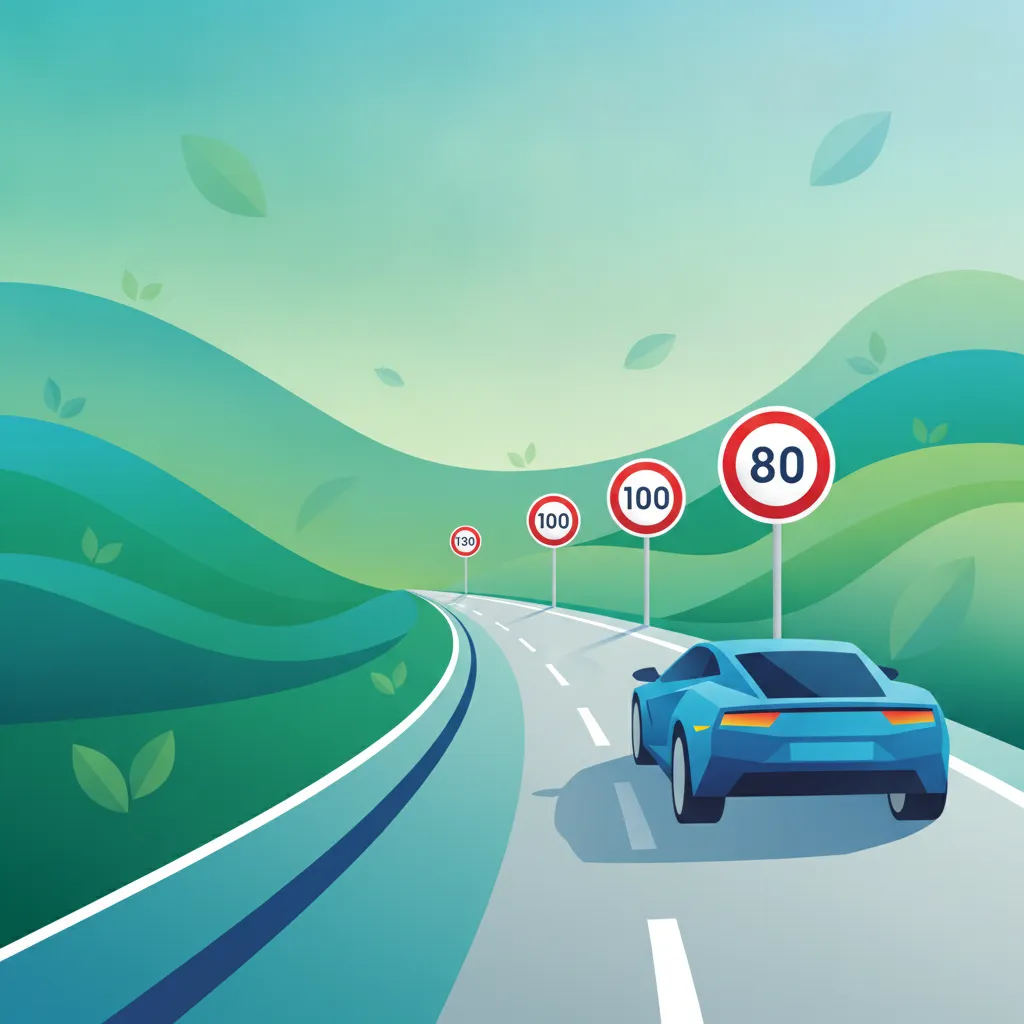
This lesson details the statutory speed limits in Germany, including the standard limits within built-up areas, on rural roads, and on the Autobahn. It emphasizes that the posted limit is a maximum and that drivers must always adapt their speed to traffic, weather, and visibility conditions. The concept of the recommended speed ('Richtgeschwindigkeit') on the Autobahn is also explained.
This lesson covers the dimensional limits for heavy vehicles, focusing on height, width, and length restrictions. It explains how to interpret clearance signage for bridges, tunnels, and overhead obstacles, and discusses the implications for route planning. The content also addresses the importance of understanding turning radii and swept paths to avoid collisions.
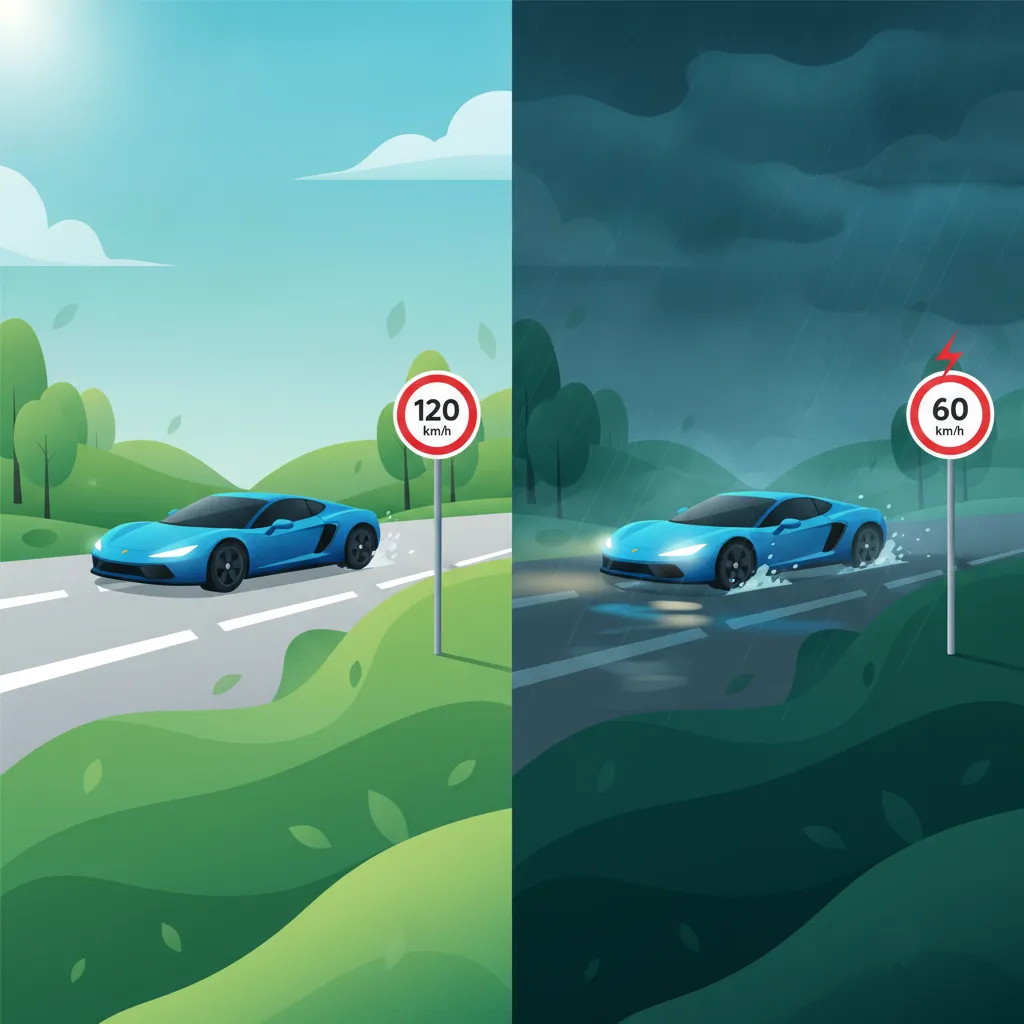
This lesson details the various speed limits applicable in Germany, from urban zones to rural roads. It emphasizes the critical skill of adapting speed to prevailing conditions such as rain, fog, or poor road surfaces. The content explains how external factors significantly impact vehicle handling and stopping distances.

This lesson examines the specific height, width, and length constraints that affect heavy vehicle operation, including bridge and tunnel clearances. It discusses how to interpret and comply with traffic signs indicating dimensional limits and the consequences of violating these restrictions. The content also covers practical strategies for route planning to avoid restricted areas.
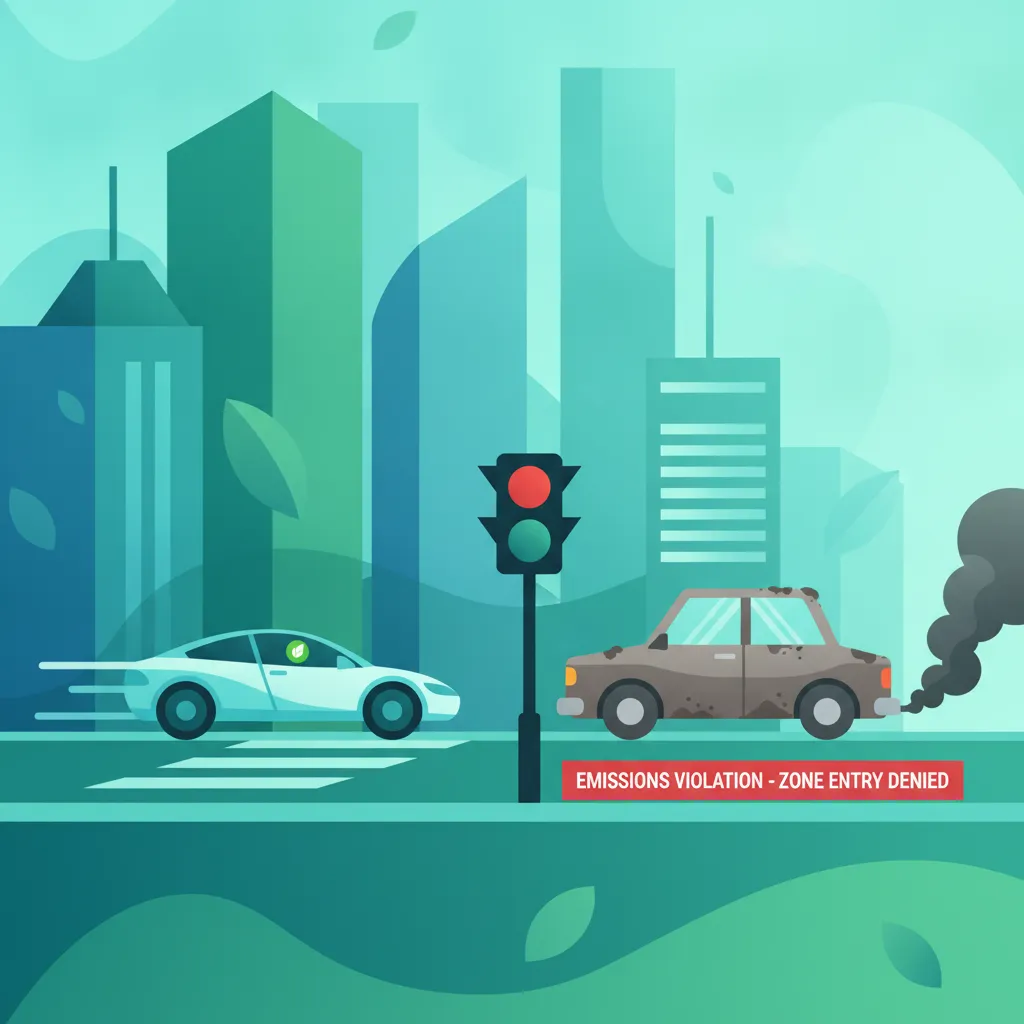
This lesson addresses the concept of environmental zones in German cities, explaining the requirements for emission stickers and the impact on heavy vehicles. It discusses the legal consequences of non-compliance, such as fines, and the importance of ensuring the vehicle meets emission standards. The content covers planning routes to avoid restricted zones if necessary.

This lesson outlines the legal requirements for vehicle roadworthiness, including mandatory periodic inspections (TÜV) and the issuance of safety certificates. It explains the standards for emissions, safety devices, and the proper documentation of defects. The content underscores the importance of complying with inspection intervals and addressing repair obligations promptly.

This lesson provides instruction on the rules and best practices for operating a large passenger vehicle on the Autobahn. It covers the principles of strict lane discipline, regulations for minimum speed, and correct procedures for overtaking and merging. The importance of maintaining significantly increased following distances at high speeds and planning for exits well in advance is a key focus.

This lesson explains the legal and safety requirements for transporting goods and cargo. It covers the importance of proper load distribution to maintain vehicle stability and the methods for securely fastening items to prevent them from shifting or falling. The regulations concerning maximum vehicle weight, roof loads, and the correct marking of loads that overhang the vehicle are also detailed.
This lesson covers the crucial skills of managing speed and maintaining a safe buffer from other vehicles. It teaches methods for calculating an appropriate following distance, such as the time-gap method, which adapts to different speeds and conditions. Learners will understand how to adjust their speed based on traffic flow, road surface, and weather to ensure they always have enough time and space to stop safely.
Find clear answers to common questions learners have about Speed Management and Gas-Limit Regulations. Learn how the lesson is structured, which driving theory objectives it supports, and how it fits into the overall learning path of units and curriculum progression in Germany. These explanations help you understand key concepts, lesson flow, and exam focused study goals.
Heavy vehicles possess significantly higher kinetic energy due to their mass. This means that even small increases in speed dramatically extend your braking distance, making precise speed control a matter of road safety and legal compliance.
A speed-limiter is an electronic device that mechanically prevents the vehicle from exceeding a set legal maximum speed. In the exam, you should understand that these are mandatory for certain heavy vehicles to ensure consistent traffic flow and safety.
Yes, while the legal speed limits remain the same, your vehicle's handling and braking stability change significantly when empty versus fully loaded. You must adjust your speed according to current road conditions, load, and potential stability risks.
While both categories are heavy vehicles, specific regulations under the StVO might distinguish limits based on total mass and vehicle type. Always check the specific restrictions for your license class and vehicle combination in the exam.
Begin your targeted revision now. Use our practice search to quickly find specific German driving theory questions. Filter by StVO rules, road signs, or hazard perception to create your focused study plan. Master challenging areas and prepare confidently for your theoretical driving test.