
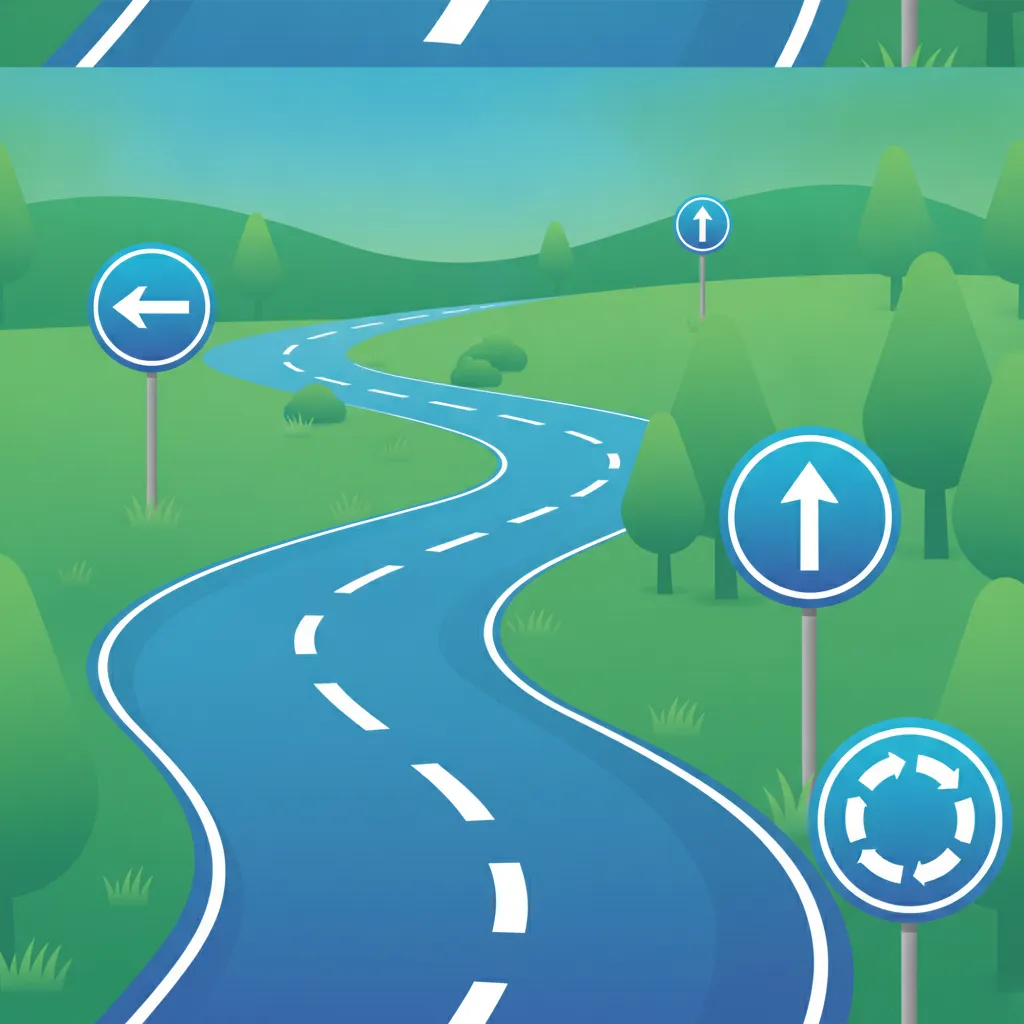
Mandatory traffic signs, known as 'Vorschriftzeichen' in Germany, are easily identifiable by their typically blue, circular design with white symbols. Unlike warning or prohibition signs, 'Vorschriftzeichen' give direct, non-negotiable instructions to road users, dictating specific actions or directions. Correctly interpreting these signs is essential for safe driving and passing your German driving theory test, as they directly regulate movement at junctions, roundabouts, and designated lanes.
Theory topic content overview
Read the full theory topic guide for Mandatory Signs (Vorschriftzeichen) with structured, easy-to-scan content built for learners in Germany. This detailed section explains the exact rule, meaning, traffic context, comparison points, and exam logic behind this German driving theory topic so you can study faster, understand the concept more clearly, and avoid common interpretation mistakes on the theory test.
Vorschriftzeichen) in Germany?Mandatory traffic signs, officially known as Vorschriftzeichen in Germany, are a fundamental category of road signs that issue direct, legally binding instructions to all road users. Unlike warning signs (Gefahrzeichen) that alert you to potential dangers, or prohibition signs (Verbotzeichen) that forbid certain actions, Vorschriftzeichen explicitly tell you what you must do.
These crucial signs are primarily identified by their distinctive design: typically circular with a blue background and white symbols or arrows. Their purpose is to regulate and guide traffic flow, ensuring safety and efficiency, especially at complex junctions, roundabouts, or specific lane arrangements. Adherence to Vorschriftzeichen is not optional; it is legally required under the German Straßenverkehrs-Ordnung (StVO).
Vorschriftzeichen Matters on German RoadsCorrectly interpreting and obeying Vorschriftzeichen is paramount for several reasons, particularly for drivers in Germany:
Autobahn where specific lane usage is required. They help maintain a smooth and predictable flow, vital for efficiency and reducing congestion.Vorschriftzeichen is a direct violation of the StVO and can result in fines, penalty points, or even more severe consequences in the event of an accident.Vorschriftzeichen are a core component of the German driving theory test. Learners are expected not only to recognize these signs but also to understand the precise action required and the potential consequences of non-compliance. Misinterpreting them is a common source of errors in the exam.Vorschriftzeichen Work in PracticeVorschriftzeichen dictate specific actions a driver must take. Here's how they generally function on German roads:
Vorschriftzeichen, you must follow its instruction.Vorschriftzeichen are specifically placed above or beside lanes to direct traffic flow for that particular lane. For example, a sign showing an arrow pointing straight ahead (Zeichen 209) and another pointing right (Zeichen 214) placed above separate lanes before an intersection indicates that drivers in the left lane must go straight, while drivers in the right lane must turn right.Kreisverkehr (Zeichen 215) mandate entering a roundabout in a specific direction (clockwise in Germany). Mandatory direction signs (Zeichen 209-214) are crucial at intersections to manage turning traffic.Gehweg - Zeichen 241), cycle paths (e.g., Radweg - Zeichen 237), or one-way streets (Einbahnstraße - Zeichen 220) belong to this category and define exclusive or mandatory use for certain road users or directions.Vorschriftzeichen are typically placed directly before the point where the mandatory action must be taken, ensuring drivers have ample time to react and position their vehicles correctly.The family of Vorschriftzeichen includes several important types that German drivers encounter daily:
Richtzeichen in its common display as a large informative sign at the street entrance, the arrow on a blue circle (similar to other Vorschriftzeichen) explicitly dictates direction where traffic flow must be enforced, often found in combination with the Einbahnstraße sign. For the purpose of mandating direction, similar principles apply.Radweg), pedestrians (Gehweg), or combined use (Geh- und Radweg). While these are often seen as separate categories for specific road users, they are fundamentally mandatory for that user group and prohibit others.Vorschriftzeichen vs. Other Sign TypesA common point of confusion for German theory learners is differentiating Vorschriftzeichen from other sign categories. Understanding these distinctions is critical for the exam and for safe driving.
Vorschriftzeichen (Mandatory Signs) vs. Verbotzeichen (Prohibition Signs):
Vorschriftzeichen: Typically blue circles with white symbols. They command you to do something (e.g., turn right, go straight).Verbotzeichen: Typically red circles with a white background and a black symbol (or red diagonal line). They forbid something (e.g., no entry, no overtaking, speed limit). While both are legally binding, one dictates action, the other restricts it.Vorschriftzeichen (Mandatory Signs) vs. Gefahrzeichen (Warning Signs):
Vorschriftzeichen: Blue circle, direct command.Gefahrzeichen: Red-bordered triangle with a white background and black symbol. They warn you of a hazard ahead (e.g., sharp bend, children playing, slippery road). They prompt caution, not a specific action.Vorschriftzeichen (Mandatory Signs) vs. Richtzeichen (Informative/Directional Signs):
Vorschriftzeichen: Blue circle, direct command.Richtzeichen: Typically blue square or rectangular signs. They provide information (e.g., motorway entry, parking areas, direction to a town). While helpful, they don't carry the same "must do" legal weight as Vorschriftzeichen.Let's look at how Vorschriftzeichen impact your driving decisions:
Kreisverkehr sign (Zeichen 215) before entering a junction. This sign mandates that you enter the roundabout, proceed in a clockwise direction, and generally give way to traffic already in the roundabout (unless otherwise indicated by signs like Vorfahrt gewähren).Einbahnstraße: A blue rectangular Einbahnstraße sign (Zeichen 220) with a white arrow indicates you can only drive in the direction of the arrow. This is particularly important for parking and understanding where oncoming traffic will (or won't) be.Getrennter Geh- und Radweg - Zeichen 241). This sign indicates a mandatory shared path, and as a cyclist, you must use it, while as a driver, you must be aware of its users.VorschriftzeichenLearners and even experienced drivers sometimes make mistakes regarding Vorschriftzeichen:
Vorschriftzeichen apply to all vehicle types or specify lanes for particular road users (cyclists, buses), which must be respected by everyone.Vorschriftzeichen in StVOIn Germany, the Straßenverkehrs-Ordnung (StVO) clearly defines Vorschriftzeichen as binding regulations. Section §39 of the StVO outlines the general principles for traffic signs, including the precedence of signs over general traffic rules. The specific Vorschriftzeichen are detailed in Anlage 2 (Annex 2) of the StVO, providing clear legal definitions and requirements for each sign.
German traffic management heavily relies on these signs to ensure predictable behavior, especially given the high traffic volumes and complex road networks. For a German driving license, thorough knowledge of Vorschriftzeichen is indispensable – not just for passing the theory exam, but for safely navigating German roads, from city centers to rural routes and the Autobahn.
Vorschriftzeichen are Your OrdersThink of Vorschriftzeichen as non-negotiable instructions from traffic authorities. They are your direct orders on how to proceed. A blue circular sign with a white symbol in Germany means "You MUST do this." Always recognize their shape, understand their specific command, and act accordingly and in good time. Mastering Vorschriftzeichen is a cornerstone of safe, legal, and confident driving in Germany.
Vorschriftzeichen are German mandatory traffic signs characterized by their blue circular design with white symbols, commanding drivers to perform specific actions such as turning, proceeding straight, or using particular lanes. Unlike warning signs (triangular) or prohibition signs (red circles), these signs issue non-negotiable orders that override general traffic rules and are legally binding under StVO. They are typically placed before junctions or above lanes to give drivers time to position themselves correctly. Mastering these signs—along with their Zeichen numbers and visual distinctions from other sign types—is essential for safe driving in Germany and for passing the theory exam.
A short set of high-value points that capture the most important ideas from this theory explanation.
Mandatory signs (Vorschriftzeichen) are blue circular signs with white symbols that command specific actions you must take, not suggestions.
These signs override general traffic rules and driver discretion—when you see a Vorschriftzeichen, you must comply immediately.
Vorschriftzeichen are legally binding under StVO, and failure to obey them can result in fines, penalty points, and increased liability in accidents.
Signs placed above specific lanes (Zeichen 209-214) bind only the drivers in those lanes to the indicated direction.
Understanding the difference between mandatory signs and other sign categories is essential for both safe driving and passing the German theory exam.
Blue circle with white symbol = Vorschriftzeichen = you MUST do this action (Zeichen 209-215 cover directions, roundabouts, lane use).
Red circle with white background and black symbol = Verbotzeichen = prohibition (you must NOT do something).
Red-bordered triangle = Gefahrzeichen = warning (caution, no specific mandatory action required).
Blue square or rectangle = Richtzeichen = informational or directional, not legally mandatory.
Vorschriftzeichen are defined in StVO §39 and detailed in Anlage 2 (Annex 2), with precedence over general traffic rules.
Treating mandatory signs as optional suggestions rather than strict legal commands, leading to dangerous violations.
Waiting until the last moment to change lanes after missing a mandatory direction sign, which is both hazardous and illegal.
Confusing mandatory direction signs with warning signs due to not recognizing the difference between circular and triangular shapes.
Failing to prepare for the required action (slowing down, checking mirrors, positioning) after seeing the sign.
Assuming mandatory lane-use signs only apply to cars when they also bind cyclists and other road users to designated paths.
Start with a short, direct summary of Mandatory Signs (Vorschriftzeichen) before reading the full explanation below.
Mandatory traffic signs ('Vorschriftzeichen') are a category of road signs in Germany that compel drivers to perform a specific action, such as turning left, driving straight ahead, or entering a roundabout. They are typically circular with a blue background and white symbols. These signs are crucial for organizing traffic, enhancing safety by preventing conflicts, and are legally binding under the German Straßenverkehrs-Ordnung (StVO). Adherence to 'Vorschriftzeichen' is paramount for orderly and safe participation in German road traffic.
Review the most important terms, rule signals, and traffic concepts linked to Mandatory Signs (Vorschriftzeichen).
Explore related theory topic pages connected to Mandatory Signs (Vorschriftzeichen) and continue with the next useful rule explanation.
See the common search queries learners use when trying to understand Mandatory Signs (Vorschriftzeichen) in Germany.

Solidify your understanding of German road rules. Explore specific theory topics in detail, from priority rules to complex Autobahn situations. Review key concepts and prepare thoroughly for every aspect of your official driving license theory examination.
German Driving Theory TopicsTheory topic content overview
A short set of high-value points that capture the most important ideas from this theory explanation.
Mandatory signs (Vorschriftzeichen) are blue circular signs with white symbols that command specific actions you must take, not suggestions.
These signs override general traffic rules and driver discretion—when you see a Vorschriftzeichen, you must comply immediately.
Vorschriftzeichen are legally binding under StVO, and failure to obey them can result in fines, penalty points, and increased liability in accidents.
Signs placed above specific lanes (Zeichen 209-214) bind only the drivers in those lanes to the indicated direction.
Understanding the difference between mandatory signs and other sign categories is essential for both safe driving and passing the German theory exam.
Blue circle with white symbol = Vorschriftzeichen = you MUST do this action (Zeichen 209-215 cover directions, roundabouts, lane use).
Red circle with white background and black symbol = Verbotzeichen = prohibition (you must NOT do something).
Red-bordered triangle = Gefahrzeichen = warning (caution, no specific mandatory action required).
Blue square or rectangle = Richtzeichen = informational or directional, not legally mandatory.
Vorschriftzeichen are defined in StVO §39 and detailed in Anlage 2 (Annex 2), with precedence over general traffic rules.
Treating mandatory signs as optional suggestions rather than strict legal commands, leading to dangerous violations.
Waiting until the last moment to change lanes after missing a mandatory direction sign, which is both hazardous and illegal.
Confusing mandatory direction signs with warning signs due to not recognizing the difference between circular and triangular shapes.
Failing to prepare for the required action (slowing down, checking mirrors, positioning) after seeing the sign.
Assuming mandatory lane-use signs only apply to cars when they also bind cyclists and other road users to designated paths.
Start with a short, direct summary of Mandatory Signs (Vorschriftzeichen) before reading the full explanation below.
Mandatory traffic signs ('Vorschriftzeichen') are a category of road signs in Germany that compel drivers to perform a specific action, such as turning left, driving straight ahead, or entering a roundabout. They are typically circular with a blue background and white symbols. These signs are crucial for organizing traffic, enhancing safety by preventing conflicts, and are legally binding under the German Straßenverkehrs-Ordnung (StVO). Adherence to 'Vorschriftzeichen' is paramount for orderly and safe participation in German road traffic.
Review the most important terms, rule signals, and traffic concepts linked to Mandatory Signs (Vorschriftzeichen).
Explore related theory topic pages connected to Mandatory Signs (Vorschriftzeichen) and continue with the next useful rule explanation.
See the common search queries learners use when trying to understand Mandatory Signs (Vorschriftzeichen) in Germany.
Solidify your understanding of German road rules. Explore specific theory topics in detail, from priority rules to complex Autobahn situations. Review key concepts and prepare thoroughly for every aspect of your official driving license theory examination.
German Driving Theory TopicsUse this exam-focused revision tip to understand how Mandatory Signs (Vorschriftzeichen) is likely to appear in theory questions for learners in Germany. This section helps you identify the most testable part of the rule, avoid common traps, and remember the concept more effectively during German driving theory exam preparation.
In the German theory exam, pay close attention to the difference between mandatory signs (Vorschriftzeichen), warning signs (Gefahrzeichen), and prohibition signs (Verbotzeichen). Mandatory signs dictate what you *must* do, often guiding direction or lane use. Remember their blue, circular shape, as mistaking them for other sign types is a common error that can lead to incorrect answers.
Read direct answers to the most common learner questions about Mandatory Signs (Vorschriftzeichen) in Germany. This FAQ focuses on rule confusion, practical meaning, comparison with similar concepts, and the exact uncertainties that appear most often in German driving theory revision and exam preparation.
Mandatory traffic signs ('Vorschriftzeichen') primarily instruct drivers on specific actions they must take, such as following a particular direction or using a designated lane. Their purpose is to ensure orderly traffic flow and enhance safety by preventing conflicts at complex road points.
In Germany, mandatory signs (Vorschriftzeichen) *require* you to perform an action (e.g., turn right), while prohibition signs (Verbotzeichen) *forbid* an action (e.g., no entry). Mandatory signs are typically blue and circular, whereas most prohibition signs are red and circular.
Yes, many mandatory signs in Germany specifically indicate how a lane must be used, for example, a sign might show an arrow directing traffic straight ahead only for that lane, or that a lane is exclusively for buses or cyclists.
The most common mandatory sign for a roundabout in Germany is a blue circular sign with three white arrows forming a circle (Zeichen 215). It instructs drivers to proceed in a clockwise direction within the roundabout and not to overpass the central island.
Yes, 'Vorschriftzeichen' are legally binding instructions under the German Straßenverkehrs-Ordnung (StVO). Failing to comply with a mandatory sign is a traffic violation that can lead to fines and points.
When mandatory direction signs are combined with traffic lights, the instructions from both must be followed. The traffic light usually regulates *when* you can proceed, while the mandatory sign dictates *how* you must proceed (e.g., direction of turn).
Mandatory signs are usually placed before the point where the action is required, such as before an intersection where a turn is mandatory, or at the entry to a specific lane. In some cases, signs indicating 'Here right' or 'Here left' are placed after the point of turning.
Begin your targeted revision now. Use our practice search to quickly find specific German driving theory questions. Filter by StVO rules, road signs, or hazard perception to create your focused study plan. Master challenging areas and prepare confidently for your theoretical driving test.