
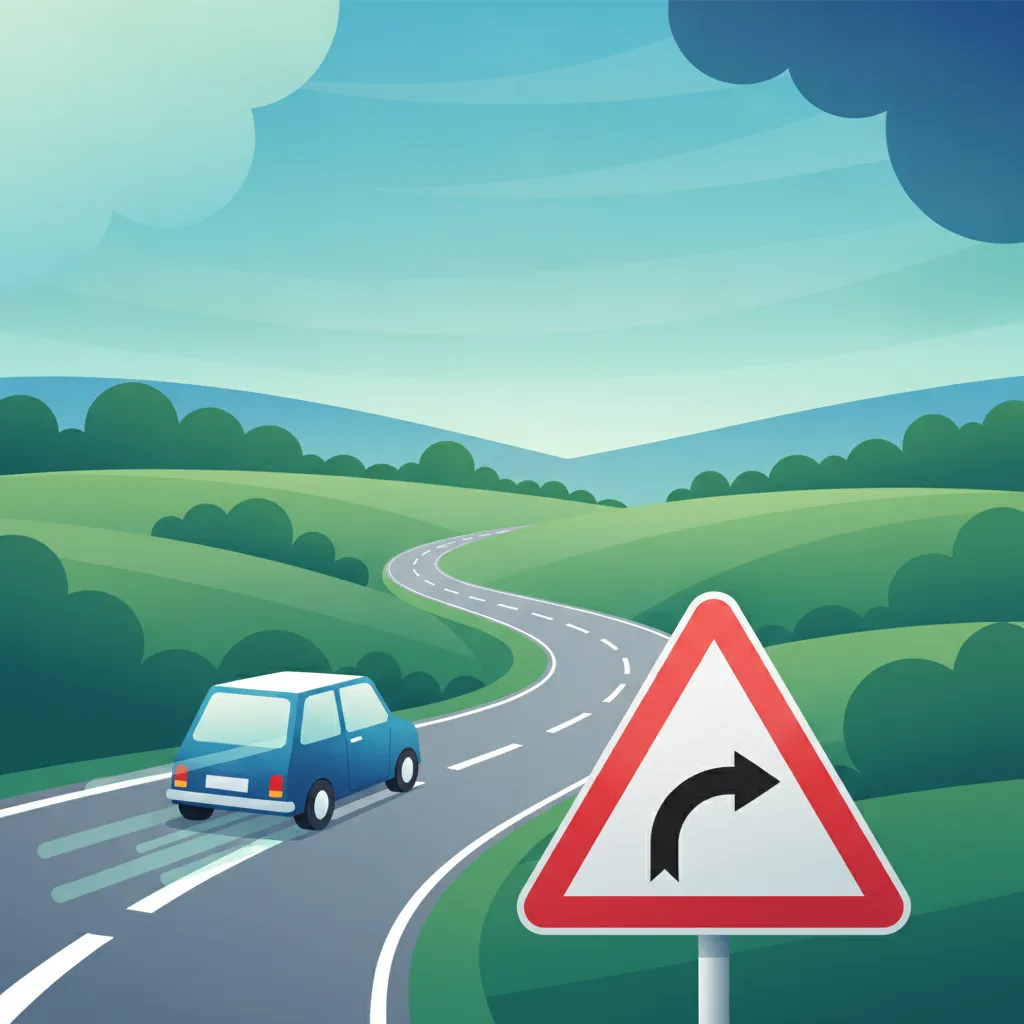
Warning signs, known as Gefahrenzeichen in Germany, are a fundamental part of the road signage system designed to alert drivers to potential hazards or changes in road conditions well in advance. Unlike regulatory signs that command or prohibit, warning signs serve to inform, prompting drivers to increase their attention and adjust their driving behavior. Understanding these signs is vital for anticipating risks and maintaining safety on German roads, from urban streets to the Autobahn.
Theory topic content overview
Read the full theory topic guide for German Warning Signs with structured, easy-to-scan content built for learners in Germany. This detailed section explains the exact rule, meaning, traffic context, comparison points, and exam logic behind this German driving theory topic so you can study faster, understand the concept more clearly, and avoid common interpretation mistakes on the theory test.
In Germany, warning signs, known officially as Gefahrenzeichen (Danger Signs), are a fundamental category of traffic signs designed to alert drivers to potential hazards or changes in road conditions ahead. These signs are instantly recognisable by their distinctive triangular shape with a red border and a black symbol on a white background, pointing upwards.
Unlike regulatory signs (Vorschriftzeichen) that issue commands or prohibitions (e.g., speed limits, stop signs), Gefahrenzeichen do not directly dictate an action. Instead, their primary purpose is to inform and prepare you for what lies ahead, prompting you to increase your attention and adjust your driving behavior proactively. They serve as an early warning system, crucial for maintaining safety and preventing accidents on German roads.
Understanding and correctly interpreting Gefahrenzeichen is not just about passing your German driving theory test; it's essential for everyday safe driving across all types of roads, from busy urban streets to high-speed Autobahns and winding rural routes.
Gefahrenzeichen are strategically placed to give drivers sufficient time to react to the upcoming hazard. According to German regulations:
The process of interacting with a Gefahrenzeichen should follow this sequence:
Your reaction to a Gefahrenzeichen should always be dynamic and consider multiple factors:
The variety of Gefahrenzeichen covers almost every conceivable road hazard. Here are some common examples relevant to German driving:
Often, a Zusatzzeichen (supplementary sign) is placed below a Gefahrenzeichen to provide additional details, such as the length of the hazardous section, specific times the hazard applies, or the nature of the danger (e.g., "bei Nässe" - in wet conditions).
It's crucial for German learners to differentiate between the various categories of traffic signs:
The key difference lies in the driver's obligation: with a Gefahrenzeichen, you are expected to interpret the warning and adapt your driving accordingly; with a Vorschriftzeichen, you are required to obey a specific rule.
Let's look at how Gefahrenzeichen guide your driving decisions in Germany:
Learners often misunderstand the subtle yet critical role of warning signs:
Gefahrenzeichen are your allies on German roads. They empower you to be a safer, more confident driver by giving you the gift of time. Instead of merely reacting to dangers, these signs enable you to anticipate and prepare.
Always remember: a red-bordered triangle is a call to heightened awareness. Scan the road, assess your surroundings, and adjust your speed and driving style before the hazard manifests. Master this principle, and you'll not only pass your German driving theory test but also become a much safer and more capable driver across Germany's diverse road network.
German Gefahrenzeichen are warning signs designed to alert drivers to potential hazards through their distinctive triangular shape with red borders and black symbols on white backgrounds, strategically placed before dangers to enable anticipatory driving (Vorausschauendes Fahren). These signs function differently from regulatory commands by prompting increased attention and adapted behavior rather than mandating specific actions, making proper interpretation and proactive response essential for both safe driving and theory exam success. Placement distances follow regulated standards varying from 50-100 metres in urban areas to up to 500 metres on faster roads, and learners must understand that Gefahrenzeichen always require immediate behavioral adaptation and careful reading of any supplementary signs (Zusatzzeichen) that provide additional hazard details.
A short set of high-value points that capture the most important ideas from this theory explanation.
Gefahrenzeichen are triangular signs with red borders that alert drivers to hazards ahead, requiring proactive behavioral adaptation rather than specific commands
Warning signs must be reacted to immediately upon recognition, not when the hazard becomes visible
Sign placement distances vary by context: 50-100m in built-up areas, 150-250m outside built-up areas, and up to 500m or more on faster roads like the Autobahn
Gefahrenzeichen differ fundamentally from Vorschriftzeichen (regulatory signs) because they inform and prepare rather than command or prohibit
The concept of Bremsbereitschaft (readiness to brake) and Vorausschauendes Fahren (anticipatory driving) are central to proper warning sign response
Red-bordered triangle = Gefahrenzeichen (warning); always demands increased attention and adapted speed
In built-up areas (innerorts), warning signs typically appear 50-100m before the hazard; outside built-up areas (außerorts), 150-250m is standard
The 'Right-of-Way from Right' (Vorfahrt von rechts) sign specifically indicates yield obligation to traffic approaching from the right at intersections
Supplementary signs (Zusatzzeichen) placed below the main sign provide critical additional details like conditions ('bei Nässe') or hazard length
Weather and visibility conditions can amplify the danger indicated by any warning sign, requiring more drastic speed adjustments
Seeing Gefahrenzeichen as purely informative rather than action-triggering, delaying response until the hazard is directly visible
Misinterpreting 'Vorfahrt von rechts' as simply indicating an intersection instead of the specific yield-to-right obligation
Assuming a slippery road sign doesn't apply if the road surface appears dry, since it warns of potential or recurrent hazard
Failing to read Zusatzzeichen (supplementary signs) that specify conditions, times, or distance of the hazard
Underestimating available reaction time due to poor understanding of standard placement distances, especially at higher speeds
Start with a short, direct summary of German Warning Signs before reading the full explanation below.
In Germany, warning signs (Gefahrenzeichen) are crucial triangular traffic signs designed to alert drivers to upcoming hazards or changes in road conditions, allowing them to react proactively. They do not prohibit actions but compel drivers to increase attention, reduce speed, and be prepared for specific dangers like sharp curves, intersections, or pedestrian crossings. Understanding these signs is key to anticipating risks and ensuring safety on German roads and passing the theory exam.
Review the most important terms, rule signals, and traffic concepts linked to German Warning Signs.
Explore related theory topic pages connected to German Warning Signs and continue with the next useful rule explanation.
See the common search queries learners use when trying to understand German Warning Signs in Germany.

Solidify your understanding of German road rules. Explore specific theory topics in detail, from priority rules to complex Autobahn situations. Review key concepts and prepare thoroughly for every aspect of your official driving license theory examination.
German Driving Theory TopicsTheory topic content overview
A short set of high-value points that capture the most important ideas from this theory explanation.
Gefahrenzeichen are triangular signs with red borders that alert drivers to hazards ahead, requiring proactive behavioral adaptation rather than specific commands
Warning signs must be reacted to immediately upon recognition, not when the hazard becomes visible
Sign placement distances vary by context: 50-100m in built-up areas, 150-250m outside built-up areas, and up to 500m or more on faster roads like the Autobahn
Gefahrenzeichen differ fundamentally from Vorschriftzeichen (regulatory signs) because they inform and prepare rather than command or prohibit
The concept of Bremsbereitschaft (readiness to brake) and Vorausschauendes Fahren (anticipatory driving) are central to proper warning sign response
Red-bordered triangle = Gefahrenzeichen (warning); always demands increased attention and adapted speed
In built-up areas (innerorts), warning signs typically appear 50-100m before the hazard; outside built-up areas (außerorts), 150-250m is standard
The 'Right-of-Way from Right' (Vorfahrt von rechts) sign specifically indicates yield obligation to traffic approaching from the right at intersections
Supplementary signs (Zusatzzeichen) placed below the main sign provide critical additional details like conditions ('bei Nässe') or hazard length
Weather and visibility conditions can amplify the danger indicated by any warning sign, requiring more drastic speed adjustments
Seeing Gefahrenzeichen as purely informative rather than action-triggering, delaying response until the hazard is directly visible
Misinterpreting 'Vorfahrt von rechts' as simply indicating an intersection instead of the specific yield-to-right obligation
Assuming a slippery road sign doesn't apply if the road surface appears dry, since it warns of potential or recurrent hazard
Failing to read Zusatzzeichen (supplementary signs) that specify conditions, times, or distance of the hazard
Underestimating available reaction time due to poor understanding of standard placement distances, especially at higher speeds
Start with a short, direct summary of German Warning Signs before reading the full explanation below.
In Germany, warning signs (Gefahrenzeichen) are crucial triangular traffic signs designed to alert drivers to upcoming hazards or changes in road conditions, allowing them to react proactively. They do not prohibit actions but compel drivers to increase attention, reduce speed, and be prepared for specific dangers like sharp curves, intersections, or pedestrian crossings. Understanding these signs is key to anticipating risks and ensuring safety on German roads and passing the theory exam.
Review the most important terms, rule signals, and traffic concepts linked to German Warning Signs.
Explore related theory topic pages connected to German Warning Signs and continue with the next useful rule explanation.
See the common search queries learners use when trying to understand German Warning Signs in Germany.
Solidify your understanding of German road rules. Explore specific theory topics in detail, from priority rules to complex Autobahn situations. Review key concepts and prepare thoroughly for every aspect of your official driving license theory examination.
German Driving Theory TopicsUse this exam-focused revision tip to understand how German Warning Signs is likely to appear in theory questions for learners in Germany. This section helps you identify the most testable part of the rule, avoid common traps, and remember the concept more effectively during German driving theory exam preparation.
In the German theory exam, distinguishing between warning signs (Gefahrenzeichen), regulatory signs (Vorschriftzeichen), and informational signs (Richtzeichen) is crucial. Remember that warning signs *alert* you to dangers, but do not *command* a specific action. Your response to a Gefahrenzeichen should always involve increasing attention and readiness to adapt, which is often tested in hazard perception questions.
Read direct answers to the most common learner questions about German Warning Signs in Germany. This FAQ focuses on rule confusion, practical meaning, comparison with similar concepts, and the exact uncertainties that appear most often in German driving theory revision and exam preparation.
A Gefahrenzeichen is a German warning sign, typically triangular with a red border, designed to alert drivers to potential hazards or changes in road conditions ahead. These signs encourage drivers to be cautious and adapt their driving style.
Warning signs (Gefahrenzeichen) inform drivers about potential dangers, prompting caution or a change in behavior, but do not impose direct prohibitions or commands. Regulatory signs (Vorschriftzeichen), in contrast, establish mandatory rules like speed limits or stop requirements.
When you see a Gefahrenzeichen, you should immediately increase your alertness, reduce your speed if necessary, and prepare to react to the indicated hazard. This might involve checking mirrors, being ready to brake, or adjusting your lane position.
Most common warning signs (Gefahrenzeichen) in Germany are indeed triangular with a red border and black symbol on a white background. This distinctive shape helps drivers quickly identify them as warnings, even before reading the specific symbol.
Common hazards indicated by German warning signs include sharp curves, intersections with priority from the right, pedestrian crossings, children playing, steep gradients, slippery roads, and wild animal crossings. Each sign uses a specific symbol to depict the nature of the danger.
In Germany, warning signs are generally placed at a sufficient distance before the hazard to give drivers ample time to react. In built-up areas, this is typically 50-100 meters, while outside built-up areas, it can be 150-250 meters, or even further on fast roads like the Autobahn, depending on the specific hazard and speed limit.
Begin your targeted revision now. Use our practice search to quickly find specific German driving theory questions. Filter by StVO rules, road signs, or hazard perception to create your focused study plan. Master challenging areas and prepare confidently for your theoretical driving test.