
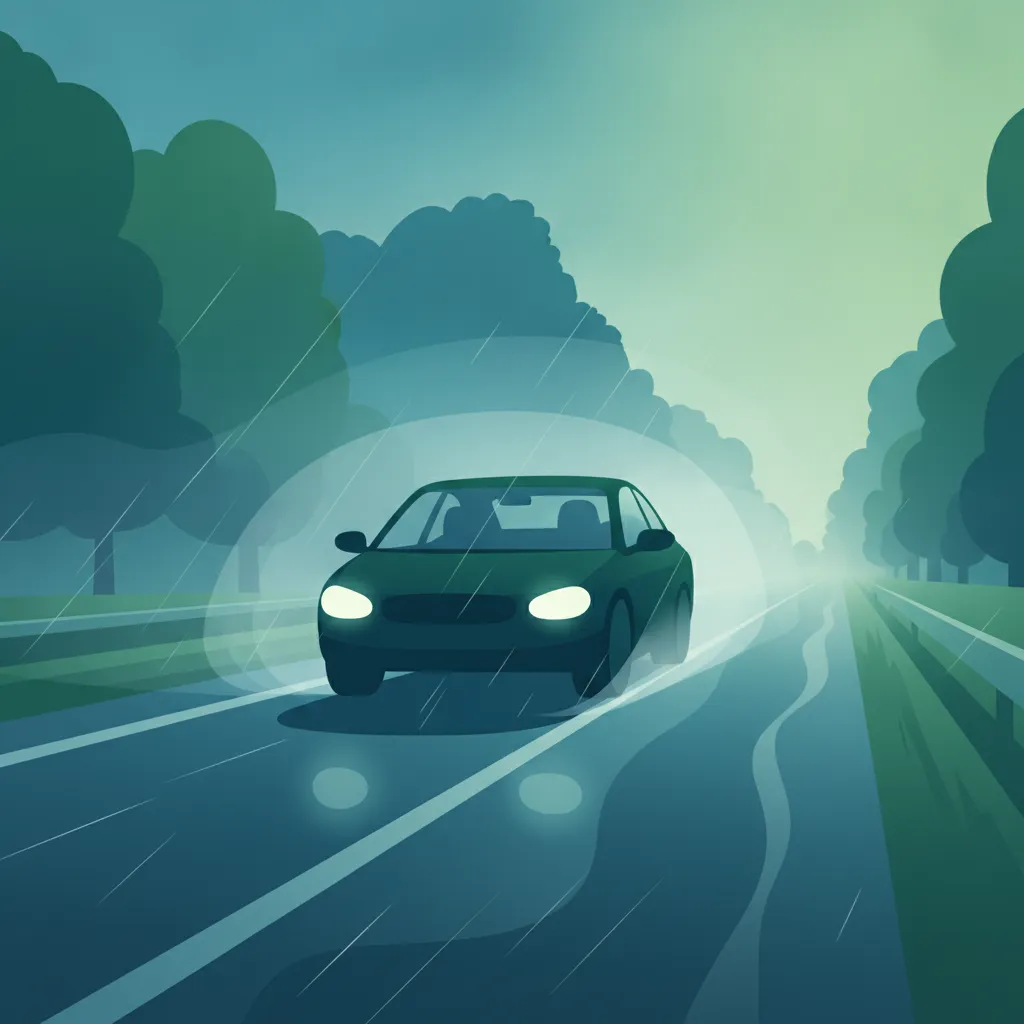
In Germany, driving at a safe speed is a fundamental principle of the Straßenverkehrs-Ordnung (StVO). It requires drivers to choose a speed that is always appropriate for the current road, traffic, visibility, and weather conditions. This page explains why the maximum legal speed is not always the safest speed and how to make the right decisions to maintain control and react effectively to hazards.
Theory topic content overview
Read the full theory topic guide for Safe Speed Principle with structured, easy-to-scan content built for learners in Germany. This detailed section explains the exact rule, meaning, traffic context, comparison points, and exam logic behind this German driving theory topic so you can study faster, understand the concept more clearly, and avoid common interpretation mistakes on the theory test.
In German driving theory and practical road safety, understanding safe speed is fundamental. It's the principle that a driver must always choose a speed appropriate for the current road, traffic, visibility, and weather conditions, regardless of the posted speed limit. The legal speed limit (zulässige Höchstgeschwindigkeit) is merely the maximum allowed under ideal conditions, not a target to be reached. Your actual driving speed must constantly be adapted to ensure you maintain full control of your vehicle and can react effectively to any unforeseen hazards.
This concept is enshrined in the Straßenverkehrs-Ordnung (StVO), German traffic regulations, which requires drivers to drive only as fast as they can, given their vehicle, their abilities, and the prevailing conditions.
The importance of safe speed cannot be overstated for several reasons:
Theorieprüfung) frequently includes questions that challenge your judgment on appropriate speed in various scenarios, especially under adverse conditions. You'll need to demonstrate an understanding that the maximum limit is not always the safest choice.Determining a safe speed involves a continuous assessment of multiple factors:
Straßenverhältnisse)Baustellen) demand reduced speed.Glatteis, Schnee): These are extremely hazardous. Speed must be drastically reduced, often to walking pace in severe conditions, to maintain any semblance of grip. Black ice (Blitzeis) is particularly dangerous as it's nearly invisible.Kurven): Enter curves at a speed that allows you to maintain your lane without braking sharply or drifting wide.Steigungen, Gefälle): Going downhill often requires lower speed to manage momentum and braking effectively.Verkehrsverhältnisse)Verkehrsdichte): In heavy traffic, especially in urban areas or on the Autobahn during peak hours, lower speeds are necessary to maintain a safe following distance (Sicherheitsabstand) and react to sudden stops.Wohngebiete), expect pedestrians, cyclists, or children to act unpredictably. Reduce speed significantly.Sichtverhältnisse)Nebel): Reduce speed so you can stop within the distance you can clearly see ahead. Use fog lights only when visibility is severely restricted (below 50 meters).Starker Regen/Schneefall): Similar to fog, visibility is reduced. Your speed must match your visible stopping distance.Dunkelheit): Even with headlights, visibility is limited. Be particularly cautious on unlit rural roads.Blendung durch Sonne): Low sun can temporarily blind you. Reduce speed and use sun visors.abgefahrene Reifen) or incorrect tire pressure reduce grip and necessitate lower speeds, particularly in wet conditions.A cornerstone of German traffic law regarding speed is the principle that a driver must always be able to stop their vehicle within the distance they can see to be clear ahead (auf Sicht fahren).
This means:
It's vital to understand the difference for your German driving license:
zulässige Höchstgeschwindigkeit): This is the maximum legal speed permitted under ideal conditions. It's indicated by round white signs with a red border and black numbers, or by variable message signs, especially on the Autobahn. Exceeding this limit is a violation.angemessene Geschwindigkeit): This is the speed you should be driving at, which is often below the legal limit, to maintain safety and control given the actual circumstances. Driving at the speed limit can still be unsafe and illegal if conditions are poor.Example: On a German rural road (Landstraße) with a speed limit of 100 km/h, if it's raining heavily and visibility is poor, 100 km/h is absolutely unsafe and potentially illegal. A safe speed might be 70 km/h, 50 km/h, or even less, depending on how much distance you can see to stop.
Speed has a dramatic, non-linear effect on your stopping distance and reaction time:
Anhalteweg): This is the sum of reaction distance and braking distance. Understanding this relationship is crucial for the German theory exam. For example, at 100 km/h on dry roads, your stopping distance is approximately 130 meters (30m reaction + 100m braking). Imagine how much longer that becomes on a wet or icy surface!Learners frequently make these errors regarding safe speed:
Zebrastreifen): Even if the speed limit is 50 km/h, if children are playing nearby, or visibility is reduced by parked cars, a safe speed would be significantly lower, allowing you to stop if someone steps out.Landstraße) with Sharp Bends: The national speed limit might be 100 km/h, but you must reduce your speed well before a blind bend to ensure you can stay in your lane and react to oncoming traffic or unexpected obstacles.Ortschaft): Upon seeing the village entrance sign (yellow rectangle with black border and town name), the general speed limit of 50 km/h applies. You must smoothly reduce your speed from the potentially higher rural road speed to 50 km/h before entering the built-up area to ensure safety for residents.For your German driving license and for a lifetime of safe driving, remember: The speed limit is a legal maximum; safe speed is a dynamic necessity. Always prioritize safety over speed. Continuously assess the conditions around you – the road, the weather, the traffic, and your own capabilities – and adjust your speed proactively. This active, responsible approach to speed control is the hallmark of a competent driver in Germany.
Safe speed in German driving theory requires drivers to choose a speed appropriate for current road, traffic, visibility, and weather conditions, regardless of the posted speed limit. The principle of 'auf Sicht fahren' (driving within visible distance) is a cornerstone of StVO, mandating that you can always stop within the distance you can see ahead. Speed has an exponential effect on stopping distance, making condition-based speed adaptation critical for safety. The German theory exam frequently tests your judgment in scenarios where the maximum speed limit would be unsafe, emphasizing that defensive driving means prioritizing safe adaptation over reaching the limit.
A short set of high-value points that capture the most important ideas from this theory explanation.
The speed limit is a maximum under ideal conditions, not a target to be reached
Safe speed is a dynamic choice that must be continuously adjusted based on real-world conditions
You must always be able to stop within the distance you can see to be clear ahead (auf Sicht fahren)
Speed affects stopping distance exponentially, not linearly - doubling speed roughly quadruples braking distance
Driving below the speed limit can still be illegal and dangerous if conditions require an even lower speed
In poor visibility (fog, heavy rain), reduce speed so you can stop within your visible distance
Wet, icy, or snow-covered roads drastically reduce tire grip and increase stopping distances
When approaching vulnerable road users (pedestrians, cyclists, children), significantly reduce speed
Heavily loaded vehicles or vehicles with worn tires require lower speeds and longer stopping distances
The StVO principle applies everywhere in Germany - urban streets, rural roads, and Autobahn sections alike
Treating the posted speed limit as a minimum speed they must drive at
Underestimating how much weather conditions (rain, fog, ice) affect grip and stopping distance
Failing to apply the 'stopping within visible distance' rule when visibility is reduced
Not reducing speed sufficiently near schools, playgrounds, bus stops, or residential areas
Assuming familiar roads are safe at higher speeds regardless of current conditions
Start with a short, direct summary of Safe Speed Principle before reading the full explanation below.
Safe speed is the speed at which a driver can maintain control of their vehicle and react to unforeseen hazards, regardless of the posted speed limit. It requires continuous adjustment based on factors like weather, road surface, traffic density, and visibility. In Germany, drivers must always be able to stop within the distance they can see to be clear ahead, emphasizing the importance of adapting speed to prevailing conditions, not just the maximum allowed.
Review the most important terms, rule signals, and traffic concepts linked to Safe Speed Principle.
Explore related theory topic pages connected to Safe Speed Principle and continue with the next useful rule explanation.
See the common search queries learners use when trying to understand Safe Speed Principle in Germany.

Solidify your understanding of German road rules. Explore specific theory topics in detail, from priority rules to complex Autobahn situations. Review key concepts and prepare thoroughly for every aspect of your official driving license theory examination.
German Driving Theory TopicsTheory topic content overview
A short set of high-value points that capture the most important ideas from this theory explanation.
The speed limit is a maximum under ideal conditions, not a target to be reached
Safe speed is a dynamic choice that must be continuously adjusted based on real-world conditions
You must always be able to stop within the distance you can see to be clear ahead (auf Sicht fahren)
Speed affects stopping distance exponentially, not linearly - doubling speed roughly quadruples braking distance
Driving below the speed limit can still be illegal and dangerous if conditions require an even lower speed
In poor visibility (fog, heavy rain), reduce speed so you can stop within your visible distance
Wet, icy, or snow-covered roads drastically reduce tire grip and increase stopping distances
When approaching vulnerable road users (pedestrians, cyclists, children), significantly reduce speed
Heavily loaded vehicles or vehicles with worn tires require lower speeds and longer stopping distances
The StVO principle applies everywhere in Germany - urban streets, rural roads, and Autobahn sections alike
Treating the posted speed limit as a minimum speed they must drive at
Underestimating how much weather conditions (rain, fog, ice) affect grip and stopping distance
Failing to apply the 'stopping within visible distance' rule when visibility is reduced
Not reducing speed sufficiently near schools, playgrounds, bus stops, or residential areas
Assuming familiar roads are safe at higher speeds regardless of current conditions
Start with a short, direct summary of Safe Speed Principle before reading the full explanation below.
Safe speed is the speed at which a driver can maintain control of their vehicle and react to unforeseen hazards, regardless of the posted speed limit. It requires continuous adjustment based on factors like weather, road surface, traffic density, and visibility. In Germany, drivers must always be able to stop within the distance they can see to be clear ahead, emphasizing the importance of adapting speed to prevailing conditions, not just the maximum allowed.
Review the most important terms, rule signals, and traffic concepts linked to Safe Speed Principle.
Explore related theory topic pages connected to Safe Speed Principle and continue with the next useful rule explanation.
See the common search queries learners use when trying to understand Safe Speed Principle in Germany.
Solidify your understanding of German road rules. Explore specific theory topics in detail, from priority rules to complex Autobahn situations. Review key concepts and prepare thoroughly for every aspect of your official driving license theory examination.
German Driving Theory TopicsUse this exam-focused revision tip to understand how Safe Speed Principle is likely to appear in theory questions for learners in Germany. This section helps you identify the most testable part of the rule, avoid common traps, and remember the concept more effectively during German driving theory exam preparation.
The German theory exam often presents scenarios where driving at the maximum speed limit would be unsafe due to weather, traffic, or road conditions. Always remember: the speed limit is a maximum, not a target. Prioritize safe adaptation over simply reaching the limit, especially in adverse conditions like fog, heavy rain, or icy roads. Questions may test your judgment in these nuanced situations.
Read direct answers to the most common learner questions about Safe Speed Principle in Germany. This FAQ focuses on rule confusion, practical meaning, comparison with similar concepts, and the exact uncertainties that appear most often in German driving theory revision and exam preparation.
The speed limit (Geschwindigkeitsbegrenzung) is the maximum legally allowed speed under ideal conditions. Safe speed, however, is the speed you *should* drive at to be safe, which may be significantly lower than the limit, depending on current road, traffic, and weather conditions.
Key factors include road conditions (wet, icy, gravel), visibility (fog, heavy rain, snow), traffic density, the presence of vulnerable road users (pedestrians, cyclists), road layout (sharp bends, narrow roads), and your vehicle's condition.
Yes. Even if you are within the posted speed limit, German traffic law (StVO) requires you to adapt your speed to conditions. If your speed is deemed inappropriate for the circumstances and contributes to a dangerous situation or accident, you can face penalties for unsafe driving (nicht angepasste Geschwindigkeit).
Safe speed directly influences your stopping distance. A higher speed requires a significantly longer reaction and braking distance. Driving at a safe speed ensures you can stop your vehicle within the visible clear distance ahead, giving you enough time to react to unexpected hazards.
While 'safe speed' is a core principle, the StVO (Straßenverkehrs-Ordnung) primarily addresses this under § 3 (Geschwindigkeit), which generally states that drivers must not drive faster than they can control their vehicle, and must adjust their speed to road, traffic, visibility, and weather conditions.
This term refers to driving at a speed that is too high for the prevailing conditions, even if it's below the legal maximum. It's a common cause of accidents and is a specific offense under German traffic law, emphasizing that speed limits are not targets but maximums.
Begin your targeted revision now. Use our practice search to quickly find specific German driving theory questions. Filter by StVO rules, road signs, or hazard perception to create your focused study plan. Master challenging areas and prepare confidently for your theoretical driving test.