
The Place Marker sign (729.2) is a crucial directional traffic sign designed to help you navigate junctions, roundabouts, and route changes smoothly. It ensures you can identify the correct route or lane well in advance, preventing last-second maneuvers. By reading these signs early, you'll position yourself correctly, maintain traffic flow, and avoid dangerous driving situations, making your journey safer and less stressful.
This directional sign is crucial for identifying upcoming routes and lanes in Iceland, helping you make timely decisions to avoid hazardous last-minute manoeuvres. Master its interpretation for smoother journeys and effective theory test revision.
Place Marker belongs to the directional signing system used before and at junctions, roundabouts, forks, local destinations, and route changes. These signs help drivers match place names, route numbers, arrows, and lane information to the real road layout ahead. Good use of the sign means reading it early, positioning in the correct lane while there is still time, and continuing ahead if a safe late change is no longer possible. That habit prevents hard braking, swerving, and wrong-lane exits.
This sign guides drivers through direction guidance to destinations, routes, or lanes. Its role is to help you recognise the correct route or lane in time, so you can keep moving smoothly without a last-second correction.
Get clear, practical answers to the most common questions about the 729.2 - Place Marker road sign. Learn how the sign works, what rules it represents, and how it affects real driving situations. This FAQ strengthens your understanding and supports accurate decision making for the Icelandic driving theory exam in Iceland.
The primary purpose of the Place Marker sign (729.2) is to provide direction and guidance. It helps drivers identify the correct route, lane, or destination before reaching a junction or split in the road, allowing for timely and safe decision-making.
When you see a Place Marker sign (729.2), you should read it as early as possible. Use the information on the sign, such as destination names and route numbers, to confirm your intended path and move into the correct lane well before the decision point.
Common mistakes include reading the sign too late, leading to sudden lane changes or missing the exit. Another trap is treating the sign as optional or relying solely on GPS, ignoring the clear lane guidance provided by the Place Marker sign. Stopping in a live lane to read the sign is also dangerous and prohibited.
While you might be familiar with the area, it's always best practice to acknowledge the 729.2 Place Marker sign. It confirms the correct lane or route, especially in complex junctions or when road layouts change. Ignoring it can still lead to confusion or an unsafe maneuver, and it's a common focus area in theory exams.
If you realize too late that you are in the wrong lane, it is unsafe to swerve across lanes. The correct procedure is to continue in your current lane and find a safe place to reposition or make your way back, rather than forcing other traffic to brake or causing an accident. This is a key point for driving safety and theory tests.
A clear reference image of the 729.2 - Place Marker road sign used in Iceland.
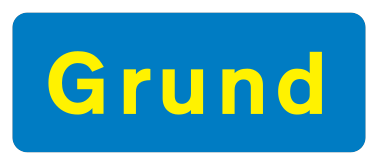
The 729.2 - Place Marker road sign may also be known by these alternative names or terms.
The 729.2 - Place Marker road sign is part of the Direction and Route Guidance Signs category, which groups together signs with similar rules and functions.
Mastering Icelandic road signs involves understanding subtle differences. Comparing similar signs, like different Place Markers, aids in accurate recognition and prevents theory test errors, reinforcing crucial traffic rules and driving knowledge for smoother navigation.
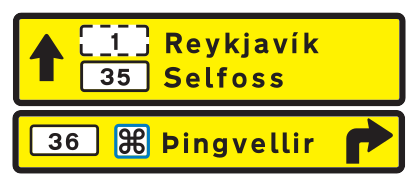
Master Your Route with the Icelandic Route Confirmation Sign (701.2)
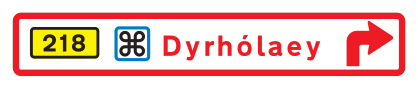
Understand the Local Route Confirmation Sign (701.3) for Clear Directional Guidance
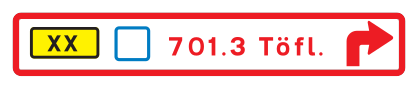
This Text Panel sign confirms your local route details at junctions and forks.

Follow the Tourist Route Confirmation Sign (701.4) to stay on track.

Confirm your tourist route and lane with this text panel sign.
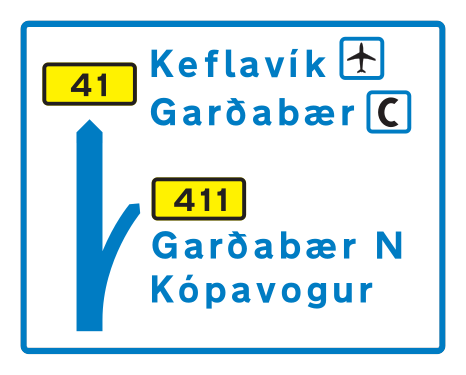
Navigate Confidently with the Straight-Ahead Local Direction Sign (703.1)
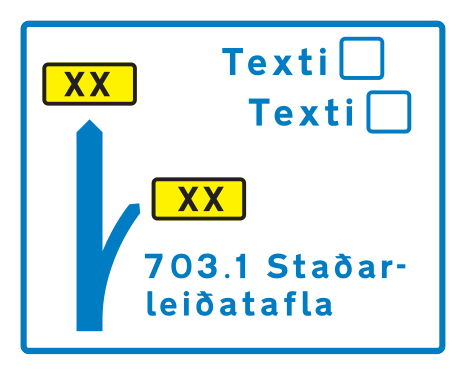
Follow the Text Panel for Straight-Ahead Local Direction Sign to stay on course.
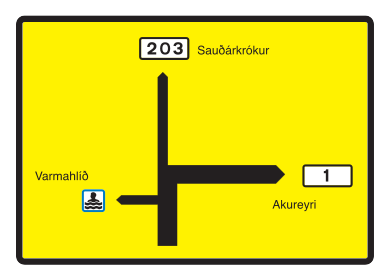
Master the Diagrammatic Local Direction Sign (703.2) for clear route guidance.
Explore curated theory modules and safety procedures that clarify how specific road signs dictate right-of-way and vehicle conduct on Icelandic roads. Apply this knowledge to your driving theory test preparation by linking visual signage to real-world traffic laws.
Don't let a false sense of security put you at risk on Icelandic roads.
Master Icelandic Crosswalk Rules for a Safer Drive and Exam Success
Prepare for your Icelandic driving theory test by mastering the physics of stopping distances. This guide breaks down the formulas for calculating reaction distance and braking distance in meters, explaining how factors like speed and road surface conditions, critical for Samgöngustofa requirements, directly influence your vehicle's stopping capability.
Navigating intersections without signs can be confusing, but Iceland's 'Hægri Regla' provides a clear priority system. This article explains how to yield to traffic from the right in such situations and outlines the hierarchy of traffic controls, from police officers to road signs. Understanding these principles is essential for safe driving and success in your Icelandic driving theory test.
Garbage Can belongs to the directional signing system used before and at junctions, roundabouts, forks, local destinations, and route changes. These signs help drivers match place names, route numbers, arrows, and lane information to the real road layout ahead. Good use of the sign means reading it early, positioning in the correct lane while there is still time, and continuing ahead if a safe late change is no longer possible. That habit prevents hard braking, swerving, and wrong-lane exits.
Text Panel for Straight-Ahead Local Direction Sign belongs to the directional signing system used before and at junctions, roundabouts, forks, local destinations, and route changes. These signs help drivers match place names, route numbers, arrows, and lane information to the real road layout ahead. Good use of the sign means reading it early, positioning in the correct lane while there is still time, and continuing ahead if a safe late change is no longer possible. That habit prevents hard braking, swerving, and wrong-lane exits.
After reviewing the full list of Icelandic road signs, reinforce your learning with targeted practice. Explore our sign group categories or take a specific quiz to test your recognition and recall. Ensure you're fully prepared to identify and interpret all traffic signs for your upcoming driving theory exam.
View All Icelandic Road Signs