
The E09.31 Runway sign, also known as 'Flugbraut', is part of Iceland's directional signing system. It appears before junctions, roundabouts, or route splits to guide you towards specific destinations or lanes. Its primary purpose is to help you identify your correct route in advance, allowing for smooth and safe lane positioning before you reach the decision point, thus preventing last-minute, potentially dangerous manoeuvres.
This "Runway" directional sign is crucial for understanding upcoming lane guidance and route changes in Iceland. Mastering its interpretation aids in correct lane positioning, vital for your theory test revision and safe driving.
Runway belongs to the directional signing system used before and at junctions, roundabouts, forks, local destinations, and route changes. These signs help drivers match place names, route numbers, arrows, and lane information to the real road layout ahead. Good use of the sign means reading it early, positioning in the correct lane while there is still time, and continuing ahead if a safe late change is no longer possible. That habit prevents hard braking, swerving, and wrong-lane exits.
This sign guides drivers through direction guidance to destinations, routes, or lanes. Its role is to help you recognise the correct route or lane in time, so you can keep moving smoothly without a last-second correction.
Get clear, practical answers to the most common questions about the E09.31 - Runway road sign. Learn how the sign works, what rules it represents, and how it affects real driving situations. This FAQ strengthens your understanding and supports accurate decision making for the Icelandic driving theory exam in Iceland.
The E09.31 Runway sign is a directional traffic sign designed to guide drivers towards their correct route or lane before reaching a junction, roundabout, or road split. It helps you prepare and position yourself correctly in advance, ensuring smoother traffic flow and preventing sudden lane changes.
You should look for and read the E09.31 Runway sign well in advance of the junction or decision point. These signs are most effective when seen early, giving you ample time to assess your route and move into the appropriate lane before you absolutely need to.
A common mistake is ignoring the sign until the last moment, forcing a sudden lane change or a missed exit. Others include relying solely on GPS and disregarding the lane guidance provided by the sign, or stopping in a live lane to try and read it, which is dangerous and prohibited.
You must not swerve across lanes if you realise too late which lane you need, stop in traffic to read the sign, treat it as optional if it clearly indicates a route choice, or force other traffic to brake due to a late reaction to the sign's guidance.
You should use the E09.31 Runway sign to choose your lane early. If you have already reached the point where a safe lane change is no longer possible, you must continue on your current path and plan for your next opportunity to correct your route, rather than forcing a dangerous manoeuvre.
A clear reference image of the E09.31 - Runway road sign used in Iceland.
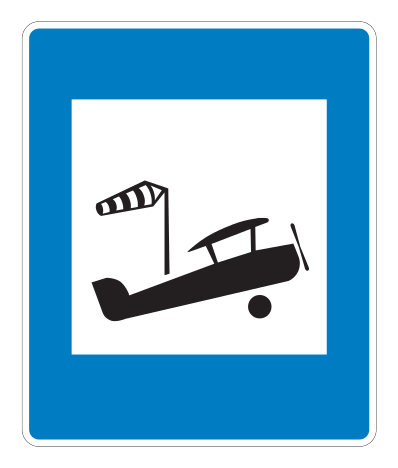
The E09.31 - Runway road sign may also be known by these alternative names or terms.
The E09.31 - Runway road sign is part of the Direction and Route Guidance Signs category, which groups together signs with similar rules and functions.
Comparing related road signs helps cement your understanding and prevent confusion during your Icelandic theory test revision. Mastering similar road signs through focused traffic sign comparison is key to accurate sign recognition and successful exam preparation.
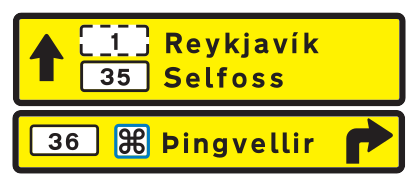
Master Your Route with the Icelandic Route Confirmation Sign (701.2)
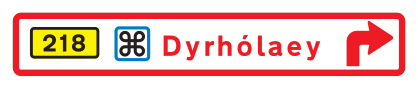
Understand the Local Route Confirmation Sign (701.3) for Clear Directional Guidance
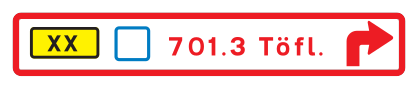
This Text Panel sign confirms your local route details at junctions and forks.

Follow the Tourist Route Confirmation Sign (701.4) to stay on track.

Confirm your tourist route and lane with this text panel sign.
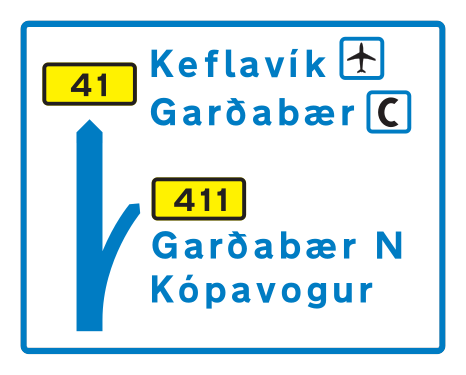
Navigate Confidently with the Straight-Ahead Local Direction Sign (703.1)
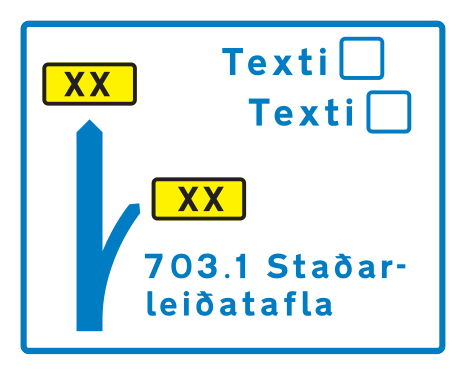
Follow the Text Panel for Straight-Ahead Local Direction Sign to stay on course.
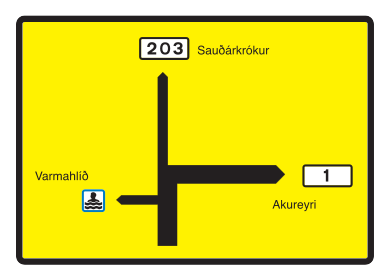
Master the Diagrammatic Local Direction Sign (703.2) for clear route guidance.
Explore curated theory modules and safety procedures that clarify how specific road signs dictate right-of-way and vehicle conduct on Icelandic roads. Apply this knowledge to your driving theory test preparation by linking visual signage to real-world traffic laws.
Don't let a false sense of security put you at risk on Icelandic roads.
Master Icelandic Crosswalk Rules for a Safer Drive and Exam Success
Prepare for your Icelandic driving theory test by mastering the physics of stopping distances. This guide breaks down the formulas for calculating reaction distance and braking distance in meters, explaining how factors like speed and road surface conditions, critical for Samgöngustofa requirements, directly influence your vehicle's stopping capability.
Navigating intersections without signs can be confusing, but Iceland's 'Hægri Regla' provides a clear priority system. This article explains how to yield to traffic from the right in such situations and outlines the hierarchy of traffic controls, from police officers to road signs. Understanding these principles is essential for safe driving and success in your Icelandic driving theory test.
Garbage Can belongs to the directional signing system used before and at junctions, roundabouts, forks, local destinations, and route changes. These signs help drivers match place names, route numbers, arrows, and lane information to the real road layout ahead. Good use of the sign means reading it early, positioning in the correct lane while there is still time, and continuing ahead if a safe late change is no longer possible. That habit prevents hard braking, swerving, and wrong-lane exits.
Text Panel for Straight-Ahead Local Direction Sign belongs to the directional signing system used before and at junctions, roundabouts, forks, local destinations, and route changes. These signs help drivers match place names, route numbers, arrows, and lane information to the real road layout ahead. Good use of the sign means reading it early, positioning in the correct lane while there is still time, and continuing ahead if a safe late change is no longer possible. That habit prevents hard braking, swerving, and wrong-lane exits.
After reviewing the full list of Icelandic road signs, reinforce your learning with targeted practice. Explore our sign group categories or take a specific quiz to test your recognition and recall. Ensure you're fully prepared to identify and interpret all traffic signs for your upcoming driving theory exam.
View All Icelandic Road Signs