
This lesson explores the fundamental legal and professional obligations of Category D and D1 licence holders regarding their duty of care. You will learn how to proactively manage risks to both your passengers and other road users while building a professional safety culture for your driving career.

Lesson content overview
Operating a passenger-carrying vehicle in Ireland carries immense legal and ethical responsibilities. Whether you are driving a local double-decker bus, an intercity coach, or a school minibus, you are entrusted with the safety, comfort, and lives of your passengers, as well as the safety of everyone sharing the road.
This lesson covers the concept of the Duty of Care under Irish law and professional transport standards. For candidates preparing for their Category D or D1 Irish Driver Theory Test, mastering this topic is essential. It is not merely about passing an exam; it is about establishing a proactive safety culture that protects vulnerable occupants and minimizes road risks across Ireland’s transport network.
Under Irish law, "Duty of Care" is not a vague ethical concept; it is a strict statutory and civil obligation. As a professional driver of a Category D passenger vehicle, you are held to a significantly higher standard of care than an ordinary private motorist.
The foundation of Irish road safety legislation is the Road Traffic Act 1961 (as amended). Under this Act, drivers must take all reasonable steps to ensure the safety of their passengers and other road users.
A legal and moral obligation requiring professional drivers to act with reasonable care, prudence, and attentiveness to avoid causing foreseeable harm, injury, or loss to passengers and external road users.
Failure to uphold this duty can result in serious consequences:
This legislation outlines the structural and safety equipment standards that Category D vehicles must meet. A critical component of these regulations is the provision and use of seat belts.
Allowing passengers to travel unbelted in a vehicle equipped with safety restraints is a direct breach of your legal duty of care. In the event of a sudden stop or collision, you could be held legally liable for injuries sustained by unrestrained occupants.
The Road Safety Authority (RSA) publishes operational guidelines that establish best-practice standards for passenger transport operators in Ireland. While some guidelines represent advisory best practices rather than primary legislation, Irish courts heavily rely on RSA guidelines to determine whether a professional driver acted "reasonably" in the event of an incident. Non-compliance with RSA safety codes is often cited as prima facie evidence of negligence in civil and criminal proceedings.
While the legal duty of care prevents accidents and avoids prosecution, the moral duty of care defines the quality of your professionalism. It represents an ethical commitment to protect the dignity, comfort, and general well-being of every person who boards your vehicle.
A professional driver must understand that passengers do not have a steering wheel to hold onto or pedals to brace themselves. They are entirely at the mercy of the vehicle's movement.
Active passenger welfare management requires a systematic approach to monitoring and controlling the cabin environment throughout the journey.
Pre-Departure Briefing & Inspection: Walk through the cabin to ensure aisles are completely clear of obstructions, emergency exits are unlocked, and safety signs are visible. Instruct passengers to secure their seat belts.
Secure On-Board Items: Ensure all hand luggage is placed securely in overhead racks, under seats, or in designated luggage pens to prevent items from becoming dangerous projectiles.
Monitor Passenger Behavior: Regularly check your interior mirrors to monitor passenger conduct. Address any unsafe behaviors, such as standing in the aisles while the vehicle is moving or blocking emergency exits, immediately and politely.
Adjust Cabin Environment: Maintain a comfortable cabin temperature and ensure appropriate interior lighting. Avoid dazzling passengers at night while maintaining enough light for safe passenger movement if the vehicle is designed for standing occupants.
Exceeding the certified carrying capacity of a Category D vehicle is an extreme safety violation. Every bus or coach has a plate displaying its maximum capacity of seated and, if applicable, standing passengers.
A key element of passenger safety is how you manage physical weight distribution. The physics of a heavy vehicle dictate that unsecured weight can catastrophically affect handling and safety.
When operating coaches with underfloor luggage compartments (sometimes called boots or lockers), drivers must supervise loading and unloading:
The physical forces acting on a passenger vehicle are directly controlled by the driver’s use of the primary controls: the accelerator, the footbrake, the retarder, and the steering wheel.
When a bus turns, accelerates, or brakes, inertia acts on every passenger inside:
To minimize these forces and ensure passenger safety, professional drivers must practice defensive driving and advanced hazard perception:
Your duty of care is heightened when transporting passengers who are more vulnerable to injury or require specialized assistance.
Your duty of care extends far beyond the physical boundaries of your vehicle. A professional Category D driver must safely co-exist with all other road users, paying specific attention to those who are most vulnerable.
Due to the sheer size and weight of a bus or coach, any collision with a vulnerable road user (VRU) is likely to result in fatal or life-changing injuries.
A professional driver must constantly adapt their driving to match the environmental conditions. Your duty of care requires proactive adjustments to prevent loss of control and ensure passenger safety.
| Weather Hazard | Physical Impact on Vehicle | Required Driver Action |
|---|---|---|
| Wet Roads / Heavy Rain | Halves tire grip; doubles stopping distances; increases risk of aquaplaning. | Reduce speed; double your following distance to at least ; apply brakes smoothly and early. |
| Icy or Snowy Roads | Reduces tire grip drastically; can increase stopping distances up to ten times. | Drive in a high gear with low engine revs; avoid sudden steering inputs; keep following distances extremely large. |
| Strong Crosswinds | Highly affects high-sided Category D vehicles (coaches/double-deckers), pushing them out of their lane. | Hold the steering wheel firmly with both hands; reduce speed, especially when crossing exposed bridges or passing gaps in hedges. |
Operating in poor light or darkness demands heightened vigilance:
To maintain the highest standards of safety, drivers must understand and actively avoid the common errors that lead to legal prosecution or severe accidents.
This lesson establishes that professional Category D drivers in Ireland operate under both legal obligations defined by the Road Traffic Act 1961 and RSA guidelines, and moral duties to passenger dignity and comfort. Learners must understand that driving style directly impacts passenger safety through physics of inertia, making smooth acceleration and progressive braking essential techniques. The content covers critical procedures including pre-departure inspections, seat belt enforcement, capacity management, and specific protocols for vulnerable passengers such as elderly, disabled, and children. External road user awareness, particularly regarding cyclist passing distances and blind spot hazards, forms a key part of the professional driver's expanded duty of care that extends beyond the vehicle's physical boundaries.
A short set of high-value points that capture the most important learning from this lesson.
Category D drivers are held to a significantly higher standard of care than ordinary motorists under the Road Traffic Act 1961
Smooth driving techniques directly prevent passenger injuries by managing inertia forces acting on occupants
Drivers must actively ensure passengers wear seat belts and never exceed the vehicle's legal capacity plate limits
Heightened duty of care applies to vulnerable passengers including elderly, disabled, and children who board and alight
Blind spot awareness and safe passing distances (1m up to 50km/h, 1.5m above 50km/h) are critical when sharing roads with cyclists and pedestrians
Explore all units and lessons included in this driving theory course.
RSA guidelines are heavily relied upon by Irish courts to determine whether a professional driver acted reasonably
Progressive braking involves gentle initial application, increasing pressure, then easing off before the vehicle stops
Unsecured luggage and standing passengers in forbidden areas create direct legal liability
Allow passengers to be fully seated before releasing the handbrake and wait for complete standstill before they stand to alight
Wet road conditions can double stopping distances and icy conditions can increase them up to tenfold
Harsh braking and acceleration caused by poor forward planning, leading to passenger falls especially for standing occupants
Failure to check blind spots before turning, resulting in side-swipe collisions with cyclists at intersections
Allowing passengers to stand forward of the driver's seat or in the articulated joint of bendy buses
Not supervising luggage loading evenly, which can cause dangerous weight shifts during cornering
Neglecting to use kneeling features or ramps when assisting passengers with mobility disabilities
Lesson content overview
A short set of high-value points that capture the most important learning from this lesson.
Category D drivers are held to a significantly higher standard of care than ordinary motorists under the Road Traffic Act 1961
Smooth driving techniques directly prevent passenger injuries by managing inertia forces acting on occupants
Drivers must actively ensure passengers wear seat belts and never exceed the vehicle's legal capacity plate limits
Heightened duty of care applies to vulnerable passengers including elderly, disabled, and children who board and alight
Blind spot awareness and safe passing distances (1m up to 50km/h, 1.5m above 50km/h) are critical when sharing roads with cyclists and pedestrians
Explore all units and lessons included in this driving theory course.
RSA guidelines are heavily relied upon by Irish courts to determine whether a professional driver acted reasonably
Progressive braking involves gentle initial application, increasing pressure, then easing off before the vehicle stops
Unsecured luggage and standing passengers in forbidden areas create direct legal liability
Allow passengers to be fully seated before releasing the handbrake and wait for complete standstill before they stand to alight
Wet road conditions can double stopping distances and icy conditions can increase them up to tenfold
Harsh braking and acceleration caused by poor forward planning, leading to passenger falls especially for standing occupants
Failure to check blind spots before turning, resulting in side-swipe collisions with cyclists at intersections
Allowing passengers to stand forward of the driver's seat or in the articulated joint of bendy buses
Not supervising luggage loading evenly, which can cause dangerous weight shifts during cornering
Neglecting to use kneeling features or ramps when assisting passengers with mobility disabilities
Explore search topics learners often look for when studying Duty of Care to Passengers and Others. These topics reflect common questions about road rules, driving situations, safety guidance, and lesson level theory preparation for learners in Ireland.
Browse additional driving theory lessons that cover connected traffic rules, road signs, and common driving situations related to this topic. Improve your understanding of how different rules interact across everyday traffic scenarios.
Learn the professional standards for managing passenger comfort, seating safety, and luggage security. This guide explains how to effectively handle passenger behavior, maintain cabin environments, and follow RSA guidelines for operating public transport services while prioritizing the wellbeing and dignity of every occupant on board.

Maintaining cabin discipline is critical for preventing driver distractions and ensuring passenger transit remains completely safe and comfortable. This lesson teaches conflict resolution, proactive de-escalation techniques, and the roles of specialized escorts on school or medical transport. Drivers will learn to assess security threats on board and apply the appropriate response protocols under Irish laws.
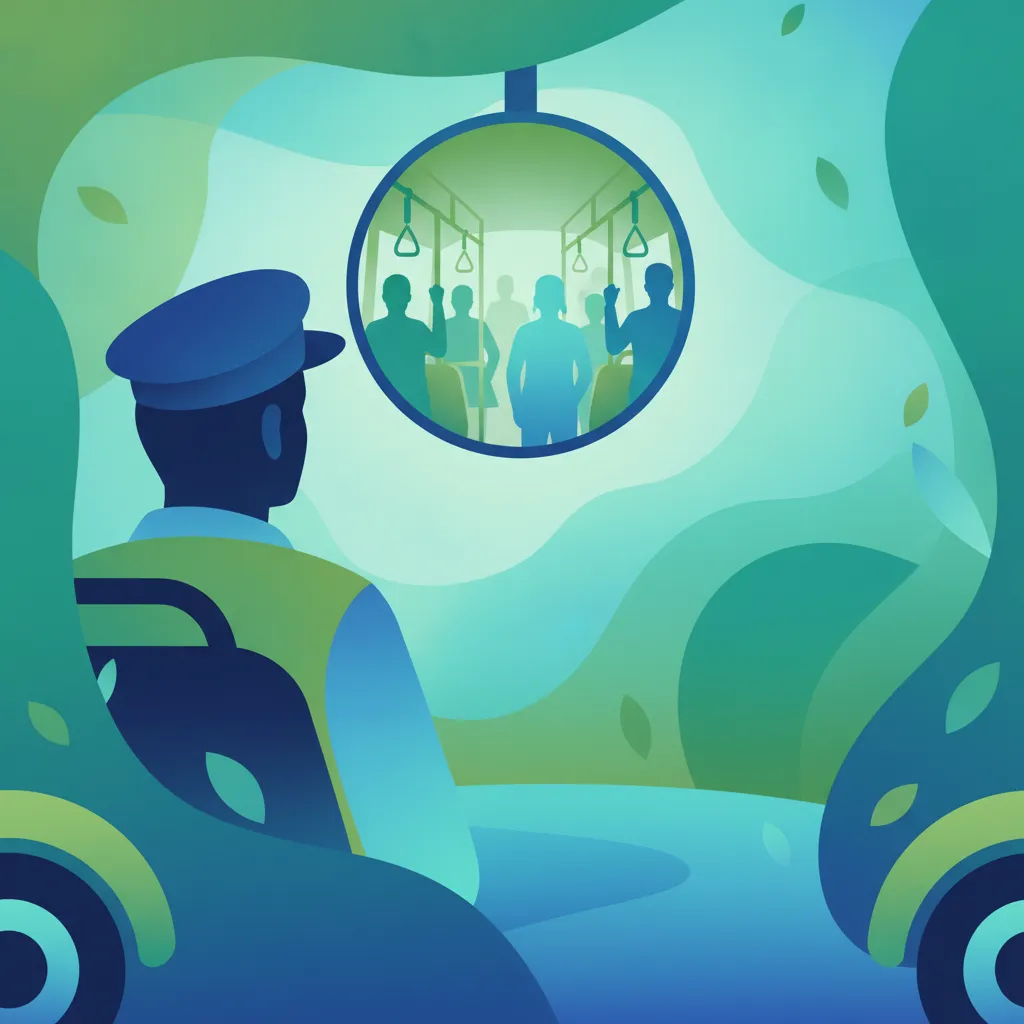
Standing passengers face heightened safety risks due to sudden changes in bus velocity, turning forces, or abrupt stops. This lesson covers maximum standing capacity regulations, correct passenger distribution, and the importance of active handrail utilization. Drivers will learn how to adjust their braking and acceleration patterns to prevent slips, trips, and falls among standing occupants.

Maintaining high levels of passenger satisfaction requires proactive management of the vehicle internal environment and driving style. This lesson teaches drivers how to control internal heating and ventilation systems, minimize harsh vibrations, and communicate route updates professionally. By optimizing passenger comfort, drivers prevent travel anxiety, reduce motion sickness, and deliver high-quality public service.

Evacuating a coach or bus requires quick, decisive leadership, structured directions, and full use of onboard emergency exits. This lesson details the exact location and operation of emergency glass-breakers, roof hatches, and manual door release systems. Drivers will study crowd management techniques to prevent panic, ensuring all passengers gather at a safe distance from the vehicle.

Sudden or jerky vehicle movements can cause immediate discomfort or direct physical injuries to onboard passengers, particularly standing occupants. This lesson teaches progressive throttle control, gradual gear shifts, and smooth steering inputs that stabilize the heavy vehicle body. Drivers will master the technique of progressive braking to ensure comfortable, safe slowing actions at junctions.

Operating long-distance intercity services requires meticulous journey planning to satisfy passenger comfort and comply with driver rest regulations. This lesson covers schedule coordination, planning convenient rest stop locations, and managing driver alertness over extended periods. Drivers will learn to perform intermediate safety checks on passenger comfort systems during journey breaks.
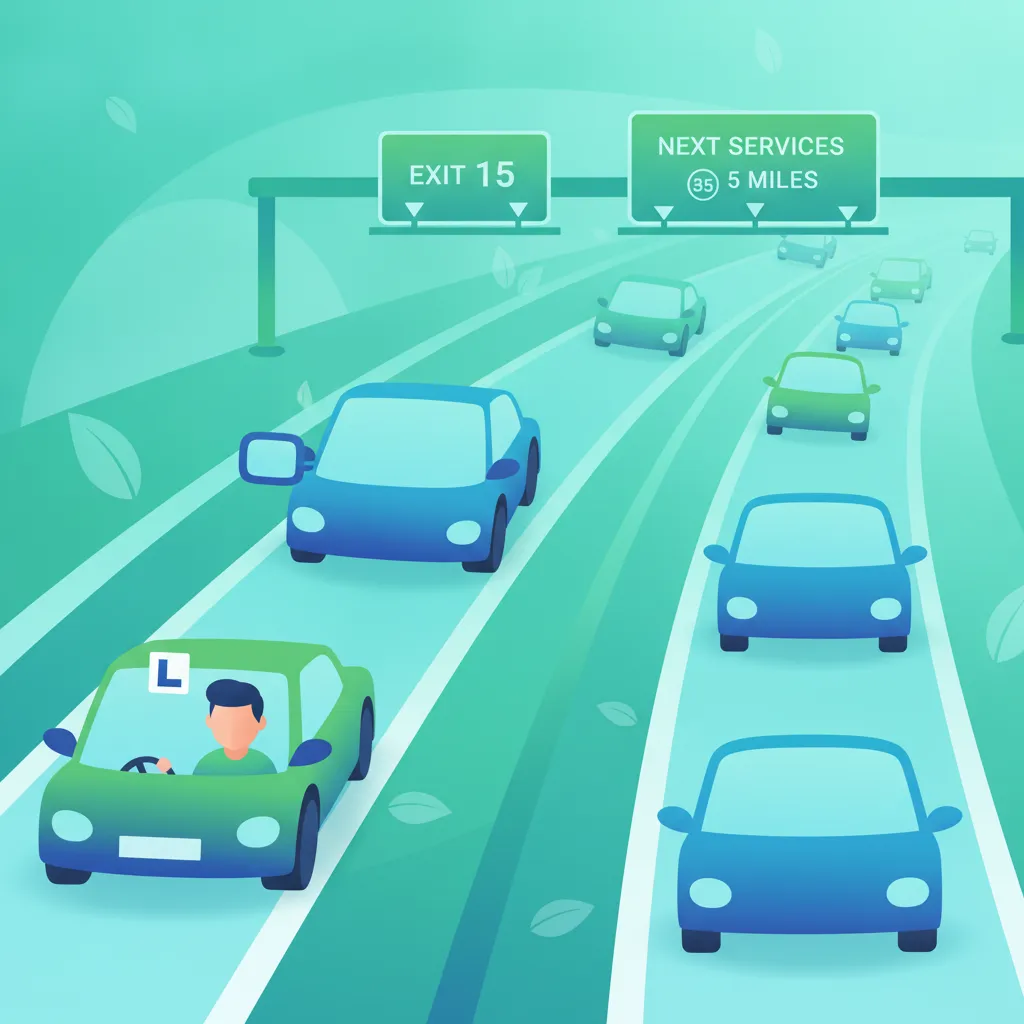
Motorway transport requires consistent forward planning, strict speed restriction compliance, and clear mirror checks before exiting lanes. This lesson details the rules of joining and leaving motorways, navigating toll plazas safely, and managing breakdowns on the hard shoulder. Drivers will learn to balance high-speed travel with passenger stability, ensuring a comfortable, secure ride.
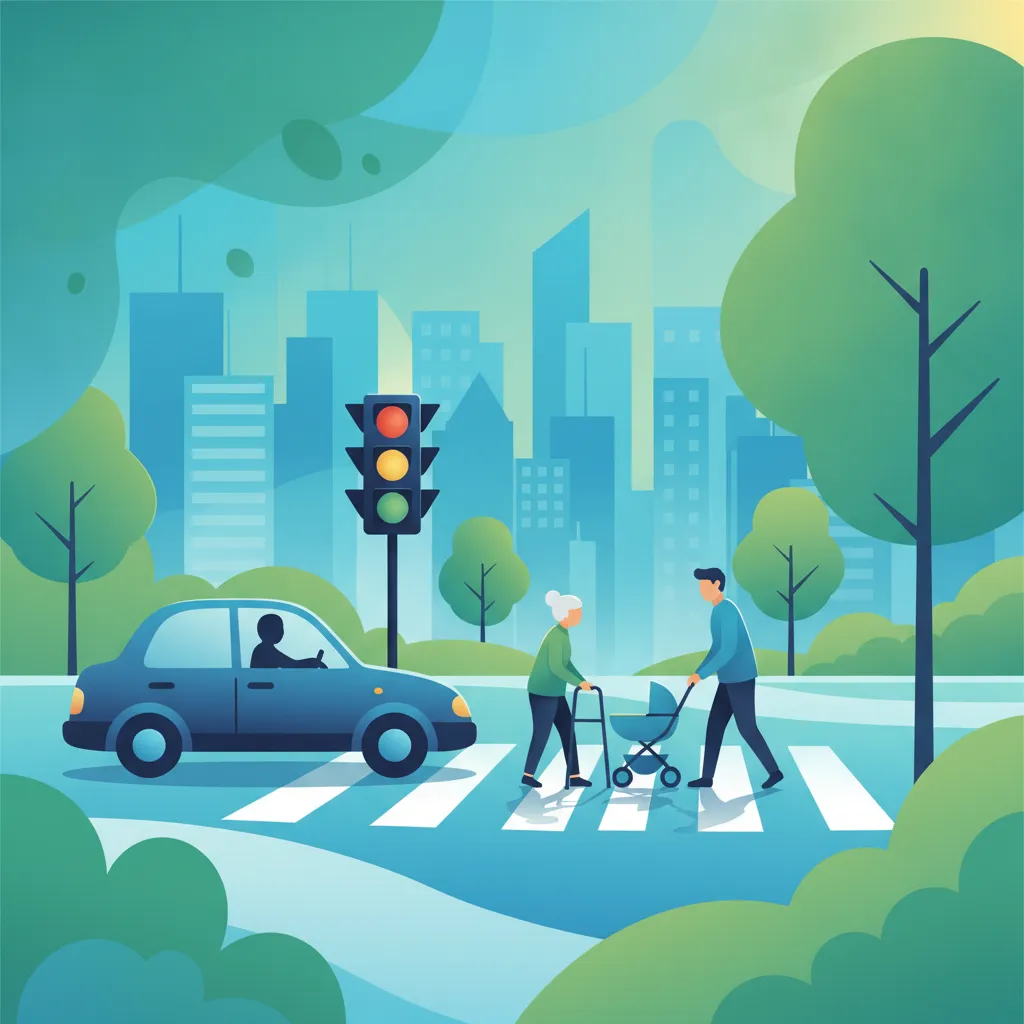
Transporting passengers with mobility impairments, children, or elderly citizens requires specialised communication skills and physical driving adjustments. This lesson reviews safe boarding techniques, wheelchair-accessible vehicle setups, and best practices for supporting passengers with hidden disabilities. It highlights the importance of empathy, patience, and maintaining professional dignity during passenger transport.

Passenger boarding and exiting periods represent a highly critical operational window where slip and fall injuries frequently occur. This lesson outlines safe door opening procedures, the deployment of mechanical boarding steps, and proper handrail holding instructions. Drivers will learn to supervise passenger flow, ensuring passengers clear the immediate exit area before the bus begins moving.

As passenger numbers change throughout a service shift, a heavy vehicle suspension, center of gravity, and steering responsiveness adapt dynamically. This lesson covers load balancing, the physical risks of overloading, and how uneven weight distribution compromises stability during turns. Drivers will learn to perform regular axle weight assessments to comply with Irish transport safety rules.
Understand the driving theory requirements for navigating urban environments in large passenger vehicles. This lesson provides clear explanations of how to manage blind spots, anticipate the actions of pedestrians and cyclists, and adapt your driving style to keep vulnerable road users safe in high-density traffic situations.

This lesson focuses on managing the interactions between commercial goods vehicles and non-motorized or lightweight commuters. It outlines defensive driving techniques to utilize when overtaking cyclists, navigating pedestrian crossings, or negotiating shared junctions in Irish cities. Drivers will examine common cyclist behaviors at roundabouts and understand how to maintain massive safety margins to protect lives.

Motorcycles and bicycles are often hidden from view in the large blind spots of passenger buses and coaches during turns. This lesson covers safe lateral clearances when overtaking cyclists, recognizing advanced stop lines, and sharing narrow lanes. Drivers will understand how to signal clearly, giving riders enough room to navigate safely near busy public transit corridors.

This lesson explains the extensive blind spots of heavy goods vehicles, buses, and other large trucks on Irish roads. It teaches Category AM riders how to maintain safe following distances and position themselves where truck drivers can see them. Proper space cushion management is emphasized to protect riders from the wind turbulence of passing trucks.

Driving a coach through narrow urban streets or historic Irish town centers demands precise spatial judgment and low speed control. This lesson covers turning radii, rear tail-swing physics, and managing overhangs when navigating around tight, permanent obstacles. Drivers will learn to assess clearance gaps accurately, reducing damage risks to the vehicle exterior and public infrastructure.
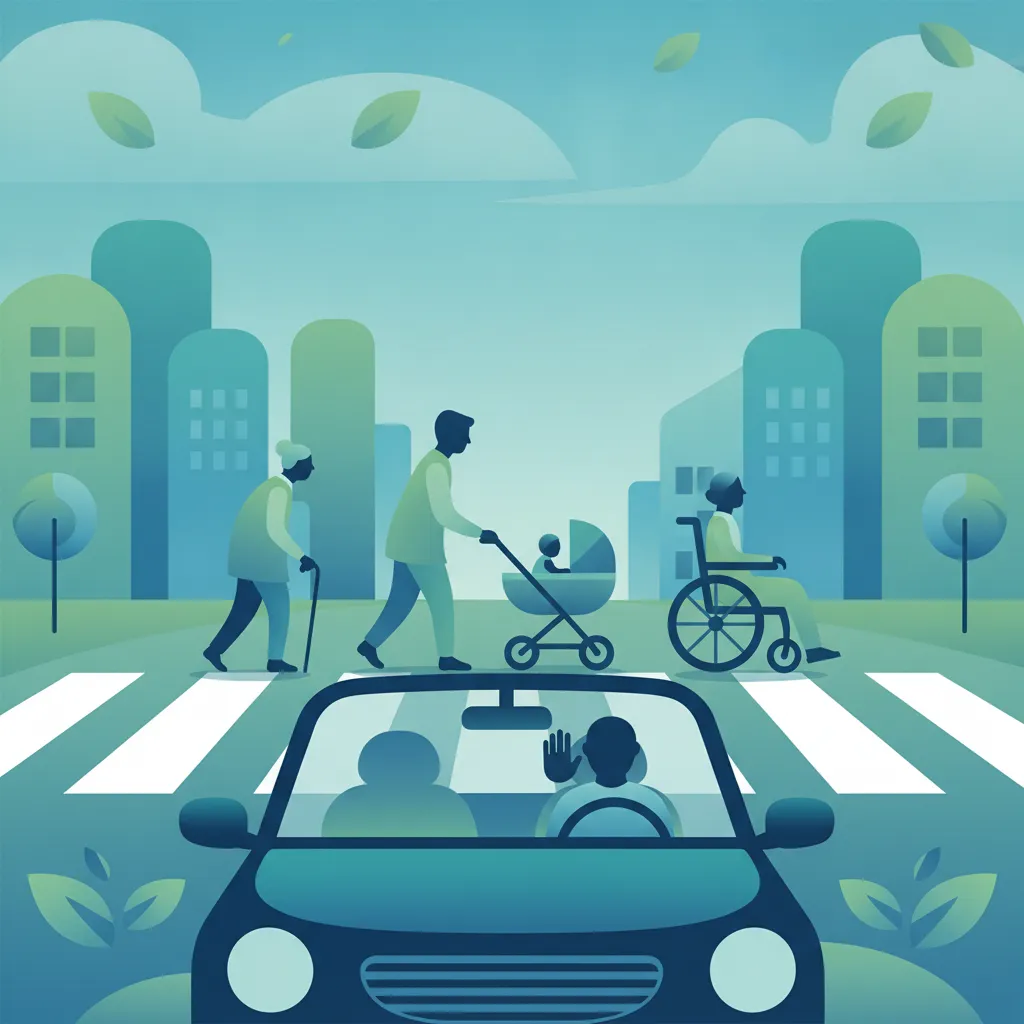
Children, the elderly, and disabled individuals often require extra time and understanding when navigating road networks. This lesson outlines special safety hazards, such as children unexpectedly running into school zones, or senior citizens needing longer times to cross wide junctions. You will learn how to recognise visually impaired pedestrians by their white canes or guide dogs, and the absolute requirement to drive slowly and patiently.

Heavy vehicles require continuous visual scanning to identify small or slow-moving road users who may enter the path of travel. This lesson explores the typical behaviors of young children, elderly pedestrians, and visually impaired road users. Drivers will build strong hazard perception skills to anticipate sudden movements, ensuring they can brake safely and avoid serious accidents.
Safeguarding vulnerable road users requires more than simple obedience to traffic signs; it demands a defensive driving mindset. This lesson summarizes safe practices, including scanning far ahead in urban areas, keeping massive safety margins in wet weather, and executing thorough blind spot checks before reversing. By anticipating the unpredictable movements of others, you can prevent accidents and support a safe road culture.

Children often struggle to judge heavy vehicle speeds accurately, while elderly pedestrians may possess limited mobility or hearing impairments. This lesson addresses these unique risks, explaining how to adjust driving patterns in residential neighborhoods and near shopping districts. Drivers will learn to maintain a high safety margin, ensuring they can yield quickly to vulnerable road users.

Bus stops often intersect with designated bicycle lanes and busy walking pathways, creating high-risk conflict areas for drivers. This lesson trains drivers to check blind spots for oncoming cyclists before pulling into or exiting public stop bays. It emphasizes yielding right-of-way to passengers crossing the road, preventing collision risks in active urban transport hubs.

This lesson addresses the unique environmental and logistical challenges faced during delivery stops in commercial town and city centers. It covers the legal frameworks governing municipal loading zones, double-parking hazards, and temporary pedestrian-only street restrictions. Drivers will acquire practical skills for managing traffic build-up, utilizing visual spotters, and securing the vehicle while unloading cargo.
Find clear answers to common questions learners have about Duty of Care to Passengers and Others. Learn how the lesson is structured, which driving theory objectives it supports, and how it fits into the overall learning path of units and curriculum progression in Ireland. These explanations help you understand key concepts, lesson flow, and exam focused study goals.
A bus driver has a legal and moral responsibility to ensure the safety of passengers from the moment they board until they alight. This includes maintaining a safe vehicle, driving in a smooth and controlled manner, and anticipating hazards to prevent injury.
Yes. While passenger safety is a priority, you owe a duty of care to all road users. This involves following Rules of the Road, maintaining correct following distances, and being hyper-aware of vulnerable users like cyclists and pedestrians.
Harsh braking, aggressive acceleration, or sharp cornering can lead to passenger falls or injuries, especially for standing passengers. Adopting a smooth driving style is a direct application of your duty of care to ensure passenger comfort and safety.
Yes, the theory test includes questions on professional ethics, legal responsibilities, and how to manage safety in a public transport context. Understanding these principles is vital for passing the exam and your subsequent Certificate of Professional Competence (CPC).
Use the practice question search tool to pinpoint specific topics, road signs, or rules you need to master for your official Driver Theory Test. Refine your study strategy and ensure comprehensive preparation for all aspects of the Irish driving exam. Start your focused revision now and build confidence for your learner permit test.