
This unit focuses on critical motorcycle control skills: mastering braking, choosing appropriate speeds, and maintaining safe following distances. Understanding these elements is vital for passing your Italian A1, A2, or A motorcycle theory test and ensuring safety on Italian roads.
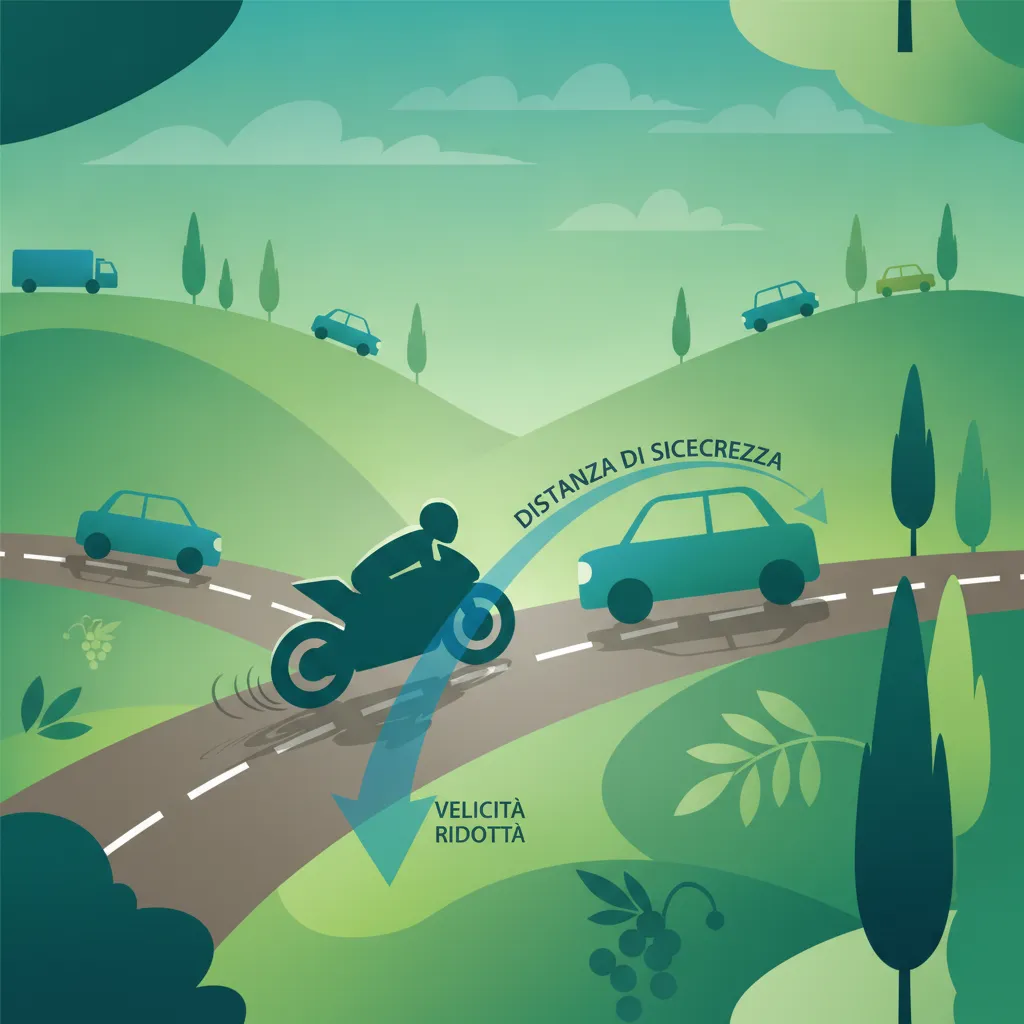
Browse all lessons that make up Braking, Speed Choice, Following Distance and Emergency Control. Each lesson focuses on specific topics, learning objectives, and core concepts, helping you build essential knowledge and follow a clear, structured progression toward your study goals in Italy.
This lesson clarifies the different functions of the front and rear brake systems on a motorcycle. It explains the physics of weight transfer under deceleration, which makes the front brake responsible for the majority of stopping power. The content also covers the role of the rear brake in stabilizing the motorcycle, especially at low speeds and on loose surfaces, and introduces the concept of combined braking.
This lesson focuses on the factors that determine a motorcycle's total stopping distance: perception time, reaction time, and braking distance. It provides a clear understanding of how speed exponentially increases the distance required to come to a complete stop. Learners will be able to apply principles like the two-second rule to maintain a safe and appropriate following distance in various traffic situations.
This lesson teaches the critical skill of executing a rapid and controlled stop in an emergency. It covers the technique of applying firm, progressive pressure to the brakes to achieve maximum deceleration without locking the wheels, both in a straight line and while cornering. The content also explains how Anti-lock Braking Systems (ABS) function in these scenarios and the correct body posture to maintain stability.
This lesson addresses two key aspects of defensive riding: maintaining a safe buffer and performing overtaking maneuvers. It details how to use time-based rules, such as the two-second rule, to ensure adequate following distance for reaction. The content also provides a structured approach to overtaking, covering observation, signalling, speed management, and ensuring sufficient clearance before returning to the lane.
This lesson teaches the crucial skill of adapting speed to constantly changing environments, independent of the posted speed limit. It explains how to assess factors such as road surface condition, adverse weather, traffic flow, and limited visibility to determine a safe and appropriate speed. The principle taught is that the speed limit is a maximum, not a target, and responsible riding requires constant adjustment.
Explore high-intent keywords and long-tail search topics learners use when researching Braking, Speed Choice, Following Distance and Emergency Control. These terms reflect how people search for reliable study materials, structured explanations, and unit-level theory preparation support in Italy.
Find clear answers to the most common questions learners ask about Braking, Speed Choice, Following Distance and Emergency Control. Understand how the unit is organized, what learning goals it supports, and how it contributes to your study progression with structured explanations and practical guidance tailored for learners in Italy.
In Italy, as elsewhere, the front brake provides the majority of stopping power, typically around 70-80%. The rear brake is used to balance the motorcycle and assist in stopping. For emergency braking, applying both simultaneously is crucial, but understanding their individual roles helps maintain stability.
Total stopping distance is the sum of reaction distance and braking distance. Reaction distance depends on your speed and reaction time (usually estimated at 1-2 seconds). Braking distance increases with the square of your speed and is affected by road conditions. Your theory test will cover these calculations.
Motorcycles can stop faster than most cars, but riders are more vulnerable. A safe following distance provides crucial space and time to react to hazards, avoid sudden braking by the vehicle ahead, and manoeuvre if necessary. It's a fundamental aspect of defensive riding in Italy.
Italian law, like general safe practice, emphasizes controlled and simultaneous application of both brakes during emergencies. Avoid locking the wheels. The theory test often assesses your understanding of the correct procedures to maximize deceleration while maintaining control and stability.
Italian traffic laws require you to adjust your speed according to road conditions, weather, and visibility. Wet roads, gravel, or damaged surfaces significantly increase braking distances and reduce traction. Always reduce speed proactively in adverse conditions to ensure you can stop safely.
Yes, the Italian motorcycle theory exam heavily features questions related to speed management, appropriate following distances, and understanding stopping distances under various conditions. Mastering these topics is vital for passing.
All included lessons
Lessons in Braking, Speed Choice, Following Distance and Emergency Control
See who benefits most from studying Braking, Speed Choice, Following Distance and Emergency Control. This overview explains how the unit supports different learning needs, what level of knowledge is helpful before starting, and how it fits into the overall study path in Italy.
This unit is essential for all learners preparing for the Italian A1, A2, and A motorcycle theory tests. It is particularly beneficial for riders who need to strengthen their understanding of vehicle control dynamics, safe following distances, and emergency procedures to build confidence and pass their exam.

Begin your structured study today by exploring our Italian driving license theory curriculum. Browse comprehensive courses designed to cover all official exam topics, build your knowledge of road rules, and prepare effectively for your test.
Explore Italian Theory CurriculumExplore all units and lessons included in this driving theory course.
Begin your structured study today by exploring our Italian driving license theory curriculum. Browse comprehensive courses designed to cover all official exam topics, build your knowledge of road rules, and prepare effectively for your test.
Explore Italian Theory Curriculum