
This lesson explores the physics of motorcycle stopping, focusing on the critical relationship between speed and total braking distance. You will learn to evaluate road conditions, master the two-second rule, and apply these concepts to ensure safety and pass your A1, A2, or A Italian motorcycle theory exam.
Lesson content overview
Mastering control over your motorcycle involves understanding how it responds to your actions, especially when it comes to stopping. Total stopping distance is a critical concept for every rider, encompassing not just the physical act of braking but also the mental processes that precede it. For those preparing for their Italian Driving License Theory Course for Motorcycle Categories A1, A2, & A, a thorough grasp of these principles is not just advisable; it is essential for safety and success.
This lesson delves into the precise components that form a motorcycle’s total stopping distance: perception distance, reaction distance, and braking distance. We will explore how these elements combine and how factors like speed dramatically influence the overall distance required to bring your motorcycle to a complete stop. By understanding these dynamics and applying practical rules like the two-second rule, you will be equipped to maintain safe following distances and adjust your speed appropriately in various traffic conditions on Italian roads.
The journey from identifying a hazard to coming to a complete stop is a multi-stage process. Each stage contributes a segment to the total stopping distance, and understanding these individual components is fundamental to safe riding. These stages are perception, reaction, and active braking.
The distance your motorcycle travels from the moment a potential hazard appears in your field of vision or hearing until you consciously recognize and understand that hazard.
Perception distance accounts for the inherent lag in human sensory and cognitive processing. It's not enough for an object to simply appear; your brain must register it, interpret its significance, and determine that it poses a threat. This initial phase is crucial, as any delay here directly impacts the overall time and distance needed to react. Factors such as rider alertness, visibility conditions (e.g., fog, night riding), and the size or contrast of the hazard can all influence how quickly you perceive a danger. For instance, a distracted rider will have a longer perception distance than one who is fully focused on the road ahead.
The duration between consciously detecting a hazard and physically initiating the braking maneuver by applying the brakes.
Once a hazard is perceived, your brain needs to make a decision and send signals to your muscles to act. This interval is known as reaction time, and the distance covered during this time is the reaction distance. On average, a sober, attentive rider's reaction time ranges from 0.7 to 1.5 seconds. However, this can be extended by fatigue, alcohol, drugs, or distractions like checking mirrors unnecessarily or looking at passing scenery. At higher speeds, even a fraction of a second delay translates into a significant increase in the distance traveled before braking begins. For example, at 70 km/h, a one-second reaction time means your motorcycle travels approximately 19.4 metres before you even touch the brakes. Minimising reaction time through active observation and avoiding distractions is paramount for motorcycle safety.
The distance your motorcycle travels from the moment you physically begin to apply the brakes until it comes to a complete stop.
Braking distance is the physical phase of stopping, where the motorcycle's kinetic energy is dissipated through friction between the tires and the road surface, and within the braking system itself. Unlike perception and reaction distances, which are primarily human-factor dependent, braking distance is heavily influenced by physics and mechanical conditions. It is the most variable component of total stopping distance, changing dramatically with speed, road conditions, tire quality, brake efficiency, and the motorcycle's load. Understanding and optimising your motorcycle's braking distance is vital for effective hazard avoidance.
The sum of these three components—perception distance, reaction distance, and braking distance—gives you the total stopping distance. This combined distance is the absolute minimum space required for your motorcycle to come to a halt after a hazard appears.
To determine the total stopping distance, simply add the individual distances:
( Total Stopping Distance = Perception Distance + Reaction Distance + Braking Distance )
It's crucial not to underestimate any of these components. Many riders mistakenly focus only on braking distance, forgetting the considerable distance covered during perception and reaction, especially at higher speeds. Ignoring these initial distances can lead to misjudgments of safe following gaps and an increased risk of collision.
One of the most profound principles in motorcycle safety is the exponential relationship between speed and stopping distance. This is because kinetic energy, the energy of motion, increases with the square of the speed (( KE = \fracmv^2 )). If you double your speed, your kinetic energy quadruples, and consequently, your braking distance will also quadruple, assuming all other factors remain constant.
Doubling your speed does NOT merely double your stopping distance; it can quadruple it or even increase it further, especially when considering the increased reaction distance at higher speeds.
This non-linear relationship highlights why speed management is paramount. A small reduction in speed can lead to a disproportionately large reduction in the distance needed to stop, significantly enhancing safety margins. For instance, reducing your speed from 100 km/h to 80 km/h might not feel like a huge difference, but it could shorten your braking distance by a substantial amount, giving you more time and space to react to unexpected events.
Given the complexities of calculating exact stopping distances on the fly, a practical rule of thumb is essential for everyday riding. The "Two-Second Rule" serves as a simple yet effective heuristic to maintain a safe following distance.
A practical guideline stating that a rider should maintain a minimum following distance of two seconds behind the vehicle ahead, regardless of speed.
To apply the two-second rule, choose a fixed object ahead (e.g., a road sign, tree, or bridge) that the vehicle in front of you passes. As soon as the rear of that vehicle passes the object, begin counting "one thousand one, one thousand two." If your front wheel reaches that same object before you finish counting "one thousand two," you are following too closely.
This rule automatically adjusts for your speed: the faster you go, the further you will travel in two seconds, thus providing a larger physical gap. This gap is designed to account for your average perception time, reaction time, and a reasonable braking distance under normal, dry road conditions.
The two-second rule is a minimum for ideal conditions. However, various factors necessitate increasing this gap to three seconds or even more.
Always increase your following distance in adverse conditions. The two-second rule is a minimum; a three-second rule provides a greater safety margin.
You should extend your following distance to at least three seconds when:
By proactively increasing your following distance, you create a larger safety buffer, giving yourself more time and space to react to unforeseen events and prevent collisions.
While speed is the primary factor influencing stopping distance, many other conditions play a significant role in how effectively and quickly your motorcycle can stop. A competent rider must be aware of these variables and adjust their riding accordingly.
The coefficient of friction between your tires and the road surface is crucial for braking efficiency.
The condition of your motorcycle's tires and braking system directly impacts stopping performance.
The physical characteristics of your motorcycle and the road itself also affect braking.
The Italian Codice della Strada (Highway Code) provides specific regulations designed to ensure safety, including directives related to braking and speed management. Compliance with these rules is mandatory for all riders on Italian roads.
Under normal riding conditions, and especially when decelerating, Italian law requires riders to apply both the front and rear brakes simultaneously for optimal stopping performance.
The Codice della Strada mandates specific minimum tread depths for motorcycle tires to ensure sufficient grip and safety. For motorcycles, the minimum legal tread depth for both front and rear tires is 1.6 mm.
Italian law explicitly states that riders must adapt their speed not only to official speed limits but also to prevailing road, weather, visibility, and traffic conditions.
The Codice della Strada recommends that riders maintain a distance from the vehicle ahead that allows them to brake safely without colliding in the event of a sudden stop.
Even experienced riders can make mistakes related to braking and speed adjustment. Awareness of these common pitfalls can help you avoid dangerous situations.
Tailgating, or following too closely (less than the recommended two or three-second gap), is a prevalent and dangerous habit. It dramatically reduces your available perception and reaction time, leaving you with insufficient space to stop if the vehicle ahead brakes suddenly. This significantly increases the risk of a rear-end collision.
Over-reliance on ABS or other emergency braking systems without proper technique can lead to complacency and delayed reactions.
Understanding these concepts abstractly is one thing; applying them in real-world situations is another. Here are some applied scenarios that illustrate how braking distance, speed, and environmental factors interact.
By internalising these principles and consistently applying them in your riding, you will develop the critical judgment and skills necessary to manage your motorcycle's stopping distance effectively, enhancing your safety and that of others on Italian roads.
This lesson explains the three components of total stopping distance—perception, reaction, and braking—and their combined effect on motorcycle safety. It highlights the exponential relationship between speed and stopping distance, demonstrating why small speed reductions provide disproportionate safety benefits. The two-second rule offers a practical method to maintain safe following distances that automatically adjust with speed. Italian traffic law mandates simultaneous use of both brakes and requires riders to adapt speed to all conditions, not just posted limits. Understanding these principles is essential for both passing the Italian A1, A2, and A theory exam and developing the hazard perception skills needed for real-world defensive riding.
A short set of high-value points that capture the most important learning from this lesson.
Total stopping distance equals the sum of perception, reaction, and braking distances; never focus only on braking distance alone.
Doubling your speed quadruples braking distance due to kinetic energy increasing with the square of velocity.
The two-second rule provides a practical minimum following distance that scales with speed automatically.
Use both front and rear brakes simultaneously; the front brake provides 70-80% of stopping power.
Adapt speed and following distance to road surface, weather, visibility, gradient, and load conditions.
Explore all units and lessons included in this driving theory course.
At 70 km/h, a one-second reaction time means traveling approximately 19.4 metres before brakes engage.
Minimum tire tread depth under the Codice della Strada is 1.6 mm for motorcycles.
Wet roads dramatically reduce the coefficient of friction, significantly extending braking distances.
On downhill gradients, gravity increases momentum and extends braking distance, requiring proactive speed reduction.
The front brake provides the majority of stopping power while the rear brake stabilises the motorcycle.
Relying on rear brake only, which severely extends stopping distance and compromises stability.
Braking while leaned into a curve, which reduces tire traction and risks loss of control or skidding.
Maintaining dry-road speeds and following distances when road conditions are wet or slippery.
Failing to downshift and use engine braking before applying friction brakes at high speed.
Riding with underinflated, worn, or overloaded tires, which reduces the contact patch and braking effectiveness.
Lesson content overview
A short set of high-value points that capture the most important learning from this lesson.
Total stopping distance equals the sum of perception, reaction, and braking distances; never focus only on braking distance alone.
Doubling your speed quadruples braking distance due to kinetic energy increasing with the square of velocity.
The two-second rule provides a practical minimum following distance that scales with speed automatically.
Use both front and rear brakes simultaneously; the front brake provides 70-80% of stopping power.
Adapt speed and following distance to road surface, weather, visibility, gradient, and load conditions.
Explore all units and lessons included in this driving theory course.
At 70 km/h, a one-second reaction time means traveling approximately 19.4 metres before brakes engage.
Minimum tire tread depth under the Codice della Strada is 1.6 mm for motorcycles.
Wet roads dramatically reduce the coefficient of friction, significantly extending braking distances.
On downhill gradients, gravity increases momentum and extends braking distance, requiring proactive speed reduction.
The front brake provides the majority of stopping power while the rear brake stabilises the motorcycle.
Relying on rear brake only, which severely extends stopping distance and compromises stability.
Braking while leaned into a curve, which reduces tire traction and risks loss of control or skidding.
Maintaining dry-road speeds and following distances when road conditions are wet or slippery.
Failing to downshift and use engine braking before applying friction brakes at high speed.
Riding with underinflated, worn, or overloaded tires, which reduces the contact patch and braking effectiveness.
Explore search topics learners often look for when studying Braking Distance Calculations and Speed Adjustment. These topics reflect common questions about road rules, driving situations, safety guidance, and lesson level theory preparation for learners in Italy.
Browse additional driving theory lessons that cover connected traffic rules, road signs, and common driving situations related to this topic. Improve your understanding of how different rules interact across everyday traffic scenarios.
Understand how speed, road conditions, tires, and load impact motorcycle braking distance. Essential theory for safe riding and passing your Italian driving license exam.
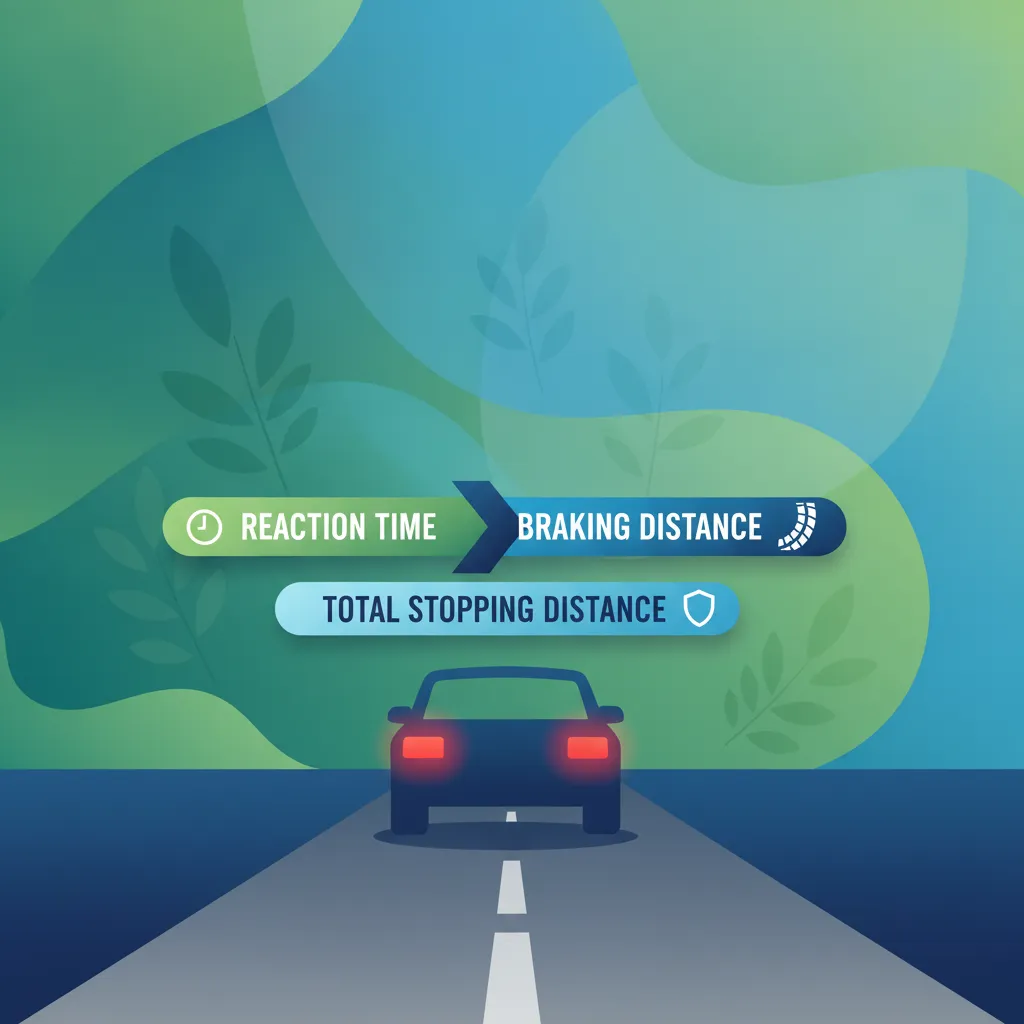
This lesson provides a technical breakdown of the total stopping distance, explaining its two key components: reaction distance and braking distance. It details how factors like driver alertness affect reaction time, while speed, vehicle weight, and road grip influence braking distance. Understanding this relationship is fundamental to managing speed and maintaining a safe distance from other road users.

This lesson teaches riders how to maintain a safe following distance using the two-second rule, which accounts for reaction time and braking distance. It covers grip management, explaining how tire condition and road surfaces like wet asphalt affect traction. Mastering these concepts is essential for anticipating hazards and preventing rear-end collisions.
This lesson addresses two key aspects of defensive riding: maintaining a safe buffer and performing overtaking maneuvers. It details how to use time-based rules, such as the two-second rule, to ensure adequate following distance for reaction. The content also provides a structured approach to overtaking, covering observation, signalling, speed management, and ensuring sufficient clearance before returning to the lane.

This lesson teaches the critical skill of executing a rapid and controlled stop in an emergency. It covers the technique of applying firm, progressive pressure to the brakes to achieve maximum deceleration without locking the wheels, both in a straight line and while cornering. The content also explains how Anti-lock Braking Systems (ABS) function in these scenarios and the correct body posture to maintain stability.

This lesson provides an in-depth analysis of motorcycle braking systems, clearly defining the distinct roles of the front and rear brakes. It covers the mechanics of hydraulic disc brakes and explains the function and benefits of an Anti-lock Braking System (ABS). Learners will understand the principles of brake balance for achieving maximum stopping power and the importance of routine maintenance on pads, discs, and fluid.
This lesson is dedicated to the vital concept of 'distanza di sicurezza', the safe following distance required to avoid a rear-end collision. It explains how this distance is not fixed but varies with speed and conditions, covering practical methods like the 'two-second rule' to help judge it accurately. Maintaining this space cushion provides the necessary time to react and brake safely if the vehicle ahead stops suddenly.

This lesson focuses on the rider's active role in controlling the motorcycle through body positioning and weight shifts. It explains how to maintain a relaxed yet engaged posture to absorb road imperfections and provide precise inputs to the handlebars and footpegs. The content covers how leaning with the bike in corners and shifting weight during braking and acceleration significantly impacts the vehicle's stability and performance.

This lesson focuses on the vital systems for visibility and communication: mirrors, lighting, and signals. It provides instruction on the proper adjustment of mirrors to minimize blind spots and the correct use of headlamps, indicators, and brake lights as per Italian regulations. The content underscores how maintaining these systems in full working order is crucial for being seen and signalling intentions clearly in traffic.
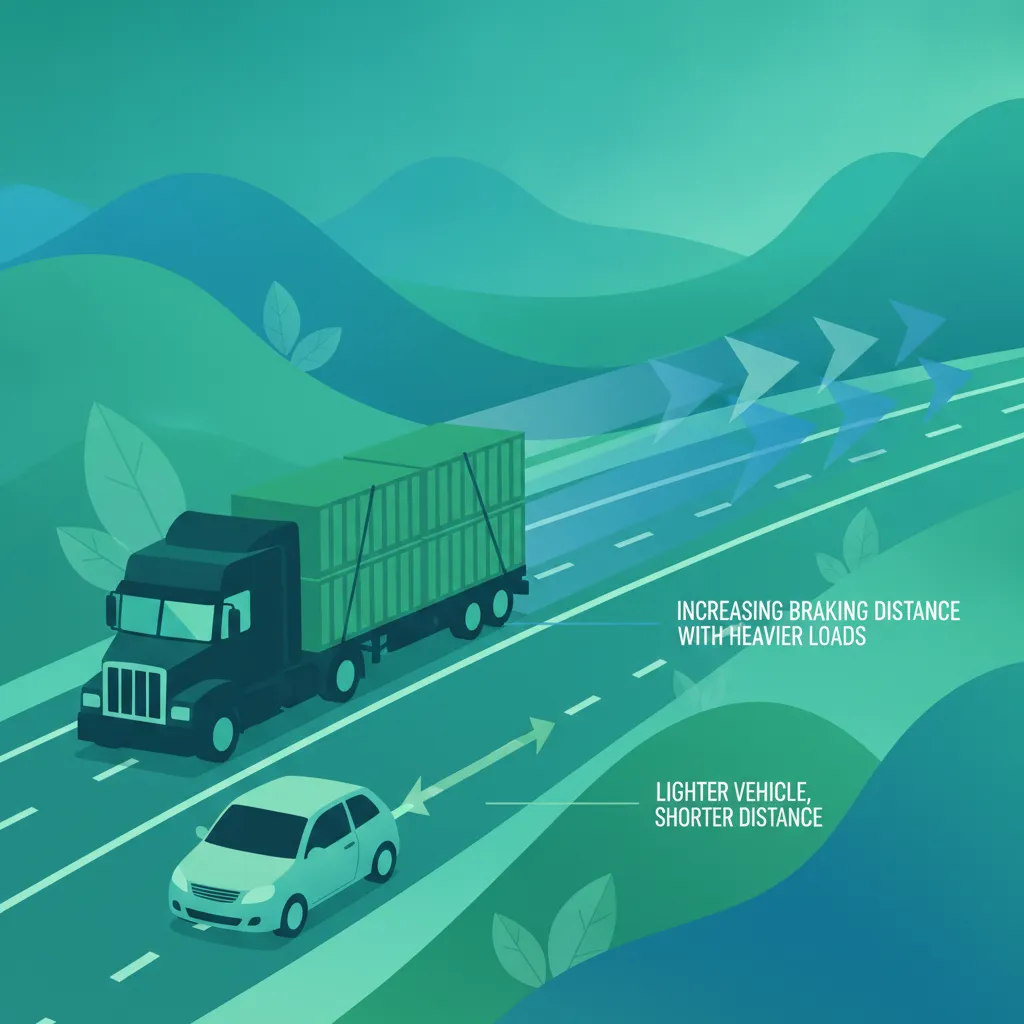
This lesson explores the critical physics behind stopping a heavy vehicle. It breaks down the components of total stopping distance—thinking distance and braking distance—and explains how this is significantly increased by vehicle mass and speed. Learners will understand the necessity of maintaining a much greater following distance than a car to allow enough space to stop safely in all conditions.

This lesson addresses the specific challenges of sharing the road with two-wheeled motor vehicles like motorcycles and scooters. It highlights their reduced visibility and stability compared to cars, requiring drivers to double-check blind spots and maintain a greater following distance. The content also discusses common behaviors like lane filtering and the need for drivers to be predictable and signal intentions clearly.
Learn the two-second rule and how to adapt following distance for conditions like rain or night riding. Crucial theory for maintaining safe gaps on Italian roads.
This lesson addresses two key aspects of defensive riding: maintaining a safe buffer and performing overtaking maneuvers. It details how to use time-based rules, such as the two-second rule, to ensure adequate following distance for reaction. The content also provides a structured approach to overtaking, covering observation, signalling, speed management, and ensuring sufficient clearance before returning to the lane.
This lesson is dedicated to the vital concept of 'distanza di sicurezza', the safe following distance required to avoid a rear-end collision. It explains how this distance is not fixed but varies with speed and conditions, covering practical methods like the 'two-second rule' to help judge it accurately. Maintaining this space cushion provides the necessary time to react and brake safely if the vehicle ahead stops suddenly.
This lesson teaches riders how to maintain a safe following distance using the two-second rule, which accounts for reaction time and braking distance. It covers grip management, explaining how tire condition and road surfaces like wet asphalt affect traction. Mastering these concepts is essential for anticipating hazards and preventing rear-end collisions.
This lesson addresses the specific challenges of sharing the road with two-wheeled motor vehicles like motorcycles and scooters. It highlights their reduced visibility and stability compared to cars, requiring drivers to double-check blind spots and maintain a greater following distance. The content also discusses common behaviors like lane filtering and the need for drivers to be predictable and signal intentions clearly.
This lesson focuses on the vital systems for visibility and communication: mirrors, lighting, and signals. It provides instruction on the proper adjustment of mirrors to minimize blind spots and the correct use of headlamps, indicators, and brake lights as per Italian regulations. The content underscores how maintaining these systems in full working order is crucial for being seen and signalling intentions clearly in traffic.
This lesson provides a comprehensive guide to riding on high-speed motorways, or autostrade. It details the correct procedures for safely merging into traffic from an entry ramp and exiting via a deceleration lane. The content reinforces strict lane discipline, rules for overtaking, and the importance of maintaining a significantly larger following distance to compensate for higher speeds and potential wind gusts.
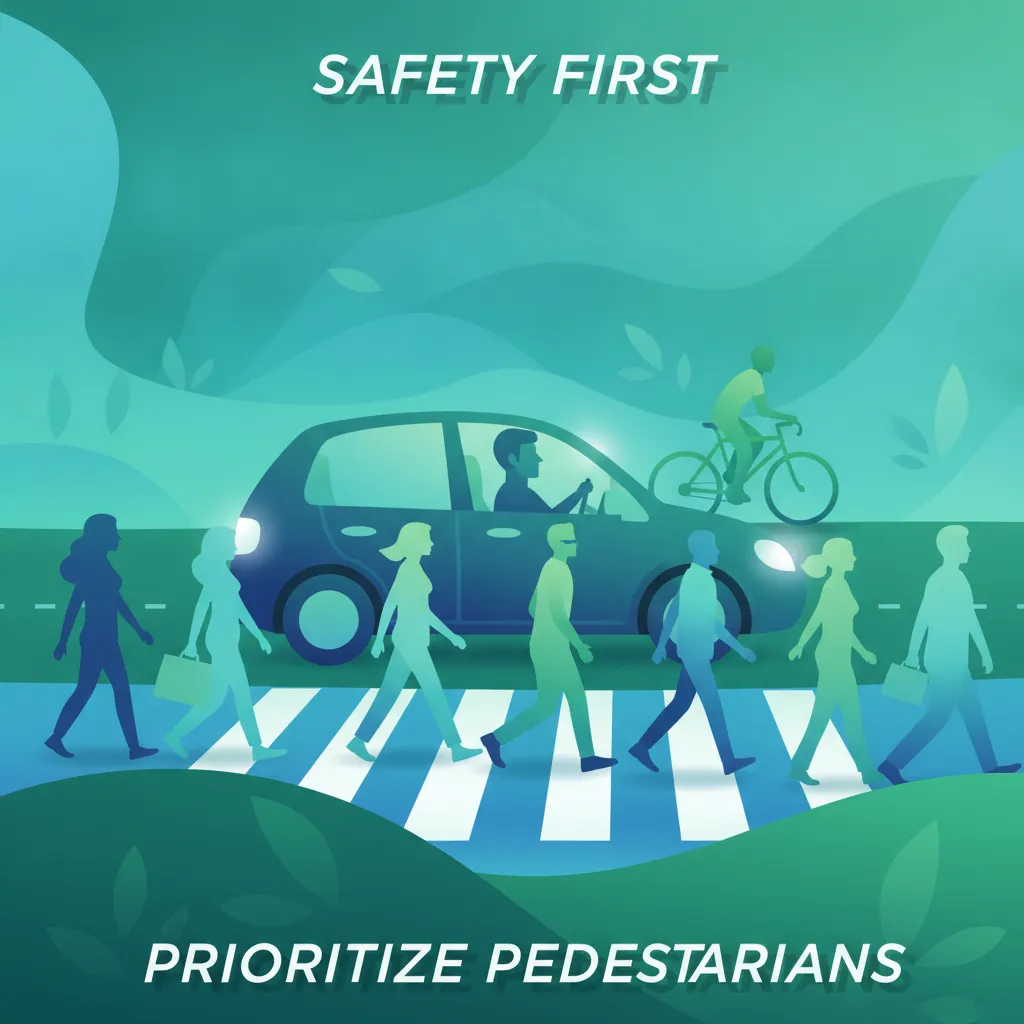
This lesson provides critical guidance on how to safely share the road with vulnerable users, including pedestrians, cyclists, motorcyclists, and children. It highlights the importance of increased awareness in specific areas like school zones and crosswalks. The content teaches techniques for maintaining a safe lateral distance when overtaking, checking blind spots thoroughly, and anticipating the often unpredictable movements of these users.

This lesson delivers a comprehensive explanation of right-of-way regulations at Italian intersections. It covers the interpretation of traffic light signals, the absolute requirement to stop at stop signs, and yielding at give-way signs. Furthermore, it details the default priority rules for unmarked intersections and the specific obligations a rider has towards pedestrians on crossings.

This lesson equips riders to safely manage the challenges posed by road construction zones. It explains how to interpret temporary signage, navigate lane closures or diversions, and maintain heightened awareness for surface hazards like gravel or steel plates. The content emphasizes the need to reduce speed and increase following distances to safely share the road with large construction vehicles and workers.

This lesson addresses the increased complexity of overtaking in urban environments with dense traffic and frequent intersections. It stresses the importance of thorough observation, including mirror and blind spot checks, to ensure a safe gap is available. The content covers judging speed differentials and the necessity of clear signalling to execute the maneuver without causing conflict with other road users.
Find clear answers to common questions learners have about Braking Distance Calculations and Speed Adjustment. Learn how the lesson is structured, which driving theory objectives it supports, and how it fits into the overall learning path of units and curriculum progression in Italy. These explanations help you understand key concepts, lesson flow, and exam focused study goals.
Stopping distance increases exponentially, not linearly, with speed. If your speed doubles, your braking distance can increase fourfold, making it vital to adjust your speed based on road conditions.
The two-second rule is a simple way to maintain a safe following distance. You should ensure that at least two seconds pass between the vehicle in front passing a fixed point and your motorcycle reaching that same point.
While the exam focuses on understanding the relationships between speed and distance, knowing the concepts behind braking distance calculation is essential to answer theory questions accurately.
On wet or loose surfaces, your friction is significantly lower, increasing the distance required to stop. You must increase your following distance and apply brakes more progressively than you would on dry, clean asphalt.
Start searching now to pinpoint exactly which Italian driving theory topics, road signs, or traffic rules you need to master. Use our advanced filters to build a custom practice session and ensure you're fully prepared for every aspect of your official driving licence exam.