
This guide covers the essential equipment required in vehicles registered in Poland, focusing on items crucial for the driving theory exam. You will learn about mandatory items like the warning triangle (trójkąt ostrzegawczy) and fire extinguisher (gaśnica), their placement, and their importance for road safety and legal compliance in Poland. Understanding these requirements is vital for passing your theory test and ensuring you are prepared for roadside inspections.
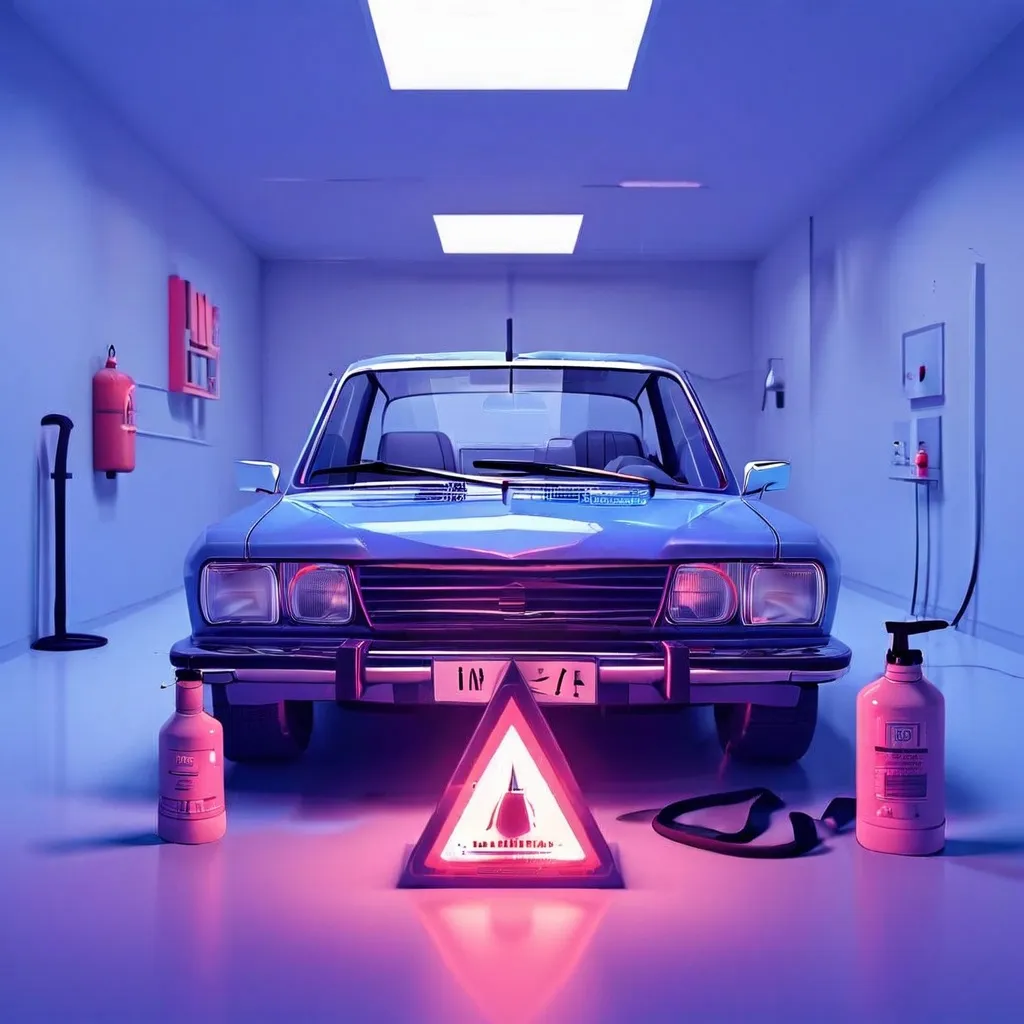
Article content overview
Driving legally and safely in Poland requires more than just knowing the rules of the road; it also involves ensuring your vehicle is equipped with specific mandatory items. The Polish theory driving exam frequently tests your knowledge of these requirements, as they are critical for both everyday safety and emergency situations. Understanding what must be carried in your car, why it’s important, and where it should be stored is a fundamental aspect of becoming a responsible driver in Poland. This article will guide you through the mandatory vehicle equipment, helping you prepare effectively for your theory test and drive with confidence.
Polish law mandates that certain equipment must be present and readily accessible in vehicles to ensure roadworthiness and driver preparedness. These items are not merely suggestions but legal requirements that authorities can inspect during roadside checks. Failure to have the correct equipment can result in penalties, and more importantly, can compromise your safety and the safety of others in critical moments. The theory exam specifically focuses on these regulations to ensure all new drivers are aware of their legal obligations and the practical implications of vehicle compliance.
While Polish regulations are detailed, three items stand out as universally critical for safety and frequently appear in theory exam questions: the warning triangle, the fire extinguisher, and (though not always strictly mandatory for all passenger vehicles under 3.5 tonnes) the first aid kit. Ensuring these are present, in good condition, and correctly stored is paramount.
The warning triangle, or trójkąt ostrzegawczy, is a vital piece of safety equipment designed to alert other road users to a stationary vehicle that poses a potential hazard. Its primary function is to prevent secondary accidents, especially in low visibility conditions or on busy roads where a sudden stop or breakdown can be dangerous. Polish regulations specify its use and placement to maximize its effectiveness.
According to Polish law, a warning triangle is mandatory for all vehicles except single-track motorcycles. It must be placed at a sufficient distance behind the vehicle to provide adequate warning. On express roads (droga ekspresowa) and motorways (autostrada), this distance should be at least 100 meters. On other roads, the warning triangle should be placed 30 to 50 meters behind the vehicle. In urban areas, 30 meters is generally sufficient, while outside urban areas, 50 meters is the minimum. The correct placement is crucial for preventing collisions and is a common topic in theory exams.
A fire extinguisher, or gaśnica, is another non-negotiable piece of mandatory equipment for most vehicles registered in Poland. Its purpose is to allow drivers to quickly suppress a small fire before it escalates into a serious emergency, potentially saving lives and minimizing damage. The law specifies that the fire extinguisher must be placed in a location that is easily accessible in case of need.
For passenger cars, the fire extinguisher should ideally be mounted securely, for instance, under the passenger seat or in a designated bracket, rather than being left loose in the boot or on a shelf where it could become a projectile or be difficult to reach. The theory exam will assess your understanding of this accessibility requirement. While the exact type and capacity might vary, the crucial point is that it must be present and accessible. The requirement for a fire extinguisher does not apply to motorcycles.
While the inclusion of a first aid kit (apteczka) in passenger cars (up to 3.5 tonnes) is often considered best practice and is sometimes included in broader vehicle equipment discussions, its strict legal mandate can be nuanced. However, for comprehensive preparedness and to align with typical Polish driving standards tested in theory exams, it is highly advisable to carry one. If a first aid kit is carried, it should contain essential items for administering immediate care in case of injuries following an accident.
The contents of a first aid kit can be crucial for stabilising a casualty before professional medical help arrives. While specific contents can vary, a kit typically includes bandages, sterile pads, antiseptic wipes, medical tape, scissors, and disposable gloves. Understanding the purpose of such items and their role in emergency response is often part of the broader safety knowledge assessed in the driving theory test.
Beyond emergency equipment, Polish regulations also stipulate other technical requirements and documentation that a vehicle must possess to be legally allowed on the road. These aspects are frequently covered in the more specialist sections of the theory exam, particularly for categories C, D, and their subcategories.
Ensuring a vehicle is technically sound and identifiable is a fundamental legal requirement. This includes having a valid technical inspection certificate and clearly visible identification numbers.
Some vehicles have additional mandatory equipment based on their type, weight, or intended use.
Beyond the physical equipment, drivers in Poland must carry and be able to present specific documents to competent authorities upon request. This is a recurring theme in Polish driving theory exams.
The Polish driving theory exam is designed to ensure you are not only a skilled driver but also a legally compliant and safety-conscious one. When it comes to vehicle equipment, the exam focuses on:
Questions often revolve around hypothetical scenarios, such as what to do in case of a breakdown, how to secure an accident scene, or what documents to show an inspector. Familiarising yourself with these topics through practice questions is essential.
To ensure you are fully prepared for the Polish driving theory test, understanding specific terminology is vital. This includes terms related to vehicle equipment and legal requirements.
By thoroughly understanding these mandatory equipment requirements and related documentation, you will not only meet your legal obligations as a driver in Poland but also significantly improve your preparedness for the driving theory exam and your overall safety on the road.
This article covers Poland's mandatory vehicle equipment requirements essential for both road safety and theory exam success. The three critical items are the warning triangle (trójkąt ostrzegawczy), fire extinguisher (gaśnica), and first aid kit, with specific placement rules for the warning triangle depending on road type. Drivers must also carry key documents including their driving licence, vehicle registration, and insurance proof, while those with alcohol interlock restrictions must carry calibration certificates. The content provides important Polish terminology and exam-relevant details that help learners understand both legal obligations and practical safety requirements.
A short set of high-value points that capture the most important ideas from this article.
The warning triangle is mandatory for all vehicles except single-track motorcycles in Poland
Warning triangle placement distances vary: 30m in urban areas, 50m outside urban areas, and at least 100m on motorways and express roads
The fire extinguisher must be easily accessible and securely mounted—loose storage in the boot is not sufficient
Drivers must carry their driving licence, vehicle registration document, and proof of compulsory third-party liability insurance (OC)
If your licence is restricted to alcohol interlock-equipped vehicles, you must carry the calibration certificate
Warning triangle distances: 30m (urban), 50m (outside urban), 100m (motorway/express roads)
Fire extinguisher placement must allow quick access in an emergency—under passenger seat or in a designated bracket
Technical inspection status may be electronically verifiable in Poland, but drivers should be prepared to present proof
Heavy vehicles over 3.5 tonnes have additional requirements including possible alcohol interlock device mandates
Polish terms: trójkąt ostrzegawczy (warning triangle), gaśnica (fire extinguisher), apteczka (first aid kit), dowód rejestracyjny (registration document)
Placing the warning triangle too close to the vehicle instead of at the correct distance for the road type
Storing the fire extinguisher loosely in the boot where it is difficult to reach quickly during an emergency
Assuming the first aid kit is strictly mandatory for all passenger vehicles when its legal status is nuanced
Forgetting that motorcycles are exempt from carrying a warning triangle
Not carrying the alcohol interlock calibration certificate when driving a vehicle fitted with one under licence restrictions
Article content overview
A short set of high-value points that capture the most important ideas from this article.
The warning triangle is mandatory for all vehicles except single-track motorcycles in Poland
Warning triangle placement distances vary: 30m in urban areas, 50m outside urban areas, and at least 100m on motorways and express roads
The fire extinguisher must be easily accessible and securely mounted—loose storage in the boot is not sufficient
Drivers must carry their driving licence, vehicle registration document, and proof of compulsory third-party liability insurance (OC)
If your licence is restricted to alcohol interlock-equipped vehicles, you must carry the calibration certificate
Warning triangle distances: 30m (urban), 50m (outside urban), 100m (motorway/express roads)
Fire extinguisher placement must allow quick access in an emergency—under passenger seat or in a designated bracket
Technical inspection status may be electronically verifiable in Poland, but drivers should be prepared to present proof
Heavy vehicles over 3.5 tonnes have additional requirements including possible alcohol interlock device mandates
Polish terms: trójkąt ostrzegawczy (warning triangle), gaśnica (fire extinguisher), apteczka (first aid kit), dowód rejestracyjny (registration document)
Placing the warning triangle too close to the vehicle instead of at the correct distance for the road type
Storing the fire extinguisher loosely in the boot where it is difficult to reach quickly during an emergency
Assuming the first aid kit is strictly mandatory for all passenger vehicles when its legal status is nuanced
Forgetting that motorcycles are exempt from carrying a warning triangle
Not carrying the alcohol interlock calibration certificate when driving a vehicle fitted with one under licence restrictions
Explore related topics, search based questions, and concepts that learners often look up when studying Poland Vehicle Equipment. These themes reflect real search intent and help you understand how this topic connects to wider driving theory knowledge in Poland.
Find clear and practical answers to common questions learners often have about Poland Vehicle Equipment. This section helps explain difficult points, remove confusion, and reinforce the key driving theory concepts that matter for learners in Poland.
In Poland, mandatory items for most vehicles include a warning triangle (trójkąt ostrzegawczy) and a fire extinguisher (gaśnica), which must be easily accessible. Specific requirements can vary by vehicle type.
No, fire extinguishers and warning triangles are generally not required for single-track motorcycles in Poland. Other vehicle categories have different obligations.
The 'PL' sticker indicates that a vehicle registered in Poland is intended for international traffic. It's a national identifier and must be displayed if the vehicle is used abroad.
Yes, the fire extinguisher must be placed in an easily accessible location, and the warning triangle should be readily available for use to secure an accident scene. Exact placement details may vary, but accessibility is key.
Drivers must carry documents such as a driving licence, and potentially a document confirming compulsory third-party liability insurance. For vehicles with specific conditions (like alcohol interlocks), relevant certificates must also be carried.
After finding your specific article, continue your targeted learning by exploring related topics or diving deeper into practice questions. Our extensive library ensures you have all the resources needed to confidently prepare for your Polish driving license theory exam. Discover more guides and solidify your understanding of Polish road rules.