
While planning a trip abroad, many drivers mistakenly assume that an empty parking lot near a closed business is public property and free to use. This guide details the reality of private parking enforcement, explaining how surveillance and legal firms monitor vehicles with foreign license plates. You will learn how ignoring these notices can lead to severe legal and financial consequences in your home country.
Article content overview
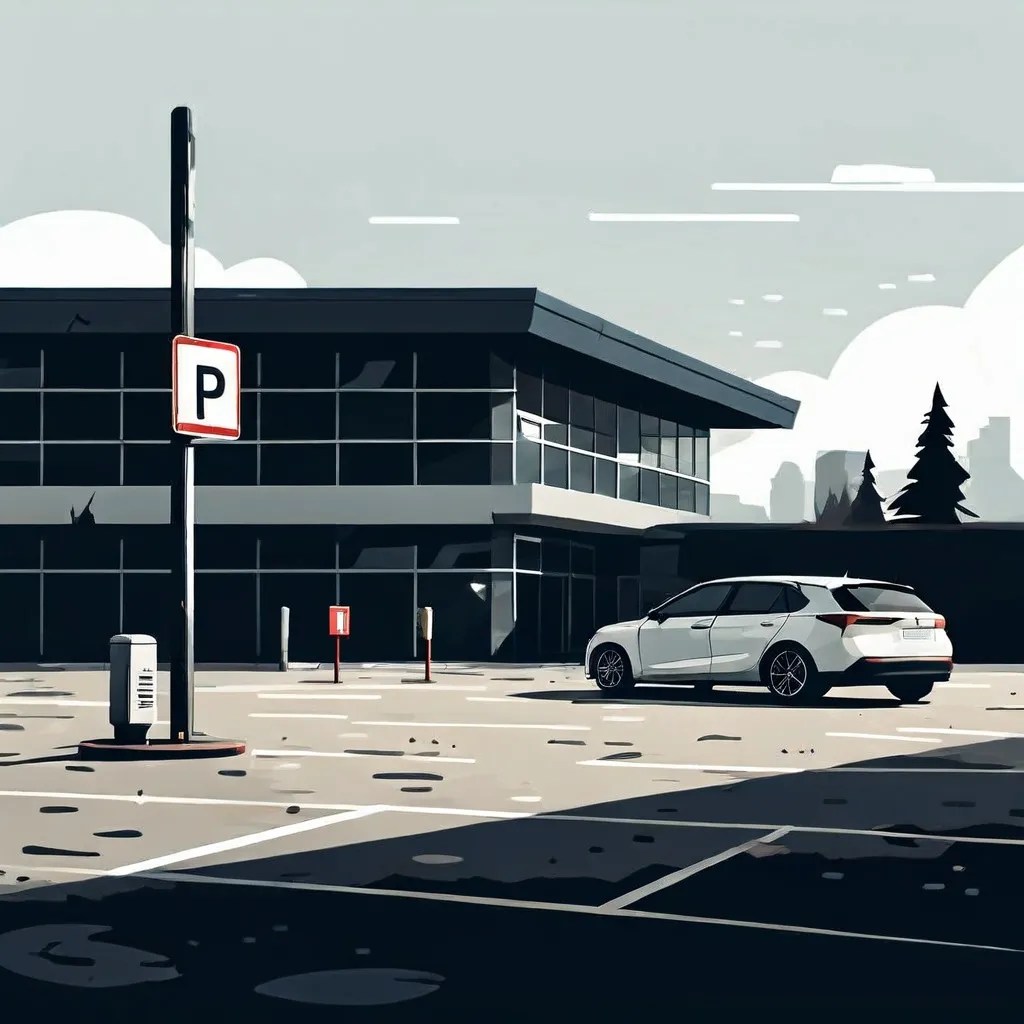
When planning a road trip across Europe, most drivers spend time checking fuel prices, toll road requirements, and speed limits. However, one of the most common and expensive mistakes made by Polish drivers abroad is the assumption that an empty parking lot near a closed business is public property. In countries like Austria, Germany, or France, parking on a seemingly unused commercial lot after business hours can trigger severe financial penalties. What appears to be a "convenient" five-minute stop for a quick walk or a coffee can quickly transform into a significant legal headache, with fines sometimes reaching 500 PLN or more.
Do not assume that an empty parking lot is free or public. Private property owners in many EU countries use automated camera surveillance to monitor vehicle entry and exit times, strictly enforcing regulations regardless of whether the business is currently open.
Many drivers assume that if a store is closed, the parking area associated with it becomes a public space. This is a fundamental misunderstanding of property laws in many European jurisdictions. In nations with strict enforcement regimes, such as Austria, private lot owners often contract with specialized property management firms. These companies install high-resolution cameras that record your license plate upon entry. If your vehicle remains on the premises in violation of the posted terms—such as outside of operational hours or beyond a permitted time limit—you are considered to have violated the owner's private possession rights.
The enforcement process is remarkably efficient and automated. Once a violation is recorded, the management firm uses license plate recognition to identify the vehicle owner’s details. Because EU data sharing allows for the identification of owners across borders, you cannot rely on having "foreign plates" to protect you. These firms will send a penalty notice directly to your registered address in Poland. Ignoring these letters is a major error, as the debt does not disappear; instead, it tends to escalate through legal fees and interest.
Many tourists believe that foreign parking fines can be ignored without consequence. This is a dangerous myth. When an initial penalty notice is left unpaid, the case is frequently handed over to legal counsel or collection agencies. If the debt remains outstanding, these entities may seek to recover the amount through formal legal proceedings.
The primary tool used in these cases is the European Payment Order (EPO). The EPO is a simplified procedure for cross-border recovery of monetary claims in civil and commercial matters within the EU. If a court issues an EPO against you, the original fine—which might have started at 120 EUR—can significantly increase due to court costs, legal fees, and administrative charges.
To avoid these costly traps, you must prioritize reading and understanding local signage before leaving your vehicle. Even if the lot looks empty, look for any signs near the entrance or individual parking spots. These signs often contain crucial information about operating hours, permitted parking durations, and private terms of service.
Always remember that as a driver, you are responsible for knowing the rules of the specific area where you park. While the "empty lot" might seem like an ideal spot, the legal and financial risks are simply not worth the short-term convenience.
Article content overview
Explore related topics, search based questions, and concepts that learners often look up when studying Avoiding Foreign Parking Fines. These themes reflect real search intent and help you understand how this topic connects to wider driving theory knowledge in Poland.
Find clear and practical answers to common questions learners often have about Avoiding Foreign Parking Fines. This section helps explain difficult points, remove confusion, and reinforce the key driving theory concepts that matter for learners in Poland.
No, you should not ignore it. Private parking operators can identify the vehicle owner across borders, and unpaid fines can escalate into legal proceedings, including a European Payment Order (EPO) that adds significant court costs.
Parking signage on private property is legally binding regardless of the business's operating hours. Even if the shop is closed, the land remains private, and unauthorized parking is considered a violation of the owner's property rights.
No. Parking management firms often use advanced surveillance and legal partnerships to track vehicle owners across the EU and send payment notices directly to your home address in Poland.
After finding your specific article, continue your targeted learning by exploring related topics or diving deeper into practice questions. Our extensive library ensures you have all the resources needed to confidently prepare for your Polish driving license theory exam. Discover more guides and solidify your understanding of Polish road rules.