
Prepare for the challenges of urban driving in Poland with this comprehensive guide. You'll learn to expertly manage complex intersections, understand your obligations towards pedestrians and cyclists, and adhere to diverse speed limits common in Polish cities. This knowledge is vital for passing your theory exam and driving safely in bustling urban environments.
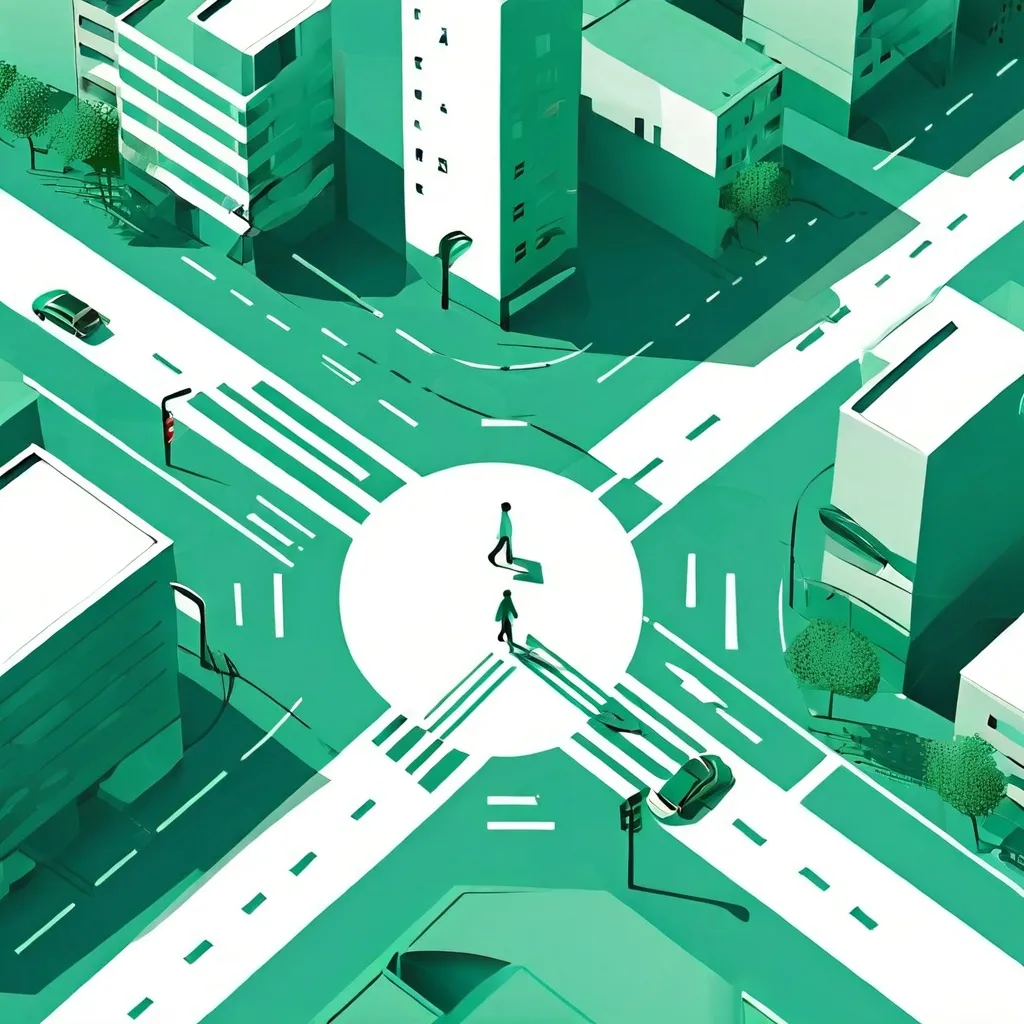
Article content overview
Navigating the bustling streets of Polish cities presents a unique set of challenges for any driver, and understanding these nuances is paramount for both road safety and success in your driving theory exam. Polish urban environments are characterized by complex intersections, a high density of vulnerable road users like pedestrians and cyclists, and dynamic speed limits that require constant vigilance. This comprehensive guide, tailored to the official Polish traffic rules and exam standards, will equip you with the knowledge to confidently handle these situations, ensuring you are well-prepared for both your theory test and everyday driving. We will delve into the critical aspects of urban driving, from deciphering intersection priorities to understanding your responsibilities towards pedestrians and cyclists, and mastering the art of adapting to varying speed restrictions.
Intersections are often the most demanding environments on the road, and Polish cities present a diverse array, from simple junctions to multi-lane chaos. The fundamental principle of Polish traffic law, known as ruch prawostronny (right-hand traffic), dictates that drivers must keep as far to the right as possible. However, at intersections, determining priority requires a systematic approach, especially when road signs or traffic lights are involved. It is crucial to remember the hierarchy of traffic control: police officer signals take precedence over traffic lights, which in turn override traffic signs, and all of these supersede general traffic rules, such as the 'rule of the right hand' (the principle of yielding to the vehicle approaching from the right at unmarked intersections).
When approaching an intersection, your first step should always be to scan for relevant traffic signs. Signs regulating priority, such as B1 (Give Way) or B3 (Stop), must be heeded immediately. If no priority signs are present, the unmarked intersection rules come into play, meaning you must yield to vehicles approaching from your right. However, this principle is often modified by the presence of traffic lights. Red lights unequivocally mean stop, while green lights permit passage, unless otherwise directed by a traffic controller or specific signage. Understanding how these different elements interact is a common area of focus in the Polish theory exam, with many questions designed to test your ability to correctly interpret a complex junction scenario.
Consider a scenario where you are approaching an intersection with a green light, but there is also a B1 (Give Way) sign on an intersecting road. If a vehicle on that intersecting road has a green light or is on a road where they have priority (due to a B1 sign indicating they must give way), your green light generally allows you to proceed. However, you must still be aware of other vehicles, especially those from your right at unmarked junctions or those making unexpected maneuvers. The key is to anticipate potential conflicts and always be prepared to yield if necessary to avoid an accident. Polish traffic regulations emphasize a proactive and defensive driving style, particularly in urban settings where unexpected situations are more frequent.
Polish cities are vibrant and dynamic, with a significant presence of pedestrians and cyclists who are among the most vulnerable road users. Your responsibility to ensure their safety is a core tenet of Polish driving law and a frequent topic in the driving theory exam. This involves not only understanding designated crossing areas but also exercising caution in all situations where pedestrians or cyclists might be present.
Pedestrian crossings, marked by specific road markings and often accompanied by warning signs, demand your utmost attention. When approaching a marked pedestrian crossing, you are required to reduce speed and, if a pedestrian is on or entering the crossing, you must stop to allow them to pass safely. This rule applies regardless of whether the crossing is controlled by traffic lights or not. A common misconception among learners is that their right of way is absolute once they have a green light. However, if a pedestrian is already on the crossing, they retain their right of way until they have safely reached the other side.
Cyclists also require special consideration. In urban areas, you will frequently encounter cycle lanes, shared paths, and cyclists navigating general traffic. When overtaking a cyclist, you must maintain a safe distance, and Polish law specifies a minimum of 1 meter during the overtaking manoeuvre on roads outside built-up areas, and a recommended safe distance in built-up areas. You must also be mindful of cyclists preparing to turn or change position. Always check your mirrors and blind spots carefully before making any maneuver that could affect a cyclist. Many theory exam questions simulate scenarios involving cyclist interactions, testing your awareness of their presence and your obligation to provide them with adequate space and safety.
Furthermore, specific regulations apply to situations involving public transport. For instance, when an bus or trolleybus is signalling its intention to pull out from a designated bus stop and enter the traffic lane, drivers of other vehicles are obligated to reduce speed and, if necessary, stop to allow it to merge safely. This rule is particularly important in busy urban arteries where public transport movement can significantly impact traffic flow.
Speed limits are a critical component of road safety, and in Polish urban areas, they can be highly variable. The general speed limit within built-up areas in Poland is 50 km/h. However, this can be significantly reduced during certain hours or in specific zones, and can also be increased on certain types of roads with better infrastructure. Understanding these variations and adhering to them is not only a legal requirement but also a key focus of the Polish driving theory exam.
You will encounter various speed limit signs, including regulatory signs that set absolute maximums and supplementary signs that modify these limits. For example, a B-33 sign indicates the maximum permitted speed, and it is crucial to observe this limit. During nighttime hours (from 11 PM to 5 AM) in built-up areas, the speed limit is often reduced to 60 km/h, even if the daytime limit is 50 km/h. This is indicated by a supplementary sign strefa ograniczonej prędkości do 60 km/h (zone of speed limited to 60 km/h) with a clock symbol.
Beyond standard speed limits, Polish cities often feature special zones with reduced speeds to enhance safety for pedestrians and cyclists. These include "zones of calmness" (strefa zamieszkania) and "traffic zones" (strefa ruchu). In a strefa zamieszkania, the speed limit is set at 20 km/h, and pedestrians have priority everywhere. In a strefa ruchu, general traffic rules apply, but speed limits are typically lowered. It is essential to be aware of these zones and their associated speed restrictions, as they are frequently tested in theoretical assessments.
The theory exam often presents scenarios requiring you to identify the correct speed limit based on signage and road conditions, including the time of day and the type of zone you are in. Misinterpreting speed limits is a common cause of errors in the exam, and potentially dangerous on the road. Always be observant of road signs and any supplementary information that might alter the standard speed limits. Remember that "safe speed" is not always the maximum legal speed; it is the speed appropriate for the conditions, traffic, and your vehicle's capabilities.
To effectively understand Polish traffic rules and prepare for your theory exam, familiarising yourself with key terminology is essential.
The Polish driving theory exam is designed to thoroughly test your understanding of traffic rules and your ability to apply them in various scenarios. Urban driving situations, with their inherent complexity, are a frequent source of challenging questions. One common trap involves priority at unmarked intersections when multiple vehicles are present. Always recall the strict hierarchy: police officer > traffic lights > priority signs > general rules (right-hand rule). Another area of confusion arises with pedestrian crossings, particularly regarding situations where a pedestrian is already on the crossing, even if you have a green light. Remember, a pedestrian on the crossing always has priority.
Interpreting speed limits correctly is another critical aspect. Pay close attention to supplementary signs that might modify the general speed limit, such as those indicating nighttime restrictions or special zones. Forgetting to account for the reduced speed limits in strefa zamieszkania (20 km/h) or during specific hours can lead to incorrect answers. Also, be aware of situations where you might be required to yield to public transport, such as buses signalling to merge from a stop. These rules are not always intuitive but are crucial for safe urban navigation and are regularly tested.
Understanding the distinction between omijanie (overtaking) and wymijanie (meeting and passing) is also vital. Overtaking involves passing a vehicle moving in the same direction, while meeting and passing is for vehicles travelling in opposite directions. The rules, particularly regarding safe distances and clearances, differ for each. Carefully read the question details to ensure you are applying the correct principle.
To solidify your understanding of Polish urban driving rules, including navigating complex intersections, respecting pedestrian and cyclist rights, and adhering to speed limits, engaging with practice questions is essential. The Polish driving theory exam often features questions based on real-world urban scenarios.
By actively preparing with these resources, you will gain the confidence and knowledge needed to not only pass your theory test but also to become a safer, more competent driver on the roads of Poland.
Polish urban driving requires understanding the priority hierarchy at intersections, where police signals, traffic lights, and signs take precedence over the general right-hand rule. Drivers must yield to pedestrians on crossings regardless of traffic light status, maintain safe distances when passing cyclists, and recognize special speed zones such as strefa zamieszkania at 20 km/h and built-up areas at 50 km/h with nighttime reductions. The theory exam frequently tests these interactions, including the obligation to yield to public transport merging from stops, making knowledge of specific signage and terminology essential for both exam success and safe city driving.
A short set of high-value points that capture the most important ideas from this article.
Traffic control priority follows a strict hierarchy: police officer signals override traffic lights, which override road signs, which override general rules including the right-hand rule
Pedestrians on a crossing retain right of way even when you have a green light and must be allowed to finish crossing safely
Speed limits in Polish built-up areas are typically 50 km/h, but strefa zamieszkania imposes a 20 km/h limit with pedestrians having priority across the entire road surface
When overtaking a cyclist, you must maintain at least 1 meter minimum distance and always be prepared for unpredictable cyclist behavior
You must yield to buses signaling to pull out from designated bus stops, slowing or stopping to allow them to merge safely
Unmarked intersection rule (yielding to vehicles from the right) only applies when no traffic lights, signs, or other controls are present
Nighttime speed limit reduction from 11 PM to 5 AM in built-up areas is indicated by a supplementary sign with a clock symbol
Strefa zamieszkania (zone of calmness) is marked at all entrances and requires 20 km/h maximum speed with pedestrians permitted to play on the road
The B33 sign sets an absolute maximum speed; exceeding it is a traffic violation regardless of conditions
Omijanie means overtaking a vehicle moving in the same direction; wymijanie means passing a vehicle moving in the opposite direction, each with different safe distance requirements
Assuming green light always grants right of way, forgetting that pedestrians already on the crossing retain priority until safely across
Applying the right-hand rule at unmarked intersections when traffic lights or priority signs are also present at the same junction
Forgetting that strefa zamieszkania has a 20 km/h limit (not 50 km/h) and pedestrians have priority throughout the entire road area
Confusing omijanie and wymijanie rules, particularly regarding minimum safe distances and when each principle applies
Missing supplementary signs that modify the standard speed limit, such as nighttime restrictions or zone-specific reductions
Article content overview
A short set of high-value points that capture the most important ideas from this article.
Traffic control priority follows a strict hierarchy: police officer signals override traffic lights, which override road signs, which override general rules including the right-hand rule
Pedestrians on a crossing retain right of way even when you have a green light and must be allowed to finish crossing safely
Speed limits in Polish built-up areas are typically 50 km/h, but strefa zamieszkania imposes a 20 km/h limit with pedestrians having priority across the entire road surface
When overtaking a cyclist, you must maintain at least 1 meter minimum distance and always be prepared for unpredictable cyclist behavior
You must yield to buses signaling to pull out from designated bus stops, slowing or stopping to allow them to merge safely
Unmarked intersection rule (yielding to vehicles from the right) only applies when no traffic lights, signs, or other controls are present
Nighttime speed limit reduction from 11 PM to 5 AM in built-up areas is indicated by a supplementary sign with a clock symbol
Strefa zamieszkania (zone of calmness) is marked at all entrances and requires 20 km/h maximum speed with pedestrians permitted to play on the road
The B33 sign sets an absolute maximum speed; exceeding it is a traffic violation regardless of conditions
Omijanie means overtaking a vehicle moving in the same direction; wymijanie means passing a vehicle moving in the opposite direction, each with different safe distance requirements
Assuming green light always grants right of way, forgetting that pedestrians already on the crossing retain priority until safely across
Applying the right-hand rule at unmarked intersections when traffic lights or priority signs are also present at the same junction
Forgetting that strefa zamieszkania has a 20 km/h limit (not 50 km/h) and pedestrians have priority throughout the entire road area
Confusing omijanie and wymijanie rules, particularly regarding minimum safe distances and when each principle applies
Missing supplementary signs that modify the standard speed limit, such as nighttime restrictions or zone-specific reductions
Explore related topics, search based questions, and concepts that learners often look up when studying Polish City Driving Essentials. These themes reflect real search intent and help you understand how this topic connects to wider driving theory knowledge in Poland.
Find clear and practical answers to common questions learners often have about Polish City Driving Essentials. This section helps explain difficult points, remove confusion, and reinforce the key driving theory concepts that matter for learners in Poland.
In built-up areas in Poland, the general speed limit is 50 km/h during the day (5:00-23:00) and 60 km/h at night (23:00-5:00). However, always be aware of specific signs that may indicate lower limits.
When approaching a marked pedestrian crossing, you must reduce speed and, if necessary, stop to allow pedestrians to cross safely. This applies when pedestrians are on the crossing or about to step onto it.
Trams in Poland generally have priority in many situations, especially at intersections. You must always yield to trams unless signs or signals indicate otherwise, as they often operate on fixed routes and can have specific priority rules.
The Polish theory exam often includes questions about navigating various types of intersections, including those with traffic lights, signs, and unmarked junctions, emphasizing priority rules and safe maneuvering.
Drivers must be aware of cyclists, especially in designated lanes or when they are sharing the road. You must maintain a safe distance when overtaking cyclists and yield to them at junctions or crossings when appropriate according to traffic rules.
After finding your specific article, continue your targeted learning by exploring related topics or diving deeper into practice questions. Our extensive library ensures you have all the resources needed to confidently prepare for your Polish driving license theory exam. Discover more guides and solidify your understanding of Polish road rules.