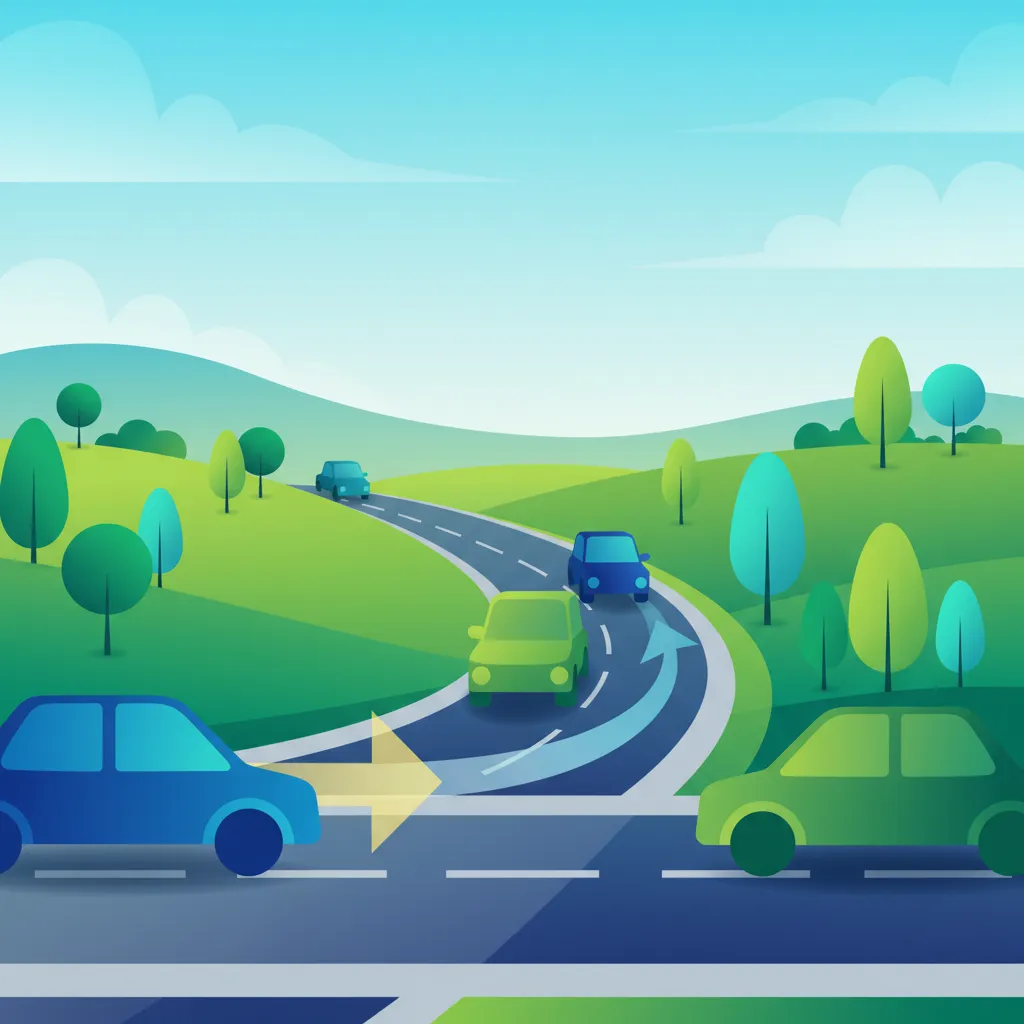
Merging traffic involves combining two separate lanes or traffic streams into a single one. This maneuver frequently occurs at road junctions, motorway entrances, or due to lane reductions. Safe merging relies heavily on driver awareness and cooperation, ensuring all vehicles integrate smoothly without causing disruption or danger. This page covers the essential principles and techniques for navigating these situations effectively in Poland.
Theory topic content overview
Read the full theory topic guide for Merging Traffic with structured, easy-to-scan content built for learners in Poland. This detailed section explains the exact rule, meaning, traffic context, comparison points, and exam logic behind this Polish driving theory topic so you can study faster, understand the concept more clearly, and avoid common interpretation mistakes on the theory test.
Merging traffic is a common and critical maneuver in driving, especially prevalent on Polish motorways (autostrady and drogi ekspresowe), at urban junctions, and in construction zones. It occurs when two separate traffic streams or lanes combine to form a single lane. Mastery of safe merging is essential for maintaining smooth traffic flow, preventing congestion, and, most importantly, avoiding collisions. This page will break down the concept of merging traffic, its rules, and best practices relevant to driving in Poland.
Merging traffic involves a driver integrating their vehicle from an ending lane or an entrance road into an existing, continuous lane of traffic. Unlike a simple lane change where you move between parallel lanes, merging means your current lane or road is about to disappear or join another.
Common merging scenarios in Poland include:
The core principle is to safely become part of the main traffic stream without disrupting its speed or flow, and without causing other drivers to take evasive action.
Effective merging is more than just a procedural step; it's a vital component of road safety and efficiency, particularly in areas of high traffic density common in Polish cities and on major routes.
When you are the driver merging into another lane, your actions are critical:
Observation (Obserwacja):
Speed Adjustment (Dostosowanie Prędkości):
Signalling (Sygnalizowanie):
Gap Assessment (Ocena Luki):
Smooth Steering:
Safe merging is a shared responsibility. Drivers already travelling in the main lane play a crucial role in facilitating a smooth merge:
The "zipper merge," known as "jazda na suwak" in Poland, is a technique specifically designed to optimize traffic flow when two lanes merge into one, particularly during congestion or lane closures.
It's important not to confuse merging with a standard lane change:
In merging, the driver joining the main traffic stream usually has the primary responsibility to yield, though the main lane drivers are expected to cooperate. In a lane change, the driver changing lanes has full responsibility to ensure the maneuver is safe and clear, yielding to all traffic in the target lane.
Learners frequently make these errors when merging in Poland:
To master merging traffic in Poland, remember the "3 Cs": Conscious Observation, Consistent Speed Matching, and Crucial Cooperation. Always anticipate, communicate your intentions early with your indicator, and be prepared to adjust your actions based on the behavior of other drivers. Whether you are the merging driver or already in the main lane, your proactive and cooperative actions contribute significantly to safer and smoother Polish roads.
Merging traffic in Poland involves safely integrating a vehicle from an ending lane or entrance ramp into an existing traffic stream, and it requires careful observation, speed matching, early signalling, and gap assessment. While the merging driver typically yields, Polish road etiquette emphasizes cooperation from all drivers—main lane drivers should maintain awareness and create space where safe. The zipper merge (jazda na suwak) is a recommended technique during congestion that uses both lanes fully before merging point to optimize traffic flow. Key exam-relevant points include distinguishing merging from lane changing, understanding the shared responsibility between merging and main lane drivers, and applying the 3 Cs: Conscious Observation, Consistent Speed Matching, and Crucial Cooperation.
A short set of high-value points that capture the most important ideas from this theory explanation.
The merging driver typically yields and must adjust speed to match main lane traffic, signal early, and find a sufficient gap before entering.
Drivers already in the main lane share responsibility and should maintain steady speed while creating space where safe to facilitate merging.
Jazda na suwak (zipper merge) maximizes traffic flow by having vehicles use both lanes up to the merge point and take turns entering the single lane.
Safe merging requires constant observation using mirrors, blind spot checks, and looking ahead to anticipate traffic conditions.
Merging differs from lane changing because your lane is ending, requiring more aggressive speed adjustment and yield responsibility.
On motorway acceleration lanes, use the full length to reach high speeds matching the autostrada before merging.
Remember the 3 Cs of safe merging: Conscious Observation, Consistent Speed Matching, and Crucial Cooperation.
The zipper merge (jazda na suwak) is widely understood and encouraged in Poland during congestion to promote fairness and efficiency.
In merging, you usually yield; in lane changing, you must yield to all traffic in the target lane before moving.
Drivers in both lanes are expected to cooperate—main lane drivers should create space and the merging driver should not force entry.
Hesitating or stopping at the end of an acceleration lane when traffic is flowing, making it impossible to find a safe gap.
Failing to check blind spots with a shoulder check, relying only on mirrors and missing vehicles in the adjacent lane.
Merging too slowly by not accelerating sufficiently, which forces drivers in the main lane to brake suddenly.
Not signalling intentions early enough, leaving other drivers insufficient time to anticipate and react.
Aggressive merging by forcing into gaps that are too small, expecting others to take evasive action.
Start with a short, direct summary of Merging Traffic before reading the full explanation below.
Merging traffic requires drivers to safely integrate their vehicle from one lane into an existing traffic stream. Key actions include careful observation of surrounding traffic, adjusting your speed to match the flow, and clearly signaling your intentions. Drivers in both the merging and target lanes must cooperate by leaving sufficient space and anticipating movements to prevent sudden braking or collisions, thereby ensuring a smooth and safe transition.
Review the most important terms, rule signals, and traffic concepts linked to Merging Traffic.
Explore related theory topic pages connected to Merging Traffic and continue with the next useful rule explanation.
See the common search queries learners use when trying to understand Merging Traffic in Poland.

Continue your preparation by exploring specific Polish driving theory topics in detail. Review each section to reinforce your understanding of traffic rules, road signs, and safe driving practices. Our comprehensive explanations are structured to support your learning journey and help you confidently approach the official driving licence theory exam.
Polish Driving Theory TopicsTheory topic content overview
A short set of high-value points that capture the most important ideas from this theory explanation.
The merging driver typically yields and must adjust speed to match main lane traffic, signal early, and find a sufficient gap before entering.
Drivers already in the main lane share responsibility and should maintain steady speed while creating space where safe to facilitate merging.
Jazda na suwak (zipper merge) maximizes traffic flow by having vehicles use both lanes up to the merge point and take turns entering the single lane.
Safe merging requires constant observation using mirrors, blind spot checks, and looking ahead to anticipate traffic conditions.
Merging differs from lane changing because your lane is ending, requiring more aggressive speed adjustment and yield responsibility.
On motorway acceleration lanes, use the full length to reach high speeds matching the autostrada before merging.
Remember the 3 Cs of safe merging: Conscious Observation, Consistent Speed Matching, and Crucial Cooperation.
The zipper merge (jazda na suwak) is widely understood and encouraged in Poland during congestion to promote fairness and efficiency.
In merging, you usually yield; in lane changing, you must yield to all traffic in the target lane before moving.
Drivers in both lanes are expected to cooperate—main lane drivers should create space and the merging driver should not force entry.
Hesitating or stopping at the end of an acceleration lane when traffic is flowing, making it impossible to find a safe gap.
Failing to check blind spots with a shoulder check, relying only on mirrors and missing vehicles in the adjacent lane.
Merging too slowly by not accelerating sufficiently, which forces drivers in the main lane to brake suddenly.
Not signalling intentions early enough, leaving other drivers insufficient time to anticipate and react.
Aggressive merging by forcing into gaps that are too small, expecting others to take evasive action.
Start with a short, direct summary of Merging Traffic before reading the full explanation below.
Merging traffic requires drivers to safely integrate their vehicle from one lane into an existing traffic stream. Key actions include careful observation of surrounding traffic, adjusting your speed to match the flow, and clearly signaling your intentions. Drivers in both the merging and target lanes must cooperate by leaving sufficient space and anticipating movements to prevent sudden braking or collisions, thereby ensuring a smooth and safe transition.
Review the most important terms, rule signals, and traffic concepts linked to Merging Traffic.
Explore related theory topic pages connected to Merging Traffic and continue with the next useful rule explanation.
See the common search queries learners use when trying to understand Merging Traffic in Poland.
Continue your preparation by exploring specific Polish driving theory topics in detail. Review each section to reinforce your understanding of traffic rules, road signs, and safe driving practices. Our comprehensive explanations are structured to support your learning journey and help you confidently approach the official driving licence theory exam.
Polish Driving Theory TopicsUse this exam-focused revision tip to understand how Merging Traffic is likely to appear in theory questions for learners in Poland. This section helps you identify the most testable part of the rule, avoid common traps, and remember the concept more effectively during Polish driving theory exam preparation.
In Polish theory exams, merging questions often test your understanding of observation, speed matching, and the principle of cooperation. Remember, while the merging driver usually yields, drivers in the main lane have a responsibility to facilitate the merge where safe. Look out for scenarios involving acceleration lanes and situations where a 'zipper merge' would be most efficient.
Read direct answers to the most common learner questions about Merging Traffic in Poland. This FAQ focuses on rule confusion, practical meaning, comparison with similar concepts, and the exact uncertainties that appear most often in Polish driving theory revision and exam preparation.
Merging traffic occurs when two separate lanes or traffic streams converge into a single lane, requiring vehicles to alternate and join the combined flow. This is distinct from a lane change, which typically involves moving between parallel lanes without a reduction in overall lane count.
In Poland, drivers entering a main roadway or a lane that ends generally must yield to vehicles already in the through lane, unless signs indicate otherwise. However, drivers in the through lane are expected to cooperate by creating space to facilitate a smooth merge, particularly in 'zipper merge' scenarios.
The zipper merge is a technique for efficient merging where drivers from both lanes proceed to the merge point and then alternate, like teeth of a zipper, entering the single combined lane. This method helps reduce congestion and maintain traffic flow.
When merging, you should adjust your speed to match that of the traffic in the target lane. This often means accelerating on an entry ramp to seamlessly join the flow, rather than stopping or entering too slowly.
Common mistakes include failing to observe traffic adequately, not adjusting speed to match the flow, forcing entry without sufficient space, or not signaling intentions clearly. A lack of cooperation from either merging or through-lane drivers can also lead to issues.
When merging onto a Polish motorway, use the acceleration lane to match the speed of motorway traffic, signal your intention, and actively look for a safe gap. Be prepared to adjust your speed to fit into the flow, yielding to existing motorway traffic.
No, merging is not the same as changing lanes. Merging involves two lanes becoming one, typically at an entry point or where a lane ends. Lane changing involves moving from one lane to another parallel lane on the same road without a lane reduction.
Cooperation is vital during merging to ensure smooth traffic flow and prevent accidents. Drivers in the through lane should make space when possible, and merging drivers should adjust their speed and find a safe gap. Mutual consideration reduces stress and the risk of collisions.
Build custom practice sessions tailored precisely to your needs. Focus on areas requiring improvement, review specific Polish road signs, or master complex traffic rules to ensure full preparation for your official driving license exam.