
Polish roads are dynamic environments shared by many different types of users, from vulnerable pedestrians and cyclists to large trucks and buses. As a driver, it's essential to adapt your behavior, maintain safe distances, and anticipate actions to prevent accidents. This guide explains how to safely interact with each group, ensuring cooperation and awareness.
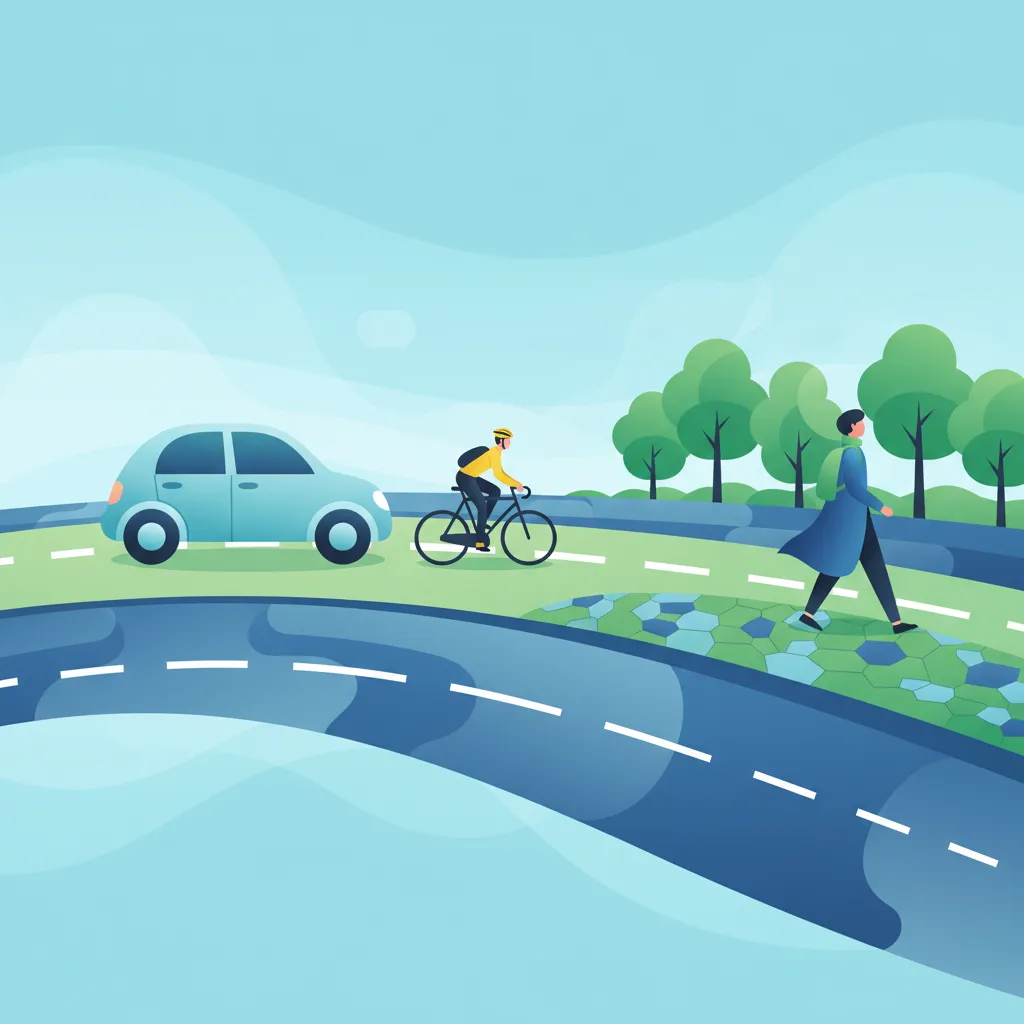
Theory topic content overview
Read the full theory topic guide for Safe Road Sharing with structured, easy-to-scan content built for learners in Poland. This detailed section explains the exact rule, meaning, traffic context, comparison points, and exam logic behind this Polish driving theory topic so you can study faster, understand the concept more clearly, and avoid common interpretation mistakes on the theory test.
Driving on Polish roads requires more than just knowing your vehicle's controls; it demands a deep understanding of how to safely interact with a diverse range of other road users. From the most vulnerable pedestrians and cyclists to large, imposing trucks, each user group presents unique challenges and requires specific adaptations in your driving behavior. Mastering these interactions is critical for passing your Polish driving theory exam and, more importantly, for ensuring safety on the road.
Sharing the road is the principle that all users, regardless of their mode of transport, have a right to safe passage and must cooperate to prevent accidents. As a driver of a motor vehicle, you carry a greater responsibility due to your vehicle's size, speed, and potential to cause harm. This means actively anticipating the actions of others, maintaining safe distances, and adapting your driving to protect the most vulnerable road users.
Understanding how to share the road effectively is paramount for several reasons:
Prawo o ruchu drogowym) contains specific regulations governing interactions with different road users, particularly regarding priority, distances, and maneuvering.Effective road sharing means tailoring your approach to each type of user.
Pedestrians are the most vulnerable road users, completely exposed in the event of a collision.
Przejście dla Pieszych): In Poland, drivers must yield to pedestrians who are already on a zebra crossing or are entering it. Always approach these crossings with caution, ready to stop.Cyclists and moped riders are faster than pedestrians but still vulnerable.
poza obszarem zabudowanym) and your speed exceeds 50 km/h, this minimum distance increases to 1.5 meters.Motorcyclists are highly exposed and can be easily overlooked.
Martwy Punkt): Due to their narrow profile, motorcyclists can easily disappear into your mirrors' blind spots. Always perform a quick head-check (przekrok) over your shoulder before changing lanes, turning, or opening your door.These vehicles have significant limitations that drivers must respect.
przejście dla pieszych), a driver always has a fundamental duty of care to prevent harm, especially to vulnerable users. Never insist on your right of way if it could cause danger.Przejście dla Pieszych in a City: As you near a zebra crossing in a Polish town, you see a pedestrian standing at the curb looking to cross. Even if they haven't stepped onto the crossing yet, slow down and be prepared to stop, as they may be about to enter it. Under Polish law, you must yield to pedestrians entering or already on the crossing.Droga Poza Obszarem Zabudowanym): You're driving outside a built-up area at 70 km/h and come up behind a cyclist. Before overtaking, ensure you have a clear view ahead, and can maintain at least 1.5 meters of lateral distance (due to exceeding 50 km/h) throughout the maneuver without encroaching on oncoming traffic.Sharing the road safely in Poland boils down to two core principles: awareness and adaptation. Be constantly aware of your surroundings, anticipate the actions of all road users, and adapt your speed, position, and maneuvers to ensure everyone's safety. Remember the specific Polish rules regarding pedestrian priority at crossings and minimum overtaking distances for vulnerable users. Practicing patience and mutual respect will make you a safer and more confident driver, ready for the exam and for the diverse roads of Poland.
Sharing the road safely in Poland requires understanding mutual responsibility among all users, with drivers bearing the greatest obligation to protect vulnerable road users. Pedestrians on zebra crossings have priority, and specific lateral distances apply when overtaking cyclists: minimum 1 meter, or 1.5 meters outside built-up areas at speeds over 50 km/h. Large vehicles like trucks and buses have extensive blind spots, wide turning circles, and increased braking distances that drivers must respect. Motorcyclists require special attention as they can easily disappear into blind spots - a quick head-check before any lateral movement is essential for safety.
A short set of high-value points that capture the most important ideas from this theory explanation.
Drivers carry greater responsibility on shared roads due to vehicle size, speed, and potential to cause harm to vulnerable users
In Poland, drivers must yield to pedestrians who are entering or already on a zebra crossing (Przejście dla pieszych)
When overtaking cyclists or mopeds, minimum lateral distance is 1 meter, increasing to 1.5 meters outside built-up areas at speeds exceeding 50 km/h
Large vehicles like trucks and buses have massive blind spots and wide turning circles - never linger alongside or try to squeeze past turning trucks
Motorcyclists can easily disappear into blind spots; always perform a head-check (przekrok) before changing lanes or turning
At Przejście dla pieszych: yield to pedestrians already on the crossing AND those entering it - slow down and be prepared to stop
Overtaking distances: minimum 1m lateral distance for cyclists/mopeds, 1.5m if outside built-up area and speed exceeds 50 km/h
Perform przekrok (head-check over shoulder) before any lane change, turn, or opening door to detect motorcycles in blind spots
Large vehicles swing wide before turning right - never attempt to pass on the inside or squeeze alongside
If you cannot see the truck or bus driver's mirrors, assume they cannot see you - avoid lingering in blind zones
Insisting on 'right of way' when it could cause danger to vulnerable users - duty of care always takes priority
Assuming the legal minimum distances (1m, 1.5m) are always sufficient - safe distance depends on speed, weather, and conditions
Failing to perform head-checks and ignoring blind spots when changing lanes, turning, or opening the car door
Overtaking cyclists near junctions or on bends when their path ahead is unclear or obstructed
Underestimating cyclist and pedestrian vulnerability - they lack the protective shell of a vehicle
Start with a short, direct summary of Safe Road Sharing before reading the full explanation below.
Sharing the road safely in Poland means actively adapting your driving to protect all road users, especially vulnerable ones like pedestrians and cyclists. This involves maintaining adequate distances, diligently checking blind spots for motorcyclists and smaller vehicles, and understanding the maneuverability limitations of large trucks and buses. Practicing patience, cooperation, and predictable behavior are fundamental for preventing collisions and ensuring smooth traffic flow for everyone.
Review the most important terms, rule signals, and traffic concepts linked to Safe Road Sharing.
Explore related theory topic pages connected to Safe Road Sharing and continue with the next useful rule explanation.
See the common search queries learners use when trying to understand Safe Road Sharing in Poland.

Continue your preparation by exploring specific Polish driving theory topics in detail. Review each section to reinforce your understanding of traffic rules, road signs, and safe driving practices. Our comprehensive explanations are structured to support your learning journey and help you confidently approach the official driving licence theory exam.
Polish Driving Theory TopicsTheory topic content overview
A short set of high-value points that capture the most important ideas from this theory explanation.
Drivers carry greater responsibility on shared roads due to vehicle size, speed, and potential to cause harm to vulnerable users
In Poland, drivers must yield to pedestrians who are entering or already on a zebra crossing (Przejście dla pieszych)
When overtaking cyclists or mopeds, minimum lateral distance is 1 meter, increasing to 1.5 meters outside built-up areas at speeds exceeding 50 km/h
Large vehicles like trucks and buses have massive blind spots and wide turning circles - never linger alongside or try to squeeze past turning trucks
Motorcyclists can easily disappear into blind spots; always perform a head-check (przekrok) before changing lanes or turning
At Przejście dla pieszych: yield to pedestrians already on the crossing AND those entering it - slow down and be prepared to stop
Overtaking distances: minimum 1m lateral distance for cyclists/mopeds, 1.5m if outside built-up area and speed exceeds 50 km/h
Perform przekrok (head-check over shoulder) before any lane change, turn, or opening door to detect motorcycles in blind spots
Large vehicles swing wide before turning right - never attempt to pass on the inside or squeeze alongside
If you cannot see the truck or bus driver's mirrors, assume they cannot see you - avoid lingering in blind zones
Insisting on 'right of way' when it could cause danger to vulnerable users - duty of care always takes priority
Assuming the legal minimum distances (1m, 1.5m) are always sufficient - safe distance depends on speed, weather, and conditions
Failing to perform head-checks and ignoring blind spots when changing lanes, turning, or opening the car door
Overtaking cyclists near junctions or on bends when their path ahead is unclear or obstructed
Underestimating cyclist and pedestrian vulnerability - they lack the protective shell of a vehicle
Start with a short, direct summary of Safe Road Sharing before reading the full explanation below.
Sharing the road safely in Poland means actively adapting your driving to protect all road users, especially vulnerable ones like pedestrians and cyclists. This involves maintaining adequate distances, diligently checking blind spots for motorcyclists and smaller vehicles, and understanding the maneuverability limitations of large trucks and buses. Practicing patience, cooperation, and predictable behavior are fundamental for preventing collisions and ensuring smooth traffic flow for everyone.
Review the most important terms, rule signals, and traffic concepts linked to Safe Road Sharing.
Explore related theory topic pages connected to Safe Road Sharing and continue with the next useful rule explanation.
See the common search queries learners use when trying to understand Safe Road Sharing in Poland.
Continue your preparation by exploring specific Polish driving theory topics in detail. Review each section to reinforce your understanding of traffic rules, road signs, and safe driving practices. Our comprehensive explanations are structured to support your learning journey and help you confidently approach the official driving licence theory exam.
Polish Driving Theory TopicsUse this exam-focused revision tip to understand how Safe Road Sharing is likely to appear in theory questions for learners in Poland. This section helps you identify the most testable part of the rule, avoid common traps, and remember the concept more effectively during Polish driving theory exam preparation.
The Polish driving exam often tests your understanding of safe distances and awareness of vulnerable road users. Remember that pedestrians and cyclists are highly exposed, and smaller vehicles like motorcycles can easily disappear into your blind spots. Always prioritize safety and maintain extra caution in mixed traffic situations, especially when overtaking or turning.
Read direct answers to the most common learner questions about Safe Road Sharing in Poland. This FAQ focuses on rule confusion, practical meaning, comparison with similar concepts, and the exact uncertainties that appear most often in Polish driving theory revision and exam preparation.
It covers critical safety principles for interacting with diverse road users, which is a frequent and important topic on the Polish driving exam, impacting real-world accident prevention.
Always give pedestrians priority at designated crossings and be prepared to stop. Outside crossings, maintain a safe distance and slow down, especially in residential areas and poor visibility conditions.
Cyclists are vulnerable and can be less predictable. Maintain a minimum safe distance when passing them, allow for sudden movements due to road conditions, and check for them before turning.
Motorcyclists are smaller and harder to see, easily disappearing into blind spots. Always check your mirrors and blind spots thoroughly before changing lanes, turning, or maneuvering, as they can quickly enter these zones.
Large vehicles have significant blind spots, require more space to maneuver, and have longer stopping distances. Avoid driving in their blind spots and give them ample room, especially when they are turning or changing lanes.
According to Polish regulations, you must maintain a minimum distance of 1 meter when overtaking another moped, as they are considered vulnerable road users and require extra caution.
Cooperation means anticipating other users' actions, being patient, and making predictable maneuvers to ensure everyone's safety and promote smooth, efficient traffic flow for all road participants.
Build custom practice sessions tailored precisely to your needs. Focus on areas requiring improvement, review specific Polish road signs, or master complex traffic rules to ensure full preparation for your official driving license exam.