
Navigate the diverse landscapes of Polish roads, from winding rural routes to high-speed expressways. This unit prepares you for the unique challenges and rules of both, ensuring you can drive safely and confidently across all road types in Poland, a crucial aspect for your Category B theory exam.
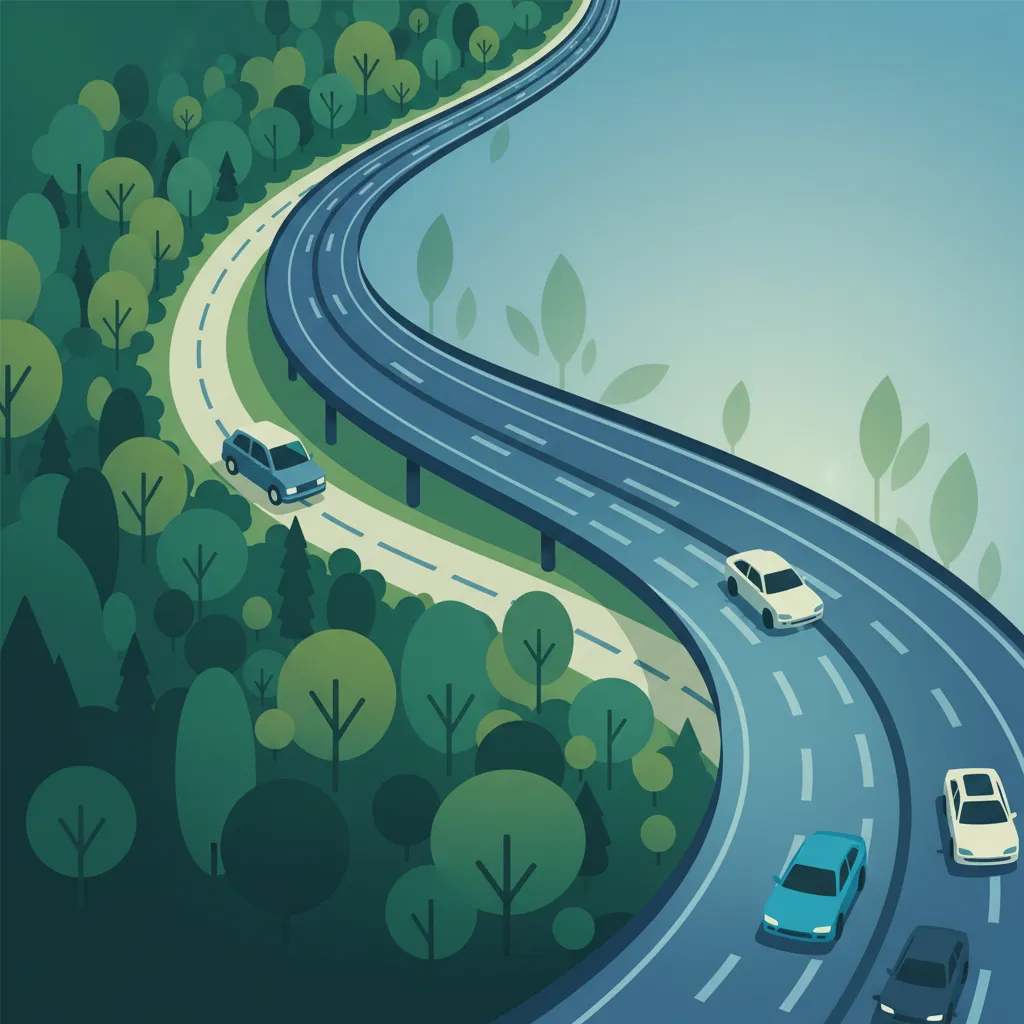
Browse all lessons that make up Rural Roads and Expressways. Each lesson focuses on specific topics, learning objectives, and core concepts, helping you build essential knowledge and follow a clear, structured progression toward your study goals in Poland.
This lesson explores the unique characteristics of driving on rural roads. It highlights potential hazards such as sharp, unbanked curves, poor road surfaces, and limited visibility due to hills and vegetation. The content teaches drivers to anticipate these conditions and adjust their speed and position to navigate safely.
This lesson details the rules and best practices for driving on Poland's fastest roads. It covers the higher speed limits, the strict lane discipline of keeping right except to overtake, and prohibitions on stopping. The aim is to ensure drivers can handle the demands of sustained high-speed travel safely and efficiently.
This lesson provides a focused guide on the techniques for entering and exiting high-speed roads. It explains the purpose of acceleration lanes for getting up to speed and deceleration lanes for slowing down safely away from the main traffic flow. Correct observation, signaling, and speed adjustment are emphasized for seamless transitions.
This lesson prepares drivers for the event of a vehicle breakdown on a motorway or expressway. It details the correct procedure: pulling over to the emergency lane, activating hazard lights, and placing the warning triangle at the legally required distance. The importance of wearing a reflective vest when outside the vehicle is also a key safety point.
This lesson addresses encounters with slow-moving vehicles, such as tractors, which are common on rural roads. It teaches drivers to be patient, maintain a safe following distance, and only overtake when it is absolutely safe and legal to do so. Recognizing the large size and limited maneuverability of such vehicles is crucial for avoiding accidents.
Explore high-intent keywords and long-tail search topics learners use when researching Rural Roads and Expressways. These terms reflect how people search for reliable study materials, structured explanations, and unit-level theory preparation support in Poland.
Find clear answers to the most common questions learners ask about Rural Roads and Expressways. Understand how the unit is organized, what learning goals it supports, and how it contributes to your study progression with structured explanations and practical guidance tailored for learners in Poland.
Rural roads in Poland can present several dangers. These include poor lighting, making it hard to see obstacles, uneven road surfaces that can affect vehicle handling, and the potential for unexpected encounters with animals, especially at dawn and dusk. Visibility can also be limited by bends and vegetation. It's crucial to reduce speed and increase observation.
For expressways (droga ekspresowa), the general speed limit for passenger cars (Category B) is 120 km/h. For motorways (autostrada), the limit is 140 km/h. Always check posted signs, as these limits can vary, and be prepared to reduce speed based on traffic and weather conditions.
To merge safely onto a Polish expressway or motorway, use the acceleration lane to match the speed of the traffic on the main carriageway. Check your mirrors and blind spot, signal your intention, and merge when there is a sufficient gap in traffic. Do not stop on the acceleration lane unless absolutely necessary due to traffic.
If you encounter slow-moving vehicles like tractors on a rural road, maintain a safe following distance. Assess if overtaking is safe and legal by checking for oncoming traffic and clear visibility. If overtaking is not possible, be patient and wait for a suitable opportunity. Do not rush or attempt risky maneuvers.
Yes, the emergency lane (pas awaryjny) on Polish motorways and expressways is strictly for emergencies. It should only be used for breakdowns or to allow emergency vehicles to pass. Stopping unnecessarily in the emergency lane is prohibited and dangerous.
Motorways are designed for high-speed, continuous flow with multiple lanes and controlled access, requiring higher speeds and precise lane discipline. Rural roads are typically two-lane, have lower speed limits, and present more unpredictable hazards like sharp bends, poor surfaces, and slower traffic. Your approach to observation, speed management, and hazard perception must adapt significantly between these environments.
All included lessons
Lessons in Rural Roads and Expressways
See who benefits most from studying Rural Roads and Expressways. This overview explains how the unit supports different learning needs, what level of knowledge is helpful before starting, and how it fits into the overall study path in Poland.
This unit is vital for all Category B license applicants in Poland preparing for their theory test. It's particularly beneficial for learners who may not have extensive experience driving on both rural roads and high-speed expressways, providing the specific knowledge needed for Polish conditions.

Dive into our curated curriculum designed for Polish driving license aspirants. Select a course, follow its guided modules, and master every aspect of traffic rules and road signs necessary to pass your theory exam with confidence.
Polish Theory CurriculumExplore all units and lessons included in this driving theory course.
Dive into our curated curriculum designed for Polish driving license aspirants. Select a course, follow its guided modules, and master every aspect of traffic rules and road signs necessary to pass your theory exam with confidence.
Polish Theory Curriculum