
Prepare for the unpredictable Polish weather on your motorcycle. This unit covers essential techniques for riding safely in rain, snow, ice, and strong winds, ensuring you master the necessary skills for the Category A theory exam and real-world conditions.
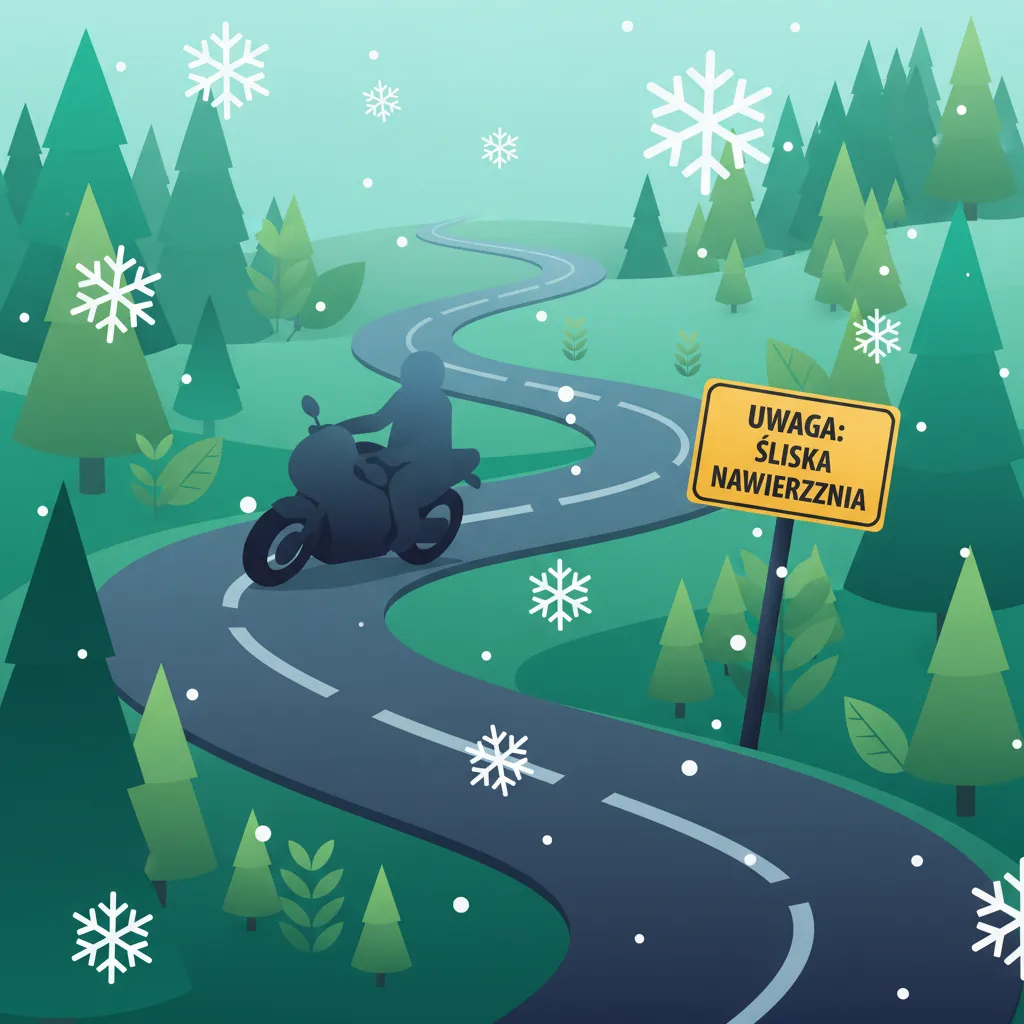
Browse all lessons that make up Riding in Adverse Weather and Seasonal Conditions. Each lesson focuses on specific topics, learning objectives, and core concepts, helping you build essential knowledge and follow a clear, structured progression toward your study goals in Poland.
This lesson focuses on the specific challenges of riding in rain, detailing how wet road surfaces reduce tyre grip and increase braking distances. Learners will learn about hydroplaning risk, the importance of deep tyre tread, and the need for smooth throttle and brake modulation to maintain stability. The content also covers visibility concerns, such as proper headlamp use and the selection of waterproof clothing, so riders can safely navigate wet conditions.
In this lesson, learners explore the complexities of winter riding, including snow-covered roads, ice patches, and the impact of low temperatures on both the rider and the motorcycle. The content addresses the use of ABS and traction control on slippery surfaces and the need for appropriate tyre pressure. Learners will also learn about appropriate clothing layers, frostbite prevention, and how to adjust riding technique for safe cornering and braking on ice.
This lesson examines how cross-winds affect motorcycle stability and control, providing strategies for compensating wind gusts through rider body positioning and throttle management. Learners will understand the aerodynamic effects of wind on the bike, how to position within the lane to minimize drift, and techniques for maintaining balance during sudden gusts. The content also covers the influence of wind on braking distances and the importance of adjusting speed.
In this lesson, learners focus on the essential maintenance tasks required to keep a motorcycle in optimal condition across seasonal changes. The content outlines a comprehensive pre-ride checklist that includes tyre pressure verification, brake fluid inspection, battery performance checks, and chain lubrication. Learners will also study the selection of appropriate seasonal tyres and oil viscosity adjustments, helping prevent mechanical failures and enhance rider safety.
This lesson equips learners with a structured approach to risk assessment and decision-making when facing adverse weather or seasonal conditions. The content introduces a hazard perception framework, guiding riders to assess weather forecasts, evaluate road surface conditions, and calculate safety margins. Learners will learn how to make go/no-go decisions, adjust speed dynamically, and plan contingencies for unexpected events to prioritize safety.
Explore high-intent keywords and long-tail search topics learners use when researching Riding in Adverse Weather and Seasonal Conditions. These terms reflect how people search for reliable study materials, structured explanations, and unit-level theory preparation support in Poland.
Find clear answers to the most common questions learners ask about Riding in Adverse Weather and Seasonal Conditions. Understand how the unit is organized, what learning goals it supports, and how it contributes to your study progression with structured explanations and practical guidance tailored for learners in Poland.
Rain significantly reduces tyre grip by creating a layer of water between the tyre and the road surface, known as aquaplaning. This increases braking distances and makes cornering more hazardous. It's crucial to brake earlier and more gently, avoid sudden movements, and maintain a greater following distance.
Riding on ice or snow presents extreme risks due to minimal tyre grip. Acceleration, braking, and steering inputs can easily lead to skids and falls. It is generally advised to avoid riding in icy or snowy conditions if at all possible, especially without specialized tires and extensive experience.
Strong winds, especially crosswinds, can push your motorcycle unexpectedly. Maintain a firm but relaxed grip on the handlebars, be prepared to counter-steer slightly to stay in your lane, and increase your following distance. Be particularly cautious when passing large vehicles or emerging from sheltered areas, as wind gusts can be strongest there.
Before riding in cold weather, check your tyre pressure as it can decrease in cooler temperatures. Ensure your lights, indicators, and horn are functioning perfectly, as visibility is often reduced. Verify that your battery is in good condition, as cold weather impacts its performance. Check that your brakes are responsive and that there's no ice or snow buildup on critical components.
Layering is key for cold weather. Wear thermal base layers, an insulating mid-layer (like fleece), and a waterproof and windproof outer shell. Ensure your gloves, boots, and helmet are also waterproof and insulated. High-visibility clothing is also recommended, especially in poor light conditions common during winter months.
Yes, the Polish theory exam for Category A includes questions on safe riding practices in various conditions, including adverse weather. You will need to demonstrate an understanding of how weather affects riding and what adjustments are necessary to maintain safety and comply with traffic rules.
All included lessons
Lessons in Riding in Adverse Weather and Seasonal Conditions
See who benefits most from studying Riding in Adverse Weather and Seasonal Conditions. This overview explains how the unit supports different learning needs, what level of knowledge is helpful before starting, and how it fits into the overall study path in Poland.
This unit is crucial for all Category A license applicants in Poland preparing for their theory test, especially those new to riding or who find managing varying weather conditions challenging. It helps Polish riders develop the confidence and knowledge to handle diverse seasonal hazards safely.

Dive into our curated curriculum designed for Polish driving license aspirants. Select a course, follow its guided modules, and master every aspect of traffic rules and road signs necessary to pass your theory exam with confidence.
Polish Theory CurriculumExplore all units and lessons included in this driving theory course.
Dive into our curated curriculum designed for Polish driving license aspirants. Select a course, follow its guided modules, and master every aspect of traffic rules and road signs necessary to pass your theory exam with confidence.
Polish Theory Curriculum