
Giving way means allowing other road users to proceed first in order to prevent conflict or collision. In Sweden, these rules are clearly defined by traffic signs, road markings, and general priority principles. Mastering when and how to yield ensures smooth traffic flow and significantly reduces the risk of dangerous situations.
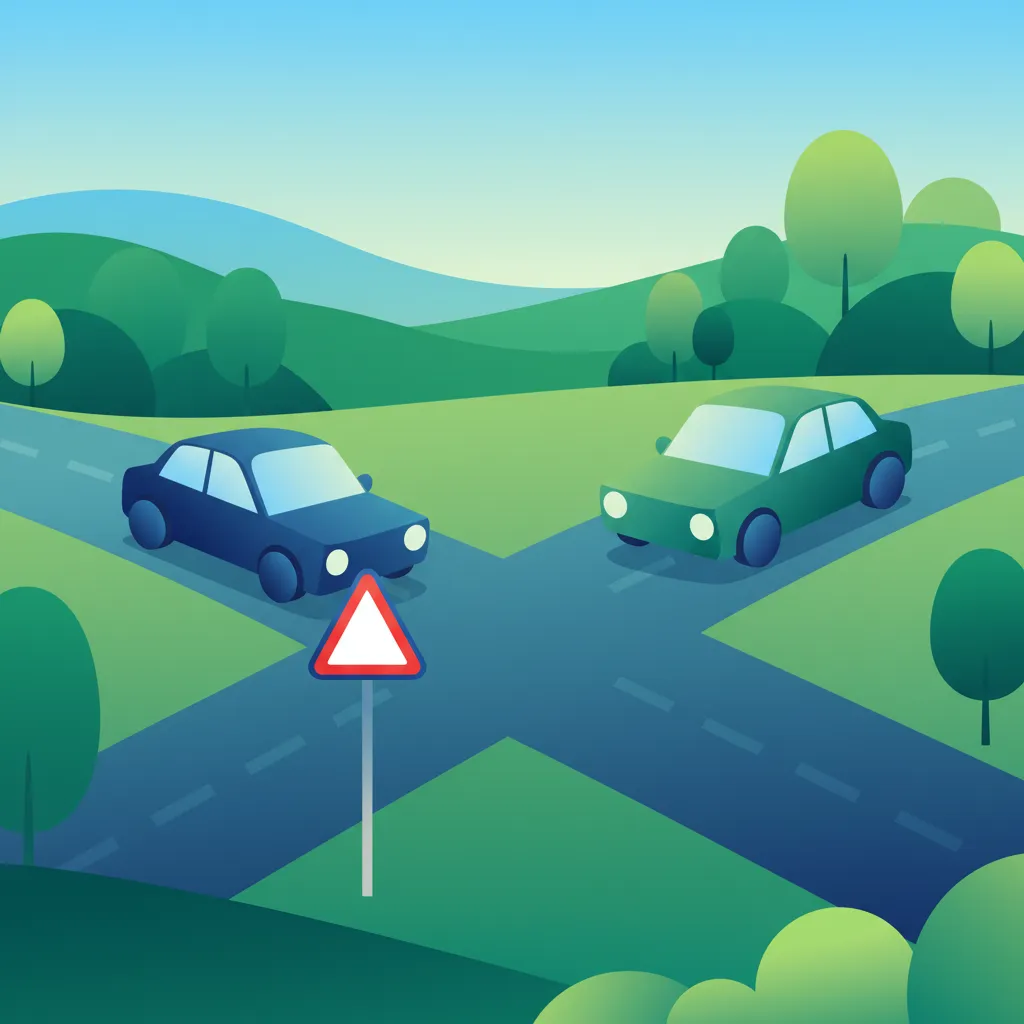
Theory topic content overview
Read the full theory topic guide for Give Way Rules with structured, easy-to-scan content built for learners in Sweden. This detailed section explains the exact rule, meaning, traffic context, comparison points, and exam logic behind this Swedish driving theory topic so you can study faster, understand the concept more clearly, and avoid common interpretation mistakes on the theory test.
In Swedish traffic, "giving way" (or väjningsplikt in Swedish) is a fundamental obligation to allow other road users to proceed first. It means you must slow down, and if necessary, stop your vehicle to ensure that traffic with priority (those who have förkörsrätt – right of way) can continue safely and without obstruction. This action prevents conflicts, maintains smooth traffic flow, and is crucial for road safety throughout Sweden.
Understanding väjningsplikt is not just about avoiding collisions; it's about respecting the established order of traffic to ensure everyone can navigate the road network efficiently. It's a core concept heavily tested in the Swedish driving theory exam.
Failing to give way is a common cause of accidents and a frequent mistake among new drivers. The Swedish traffic system relies heavily on drivers understanding and applying väjningsplikt correctly. For your driving theory exam, you'll encounter numerous scenarios and images designed to test your ability to correctly identify who has priority and when you must yield.
Correctly applying give way rules:
Knowing when and where to give way involves observing various cues: traffic signs, road markings, and general rules that apply in the absence of signs.
The most explicit instruction to give way comes from specific traffic signs:
Väjningsplikt sign. You must come to a complete stop before the stop line (if present) or at the intersection itself, and then yield to all traffic on the intersecting road. Only proceed when it is completely safe and you do not hinder anyone.
Stopplikt sign (code B2) is used where visibility might be poor or the intersecting traffic volume is very high, requiring an absolute stop.Where no signs or traffic lights regulate priority at an intersection, the Right-Hand Rule (Högerregeln) applies in Sweden. This means you must give way to traffic approaching from your right. This rule applies to all drivers on a shared road surface, including cyclists, but usually excludes vehicles exiting private driveways or footpaths.
Högerregeln is a cornerstone of Swedish traffic law. It's vital to remember it applies at unmarked intersections of equal priority roads.When approaching a roundabout in Sweden, the general rule is that you must give way to traffic already circulating within the roundabout. You will usually see Väjningsplikt signs and dashed yield lines at each entrance to a roundabout, reinforcing this rule. Only enter when there is a safe gap in the traffic flow.
At an unmarked pedestrian crossing (obevakat övergångsställe), drivers must always give way to pedestrians who are on the crossing or are clearly about to step onto it. Even at marked crossings where there are no traffic lights, the pedestrian has priority. You must slow down and be prepared to stop.
When joining a main road or a motorway from an acceleration lane, you must give way to traffic already on the main carriageway. You should adjust your speed to match the flow of traffic on the main road and find a safe gap to merge without forcing other drivers to brake or swerve.
motorvägar), acceleration lanes are designed to help you build speed and merge safely, but the väjningsplikt remains with the merging driver.When leaving a private driveway, a parking lot, a petrol station, or a dirt track to join a public road, you must always give way to all traffic on the public road, including pedestrians and cyclists.
It's critical to understand the difference between the Väjningsplikt (Give Way) sign and the Stopplikt (Stop) sign:
Failure to stop completely at a Stopplikt sign, even if the road is clear, is a serious violation and a common error in driving tests.
Let's look at how these rules apply in practice:
Högerregeln, you must slow down and allow the car from your right to pass before you proceed.Väjningsplikt sign. A truck is approaching on the main road from your left. You must wait for the truck to pass, or for a sufficient gap to appear, before you can safely turn onto the main road without causing the truck to brake or swerve.Väjningsplikt signs. You see a car already circulating within the roundabout to your left. You must wait for that car to pass your entry point before you enter the roundabout.överrångsställe (zebra crossing), you see a pedestrian standing at the curb, looking ready to cross. You must slow down and stop before the crossing to allow the pedestrian to cross safely.Swedish driving theory often highlights these common pitfalls:
Högerregeln: Overlooking the right-hand rule at unmarked intersections, especially in quieter residential areas, and assuming all junctions have signs.Stopplikt Sign: Not coming to a complete halt at a stop sign, which is an immediate test failure.väjningslinjer) painted on the road.Mastering give way rules in Sweden (väjningsplikt and högerregeln) is about more than just memorising signs; it's about developing an active awareness of your surroundings and the hierarchy of traffic. Always be prepared to slow down or stop, and constantly scan for signs, road markings, and other road users. When in doubt, it is always safer to yield. This proactive approach will make you a safer, more confident driver and help you excel in your Swedish driving licence theory test.
Väjningsplikt (give way) is a fundamental Swedish traffic obligation requiring drivers to allow priority traffic to proceed safely. The Väjningsplikt sign requires yielding but not necessarily stopping, while Stopplikt demands a complete stop regardless of visibility. Högerregeln (right-hand rule) governs unmarked intersections of equal priority. Key yielding situations include roundabouts, pedestrian crossings, merging lanes, and when exiting private property. Common exam mistakes involve rolling stops at stop signs, forgetting the right-hand rule at quiet intersections, and misjudging gaps in traffic flow.
A short set of high-value points that capture the most important ideas from this theory explanation.
Väjningsplikt means you must slow down or stop to allow priority traffic (förkörsrätt) to proceed safely and without obstruction
At unmarked intersections where no signs apply, Högerregeln (right-hand rule) requires you to give way to traffic approaching from your right
The Väjningsplikt (Give Way) sign allows you to proceed without stopping if the way is clear, while Stopplikt requires a complete, absolute stop regardless of traffic
Pedestrians have priority at both marked and unmarked crossings, and drivers must be prepared to stop for them
When merging onto a main road or motorway, you must yield to traffic already on the main carriageway
Väjningsplikt sign (code B1) is a red-bordered white inverted triangle; Stopplikt sign (code B2) is a red octagon with STOP
Högerregeln applies only at unmarked intersections of equal priority roads, not at driveways or private roads
At roundabouts, always give way to traffic already circulating within the roundabout before entering
Exiting a private driveway, parking lot, or petrol station requires giving way to ALL public road users, including cyclists and pedestrians
Trams in Sweden generally have priority unless specific signs or signals indicate otherwise
Making a 'rolling stop' at Stopplikt signs instead of coming to a complete halt, which is an immediate test failure
Misjudging gaps in traffic and pulling out too soon when merging or entering intersections
Forgetting Högerregeln at quiet residential intersections where drivers assume signs must be present
Focusing only on traffic signs and ignoring important road markings like yield lines (väjningslinjer)
Failing to yield to pedestrians at unmarked crossings or misjudging their intent to cross
Start with a short, direct summary of Give Way Rules before reading the full explanation below.
Giving way is the act of slowing down or stopping to allow other traffic or pedestrians to proceed safely, as required by Swedish traffic laws. This ensures that vehicles and pedestrians can continue their journey without obstruction or danger. Common situations requiring you to give way include intersections where you lack priority, specific traffic signs like the triangular 'Give Way' sign (Väjningsplikt), merging lanes, and designated pedestrian crossings.
Review the most important terms, rule signals, and traffic concepts linked to Give Way Rules.
Explore related theory topic pages connected to Give Way Rules and continue with the next useful rule explanation.
See the common search queries learners use when trying to understand Give Way Rules in Sweden.

Dive deeper into specific theory topics, review detailed explanations of road rules, and reinforce your understanding of Swedish traffic regulations. Continue your preparation for the driving licence exam by exploring each core concept in detail.
Explore Driving Theory TopicsTheory topic content overview
A short set of high-value points that capture the most important ideas from this theory explanation.
Väjningsplikt means you must slow down or stop to allow priority traffic (förkörsrätt) to proceed safely and without obstruction
At unmarked intersections where no signs apply, Högerregeln (right-hand rule) requires you to give way to traffic approaching from your right
The Väjningsplikt (Give Way) sign allows you to proceed without stopping if the way is clear, while Stopplikt requires a complete, absolute stop regardless of traffic
Pedestrians have priority at both marked and unmarked crossings, and drivers must be prepared to stop for them
When merging onto a main road or motorway, you must yield to traffic already on the main carriageway
Väjningsplikt sign (code B1) is a red-bordered white inverted triangle; Stopplikt sign (code B2) is a red octagon with STOP
Högerregeln applies only at unmarked intersections of equal priority roads, not at driveways or private roads
At roundabouts, always give way to traffic already circulating within the roundabout before entering
Exiting a private driveway, parking lot, or petrol station requires giving way to ALL public road users, including cyclists and pedestrians
Trams in Sweden generally have priority unless specific signs or signals indicate otherwise
Making a 'rolling stop' at Stopplikt signs instead of coming to a complete halt, which is an immediate test failure
Misjudging gaps in traffic and pulling out too soon when merging or entering intersections
Forgetting Högerregeln at quiet residential intersections where drivers assume signs must be present
Focusing only on traffic signs and ignoring important road markings like yield lines (väjningslinjer)
Failing to yield to pedestrians at unmarked crossings or misjudging their intent to cross
Start with a short, direct summary of Give Way Rules before reading the full explanation below.
Giving way is the act of slowing down or stopping to allow other traffic or pedestrians to proceed safely, as required by Swedish traffic laws. This ensures that vehicles and pedestrians can continue their journey without obstruction or danger. Common situations requiring you to give way include intersections where you lack priority, specific traffic signs like the triangular 'Give Way' sign (Väjningsplikt), merging lanes, and designated pedestrian crossings.
Review the most important terms, rule signals, and traffic concepts linked to Give Way Rules.
Explore related theory topic pages connected to Give Way Rules and continue with the next useful rule explanation.
See the common search queries learners use when trying to understand Give Way Rules in Sweden.
Dive deeper into specific theory topics, review detailed explanations of road rules, and reinforce your understanding of Swedish traffic regulations. Continue your preparation for the driving licence exam by exploring each core concept in detail.
Explore Driving Theory TopicsUse this exam-focused revision tip to understand how Give Way Rules is likely to appear in theory questions for learners in Sweden. This section helps you identify the most testable part of the rule, avoid common traps, and remember the concept more effectively during Swedish driving theory exam preparation.
Pay close attention to diagrams in your Swedish theory exam. Many questions test your ability to correctly identify priority situations at intersections, especially involving the right-hand rule or less common signs. Always look for signs, road markings, and assess traffic from all directions before deciding who has priority.
Read direct answers to the most common learner questions about Give Way Rules in Sweden. This FAQ focuses on rule confusion, practical meaning, comparison with similar concepts, and the exact uncertainties that appear most often in Swedish driving theory revision and exam preparation.
In Swedish traffic, 'give way' (väjningsplikt) means you must allow other road users to pass first without hindrance, slowing down or stopping if necessary. This prevents conflicts and ensures safe traffic flow.
You must give way at intersections if there is a 'Give Way' sign (Väjningsplikt), a 'Stop' sign (Stopplikt), or if you are entering a priority road. At unmarked or equal intersections, the 'right-hand rule' (högerregeln) applies, meaning you give way to traffic coming from your right, unless otherwise indicated.
The 'right-hand rule' applies at unmarked intersections where no other priority rules or signs are present. It means that drivers must give way to any vehicle approaching from their immediate right.
You must always give way to pedestrians at designated pedestrian crossings (överfartställe or gångpassage) and when turning. Be particularly cautious and ready to stop for pedestrians near crossings.
A 'Give Way' sign (Väjningsplikt) requires you to yield to traffic on the priority road, slowing down or stopping if needed. A 'Stop' sign (Stopplikt) has the same requirement but explicitly demands that you come to a complete stop before the intersection or stop line, even if no traffic is visible.
When entering a roundabout in Sweden, you must give way to traffic already circulating within the roundabout. Once inside, you have priority over traffic entering from other arms of the roundabout.
When merging onto a motorway or a new lane, you must adjust your speed and give way to traffic already in the lane you are entering. It's your responsibility to find a safe gap and merge smoothly without forcing others to brake or swerve.
Refine your study plan by exploring practice sets on specific Swedish traffic rules, road signs, or driving situations. Use the search to quickly access relevant questions and focus your preparation for the official driving licence theory exam.