
This lesson explores critical defensive driving techniques for navigating challenging weather conditions like heavy rain, snow, and dense fog. It provides essential strategies for adjusting your driving to ensure safety, which is a key requirement for the Turkish Category B theory exam. You will learn how to maintain control and adapt your habits to different road surfaces.
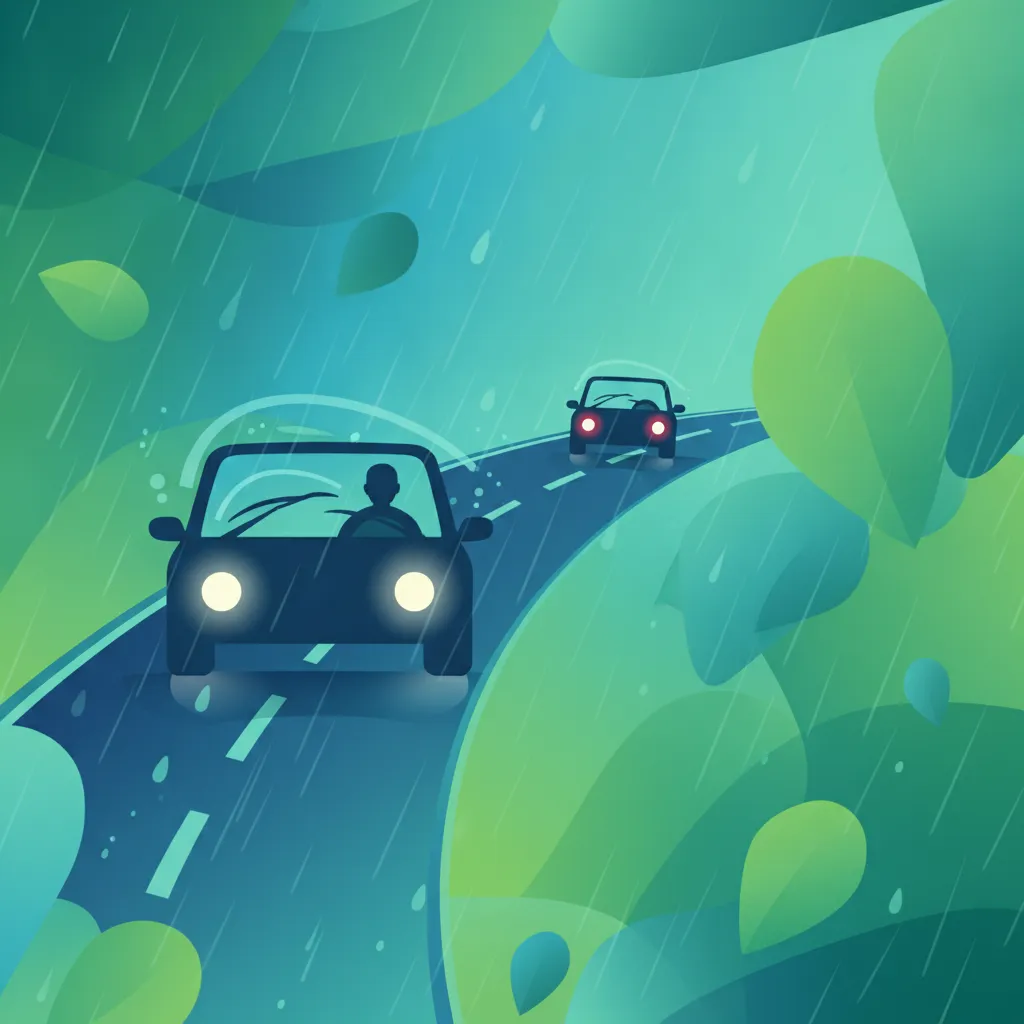
Lesson content overview
Operating a passenger vehicle safely requires a deep understanding of how weather conditions alter the physical relationship between your tires and the road surface. In Turkey, road conditions can shift rapidly—from heavy autumn downpours in the Black Sea region to sudden dense fog in the Marmara basin, and severe winter snowstorms on Anatolian high-altitude passes.
As a candidate preparing for the Turkish driving theory exam (MTSK e-sınav), mastering the principles of driving in adverse weather (olumsuz hava şartları) is not just necessary for passing the test; it is a core pillar of defensive driving that will keep you and your passengers safe. This lesson details the physics of traction loss, safety protocols for low visibility, and the critical adjustments required to maintain vehicle control under adverse conditions.
To control a vehicle, a driver relies entirely on the friction generated between the tire tread and the road surface. This grip is known as skid resistance (yol tutuşu). On a dry, clean asphalt road, the coefficient of friction is high, allowing for efficient braking, precise steering, and rapid acceleration. When weather conditions change, this coefficient drops dramatically, altering your vehicle's dynamics.
Braking distance increases exponentially relative to speed. When the road surface becomes wet, icy, or covered in snow, the friction coefficient is halved or worse.
Because traction is so severely compromised, any sudden input—whether it is slamming on the brakes, turning the steering wheel sharply, or accelerating rapidly—can easily overcome the available grip, sending the vehicle into an uncontrollable skid.
The Golden Rule of Low-Traction Environments: Always separate your inputs. Brake only when traveling in a straight line, steer smoothly without accelerating, and accelerate progressively only after the steering wheel has been straightened.
One of the most dangerous phenomena a driver can experience in wet weather is aquaplaning (also known as hydroplaning, or su kızağı in Turkish).
Aquaplaning is the loss of traction that occurs when a layer of water builds up between the vehicle's tires and the road surface, lifting the tires off the asphalt and causing the vehicle to slide uncontrollably on a cushion of water.
As a tire rolls over a wet road, the tread grooves disperse water outward to maintain direct contact with the pavement. However, if the volume of water is too high, or if the vehicle's speed is too fast, the tire cannot clear the water quickly enough. A wedge of water builds up in front of the tire, eventually forcing its way underneath the tread.
When this happens:
If your vehicle begins to aquaplane, your natural panic response may be to slam on the brakes or steer sharply. Doing so will cause a violent crash once the tires regain sudden grip on dry asphalt. Follow this defensive protocol:
Do not press the brake pedal. Braking locks the wheels, which will cause a severe skid the moment the tires contact solid ground again.
Ease off the accelerator slowly. Allow the vehicle's natural drag to slow you down. This reduces forward momentum and helps the tires sink back through the water layer.
Keep the steering wheel straight. Hold the wheel firmly in the direction of travel. Do not attempt to turn or steer until you feel the tires regain physical contact with the road.
Depress the clutch pedal (in manual vehicles). This disengages the engine from the drive wheels, preventing engine braking from destabilizing the car.
Safe driving is impossible if you cannot see hazards ahead or if other drivers cannot see you. Adverse weather conditions like heavy rain, dense fog (yoğun sis), and snowfall scatter light waves, drastically reducing visibility.
A common mistake among novice drivers is switching on high-beam headlights (uzun farlar) when encountering heavy fog. High beams project light straight ahead. In dense fog, the tiny water droplets suspended in the air act as millions of tiny mirrors, reflecting the intense light directly back into the driver's eyes. This creates a blinding white wall of glare, reducing visibility to nearly zero.
To maintain maximum visibility and signal your presence to other drivers without blinding them, you must use your vehicle's lighting systems correctly:
Turkish Traffic Law Reminder: Daytime running lights (DRLs) are often insufficient in bad weather because they do not activate the rear tail lights. Always manually switch on your low beams in rain, fog, or snow to ensure you are fully visible from behind.
When road grip and visibility drop, your standard driving habits must adapt. The posted speed limits on Turkish highways are designed for dry, clear, daytime conditions. Under adverse weather, these limits act as legal maximums, not targets.
Under ideal conditions, a safe following distance (takip mesafesi) is maintained using the 2-second rule. This gap provides enough space to react and stop if the leading vehicle brakes suddenly.
In adverse weather, because braking distance increases dramatically, you must increase this safety buffer:
Slowing down serves two critical purposes:
Winter conditions require highly specialized vehicle equipment and precise handling techniques. Snow-packed roads and hidden ice layers present some of the most unforgiving driving environments.
Perhaps the most treacherous winter hazard on Turkish roads is black ice (gizli buzlanma).
Black ice is a thin, nearly transparent coating of glaze ice on a road surface. Because it is transparent, the black asphalt underneath shows through, making it look like a harmless wet puddle or dry pavement.
Black ice typically forms during the late night and early morning hours when temperatures hover around freezing (). It is most common in specific microclimates:
If you steer onto black ice, you will feel a sudden silence as tire noise disappears, accompanied by an immediate loss of steering resistance. Keep your steering wheel straight, avoid braking, and let the vehicle coast across the patch.
In Turkey, the use of winter tires is regulated by strict transport laws. Winter tires are manufactured using a specialized rubber compound that remains soft and flexible at temperatures below , featuring deep tread sipes designed to bite into snow and ice.
High winds (şiddetli rüzgar) can destabilize a vehicle, especially high-sided vehicles, but also standard Category B passenger cars. Strong crosswinds are common on long bridges (such as the bridges crossing the Bosphorus or the Gulf of İzmit), coastal highways, and open flat plains in Central Anatolia.
When strong wind gusts strike the side of your vehicle, they can push you out of your lane. To counter this:
Under Turkish traffic laws, drivers bear full legal responsibility for adapting their driving style to environmental conditions. Ignorance of weather conditions is never an acceptable defense for an accident.
To prepare for your Category B exam and real-world driving, study these common hazardous mistakes and their direct safety consequences:
You are driving on a three-lane highway in heavy rain. Visibility is moderate, and water is starting to pool in the ruts of the right lane.
You hit sudden, dense fog on a winding mountain road. Visibility drops to roughly 40 meters.
The temperature display in your car reads . The asphalt appears wet but clear of snow. You are approaching a concrete overpass.
To build a complete foundation of driving safety and traffic rules for your Category B theory exam, review these highly related topics:
Ready to test your knowledge on driving in challenging conditions? Practice with sample questions tailored to the official MTSK e-sınav format:
This lesson covers the physics of traction loss and explains why adverse weather dramatically reduces road grip, increasing braking distances exponentially. It details the aquaplaning phenomenon—how water between tires and road causes complete loss of control—and provides a specific recovery protocol that emphasizes never braking and keeping the steering straight. The lesson also covers fog lighting protocols, the critical 100-meter visibility rule for activating fog lights, and explains how to adjust both speed and following distance based on weather severity. Winter driving content addresses black ice formation on bridges and overpasses, plus Turkey's mandatory winter tire regulations. All content aligns with Turkish traffic law requirements and prepares learners for weather-related scenarios in the MTSK e-sınav.
A short set of high-value points that capture the most important learning from this lesson.
Road grip drops dramatically in adverse weather: wet roads double braking distance, snow increases it 3-4x, and black ice can increase it up to ten times.
Aquaplaning can begin at speeds as low as 50 km/h and becomes highly likely above 80 km/h in heavy rain when tires lose contact with the road surface.
When aquaplaning, do not brake—ease off the accelerator, keep steering straight, and wait for tires to regain contact before attempting any input.
Low-beam headlights are mandatory in rain, fog, and snow because daytime running lights do not activate rear tail lights, making you invisible from behind.
The 100-meter visibility rule means fog lights must only be activated when visibility drops below 100 meters to avoid blinding other drivers.
Explore all units and lessons included in this driving theory course.
Always separate your inputs in low-traction conditions: brake when straight, steer without accelerating, and only accelerate after straightening the wheel.
Use low beams in fog, not high beams—high beams reflect off water droplets and create a blinding white wall of glare.
In rain, increase following distance to 4 seconds minimum; in snow or ice, increase to 6-10 seconds using the time-gap method.
Black ice forms most commonly on bridges, overpasses, and shaded road sections during freezing temperatures.
Winter tires (displaying 3PMSF or M+S symbol) are mandatory for commercial vehicles from December 1 to April 1, with local governorates able to extend this to private vehicles.
Maintaining posted speed limits in rain or snow, believing they are always safe—this leads to aquaplaning or loss of control on curves.
Following too closely in wet conditions, dramatically increasing rear-end collision risk when the front vehicle brakes suddenly.
Using high-beam headlights in fog, which causes backscatter reflection that blinds the driver rather than improving visibility.
Slamming on the brakes during a skid, which locks the wheels, worsens the skid, and eliminates all steering control.
Using high-intensity fog lights in light rain or clear conditions, blinding drivers behind you and violating traffic regulations.
Lesson content overview
A short set of high-value points that capture the most important learning from this lesson.
Road grip drops dramatically in adverse weather: wet roads double braking distance, snow increases it 3-4x, and black ice can increase it up to ten times.
Aquaplaning can begin at speeds as low as 50 km/h and becomes highly likely above 80 km/h in heavy rain when tires lose contact with the road surface.
When aquaplaning, do not brake—ease off the accelerator, keep steering straight, and wait for tires to regain contact before attempting any input.
Low-beam headlights are mandatory in rain, fog, and snow because daytime running lights do not activate rear tail lights, making you invisible from behind.
The 100-meter visibility rule means fog lights must only be activated when visibility drops below 100 meters to avoid blinding other drivers.
Explore all units and lessons included in this driving theory course.
Always separate your inputs in low-traction conditions: brake when straight, steer without accelerating, and only accelerate after straightening the wheel.
Use low beams in fog, not high beams—high beams reflect off water droplets and create a blinding white wall of glare.
In rain, increase following distance to 4 seconds minimum; in snow or ice, increase to 6-10 seconds using the time-gap method.
Black ice forms most commonly on bridges, overpasses, and shaded road sections during freezing temperatures.
Winter tires (displaying 3PMSF or M+S symbol) are mandatory for commercial vehicles from December 1 to April 1, with local governorates able to extend this to private vehicles.
Maintaining posted speed limits in rain or snow, believing they are always safe—this leads to aquaplaning or loss of control on curves.
Following too closely in wet conditions, dramatically increasing rear-end collision risk when the front vehicle brakes suddenly.
Using high-beam headlights in fog, which causes backscatter reflection that blinds the driver rather than improving visibility.
Slamming on the brakes during a skid, which locks the wheels, worsens the skid, and eliminates all steering control.
Using high-intensity fog lights in light rain or clear conditions, blinding drivers behind you and violating traffic regulations.
Explore search topics learners often look for when studying Driving in Adverse Weather Conditions. These topics reflect common questions about road rules, driving situations, safety guidance, and lesson level theory preparation for learners in Turkey.
Browse additional driving theory lessons that cover connected traffic rules, road signs, and common driving situations related to this topic. Improve your understanding of how different rules interact across everyday traffic scenarios.
Learn how to actively scan the road for potential dangers and anticipate other road users' movements. This guide focuses on defensive driving strategies to recognize risks early and adjust your speed or position to maintain safety in diverse traffic environments.
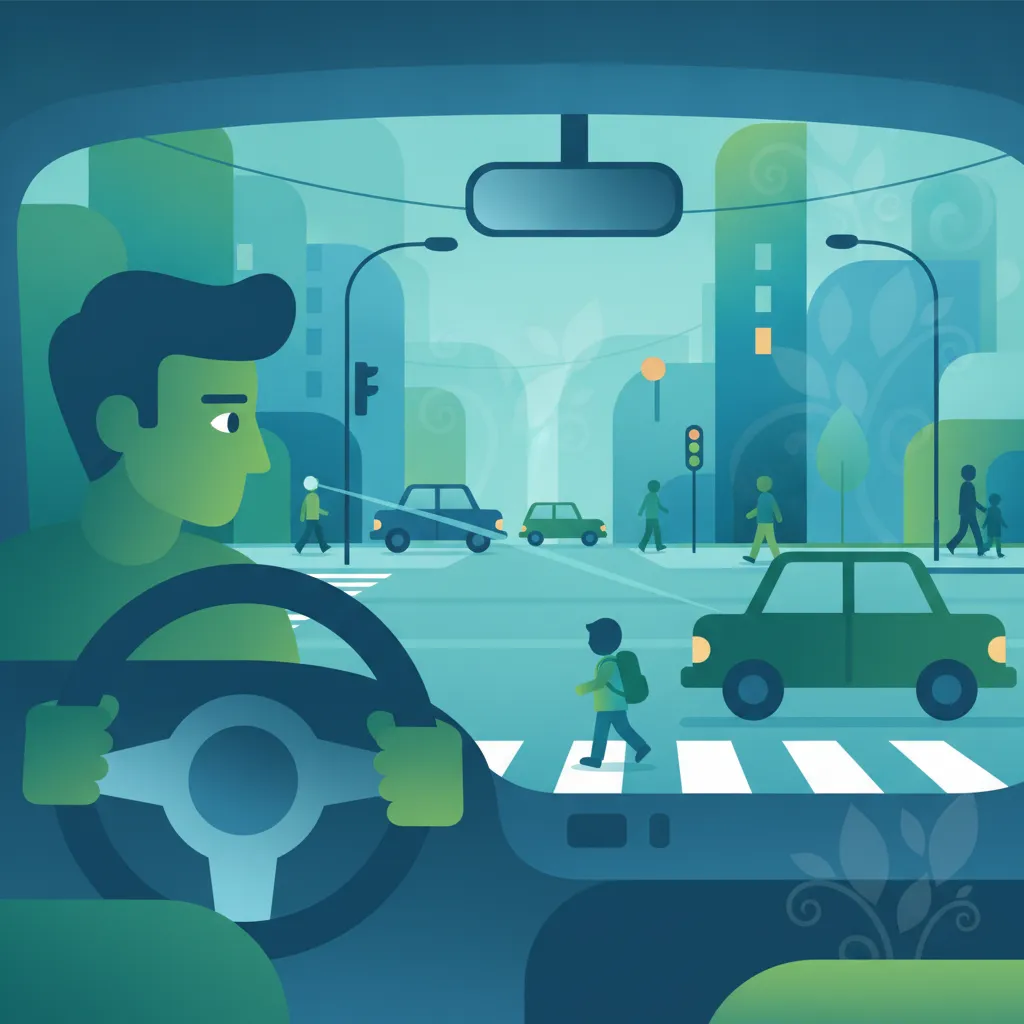
This lesson explores the critical skill of hazard identification and anticipation while driving. Topics include recognizing potential risks in traffic, road conditions, and environmental factors. Learners will develop skills in anticipatory driving to proactively address hazards before they become dangerous. Real-world examples illustrate how to maintain vigilance.
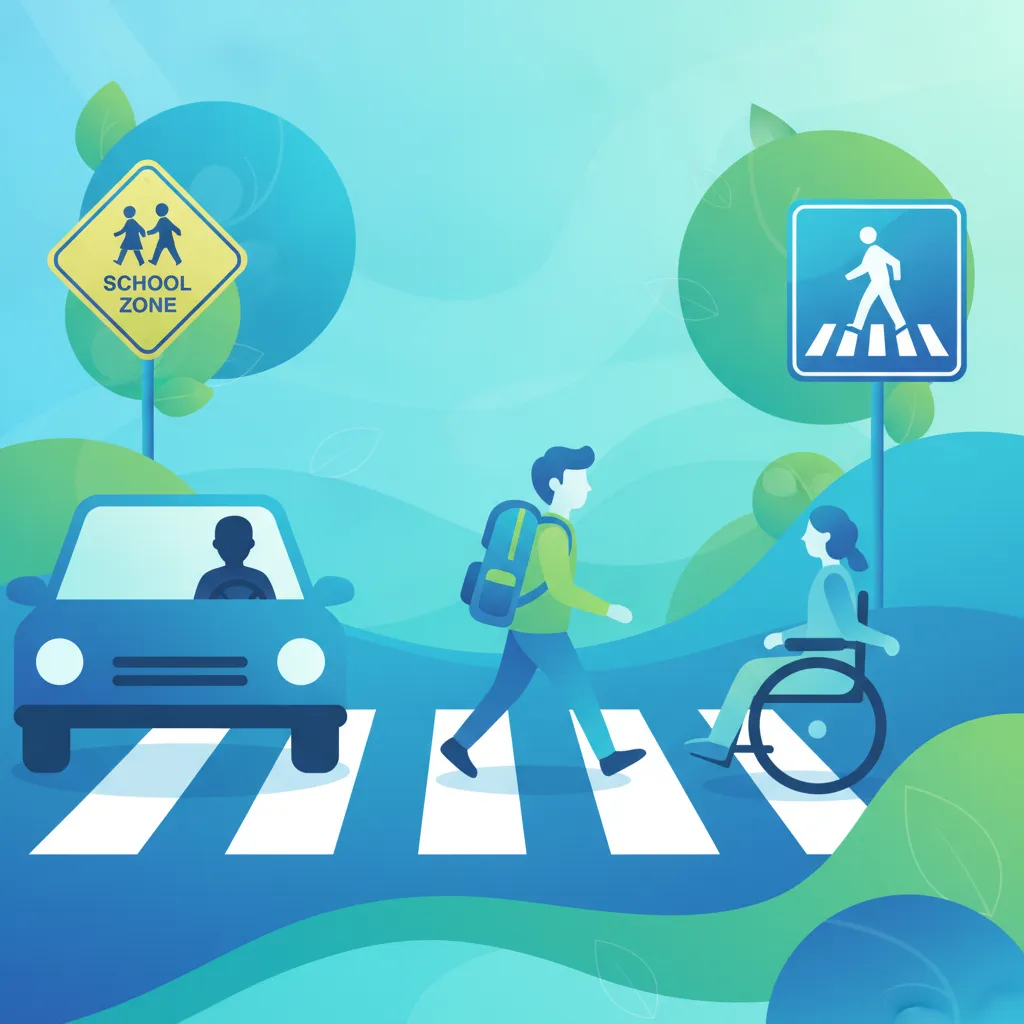
Learners will identify the different categories of vulnerable road users and understand the heightened risks they face. The lesson emphasizes the importance of recognizing these users, anticipating their actions, and taking proactive measures to ensure their safety while operating passenger vehicles. Strategies for mitigating danger and fostering a protective driving environment are explored.
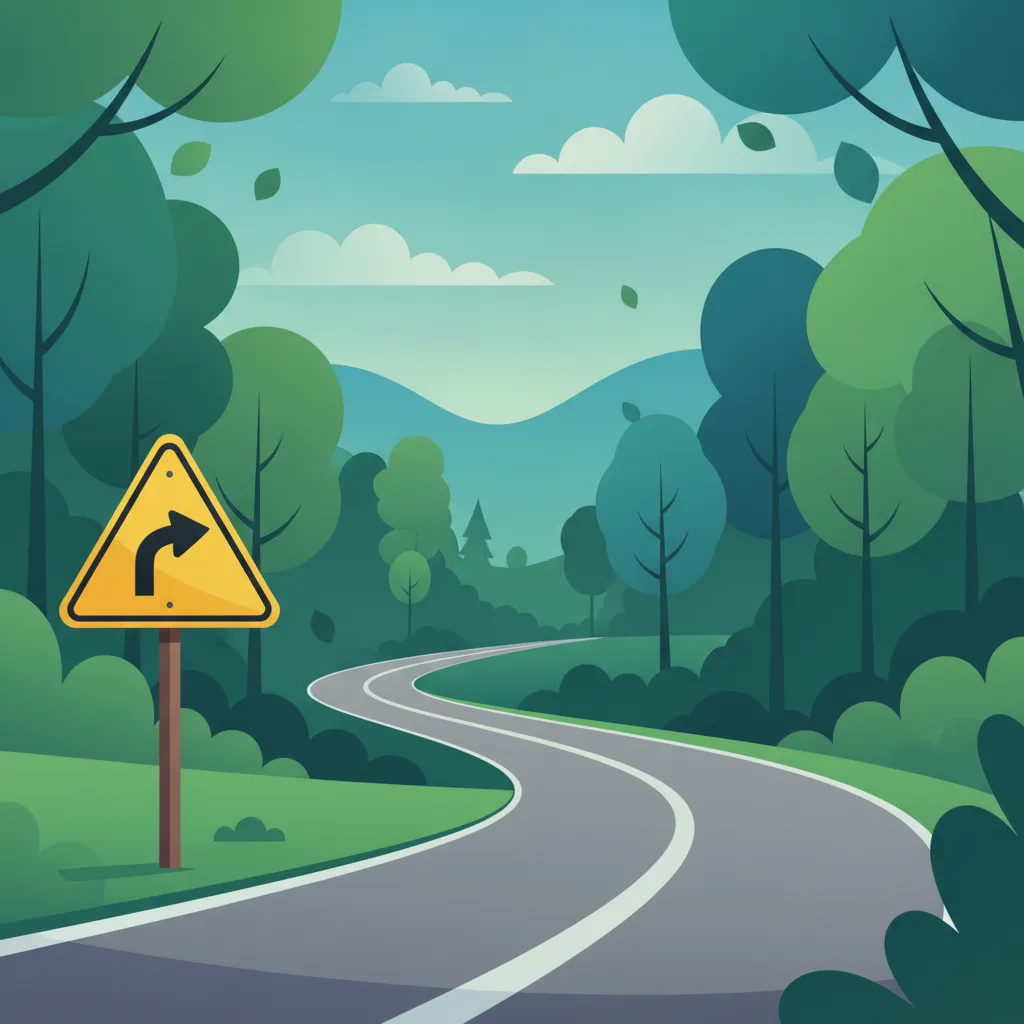
In this lesson, learners explore warning traffic signs designed to alert drivers to potential hazards ahead. Topics include signs indicating curves, steep descents, slippery surfaces, pedestrian crossings, and school zones. The lesson emphasizes the importance of interpreting these signs correctly to adjust speed and driving behaviour, thereby preventing accidents.
This lesson focuses on protecting vulnerable road users, such as pedestrians, cyclists, and motorcyclists, in mixed traffic environments. Learners will examine specific strategies for increased vigilance, anticipatory driving, and properly yielding to these users. The lesson also covers high-risk zones, such as school areas and public transport stops, emphasizing the need for heightened safety.
Learners will explore the specific challenges presented by adverse weather conditions, such as rain, fog, and nighttime driving. The lesson emphasizes the importance of adjusting speed, increasing following distances, and using appropriate lighting to maintain safety. Strategies for handling reduced road surface grip and visibility issues are discussed, ensuring drivers can adapt to changing weather while protecting passengers and other road users.
Learners will examine the complexities of operating in environments where various road users, including pedestrians, cyclists, and motorcyclists, coexist. The lesson emphasizes the need for heightened situational awareness, defensive driving techniques, and proactive hazard anticipation. Strategies for navigating mixed traffic safely, especially in congested urban areas, are highlighted.
Learners will explore techniques for adjusting driving styles based on different road surface conditions, such as gravel, potholes, and wet pavement. The lesson emphasizes the importance of adapting speed, braking, and steering inputs to maintain vehicle control and passenger comfort. Strategies for detecting and responding to road hazards are discussed to ensure safety across diverse driving environments.
Proper road positioning is your primary shield against being squeezed, sideswiped, or overlooked by larger motor vehicles in daily traffic. This lesson explains how to ride in the center or slightly off-center of your lane to prevent unsafe overtaking within the same lane. You will study how to identify the massive blind spots of buses and trucks, maintain appropriate following distances, and execute overtaking maneuvers with maximum safety margin and clear signal warning.

This lesson explores the hazards characteristic of rural roads, including narrow paths, lack of lighting, slow agricultural vehicles, and sharp curves. It teaches drivers how to anticipate blind corners, adjust speed, and pass slow-moving tractors safely. Motorists will learn to remain highly alert for unexpected roadway obstructions.
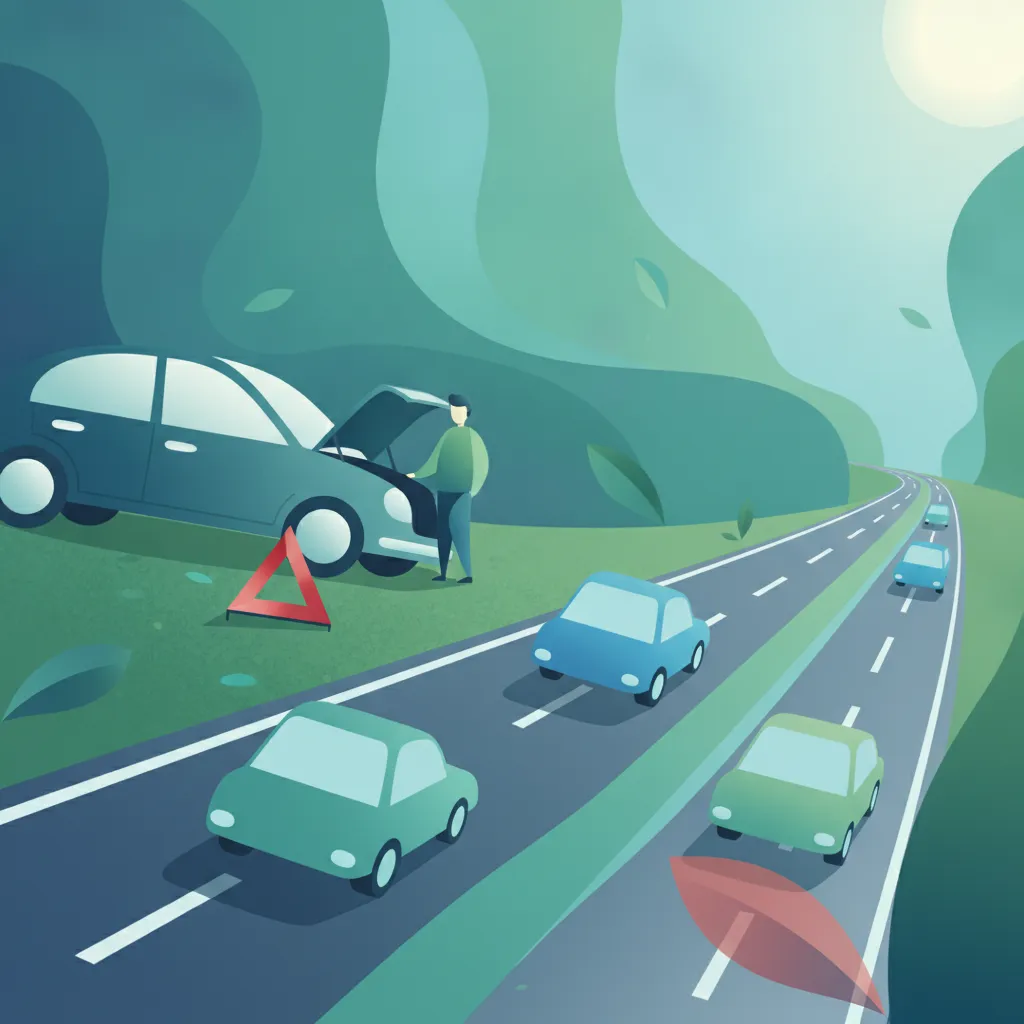
This lesson examines portable and electronic warning devices used to inform drivers of temporary road conditions. Learners will explore the use of movable signs, electronic variable message signs, speed display devices, and reflective hazard cones. The lesson emphasizes the significance of these devices in construction zones, roadworks, and dynamic traffic situations.
Understand the specific challenges of driving on highways and during night hours. This lesson covers proper use of vehicle lighting, managing fatigue, maintaining safe distances at high speeds, and navigating rural or motorway routes under reduced visibility conditions.
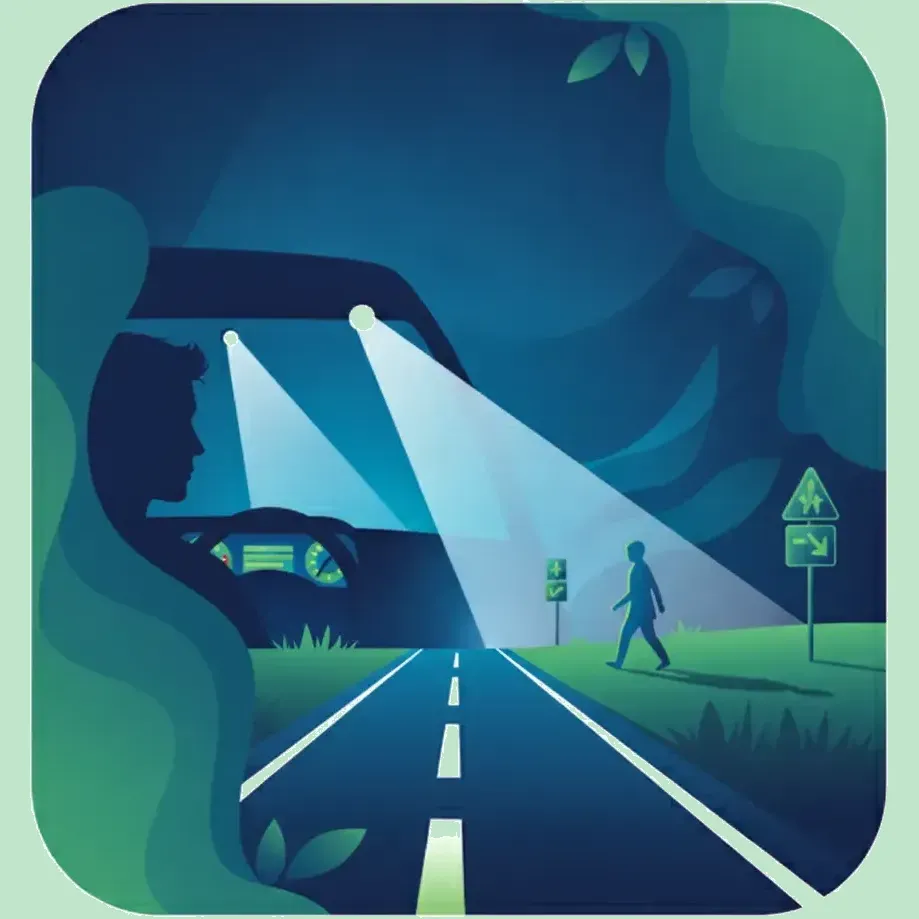
This lesson covers the unique challenges of nighttime driving, focusing on reduced visual perception, headlight glare, and driver fatigue. It explains how to adjust speed to remain within the headlight beam range and react to poorly illuminated road hazards. Motorists will learn techniques to maintain maximum focus and safety after sunset.
Learners will explore the specific challenges presented by adverse weather conditions, such as rain, fog, and nighttime driving. The lesson emphasizes the importance of adjusting speed, increasing following distances, and using appropriate lighting to maintain safety. Strategies for handling reduced road surface grip and visibility issues are discussed, ensuring drivers can adapt to changing weather while protecting passengers and other road users.

This lesson addresses the specific challenges of riding a motorcycle after dark, focusing on the importance of proper headlamp usage, reflective clothing, and heightened situational awareness. It provides guidance on how to remain visible to other road users, how to read road markings and signs under low-light conditions, and techniques for managing glare and fatigue during extended night rides.
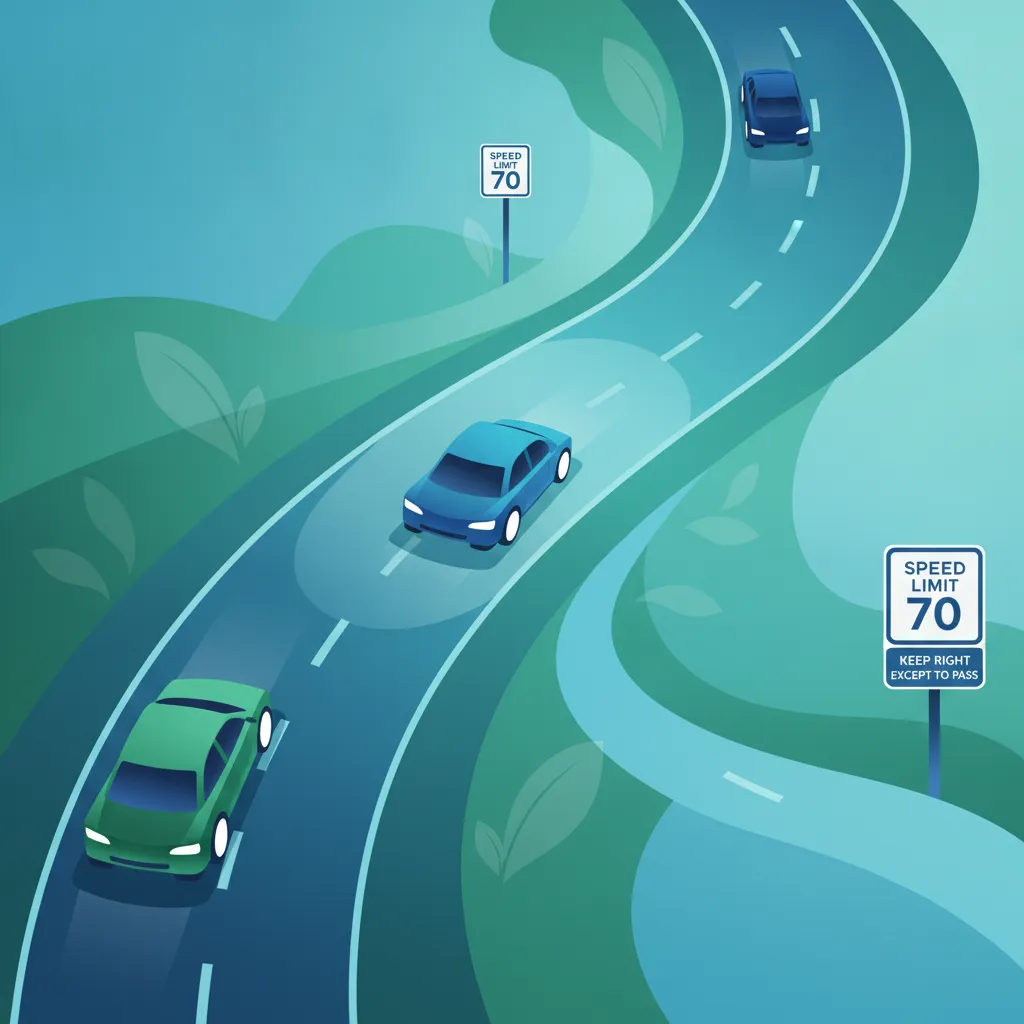
This lesson explains the specific rules, driving etiquette, and safety protocols for operating a vehicle on high-speed Turkish motorways. It covers correct lane usage, overtaking procedures, emergency lane restrictions, and how to maintain consistent high speeds safely. Drivers will learn to avoid dangerous tailgating and sudden lane changes.
This lesson covers the proper usage, maintenance, and alignment of the vehicle's lighting systems, including high beams, low beams, and fog lights. It explains the legal requirements for activating lights during daytime, twilight, tunnel crossings, and heavy rain. Drivers will learn how to avoid blinding oncoming motorists while maintaining visibility.
This lesson explores the hazards characteristic of rural roads, including narrow paths, lack of lighting, slow agricultural vehicles, and sharp curves. It teaches drivers how to anticipate blind corners, adjust speed, and pass slow-moving tractors safely. Motorists will learn to remain highly alert for unexpected roadway obstructions.
This lesson focuses on the unique requirements and best practices for operating passenger vehicles on highways and expressways. Topics include maintaining appropriate speed, adhering to lane discipline, executing safe overtaking maneuvers, and managing merges and exits. Emphasis is placed on ensuring a smooth ride for passengers while integrating safely with faster-moving traffic.
This lesson focuses on the extreme dangers of driver fatigue, micro-sleep episodes, and the signs of physical exhaustion. It details how sleep deprivation compromises driving safety in a manner comparable to moderate alcohol intoxication. Drivers will learn proactive fatigue management strategies, including scheduling regular rest stops.
Learners will explore techniques for adjusting driving styles based on different road surface conditions, such as gravel, potholes, and wet pavement. The lesson emphasizes the importance of adapting speed, braking, and steering inputs to maintain vehicle control and passenger comfort. Strategies for detecting and responding to road hazards are discussed to ensure safety across diverse driving environments.
This lesson focuses on the challenges of driving goods vehicles in adverse weather conditions, such as rain, fog, snow, and strong wind. Learners will explore safe speed management, increased following distances, proper use of headlights and windshield wipers, and techniques to maintain traction. The lesson emphasizes the importance of adapting driving behavior to the specific weather conditions.
Find clear answers to common questions learners have about Driving in Adverse Weather Conditions. Learn how the lesson is structured, which driving theory objectives it supports, and how it fits into the overall learning path of units and curriculum progression in Turkey. These explanations help you understand key concepts, lesson flow, and exam focused study goals.
You should use rear fog lights only when visibility is severely reduced, generally less than 50 meters, due to fog, heavy rain, or snow. Always turn them off immediately once visibility improves to avoid dazzling other drivers.
If your tires lose contact with the road due to water, do not slam on the brakes or make sharp steering movements. Ease off the accelerator, keep the steering wheel straight, and allow the vehicle to regain traction naturally.
While official signs indicate the maximum speed, Turkish law requires you to drive at a speed appropriate for road and weather conditions. If conditions are poor, you must reduce your speed significantly below the posted limit for safety.
Snow and ice significantly reduce friction, which can increase your stopping distance by up to ten times compared to a dry, clean road surface. You must increase your following distance proportionally.
Use our comprehensive practice search to find exactly the Turkish driving theory questions you need to master. Whether reviewing specific road signs, traffic rules, or first aid scenarios, select your perfect practice set and boost your confidence for the official ehliyet sınavı.