
This lesson addresses the critical risks of driving while tired and explains how to implement effective fatigue management strategies. It is a vital part of your Category B theory preparation, ensuring you understand both the legal requirements and the personal responsibility needed to prevent accidents caused by exhaustion.

Lesson content overview
Driver fatigue is one of the most critical yet frequently underestimated hazards on the road. Unlike a mechanical failure or an obvious external road hazard, fatigue is an internal, progressive impairment that directly compromises a driver's cognitive and physical capabilities.
In Turkey, where long-distance travel between major cities like Istanbul, Ankara, and Izmir is common, managing fatigue is essential for highway safety. Statistics indicate that a significant percentage of serious accidents on high-speed motorways (otoban) are directly linked to sleep-deprived drivers.
This lesson covers the physiological mechanics of driver fatigue, the extreme dangers of micro-sleep, the primary indicators of exhaustion, and practical, scientifically-backed strategies to manage and prevent fatigue. Mastering these concepts is not only a vital step toward passing the official Turkish MTSK e-sınav (Electronic Driving License Exam) but is also fundamental to your safety as a Category B license holder.
Fatigue is a physiological state of reduced mental and physical alertness resulting from prolonged wakefulness, sleep deprivation, or intense physical or mental exertion. When you are fatigued, your brain’s ability to process sensory information, calculate hazards, and coordinate motor responses declines dramatically.
A state of temporary impairment in mental and physical performance caused by insufficient rest, prolonged cognitive workload, or disruptions to the body's natural sleep cycle.
Safe vehicle operation requires continuous visual scanning, rapid hazard perception, and precise steering and braking adjustments. Fatigue degrades these processes in several distinct ways:
To appreciate the danger of driving while tired, it is helpful to compare it to driving under the influence of alcohol. Extensive traffic safety research shows that prolonged sleep deprivation impairs cognitive and motor functions in a manner virtually identical to alcohol consumption.
One of the greatest dangers of fatigue is that drivers often try to "push through" it, believing they can control their level of alertness. However, sleep is a biological necessity, not a conscious choice. Recognizing the early symptoms of fatigue is the only way to prevent a serious accident.
The body provides clear physical signals when its cognitive reserves are depleted. You must monitor yourself for:
These signs manifest in how you control the vehicle and interact with the road environment:
Mental fatigue affects your mood, attention span, and cognitive processing:
When fatigue is ignored, the brain eventually bypasses your conscious will and forces brief periods of sleep known as micro-sleep.
An involuntary, temporary episode of sleep that lasts anywhere from a fraction of a second up to 10 or 15 seconds, during which the brain completely disengages from the external environment.
During a micro-sleep episode, you are completely unconscious. Your eyes may remain wide open, giving you the false illusion of wakefulness, but your brain is not processing any visual or auditory input. You cannot steer, brake, or react to hazards.
The physics of a vehicle in motion illustrate why even a two-second micro-sleep is incredibly dangerous. Consider the distance covered while completely blind at common speeds:
During this distance, the vehicle can easily drift off the road, collide with a concrete barrier, cross into oncoming traffic, or rear-end a slower-moving vehicle. Drivers experiencing a micro-sleep rarely attempt to brake before impact, which is why fatigue-related crashes are highly lethal.
Preventing fatigue-related accidents requires active planning before you start your journey and immediate action if fatigue signs appear while driving.
Before embarking on a long journey (such as driving from Istanbul to Antalya), implement these preventative steps:
If you are already driving and begin to experience any of the warning signs of fatigue, you must act immediately. Do not try to stretch your drive to the next major city; pull over at the nearest safe area, such as a highway service station (dinlenme tesisi).
Pull Over Safely: Signal and pull into a designated highway rest area, service station, or parking bay. Never pull over on the emergency lane (hard shoulder / emniyet şeridi) to sleep, as this is highly dangerous and illegal except in absolute mechanical emergencies.
Consume Caffeine: Drink a cup of strong coffee or a highly caffeinated beverage.
Take a Restorative Power Nap: Immediately lock your vehicle doors and take a short 15-to-20-minute nap. Do not sleep for longer than 30 minutes, or you may enter deep sleep and wake up feeling even more groggy (a state known as sleep inertia).
Allow Time for Caffeine to Kick In: It takes approximately 20 minutes for caffeine to enter your bloodstream and affect your brain. This timing aligns perfectly with your 20-minute nap.
Stretch and Hydrate: Step out of the vehicle, do some light stretching exercises to stimulate blood circulation, and drink cold water before resuming your drive.
Many drivers rely on ineffective methods to fight off drowsiness. These "quick fixes" do not restore your cognitive functions and create a dangerous, false sense of security:
Turkish law recognizes the extreme danger that fatigued drivers pose to public safety. Consequently, strict regulations govern driving times and rest periods, particularly for commercial and professional drivers.
Under the Turkish Highway Traffic Regulation (Karayolları Trafik Yönetmeliği), drivers of commercial vehicles (such as buses, heavy trucks, and commercial transport vans carrying freight or passengers) are subject to strict legal driving limits. These limits are monitored using a digital or analog Tachograph (Takograf) device installed in the vehicle.
While private passenger car drivers do not have legally mandated hourly driving limits monitored by tachographs, they are still legally bound to be fit to drive.
The likelihood of experiencing fatigue is heavily influenced by your driving environment. Understanding these situational risk factors allows you to adapt your driving plan.
Long, straight highways with minimal scenery (such as sections of the Ankara-Konya or Niğde-Ankara highways) are prime locations for highway hypnosis. The repetitive visual field and lack of physical maneuvers (steering, shifting gears) reduce brain activity, accelerating the transition from alertness to drowsiness.
Driving in heavy rain, thick fog, or snow demands intense concentration. This high cognitive workload drains your mental reserves rapidly. Under these conditions, mental fatigue sets in much faster than during a clear, sunny day. You must adjust your rest break schedule accordingly, taking stops every 1 to 1.5 hours.
Our bodies are naturally programmed to sleep when it is dark. Night driving requires your eyes to work harder to adjust to low-light conditions and glare from oncoming headlights. The combination of your body’s natural circadian dip and increased visual strain makes driving between 11:00 PM and 6:00 AM exceptionally hazardous.
Always remember: No destination is important enough to risk your life or the lives of others. If you feel tired, stop driving immediately. Sleep is the only cure for sleepiness.
To successfully navigate questions on fatigue on the Turkish driving theory exam, keep these core principles in mind:
This lesson explains why driver fatigue is a leading cause of serious accidents on Turkish roads, comparable to alcohol impairment at measurable equivalence levels. Learners are taught to recognize physical, behavioral, and mental warning signs such as lane drifting and highway hypnosis, and to understand the catastrophic danger of micro-sleep episodes where the brain involuntarily disengages for seconds while the vehicle continues at high speed. The content covers proactive pre-trip planning including quality sleep and circadian-aware scheduling, immediate in-trip interventions like the recommended 15-to-20-minute power nap aligned with caffeine intake timing, and the proven ineffectiveness of quick fixes. For the MTSK e-sınav, key facts include the 0.50 promil equivalence of 18 hours awake and the specific commercial driving limits of 4.5 hours continuous and 9 hours daily with mandatory rest periods, along with the legal consequences of fatigued driving under Turkish traffic law.
A short set of high-value points that capture the most important learning from this lesson.
Sleep deprivation impairs driving ability equivalent to alcohol intoxication; 18 hours awake equals the 0.50 promil legal limit in Turkey.
Micro-sleep episodes lasting just 3 seconds at 120 km/h result in a vehicle traveling 100 meters with no driver control.
Fatigue warning signs include heavy eyelids, frequent yawning, lane drifting, and forgetting recent kilometers driven.
Commercial drivers in Turkey must stop for at least 45 minutes after 4.5 hours of continuous driving, with a 9-hour daily maximum.
Fighting fatigue with windows, loud music, or conversation provides only temporary and false relief; only sleep truly restores alertness.
Explore all units and lessons included in this driving theory course.
The body's natural alertness dips occur between 2:00–6:00 AM and 2:00–4:00 PM; avoid scheduling long drives during these circadian low points.
A restorative power nap should be limited to 15–20 minutes; exceeding 30 minutes risks entering deep sleep and sleep inertia.
Pulling over on the emergency lane (emniyet şeridi) to rest is illegal in Turkey except during absolute mechanical emergencies.
Under Article 47 of Turkish Highway Traffic Law (No. 2918), causing an accident by falling asleep at the wheel is classified as conscious negligence (bilinçli taksir).
The Tachograph (Takograf) is a mandatory recording device in commercial vehicles that tracks driving hours and rest periods for regulatory compliance.
Assuming they can push through fatigue by willpower, not realizing sleep is a biological necessity rather than a conscious choice.
Relying on caffeine as a substitute for sleep; caffeine provides temporary stimulation but does not restore impaired cognitive functions.
Continuing to drive into natural low-energy periods (late night or early afternoon) without factoring in the body's circadian rhythm.
Taking breaks too infrequently; the recommended interval is every 2 hours or 150–200 kilometers, not only when exhaustion becomes severe.
Pulling over on the highway hard shoulder to sleep, not recognizing that only designated rest areas (dinlenme tesisi) are legally safe for this purpose.
Lesson content overview
A short set of high-value points that capture the most important learning from this lesson.
Sleep deprivation impairs driving ability equivalent to alcohol intoxication; 18 hours awake equals the 0.50 promil legal limit in Turkey.
Micro-sleep episodes lasting just 3 seconds at 120 km/h result in a vehicle traveling 100 meters with no driver control.
Fatigue warning signs include heavy eyelids, frequent yawning, lane drifting, and forgetting recent kilometers driven.
Commercial drivers in Turkey must stop for at least 45 minutes after 4.5 hours of continuous driving, with a 9-hour daily maximum.
Fighting fatigue with windows, loud music, or conversation provides only temporary and false relief; only sleep truly restores alertness.
Explore all units and lessons included in this driving theory course.
The body's natural alertness dips occur between 2:00–6:00 AM and 2:00–4:00 PM; avoid scheduling long drives during these circadian low points.
A restorative power nap should be limited to 15–20 minutes; exceeding 30 minutes risks entering deep sleep and sleep inertia.
Pulling over on the emergency lane (emniyet şeridi) to rest is illegal in Turkey except during absolute mechanical emergencies.
Under Article 47 of Turkish Highway Traffic Law (No. 2918), causing an accident by falling asleep at the wheel is classified as conscious negligence (bilinçli taksir).
The Tachograph (Takograf) is a mandatory recording device in commercial vehicles that tracks driving hours and rest periods for regulatory compliance.
Assuming they can push through fatigue by willpower, not realizing sleep is a biological necessity rather than a conscious choice.
Relying on caffeine as a substitute for sleep; caffeine provides temporary stimulation but does not restore impaired cognitive functions.
Continuing to drive into natural low-energy periods (late night or early afternoon) without factoring in the body's circadian rhythm.
Taking breaks too infrequently; the recommended interval is every 2 hours or 150–200 kilometers, not only when exhaustion becomes severe.
Pulling over on the highway hard shoulder to sleep, not recognizing that only designated rest areas (dinlenme tesisi) are legally safe for this purpose.
Explore search topics learners often look for when studying Fatigue Management. These topics reflect common questions about road rules, driving situations, safety guidance, and lesson level theory preparation for learners in Turkey.
Browse additional driving theory lessons that cover connected traffic rules, road signs, and common driving situations related to this topic. Improve your understanding of how different rules interact across everyday traffic scenarios.
Understand the legal obligations and essential first aid steps required for drivers in Turkey during traffic accidents. This lesson covers critical emergency response protocols, the importance of maintaining composure, and the necessary procedures for securing the scene while waiting for professional medical assistance.
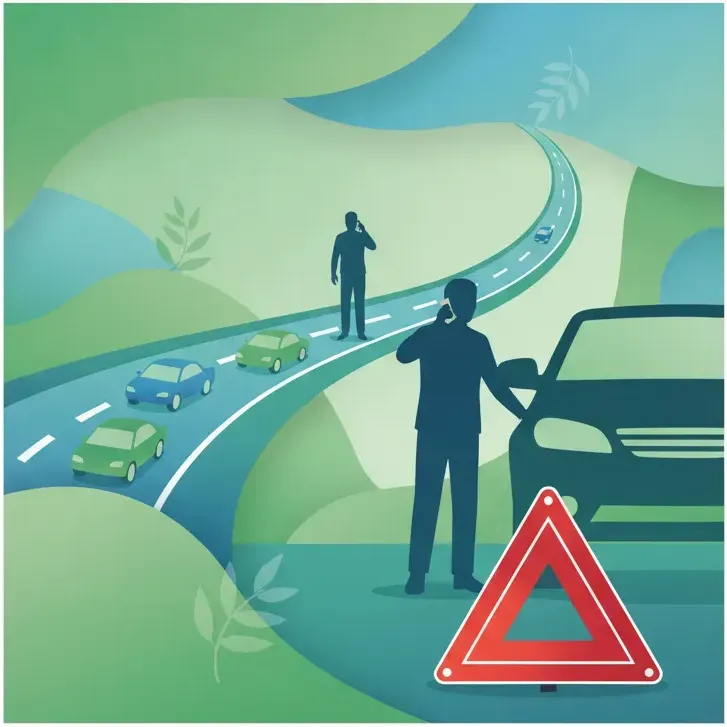
This lesson provides guidance on appropriate actions to take in the event of an accident or emergency while operating a goods vehicle. Learners will understand how to secure the scene, call Turkish emergency services (112), provide basic first aid, and complete necessary documentation. Emphasis is placed on ensuring personal safety, preventing further incidents, and facilitating rescue teams.
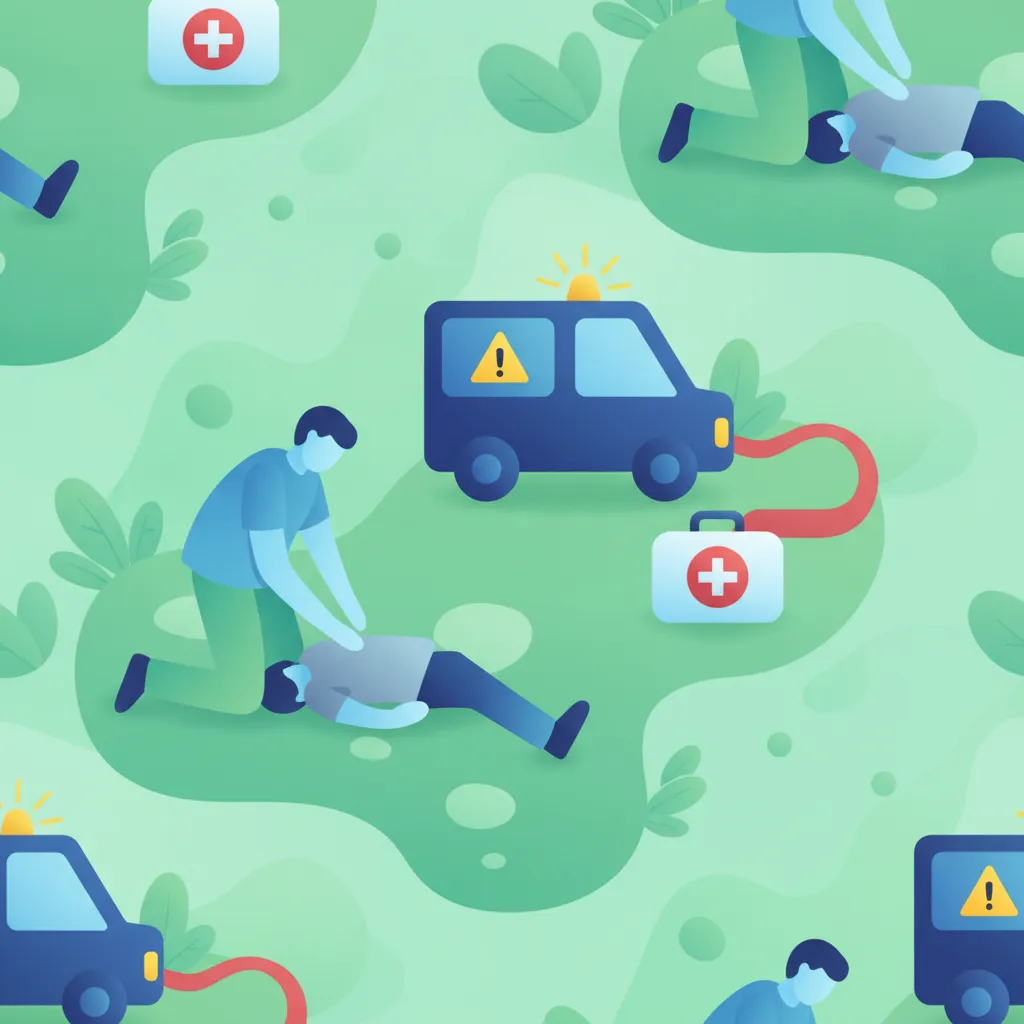
This lesson explains the critical steps to take during a road accident, focusing on scene safety, emergency calling, and basic first aid. It details how to secure the crash scene using reflectors to prevent secondary collisions and how to assess injured victims safely. Drivers will learn essential life-saving techniques required by Turkish law.
This lesson examines the integral role of the goods vehicle driver in contributing to overall traffic safety and a positive safety culture. It focuses on proactive driving behaviors, hazard identification, and effective risk management strategies. Communication techniques with other road users, compliance with traffic flow regulations, and competent emergency responses are highlighted as essential skills.
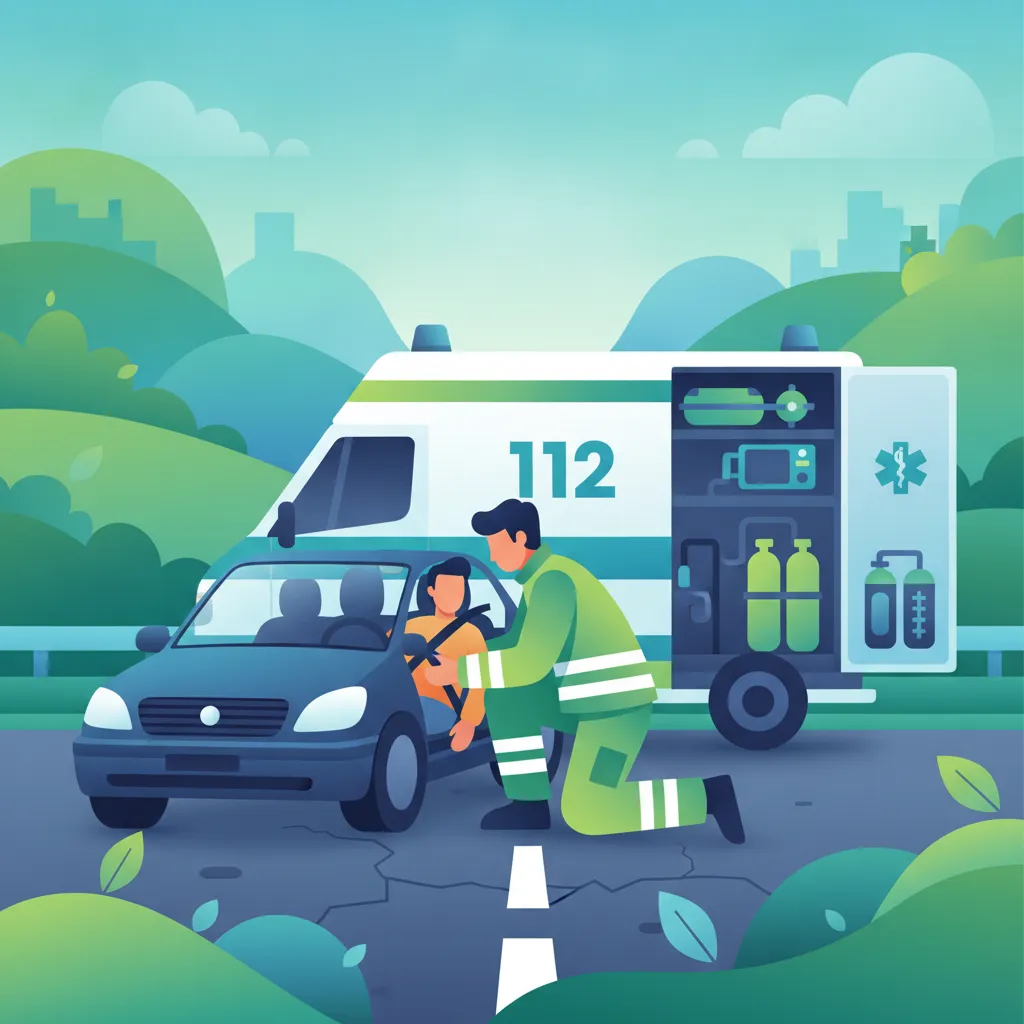
This lesson educates learners on the critical role of the 112 emergency service in Turkey, covering how to effectively report accidents and seek assistance. It emphasizes the importance of clear communication with dispatchers, providing accurate information such as location and nature of the incident. Additionally, the lesson introduces basic first aid principles that riders can apply while awaiting professional help, underscoring collective responsibility.
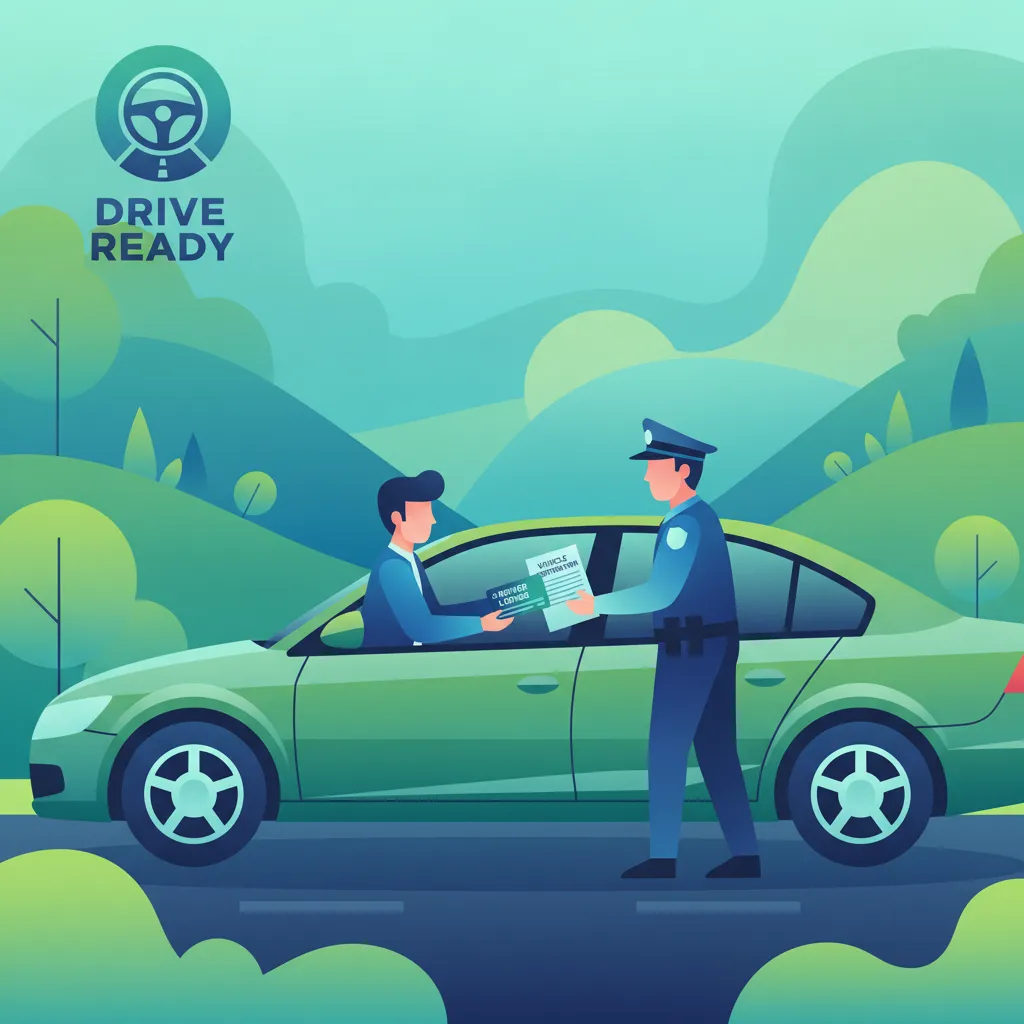
This lesson details the statutory duties imposed on motor vehicle drivers by Turkish traffic legislation to maintain order on public roads. It emphasizes mandatory seat belt usage, mobile phone bans, vehicle inspection rules, and general compliance with police directions. Understanding these duties ensures drivers avoid heavy penalties and maintain road safety.
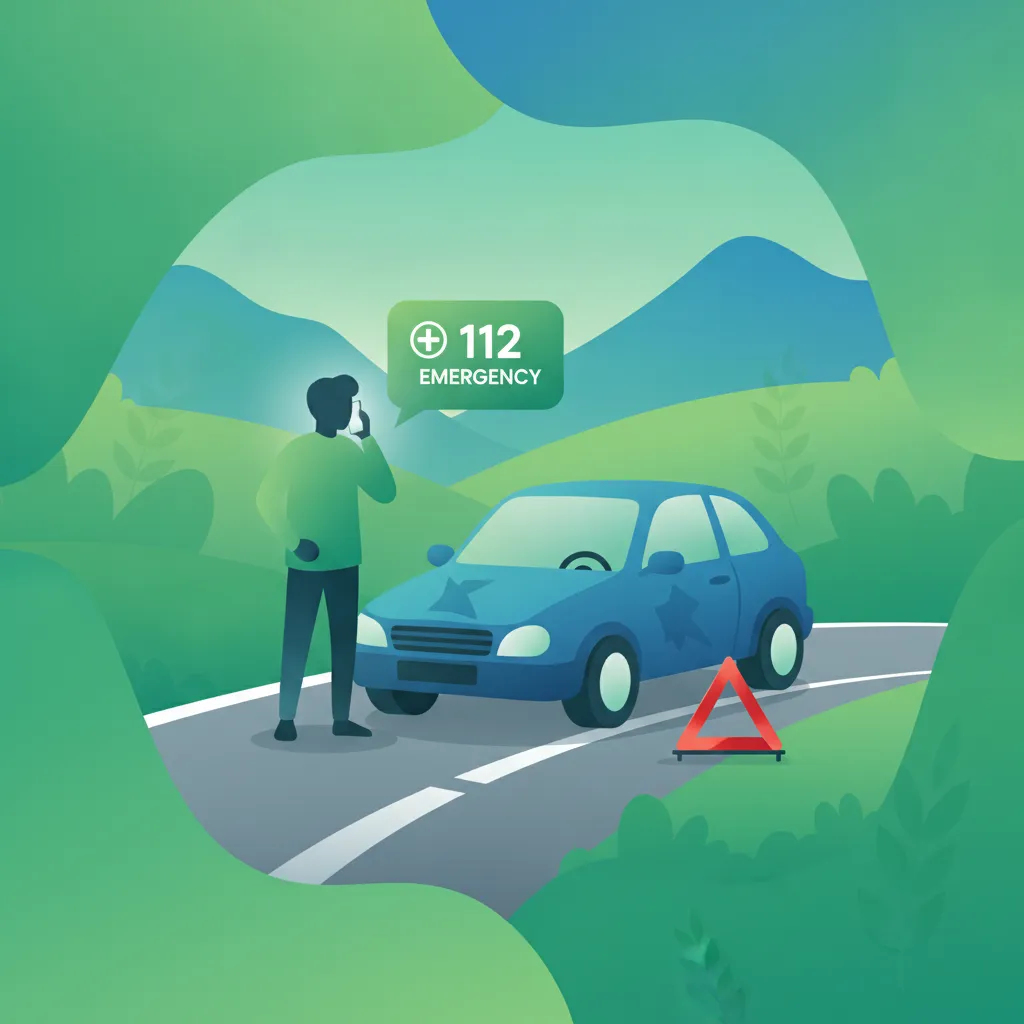
Knowing how to act immediately following a traffic accident or mechanical breakdown is crucial for saving lives and preventing secondary collisions. This lesson provides clear instructions on securing the scene using warning markers, assessing injuries, and immediately dialing the national 112 emergency number. You will learn what critical information to report, how to administer basic life-saving first aid within your capacity, and how to position a disabled moped safely out of active traffic lanes.

Learners will examine common vehicle emergencies that may occur while transporting passengers, such as fires, tire blowouts, or brake failures. The lesson emphasizes quick recognition of warning signs and outlines step-by-step emergency protocols to ensure the safety of passengers and other road users. Strategies for effective incident response and communication are also covered.
This lesson delves into the ethical responsibilities and professional standards expected of goods vehicle drivers, emphasizing their pivotal role in ensuring traffic safety. It explores the duty of care owed to other road users and the broader societal expectations placed upon professional drivers. Learners will examine how their conduct directly influences public trust and overall traffic flow in urban environments.

Learners will explore the core safety priorities for passenger transport, including the correct use of seat belts, securing luggage, and maintaining passenger stability during vehicle motion. The lesson highlights the importance of clear safety briefings, the location and operation of emergency exits, and conducting risk assessments before departure. By mastering these practices, drivers can significantly reduce the likelihood of accidents and injuries.
This lesson focuses on the importance of maintaining professional conduct when interacting with traffic authorities, law enforcement, and the general public. Learners will explore communication techniques that convey respect and courtesy, even in stressful situations. Emphasis is placed on upholding a positive image of the transportation industry and resolving conflicts amicably on the road.
Explore the foundations of responsible driving culture and how driver behavior influences road safety in Turkey. This lesson focuses on the ethical aspects of sharing the road, managing road rage, and understanding the long-term impact of individual driving habits on collective public safety.

This lesson emphasizes the ethical dimension of driving, encouraging a responsible and considerate attitude towards all road users. Learners will explore the principles of defensive driving, risk awareness, and the moral obligations that come with operating a vehicle. The importance of respecting pedestrians, cyclists, and vulnerable road users is highlighted, along with the broader societal benefits of ethical driving.

This lesson promotes a responsible, safe, and sustainable driving culture, emphasizing personal accountability and environmental protection. It covers eco-driving techniques that reduce emissions and fuel consumption while enhancing overall traffic flow. Motorists will learn to view driving as a privilege that demands constant civic responsibility.

In this lesson, learners will explore the core obligations of a motorcyclist, emphasizing the necessity of adhering to traffic laws and maintaining respectful conduct toward all road participants. The discussion will focus on the principles of defensive riding, where anticipation of hazards and courteous behavior are paramount. Ethical decision-making will be highlighted as a key factor in preventing accidents and fostering a positive traffic environment.
This lesson focuses on the importance of maintaining professional conduct when interacting with traffic authorities, law enforcement, and the general public. Learners will explore communication techniques that convey respect and courtesy, even in stressful situations. Emphasis is placed on upholding a positive image of the transportation industry and resolving conflicts amicably on the road.
This lesson delves into the ethical responsibilities and professional standards expected of goods vehicle drivers, emphasizing their pivotal role in ensuring traffic safety. It explores the duty of care owed to other road users and the broader societal expectations placed upon professional drivers. Learners will examine how their conduct directly influences public trust and overall traffic flow in urban environments.
This lesson explains the specific rules, driving etiquette, and safety protocols for operating a vehicle on high-speed Turkish motorways. It covers correct lane usage, overtaking procedures, emergency lane restrictions, and how to maintain consistent high speeds safely. Drivers will learn to avoid dangerous tailgating and sudden lane changes.
This lesson details the statutory duties imposed on motor vehicle drivers by Turkish traffic legislation to maintain order on public roads. It emphasizes mandatory seat belt usage, mobile phone bans, vehicle inspection rules, and general compliance with police directions. Understanding these duties ensures drivers avoid heavy penalties and maintain road safety.
Riding an exposed lightweight vehicle in busy Turkish cities requires exceptional personal conduct, patience, and absolute control over your emotional reactions. This lesson discusses the psychological aspects of riding, teaching you how to avoid aggressive behaviors and stay calm under stressful traffic situations. It covers proper non-verbal communication, polite road sharing practices, and maintaining safe buffers from other motorists to establish a safe, predictable presence on any public street.
This lesson explores the standards of conduct expected from passenger vehicle drivers, emphasizing ethical decision-making and interactions with passengers and the public. It covers the impact of driver behaviour on public perception, the importance of maintaining a professional image, and the responsibilities inherent in transporting passengers safely and courteously. Learners will develop an understanding of how ethical practices contribute to service excellence and public trust.
This lesson examines the integral role of the goods vehicle driver in contributing to overall traffic safety and a positive safety culture. It focuses on proactive driving behaviors, hazard identification, and effective risk management strategies. Communication techniques with other road users, compliance with traffic flow regulations, and competent emergency responses are highlighted as essential skills.
Find clear answers to common questions learners have about Fatigue Management. Learn how the lesson is structured, which driving theory objectives it supports, and how it fits into the overall learning path of units and curriculum progression in Turkey. These explanations help you understand key concepts, lesson flow, and exam focused study goals.
Both conditions significantly reduce a driver's reaction speed, decision-making ability, and situational awareness. The theory exam emphasizes this comparison to highlight that driving while extremely tired is just as dangerous as driving under the influence.
A micro-sleep is a temporary episode of light sleep that may last for a few seconds. Even at highway speeds, a few seconds of unconsciousness can lead to a vehicle veering off the road or failing to brake for hazards, often resulting in severe collisions.
While professional drivers have strict legal schedules for rest, all Category B drivers are expected to manage their own fitness to drive. If you feel symptoms of exhaustion, the only safe action is to stop, park safely, and rest, rather than attempting to reach your destination while impaired.
Common warning signs include heavy eyelids, difficulty maintaining your lane, constant yawning, daydreaming, or failing to remember the last few kilometers of driving. If you notice these signs, you must stop driving immediately.
Use our comprehensive practice search to find exactly the Turkish driving theory questions you need to master. Whether reviewing specific road signs, traffic rules, or first aid scenarios, select your perfect practice set and boost your confidence for the official ehliyet sınavı.