
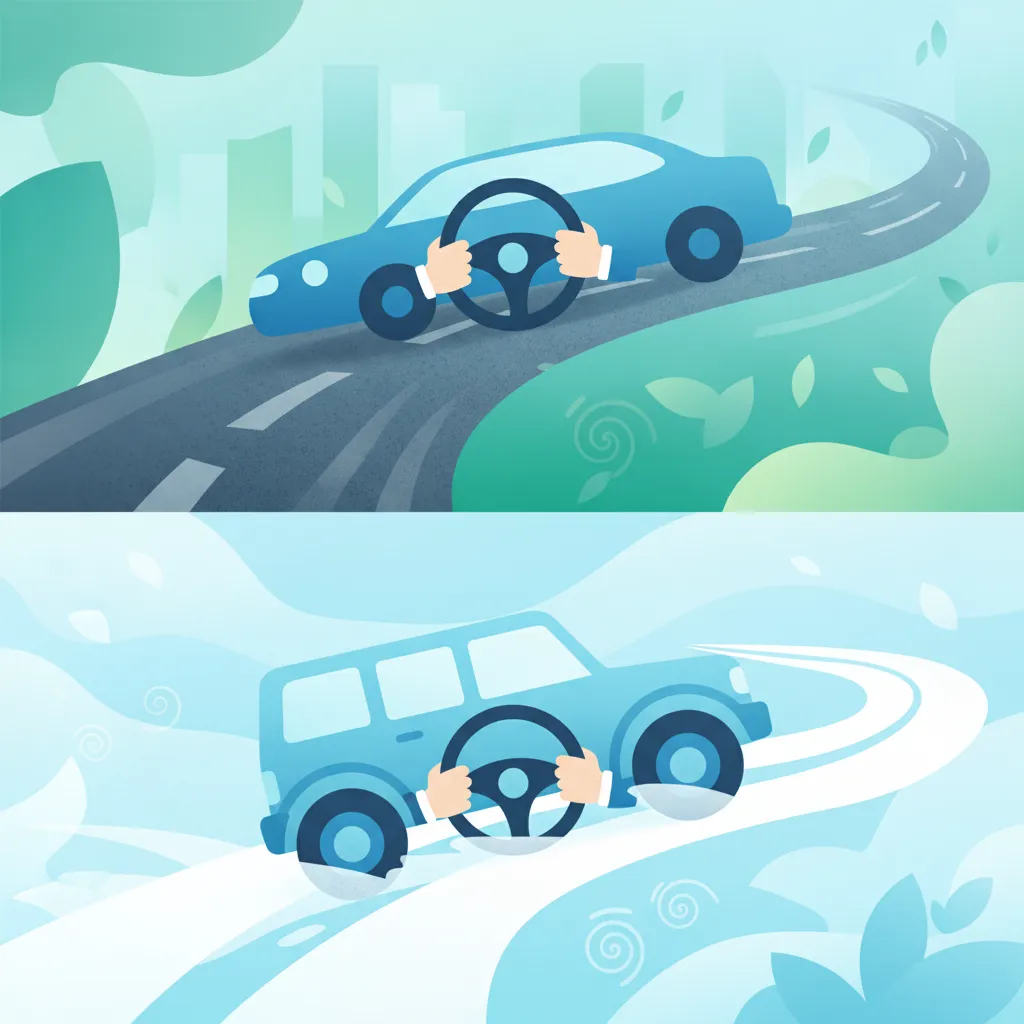
This lesson guides Class D drivers on how to effectively adapt their driving techniques to handle diverse road conditions, from slippery surfaces to rough terrain. By mastering these adjustments, you will ensure both passenger comfort and vehicle stability, which are critical components of the professional driving standards required for your Turkish driving licence.
Lesson content overview
Operating a large passenger vehicle under a Class D licence (Sürücü Belgesi) involves much more than steering and maintaining a lane. Because you are transporting passengers, you are responsible for their safety, physical comfort, and peace of mind. A major part of this responsibility is mastering how to read the road surface and adjusting your driving style accordingly.
Road surfaces are dynamic. A highway that offers excellent grip when dry can become as slippery as ice during the first minutes of rain. Rural routes may transition from smooth asphalt to loose gravel, and winter conditions can hide patches of black ice under thin layers of snow.
This lesson details the physical principles of road traction, examines how different surfaces affect Class D passenger vehicles, and outlines the precise driving adjustments you must make to prevent accidents and protect your passengers.
Traction is the friction generated between the vehicle's tyre tread and the road surface. It is this physical grip that allows your bus or coach to accelerate, steer, and brake. Without adequate traction, steering inputs will not change the vehicle's direction, and braking inputs will not reduce its speed.
The grip level of any road is represented scientifically by the coefficient of friction ().
For heavy Class D vehicles, the massive weight of the vehicle increases its momentum. While the heavy load can sometimes help press the tyres into snow or wet ground to find grip, the physical momentum makes it much harder to stop or change direction once traction is lost.
Rain is one of the most common hazards a passenger transport driver faces. Understanding the transition from dry to wet roads is critical for maintaining vehicle control.
When rain first begins to fall, it mixes with the accumulated oil, grease, fuel drippings, and dust on the road surface. This creates a highly lubricated, slick film. During the first 10 to 15 minutes of a rain shower, the road is often at its most slippery. Once heavy rain continues, it eventually washes this oily residue away, but the hazard then transitions to standing water.
Hydroplaning occurs when a layer of water builds up between the vehicle's tyres and the road surface. When this happens, the tyre loses direct contact with the road, and the vehicle literally floats on a thin cushion of water.
Retarders and Auxiliary Brakes on Wet Surfaces: Avoid using strong retarders or electromagnetic auxiliary brakes on very slippery or wet roads. If the auxiliary brake acts heavily on the drive axle alone, it can cause the rear wheels to lock up and slide, leading to a dangerous jackknife or spin.
In many parts of Turkey, intercity routes or rural shuttle services require driving on unpaved roads, loose dirt, or roads under construction where loose gravel (mıcır) is present.
Loose gravel behaves like thousands of tiny ball bearings under your vehicle’s tyres. When you steer or brake on gravel, the tyres slide on top of the stones rather than gripping the solid ground beneath.
Heavy passenger vehicles can easily sink into soft earth or mud. If you must navigate mud on rural routes, keep your speed steady and avoid stopping in the deepest parts. Be extremely cautious of road shoulders (banket). If the heavy wheels of your bus slip off the paved edge onto a wet, soft shoulder, the vehicle can easily slide into a ditch or roll over due to its high center of gravity.
Road damage, such as potholes (çukurlar), cracked pavement, and frost heaves, presents two distinct challenges for Class D drivers: vehicle damage and passenger injury.
If you spot a pothole or severe surface irregularity ahead, use the following approach:
Scan Ahead: Keep your eyes looking 12 to 15 seconds down the road so you can spot potholes early.
Slow Down Smoothly: Check your mirrors and apply the brakes gently to reduce speed before reaching the pothole.
Release the Brakes Before Impact: Do not brake hard while your tyres are rolling through the pothole. Braking compresses the front suspension, removing its ability to absorb the shock and increasing the risk of structural damage.
Avoid Sudden Swerving: Do not make a sudden, violent turn into the oncoming lane or onto the shoulder to miss a pothole. It is far safer to slow down and roll through a pothole than to cause a head-on collision or run a vulnerable road user off the road.
Winter driving demands the highest level of skill and caution from a professional passenger transport driver. Packed snow and ice provide almost zero traction.
On dry asphalt, a bus traveling at a safe speed can stop within a relatively short distance. On wet pavement, that distance doubles. On packed snow, it triples, and on ice, the stopping distance can be up to ten times longer than on a dry road.
Dry Road:  [===] (Baseline stopping distance)
Wet Road:  [======] (2x baseline)
Snow Road: [=========] (3x baseline)
Icy Road:  [==================================================] (Up to 10x baseline)
Use this reference table to quickly review how your driving inputs must adapt to different surface conditions.
| Surface Condition | Friction Level | Target Speed Adjustment | Recommended Following Distance | Steering & Braking Approach |
|---|---|---|---|---|
| Dry Asphalt / Concrete | High () | Post limits / Normal flow | 2 Seconds | Normal, firm, precise inputs. |
| Wet Road / Light Rain | Medium () | Reduce speed by 15–20% | 4 Seconds | Smooth inputs; ease off accelerator early; avoid sharp braking. |
| Loose Gravel / Mud | Medium-Low () | Reduce speed by 30–50% | 5–6 Seconds | Gradual steering; steady throttle; avoid hard braking. |
| Snow / Slush | Low () | Reduce speed by 50% or more | 6–8 Seconds | Extremely gentle inputs; no abrupt acceleration; no cruise control. |
| Ice / Black Ice | Critical () | Extreme reduction (crawl speed) | 10+ Seconds | Minimal steering adjustments; use engine braking gently; do not use retarders. |
Let us analyze how a professional driver applies these principles in real-world scenarios on Turkish roads.
You are driving a passenger coach from Ankara to Konya. It begins to rain lightly. As the road climbs, you notice the asphalt color changes, indicating a surface transition, and water is beginning to pool in the ruts left by heavy trucks.
While driving a tourist group along a scenic route in southern Turkey, you are detoured onto an unpaved road covered in fresh, loose gravel (mıcır).
To build a deeper understanding of vehicle control, passenger transport safety, and handling complex road environments, explore these related topics and practice materials.
This lesson teaches Class D passenger transport drivers how to read and respond to different road surfaces by understanding traction physics and friction coefficients. Wet roads become most dangerous in the first minutes of rain when oil and debris create a slick film, while loose gravel acts like ball bearings requiring smooth, steady inputs rather than sharp corrections. Hydroplaning can occur on heavy vehicles with worn front tyres, eliminating steering control entirely if speed is not reduced. On winter surfaces, stopping distances extend dramatically—up to ten times on ice—so following distances must increase from 2 seconds to 10 or more seconds. Pothole navigation requires scanning ahead 12–15 seconds, braking gently before impact, and releasing brakes before the wheels enter the pothole to allow proper suspension function.
A short set of high-value points that capture the most important learning from this lesson.
Traction is the friction between tyre tread and road surface that enables acceleration, braking, and steering; without it, steering and braking inputs are ineffective.
The coefficient of friction (μ) quantifies grip: dry asphalt (μ≈0.7–0.9) offers maximum traction, while ice (μ≈0.1) provides almost none.
On wet roads, stopping distances can double; on packed snow they triple; on ice they can extend to ten times the dry-road baseline.
Hydroplaning occurs when water separates tyres from the road; for Class D vehicles, it primarily affects worn front steering axles and causes complete steering loss.
When navigating potholes or irregularities, always release brakes before impact to allow suspension to absorb the shock and prevent mechanical damage.
Explore all units and lessons included in this driving theory course.
Reduce speed by 15–20% on wet roads, 30–50% on gravel, 50% or more on snow, and to crawl speed on ice.
On ice or black ice, never use retarders or auxiliary brakes as they can lock rear wheels and cause jackknifing.
During initial rain (first 10–15 minutes), roads are most slippery due to oil and grease mixing with water.
On loose gravel (mıcır), always slow down BEFORE transitioning from tarmac; braking hard while already on gravel causes dangerous sliding.
Disable cruise control on slippery, wet, or icy roads; the system may attempt to accelerate on ice, causing immediate spin.
Braking hard while your tyres are already rolling through a pothole, which compresses suspension and transfers impact force to structural components instead of allowing shock absorption.
Making sharp or sudden steering inputs on loose gravel, which causes the front wheels to plow forward on the stone layer rather than turning the vehicle.
Failing to increase following distance appropriately: many drivers use the standard 2-second rule even in wet or snowy conditions where 6–8 seconds or more is required.
Using strong retarders or electromagnetic auxiliary brakes on slippery wet roads, which can lock the drive axle and cause the rear of a heavy vehicle to swing around.
Attempting to swerve violently into the oncoming lane or onto the shoulder to avoid a pothole, creating greater danger than rolling through it at reduced speed.
Lesson content overview
A short set of high-value points that capture the most important learning from this lesson.
Traction is the friction between tyre tread and road surface that enables acceleration, braking, and steering; without it, steering and braking inputs are ineffective.
The coefficient of friction (μ) quantifies grip: dry asphalt (μ≈0.7–0.9) offers maximum traction, while ice (μ≈0.1) provides almost none.
On wet roads, stopping distances can double; on packed snow they triple; on ice they can extend to ten times the dry-road baseline.
Hydroplaning occurs when water separates tyres from the road; for Class D vehicles, it primarily affects worn front steering axles and causes complete steering loss.
When navigating potholes or irregularities, always release brakes before impact to allow suspension to absorb the shock and prevent mechanical damage.
Explore all units and lessons included in this driving theory course.
Reduce speed by 15–20% on wet roads, 30–50% on gravel, 50% or more on snow, and to crawl speed on ice.
On ice or black ice, never use retarders or auxiliary brakes as they can lock rear wheels and cause jackknifing.
During initial rain (first 10–15 minutes), roads are most slippery due to oil and grease mixing with water.
On loose gravel (mıcır), always slow down BEFORE transitioning from tarmac; braking hard while already on gravel causes dangerous sliding.
Disable cruise control on slippery, wet, or icy roads; the system may attempt to accelerate on ice, causing immediate spin.
Braking hard while your tyres are already rolling through a pothole, which compresses suspension and transfers impact force to structural components instead of allowing shock absorption.
Making sharp or sudden steering inputs on loose gravel, which causes the front wheels to plow forward on the stone layer rather than turning the vehicle.
Failing to increase following distance appropriately: many drivers use the standard 2-second rule even in wet or snowy conditions where 6–8 seconds or more is required.
Using strong retarders or electromagnetic auxiliary brakes on slippery wet roads, which can lock the drive axle and cause the rear of a heavy vehicle to swing around.
Attempting to swerve violently into the oncoming lane or onto the shoulder to avoid a pothole, creating greater danger than rolling through it at reduced speed.
Explore search topics learners often look for when studying Adjusting Driving Styles for Varying Road Surfaces. These topics reflect common questions about road rules, driving situations, safety guidance, and lesson level theory preparation for learners in Turkey.
Browse additional driving theory lessons that cover connected traffic rules, road signs, and common driving situations related to this topic. Improve your understanding of how different rules interact across everyday traffic scenarios.
Learn the specific traffic regulations and safe driving practices for large passenger vehicles on Turkish highways. This lesson covers lane discipline, motorway speed limits, and managing vehicle dynamics during long-distance intercity travel.
This lesson focuses on the unique requirements and best practices for operating passenger vehicles on highways and expressways. Topics include maintaining appropriate speed, adhering to lane discipline, executing safe overtaking maneuvers, and managing merges and exits. Emphasis is placed on ensuring a smooth ride for passengers while integrating safely with faster-moving traffic.
This lesson explains the specific rules, driving etiquette, and safety protocols for operating a vehicle on high-speed Turkish motorways. It covers correct lane usage, overtaking procedures, emergency lane restrictions, and how to maintain consistent high speeds safely. Drivers will learn to avoid dangerous tailgating and sudden lane changes.
This lesson addresses the specific considerations for goods vehicle operation on highways and expressways, covering speed limits, lane discipline, safe merging, and overtaking. Learners will learn how to adapt to traffic flow, manage heavy vehicle dynamics at higher speeds, and ensure safe operation. The lesson emphasizes the importance of vigilance and proper lane usage to prevent accidents.
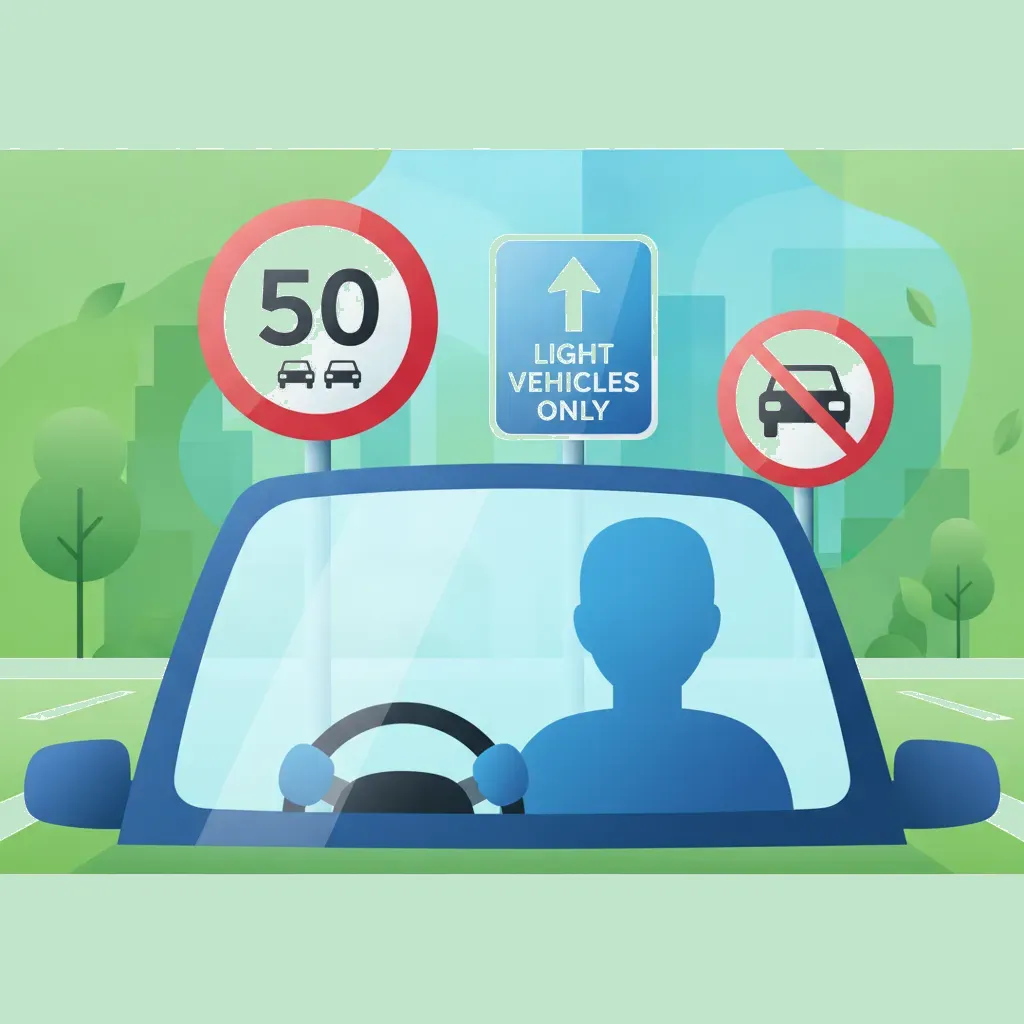
This lesson focuses on the identification and interpretation of traffic signs and road markings that are particularly relevant to passenger vehicle drivers, such as bus lane indications, priority road signs, and specific speed limits. Learners will explore how these signs affect route planning, compliance, and the overall flow of traffic. Mastery of sign interpretation ensures safe and lawful operation in various traffic conditions.
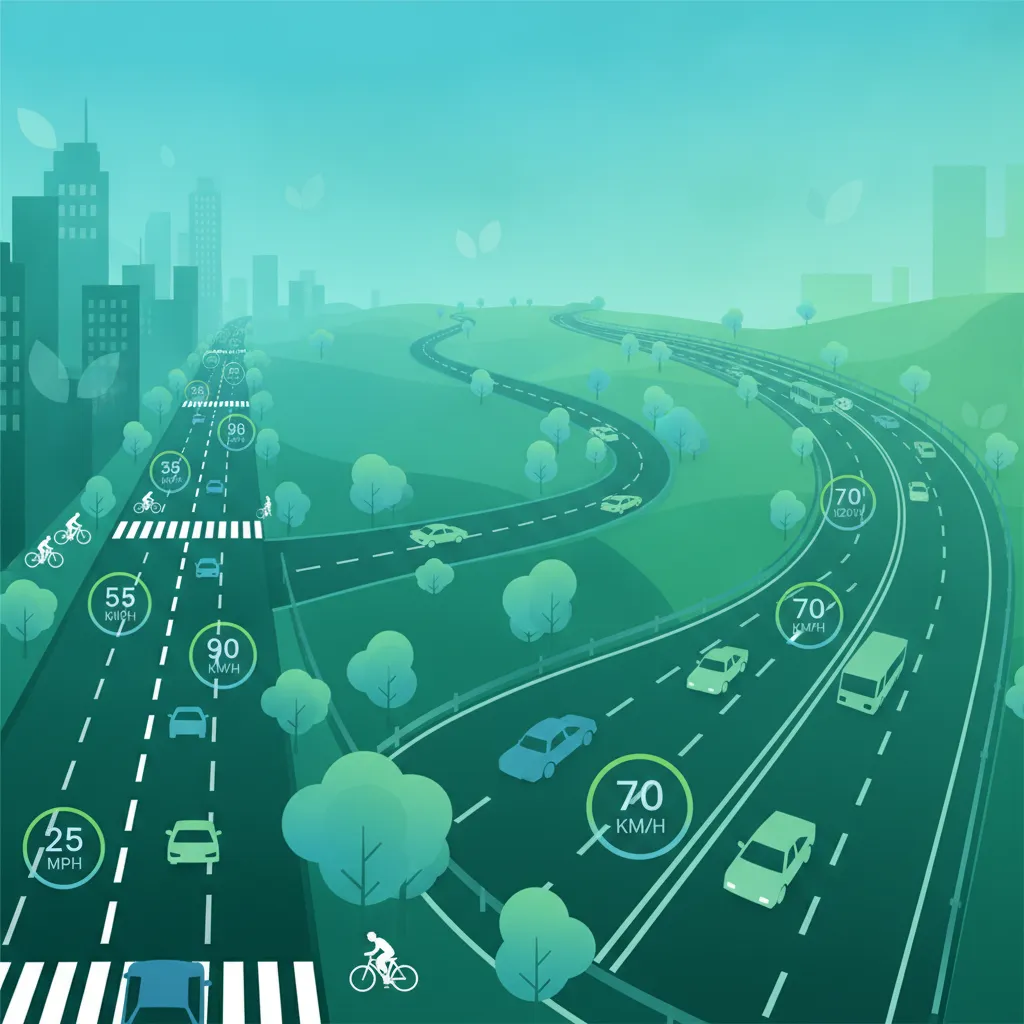
This lesson focuses on managing vehicle speed according to different road environments—urban, rural, and highways—while complying with legal speed limits and traffic flow. Learners will understand how to adjust speed for varying road conditions, traffic density, and safety considerations, ensuring a balance between efficiency and risk mitigation.
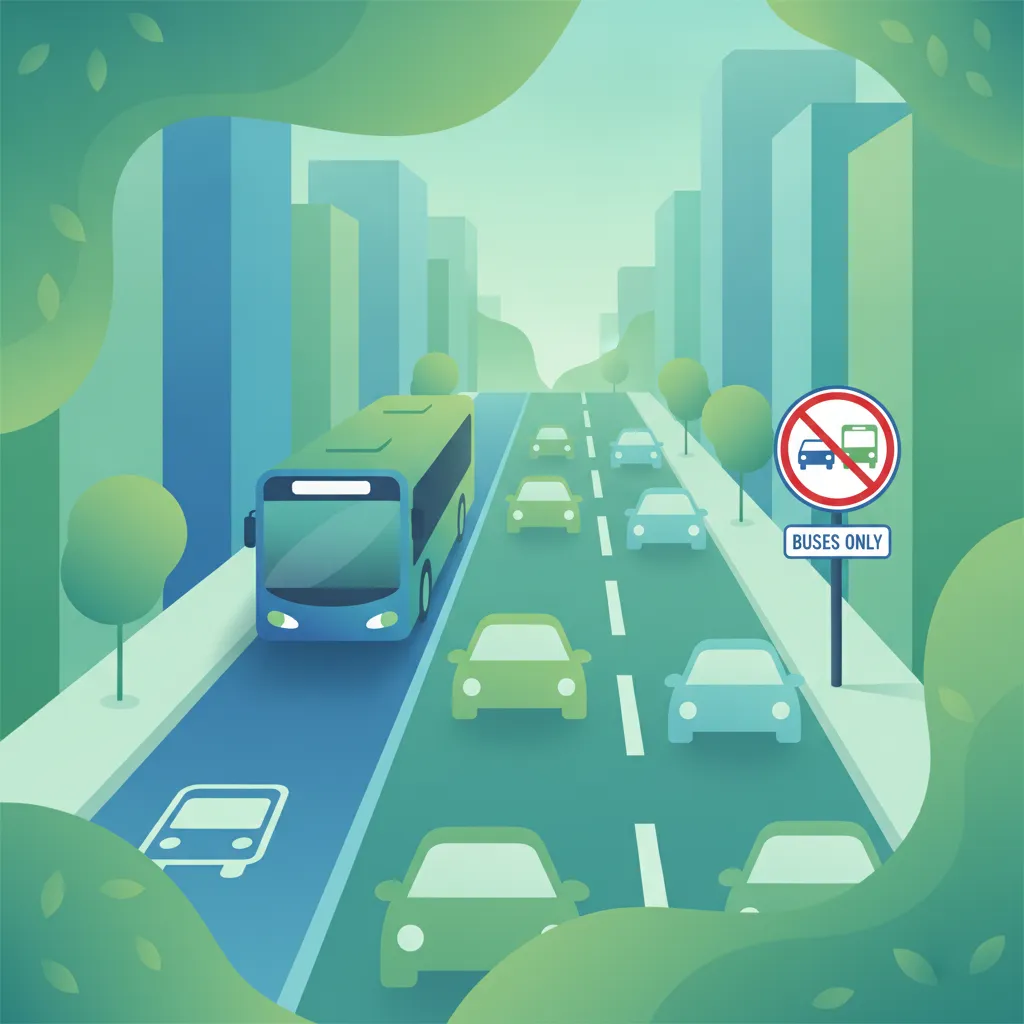
Learners will explore the specific regulations governing bus lanes, priority routes, and other legal restrictions applicable to passenger vehicles. The lesson covers the conditions under which buses may use dedicated lanes, how to navigate priority roadways, and the penalties associated with misuse. Understanding these rules is essential for efficient operation and avoiding violations in high-traffic areas.
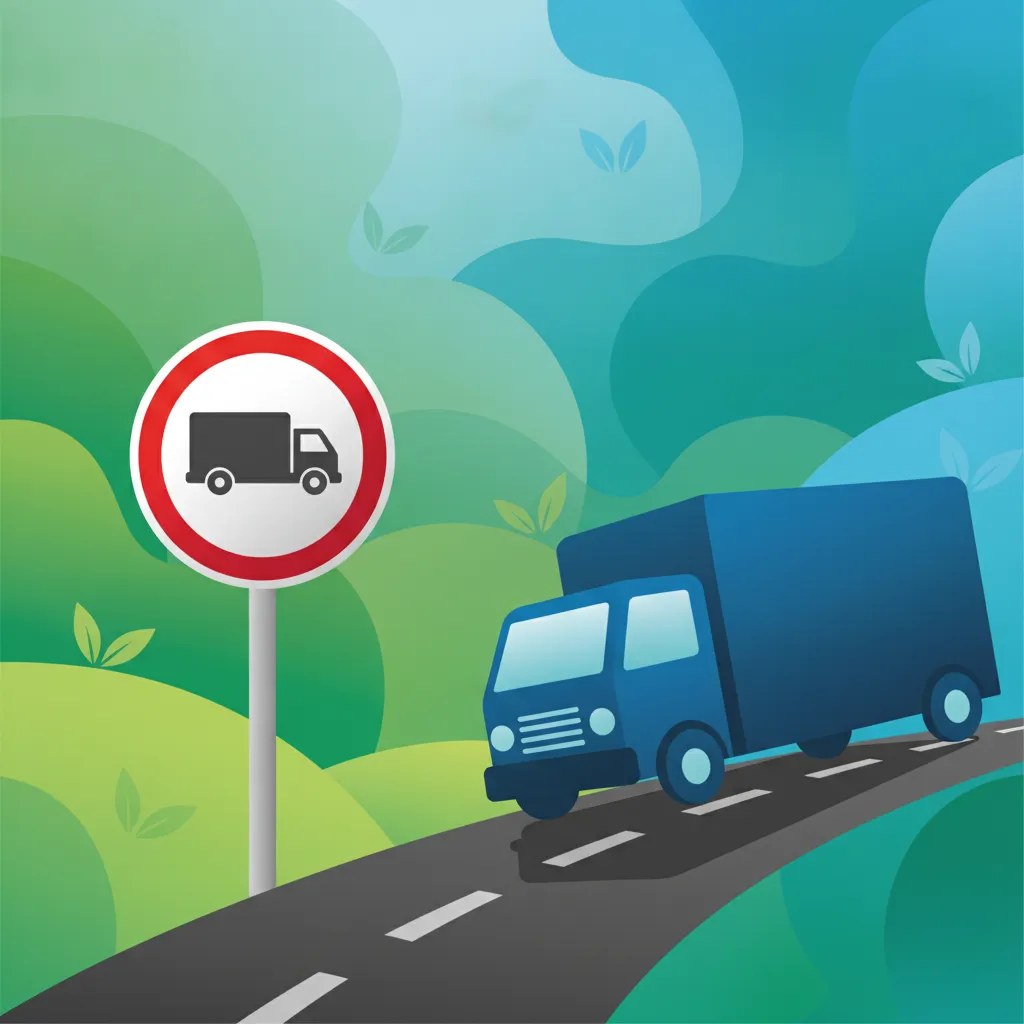
This lesson focuses on traffic signs and road markings that are specifically relevant to goods vehicles in Turkey. Learners will become familiar with signs indicating prohibited routes, weight limits, height restrictions, hazardous material transport, and lane usage regulations. The lesson emphasizes the importance of accurately interpreting these signs to ensure compliance with traffic laws.
This lesson focuses on the safe interaction with other traffic participants at bus stops and traffic intersections. Learners will explore right-of-way rules, signal compliance, and techniques for maintaining safe distances while stopping and departing. Understanding these interactions is vital for preventing accidents in complex traffic environments.
This lesson outlines the precise legal and safety procedures for overtaking slower vehicles on two-lane and multi-lane roads. It details when overtaking is strictly prohibited by signs or solid road lines, and how to calculate passing distances. Drivers will learn how to communicate their intentions using indicators and pass other vehicles safely.
Learners will identify the different categories of vulnerable road users and understand the heightened risks they face. The lesson emphasizes the importance of recognizing these users, anticipating their actions, and taking proactive measures to ensure their safety while operating passenger vehicles. Strategies for mitigating danger and fostering a protective driving environment are explored.
Understand the theoretical framework for managing vehicle emergencies, including fire safety, breakdown protocols, and safe passenger evacuation. This guide focuses on professional driver responsibilities in critical situations to ensure maximum safety for all passengers on board.
This lesson details the procedures for safely evacuating passengers from a bus in the event of a fire or other critical emergency. Topics include the location and use of emergency exits, fire extinguishers, and lighting, as well as the importance of clear communication and orderly movement of passengers. Practical steps for assisting vulnerable passengers during evacuation are emphasized.
Learners will examine common vehicle emergencies that may occur while transporting passengers, such as fires, tire blowouts, or brake failures. The lesson emphasizes quick recognition of warning signs and outlines step-by-step emergency protocols to ensure the safety of passengers and other road users. Strategies for effective incident response and communication are also covered.
Learners will explore the core safety priorities for passenger transport, including the correct use of seat belts, securing luggage, and maintaining passenger stability during vehicle motion. The lesson highlights the importance of clear safety briefings, the location and operation of emergency exits, and conducting risk assessments before departure. By mastering these practices, drivers can significantly reduce the likelihood of accidents and injuries.
Learners will explore best practices for ensuring passenger safety during the boarding and alighting process, focusing on proper vehicle positioning, door operation, and passenger assistance. The lesson covers the use of handrails, steps, and ramps, as well as strategies for managing standing passengers and luggage. Emphasis is placed on clear communication and maintaining situational awareness to prevent accidents.
This lesson addresses the particular challenges posed by standing passengers and the handling of luggage within passenger vehicles. Learners will explore best practices for securing items, guiding passenger movement, and maintaining vehicle stability. Understanding these aspects helps prevent accidents caused by shifting loads or passenger instability, especially during sudden stops or turns.
Find clear answers to common questions learners have about Adjusting Driving Styles for Varying Road Surfaces. Learn how the lesson is structured, which driving theory objectives it supports, and how it fits into the overall learning path of units and curriculum progression in Turkey. These explanations help you understand key concepts, lesson flow, and exam focused study goals.
On gravel, your tire grip is significantly reduced. You must drive at a slower speed, avoid sudden braking or sharp steering, and allow for a much longer stopping distance to maintain control of your heavy passenger vehicle.
Wet surfaces reduce tire traction, meaning your vehicle requires a longer distance to come to a complete stop. As a professional driver, increasing your following distance provides the extra space needed to avoid collisions if the vehicle ahead brakes suddenly.
You should reduce your speed immediately to minimize impact forces that could damage the vehicle or unsettle passengers. If safe to do so, steer around the obstacle, but always check your mirrors to ensure there is no traffic in your blind spots before moving.
Yes, the theory exam often includes scenario-based questions where you must choose the safest action based on provided conditions, such as rain, snow, or road damage, reflecting real-world driving responsibilities.
Use our comprehensive practice search to find exactly the Turkish driving theory questions you need to master. Whether reviewing specific road signs, traffic rules, or first aid scenarios, select your perfect practice set and boost your confidence for the official ehliyet sınavı.