
This lesson details the mandatory pre-trip inspection procedures required for professional goods vehicle drivers in Turkey. You will learn to perform systematic checks on critical components, ensuring your vehicle remains compliant and safe before every journey. This knowledge is essential for both your theory exam success and safe operation of C1, C, C1E, or CE category vehicles.
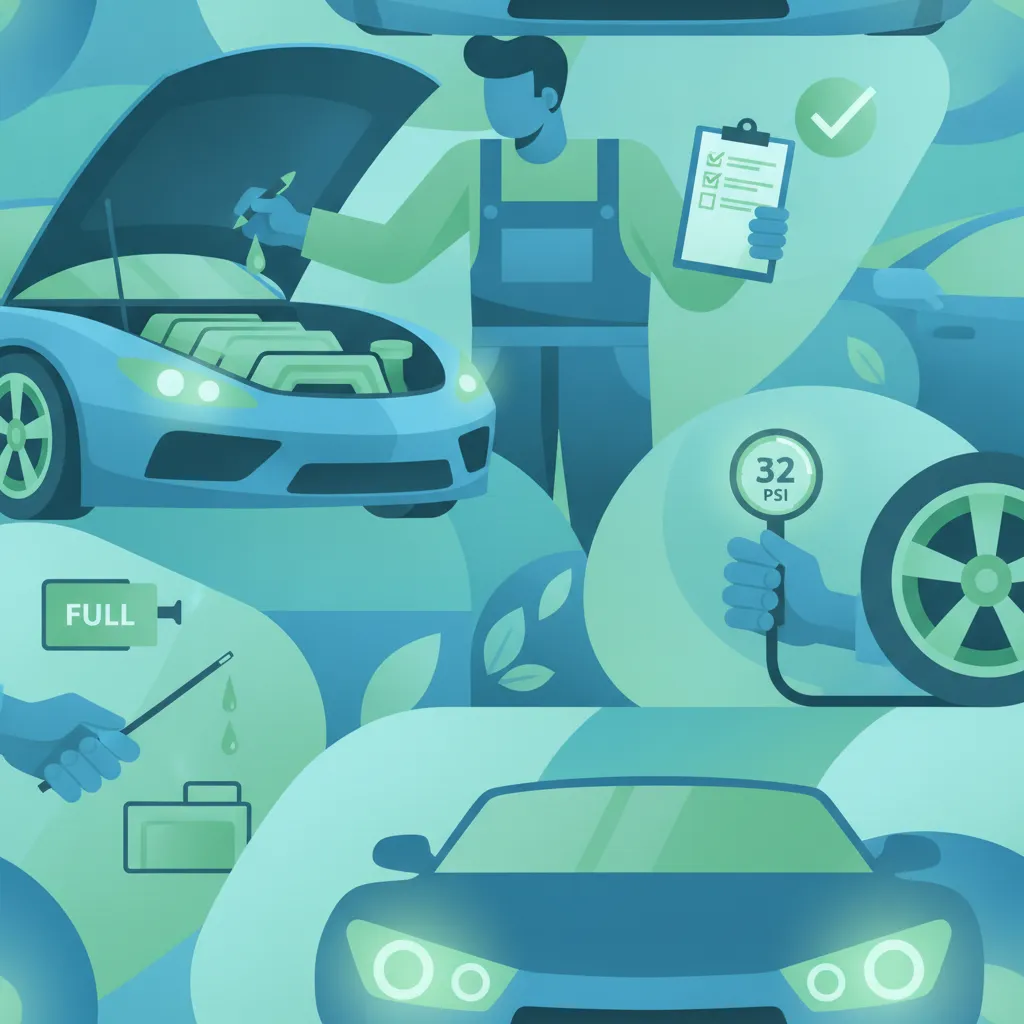
Lesson content overview
Operating a heavy goods vehicle (HGV) or a combination of vehicles (truck and trailer) carries immense responsibility. Under the Turkish Highway Traffic Law (Karayolları Trafik Kanunu No. 2918), drivers must ensure that their vehicle is in a completely roadworthy condition before entering any public highway.
A pre-trip vehicle inspection (araç öncesi kontrol) is a systematic, highly structured physical and functional check performed daily before your first journey, and whenever there is a change of driver or trailer. Skipping this check can result in catastrophic mechanical failures, severe legal liabilities, and life-threatening road accidents. This lesson details the exact inspection protocols required to meet the high standards of Turkish professional goods vehicle licensing.
In Turkey, the responsibility for the safe condition of a commercial vehicle is shared between the vehicle owner (araç sahibi) and the driver (sürücü). However, once the vehicle is on the road, the driver bears direct legal and administrative liability for any visible or easily detectable defects.
Under Turkish Traffic Regulations, driving a vehicle with defective brakes, inadequate tyre tread, faulty lighting, or unsecured loads is a fineable offense that also results in penalty points on your driver's license. If an accident occurs due to a pre-existing defect that should have been caught during a pre-trip check, the driver may face criminal prosecution for professional negligence.
Conducting a thorough pre-trip inspection offers three main benefits:
An inspection should never be random. Drivers should adopt a consistent "circle of safety" walkaround routine, starting at the driver's door, moving forward around the cab, along the passenger side, to the rear of the vehicle or trailer, and back up the driver's side.
Cabin Entry & Initial Setup: Apply the parking brake, insert your digital tachograph card (takograf kartı), turn on the ignition to check dashboard warning lights, turn on all external lights (including hazard lights), and step out.
Front of the Vehicle: Inspect the windshield for cracks, check wiper blades, test headlight and indicator cleanliness, and look beneath the engine bay for active fluid leaks.
Passenger (Right) Side: Check the condition of the front tyre, suspension components, lateral protection devices (side guards), fuel tank cap security, and right-side mirrors.
Rear of the Cab & Chassis: Inspect the exhaust system, electrical/air lines, and cargo-securing mechanisms.
Rear of the Vehicle / Trailer: Check rear lighting clusters, registration plate light, reflective contour markings, mud flaps, and rear underrun protection.
Driver (Left) Side: Inspect left-side tyres, fuel/AdBlue tanks, battery box security, and side mirrors before re-entering the cab.
In-Cab Functional Checks: Adjust your seat, clean and align mirrors, verify the brake system air pressure, test the horn, and ensure all emergency equipment is secured within arm's reach.
Tyres are the only contact points between a heavy goods vehicle and the road surface. Because commercial vehicles carry immense weight, tyre integrity directly dictates braking distance, steering control, and aquaplaning resistance.
In Turkey, the absolute legal minimum tread depth for commercial goods vehicles is 1.6 mm across the entire tread pattern. However, for professional safety, a tyre should be replaced long before reaching this limit.
Additionally, Turkish law mandates the use of approved winter tyres (kış lastiği), marked with the snowflake or M+S symbol, on all commercial cargo and passenger transport vehicles between December 1st and April 1st of each year. This period may be extended by local governorships (valilikler) depending on regional weather conditions. During this period, the recommended winter tread depth is a minimum of 4 mm for optimal traction on snow and ice.
Walk around the vehicle and inspect every tyre for:
Tyre pressure must be checked using a calibrated gauge when the tyres are cold. Do not rely solely on visual checks; a tyre can be significantly under-inflated without looking completely flat. Under-inflation leads to excessive heat buildup, accelerated wear, and increased fuel consumption. Uneven wear patterns across the tyre face typically indicate wheel misalignment or suspension damage.
Goods vehicles in the C1, C, C1E, and CE categories rely on pneumatic (air) braking systems (havalı fren sistemi) to halt gross combination weights that can exceed 40 tonnes. A failure in this system is an immediate safety catastrophe.
Start the engine and allow the compressor to build up the system pressure to its maximum operating limit (typically between 6 and 8.5 bar, depending on the vehicle specifications). Watch the dashboard gauges:
If visible through the wheel rims, inspect the brake discs and pads. Look for:
A valve located at the bottom of air brake reservoirs. Because compressing air generates moisture, drivers must regularly drain these reservoirs to prevent water from entering the brake lines, where it can cause corrosion or freeze during cold Turkish winters, blocking air supply to the brakes.
Visibility is a two-way street: you must be able to see clearly, and other road users must be able to see you. This is especially critical during adverse weather conditions or night driving on unlit rural highways (şehirlerarası yollar).
Verify the operation, alignment, and cleanliness of the following:
Heavy vehicles have large blind spots (kör noktalar). Adjust all mirrors (main, wide-angle, close-proximity, and front-view mirrors) so you can see the critical areas surrounding the cab. Clean any dirt, dust, or frost from the side glass and windshield.
Check the windshield wiper blades for tears. Ensure the windshield washer fluid reservoir (cam suyu) is filled to capacity, adding anti-freeze washer concentrate in winter.
For drivers towing heavy trailers, the mechanical and pneumatic coupling point represents a critical single point of failure. A trailer detachment at highway speeds is almost always fatal for nearby motorists.
When inspecting a tractor-trailer coupling:
The connections between the tractor and the trailer are often referred to as "suzie coils" or coupling hoses.
A commercial vehicle's engine operates under high thermal and mechanical stress. Pre-trip fluid checks prevent catastrophic engine failures.
Engine Oil Level: Use the dipstick. The level must be between the minimum and maximum marks. Never run an engine with oil levels below the minimum line.
Coolant Reservoir (Radyatör Yedek Su Deposu): Check the coolant level through the translucent reservoir. Never open a hot radiator cap; pressurized steam can cause severe burns.
Power Steering Fluid: Ensure the hydraulic reservoir is filled to the correct level to avoid heavy, unresponsive steering at low speeds.
Brake Fluid / Clutch Fluid: Ensure there is no loss of hydraulic fluid, which could indicate a leak in the master or slave cylinders.
Under-Vehicle Visual Scan: Walk around the engine and transmission area, looking at the pavement below. Active puddles of oil (black), coolant (green/pink), or fuel (diesel smell) indicate an urgent mechanical problem that must be resolved before departing.
An unsecured load can shift during a turn or hard braking, altering the vehicle's center of gravity and causing a rollover, or worse, spilling cargo onto public highways.
Verify that all securing equipment is in pristine condition:
Turkish Highway Traffic Regulations dictate a strict list of safety and emergency equipment that must be carried on board all goods vehicles. During a road traffic inspection, failing to produce these items will result in an immediate fine.
| Equipment | Turkish Term | Minimum Requirement / Description |
|---|---|---|
| Warning Triangles | Reflektör | At least two highly reflective warning triangles. Must be capable of standing upright on the road in high winds. |
| Fire Extinguisher | Yangın Söndürme Cihazı | For goods vehicles over 12 tonnes, a minimum of 6 kg dry powder capacity is mandatory. It must be pressurized, within its expiration date, and easily accessible. |
| Wheel Chocks | Tekerlek Takozu | At least one heavy-duty chock (two are recommended) sized appropriately for the vehicle's tyre diameter, used to secure the vehicle on steep inclines. |
| First-Aid Kit | İlk Yardım Çantası | Must contain sterile bandages, antiseptic, tourniquets, and emergency scissors, all within their expiration dates. |
| Spare Tyre & Jack | Yedek Lastik ve Kriko | A functional spare tyre inflated to correct pressure, alongside a hydraulic jack and lug wrench capable of lifting the loaded vehicle. |
Your pre-trip inspection is not complete until you have verified that your administrative documents are in order and legally accessible inside the cabin.
This lesson covers the mandatory pre-trip inspection procedures for professional goods vehicle drivers holding C1, C, C1E, or CE licences in Turkey, based on Karayolları Trafik Kanunu No. 2918. Learners must master a systematic walkaround routine covering tyres, air brakes, lights, coupling mechanisms, fluid levels, and cargo security, along with verifying emergency equipment and administrative documents. Critical thresholds include the 1.6mm minimum tread depth (4mm for winter tyres), air brake pressure drop limits of 0.15-0.2 bar per minute, and the requirement for approved winter tyres between December 1st and April 1st. Successful inspection prevents mechanical failures, avoids fines and penalty points, and ensures legal compliance with TÜVTÜRK periodic inspection requirements.
A short set of high-value points that capture the most important learning from this lesson.
Drivers bear direct legal liability for visible or easily detectable defects while operating heavy goods vehicles on Turkish roads.
The minimum legal tread depth for commercial tyres in Turkey is 1.6mm, but winter tyres (kış lastiği) require a minimum 4mm depth and must be used from December 1st to April 1st.
Air brake systems must build to 6-8.5 bar operating pressure, with a static leak test allowing no more than 0.15 bar/min drop for single vehicles or 0.2 bar/min for combinations.
Fifth wheel coupling inspections must verify complete jaw closure around the kingpin and absence of any daylight gap between trailer apron and fifth wheel plate.
Unsecured loads, faulty brakes, inadequate tyre tread, or faulty lighting are fineable offenses that can also result in criminal prosecution if they cause accidents.
Explore all units and lessons included in this driving theory course.
The mandatory pre-trip walkaround follows a consistent circle-of-safety sequence: cab entry, front, passenger side, rear, driver side, then in-cab checks.
Winter tyre requirement (M+S or snowflake symbol) applies to all commercial cargo vehicles from December 1st through April 1st, with possible regional extensions by valilikler.
The red air line is the emergency/supply line; if severed, trailer emergency brakes apply automatically.
Tyre pressure must be checked with a calibrated gauge when cold—visual checks alone are insufficient to detect significant under-inflation.
Drivers must carry documents including SRC 4 (domestic) or SRC 3 (international) certificates and tachograph records for the current day plus 28 previous days.
Assuming a tyre is properly inflated based on visual appearance alone; always use a calibrated pressure gauge.
Failing to check for trapped objects between dual rear tyres, which can cause friction fires or become dangerous projectiles.
Neglecting to drain condensation from air brake reservoirs, leading to corrosion or freeze-related brake failure in cold Turkish winters.
Moving the vehicle when the low-pressure warning light is active, which indicates air system pressure has dropped below the safe threshold.
Overlooking the electrical and air line connections between tractor and trailer, which power trailer lights, ABS/EBS systems, and braking.
Lesson content overview
A short set of high-value points that capture the most important learning from this lesson.
Drivers bear direct legal liability for visible or easily detectable defects while operating heavy goods vehicles on Turkish roads.
The minimum legal tread depth for commercial tyres in Turkey is 1.6mm, but winter tyres (kış lastiği) require a minimum 4mm depth and must be used from December 1st to April 1st.
Air brake systems must build to 6-8.5 bar operating pressure, with a static leak test allowing no more than 0.15 bar/min drop for single vehicles or 0.2 bar/min for combinations.
Fifth wheel coupling inspections must verify complete jaw closure around the kingpin and absence of any daylight gap between trailer apron and fifth wheel plate.
Unsecured loads, faulty brakes, inadequate tyre tread, or faulty lighting are fineable offenses that can also result in criminal prosecution if they cause accidents.
Explore all units and lessons included in this driving theory course.
The mandatory pre-trip walkaround follows a consistent circle-of-safety sequence: cab entry, front, passenger side, rear, driver side, then in-cab checks.
Winter tyre requirement (M+S or snowflake symbol) applies to all commercial cargo vehicles from December 1st through April 1st, with possible regional extensions by valilikler.
The red air line is the emergency/supply line; if severed, trailer emergency brakes apply automatically.
Tyre pressure must be checked with a calibrated gauge when cold—visual checks alone are insufficient to detect significant under-inflation.
Drivers must carry documents including SRC 4 (domestic) or SRC 3 (international) certificates and tachograph records for the current day plus 28 previous days.
Assuming a tyre is properly inflated based on visual appearance alone; always use a calibrated pressure gauge.
Failing to check for trapped objects between dual rear tyres, which can cause friction fires or become dangerous projectiles.
Neglecting to drain condensation from air brake reservoirs, leading to corrosion or freeze-related brake failure in cold Turkish winters.
Moving the vehicle when the low-pressure warning light is active, which indicates air system pressure has dropped below the safe threshold.
Overlooking the electrical and air line connections between tractor and trailer, which power trailer lights, ABS/EBS systems, and braking.
Explore search topics learners often look for when studying Pre-Trip Vehicle Inspection Checklist. These topics reflect common questions about road rules, driving situations, safety guidance, and lesson level theory preparation for learners in Turkey.
Browse additional driving theory lessons that cover connected traffic rules, road signs, and common driving situations related to this topic. Improve your understanding of how different rules interact across everyday traffic scenarios.
Understand the legal and mechanical requirements for securing cargo on goods vehicles. This guide explains how center of gravity, load distribution, and weight limits impact vehicle handling and safety on Turkish roads according to highway traffic regulations.

This lesson focuses on the essential principles of load planning and weight distribution for goods vehicles. Learners will understand how to assess cargo weight, determine optimal placement, and maintain a low centre of gravity to ensure vehicle stability. The lesson emphasizes legal load limits, the dangers of overloading, and the impact of uneven load distribution on handling and braking.

This lesson delves into the concept of centre of gravity and its critical impact on the stability of goods vehicles. Learners will explore how load height and distribution affect side and dynamic stability, particularly during braking, cornering, and evasive maneuvers. The lesson explains the increased rollover risk associated with a high centre of gravity and provides strategies for managing weight.

This lesson delves into the principles of weight distribution and load limits for goods vehicles, emphasizing the impact on vehicle stability and safety. It examines the concept of Gross Vehicle Weight (GVW) and the legal limits imposed on individual axles to prevent overloading. Learners will explore how improper weight distribution affects the centre of gravity, braking performance, and handling characteristics.

This lesson examines the effects of load dynamics on vehicle stability during acceleration and deceleration. Learners will learn how cargo can shift and affect handling, particularly during sudden speed changes or emergency braking situations. The lesson emphasizes proper load securing, gradual acceleration, and controlled braking to maintain stability and prevent serious accidents.
Examine the legal framework governing professional goods vehicle operation in Turkey. Learn about the responsibilities of drivers regarding vehicle maintenance, documentation, and the professional conduct expected under the Turkish Highway Traffic Law to avoid legal sanctions and penalty points.
This lesson outlines the spectrum of penalties and legal consequences that goods vehicle drivers may face for violating traffic regulations. It details the types of infractions, ranging from minor violations to serious offenses, and explains the corresponding fines, points, and license suspensions. Learners will gain an understanding of the enforcement mechanisms and how repeat offenses can exacerbate penalties.
This lesson details the statutory duties imposed on motor vehicle drivers by Turkish traffic legislation to maintain order on public roads. It emphasizes mandatory seat belt usage, mobile phone bans, vehicle inspection rules, and general compliance with police directions. Understanding these duties ensures drivers avoid heavy penalties and maintain road safety.
In this lesson, participants will learn about the specific offences and penalties that apply to passenger vehicle drivers, focusing on violations that directly jeopardize passenger safety and public security. The content outlines the legal repercussions of non-compliance, including fines, licence suspensions, and other enforcement actions. Understanding these penalties reinforces the critical nature of adhering to traffic laws and safety protocols in professional passenger transport.
This lesson outlines the legal framework governing passenger vehicle operation, highlighting the penalties for various offences, such as speeding, failure to adhere to stop procedures, or neglecting passenger safety protocols. Learners will understand the importance of compliance to avoid fines, licence suspension, or other legal actions, and the role of regulatory bodies in enforcement.
This lesson covers the severe administrative, financial, and criminal penalties associated with serious traffic violations in Turkey. It outlines the legal processes for driving licence suspension, vehicle impoundment, and mandatory driver retraining programs. Motorists will understand the long-term impact of a criminal driving record.
This lesson delves into the ethical responsibilities and professional standards expected of goods vehicle drivers, emphasizing their pivotal role in ensuring traffic safety. It explores the duty of care owed to other road users and the broader societal expectations placed upon professional drivers. Learners will examine how their conduct directly influences public trust and overall traffic flow in urban environments.
This lesson examines the integral role of the goods vehicle driver in contributing to overall traffic safety and a positive safety culture. It focuses on proactive driving behaviors, hazard identification, and effective risk management strategies. Communication techniques with other road users, compliance with traffic flow regulations, and competent emergency responses are highlighted as essential skills.
This lesson provides an overview of the penalties and legal consequences associated with traffic violations and non-compliance in goods vehicle operation. Learners will learn about the fines, demerit points, and potential license suspensions that can result from various infractions. The lesson emphasizes the importance of adhering to regulations and the impact of repeated offenses on drivers.

Learners will examine the specific licence categories applicable to passenger vehicles, detailing the legal definitions and core obligations tied to each class. The lesson clarifies the prerequisites for obtaining each licence, the regulatory environment governing passenger transport, and the responsibilities drivers assume upon certification. By understanding these legal foundations, participants will be prepared to navigate the regulatory landscape effectively in their professional roles.

This lesson explores the standards of conduct expected from passenger vehicle drivers, emphasizing ethical decision-making and interactions with passengers and the public. It covers the impact of driver behaviour on public perception, the importance of maintaining a professional image, and the responsibilities inherent in transporting passengers safely and courteously. Learners will develop an understanding of how ethical practices contribute to service excellence and public trust.
Find clear answers to common questions learners have about Pre-Trip Vehicle Inspection Checklist. Learn how the lesson is structured, which driving theory objectives it supports, and how it fits into the overall learning path of units and curriculum progression in Turkey. These explanations help you understand key concepts, lesson flow, and exam focused study goals.
Professional drivers carry greater responsibility for road safety given the size and weight of their vehicles. Regular inspections are legally required to prevent mechanical failures and ensure that you, your cargo, and other road users are not endangered.
Beyond standard passenger car checks, you must inspect the coupling mechanism for trailers, the condition of heavy-duty tyres, braking systems including air pressure levels, and the security of your cargo load to ensure it does not shift during transit.
Yes, the theory exam includes questions regarding vehicle technique and maintenance. You are expected to know which checks are essential for safety and the consequences of operating a vehicle with faulty equipment.
Part of your pre-trip inspection includes verifying that cargo is properly distributed and secured according to regulations. Failing to do this can shift your center of gravity, making the vehicle unstable during cornering or emergency braking.
Use our comprehensive practice search to find exactly the Turkish driving theory questions you need to master. Whether reviewing specific road signs, traffic rules, or first aid scenarios, select your perfect practice set and boost your confidence for the official ehliyet sınavı.