This lesson guides you through the fundamental priority-to-the-right (priorite a droite) rule, a cornerstone of the French Code de la route. You will learn to identify intersections lacking clear signage and how to apply the correct yielding hierarchy to ensure safety in both urban and rural driving environments.

Lesson content overview
Navigating intersections safely is one of the most critical aspects of driving in France. Under the French Code de la route (French traffic law), priority rules are highly structured to prevent conflict, reduce decision-making times, and ensure smooth traffic flow. Whether you are driving through a dense urban center like Paris or navigating quiet rural roads in the countryside, understanding who has the right of way is essential for passing your French Category B driving theory exam (known as the Épreuve Théorique Générale or ETG) and driving safely.
At the heart of French traffic regulation lies a fundamental default rule: priorité à droite (priority to the right). This lesson covers how this default rule operates, how to identify when it applies, the specific road signs and markings that override it, and how to handle complex intersections safely.
In France, unless explicit signage or road markings indicate otherwise, the default rule at any intersection is that you must yield the right of way to vehicles approaching from your right. This rule is a cornerstone of French road safety. It simplifies interactions at unsignaled junctions by creating a predictable hierarchy of movement.
The statutory default rule in France requiring drivers to yield the right of way to any vehicle approaching an intersection from a road on their right, unless signage, road markings, or traffic signals dictate otherwise.
The principle of priority to the right dictates that as you approach an intersection, your primary focus must be on checking your right-hand side. If a vehicle is approaching from an intersecting road on your right, you must slow down or come to a complete stop to let them pass. Conversely, vehicles approaching from your left must yield to you, provided there are no overriding signs on your path.
Important Legal Distinction: The priority to the right rule applies regardless of the size, speed, or perceived importance of the intersecting roads. A driver on a wide, busy boulevard must still yield to a vehicle emerging from a small, narrow side street on the right, unless signs or road markings state otherwise. Never assume you have priority simply because your road is wider or busier.
While priorité à droite is the baseline, there are strict legal exceptions where emerging vehicles do not have priority, even if they are on your right:
An unsignaled intersection—often called an unsigned junction—is any crossing where no traffic lights, stop signs, yield signs, or priority road signs are present to govern the flow of traffic.
In both urban and rural environments, identifying these intersections early is crucial to adjusting your speed and preparing to yield.
To assist drivers in anticipating junctions where the default rule applies, French road authorities place a specific warning sign ahead of the intersection, especially in areas where visibility might be compromised or speeds are higher.
When you see the AB1 sign, you must immediately begin your preparation:
Scan ahead: Look for road gaps, street signs, or the AB1 warning sign as you approach.
Reduce speed: Ease off the accelerator to give yourself more time to react and stop if necessary.
Check your right: Peer down the intersecting street on your right. If a vehicle is approaching, prepare to yield.
Check your left: Ensure vehicles on your left are slowing down to yield to you, but do not force your way through.
Proceed with caution: Once the intersection is clear and your path is safe, accelerate smoothly to clear the junction.
When road conditions, traffic volume, or design safety require a deviation from the default priorité à droite rule, French traffic law utilizes highly specific signage. These signs explicitly declare which road holds the right of way.
When authorities want to grant priority to a road for a single, specific intersection ahead, they use the AB2 warning sign.
This sign tells you that vehicles emerging from the side roads at the very next intersection have yield or stop signs and must give way to you. However, this priority is temporary; it applies only to the next immediate crossing. Once you pass it, the default rules or subsequent signage will dictate priority.
For major roads, arterials, and transit routes, it is inefficient to establish priority block-by-block. Instead, these routes are designated as priority roads.
When driving on a priority road, you do not need to yield to traffic emerging from side streets on either the left or the right. Drivers on those side streets will face yield or stop signs.
To signal that this status has ended, the Code de la route uses the AB7 sign, which is identical to the AB6 yellow diamond but crossed out with a black diagonal bar. Past this sign, the default priorité à droite rule or new signage applies.
If you are approaching a priority road from a secondary street, you will face signs requiring you to yield.
When facing a Cédez le passage sign, you are not legally required to come to a complete stop if the intersecting road is completely clear. You must, however, slow down sufficiently to assess traffic and stop if another vehicle is approaching.
Unlike the yield sign, the Stop sign carries a strict legal requirement: your vehicle's wheels must completely cease rolling (a "marked stop") for a minimum of two to three seconds. You must stop at the solid white line painted across the lane, check both directions, and yield to all crossing traffic before moving forward.
In addition to vertical traffic signs, road markings (horizontal signage) are painted on the asphalt to define priority boundaries. These markings are legally binding and must be followed even if the vertical signs are partially obscured by trees or bad weather.
A solid white line painted across your lane indicates the presence of a Stop sign. You must bring your vehicle to a complete stop before this line. If visibility is blocked by parked cars or buildings, you must still stop at the line first, then creep forward slowly (the "double stop" technique) until you can see clearly.
A thick, dashed white line extending across your lane indicates a Cédez le passage (Yield) requirement. You must not cross this line if doing so forces a vehicle on the priority road to brake or steer to avoid you.
A route à caractère prioritaire is a designated traffic corridor optimized for continuous travel. On these routes, intersecting traffic is systematically managed by yield signs, stop signs, or traffic signals, ensuring that drivers on the main road rarely have to slow down for junctions.
Even when driving on a priority road, defensive driving is vital. Always monitor side streets to ensure that merging drivers have seen your vehicle and are actively slowing down to yield.
Failure to understand and apply priority rules is one of the leading causes of accidents at intersections in France. It is also a critical component of the Category B theory exam, which frequently tests edge cases.
To enforce these safety rules, French traffic authorities impose strict legal penalties for failing to yield.
Priority rules are absolute, but how you prepare to execute them must adapt to external conditions. Safe driving requires adjusting your speed and stopping distances based on visibility and vehicle dynamics.
Rain, fog, snow, and darkness significantly reduce your ability to spot approaching intersections and signs.
If you are driving a vehicle towing a trailer or caravan, your acceleration is slower, and your stopping distance is much longer.
Cyclists, pedestrians, and motorcyclists are highly vulnerable at intersections.
To safely navigate priority scenarios, incorporate these driving habits into your daily routine:
| Term | Definition | Notes / Context |
|---|---|---|
| Priorité à droite | Priority to the right. | The default legal rule at unsignaled intersections in France. |
| Cédez le passage | Yield / Give way. | Indicated by an inverted red and white triangle or dashed road markings. |
| Arrêt absolu | Complete stop. | Required at Stop signs; wheels must stop rotating completely. |
| Route à caractère prioritaire | Priority road. | A road designated by a yellow diamond sign where drivers have ongoing right of way. |
| Intersection non signalée | Unsignaled intersection. | A junction without signs or lights; default rules apply. |
| Ligne de Stop | Stop line. | A solid white painted line indicating where a vehicle must stop. |
| Balise de priorité | Priority warning sign. | Physical signs (like the AB1 triangle) warning of upcoming priority rules. |
| Véhicule prioritaire | Priority vehicle. | Emergency services with active lights and sirens. |
Explore all units and lessons included in this driving theory course.
Lesson content overview
Explore all units and lessons included in this driving theory course.
Explore search topics learners often look for when studying General Priority Principles and 'Priorite a droite'. These topics reflect common questions about road rules, driving situations, safety guidance, and lesson level theory preparation for learners in France.
Browse additional driving theory lessons that cover connected traffic rules, road signs, and common driving situations related to this topic. Improve your understanding of how different rules interact across everyday traffic scenarios.
Learn the specific priority rules for navigating roundabouts and complex junctions. This explanation covers yielding at entrances and managing traffic flow within circular intersections according to the French Code de la route for Category B drivers.

France features a vast network of roundabouts (carrefours a sens giratoire) governed by specific entry and lane-use regulations. This lesson explains that vehicles entering a roundabout must yield to traffic already circulating inside. You will learn how to select the correct lane depending on your exit, use direction indicators properly, and yield to pedestrians and cyclists near roundabout exits.

Negotiating crossroads that lack active traffic light signals requires a clear reading of signs and painted stop or yield lines. This lesson details the obligations of stopping completely at stop signs and slowing down to yield at 'cedez le passage' markings. You will learn to assess cross-traffic speeds, determine priorities when multiple vehicles arrive, and execute turns safely.
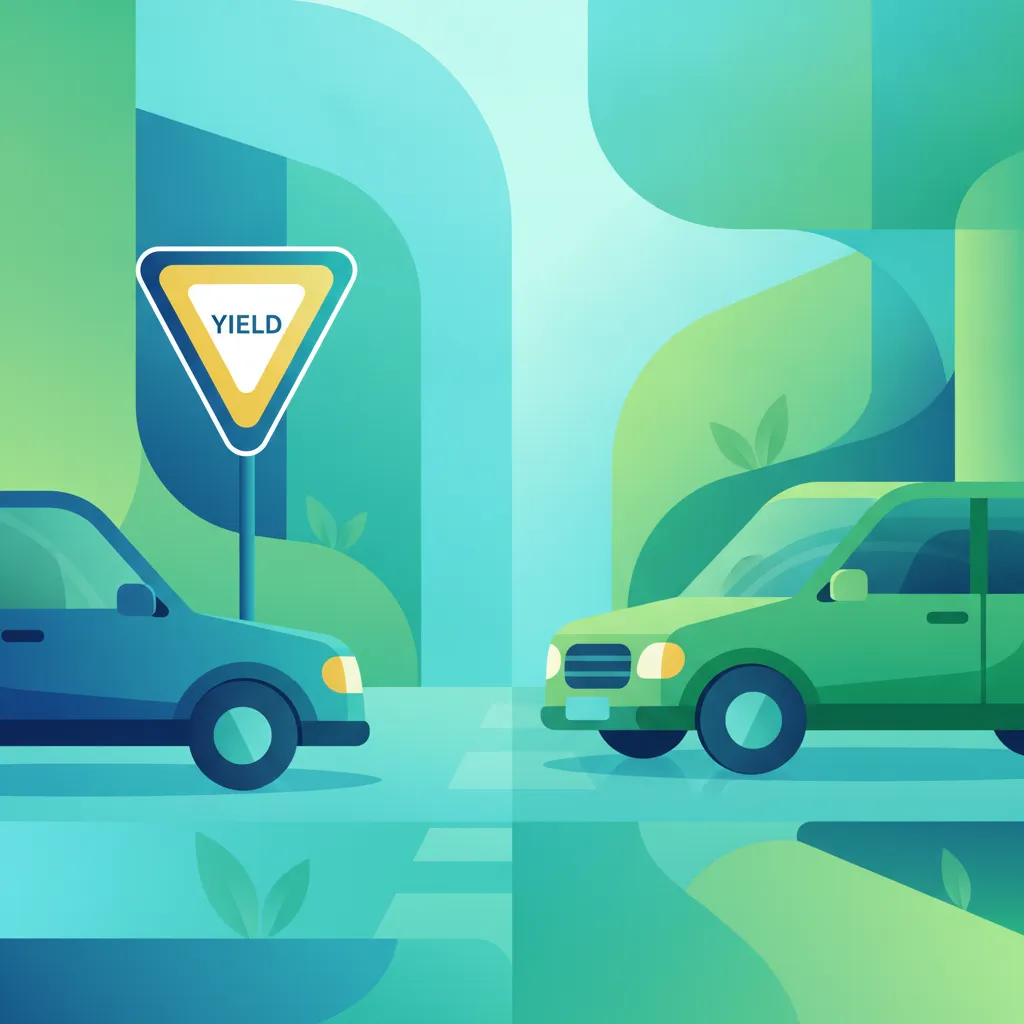
This lesson provides a comprehensive breakdown of priority rules under French law, with special focus on the default rule of priorité à droite. You will learn to recognize when this rule applies, even in the absence of explicit signage, and how to verify that entering vehicles see you. It also explains how to read priority road indicators, stop signs, and yield signs, helping you manage right-of-way safely and confidently.

Learners will study the fundamental priority rules that dictate right-of-way at intersections, focusing on the 'priorité à droite' principle prevalent in French road design. The lesson explains how to identify priority roads, interpret yield signs, and apply these rules safely when operating an AM vehicle. Understanding priority ensures orderly movement and reduces conflict points in mixed traffic scenarios.
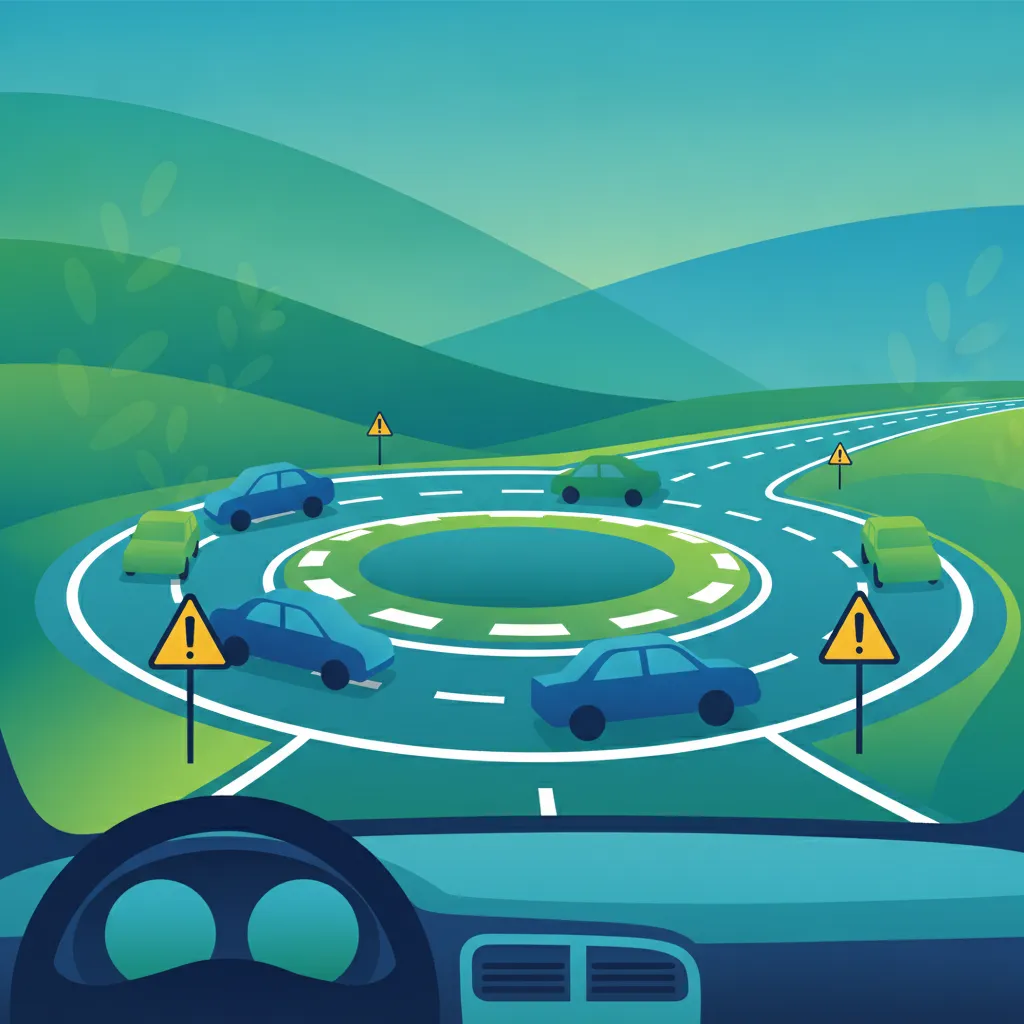
This lesson focuses on the skills required to safely enter, navigate, and exit roundabouts, a common feature in French urban environments. Learners will understand the need to yield to circulating traffic, select the appropriate lane upon entry, and signal intentions when exiting. By mastering these techniques, AM riders can safely integrate into roundabout traffic flow and reduce conflicts with other road users.

Some crossroads feature complex layouts or specific signs that modify standard priority rules, such as schematic diagrams (panonceaux schematiques). This lesson teaches you how to read these auxiliary signs, which depict the thick line of the priority road and thin lines of secondary roads. You will learn how to maintain priority when the main road curves and how to navigate non-standard intersection layouts.

Controlled intersections use traffic lights and accompanying signs to manage busy crossings systematically. This lesson covers how to safely proceed on a green light, negotiate left turns when yielding to oncoming traffic, and obey flashing amber lights. You will also learn the hierarchy of traffic control, where police officer gestures overrule both traffic lights and priority signs.

Learners will learn the critical steps for safely approaching and traversing intersections, emphasizing speed reduction, priority assessment, and adherence to right-of-way rules, including priorité à droite. The lesson covers recognizing stop lines, interpreting road markings, and maintaining a safe distance from other vehicles. By mastering these practices, AM riders can confidently navigate intersections while minimizing collision risk.

This lesson explains the correct procedures for entering, circulating, and exiting roundabouts, which are highly prevalent throughout France. You will learn the exact lane choice strategies based on your intended exit, and how to use your turn indicators at each stage of the maneuver. The content also addresses the critical task of performing over-the-shoulder blind spot checks to avoid conflicts with overtaking vehicles when exiting.

In France, pedestrians have clear legal priority when stepping onto or indicating an intent to use a crossing (passage pieton). This lesson details standard zebra crossings, refuge islands, and pedestrian crossings managed by synchronized traffic light systems. You will learn to scan crossings ahead, anticipate pedestrian movements, and safely come to a stop whenever a pedestrian attempts to cross.
Understand the full range of vertical and horizontal signage that overrides default priority rules. This guide explains how to identify and react to Stop signs, yield markings, and priority road indicators commonly found on French roads.
Negotiating crossroads that lack active traffic light signals requires a clear reading of signs and painted stop or yield lines. This lesson details the obligations of stopping completely at stop signs and slowing down to yield at 'cedez le passage' markings. You will learn to assess cross-traffic speeds, determine priorities when multiple vehicles arrive, and execute turns safely.
Some crossroads feature complex layouts or specific signs that modify standard priority rules, such as schematic diagrams (panonceaux schematiques). This lesson teaches you how to read these auxiliary signs, which depict the thick line of the priority road and thin lines of secondary roads. You will learn how to maintain priority when the main road curves and how to navigate non-standard intersection layouts.
Controlled intersections use traffic lights and accompanying signs to manage busy crossings systematically. This lesson covers how to safely proceed on a green light, negotiate left turns when yielding to oncoming traffic, and obey flashing amber lights. You will also learn the hierarchy of traffic control, where police officer gestures overrule both traffic lights and priority signs.
This lesson provides a comprehensive breakdown of priority rules under French law, with special focus on the default rule of priorité à droite. You will learn to recognize when this rule applies, even in the absence of explicit signage, and how to verify that entering vehicles see you. It also explains how to read priority road indicators, stop signs, and yield signs, helping you manage right-of-way safely and confidently.
Find clear answers to common questions learners have about General Priority Principles and 'Priorite a droite'. Learn how the lesson is structured, which driving theory objectives it supports, and how it fits into the overall learning path of units and curriculum progression in France. These explanations help you understand key concepts, lesson flow, and exam focused study goals.
If there is no signage at an intersection, the default rule is priority-to-the-right. This means you must yield to any vehicle approaching from your right side.
You do not necessarily have to stop, but you must be prepared to do so. If a vehicle is approaching from your right, you must slow down and allow them to pass.
You are on a priority road if you see a yellow diamond sign with a white border. This sign indicates that you have priority at all upcoming intersections until you see a sign indicating the end of the priority road.
The rule is the default, but it is superseded by any specific signage such as stop signs, yield signs, or traffic lights. Always check for signs before relying on the default rule.
Ready to focus your study? Use the practice search to find exactly the French driving theory questions you need for the Code de la route and permis de conduire ETG. Refine your knowledge on specific topics or challenging rules to boost your confidence and exam readiness.