
This lesson teaches you the specific, safe procedures for entering, navigating, and exiting roundabouts throughout France. Understanding these maneuvers is crucial for both your theoretical motorcycle exam and for maintaining defensive safety while riding your A1, A2, or A bike.

Lesson content overview
Navigating roundabouts safely is one of the most critical practical skills for motorcyclists in France. Roundabouts (carrefours à sens giratoire) are highly prevalent across the French road network, designed to reduce severe broadside collisions and keep traffic flowing smoothly.
However, because of their circular layout, frequent lane merges, and rapid traffic shifts, they present unique physical and cognitive challenges for riders preparing for their Category A, A1, or A2 motorcycle licenses.
This lesson covers the exact procedures for approaching, circulating, and exiting roundabouts according to the French Code de la route. You will learn how to choose the correct lane, execute perfect signaling protocols, and perform essential safety checks to protect yourself from surrounding traffic.
In France, it is essential to distinguish between a classic roundabout (rond-point) and a modern circular intersection (carrefour à sens giratoire). While everyday language often uses these terms interchangeably, their legal priority rules are fundamentally different.
For the purpose of your theory exam and daily riding, we will focus primarily on the standard carrefour à sens giratoire, where you must always yield to vehicles approaching from your left before entering.
Your safety on a roundabout begins long before you cross the entry line. The approach phase requires you to gather information, select your path, and adapt your speed.
As you approach, look beyond the vehicle directly in front of you. Observe the flow of traffic already circulating within the roundabout. Scan for vulnerable road users, such as cyclists or pedestrians, who may be crossing the entry or exit zones.
Decelerate smoothly by rolling off the throttle and applying progressive braking. Shift down to a gear that gives you enough engine flexibility to either stop smoothly if traffic is heavy, or accelerate promptly to merge into a gap. Generally, second gear is ideal for approaching and navigating most urban roundabouts on a motorcycle.
Motorcycle Grip Risk: The entry and exit points of roundabouts are notorious for accumulating oil, diesel spills from heavy vehicles, and gravel. Keep your motorcycle as upright as possible during the entry transition to maximize your tire contact patch.
Your lane choice must be decided before you enter the roundabout. Under French traffic law, your position inside the ring depends entirely on your intended exit.
If you intend to exit immediately to the right:
If you are taking an exit that is straight ahead (typically the second exit, or any exit located before the halfway point of the roundabout):
If your exit is located to the left of your entry axis, or if you are making a complete U-turn:
The legal requirement to select and maintain the correct lane of a multi-lane road or roundabout based on your destination, minimizing weaving and unpredictable lateral movements.
Incorrect signaling is one of the most common causes of collisions and near-misses on French roundabouts. For motorcyclists, whose physical profile is much smaller than a car's, clear signaling is your primary tool for making yourself seen and understood.
Approach: Position your motorcycle in the left entry lane with your left turn indicator flashing.
Yield and Enter: Yield to traffic coming from the left. Once clear, enter the inner ring of the roundabout, keeping your left indicator on.
Circulate: Maintain your position on the inner ring with the left indicator on, signaling to other drivers that you are continuing around.
Prepare to Exit: As you pass the exit immediately preceding your intended exit, perform a rapid head check over your right shoulder (blind spot check).
Switch Indicators: Switch your turn signal from left to right.
Change Lanes and Exit: Smoothly drift to the outer lane of the roundabout and exit, turning off your indicator once you have cleared the intersection.
A mirror check is never sufficient when navigating or exiting a roundabout. Due to the curved geometry of the intersection, other vehicles can easily be hidden in your blind spots—particularly fast-moving two-wheelers attempting to overtake you on the inside or cars changing lanes abruptly.
Before any lateral movement—whether entering the inner lane, shifting back to the outer lane, or turning off to exit—you must perform a rapid, decisive over-the-shoulder blind spot check (contrôle d'angle mort).
For motorcyclists, the blind spot check is a physical turning of the head (approximately 90 degrees) in the direction of the intended movement. It must be performed after checking your mirrors but before you initiate any change in handlebars direction.
Roundabouts require a high level of defensive riding. Because of your smaller visual silhouette, drivers entering the roundabout may fail to see you, or they may misjudge your speed.
Heavy commercial trucks often overfill their fuel tanks. When these trucks tilt slightly while navigating a tight circular roundabout, excess diesel fuel spills out of the tank cap onto the road.
Large trucks and buses have massive blind spots, especially on their right side when turning.
When entering a roundabout next to a car, the driver may naturally drift toward the apex of the curve, cutting into your lane space. Always position yourself defensively within your lane to maintain a "space cushion" around your motorcycle.
To pass your French theory exam and ensure your safety on the road, memorize these core principles and avoid the common pitfalls:
Understanding how to negotiate intersections and roundabouts is a cornerstone of urban riding safety. To further build your knowledge, explore how lane positioning and blind spot management apply to other riding scenarios, such as overtaking and motorway entry.
Navigating French roundabouts as a motorcyclist requires selecting your lane before entry based on your intended exit, with right-lane approach for immediate or straight exits and left-lane approach for left exits or U-turns. Traffic already circulating inside a carrefour à sens giratoire has absolute priority, so you must yield from the left before entering. Your turn indicators must be used to communicate your path—left indicator for circulating left, then switch to right indicator after passing the exit before yours. Before any lane change or exit, a physical over-the-shoulder blind spot check is mandatory because mirrors cannot reveal vehicles in your angle mort. Defensive riding is essential: avoid riding alongside heavy vehicles whose blind spots can hide you, and be alert for diesel spills on the outer lane that reduce tire grip.
A short set of high-value points that capture the most important learning from this lesson.
Always yield to vehicles already circulating inside a carrefour à sens giratoire—traffic on the left has priority over entering traffic.
Your lane choice must be decided before entering: right lane for first exit or going straight, left lane for left exits or U-turns.
Activate your right turn indicator only after passing the exit immediately before your intended exit when going straight.
A physical over-the-shoulder head check is mandatory after mirror checks and before any lateral movement or lane change.
Never ride side-by-side with heavy vehicles inside a roundabout—stay behind or pass cleanly to avoid their massive blind spots.
Explore all units and lessons included in this driving theory course.
Carrefour à sens giratoire (standard roundabout) uses yield signs at entries; rond-point uses priorité à droite where entering traffic has priority.
Left turn indicator stays on throughout circulating for left exits until you pass the preceding exit, then switch to right indicator.
Keep your motorcycle upright on entry and exit points to maximize tire contact patch on potentially slippery surfaces.
Use second gear for most urban roundabout approaches to maintain engine flexibility for stopping or accelerating.
The blind spot check is a physical 90-degree head turn—not just a mirror check—required before changing lanes or exiting.
Entering the roundabout without properly assessing traffic flow from the left, creating conflict with circulating vehicles.
Circulating on the outer (right) lane when taking a left exit, which blockades traffic and causes side-swipe collision risks.
Activating the right-turn signal only at the moment of exiting rather than signaling in advance to warn other drivers.
Failing to transition from inner to outer lane before a left exit, then cutting across lanes illegally.
Entering the roundabout at excessive speed, reducing reaction time and increasing crash risk on slippery surfaces.
Lesson content overview
A short set of high-value points that capture the most important learning from this lesson.
Always yield to vehicles already circulating inside a carrefour à sens giratoire—traffic on the left has priority over entering traffic.
Your lane choice must be decided before entering: right lane for first exit or going straight, left lane for left exits or U-turns.
Activate your right turn indicator only after passing the exit immediately before your intended exit when going straight.
A physical over-the-shoulder head check is mandatory after mirror checks and before any lateral movement or lane change.
Never ride side-by-side with heavy vehicles inside a roundabout—stay behind or pass cleanly to avoid their massive blind spots.
Explore all units and lessons included in this driving theory course.
Carrefour à sens giratoire (standard roundabout) uses yield signs at entries; rond-point uses priorité à droite where entering traffic has priority.
Left turn indicator stays on throughout circulating for left exits until you pass the preceding exit, then switch to right indicator.
Keep your motorcycle upright on entry and exit points to maximize tire contact patch on potentially slippery surfaces.
Use second gear for most urban roundabout approaches to maintain engine flexibility for stopping or accelerating.
The blind spot check is a physical 90-degree head turn—not just a mirror check—required before changing lanes or exiting.
Entering the roundabout without properly assessing traffic flow from the left, creating conflict with circulating vehicles.
Circulating on the outer (right) lane when taking a left exit, which blockades traffic and causes side-swipe collision risks.
Activating the right-turn signal only at the moment of exiting rather than signaling in advance to warn other drivers.
Failing to transition from inner to outer lane before a left exit, then cutting across lanes illegally.
Entering the roundabout at excessive speed, reducing reaction time and increasing crash risk on slippery surfaces.
Explore search topics learners often look for when studying Roundabout Entry and Exit Techniques for Motorcyclists. These topics reflect common questions about road rules, driving situations, safety guidance, and lesson level theory preparation for learners in France.
Browse additional driving theory lessons that cover connected traffic rules, road signs, and common driving situations related to this topic. Improve your understanding of how different rules interact across everyday traffic scenarios.
Learn the official regulations for right-of-way, including priorité à droite and yield signs at various intersection types. This overview clarifies how priority is determined in French traffic law and helps you understand your legal responsibilities when approaching complex junctions.

Negotiating crossroads that lack active traffic light signals requires a clear reading of signs and painted stop or yield lines. This lesson details the obligations of stopping completely at stop signs and slowing down to yield at 'cedez le passage' markings. You will learn to assess cross-traffic speeds, determine priorities when multiple vehicles arrive, and execute turns safely.

In France, the default rule at any intersection without clear priority signage is priority-to-the-right (priorite a droite). This lesson explains how to identify unsignaled junctions in urban and rural environments and when you must yield to incoming vehicles. You will learn to spot the standard yellow diamond priority signs and triangular warning signs that indicate whether you hold the priority.

This lesson provides a comprehensive breakdown of priority rules under French law, with special focus on the default rule of priorité à droite. You will learn to recognize when this rule applies, even in the absence of explicit signage, and how to verify that entering vehicles see you. It also explains how to read priority road indicators, stop signs, and yield signs, helping you manage right-of-way safely and confidently.

Controlled intersections use traffic lights and accompanying signs to manage busy crossings systematically. This lesson covers how to safely proceed on a green light, negotiate left turns when yielding to oncoming traffic, and obey flashing amber lights. You will also learn the hierarchy of traffic control, where police officer gestures overrule both traffic lights and priority signs.

Learners will study the fundamental priority rules that dictate right-of-way at intersections, focusing on the 'priorité à droite' principle prevalent in French road design. The lesson explains how to identify priority roads, interpret yield signs, and apply these rules safely when operating an AM vehicle. Understanding priority ensures orderly movement and reduces conflict points in mixed traffic scenarios.

Some crossroads feature complex layouts or specific signs that modify standard priority rules, such as schematic diagrams (panonceaux schematiques). This lesson teaches you how to read these auxiliary signs, which depict the thick line of the priority road and thin lines of secondary roads. You will learn how to maintain priority when the main road curves and how to navigate non-standard intersection layouts.

France features a vast network of roundabouts (carrefours a sens giratoire) governed by specific entry and lane-use regulations. This lesson explains that vehicles entering a roundabout must yield to traffic already circulating inside. You will learn how to select the correct lane depending on your exit, use direction indicators properly, and yield to pedestrians and cyclists near roundabout exits.

In France, pedestrians have clear legal priority when stepping onto or indicating an intent to use a crossing (passage pieton). This lesson details standard zebra crossings, refuge islands, and pedestrian crossings managed by synchronized traffic light systems. You will learn to scan crossings ahead, anticipate pedestrian movements, and safely come to a stop whenever a pedestrian attempts to cross.

Learners will explore the rules related to pedestrian crossings, focusing on the obligation to yield to pedestrians at zebra crossings and flashing pedestrian signals. The lesson highlights the importance of stopping before the stop line, reducing speed, and maintaining vigilance for pedestrian movement. Mastery of these practices ensures the safety of both pedestrians and AM riders at crossing points.

Public transit vehicles like city buses and streetcars (trams) have clear legal priorities and dedicated infrastructure in urban areas. This lesson teaches you to recognize reserved transit lanes and your legal obligation to yield to buses exiting their designated stops. You will also learn safe driving strategies near tram tracks, ensuring you never block public transit lines or risk passenger boarding areas.
Explore core defensive riding principles for managing heavy traffic, blind spots of larger vehicles, and environmental hazards in French cities. This lesson focuses on space management and continuous risk assessment to help you navigate urban areas safely and predictably.

This lesson teaches riders how to approach and cross both controlled and uncontrolled intersections in urban settings. You will practice the 'scanning cycle' technique to identify cross-traffic hazards and manage your defensive line of sight around physical obstructions. The lesson also highlights the critical importance of early signaling and positioning to ensure that turning passenger cars do not violate your safety zone.

This lesson provides practical strategies for managing the physical demands of slow, heavily congested city traffic. You will learn how to maintain excellent low-speed balance through correct body posture, rear brake modulation, and smooth clutch control. It also emphasizes the importance of preserving an adequate safety buffer when stopping behind other vehicles, allowing an immediate escape route if you face a rear-end threat.

Learners will develop the ability to anticipate potential hazards on the road, enhancing reaction times and defensive riding strategies. The lesson emphasizes constant scanning, early identification of threats such as sudden stops, pedestrian crossings, or unexpected lane changes, and appropriate response measures. By cultivating proactive risk assessment, AM riders can significantly reduce accident likelihood.

In this lesson, drivers will learn how to safely share the road with motorcycles and scooters, focusing on the specific blind spots and speed differentials that create risk. The content highlights proper lane positioning, caution when overtaking, and strategies for predicting motorcycle trajectories. Learners will also be introduced to the importance of being aware of scooter movements, especially in narrow streets.

This lesson breaks down triangular warning signs, which warn of upcoming safety hazards like reverse curves, narrowing lanes, or loose gravel. You will learn to translate these visual markers into proactive riding techniques, such as adjusting your entry speed or choosing an alternative lean angle. Special attention is given to signs indicating temporary roadworks or variable grip conditions, which pose elevated dangers to motorcycles.

This final lesson integrates all course concepts into a single, cohesive approach to defensive riding and continuous risk assessment. You will study how to maintain a high-mileage visual lead, continuously scanning the road ahead for warning signs of conflict. By learning to assume that other motorists may not see you, you will build the proactive slowing habits and situational awareness needed to remain safe throughout your riding life.

This lesson teaches you how to establish and preserve a dynamic cushion of safety on all sides of your motorcycle. You will study how to apply the 'two-second rule' to keep a safe following distance, extending it to three or more seconds in adverse weather. Additionally, you will discover how to manage tailgating motorists safely without resorting to dangerous speed increases, ensuring you always maintain a clear escape route.

This lesson teaches critical emergency response maneuvers to help you avoid sudden, unexpected obstacles on the roadway. You will learn the exact step-by-step process of executing a rapid, controlled swerve, keeping braking forces separate from steering inputs to prevent a slide. Additionally, the lesson addresses the psychological challenge of 'target fixation' and provides techniques to keep your eyes focused on your clear escape route.
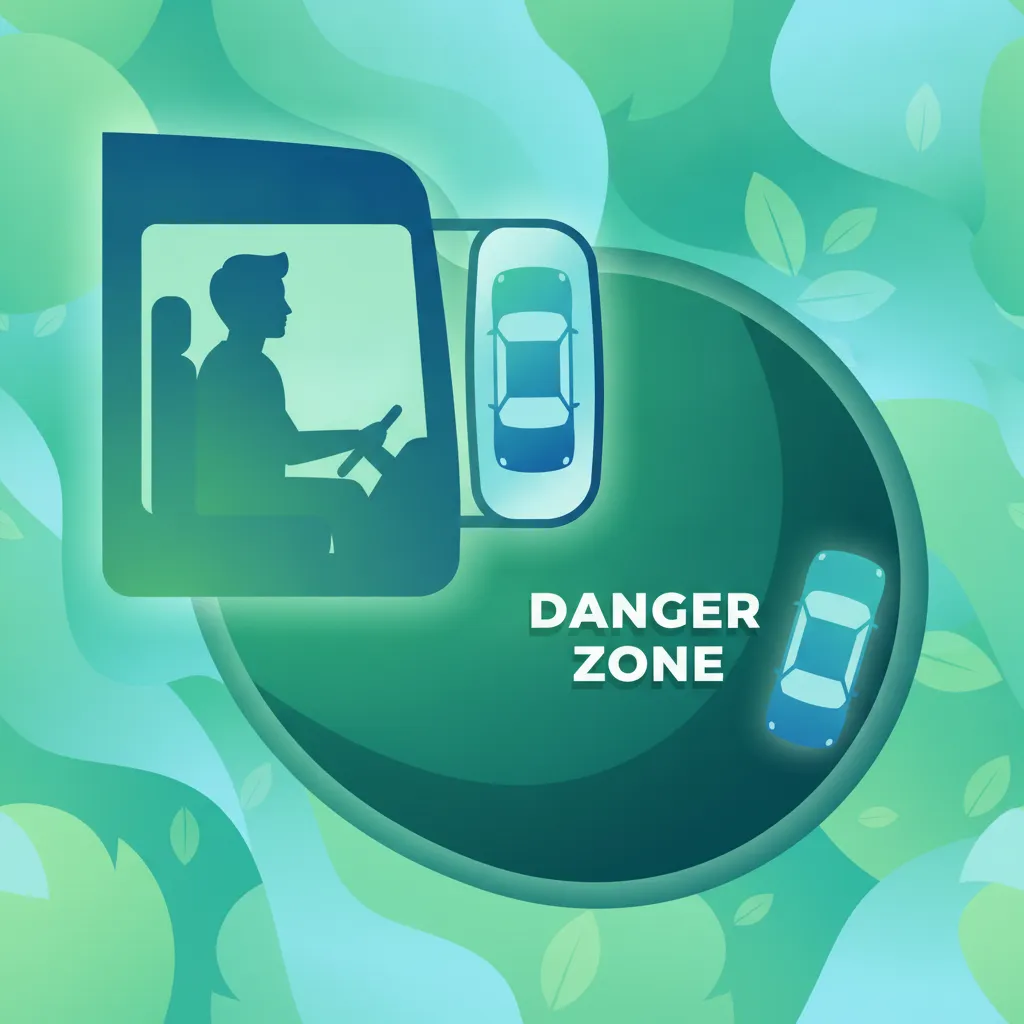
This lesson details the location and scale of blind spots around passenger cars and heavy goods vehicles, often referred to as the 'no-zone' or 'angles morts'. You will learn why truck drivers cannot see you directly behind or immediately adjacent to their cab doors. The lesson provides actionable strategies to minimize the time you spend in these dangerous zones, ensuring you always pass quickly and safely.
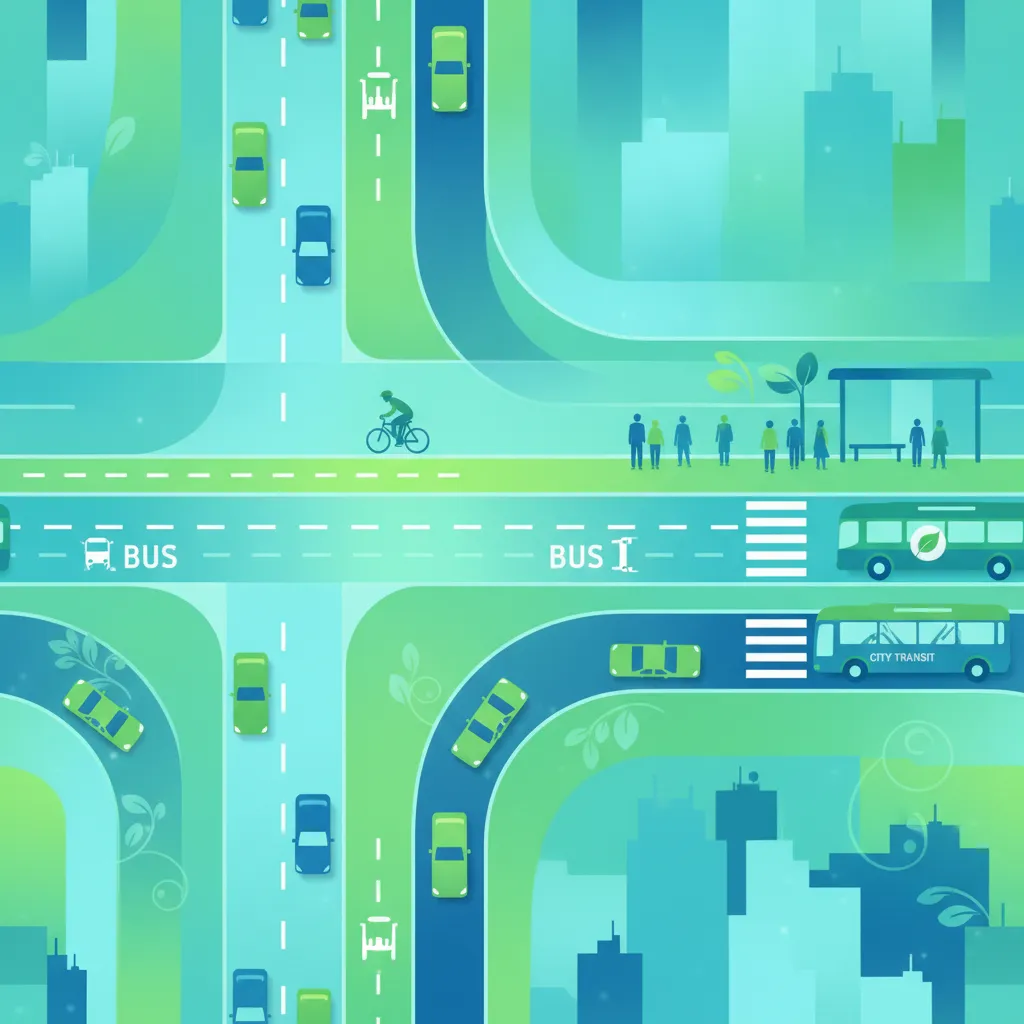
This lesson clarifies the legal boundaries of urban infrastructure, highlighting the strict ban on riding motorcycles within bus lanes or cycle paths. You will study French regulations concerning traffic flow, including where and when experimental lane filtering is permitted between lines of stationary cars. Understanding these boundaries ensures you can keep moving through congested areas without risking heavy fines or dangerous collisions.
Find clear answers to common questions learners have about Roundabout Entry and Exit Techniques for Motorcyclists. Learn how the lesson is structured, which driving theory objectives it supports, and how it fits into the overall learning path of units and curriculum progression in France. These explanations help you understand key concepts, lesson flow, and exam focused study goals.
If you intend to take the first exit, stay in the right lane. For subsequent exits, you generally enter the roundabout and stay in the lane that corresponds to your exit direction, while always watching for the markings on the road surface.
Yes, you must signal your intention to exit the roundabout. You should activate your right turn indicator before reaching the exit you intend to take, ensuring you have performed a blind spot check first.
Multi-lane roundabouts require extra caution. Position yourself clearly in the center of your lane to discourage drivers from squeezing past you, and always verify the area on your right before moving toward an exit to avoid conflicts with vehicles staying in the roundabout.
No, vehicles already circulating inside the roundabout generally have priority. You must yield to traffic coming from your left before entering the roundabout.
Ready to focus your study? Use the practice search to find exactly the French driving theory questions you need for the Code de la route and permis de conduire ETG. Refine your knowledge on specific topics or challenging rules to boost your confidence and exam readiness.