This lesson guides you through the fundamental priority rules required for your AM licence, specifically focusing on the critical concept of priorité à droite. By mastering how to interpret signs and road conditions at intersections, you will gain the confidence to navigate French roads safely. This unit builds on your basic knowledge of road signs, preparing you for complex traffic management in future lessons.
Lesson content overview
Navigating intersections safely is one of the most critical skills you must master to pass your official French Category AM licence examination and ride safely on public roads. According to French road safety statistics, nearly one-third of all injury-causing accidents occur at intersections. For riders of light motorized vehicles—such as mopeds, scooters, and light quadricycles—the stakes are exceptionally high. Because of your vehicle's smaller physical profile, larger road users may fail to spot you, making a flawless understanding of priority rules (les règles de priorité) your primary line of defense.
In France, the Code de la route governs the right-of-way systematically. This lesson covers how to recognize priority roads, interpret regulatory signs, and apply the default rule of French road design: the famous priorité à droite (priority to the right).
In the absence of any traffic signs, road markings, or traffic lights, the default rule of the road in France is priorité à droite. This means you must yield the right-of-way to any vehicle approaching an intersection from your right-hand side.
Conversely, vehicles approaching from your left must yield to you, provided there are no overriding signs or markings.
You must apply priorité à droite in the following circumstances:
Even if a vehicle is coming from your right, you do not have to yield to them if they are exiting:
In these specific scenarios, the vehicle entering the public, paved road must always yield to all circulating traffic, regardless of which side they are coming from.
The T-Junction Trap: Many new riders incorrectly assume that if they are driving straight on a wider, main-looking road, they have priority over a vehicle emerging from a small side road ending in a T-junction. If there are no signs or road markings at that T-junction, priorité à droite applies! You must yield to the vehicle on the right, even if they are turning onto your road.
To keep traffic flowing smoothly on major thoroughfares, French road authorities use specific signs to override the default priority to the right. Understanding these signs tells you when you can maintain your speed and when you must prepare to yield.
A priority road is a major route where traffic has the right-of-way over all intersecting side streets. This priority remains active at every subsequent intersection until you pass a sign indicating the end of the priority road.
If you see this sign, you do not need to yield to vehicles approaching from the right at upcoming junctions, as those side streets will have yield (Cédez le passage) or Stop signs.
To signal the end of this privileged status, the authorities use the AB7 sign, which is identical to the AB6 sign but crossed out by a thick black diagonal bar. Past the AB7 sign, you must expect to yield or obey new priority rules.
Sometimes, you do not have permanent priority, but you are granted the right-of-way for the next intersection only. This is indicated by a warning sign.
When passing this sign, you can safely proceed through the very next junction without yielding to the right. However, immediately after that junction, the status ends, and you must look for new signs or prepare for the default priority rules.
When you are traveling on a non-priority road that intersects with a priority route, you will be faced with regulatory signs requiring you to give way. Failing to respect these signs is a severe safety hazard and a major traffic violation under the French Code de la route.
The yield sign tells you that you must give the right-of-way to all vehicles traveling on the crossing road.
When approaching a yield sign on a moped or light quadricycle:
A stop sign is one of the most restrictive signs on French roads. It is used at high-risk junctions, intersections with poor visibility, or where high-speed traffic crosses.
The rules for a stop sign are absolute:
Stopping on a Two-Wheeler: When riding a moped or scooter at a stop sign, put at least one foot flat on the ground. This physical action guarantees that your vehicle has come to a complete, unambiguous stop, preventing any misunderstanding with law enforcement or other drivers.
France has thousands of circular intersections, but they are not all governed by the same priority rules. For the Category AM theory exam, you must understand the difference between a Carrefour à sens giratoire and a traditional Rond-point.
This is by far the most common type of circular intersection in France. It is marked by a blue circular sign showing three white arrows turning in a circle, accompanied by a yield sign (Cédez le passage) on your approach lane.
Though rare today, traditional roundabouts still exist (such as the famous Place de l'Étoile around the Arc de Triomphe in Paris). These intersections do not have yield signs or painted dashed lines on the entry lanes.
While traffic signs manage the priority between motorized vehicles, the Code de la route places a massive emphasis on protecting vulnerable road users, such as pedestrians, cyclists, and scooter riders.
Pedestrians always have absolute priority when crossing the road, or when they clearly show an intention to cross (e.g., stepping toward the curb, making eye contact, or waiting at the edge of a crosswalk).
Many French urban streets feature dedicated bicycle paths (pistes cyclables) or lanes (bandes cyclables).
Your ability to apply priority rules safely depends heavily on external factors. What works on a dry, sunny afternoon must be adapted when conditions deteriorate.
In adverse weather, your visibility drops, and your braking distances increase dramatically.
At night, the lack of ambient light can obscure road markings and non-reflective signage.
To make split-second decisions at intersections, memorize this hierarchy of priority. An upper level always overrides the levels beneath it:
  [ Level 1: Police Officers / Traffic Controllers ] (Overrides everything else)
                        │
                        ▼
         [ Level 2: Temporary Traffic Lights ]
                        │
                        ▼
         [ Level 3: Permanent Traffic Lights ]
                        │
                        ▼
          [ Level 4: Regulatory Signs & Lines ] (Stop, Yield, Priority Road)
                        │
                        ▼
    [ Level 5: Default "Priorité à droite" ] (If no lights, signs, or officers exist)
By committing this hierarchy and the specific signs to memory, you will not only be fully prepared for your Category AM theory exam but will also possess the defensive driving habits needed to stay safe on every street in France.
This lesson covers the foundational priority rules for French roads, centered on the priorité à droite principle which requires yielding to vehicles from your right at any unmarked intersection. The content details how to identify priority situations using road signs (AB1, AB6, AB7) and when to apply temporary priority (AB2). It distinguishes between yield signs (Cédez le passage) requiring smooth deceleration and stop signs demanding a complete halt, while also clarifying the critical difference between modern roundabouts and traditional rond-points. The lesson emphasizes protection of vulnerable road users and adapts priority application to weather and visibility conditions, concluding with a clear priority hierarchy that is essential for passing the AM licence theory exam.
A short set of high-value points that capture the most important learning from this lesson.
Priorité à droite is the default rule in France: always yield to vehicles approaching from your right at unregulated intersections
AB6 (yellow diamond) marks a priority road where you maintain right-of-way until you see AB7 (crossed out) ending the priority
At a modern roundabout (carrefour à sens giratoire), you must yield to circulating traffic; at a traditional rond-point, priorité à droite applies inside the circle
Stop signs require a complete halt behind the line; a rolling stop is illegal under the Code de la route
Vulnerable road users like pedestrians on crossings and cyclists in bike lanes always have absolute priority
Explore all units and lessons included in this driving theory course.
Exceptions to priorité à droite: vehicles entering from driveways, parking lots, dirt tracks, or pedestrian zones must always yield regardless of direction
Cédez le passage (yield) means slow down and give way but you may proceed without stopping if the road is clear
AB2 sign grants priority at the next intersection only; immediately after, default rules resume
The priority hierarchy runs: police officers > temporary lights > permanent lights > signs > default priorité à droite
In adverse weather, increase stopping distances significantly and proceed with extra caution at all intersections
Assuming main-looking roads have priority at T-junctions without signs: priorité à droite still applies regardless of road width
Confusing traditional rond-points with modern roundabouts: only modern ones give priority to circulating traffic
Performing a rolling stop at a STOP sign instead of bringing the vehicle to a complete standstill
Forgetting to check for cyclists in adjacent bike lanes when turning, especially at right-hand blind spots
Overtaking another vehicle at a pedestrian crossing that has stopped, risking unseen pedestrians
Lesson content overview
A short set of high-value points that capture the most important learning from this lesson.
Priorité à droite is the default rule in France: always yield to vehicles approaching from your right at unregulated intersections
AB6 (yellow diamond) marks a priority road where you maintain right-of-way until you see AB7 (crossed out) ending the priority
At a modern roundabout (carrefour à sens giratoire), you must yield to circulating traffic; at a traditional rond-point, priorité à droite applies inside the circle
Stop signs require a complete halt behind the line; a rolling stop is illegal under the Code de la route
Vulnerable road users like pedestrians on crossings and cyclists in bike lanes always have absolute priority
Explore all units and lessons included in this driving theory course.
Exceptions to priorité à droite: vehicles entering from driveways, parking lots, dirt tracks, or pedestrian zones must always yield regardless of direction
Cédez le passage (yield) means slow down and give way but you may proceed without stopping if the road is clear
AB2 sign grants priority at the next intersection only; immediately after, default rules resume
The priority hierarchy runs: police officers > temporary lights > permanent lights > signs > default priorité à droite
In adverse weather, increase stopping distances significantly and proceed with extra caution at all intersections
Assuming main-looking roads have priority at T-junctions without signs: priorité à droite still applies regardless of road width
Confusing traditional rond-points with modern roundabouts: only modern ones give priority to circulating traffic
Performing a rolling stop at a STOP sign instead of bringing the vehicle to a complete standstill
Forgetting to check for cyclists in adjacent bike lanes when turning, especially at right-hand blind spots
Overtaking another vehicle at a pedestrian crossing that has stopped, risking unseen pedestrians
Explore search topics learners often look for when studying Priority Rules and “Priorité à droite”. These topics reflect common questions about road rules, driving situations, safety guidance, and lesson level theory preparation for learners in France.
Browse additional driving theory lessons that cover connected traffic rules, road signs, and common driving situations related to this topic. Improve your understanding of how different rules interact across everyday traffic scenarios.
Learn the official French driving theory for negotiating circular intersections. Understand the key differences between modern roundabouts with yield signs and traditional roundabouts where the default priority to the right applies, ensuring safe navigation in urban and rural environments.

France features a vast network of roundabouts (carrefours a sens giratoire) governed by specific entry and lane-use regulations. This lesson explains that vehicles entering a roundabout must yield to traffic already circulating inside. You will learn how to select the correct lane depending on your exit, use direction indicators properly, and yield to pedestrians and cyclists near roundabout exits.

In France, the default rule at any intersection without clear priority signage is priority-to-the-right (priorite a droite). This lesson explains how to identify unsignaled junctions in urban and rural environments and when you must yield to incoming vehicles. You will learn to spot the standard yellow diamond priority signs and triangular warning signs that indicate whether you hold the priority.

Negotiating crossroads that lack active traffic light signals requires a clear reading of signs and painted stop or yield lines. This lesson details the obligations of stopping completely at stop signs and slowing down to yield at 'cedez le passage' markings. You will learn to assess cross-traffic speeds, determine priorities when multiple vehicles arrive, and execute turns safely.
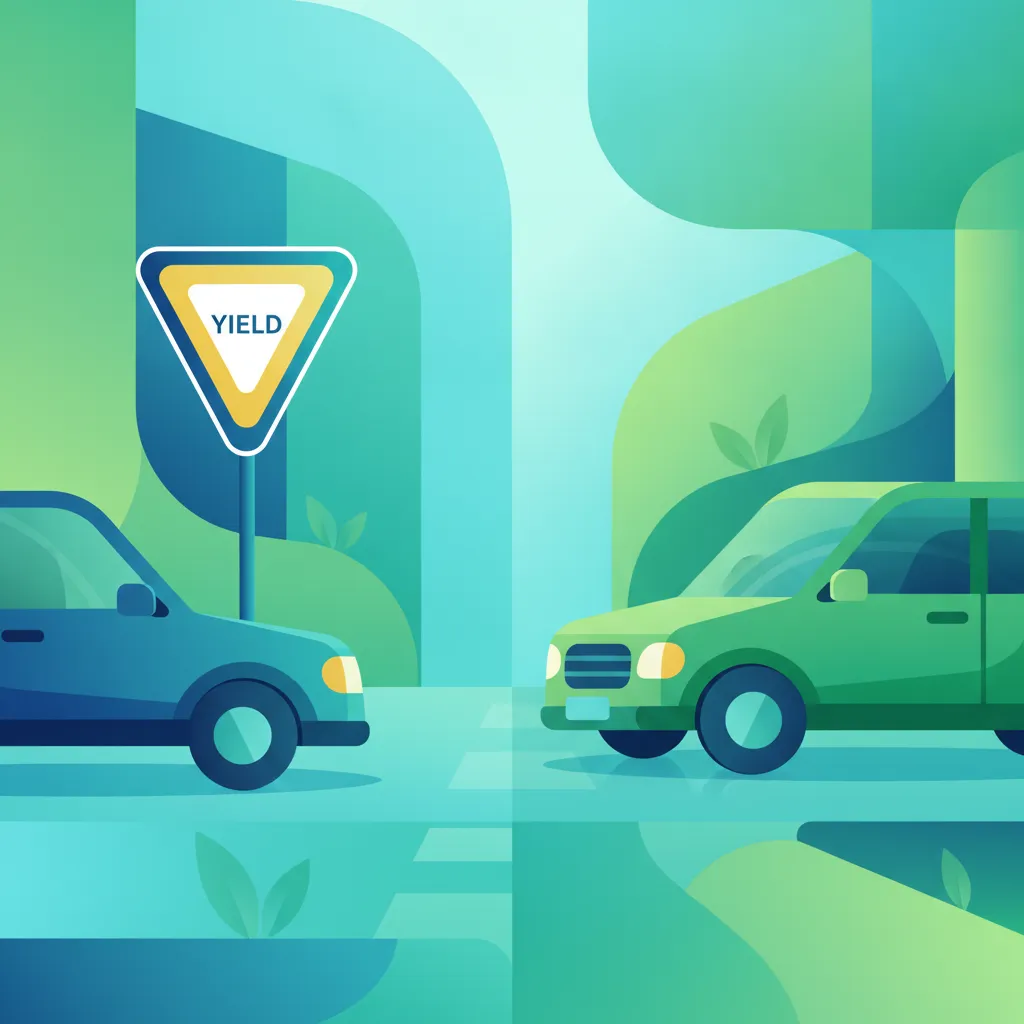
This lesson provides a comprehensive breakdown of priority rules under French law, with special focus on the default rule of priorité à droite. You will learn to recognize when this rule applies, even in the absence of explicit signage, and how to verify that entering vehicles see you. It also explains how to read priority road indicators, stop signs, and yield signs, helping you manage right-of-way safely and confidently.

Controlled intersections use traffic lights and accompanying signs to manage busy crossings systematically. This lesson covers how to safely proceed on a green light, negotiate left turns when yielding to oncoming traffic, and obey flashing amber lights. You will also learn the hierarchy of traffic control, where police officer gestures overrule both traffic lights and priority signs.
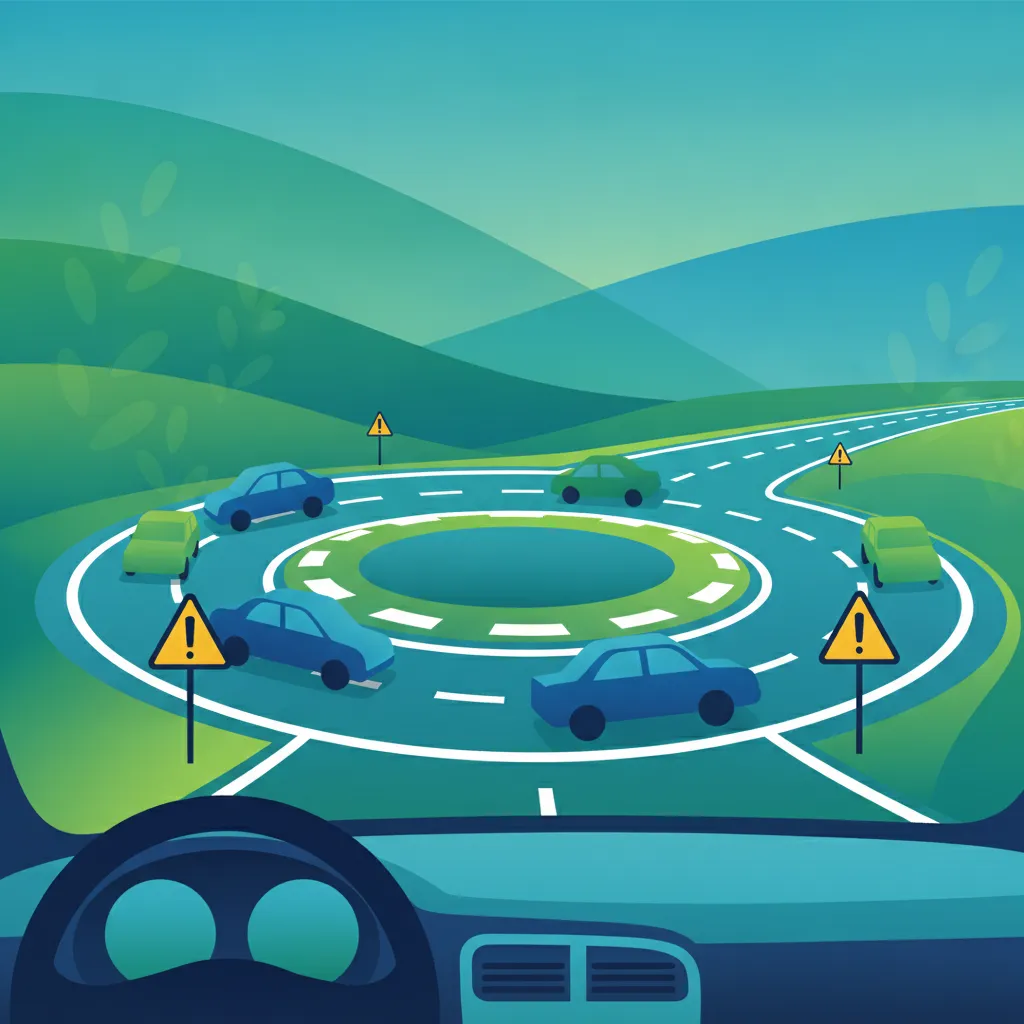
This lesson focuses on the skills required to safely enter, navigate, and exit roundabouts, a common feature in French urban environments. Learners will understand the need to yield to circulating traffic, select the appropriate lane upon entry, and signal intentions when exiting. By mastering these techniques, AM riders can safely integrate into roundabout traffic flow and reduce conflicts with other road users.

Some crossroads feature complex layouts or specific signs that modify standard priority rules, such as schematic diagrams (panonceaux schematiques). This lesson teaches you how to read these auxiliary signs, which depict the thick line of the priority road and thin lines of secondary roads. You will learn how to maintain priority when the main road curves and how to navigate non-standard intersection layouts.

This lesson explains the correct procedures for entering, circulating, and exiting roundabouts, which are highly prevalent throughout France. You will learn the exact lane choice strategies based on your intended exit, and how to use your turn indicators at each stage of the maneuver. The content also addresses the critical task of performing over-the-shoulder blind spot checks to avoid conflicts with overtaking vehicles when exiting.

Learners will explore the rules related to pedestrian crossings, focusing on the obligation to yield to pedestrians at zebra crossings and flashing pedestrian signals. The lesson highlights the importance of stopping before the stop line, reducing speed, and maintaining vigilance for pedestrian movement. Mastery of these practices ensures the safety of both pedestrians and AM riders at crossing points.

In France, pedestrians have clear legal priority when stepping onto or indicating an intent to use a crossing (passage pieton). This lesson details standard zebra crossings, refuge islands, and pedestrian crossings managed by synchronized traffic light systems. You will learn to scan crossings ahead, anticipate pedestrian movements, and safely come to a stop whenever a pedestrian attempts to cross.
Explore the specific responsibilities of light vehicle operators when interacting with pedestrians and cyclists. This guide explains how to apply priority rules during turns and at crosswalks to maintain safety for all road users under the French Code de la route.

Certain groups of road users require heightened defensive attention from drivers due to physical limitations or unpredictable behaviors. This lesson covers how to recognize signs of visual impairment (white canes), mobility challenges, and the unpredictability of young children. You will learn to reduce your speed, extend yielding patience, and proactively secure extra space to protect these vulnerable users.
This lesson focuses on the inherent vulnerability of AM vehicles due to their limited mass, exposure, and visibility within mixed traffic flows on French roads. Learners will examine how blind spots, sudden lane changes by larger vehicles, and higher impact severity affect small vehicle safety. The content underscores the necessity for riders to adopt proactive safety measures, maintain safe distances, and be constantly aware of surrounding traffic dynamics.
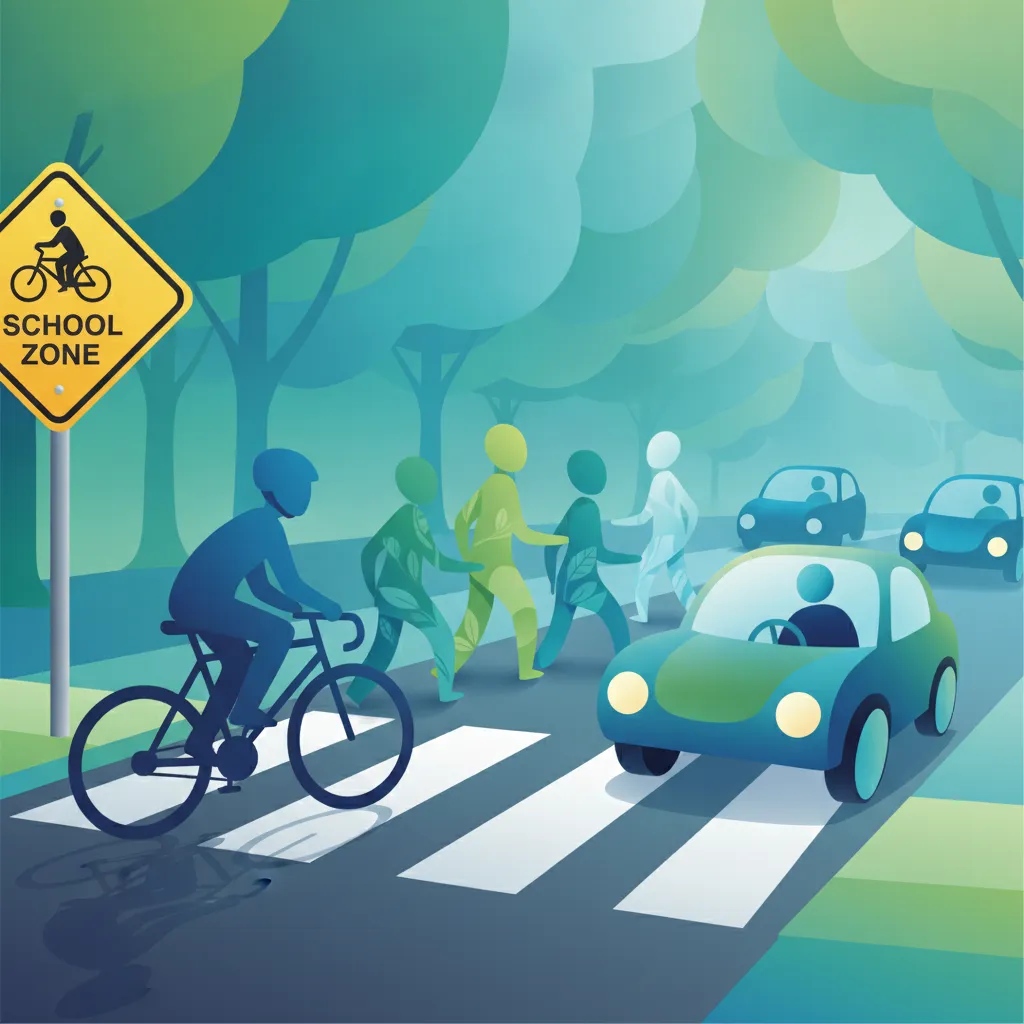
This lesson focuses on the legal requirement to yield to pedestrians on or about to step onto zebra crossings, a major focus of French road safety. You will learn how to approach school zones and pedestrian islands with heightened vigilance and reduced speed. Additionally, the lesson explores shared urban spaces, explaining how to maintain safe lateral distances when overtaking cyclists or personal electric scooters.

This lesson provides global defensive driving strategies to minimize collision risks for all non-motorized and vulnerable road users. Drivers will learn to systematically lower vehicle speed in dense pedestrian zones, even when no active hazards are visible. By cultivating an anticipatory mindset and maintaining generous safety margins, professional drivers establish a protective safety envelope around their vehicle.

Learners will focus on the best practices for interacting safely with cyclists and pedestrians in mixed traffic environments. The lesson covers proper lane usage, overtaking protocols, maintaining adequate safety gaps, and non-verbal communication techniques in the French urban landscape. By applying these principles, AM riders can coexist harmoniously with vulnerable road users, reducing the likelihood of accidents.
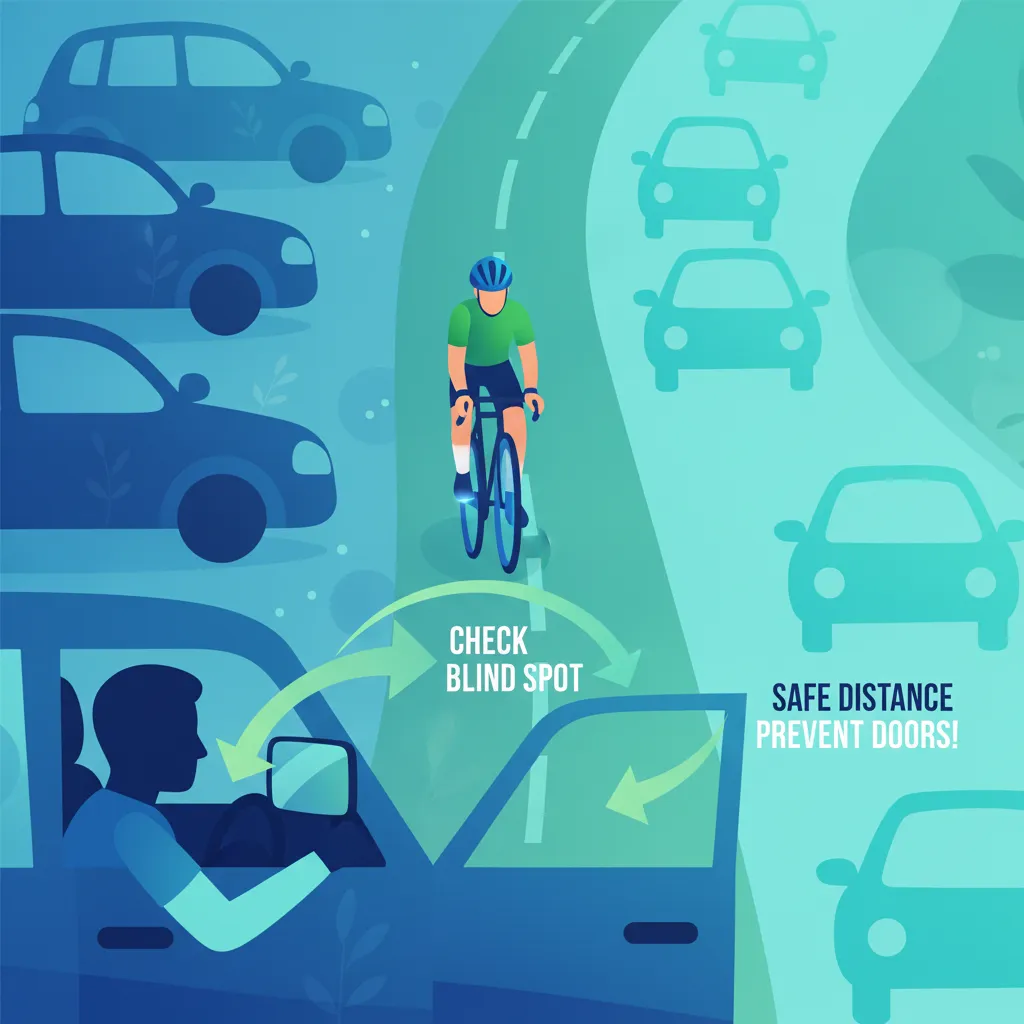
This lesson explains how to share the road safely with cyclists in both urban and rural environments. Drivers will study the legal minimum passing distances when overtaking cyclists, which is one meter in cities and one and a half meters outside urban areas. It also covers recognizing specialized cycling infrastructure, bike boxes at intersections, and preventing blind-spot collisions during right turns.

This lesson addresses the challenges of positioning near larger vehicles such as cars, vans, buses, and lorries on French roads. Learners will learn to identify blind spots (angles morts), maintain a safe distance, and position themselves to maximize visibility and predictability. Understanding these dynamics is crucial for AM riders to avoid dangerous situations and ensure safe overtaking and lane sharing.

In this lesson, drivers will learn strategies to avoid conflicts with smaller vehicles, such as cars and vans, which may not be as visible in large vehicle blind spots. The content emphasizes maintaining adequate spacing, using proper lane discipline, and being aware of small vehicles' behavior during lane changes and turns. Learners will also be introduced to communication techniques, such as signalling and eye contact.

In this lesson, drivers will learn how to safely share the road with motorcycles and scooters, focusing on the specific blind spots and speed differentials that create risk. The content highlights proper lane positioning, caution when overtaking, and strategies for predicting motorcycle trajectories. Learners will also be introduced to the importance of being aware of scooter movements, especially in narrow streets.

Learners explore the specific responsibilities that accompany operating a small, exposed vehicle, emphasizing the need for heightened defensive driving techniques under French law. The lesson stresses the importance of maintaining visibility and predictability, adhering strictly to the Code de la route, and understanding the dynamics of sharing the road safely. By internalizing these responsibilities, riders can significantly reduce risks and contribute to a safer traffic environment for all users.
Find clear answers to common questions learners have about Priority Rules and “Priorité à droite”. Learn how the lesson is structured, which driving theory objectives it supports, and how it fits into the overall learning path of units and curriculum progression in France. These explanations help you understand key concepts, lesson flow, and exam focused study goals.
It is a fundamental French traffic rule where drivers must yield to vehicles coming from their right at an intersection, provided there are no other signs or markings indicating otherwise. It is the default rule when no stop or yield sign is present.
No, you only yield to the right when no signs, lights, or road markings regulate the intersection. Always scan for traffic signs like 'stop' or 'yield' first, as these always take precedence over the default rule.
The exam often uses photos of intersections without signs. You must decide if you should proceed or yield to a vehicle appearing on the right. Paying attention to hidden road markings is key to these questions.
No, AM vehicle operators must follow the exact same priority rules as cars. Never assume you have priority just because your vehicle is smaller; always prioritize safety and defensive riding.
Ready to focus your study? Use the practice search to find exactly the French driving theory questions you need for the Code de la route and permis de conduire ETG. Refine your knowledge on specific topics or challenging rules to boost your confidence and exam readiness.