
This lesson explores the essential rules for navigating uncontrolled intersections, where no traffic lights are present to regulate the flow of vehicles. By mastering how to interpret road markings and signs like 'Stop' and 'Cédez le passage', you will build a solid foundation for safe driving under the French Code de la route. This topic is vital for your Category B theory exam as it forms the basis of many real-world intersection scenarios.

Lesson content overview
Navigating roads safely requires a deep understanding of who has the right-of-way (la priorité) at any given moment. In the French highway code (Code de la route), intersections that lack active traffic light signals or traffic controllers are known as uncontrolled intersections. To negotiate these crossroads safely, drivers must rely on a combination of physical traffic signs, road paint markings, and the foundational default priority rules of the road.
This lesson explores the essential mechanics of uncontrolled intersections, detailing your legal obligations at stop signs, yield markings, and unmarked crossroads. Understanding these rules is a critical milestone for passing the French Category B theory exam (Examen de l'Éthique Générale or ETG) and successfully obtaining your driving licence.
An uncontrolled intersection is any crossing where traffic flow is not actively directed by functional traffic lights or law enforcement officers. Without dynamic signals, drivers must read the static environment to determine who goes first.
In France, the system is designed to be highly standardized. Every driver is expected to behave predictably, reducing the need for last-second guesswork. The rules dictating priority at these crossroads are not mere guidelines; they are strict statutory mandates. Failing to understand them is one of the most common causes of serious broadside collisions (chocs latéraux), which carry heavy administrative penalties and high safety risks.
The stop sign is one of the most restrictive and unambiguous traffic control devices in the world. In France, the stop sign is designated as sign AB4. It is a red octagonal sign bearing the white word "STOP".
When approaching an intersection controlled by a STOP sign, you are legally required to bring your vehicle to a complete halt.
A "rolling stop" (known in French as a stop coulé), where the vehicle slows down to a crawl but does not completely halt, is a serious traffic violation. Even if the crossroad is entirely empty and you have a clear view in all directions, your vehicle's wheels must stop rotating entirely for at least a brief moment before proceeding.
To execute a stop correctly according to Article R415-1 of the Code de la Route, follow this procedure:
Decelerate early: Signal your intentions if turning, and progressively brake as you approach the intersection.
Align with the stop line: Stop your vehicle immediately behind the solid white stop line painted across your lane. Do not let your front bumper overhang the line.
Assess the crossroad: Look left, then right, and then left again. Check for oncoming traffic, cyclists in adjacent lanes, and pedestrians near the intersection.
Proceed with caution: Only move forward when the intersection is completely clear and you can cross or merge without forcing any priority-holding vehicle to slow down or swerve.
If there is no painted white line on the road surface, you must bring your vehicle to a complete stop at the boundary of the intersecting roadway, ensuring you have a clear view of cross-traffic without obstructing it.
Unlike a stop sign, which demands a complete halt under all circumstances, a yield sign—known in France as a Cédez le passage (sign AB3a)—allows for a more fluid flow of traffic.
The yield sign requires you to slow down, assess the state of the intersection, and prepare to stop if another vehicle is approaching.
The physical location where you must yield is marked by a broken line of white triangles painted across the lane.
These triangular markings serve as the visual threshold. You must not cross this boundary if doing so would interfere with any vehicle traveling on the crossing road.
In the absence of any traffic signs, signals, or painted road markings at an intersection, the default rule of French traffic law is the Priority to the Right (Priorité à droite), regulated under Article R415-2 of the Code de la Route.
The priority to the right rule is the cornerstone of French driving logic. If you approach a crossroad where there are no stop signs, yield signs, or traffic lights, you must yield to any vehicle approaching from the street on your right.
Conversely, any vehicle approaching from your left must yield to you.
This rule standardizes behavior at minor crossings, rural roads, and residential streets where the installation of permanent signage is unnecessary or impractical. It eliminates confusion by creating a single, universal default behavior: always look to your right.
When different roads at an intersection feature different signs, a strict hierarchy determines which vehicles have priority.
What happens if you are waiting at a STOP sign, and an oncoming car across the intersection is facing a Cédez le passage (Yield) sign?
Under Article R415-3 of the Code de la Route, traffic approaching an intersection from a road controlled by a STOP sign holds the lowest priority. You must yield to all intersecting traffic, including those facing a yield sign, unless they have not yet reached their respective yielding point.
If two vehicles are facing each other at an intersection (for instance, one at a STOP and one at a Cédez le passage, or both at equal yield markings) and one wishes to turn left across the other's path:
An essential component of safely negotiating uncontrolled intersections is anticipating the movements of vulnerable road users. Under French law, pedestrians and cyclists enjoy strong legal protections at crossings.
You must yield to pedestrians who have stepped onto, or clearly indicated their intention to step onto, a marked pedestrian crossing (passage piéton). This obligation applies even if you are on a road that otherwise has priority over intersecting vehicular traffic.
In many French urban centers, you will encounter dedicated bicycle lanes (bandes cyclables) running parallel to or intersecting main roads.
Violating priority rules at uncontrolled intersections carries some of the heaviest penalties under the French point-licence system (permis à points). The law treats these violations as major hazards due to the high risk of serious bodily injury.
Failing to bring your vehicle to a complete stop at a STOP sign, or committing a rolling stop, is classified as a class 4 contravention (contravention de 4ème classe).
Failing to yield the right-of-way at a yield sign or violating the priorité à droite rule carries identical penalties:
Your approach to an uncontrolled intersection must be dynamic, adapting to the current driving conditions, the environment, and your vehicle's physical state.
Rain, fog, snow, or nighttime driving drastically change how you must handle intersections:
If you are driving a vehicle loaded with heavy cargo or towing a trailer:
To help visualize how to apply these rules in a real-world driving scenario, follow this structured behavioral sequence:
Anticipate and Identify: As you drive, scan the road ahead for cross-streets. Look for signs indicating upcoming intersections (such as the AB1 triangle with a black cross) or simply gaps in the sidewalk/buildings.
Decelerate: Lift your foot off the accelerator and place it lightly over the brake pedal (known as "covering the brake"). This action reduces your reaction time if a vehicle suddenly emerges.
Observe the Right Side: Actively look down the intersecting street to your right. Check for headlights, vehicle noses, or cyclists.
To ensure you can quickly recall this information during your ETG theory exam, review this comparative reference table summarizing the priority rules and obligations:
| Intersection Scenario | Official Signage / Marking | Default Legal Requirement | Penalty for Violation |
|---|---|---|---|
| STOP Sign | Red Octagon (AB4) + Solid White Line | Mandatory complete stop. Yield to all cross-traffic. | 4 points off licence, €135 fine, potential 3-year suspension. |
| Yield Sign | Inverted Triangle (AB3a) + Triangular Markings | Slow down and yield. Stop only if other vehicles are present. | 4 points off licence, €135 fine. |
| Unmarked Crossroad | No signs, or Triangle with Black Cross (AB1) | Priorité à Droite. Must yield to vehicles coming from your right. | 4 points off licence, €135 fine. |
| Pedestrian Crossing | Informational sign (C20a) + Zebra Striping | Yield to any pedestrian on or showing intent to use the crossing. | 6 points off licence, €135 fine. |
Explore these related topics to build a comprehensive understanding of traffic laws and intersection control:
Ready to test your knowledge? Try practicing real exam-style questions focused on right-of-way and road markings:
This lesson covers the critical priority rules for navigating uncontrolled intersections in France, including the absolute stop requirement at STOP signs (AB4), the slower yield obligation at Cedez le passage signs (AB3a), and the foundational priority-to-the-right rule that governs unmarked crossroads under Article R415-2. It explains the legal hierarchy when mixed signage is present, the protected status of pedestrians and cyclists at crossings, and the severe penalties (4 points, €135 fine) for violations. Understanding these rules is essential for both safe driving and passing the French ETG Category B theory exam.
A short set of high-value points that capture the most important learning from this lesson.
A complete stop at a STOP sign (AB4) is legally mandatory—wheels must stop rotating entirely, not merely slow to a crawl.
The yield sign (Cédez le Passage, AB3a) requires slowing and assessing traffic; complete stops are only necessary when cross-traffic is present.
Without signs or markings, the priority-to-the-right (priorité à droite) rule applies—yield to vehicles approaching from your right at all times.
Vehicles exiting private driveways, parking lots, or unpaved tracks never have priority-to-the-right and must always yield to public road traffic.
When different roads at one intersection have different signs, a STOP sign always holds the lowest priority in the hierarchy.
Explore all units and lessons included in this driving theory course.
STOP (AB4) = complete halt at the white line; Cedez le passage (AB3a) = slow and yield only if necessary.
Priorité à droite has no exceptions based on road width, speed limit, or how 'important' a street appears.
Pedestrians on marked crossings (passage piéton) have absolute priority, even on roads that otherwise hold vehicular priority.
Violating priority rules at uncontrolled intersections carries 4 penalty points and a €135 fine as a class 4 contravention.
At unmarked crossroads, actively look right first, then left, before proceeding—treat no signs as priorite a droite applies.
Believing a rolling stop ('stop coulé') is acceptable—it's a serious violation even when the intersection is empty.
Assuming wider or faster roads have inherent priority—they do not unless explicitly signed.
Failing to yield to cyclists in dedicated cycle lanes when turning across their path.
Neglecting to check for pedestrians at crossings before proceeding, especially when focused on vehicle traffic.
Forgetting that vehicles from private driveways must always yield, not benefit from priorite a droite.
Lesson content overview
A short set of high-value points that capture the most important learning from this lesson.
A complete stop at a STOP sign (AB4) is legally mandatory—wheels must stop rotating entirely, not merely slow to a crawl.
The yield sign (Cédez le Passage, AB3a) requires slowing and assessing traffic; complete stops are only necessary when cross-traffic is present.
Without signs or markings, the priority-to-the-right (priorité à droite) rule applies—yield to vehicles approaching from your right at all times.
Vehicles exiting private driveways, parking lots, or unpaved tracks never have priority-to-the-right and must always yield to public road traffic.
When different roads at one intersection have different signs, a STOP sign always holds the lowest priority in the hierarchy.
Explore all units and lessons included in this driving theory course.
STOP (AB4) = complete halt at the white line; Cedez le passage (AB3a) = slow and yield only if necessary.
Priorité à droite has no exceptions based on road width, speed limit, or how 'important' a street appears.
Pedestrians on marked crossings (passage piéton) have absolute priority, even on roads that otherwise hold vehicular priority.
Violating priority rules at uncontrolled intersections carries 4 penalty points and a €135 fine as a class 4 contravention.
At unmarked crossroads, actively look right first, then left, before proceeding—treat no signs as priorite a droite applies.
Believing a rolling stop ('stop coulé') is acceptable—it's a serious violation even when the intersection is empty.
Assuming wider or faster roads have inherent priority—they do not unless explicitly signed.
Failing to yield to cyclists in dedicated cycle lanes when turning across their path.
Neglecting to check for pedestrians at crossings before proceeding, especially when focused on vehicle traffic.
Forgetting that vehicles from private driveways must always yield, not benefit from priorite a droite.
Explore search topics learners often look for when studying Priority at Uncontrolled Intersections. These topics reflect common questions about road rules, driving situations, safety guidance, and lesson level theory preparation for learners in France.
Browse additional driving theory lessons that cover connected traffic rules, road signs, and common driving situations related to this topic. Improve your understanding of how different rules interact across everyday traffic scenarios.
Understand the specific priority rules at roundabouts and traffic circles. This guide covers how to enter, move through, and exit circular intersections safely while respecting standard French traffic regulations regarding lane usage and right-of-way for other road users.

France features a vast network of roundabouts (carrefours a sens giratoire) governed by specific entry and lane-use regulations. This lesson explains that vehicles entering a roundabout must yield to traffic already circulating inside. You will learn how to select the correct lane depending on your exit, use direction indicators properly, and yield to pedestrians and cyclists near roundabout exits.
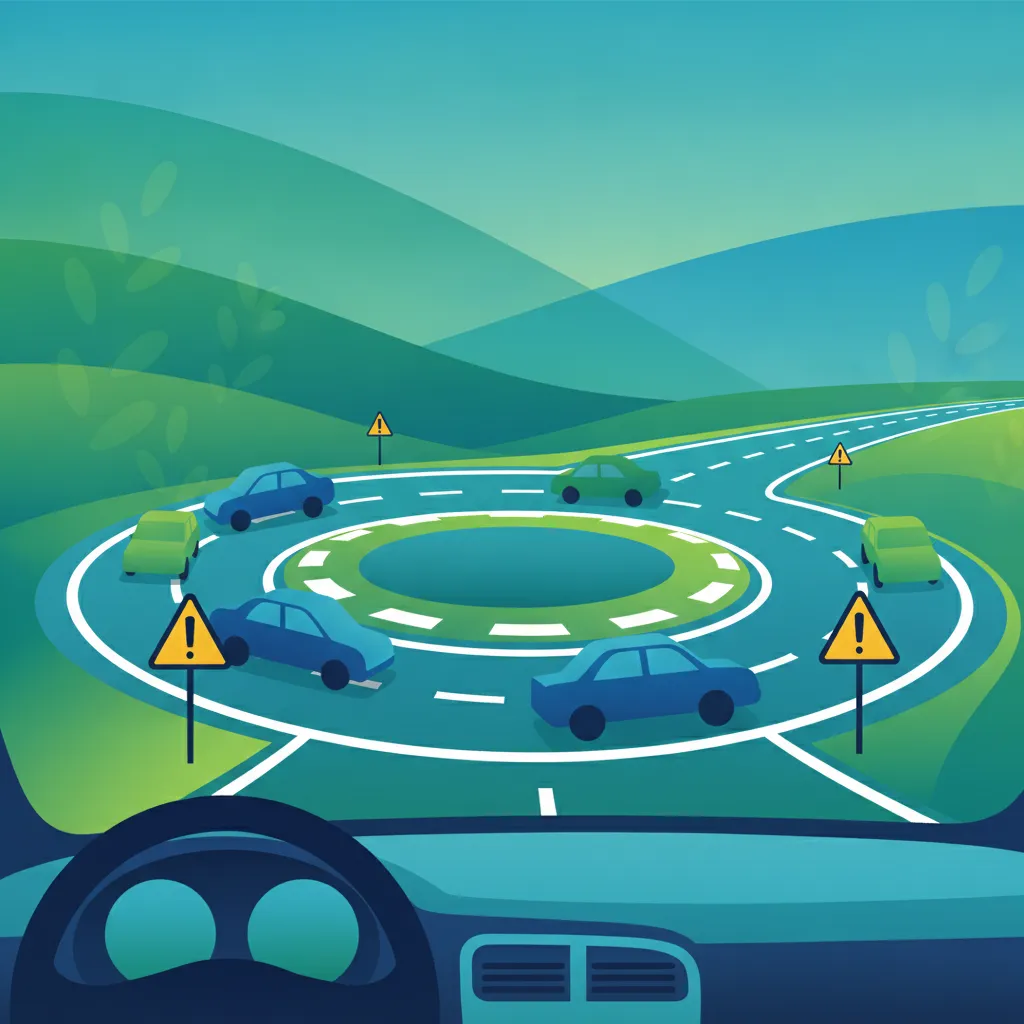
This lesson focuses on the skills required to safely enter, navigate, and exit roundabouts, a common feature in French urban environments. Learners will understand the need to yield to circulating traffic, select the appropriate lane upon entry, and signal intentions when exiting. By mastering these techniques, AM riders can safely integrate into roundabout traffic flow and reduce conflicts with other road users.

This lesson explains the correct procedures for entering, circulating, and exiting roundabouts, which are highly prevalent throughout France. You will learn the exact lane choice strategies based on your intended exit, and how to use your turn indicators at each stage of the maneuver. The content also addresses the critical task of performing over-the-shoulder blind spot checks to avoid conflicts with overtaking vehicles when exiting.

This lesson analyzes the technical path a long wheelbase vehicle must take when turning at intersections and navigating roundabouts. Drivers will learn to calculate tail swing and rear-wheel tracking, intentionally swinging wide to clear roadside curbs and poles safely. The lesson emphasizes yielding protocols for pedestrians and cyclists who may be crossing the target street during the turn.
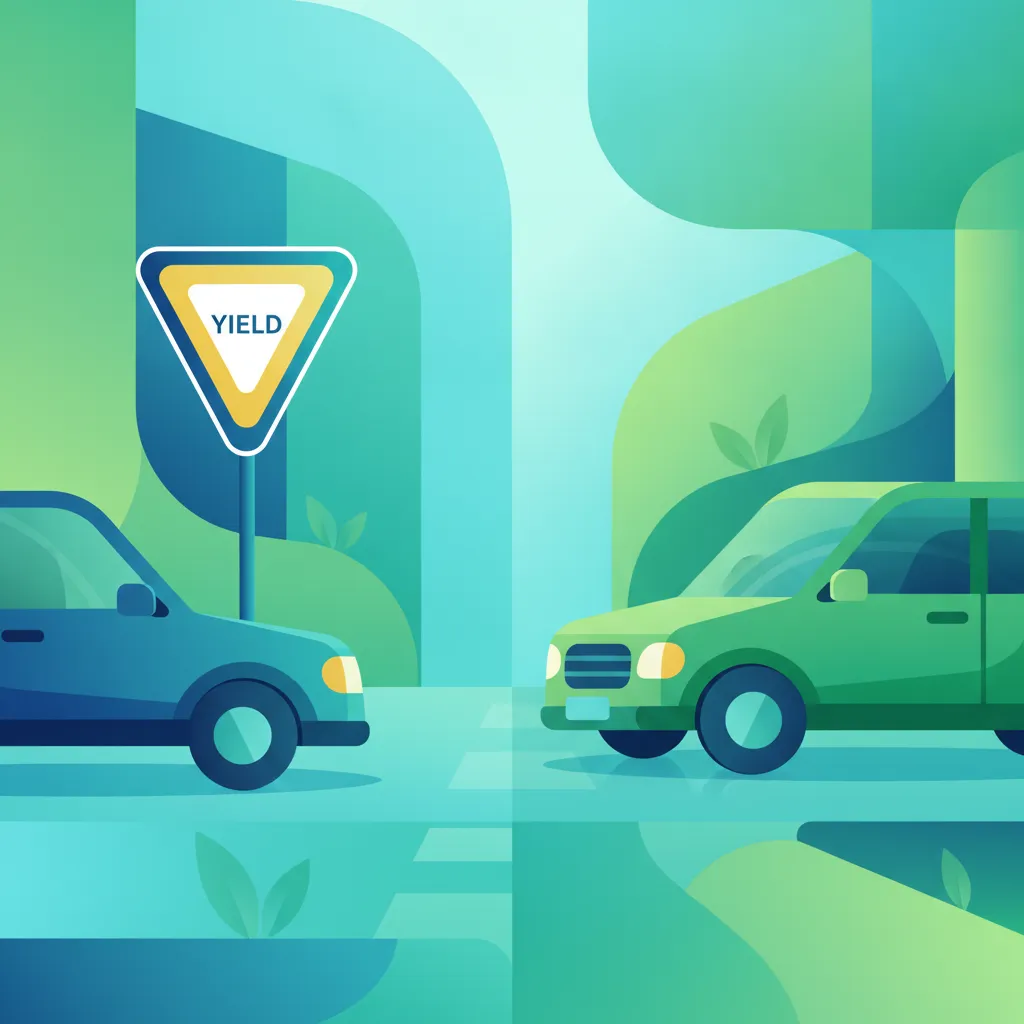
This lesson provides a comprehensive breakdown of priority rules under French law, with special focus on the default rule of priorité à droite. You will learn to recognize when this rule applies, even in the absence of explicit signage, and how to verify that entering vehicles see you. It also explains how to read priority road indicators, stop signs, and yield signs, helping you manage right-of-way safely and confidently.
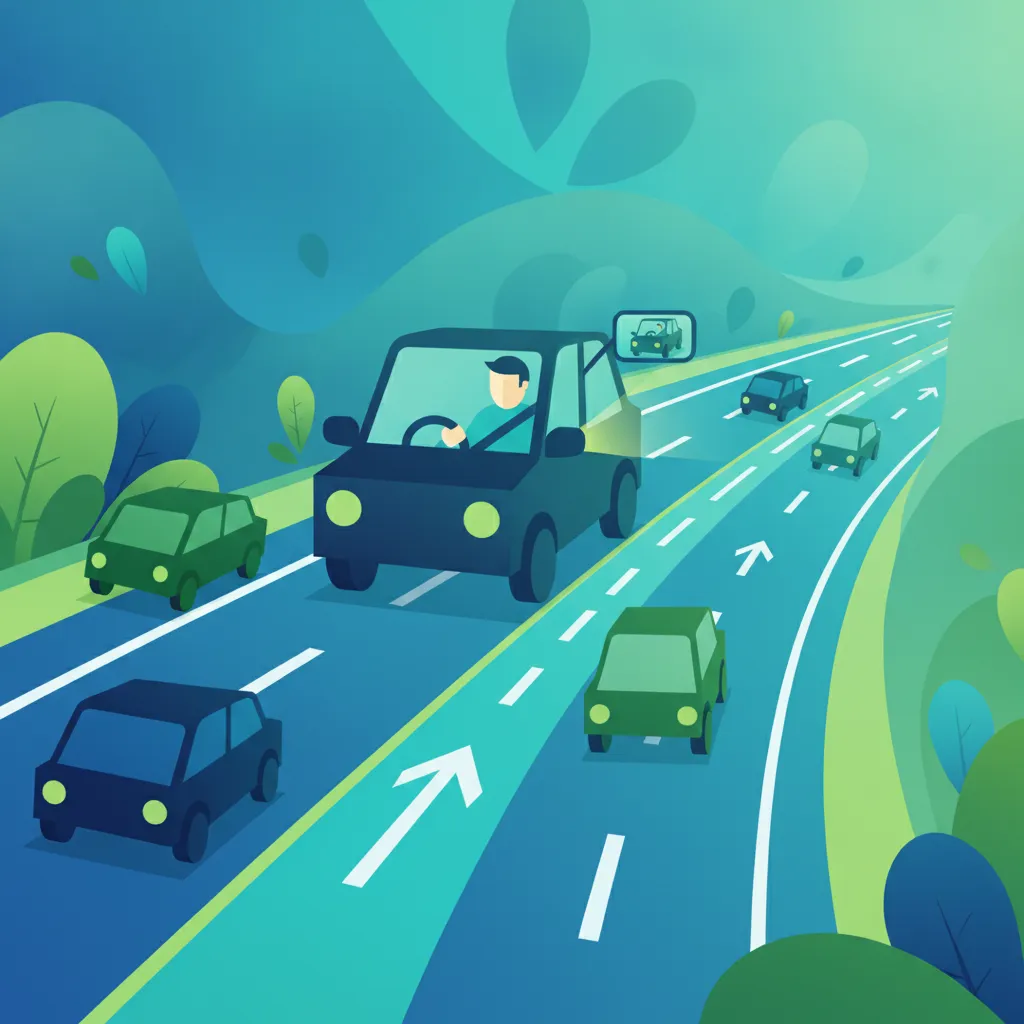
Changing lanes or executing turns requires a structured visual and physical procedure to prevent interrupting surrounding traffic. This lesson explains the key steps: checking the center mirror, exterior mirrors, turning on direction indicators, and performing blind-spot checks. You will learn correct vehicle positioning for both left and right turns, and how to execute safe turning circles without cutting corners.

Controlled intersections use traffic lights and accompanying signs to manage busy crossings systematically. This lesson covers how to safely proceed on a green light, negotiate left turns when yielding to oncoming traffic, and obey flashing amber lights. You will also learn the hierarchy of traffic control, where police officer gestures overrule both traffic lights and priority signs.

In France, the default rule at any intersection without clear priority signage is priority-to-the-right (priorite a droite). This lesson explains how to identify unsignaled junctions in urban and rural environments and when you must yield to incoming vehicles. You will learn to spot the standard yellow diamond priority signs and triangular warning signs that indicate whether you hold the priority.
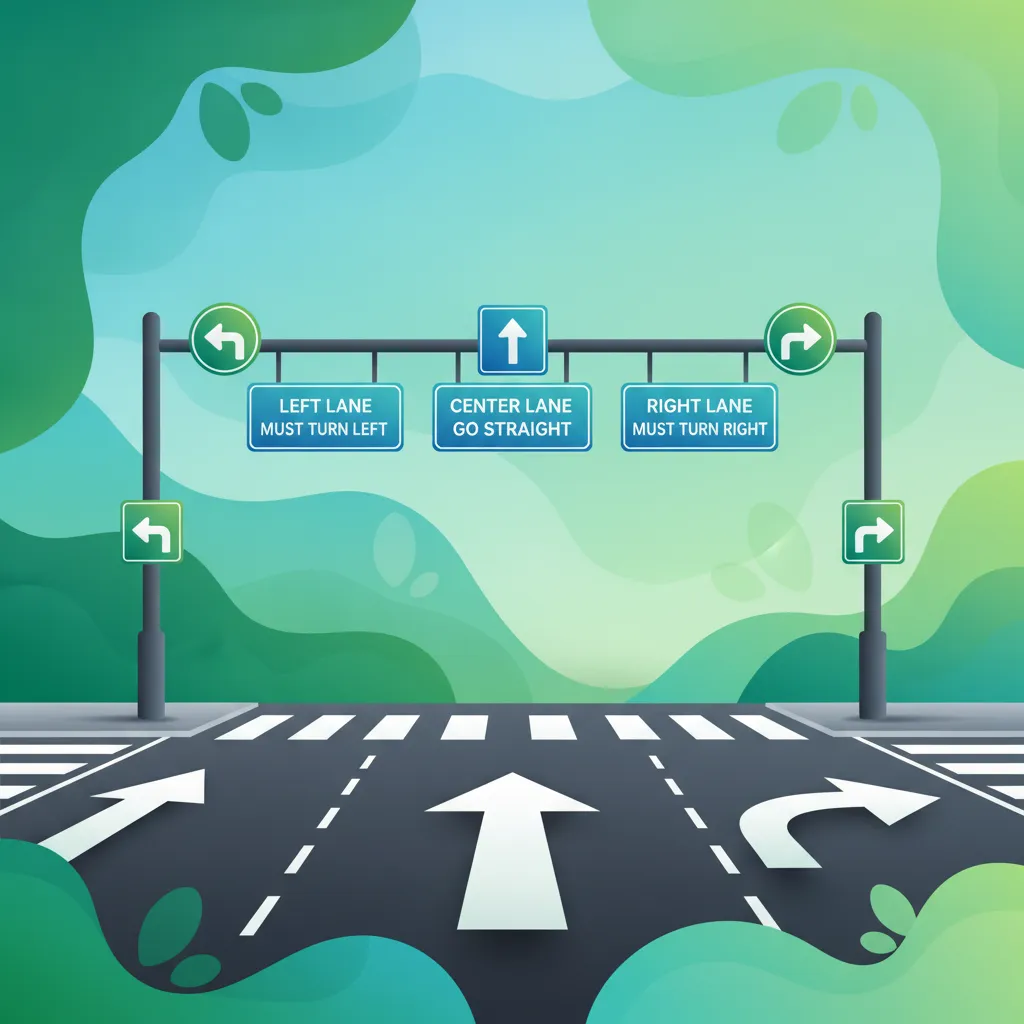
Preselection and direction arrows painted on the road surface instruct drivers on lane-specific movements at upcoming intersections or merges. This lesson teaches you how to interpret these arrows so you can position your vehicle correctly well in advance of a turn. You will learn the rules for lane merging, following curved guidance lines, and avoiding sudden, dangerous lane adjustments.

Learners will study the fundamental priority rules that dictate right-of-way at intersections, focusing on the 'priorité à droite' principle prevalent in French road design. The lesson explains how to identify priority roads, interpret yield signs, and apply these rules safely when operating an AM vehicle. Understanding priority ensures orderly movement and reduces conflict points in mixed traffic scenarios.
Learn the legal requirements for yielding to cyclists and pedestrians at crossroads. This theory lesson explains how to correctly anticipate the movements of vulnerable road users and manage priority when crossing cycle lanes or pedestrian paths in busy urban environments.
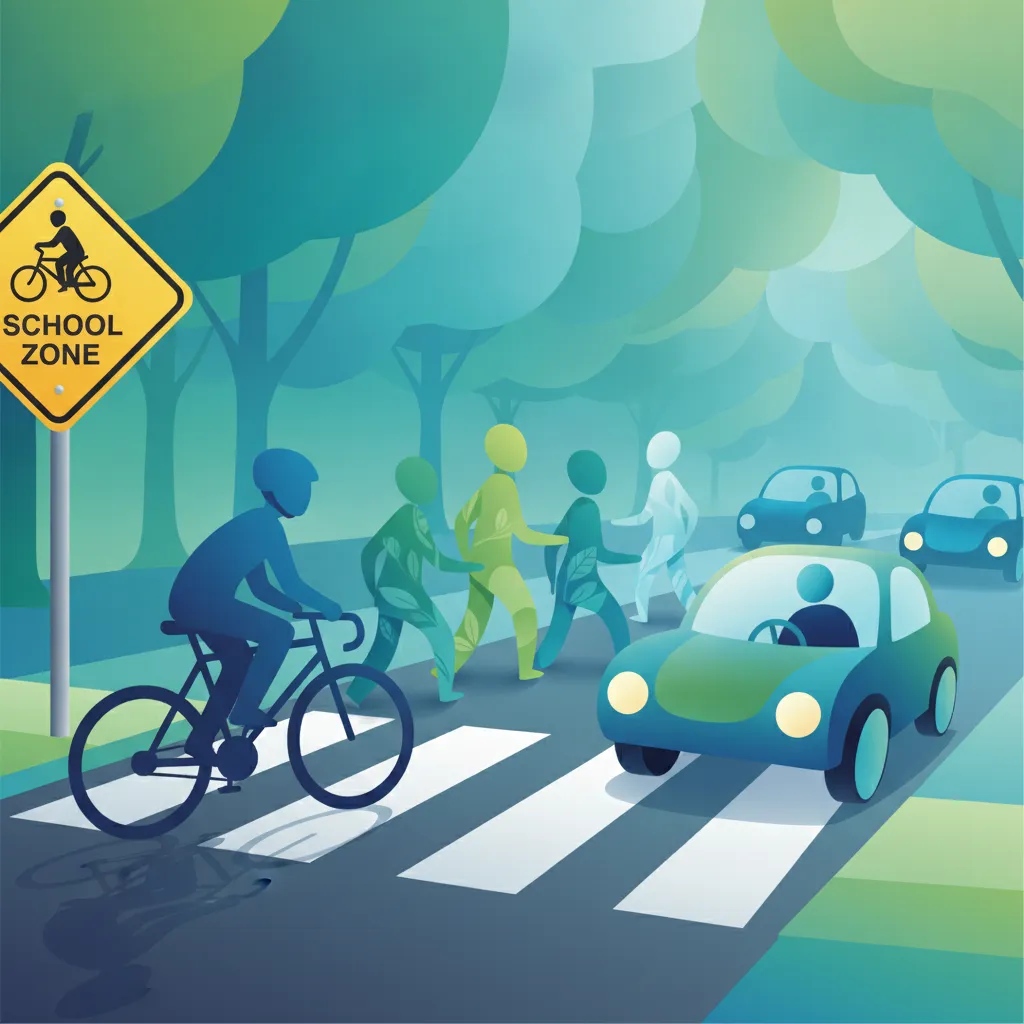
This lesson focuses on the legal requirement to yield to pedestrians on or about to step onto zebra crossings, a major focus of French road safety. You will learn how to approach school zones and pedestrian islands with heightened vigilance and reduced speed. Additionally, the lesson explores shared urban spaces, explaining how to maintain safe lateral distances when overtaking cyclists or personal electric scooters.
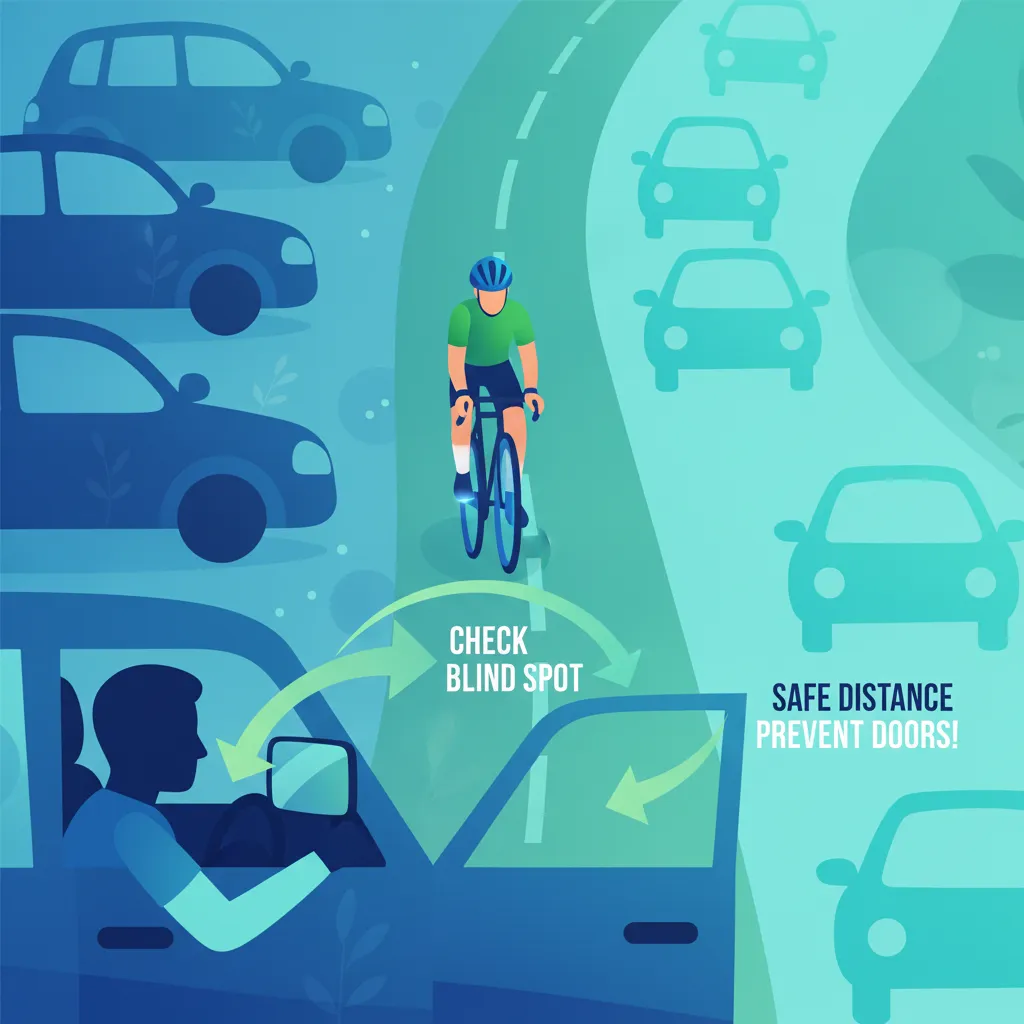
This lesson explains how to share the road safely with cyclists in both urban and rural environments. Drivers will study the legal minimum passing distances when overtaking cyclists, which is one meter in cities and one and a half meters outside urban areas. It also covers recognizing specialized cycling infrastructure, bike boxes at intersections, and preventing blind-spot collisions during right turns.
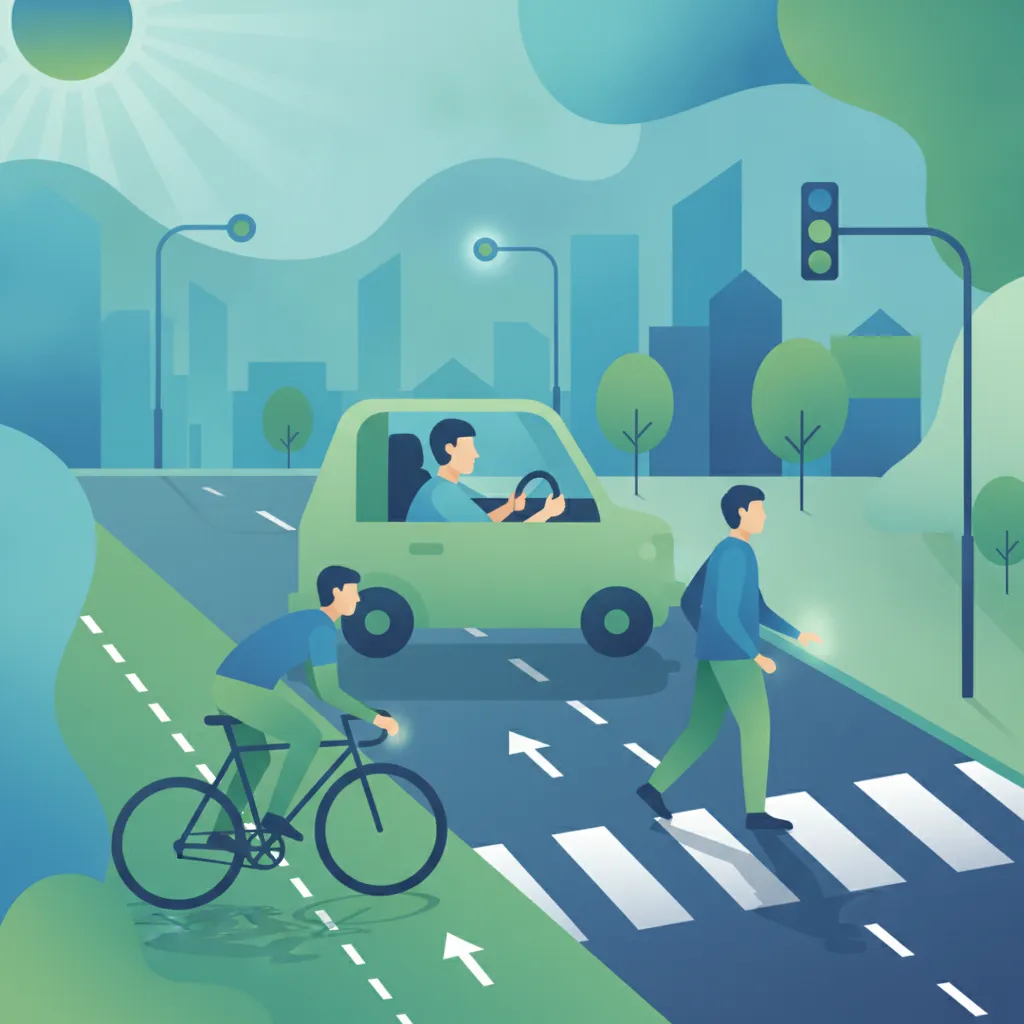
This lesson examines the specific challenges and responsibilities goods vehicle drivers face when interacting with pedestrians and cyclists in urban environments. Learners will understand right-of-way rules, the importance of yielding at pedestrian crossings, and safe turning practices that protect cyclists. The content emphasizes heightened driver vigilance, especially when navigating bike lanes and crowded sidewalks.

In France, pedestrians have clear legal priority when stepping onto or indicating an intent to use a crossing (passage pieton). This lesson details standard zebra crossings, refuge islands, and pedestrian crossings managed by synchronized traffic light systems. You will learn to scan crossings ahead, anticipate pedestrian movements, and safely come to a stop whenever a pedestrian attempts to cross.

Learners will focus on the best practices for interacting safely with cyclists and pedestrians in mixed traffic environments. The lesson covers proper lane usage, overtaking protocols, maintaining adequate safety gaps, and non-verbal communication techniques in the French urban landscape. By applying these principles, AM riders can coexist harmoniously with vulnerable road users, reducing the likelihood of accidents.

Learners will explore the rules related to pedestrian crossings, focusing on the obligation to yield to pedestrians at zebra crossings and flashing pedestrian signals. The lesson highlights the importance of stopping before the stop line, reducing speed, and maintaining vigilance for pedestrian movement. Mastery of these practices ensures the safety of both pedestrians and AM riders at crossing points.

Learners will learn the critical steps for safely approaching and traversing intersections, emphasizing speed reduction, priority assessment, and adherence to right-of-way rules, including priorité à droite. The lesson covers recognizing stop lines, interpreting road markings, and maintaining a safe distance from other vehicles. By mastering these practices, AM riders can confidently navigate intersections while minimizing collision risk.

This lesson covers the operational logic of traffic light signals in France, emphasizing the legal implications of the red, amber, and green cycles. You will study how to safely manage the amber phase to avoid rear-end collisions from vehicles behind while maintaining control. Additionally, you will discover the unique challenge of electromagnetic induction loops, which sometimes fail to detect lightweight motorcycles at quiet intersections.
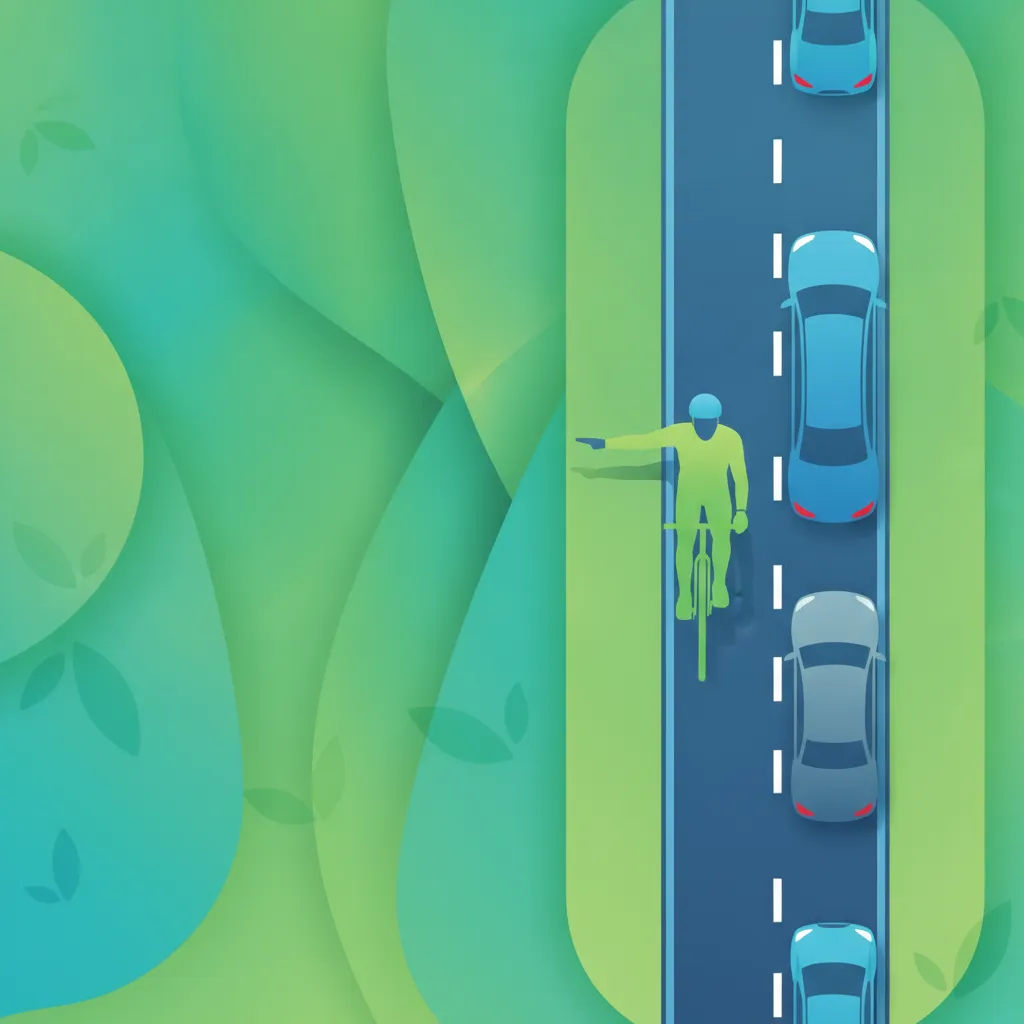
Bicycles represent an eco-friendly transport method with specific rights on French public roadways. This lesson teaches you how to identify dedicated cycle paths, respect bike lanes, and understand cyclist turning privileges at intersections. You will learn the legal minimum safety distance required when overtaking a cyclist: 1 meter in urban areas and 1.5 meters outside city limits.

This lesson examines French Code de la route laws regarding pedestrian right-of-way, emphasizing the driver's legal duty to yield to any pedestrian engaged in crossing. It outlines proper approach speeds when approaching zebra crossings with obstructed views. Candidates will learn to maintain a safe physical buffer zone and verify that crosswalks are entirely clear of pedestrians before accelerating.
Find clear answers to common questions learners have about Priority at Uncontrolled Intersections. Learn how the lesson is structured, which driving theory objectives it supports, and how it fits into the overall learning path of units and curriculum progression in France. These explanations help you understand key concepts, lesson flow, and exam focused study goals.
Yes, in the absence of signs or markings indicating otherwise, the general rule in France is to yield to the vehicle approaching from your right. Always scan junctions carefully to check for hidden priority signs.
A Stop sign requires a complete halt of the vehicle with wheels fully stopped before the stop line, even if no other traffic is visible. A Cédez le passage sign requires you to slow down and yield only if there is traffic approaching.
A flashing yellow light serves as a warning that traffic lights are not functioning or are in a specific phase. You must revert to the signage present at the intersection, such as priority signs or the general rule of priority-to-the-right.
The ETG exam often tests your ability to scan the entire environment. Missing a road marking is a common cause of error, so practice consistently looking for lines on the ground and signs on the side of the road before deciding on your priority.
Ready to focus your study? Use the practice search to find exactly the French driving theory questions you need for the Code de la route and permis de conduire ETG. Refine your knowledge on specific topics or challenging rules to boost your confidence and exam readiness.