
This lesson focuses on interpreting complex crossroads and schematic priority signs (panonceaux schématiques) found on French roads. By mastering these specialized indicators, you will be able to determine right-of-way accurately, even at unconventional or non-standard intersections. This knowledge is essential for both your ETG theory exam success and safe, confident driving in France.

Lesson content overview
Navigating standard intersections in France requires a solid grasp of basic right-of-way rules, but complex layouts often demand more sophisticated road communication. On French roads, you will frequently encounter intersections where the priority road does not simply continue in a straight line. Instead, it curves, splits, or bends across the crossroad.
To prevent confusion and eliminate ambiguity, the French traffic system uses auxiliary signs known as schematic signs (panonceaux schématiques). These signs provide a clear, top-down visual map of the intersection’s priority layout. This lesson will teach you how to interpret these signs, maintain priority when the main road curves, and handle non-standard intersection layouts safely. This knowledge is crucial for passing the French Category B driving theory exam (Examen de l'Éthique Générale or ETG) and driving confidently on French roads.
A priority road (route à caractère prioritaire) is a designated roadway where drivers have the right of way at all upcoming intersections. This status is established to maintain continuous traffic flow on main thoroughfares, reducing unnecessary stops and minimizing rear-end collisions.
To identify a priority road, look for the yellow diamond-shaped sign. Under the French Code de la route, this is designated as the AB6 sign.
When you are driving on a road marked with the AB6 sign:
Conversely, a secondary road (chemin secondaire) is any road that must yield to the priority road. Drivers on secondary roads will face yield signs (Cédez le passage), stop signs, or road markings indicating they must give way to the main flow of traffic.
Standard road markings and signs can fail to convey priority when an intersection has a non-standard geometry. For instance, if the main road bends 90 degrees to the left and a narrow local street continues straight, who has priority? To resolve this, the French road authority installs a schematic sign (panonceau schématique, categorized under the M9f series) directly beneath the priority road sign or the yield sign.
A schematic sign provides a simplified, overhead diagram of the upcoming intersection. It uses line thickness to dictate right-of-way:
An auxiliary schematic sign placed beneath a main priority or warning sign that depicts a top-down layout of an intersection. The thick line represents the priority road, while the thin lines indicate secondary roads.
By matching the bottom line of the schematic to your current lane, you can instantly determine whether you are on the priority road or a secondary road, and which turning paths maintain that priority.
The core rule of navigating a curved priority layout is the continuity of priority. This principle dictates that the priority road retains its right-of-way status even when it bends, curves, or changes direction within the intersection.
Many novice drivers mistakenly assume that "straight ahead" always has priority. This assumption is a dangerous misconception. If the thick line on the schematic curves to the left, a driver turning left is actually continuing on the priority road and has right-of-way over a driver on a secondary road who is going straight.
To determine priority at a schematic intersection, follow this logical step-by-step process:
Identify your current road status: Look at the bottom branch of the schematic. If it is a thick line, you are currently on the priority road. If it is a thin line, you are on a secondary road.
Locate other vehicles: Determine which branch of the schematic the other vehicles are approaching from. Are they on the thick line (priority) or a thin line (secondary)?
Apply the priority hierarchy: Vehicles on the thick line always have priority over vehicles on the thin lines.
Apply default rules if status is equal: If two vehicles are on the priority road (thick line) or both are on secondary roads (thin lines), resolve their conflict using standard rules, such as yielding to oncoming traffic when turning left or applying the priority-to-the-right rule among themselves.
Let's break down these relationships further:
French traffic law defines clear mandates for priority roads, auxiliary signs, and the termination of priority. Understanding the legal basis of these rules helps prevent costly traffic fines and ensures compliance.
Under Article R411-1 of the Code de la route, the yellow diamond sign (AB6) designates a priority road. This priority remains in effect at all subsequent intersections along that route until it is explicitly terminated by an end-of-priority sign or overridden by higher-priority traffic signals.
Article R413-1 dictates that when an auxiliary schematic sign is present, it must be consulted to determine the exact geometry of the priority and secondary roads. The schematic sign takes precedence over a driver's subjective assumptions about the straightness or size of the roads.
A priority road does not last indefinitely. When the priority status is terminated, you will encounter the AB7 sign.
Once you pass the AB7 sign, the road reverts to default priority rules at the very next intersection. In France, the default rule is priority to the right (priorité à droite), meaning you must stop and yield to any vehicle entering from an intersecting street on your right, unless other signs indicate otherwise.
Normally, solid or dashed lines on the asphalt indicate lane boundaries and stopping points. However, if there is a discrepancy between road markings and a physical schematic sign, the schematic sign takes legal precedence. This ensures that even if old road markings are worn or misleading, the vertical signage clearly dictates the right-of-way.
Even if you are driving on a priority road (thick line) and have right-of-way over all other vehicles, pedestrian safety supersedes vehicular priority. Under Article R415-1, you must yield to any pedestrian who has stepped onto, or clearly intends to step onto, a designated crosswalk (passage piéton).
Navigating crossroads with specific signage is a common area of failure on both the theoretical ETG exam and the practical driving test. Let's analyze the most common mistakes and how to avoid them.
Always remember the French road signage hierarchy:
A driver's ability to safely navigate crossroads with specific signage depends heavily on environmental variables and visibility.
In heavy rain, snow, or thick fog, schematic signs can become difficult to read from a distance. Because the distinction between a thick line and a thin line is subtle, poor visibility increases the risk of misinterpretation.
In urban areas, priority roads often intersect with dedicated bicycle lanes or tramway lines.
To help you study for your French theory exam, use this quick-reference summary of the rules governing crossroads with specific signage:
| Sign / Element | Legal Meaning | Action Required |
|---|---|---|
| Yellow Diamond (AB6) | Priority Road (Route prioritaire) | Maintain speed, proceed with caution, you have right-of-way over cross streets. |
| Thick Line on Schematic | Path of the Priority Road | Follow this line to maintain priority. Signal if you physically turn. |
| Thin Line on Schematic | Secondary Road | Yield to any vehicle on the thick line. |
| Crossed Yellow Diamond (AB7) | End of Priority Road | Revert to default rules (priorité à droite) at the next intersection. |
| Active Traffic Light | Overrides Priority Signs | Ignore the priority signs and obey the light colors. |
| Pedestrians on Crosswalks | Absolute Priority | Always stop for pedestrians, even if you are on the priority road. |
By mastering the visual language of schematic signs and understanding the legal hierarchy of the Code de la route, you will be fully prepared to handle even the most complex intersections safely and pass your driving theory exam with ease.
This lesson teaches how to interpret complex intersection signage in France, particularly schematic signs (panonceaux schématiques) that modify standard priority rules. The thick line on these signs represents the priority road path while thin lines represent secondary roads, allowing drivers to determine right-of-way even at curved or non-standard intersections. The core principle of continuity of priority means the designated priority path retains right-of-way regardless of physical direction changes. Key legal references include Article R411-1 for priority road designation and Article R413-1 confirming schematic signs take precedence over driver assumptions. Learners should memorize that traffic lights override all static signs and that pedestrians on crosswalks maintain absolute priority regardless of vehicle right-of-way status.
A short set of high-value points that capture the most important learning from this lesson.
Schematic signs (panonceaux schématiques) use thick lines to show the priority road path and thin lines for secondary roads, providing a top-down map of the intersection.
The principle of continuity of priority means the priority road retains right-of-way even when it curves, bends, or changes direction within the intersection.
If your branch on the schematic is thick, you have priority over all vehicles on thin branches, regardless of whether you are turning or going straight.
Traffic lights always override static priority signs; if the light is active and functioning, you must obey it regardless of AB6 or schematic signs.
Pedestrians on crosswalks have absolute priority over all vehicles, including those on priority roads.
Explore all units and lessons included in this driving theory course.
Yellow diamond AB6 = priority road; yellow diamond with black diagonal AB7 = end of priority road, revert to priorité à droite.
When two vehicles are both on secondary roads (thin lines), resolve conflict using priorité à droite between them after the priority road clears.
Even when following a curved priority road, you must signal your direction change to warn other road users.
Sign hierarchy in France: police officers > temporary signs > traffic lights > static signs > road markings and default rules.
Tramways in France have almost absolute priority over regular traffic, even on designated priority roads.
Assuming 'straight ahead' always has priority; going straight may mean leaving the priority road onto a thin secondary line, requiring you to yield.
Failing to signal when following a curved priority road, because the driver believes they are 'staying on the main road' and therefore no indicator is needed.
Misapplying priorité à droite between two vehicles on secondary roads by forgetting this rule applies once the priority road is clear.
Proceeding on a red light because an AB6 priority sign suggests the driver has right-of-way; functioning traffic lights always take precedence over static signs.
In poor visibility (rain, fog, snow), misinterpreting schematic signs and defaulting to wrong priority rules instead of treating the intersection as uncontrolled.
Lesson content overview
A short set of high-value points that capture the most important learning from this lesson.
Schematic signs (panonceaux schématiques) use thick lines to show the priority road path and thin lines for secondary roads, providing a top-down map of the intersection.
The principle of continuity of priority means the priority road retains right-of-way even when it curves, bends, or changes direction within the intersection.
If your branch on the schematic is thick, you have priority over all vehicles on thin branches, regardless of whether you are turning or going straight.
Traffic lights always override static priority signs; if the light is active and functioning, you must obey it regardless of AB6 or schematic signs.
Pedestrians on crosswalks have absolute priority over all vehicles, including those on priority roads.
Explore all units and lessons included in this driving theory course.
Yellow diamond AB6 = priority road; yellow diamond with black diagonal AB7 = end of priority road, revert to priorité à droite.
When two vehicles are both on secondary roads (thin lines), resolve conflict using priorité à droite between them after the priority road clears.
Even when following a curved priority road, you must signal your direction change to warn other road users.
Sign hierarchy in France: police officers > temporary signs > traffic lights > static signs > road markings and default rules.
Tramways in France have almost absolute priority over regular traffic, even on designated priority roads.
Assuming 'straight ahead' always has priority; going straight may mean leaving the priority road onto a thin secondary line, requiring you to yield.
Failing to signal when following a curved priority road, because the driver believes they are 'staying on the main road' and therefore no indicator is needed.
Misapplying priorité à droite between two vehicles on secondary roads by forgetting this rule applies once the priority road is clear.
Proceeding on a red light because an AB6 priority sign suggests the driver has right-of-way; functioning traffic lights always take precedence over static signs.
In poor visibility (rain, fog, snow), misinterpreting schematic signs and defaulting to wrong priority rules instead of treating the intersection as uncontrolled.
Explore search topics learners often look for when studying Crossroads with Specific Signage. These topics reflect common questions about road rules, driving situations, safety guidance, and lesson level theory preparation for learners in France.
Browse additional driving theory lessons that cover connected traffic rules, road signs, and common driving situations related to this topic. Improve your understanding of how different rules interact across everyday traffic scenarios.
Understand the specific priority rules at roundabouts and traffic circles according to the French Code de la route. This guide explains how to identify entry priority, lane positioning, and when to yield to circulating traffic to navigate junctions safely in various French driving environments.

France features a vast network of roundabouts (carrefours a sens giratoire) governed by specific entry and lane-use regulations. This lesson explains that vehicles entering a roundabout must yield to traffic already circulating inside. You will learn how to select the correct lane depending on your exit, use direction indicators properly, and yield to pedestrians and cyclists near roundabout exits.
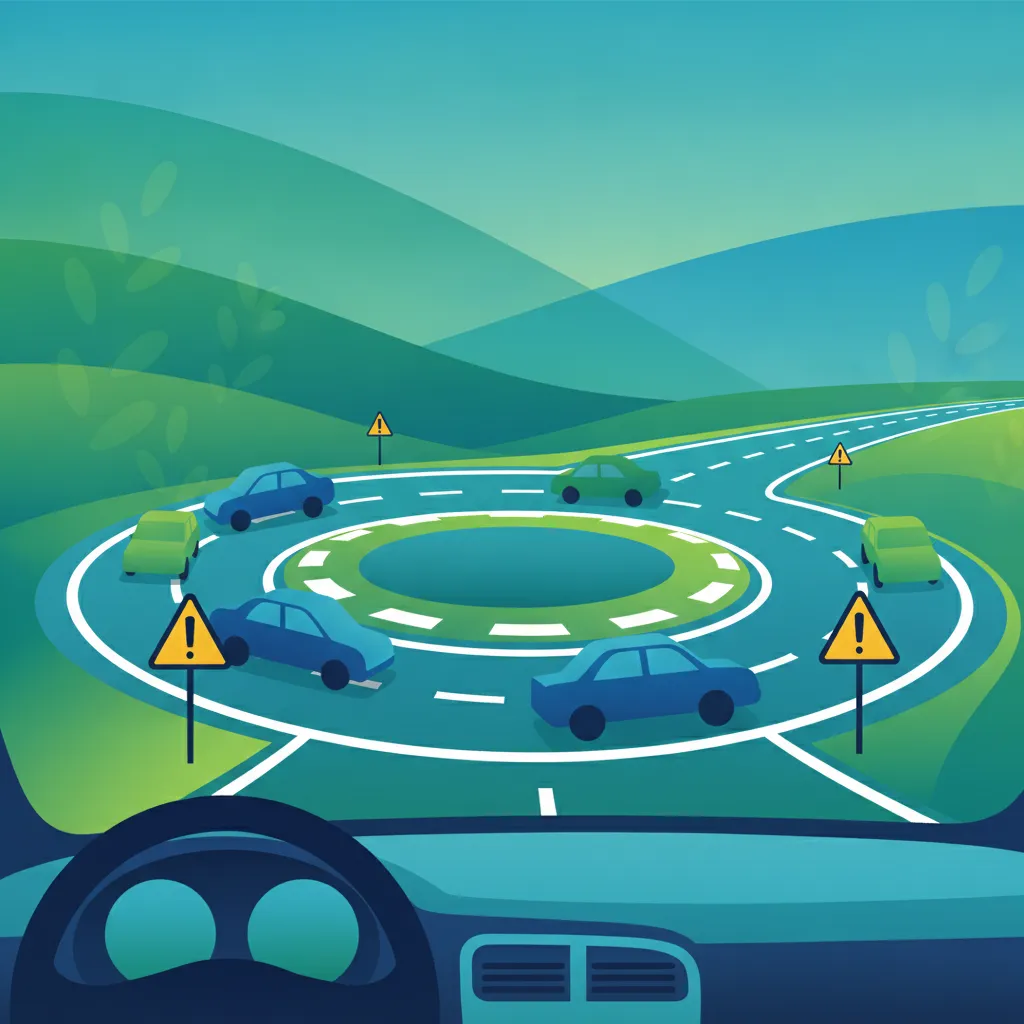
This lesson focuses on the skills required to safely enter, navigate, and exit roundabouts, a common feature in French urban environments. Learners will understand the need to yield to circulating traffic, select the appropriate lane upon entry, and signal intentions when exiting. By mastering these techniques, AM riders can safely integrate into roundabout traffic flow and reduce conflicts with other road users.

This lesson explains the correct procedures for entering, circulating, and exiting roundabouts, which are highly prevalent throughout France. You will learn the exact lane choice strategies based on your intended exit, and how to use your turn indicators at each stage of the maneuver. The content also addresses the critical task of performing over-the-shoulder blind spot checks to avoid conflicts with overtaking vehicles when exiting.
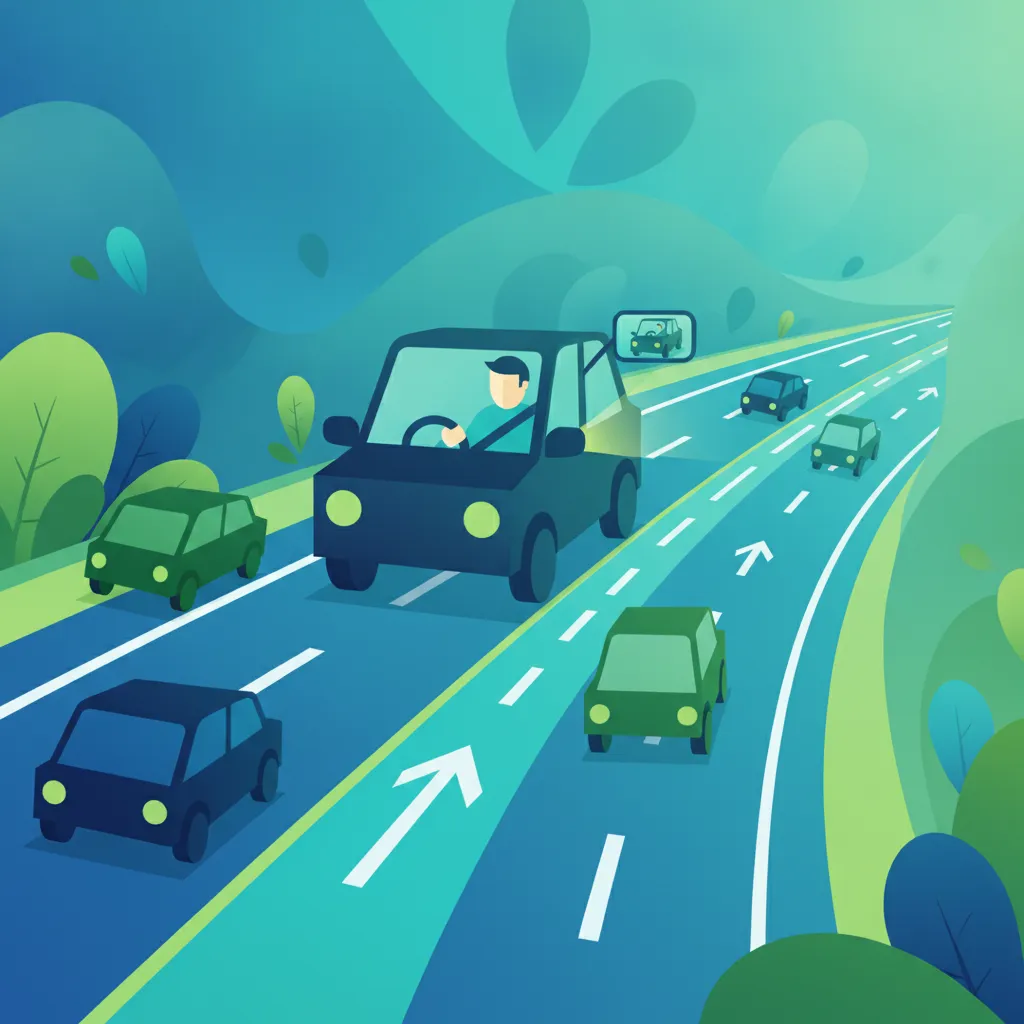
Changing lanes or executing turns requires a structured visual and physical procedure to prevent interrupting surrounding traffic. This lesson explains the key steps: checking the center mirror, exterior mirrors, turning on direction indicators, and performing blind-spot checks. You will learn correct vehicle positioning for both left and right turns, and how to execute safe turning circles without cutting corners.

This lesson analyzes the technical path a long wheelbase vehicle must take when turning at intersections and navigating roundabouts. Drivers will learn to calculate tail swing and rear-wheel tracking, intentionally swinging wide to clear roadside curbs and poles safely. The lesson emphasizes yielding protocols for pedestrians and cyclists who may be crossing the target street during the turn.
This lesson provides a comprehensive breakdown of priority rules under French law, with special focus on the default rule of priorité à droite. You will learn to recognize when this rule applies, even in the absence of explicit signage, and how to verify that entering vehicles see you. It also explains how to read priority road indicators, stop signs, and yield signs, helping you manage right-of-way safely and confidently.

Negotiating crossroads that lack active traffic light signals requires a clear reading of signs and painted stop or yield lines. This lesson details the obligations of stopping completely at stop signs and slowing down to yield at 'cedez le passage' markings. You will learn to assess cross-traffic speeds, determine priorities when multiple vehicles arrive, and execute turns safely.
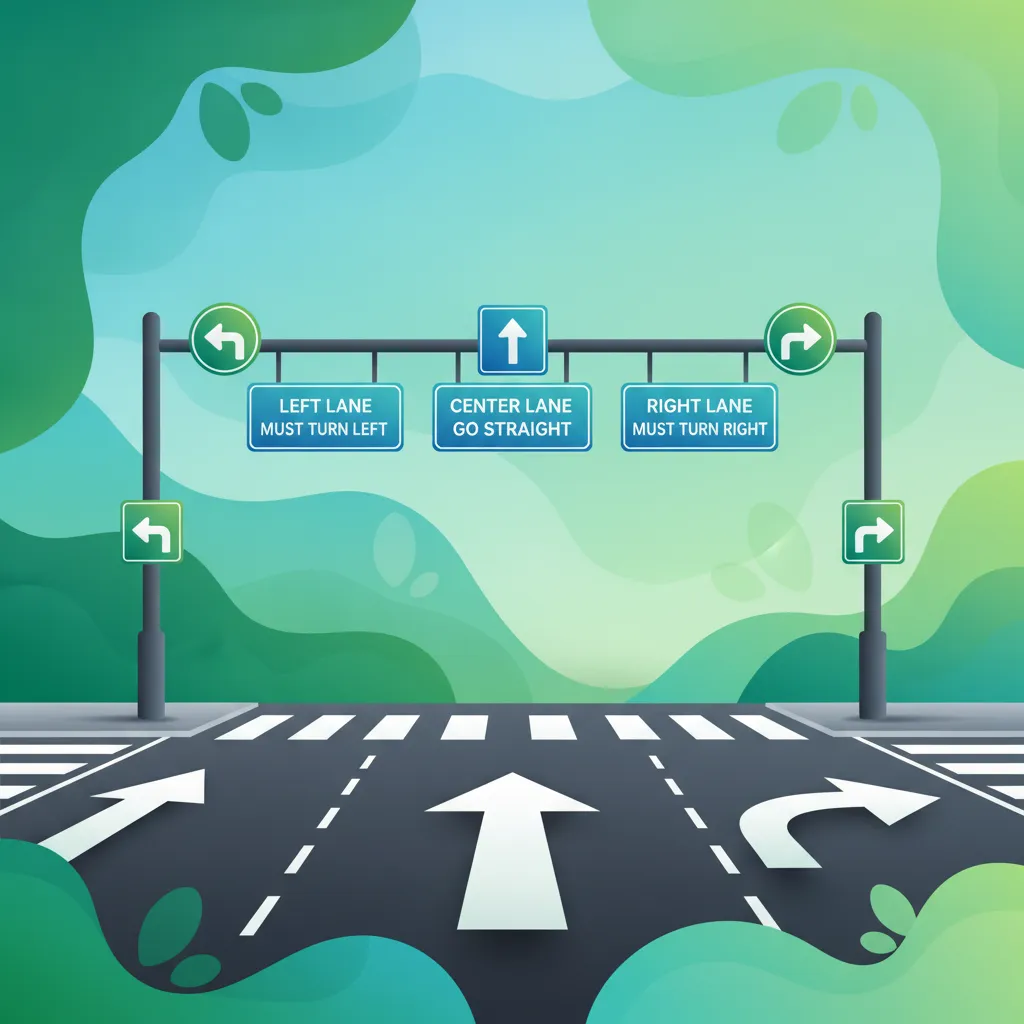
Preselection and direction arrows painted on the road surface instruct drivers on lane-specific movements at upcoming intersections or merges. This lesson teaches you how to interpret these arrows so you can position your vehicle correctly well in advance of a turn. You will learn the rules for lane merging, following curved guidance lines, and avoiding sudden, dangerous lane adjustments.

Reversing (marche arriere) is a slow-speed maneuver that presents significant visibility challenges due to rear vehicle blind spots. This lesson covers proper driver posture, direct over-the-shoulder viewing, and the effective use of mirrors while backing up. You will learn how to reverse safely out of driveways or parking bays and how to yield to pedestrians who might cross your path.

This lesson covers the strict legal conditions under which you may overtake other vehicles on French roads, including necessary visibility criteria. You will master the step-by-step process of checking rearview mirrors, performing head checks, signaling, and maintaining a safe speed differential during the pass. It also details when overtaking is strictly forbidden, such as before intersections, near pedestrian crossings, or across solid lines.
Learn to identify and avoid frequent errors made at complex intersections, such as misinterpreting priority signals or failing to signal correctly. This lesson covers critical anticipation techniques and rule applications to help you maintain safety and compliance during real-world traffic scenarios and your driving theory exam.
Negotiating crossroads that lack active traffic light signals requires a clear reading of signs and painted stop or yield lines. This lesson details the obligations of stopping completely at stop signs and slowing down to yield at 'cedez le passage' markings. You will learn to assess cross-traffic speeds, determine priorities when multiple vehicles arrive, and execute turns safely.

Controlled intersections use traffic lights and accompanying signs to manage busy crossings systematically. This lesson covers how to safely proceed on a green light, negotiate left turns when yielding to oncoming traffic, and obey flashing amber lights. You will also learn the hierarchy of traffic control, where police officer gestures overrule both traffic lights and priority signs.

In France, the default rule at any intersection without clear priority signage is priority-to-the-right (priorite a droite). This lesson explains how to identify unsignaled junctions in urban and rural environments and when you must yield to incoming vehicles. You will learn to spot the standard yellow diamond priority signs and triangular warning signs that indicate whether you hold the priority.

Learners will study the fundamental priority rules that dictate right-of-way at intersections, focusing on the 'priorité à droite' principle prevalent in French road design. The lesson explains how to identify priority roads, interpret yield signs, and apply these rules safely when operating an AM vehicle. Understanding priority ensures orderly movement and reduces conflict points in mixed traffic scenarios.

In France, pedestrians have clear legal priority when stepping onto or indicating an intent to use a crossing (passage pieton). This lesson details standard zebra crossings, refuge islands, and pedestrian crossings managed by synchronized traffic light systems. You will learn to scan crossings ahead, anticipate pedestrian movements, and safely come to a stop whenever a pedestrian attempts to cross.

Learners will learn the critical steps for safely approaching and traversing intersections, emphasizing speed reduction, priority assessment, and adherence to right-of-way rules, including priorité à droite. The lesson covers recognizing stop lines, interpreting road markings, and maintaining a safe distance from other vehicles. By mastering these practices, AM riders can confidently navigate intersections while minimizing collision risk.
Find clear answers to common questions learners have about Crossroads with Specific Signage. Learn how the lesson is structured, which driving theory objectives it supports, and how it fits into the overall learning path of units and curriculum progression in France. These explanations help you understand key concepts, lesson flow, and exam focused study goals.
The thick line represents the road that has priority, while thin lines represent secondary roads that must yield. Following the thick line helps you understand the path of the priority road as it curves through the junction.
Yes. When specific signs or markings are present at an intersection, they take precedence over the general priority-to-the-right rule. You must always obey the signs first.
Always look at the sign assembly as a whole. Identify the primary regulatory sign first, then check the panonceau underneath to see the layout of the priority path. Practice visualizing the scene from the perspective of your vehicle.
If there are no signs or markings indicating priority, you must revert to the standard Code de la route principle of priority-to-the-right, where you yield to vehicles approaching from your right.
Ready to focus your study? Use the practice search to find exactly the French driving theory questions you need for the Code de la route and permis de conduire ETG. Refine your knowledge on specific topics or challenging rules to boost your confidence and exam readiness.