
This lesson guides you through the critical skills for navigating roundabouts as an AM licence holder in France. You will learn the correct approach, how to identify priority signs, and the essential rules for signalling your intentions to other road users.
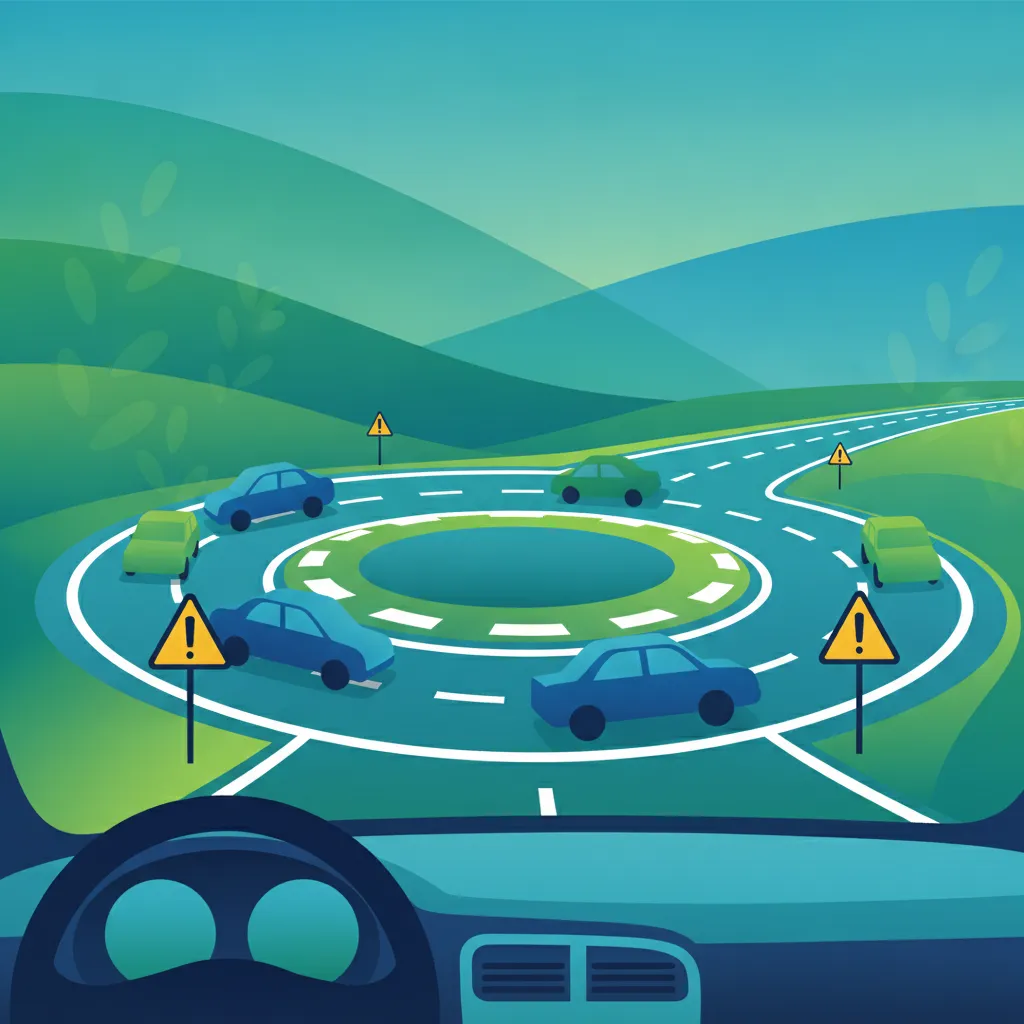
Lesson content overview
This lesson covers the essential procedures for safely navigating French roundabouts on a Category AM moped, including the critical legal distinction between carrefours à sens giratoire and rond-points, with circulating traffic always having priority. Learners must master the creep approach technique, proper gap assessment (minimum 3–4 seconds), and the specific lane discipline rules from Article R412-9 that permit slower vehicles to remain in the outer lane throughout. Correct signalling is mandatory: right indicator for immediate exits, no indicator for straight ahead until passing the previous exit, and left indicator switching to right for left turns. Environmental hazards such as slippery painted arrows, diesel spills, and poor lighting require adapted speeds of 30 km/h or lower, with constant vigilance for truck blind spots, cyclists, and pedestrians at crossings.
A short set of high-value points that capture the most important learning from this lesson.
Vehicles already circulating inside a carrefour à sens giratoire always have priority; you must yield to traffic approaching from your left
All French roundabouts operate counter-clockwise; never attempt to turn right immediately upon entry
Use the creep approach technique: decelerate early to 10–15 km/h, scan far ahead, and merge without a full stop when safe
Category AM mopeds (max 45 km/h) are legally permitted to stay in the outer right lane for the entire roundabout, even when taking a left exit
Always perform a direct shoulder check to the right before exiting to detect cyclists, pedestrians, and vehicles exiting from the inner lane
Explore all units and lessons included in this driving theory course.
Sign AB25 warns of a roundabout; sign AB3bis (yield line) means circulating traffic has priority
Signal timing: right indicator before entry only for immediate right exit; no indicator on approach for straight ahead; left indicator for left/U-turn, then switch right immediately after passing the exit before yours
Large trucks have massive blind spots directly in front and on their right sides; never pull closely in front of heavy vehicles
Speed inside a roundabout should be adapted to 30 km/h or lower to maintain control on wet or slippery surfaces
You must yield to pedestrians at all passages piétons on roundabout exits; perform a right shoulder check before leaving the ring
Activating the right indicator before passing the exit preceding yours, causing waiting drivers to pull out in front of you
Forcing entry into a gap without sufficient following distance, risking a side-impact collision (refus de priorité) with circulating traffic
Stopping abruptly at the yield line instead of using a creep approach, increasing the risk of being rear-ended by vehicles behind
Attempting to overtake other vehicles while inside the roundabout, which is prohibited and dangerous for small vehicles
Failing to exit the outer lane correctly when mixing with faster inner-lane traffic, leading to being squeezed (queue de poisson) by vehicles exiting from the left
Lesson content overview
A short set of high-value points that capture the most important learning from this lesson.
Vehicles already circulating inside a carrefour à sens giratoire always have priority; you must yield to traffic approaching from your left
All French roundabouts operate counter-clockwise; never attempt to turn right immediately upon entry
Use the creep approach technique: decelerate early to 10–15 km/h, scan far ahead, and merge without a full stop when safe
Category AM mopeds (max 45 km/h) are legally permitted to stay in the outer right lane for the entire roundabout, even when taking a left exit
Always perform a direct shoulder check to the right before exiting to detect cyclists, pedestrians, and vehicles exiting from the inner lane
Explore all units and lessons included in this driving theory course.
Sign AB25 warns of a roundabout; sign AB3bis (yield line) means circulating traffic has priority
Signal timing: right indicator before entry only for immediate right exit; no indicator on approach for straight ahead; left indicator for left/U-turn, then switch right immediately after passing the exit before yours
Large trucks have massive blind spots directly in front and on their right sides; never pull closely in front of heavy vehicles
Speed inside a roundabout should be adapted to 30 km/h or lower to maintain control on wet or slippery surfaces
You must yield to pedestrians at all passages piétons on roundabout exits; perform a right shoulder check before leaving the ring
Activating the right indicator before passing the exit preceding yours, causing waiting drivers to pull out in front of you
Forcing entry into a gap without sufficient following distance, risking a side-impact collision (refus de priorité) with circulating traffic
Stopping abruptly at the yield line instead of using a creep approach, increasing the risk of being rear-ended by vehicles behind
Attempting to overtake other vehicles while inside the roundabout, which is prohibited and dangerous for small vehicles
Failing to exit the outer lane correctly when mixing with faster inner-lane traffic, leading to being squeezed (queue de poisson) by vehicles exiting from the left
Explore search topics learners often look for when studying Roundabouts: Entry, Navigation, and Exit. These topics reflect common questions about road rules, driving situations, safety guidance, and lesson level theory preparation for learners in France.
Browse additional driving theory lessons that cover connected traffic rules, road signs, and common driving situations related to this topic. Improve your understanding of how different rules interact across everyday traffic scenarios.
Understand the legal foundation of right-of-way in France, including priority to the right, yield signs, and stop lines. This guide explains how to identify priority situations at various intersection types to ensure safe navigation according to official road regulations.

Negotiating crossroads that lack active traffic light signals requires a clear reading of signs and painted stop or yield lines. This lesson details the obligations of stopping completely at stop signs and slowing down to yield at 'cedez le passage' markings. You will learn to assess cross-traffic speeds, determine priorities when multiple vehicles arrive, and execute turns safely.

In France, the default rule at any intersection without clear priority signage is priority-to-the-right (priorite a droite). This lesson explains how to identify unsignaled junctions in urban and rural environments and when you must yield to incoming vehicles. You will learn to spot the standard yellow diamond priority signs and triangular warning signs that indicate whether you hold the priority.

Learners will study the fundamental priority rules that dictate right-of-way at intersections, focusing on the 'priorité à droite' principle prevalent in French road design. The lesson explains how to identify priority roads, interpret yield signs, and apply these rules safely when operating an AM vehicle. Understanding priority ensures orderly movement and reduces conflict points in mixed traffic scenarios.

Controlled intersections use traffic lights and accompanying signs to manage busy crossings systematically. This lesson covers how to safely proceed on a green light, negotiate left turns when yielding to oncoming traffic, and obey flashing amber lights. You will also learn the hierarchy of traffic control, where police officer gestures overrule both traffic lights and priority signs.
This lesson provides a comprehensive breakdown of priority rules under French law, with special focus on the default rule of priorité à droite. You will learn to recognize when this rule applies, even in the absence of explicit signage, and how to verify that entering vehicles see you. It also explains how to read priority road indicators, stop signs, and yield signs, helping you manage right-of-way safely and confidently.

Some crossroads feature complex layouts or specific signs that modify standard priority rules, such as schematic diagrams (panonceaux schematiques). This lesson teaches you how to read these auxiliary signs, which depict the thick line of the priority road and thin lines of secondary roads. You will learn how to maintain priority when the main road curves and how to navigate non-standard intersection layouts.

In France, pedestrians have clear legal priority when stepping onto or indicating an intent to use a crossing (passage pieton). This lesson details standard zebra crossings, refuge islands, and pedestrian crossings managed by synchronized traffic light systems. You will learn to scan crossings ahead, anticipate pedestrian movements, and safely come to a stop whenever a pedestrian attempts to cross.

Learners will learn the critical steps for safely approaching and traversing intersections, emphasizing speed reduction, priority assessment, and adherence to right-of-way rules, including priorité à droite. The lesson covers recognizing stop lines, interpreting road markings, and maintaining a safe distance from other vehicles. By mastering these practices, AM riders can confidently navigate intersections while minimizing collision risk.

Learners will explore the rules related to pedestrian crossings, focusing on the obligation to yield to pedestrians at zebra crossings and flashing pedestrian signals. The lesson highlights the importance of stopping before the stop line, reducing speed, and maintaining vigilance for pedestrian movement. Mastery of these practices ensures the safety of both pedestrians and AM riders at crossing points.

This lesson examines French Code de la route laws regarding pedestrian right-of-way, emphasizing the driver's legal duty to yield to any pedestrian engaged in crossing. It outlines proper approach speeds when approaching zebra crossings with obstructed views. Candidates will learn to maintain a safe physical buffer zone and verify that crosswalks are entirely clear of pedestrians before accelerating.
Learn how to share the road safely with cyclists and pedestrians in French urban environments. This lesson covers key awareness strategies, blind spot management, and the legal requirements for interacting with vulnerable road users at crossings and busy junctions.
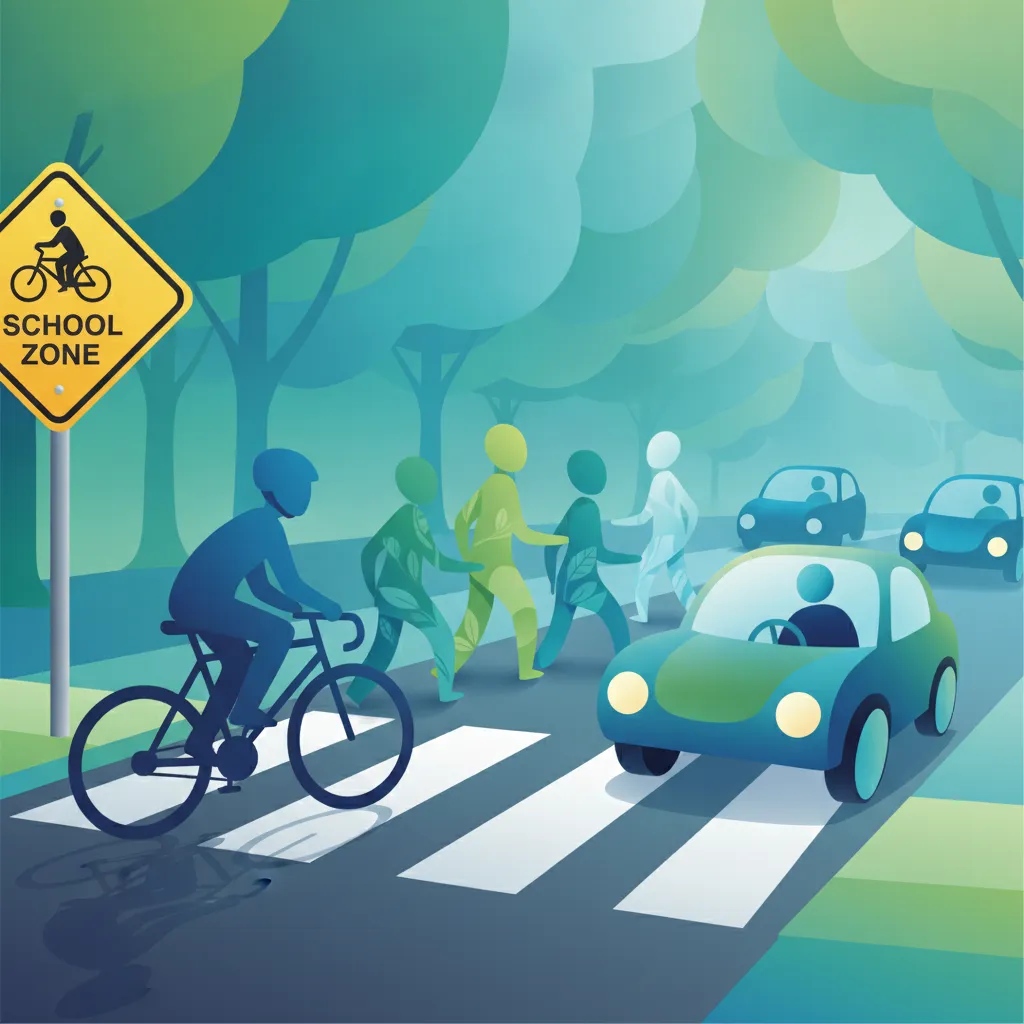
This lesson focuses on the legal requirement to yield to pedestrians on or about to step onto zebra crossings, a major focus of French road safety. You will learn how to approach school zones and pedestrian islands with heightened vigilance and reduced speed. Additionally, the lesson explores shared urban spaces, explaining how to maintain safe lateral distances when overtaking cyclists or personal electric scooters.
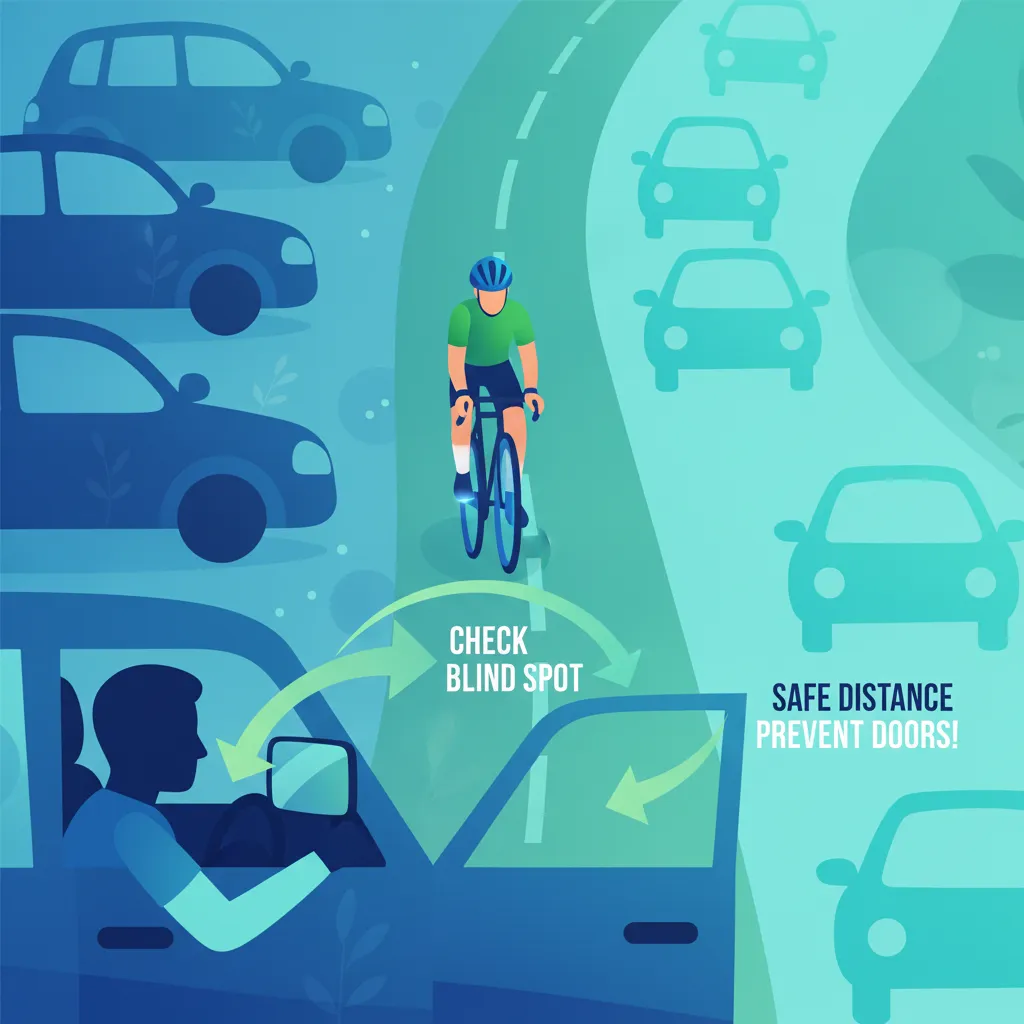
This lesson explains how to share the road safely with cyclists in both urban and rural environments. Drivers will study the legal minimum passing distances when overtaking cyclists, which is one meter in cities and one and a half meters outside urban areas. It also covers recognizing specialized cycling infrastructure, bike boxes at intersections, and preventing blind-spot collisions during right turns.

This lesson examines the specific challenges and responsibilities goods vehicle drivers face when interacting with pedestrians and cyclists in urban environments. Learners will understand right-of-way rules, the importance of yielding at pedestrian crossings, and safe turning practices that protect cyclists. The content emphasizes heightened driver vigilance, especially when navigating bike lanes and crowded sidewalks.

Learners will focus on the best practices for interacting safely with cyclists and pedestrians in mixed traffic environments. The lesson covers proper lane usage, overtaking protocols, maintaining adequate safety gaps, and non-verbal communication techniques in the French urban landscape. By applying these principles, AM riders can coexist harmoniously with vulnerable road users, reducing the likelihood of accidents.
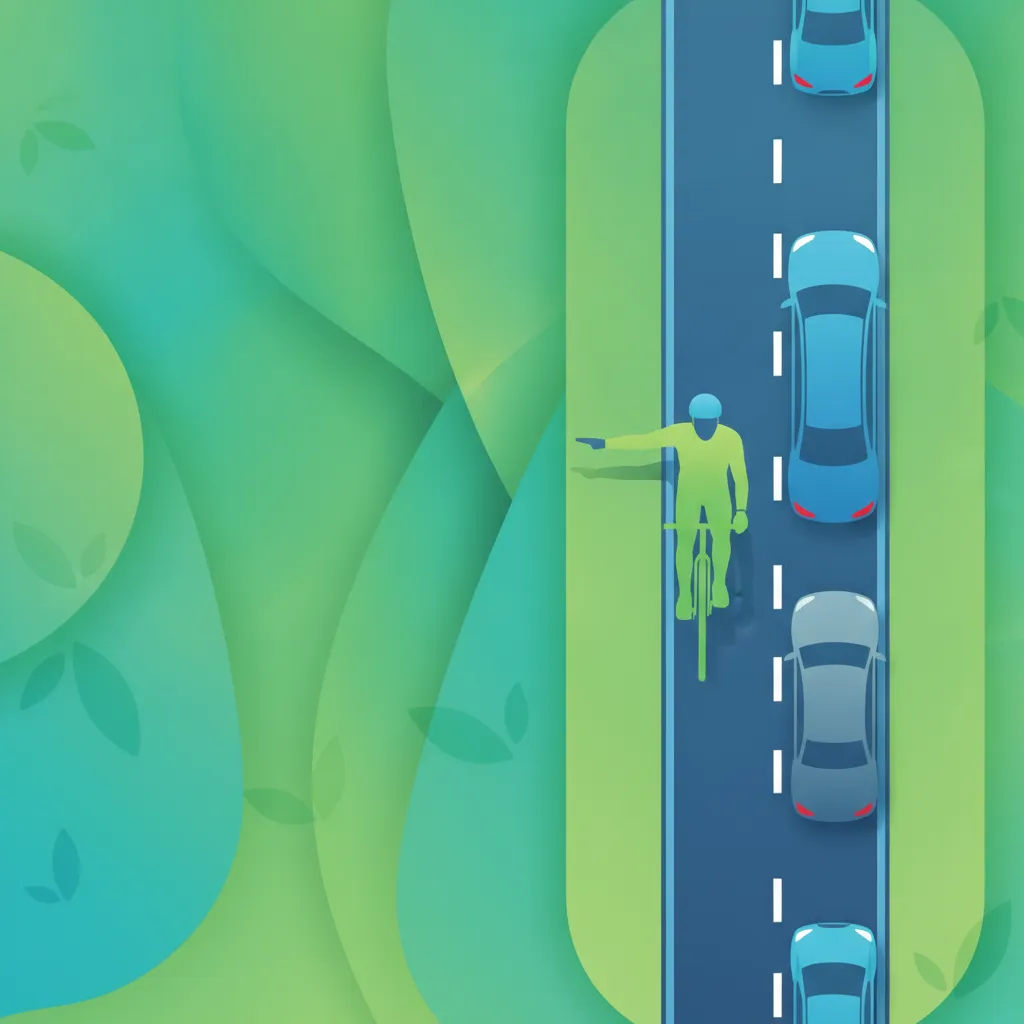
Bicycles represent an eco-friendly transport method with specific rights on French public roadways. This lesson teaches you how to identify dedicated cycle paths, respect bike lanes, and understand cyclist turning privileges at intersections. You will learn the legal minimum safety distance required when overtaking a cyclist: 1 meter in urban areas and 1.5 meters outside city limits.

This lesson details how to manage high-risk interactions with pedestrians who may step off curbs or cross the road near bus stops. Learners will study French Code de la route laws regarding pedestrian priority at crosswalks and near stopping transit vehicles. Developing heightened spatial awareness around blind zones near the front of the bus is emphasized to prevent tragic pedestrian collisions.

Certain groups of road users require heightened defensive attention from drivers due to physical limitations or unpredictable behaviors. This lesson covers how to recognize signs of visual impairment (white canes), mobility challenges, and the unpredictability of young children. You will learn to reduce your speed, extend yielding patience, and proactively secure extra space to protect these vulnerable users.
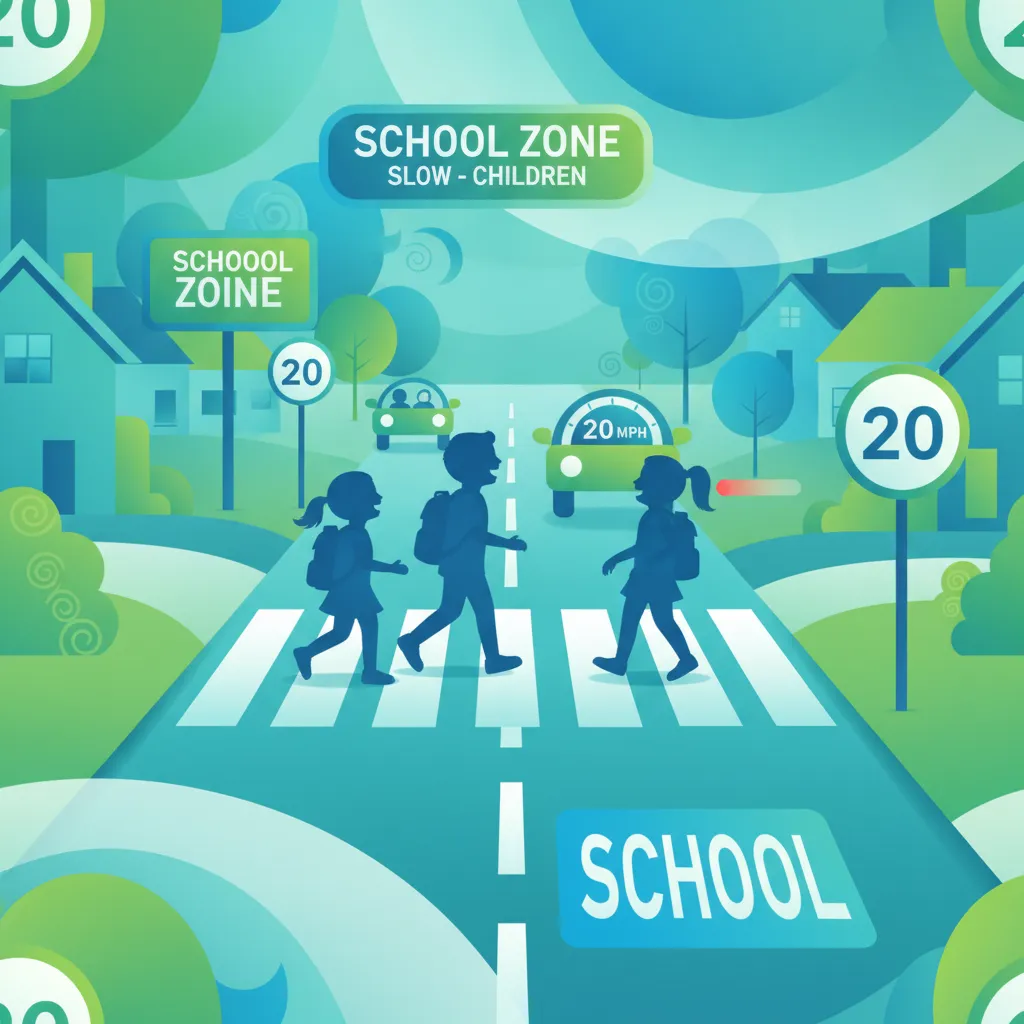
French municipalities utilize distinct low-speed configurations to foster pedestrian safety in residential and educational neighborhoods. This lesson details speed restrictions in 'zone 30', pedestrian-only districts, and shared 'zones de rencontre' where speed is capped at 20 km/h. You will learn how priority hierarchies shift in these zones, giving pedestrians legal priority to use the entire roadway.
Learners will explore the rules related to pedestrian crossings, focusing on the obligation to yield to pedestrians at zebra crossings and flashing pedestrian signals. The lesson highlights the importance of stopping before the stop line, reducing speed, and maintaining vigilance for pedestrian movement. Mastery of these practices ensures the safety of both pedestrians and AM riders at crossing points.
In France, pedestrians have clear legal priority when stepping onto or indicating an intent to use a crossing (passage pieton). This lesson details standard zebra crossings, refuge islands, and pedestrian crossings managed by synchronized traffic light systems. You will learn to scan crossings ahead, anticipate pedestrian movements, and safely come to a stop whenever a pedestrian attempts to cross.
Find clear answers to common questions learners have about Roundabouts: Entry, Navigation, and Exit. Learn how the lesson is structured, which driving theory objectives it supports, and how it fits into the overall learning path of units and curriculum progression in France. These explanations help you understand key concepts, lesson flow, and exam focused study goals.
Yes, in France, vehicles already circulating on the roundabout generally have priority. You must slow down and yield before entering, ensuring it is safe to join the flow.
You must use your right indicator to signal your exit just after passing the exit preceding the one you intend to take. Signalling earlier can confuse other drivers about your intentions.
As an AM licence rider, you should generally stay in the outer lane to ensure visibility and ease of exit, unless local signage or road markings direct you otherwise.
Yes, a roundabout is a type of intersection. All standard safety and priority rules apply, and you must maintain constant awareness of other users entering or exiting.
Ready to focus your study? Use the practice search to find exactly the French driving theory questions you need for the Code de la route and permis de conduire ETG. Refine your knowledge on specific topics or challenging rules to boost your confidence and exam readiness.